
Logo
Belgian Driving Theory Courses

Lesson 3 of the Belgian Road Signs and Traffic Signals unit

Belgian Driving Theory B: Information Signs

This lesson focuses on interpreting the diverse range of information signs found on Belgian roads, which are essential for navigation and awareness. As part of our comprehensive Category B theory program, you will learn to distinguish these helpful indicators from regulatory signs to ensure you always know your location and available services.
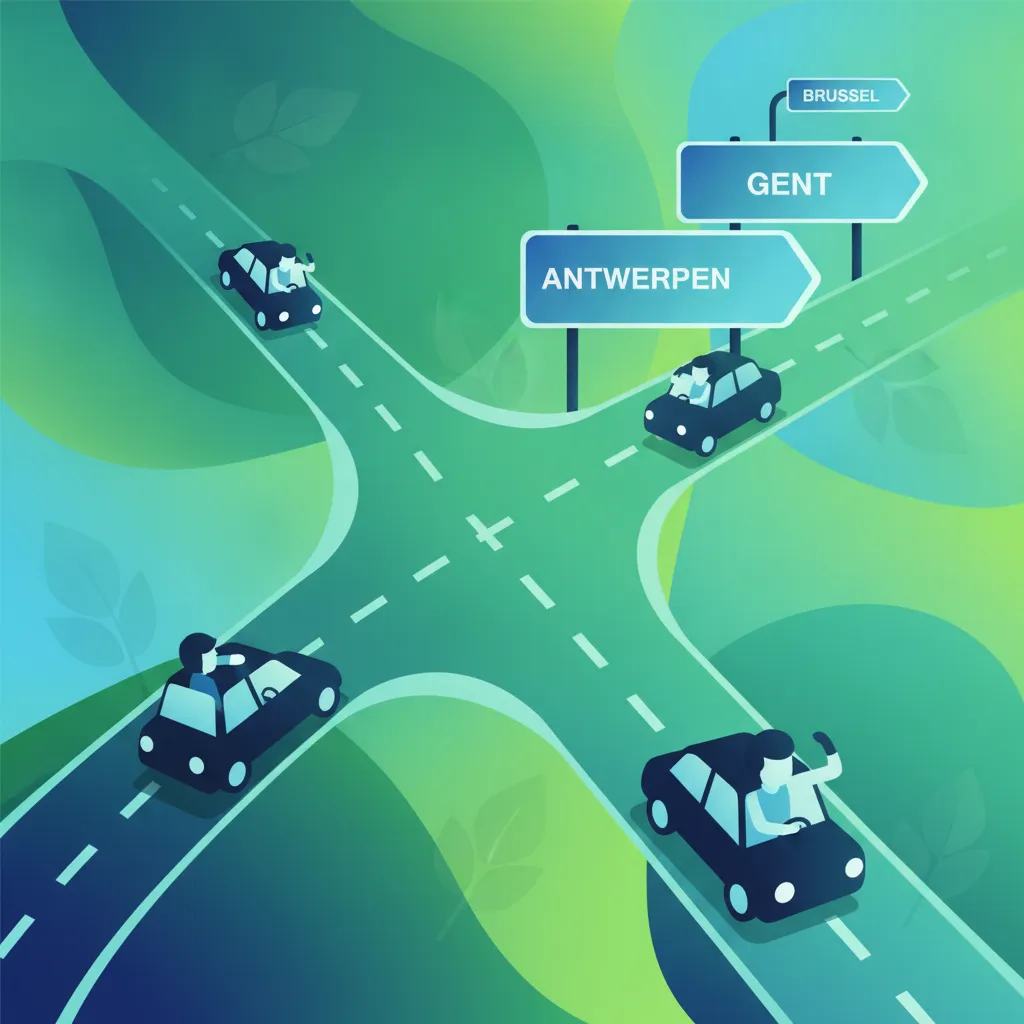
information signsBelgian driving theoryCategory Broad signsexam preparation
Belgian Driving Theory B: Information Signs

Lesson content overview

Belgian Driving Theory B

Understanding Information Signs for Safe Belgian Driving

Information signs are a fundamental part of the road network, designed to provide drivers with essential, non-regulatory guidance. As part of your Complete Theory Program for Belgian Category B Driving Licence, this lesson will equip you with the knowledge to interpret these vital signs effectively. Unlike regulatory or warning signs, information signs do not impose legal obligations or warn of immediate dangers. Instead, they offer factual data that facilitates efficient navigation, informed decision-making, and overall road safety on Belgian roads.

The Purpose and Importance of Belgian Information Signs

Information signs serve as critical guides, supplying drivers with neutral, factual messages about the road environment ahead. Their primary function is to enhance driver awareness and support proactive planning, rather than to prescribe or prohibit specific behaviors. This proactive information allows drivers to anticipate upcoming road features, destinations, and available services, leading to smoother journeys and reduced stress. Proper interpretation of these signs is crucial for efficient route planning, safe lane changes, and timely access to necessary facilities, all contributing to a safer and more confident driving experience in Belgium.

Core Characteristics of Informational Road Signs

Belgian information signs adhere to several key principles to ensure their effectiveness and universal understanding:

  • Clarity and Visibility: Information is presented clearly, using standard fonts, symbols, and appropriate sizing to ensure readability from a safe distance, even at speed. This design minimizes the time drivers need to process the information.
  • Neutrality: The messages conveyed are purely factual and do not carry legal enforcement. They offer helpful data without compelling drivers to take specific actions, distinguishing them from regulatory signs.
  • Standardization: Consistent shapes, colors, and symbols are used across Belgium and often internationally, ensuring that drivers can universally comprehend the information regardless of their origin. Typically, these signs are rectangular or square, often with blue or green backgrounds.
  • Contextual Relevance: The information provided is always pertinent to the immediate road environment or the upcoming section of the route, helping drivers make relevant decisions in real-time.

Types of Information Signs in Belgium and Their Meaning

Belgian information signs encompass various categories, each serving a distinct purpose to aid drivers. Understanding these categories is vital for efficient navigation and safe driving.

Distance signs are rectangular signs, frequently green on motorways and expressways, or blue on other roads, with white text. They display the remaining distance to specific locations, such as towns, cities, or major junctions. These distances are usually presented in kilometres (km).

  • Practical Meaning: These signs are invaluable for trip planning, allowing drivers to estimate travel times and prepare for upcoming maneuvers like exits or changes in speed. They provide foresight, enabling gradual adjustments rather than sudden reactions.
  • Common Misunderstandings: Drivers sometimes mistakenly assume that a distance sign implies an immediate need to slow down. While a town 5 km away might have a lower speed limit, the sign itself is purely informational, not a regulatory speed change. The actual speed limit change will be indicated by a separate regulatory sign.
  • Examples: A green sign on a motorway indicating "Antwerpen 50 km" helps a driver anticipate their arrival time and plan their next rest stop or fuel stop.

Following Directional Guidance Signs

Directional information signs are crucial for navigating complex junctions and ensuring drivers stay on their intended route. These signs indicate the correct direction, often using arrows, to specific destinations, points of interest, or route numbers.

  • Route Confirmation: Some signs confirm the direction of the current allocated route, reassuring drivers they are on the right path.
  • Destination Arrows: These signs clearly point towards towns, cities, or specific facilities, often appearing well in advance of a decision point to allow ample time for lane changes. They help drivers choose correct lanes and make timely navigation decisions without last-minute panic.
  • Associated Rules: While the sign itself is informational, if ignoring a directional sign leads to failing to comply with a mandatory lane designation (often indicated by road markings in conjunction with signs), it can result in an improper maneuver. Drivers are expected to combine the information with other regulations.
  • Common Misunderstandings: Over-reliance on GPS can sometimes lead drivers to ignore visible road signs, resulting in missed exits or incorrect turns, especially when GPS signals are weak or outdated.

Locating Services with Facility Signs

Service facility signs are easily recognizable icons that alert drivers to the presence and location of essential amenities. These signs are particularly helpful on long journeys or motorways where services might be sparse.

  • Subcategories and Icons:
    • Fuel Station (P): Often depicted with a fuel pump icon.
    • Restaurant (R): Typically a knife and fork symbol.
    • Hotel (H): Represented by a bed icon.
    • Repair Shop (B): Often a wrench symbol.
    • Hospital (E7): A blue square sign with a white "H" on a red square cross.
    • Motorway Service Area (E11): Often indicated by a symbol of a building with multiple service icons.
  • Practical Meaning: These signs allow drivers to plan stops for refueling, rest, food, or medical assistance, crucial for driver comfort and safety, especially on extended trips. They prevent situations where drivers might run out of fuel or become overly fatigued.
  • Associated Rules: Drivers are not obligated to stop at these facilities; the signs merely provide options. However, for safe driving, taking breaks and ensuring sufficient fuel is highly recommended.
  • Common Misunderstandings: Some drivers might assume that a service sign guarantees 24/7 availability or a specific brand of service. While many motorway services are extensive, facilities on smaller roads might have limited hours.

Understanding Lane Guidance and Assignment Signs

Lane guidance signs are vital for managing traffic flow, especially on multi-lane roads, motorways, and at complex intersections. They inform drivers which lanes lead to specific destinations or indicate upcoming changes in lane availability.

  • Lane to Destination: These signs, often placed overhead or on gantries, clearly show which lanes should be used for particular exits or continuing routes. They are critical for navigating large motorway interchanges.
  • Lane Ending: Signs indicating that a lane is about to end advise drivers to merge into an adjacent lane well in advance. This helps prevent sudden, unsafe lane changes and bottlenecks.
  • Practical Meaning: Effective lane guidance facilitates smoother traffic flow, reduces congestion, and significantly lowers the risk of collisions caused by abrupt maneuvering. Drivers can choose the correct lane early, minimizing stress and maintaining safe following distances.
  • Associated Rules: While the sign is informational, failure to comply with lane assignments (e.g., being in an exit-only lane when you intend to go straight) can lead to illegal and dangerous maneuvers, such as crossing solid lines or swerving at the last moment. These signs often work in conjunction with road markings that are legally binding.
  • Common Misunderstandings: Ignoring lane guidance due to perceived familiarity with the route can lead to being in the wrong lane, forcing risky last-minute corrections or missing an intended turn or exit.

Interpreting Advisory Speed Limit Signs

Advisory speed signs provide recommended speeds for specific road segments, typically due to prevailing road conditions such as curves, construction zones, or uneven surfaces. These signs are often square or rectangular, sometimes with a number in a black circle within a warning triangle, or simply a number (e.g., 90) on a blue background.

  • Practical Meaning: Advisory speeds help drivers adjust their speed for optimal safety and comfort, particularly when conditions might not be immediately obvious or when navigating complex road layouts. They encourage cautious driving without imposing a legal mandate.
  • Associated Rules: Adherence to advisory speeds is suggested but not legally enforced. You will not receive a fine for exceeding an advisory speed unless you also exceed a regulatory speed limit or drive in a manner considered dangerous. However, ignoring them can increase accident risk, especially in adverse conditions.
  • Common Misunderstandings: Many drivers confuse advisory speed limits with regulatory speed limits. Regulatory limits are legally binding and are typically displayed in a red circle with a white background. Advisory speeds are recommendations to enhance safety.

A crucial distinction for drivers holding a Belgian Category B Driving Licence is the legal status of information signs. By their nature, these signs are informational and generally not legally binding in the same way as regulatory (e.g., speed limit, no entry) or warning signs.

  • Informational, Not Mandatory: Drivers must use the information provided to make informed decisions for safe and efficient travel, but they are not legally obliged to act upon it unless the sign explicitly incorporates a mandatory instruction or works in conjunction with a regulatory sign or road marking that is legally binding.
  • Applicability: This principle applies uniformly on all public roads where such signs are present across Belgium.
  • Rationale: The purpose is to provide essential data for navigation and safety without imposing prescriptive actions. This approach allows drivers flexibility while encouraging prudent decision-making.
  • Correct Application Example: Seeing a distance sign indicating "Leuven 10 km" allows a driver to anticipate the need to slow down when entering the urban area, but they are not legally required to reduce their speed at the sign itself. They will reduce speed when they encounter the regulatory speed limit sign for Leuven.
  • Incorrect Application Example: Ignoring a lane guidance sign that clearly indicates the rightmost lane is "Exit only" while intending to continue straight. This could lead to a dangerous last-minute swerve across solid lines or missing the intended route, potentially resulting in a traffic violation or collision.

Common Mistakes and Misinterpretations of Information Signs

Misunderstanding or neglecting information signs can lead to unsafe driving practices and inconvenient detours.

  1. Ignoring Distance Signs: Drivers might fail to anticipate upcoming junctions or towns, leading to sudden braking or rushed lane changes.
  2. Misreading Directional Arrows: Incorrectly interpreting an arrow can lead to taking the wrong exit or lane, causing frustration and potentially dangerous maneuvers to correct the error.
  3. Disregarding Service Facility Icons: Failing to notice signs for fuel or rest stops can result in inconvenient situations, such as running out of fuel or driving while fatigued.
  4. Overlooking Lane Guidance: Not observing lane assignment signs leads to being in the wrong lane for a desired destination, often necessitating risky last-second merges or missed turns.
  5. Confusing Advisory Speed for Legal Limit: Treating an advisory speed sign as a legally binding limit can lead to driving too fast for conditions when no regulatory limit is present, or unnecessarily slowing down when conditions are good.
  6. Failure to Combine Information: Drivers sometimes fail to integrate information from these signs with existing regulatory signs or road markings, leading to misjudgments (e.g., attempting to turn when a "No Left Turn" regulatory sign is present, even if a directional sign points that way for a different route).
  7. Ignoring Contextual Factors: Not adjusting for poor visibility (fog, heavy rain) means information signs might be missed or misinterpreted, increasing risk.
  8. Assuming Universal Applicability: A sign seen on one route might not apply to an adjacent, parallel route. Drivers must always confirm signs are relevant to their current lane and direction of travel.

Contextual Factors Affecting Information Sign Interpretation

The effectiveness and interpretation of information signs can be significantly influenced by various external and situational factors.

  • Weather Conditions: Heavy rain, fog, snow, or direct sunlight can severely reduce the visibility and legibility of information signs. In such conditions, drivers must decrease speed and increase vigilance, anticipating that signs might be harder to read or appear suddenly.
  • Road Type:
    • Motorways (Autoroutes/Snelwegen): Often feature large, overhead gantry signs with complex lane guidance and multiple destinations, frequently displaying distances in kilometres to several upcoming cities.
    • Rural Roads: Signs tend to be smaller, less frequent, and provide information primarily about distances to local towns or villages.
    • Urban Areas: Information signs guide drivers through complex intersections, often indicating lanes for different directions or local points of interest.
  • Vehicle Load and Type: Drivers of heavy goods vehicles or those towing trailers require significantly more time and space to react, brake, and change lanes. They must therefore read and act upon information signs much earlier than drivers of light passenger vehicles.
  • Vulnerable Road Users: In areas frequented by pedestrians or cyclists, information signs might indicate special zones (e.g., pedestrian crossings, shared paths), requiring drivers to be extra cautious and adhere to related regulatory signs (e.g., reduced speed limits).
  • Time of Day: At night, even reflective signs can be harder to read due to glare from headlights or insufficient ambient lighting. Drivers must ensure their own headlights are correctly used to maximize visibility.

Integrating Information Signs with Other Road Rules

Information signs do not operate in isolation; they are part of a comprehensive system of road rules that includes other types of signs and markings. Effective driving requires integrating information from all sources.

  • Road Markings: Often, lane guidance signs are reinforced by arrows and lines painted on the road surface. For instance, an overhead sign indicating an exit lane will usually be accompanied by a solid white line and directional arrows on the road, which drivers must obey.
  • Regulatory Signs: While information signs are not binding, they frequently complement regulatory signs. For example, a directional sign for a town might be followed by a regulatory speed limit sign as you enter the urban area. Drivers must always prioritize regulatory signs.
  • Warning Signs: Information signs might provide context to warning signs. For instance, an advisory speed sign might precede a warning sign for a sharp curve, reinforcing the need for caution.
  • Priority Rules: When an information sign directs traffic towards an intersection, drivers must still apply the relevant priority rules (e.g., priority from the right, yield signs, stop signs) regardless of the directional information.

Practical Application: Scenarios for Information Signs

To solidify your understanding, consider these practical scenarios involving information signs.

Scenario 1: Approaching a Motorway Exit

  • Setting: Driving on a Belgian motorway at 120 km/h, intending to reach Ghent.
  • Relevant Information: A large overhead green information sign clearly shows the right lane for "Ghent A10" and the left lanes for "Brussels A12". It also indicates "Ghent 15 km".
  • Correct Behavior: The driver observes the sign early, checks their rearview and side mirrors, signals their intention, and safely merges into the rightmost lane well in advance of the exit. They maintain appropriate speed and following distance.
  • Incorrect Behavior: The driver, distracted by their phone or conversation, misses the lane guidance sign until the last moment. They then attempt a sudden, unsafe lane change across a solid white line or miss the exit entirely, having to take the next one and backtrack.
  • Explanation: Early identification and interpretation of the lane guidance sign allow for a smooth and safe transition, preventing dangerous maneuvers and ensuring the correct route is taken.

Scenario 2: Locating a Service Area on a Long Journey

  • Setting: On a long motorway journey, fuel is running low, and the driver needs a break.
  • Relevant Information: A blue information sign with a fuel pump icon and a bed icon indicates "Service Area 2 km".
  • Correct Behavior: The driver notices the sign, acknowledges the proximity of the service area, and prepares to exit the motorway in 2 kilometres. They maintain their speed and focus on finding the correct exit ramp.
  • Incorrect Behavior: The driver overlooks the sign, perhaps thinking they can push on to the next major city. They might then run out of fuel or become overly fatigued before reaching another service point, creating a hazardous situation.
  • Explanation: Service facility signs are critical for logistical planning, ensuring drivers can access essential amenities for safety and comfort, especially during extended travel.

Scenario 3: Interpreting an Advisory Speed Before a Curve

  • Setting: Driving on a rural road with a general speed limit of 90 km/h, approaching a series of curves.
  • Relevant Information: A blue information sign displays "70". This is followed by a warning sign indicating a sharp curve ahead.
  • Correct Behavior: The driver recognizes the "70" as an advisory speed, suggesting a safe speed for the upcoming curves. Although not legally bound, they reduce their speed to around 70 km/h or lower, anticipating the curve and ensuring better control of the vehicle.
  • Incorrect Behavior: The driver, knowing the regulatory limit is 90 km/h, ignores the advisory "70" and enters the curve at a higher speed. This could lead to loss of control, especially if the curve is tighter than anticipated or road conditions are less than ideal.
  • Explanation: Advisory speed signs provide crucial safety recommendations. Adhering to them, even if not legally required, significantly reduces the risk of accidents by promoting driving suitable for road conditions.

The Safety Benefits of Interpreting Information Signs Correctly

Information signs are not merely navigational tools; they are integral to promoting road safety. By providing early and clear data, they empower drivers to make thoughtful, proactive decisions, significantly reducing the potential for dangerous situations.

  • Reduced Cognitive Load: When information is presented clearly and in advance, drivers have more time to process it. This reduces the cognitive burden, allowing them to allocate more attention to monitoring traffic, vulnerable road users, and other critical driving tasks.
  • Timely Decision-Making: Early warnings about distances to destinations or lane assignments enable drivers to plan lane changes, speed adjustments, and exit maneuvers well in advance. This prevents abrupt braking or sudden swerving, which are common causes of rear-end collisions and side-swipe incidents.
  • Improved Traffic Flow: When drivers correctly follow lane guidance and directional signs, traffic flows more smoothly with fewer unexpected movements, reducing congestion and the likelihood of conflicts between vehicles.
  • Enhanced Situational Awareness: Consistently reading and understanding information signs helps drivers build a mental map of their journey, increasing their overall awareness of the road environment and upcoming challenges.
  • Stress Reduction: Knowing what to expect reduces driver anxiety and frustration, contributing to a calmer and safer driving experience.

Learn more with these articles

Learn more with these articles

Learn more with these articles

Check out these practice sets

Lesson recap

Quick summary before you move on

Fast revision

Belgian information signs provide essential navigational guidance through distance markers, directional arrows, service facility icons, lane assignments, and advisory speeds, but they carry no direct legal obligation. The critical distinction is that while drivers should act on this information for safety and efficiency, they are not legally bound by it unless it complements a regulatory sign or road marking. Advisory speed signs (blue background) differ from regulatory limits (red circle) and should guide driving behavior based on conditions rather than legal compliance. Effective use of information signs reduces cognitive load, improves traffic flow, and enhances situational awareness, making them vital tools for safe Belgian driving.


Core takeaways

Main ideas from this lesson

A short set of high-value points that capture the most important learning from this lesson.

Information signs in Belgium provide non-regulatory guidance and are not legally binding like regulatory or warning signs

The four main categories are distance signs, directional signs, service facility signs, and lane guidance signs

Advisory speed signs are recommendations only and must not be confused with legally enforceable regulatory speed limits

Service facility signs (fuel, restaurant, hospital) indicate availability of amenities but do not obligate drivers to stop

Information signs should always be combined with regulatory signs, road markings, and priority rules for complete understanding

Remember this

Details worth keeping in mind

Point 1

Information signs are typically rectangular or square with blue or green backgrounds and carry no legal obligation on their own

Point 2

Advisory speed limits are shown in blue rectangles with white numbers, not in red circles which indicate mandatory limits

Point 3

Lane guidance signs on gantries show which lanes lead to specific destinations and require early lane changes

Point 4

When information signs contradict regulatory signs, the regulatory sign always takes priority

Point 5

Service area signs use standardized icons: fuel pump (P), restaurant (knife and fork), hospital (H on red cross)

Watch for this

Frequent learner mistakes

Confusing advisory speed signs (recommendations) with regulatory speed limits (legally enforceable)

Assuming information signs are mandatory when they are purely informational guidance

Missing lane guidance signs and making dangerous last-minute lane changes

Over-relying on GPS instead of reading and reacting to visible road signs

Failing to combine information signs with road markings and regulatory signs for complete decision-making

Search topics related to Information Signs

Explore search topics learners often look for when studying Information Signs. These topics reflect common questions about road rules, driving situations, safety guidance, and lesson level theory preparation for learners in Belgium.

meaning of blue information signs in BelgiumBelgian driving theory test information signs practicehow to read motorway direction signs in BelgiumCategory B theory exam Belgian road signs guidewhat do service signs mean on Belgian roadsdifference between regulatory and information signs Belgium

Related driving theory lessons for Information Signs

Browse additional driving theory lessons that cover connected traffic rules, road signs, and common driving situations related to this topic. Improve your understanding of how different rules interact across everyday traffic scenarios.

Belgian Directional and Distance Road Signs Explained

Learn to interpret Belgian directional signs for complex routes and distance markers for trip planning. Essential knowledge for safe navigation and efficient driving on Belgian roads and motorways.
information signsnavigationroad signsBelgian driving theoryroute planning
Directional Symbols and Arrows lesson image

Directional Symbols and Arrows

Directional symbols and arrows painted on the road surface guide drivers on permitted lane movements and turning directions. This lesson explains the interpretation of these arrows, covering rules for one-way streets, mandatory turns, and lane-specific instructions. Learners will understand how to comply with these symbols to navigate complex intersections safely and efficiently.

Belgian Driving Theory BRoad Markings, Lane Use and Traffic Directions
View lesson
Warning Signs lesson image

Warning Signs

This lesson focuses on warning signs designed to alert drivers to potential hazards ahead. Topics include warnings for sharp curves, steep gradients, slippery surfaces, and zones with high pedestrian or wildlife activity. Learners will understand how to correctly interpret these signs and adjust their driving behavior to maintain safety on the road.
Belgian Driving Theory BBelgian Road Signs and Traffic Signals
View lesson
Information Signs and Road Markings lesson image

Information Signs and Road Markings

This lesson explains the role of information signs and road markings in guiding road users. It covers directional signs that help with navigation and markings that delineate lanes, pedestrian crossings, and zones for specific users like cyclists. Learners will understand how to use this information to maintain correct lane positioning and navigate their route efficiently and safely.
Belgian Driving Theory AMBelgian Road Signs, Markings, Lights and Priority Basics
View lesson
Motorways, Rural Roads, and Roadworks lesson image

Motorways, Rural Roads, and Roadworks

This lesson covers the specific challenges of driving on motorways, rural roads, and navigating roadworks. Learners will review lane discipline on high-speed roads and identify hazards common to rural roads, such as sharp bends and wildlife. It also explains the importance of adjusting speed and following temporary signage in construction zones.
Belgian Driving Theory BWeather, Night Driving, Motorways, Rural Roads and Roadworks
View lesson
Regulatory Signs lesson image

Regulatory Signs

In this lesson, learners explore the full range of regulatory signs used throughout Belgium to enforce traffic laws. It covers signs that prescribe actions, such as stop and give way, as well as those that restrict actions, like speed limits and overtaking bans. Understanding these signs enables drivers to comply accurately with enforced traffic regulations.
Belgian Driving Theory BBelgian Road Signs and Traffic Signals
View lesson
Basic Turning and Lane Change Techniques lesson image

Basic Turning and Lane Change Techniques

This lesson focuses on basic manoeuvres, covering the proper use of indicators, safe lane positioning, and correct steering for turns. Learners will study the importance of checking blind spots and maintaining appropriate speed for a smooth transition when changing lanes. It also addresses turning at intersections and signaling intentions clearly to other road users.

Belgian Driving Theory BManoeuvres, Parking, Reversing, Overtaking and Merging
View lesson
Proper Use of Lights and Signalling Devices lesson image

Proper Use of Lights and Signalling Devices

This lesson details the proper use of all vehicle lights and signaling devices. It explains when to use low and high beams, fog lights, hazard lights, and turn signals to communicate effectively with other road users. Correct lighting usage improves visibility and safety, especially in adverse weather conditions and during hours of darkness.

Belgian Driving Theory BVehicle Safety, Lights, Tyres, Loads and Passenger Safety
View lesson
Roundabouts and Traffic Flow lesson image

Roundabouts and Traffic Flow

Roundabouts are a key feature of Belgian traffic management. This lesson explains how to approach, enter, navigate, and exit a roundabout safely, with a focus on yielding priority to traffic already circulating. Learners will also study correct lane positioning on multi-lane roundabouts and the appropriate use of signals.
Belgian Driving Theory BPriority Rules, Priority from the Right, Intersections and Roundabouts
View lesson
Regulatory and Informative Signs Relevant to Motorcyclists lesson image

Regulatory and Informative Signs Relevant to Motorcyclists

This lesson focuses on the correct identification and interpretation of regulatory and informative road signs that are particularly relevant to motorcyclists. It covers signs that dictate speed limits, prohibit overtaking, and indicate compulsory routes or turns. You will learn to recognize different sign categories based on their distinct shapes and colors as defined by Belgian traffic law.

Belgian Motorcycle Theory ABelgian Road Signs, Markings, Lights and Priority Rules
View lesson
Warning Signs and Hazard Awareness lesson image

Warning Signs and Hazard Awareness

This lesson is dedicated to warning signs, which are designed to alert drivers to potential dangers ahead. It covers the interpretation of signs indicating sharp curves, steep gradients, slippery surfaces, and the presence of pedestrians or animals. By understanding these warnings, riders can anticipate potential hazards and adjust their speed and position proactively for safer travel.

Belgian Driving Theory AMBelgian Road Signs, Markings, Lights and Priority Basics
View lesson

Understanding Belgian Service and Facility Road Signs

Master the meaning of Belgian road signs indicating services like fuel stations, restaurants, and rest areas. Essential for planning stops and ensuring comfort and safety during your journeys.

information signsservice signsroad signsBelgian driving theorydriver safety
Warning Signs lesson image

Warning Signs

This lesson focuses on warning signs designed to alert drivers to potential hazards ahead. Topics include warnings for sharp curves, steep gradients, slippery surfaces, and zones with high pedestrian or wildlife activity. Learners will understand how to correctly interpret these signs and adjust their driving behavior to maintain safety on the road.

Belgian Driving Theory BBelgian Road Signs and Traffic Signals
View lesson
Regulatory Signs lesson image

Regulatory Signs

In this lesson, learners explore the full range of regulatory signs used throughout Belgium to enforce traffic laws. It covers signs that prescribe actions, such as stop and give way, as well as those that restrict actions, like speed limits and overtaking bans. Understanding these signs enables drivers to comply accurately with enforced traffic regulations.

Belgian Driving Theory BBelgian Road Signs and Traffic Signals
View lesson
Information Signs and Road Markings lesson image

Information Signs and Road Markings

This lesson explains the role of information signs and road markings in guiding road users. It covers directional signs that help with navigation and markings that delineate lanes, pedestrian crossings, and zones for specific users like cyclists. Learners will understand how to use this information to maintain correct lane positioning and navigate their route efficiently and safely.

Belgian Driving Theory AMBelgian Road Signs, Markings, Lights and Priority Basics
View lesson
Motorways, Rural Roads, and Roadworks lesson image

Motorways, Rural Roads, and Roadworks

This lesson covers the specific challenges of driving on motorways, rural roads, and navigating roadworks. Learners will review lane discipline on high-speed roads and identify hazards common to rural roads, such as sharp bends and wildlife. It also explains the importance of adjusting speed and following temporary signage in construction zones.

Belgian Driving Theory BWeather, Night Driving, Motorways, Rural Roads and Roadworks
View lesson
Directional Symbols and Arrows lesson image

Directional Symbols and Arrows

Directional symbols and arrows painted on the road surface guide drivers on permitted lane movements and turning directions. This lesson explains the interpretation of these arrows, covering rules for one-way streets, mandatory turns, and lane-specific instructions. Learners will understand how to comply with these symbols to navigate complex intersections safely and efficiently.
Belgian Driving Theory BRoad Markings, Lane Use and Traffic Directions
View lesson
Regulatory Signs and Their Meaning lesson image

Regulatory Signs and Their Meaning

This lesson focuses on regulatory signs, which impose legal obligations and restrictions on road users. It explains the meaning of common signs such as speed limits, stop, yield, and no-entry, detailing how they apply to Category AM vehicles. Understanding these signs is fundamental for legal compliance and safe interaction with traffic, as they dictate required actions and prohibitions.

Belgian Driving Theory AMBelgian Road Signs, Markings, Lights and Priority Basics
View lesson
Proper Use of Lights and Signalling Devices lesson image

Proper Use of Lights and Signalling Devices

This lesson details the proper use of all vehicle lights and signaling devices. It explains when to use low and high beams, fog lights, hazard lights, and turn signals to communicate effectively with other road users. Correct lighting usage improves visibility and safety, especially in adverse weather conditions and during hours of darkness.

Belgian Driving Theory BVehicle Safety, Lights, Tyres, Loads and Passenger Safety
View lesson
Road Surface Markings lesson image

Road Surface Markings

This lesson introduces the various types of road surface markings and their specific legal meanings in Belgium. Topics include the rules for solid and broken lines, double lines, and special markings for pedestrian zones, bus lanes, and tramways. Understanding these markings is essential for maintaining correct lane discipline and executing safe overtaking maneuvers.

Belgian Driving Theory BRoad Markings, Lane Use and Traffic Directions
View lesson
Regulatory and Informative Signs Relevant to Motorcyclists lesson image

Regulatory and Informative Signs Relevant to Motorcyclists

This lesson focuses on the correct identification and interpretation of regulatory and informative road signs that are particularly relevant to motorcyclists. It covers signs that dictate speed limits, prohibit overtaking, and indicate compulsory routes or turns. You will learn to recognize different sign categories based on their distinct shapes and colors as defined by Belgian traffic law.

Belgian Motorcycle Theory ABelgian Road Signs, Markings, Lights and Priority Rules
View lesson
Driver Obligations and Responsibilities lesson image

Driver Obligations and Responsibilities

This lesson details the spectrum of obligations that apply to drivers, from basic compliance with traffic signs to responsibilities like vehicle upkeep and accident reporting. Learners will understand the importance of maintaining a vehicle in a roadworthy condition. It also covers the legal expectations for safe driving practices, including the use of safety equipment.

Belgian Driving Theory BCategory B Licence Basics and Driver Responsibility
View lesson

Frequently asked questions about Information Signs

Find clear answers to common questions learners have about Information Signs. Learn how the lesson is structured, which driving theory objectives it supports, and how it fits into the overall learning path of units and curriculum progression in Belgium. These explanations help you understand key concepts, lesson flow, and exam focused study goals.

Are information signs in Belgium mandatory or advisory?

Unlike regulatory signs (such as stop or yield signs) which must be obeyed, information signs are generally advisory. They provide guidance to help you navigate, but they do not impose legal restrictions on your movement unless accompanied by a specific traffic rule.

How can I distinguish an information sign from a warning sign?

Information signs are typically rectangular and often blue or white, focusing on providing data. Warning signs are usually triangular with a white background and a red border, designed to alert you to specific hazards on the road.

Will I be tested on specific exit numbers in the Category B exam?

You may be asked to interpret an exit sign to identify the correct lane or direction. While you don't need to memorize every exit number in Belgium, you must be able to read and understand the information provided on such signs under time pressure.

Do information signs apply differently in Flanders, Wallonia, or Brussels?

The visual design and meaning of information signs are standardized across all of Belgium. However, please note that signs may display place names in the language of the region, so it is helpful to be familiar with the common local names for major cities.

Start Your Targeted Belgian Theory Practice Search Now

Ready to focus your Belgian driving theory revision? Utilize our powerful search tool to pinpoint exact topics, road signs, or difficulty levels. Engage with practice questions that directly address your learning needs and solidify your understanding of Belgian traffic laws for your upcoming exam.

Search Belgian Theory Practice Questions

Continue your Belgian driving theory learning journey

Belgian road signsBelgian article topicsSearch Belgian road signsBelgian driving theory homeBelgian road sign categoriesBelgian driving theory topicsSearch Belgian theory articlesBelgian driving theory coursesBelgian Driving Theory B courseBelgian driving theory articlesBelgian driving theory practiceBelgian practice set categoriesBelgian Driving Theory AM courseBelgian Motorcycle Theory A courseBelgian driving licence proceduresSearch Belgian driving theory practiceBelgian driving theory terminology A–ZBelgian driving theory terms and glossaryWarning Signs lesson in Belgian Road Signs and Traffic SignalsRegulatory Signs lesson in Belgian Road Signs and Traffic SignalsInformation Signs lesson in Belgian Road Signs and Traffic SignalsBelgian Road Signs and Traffic Signals unit in Belgian Driving Theory BHelmet, Visibility and Protective Behaviour unit in Belgian Driving Theory AMRoad Markings, Lane Use and Traffic Directions unit in Belgian Driving Theory BAM Licence Basics and Small Vehicle Responsibility unit in Belgian Driving Theory AMCategory B Licence Basics and Driver Responsibility unit in Belgian Driving Theory BMotorcycle Licence Basics and Rider Responsibility unit in Belgian Motorcycle Theory AProtective Equipment, Visibility and Rider Condition unit in Belgian Motorcycle Theory ABelgian Road Signs, Markings, Lights and Priority Basics unit in Belgian Driving Theory AMIntersections, Roundabouts, Crossings and Urban Riding unit in Belgian Motorcycle Theory ABelgian Road Signs, Markings, Lights and Priority Rules unit in Belgian Motorcycle Theory A