This lesson guides you through the essential road surface markings that dictate where you can travel at intersections and junctions. Understanding these directional symbols is a core component of your Category B theory preparation, ensuring you always choose the correct lane and movement path. By mastering these markings, you will enhance your navigation skills and avoid common traffic violations during your real-world driving practice.
Lesson content overview
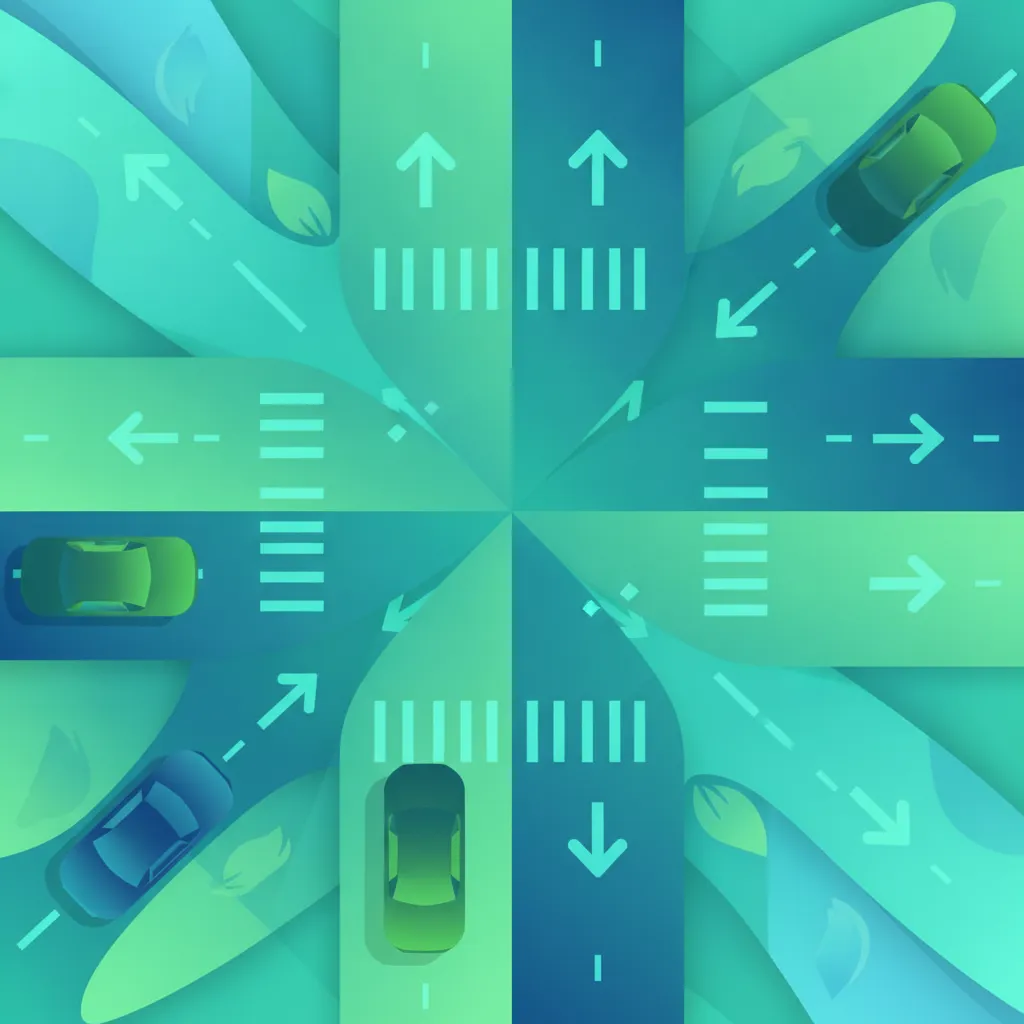
Road surface markings, particularly directional symbols and arrows, are fundamental guides for drivers on Belgian roads. These visual cues are essential for managing traffic flow, indicating permissible lane movements, and specifying turning directions. Understanding how to correctly interpret and comply with these markings is crucial for navigating complex intersections safely and efficiently, contributing significantly to your success in the Belgian Category B theoretical exam and your driving confidence.
Directional symbols and arrows painted directly onto the road surface serve as vital instructions for drivers. Their primary purpose is to organize traffic, prevent confusion, and enhance safety by clearly indicating where vehicles should go. These markings ensure that drivers make predictable movements, reducing the likelihood of collisions and improving the overall efficiency of traffic flow. They act as a silent language, directing you through busy intersections, multi-lane roads, and one-way systems.
These markings are more than just suggestions; they are legally binding instructions that govern vehicle movement. By allocating specific lanes for particular actions, such as turning or continuing straight, they streamline traffic and prevent last-minute lane changes that can cause accidents. This lesson builds upon your existing knowledge of basic road surface markings, providing the advanced understanding needed for complex driving scenarios.
Adhering to directional symbols and arrows involves several core principles that ensure orderly and safe driving. These principles highlight the mandatory nature of these markings and their role in facilitating sequential movements and specific lane uses.
The array of directional symbols and arrows you encounter on Belgian roads is designed to cover every possible movement instruction. Each type has a specific meaning and associated rules for compliance.
Drivers must always turn in the direction indicated by the arrow. Attempting to go straight or turn in the opposite direction from a lane marked with a turning arrow is illegal and extremely dangerous.
Beyond basic turns and straight movements, other specific symbols guide drivers through particular maneuvers.
Specific arrows are often painted on the road surface leading into and out of roundabouts. These are crucial for directing the flow of traffic and ensuring drivers select the correct lane for their intended exit. Following these arrows helps maintain the continuous flow characteristic of roundabouts, preventing blockages and reducing the risk of side-swipe collisions. Ignoring entry or exit arrows can lead to confusion, last-minute lane changes, and dangerous situations for all road users.
In Belgium, compliance with road surface directional arrows is legally mandated, forming a cornerstone of the traffic code. These rules are designed to ensure predictable driving behavior and minimize road hazards.
Drivers are legally obliged to follow the direction indicated by arrows painted on the road surface. This rule applies uniformly across all road types and conditions where such markings are present. The rationale is simple: it ensures consistent and predictable traffic flow, significantly reducing the potential for conflicts and accidents at intersections and during lane changes. Driving straight where a left-turn arrow is present, for example, directly violates this rule and creates a dangerous situation.
Always check your intended route and lane markings well in advance to position your vehicle correctly. Last-minute lane changes to correct for a missed arrow can be hazardous.
When arrows are combined with distinct lane markings (e.g., solid lines delineating a turn lane), drivers must remain within that designated lane. This regulation prevents dangerous weaving and ensures that vehicles commit to their intended movement once they have entered a specific lane. For instance, if you are in a lane marked with a right-turn arrow and solid lines, you must stay in that lane and complete the right turn; changing lanes prematurely is prohibited.
U-turn arrows are specific indicators of legal U-turn zones. In Belgium, U-turns are generally restricted and can only be performed at locations where a U-turn arrow is painted on the road surface or where a specific road sign permits it. This regulation ensures that U-turns, which can be complex maneuvers, are performed in safe environments with adequate visibility and space. Attempting a U-turn without such a marking is illegal and can lead to dangerous situations and penalties.
Even when following a directional arrow, drivers must always be prepared to yield to pedestrians at marked crossings. If a directional arrow crosses or is near a pedestrian crossing indicated by arrows or other markings, the priority rule for vulnerable road users takes precedence. This means stopping to allow pedestrians to cross safely, even if your lane's arrow indicates continuation.
Misunderstanding or ignoring directional arrows is a frequent cause of accidents and traffic violations. Being aware of these common pitfalls can help you avoid them.
While the rules for directional arrows are generally straightforward, various contextual factors can influence how drivers must interpret and react to them.
Adverse weather conditions like heavy rain, snow, fog, or bright sunlight can significantly obscure road surface markings. In such situations, drivers must exercise extreme caution, reduce their speed, and rely more heavily on road signs and other visual cues. When arrows are difficult to see, slower speeds provide more time to react and verify the correct path.
Directional arrows tend to be more numerous, detailed, and complex in urban areas due to the higher density of intersections, multiple lanes, and diverse traffic movements. In contrast, rural roads may feature simpler or fewer arrows, guiding traffic at less complicated junctions. Drivers should adapt their scanning and anticipation strategies based on the road environment.
The type and size of your vehicle can also influence how you navigate lanes with directional arrows. Drivers of larger or heavier vehicles, such as those towing trailers, may need to allow more space and commit to designated turning lanes earlier to execute maneuvers safely.
The presence of vulnerable road users, such as pedestrians and cyclists, always takes precedence, even when following directional arrows. At locations where arrows intersect with designated crossings for pedestrians or cyclists, drivers must prioritize their safety, yielding the right of way as required by Belgian traffic law.
Directional symbols and arrows are integral to maintaining order and safety on Belgian roads. They play a crucial role in:
Let's consider a few real-world examples to solidify your understanding.
Directional symbols and arrows on Belgian roads serve as mandatory instructions that govern lane usage and turning movements at intersections, roundabouts, and on one-way streets. These road surface markings are legally binding and, once you are in a lane marked with a specific arrow, you must follow its direction; failing to do so constitutes a traffic violation and creates dangerous situations. The system includes various arrow types such as sequence arrows for complex intersections, mandatory turning arrows, straight-ahead arrows, and U-turn arrows that indicate where specific maneuvers are permitted. Pedestrian crossings always take priority over directional arrows, requiring drivers to yield even when their lane indicates continuation. Understanding these markings is essential for safe driving in Belgium and for passing the Category B theory exam, as they form the foundation of lane discipline and intersection navigation.
A short set of high-value points that capture the most important learning from this lesson.
Directional arrows painted on Belgian roads are legally binding instructions, not suggestions, and must be followed once you are in that lane.
Mandatory turning lanes with solid white line boundaries require you to complete the indicated turn; changing lanes or exiting early is prohibited.
Sequence arrows guide drivers through multi-phase intersections, indicating the order of permitted movements across different stages.
Pedestrian crossings and vulnerable road users always take priority over directional arrows, even when your lane indicates straight-ahead movement.
U-turns are only permitted where a specific U-turn arrow or sign indicates it is legal.
Explore all units and lessons included in this driving theory course.
A lane marked with a left-turn arrow means you must turn left; attempting to go straight or turn right is illegal.
One-way arrows define the sole permissible direction of traffic flow; driving against them is a severe violation.
In complex intersections, follow the sequence of arrows in order rather than anticipating the final direction.
Once inside a dedicated turning lane separated by solid lines, you cannot merge out before completing the turn.
Adverse weather conditions may obscure road markings, requiring greater reliance on vertical signage and slower speeds.
Turning against the arrow direction, such as going straight from a left-turn-only lane, creates dangerous conflicts with other traffic.
Crossing solid lane lines prematurely when in a dedicated turning lane before completing the turn, often to merge into a straight-ahead lane.
Driving the wrong way on a one-way street by ignoring directional one-way arrows, posing severe collision risks.
Attempting a U-turn without a U-turn arrow or permitted sign, which is generally illegal in Belgium.
Misinterpreting sequence arrows at multi-phase intersections and being in the wrong lane for the intended movement.
Lesson content overview
A short set of high-value points that capture the most important learning from this lesson.
Directional arrows painted on Belgian roads are legally binding instructions, not suggestions, and must be followed once you are in that lane.
Mandatory turning lanes with solid white line boundaries require you to complete the indicated turn; changing lanes or exiting early is prohibited.
Sequence arrows guide drivers through multi-phase intersections, indicating the order of permitted movements across different stages.
Pedestrian crossings and vulnerable road users always take priority over directional arrows, even when your lane indicates straight-ahead movement.
U-turns are only permitted where a specific U-turn arrow or sign indicates it is legal.
Explore all units and lessons included in this driving theory course.
A lane marked with a left-turn arrow means you must turn left; attempting to go straight or turn right is illegal.
One-way arrows define the sole permissible direction of traffic flow; driving against them is a severe violation.
In complex intersections, follow the sequence of arrows in order rather than anticipating the final direction.
Once inside a dedicated turning lane separated by solid lines, you cannot merge out before completing the turn.
Adverse weather conditions may obscure road markings, requiring greater reliance on vertical signage and slower speeds.
Turning against the arrow direction, such as going straight from a left-turn-only lane, creates dangerous conflicts with other traffic.
Crossing solid lane lines prematurely when in a dedicated turning lane before completing the turn, often to merge into a straight-ahead lane.
Driving the wrong way on a one-way street by ignoring directional one-way arrows, posing severe collision risks.
Attempting a U-turn without a U-turn arrow or permitted sign, which is generally illegal in Belgium.
Misinterpreting sequence arrows at multi-phase intersections and being in the wrong lane for the intended movement.
Explore search topics learners often look for when studying Directional Symbols and Arrows. These topics reflect common questions about road rules, driving situations, safety guidance, and lesson level theory preparation for learners in Belgium.
Browse additional driving theory lessons that cover connected traffic rules, road signs, and common driving situations related to this topic. Improve your understanding of how different rules interact across everyday traffic scenarios.
Explore complex lane usage scenarios dictated by road arrows and symbols. Understand specific rules for multi-lane roads, intersections, and mandatory lane changes in Belgium. Deepen your understanding of Belgian traffic flow and lane discipline.

The focus of this lesson is on maintaining proper lane discipline, especially on motorways and other high-speed roads. Learners will explore the rules for changing lanes, overtaking, and positioning in the correct lane based on speed and traffic flow. Emphasis is placed on safe merging techniques and adherence to all lane markings for fluid traffic movement.

This lesson introduces the various types of road surface markings and their specific legal meanings in Belgium. Topics include the rules for solid and broken lines, double lines, and special markings for pedestrian zones, bus lanes, and tramways. Understanding these markings is essential for maintaining correct lane discipline and executing safe overtaking maneuvers.

Overtaking safely is a critical driving skill. This lesson explains where and how overtaking is permitted in Belgium, the importance of correct signaling, and maintaining a sufficient speed differential. Learners will understand the rules for passing on motorways and single-carriageway roads, and how to identify zones where overtaking is prohibited.

This lesson provides a detailed explanation of the various road markings found on Belgian roads and their specific significance for motorcyclists. It covers the rules associated with solid and broken lane lines, stop lines at junctions, and markings for pedestrian and bicycle crossings. Understanding these markings is essential for correct lane positioning and safe navigation.
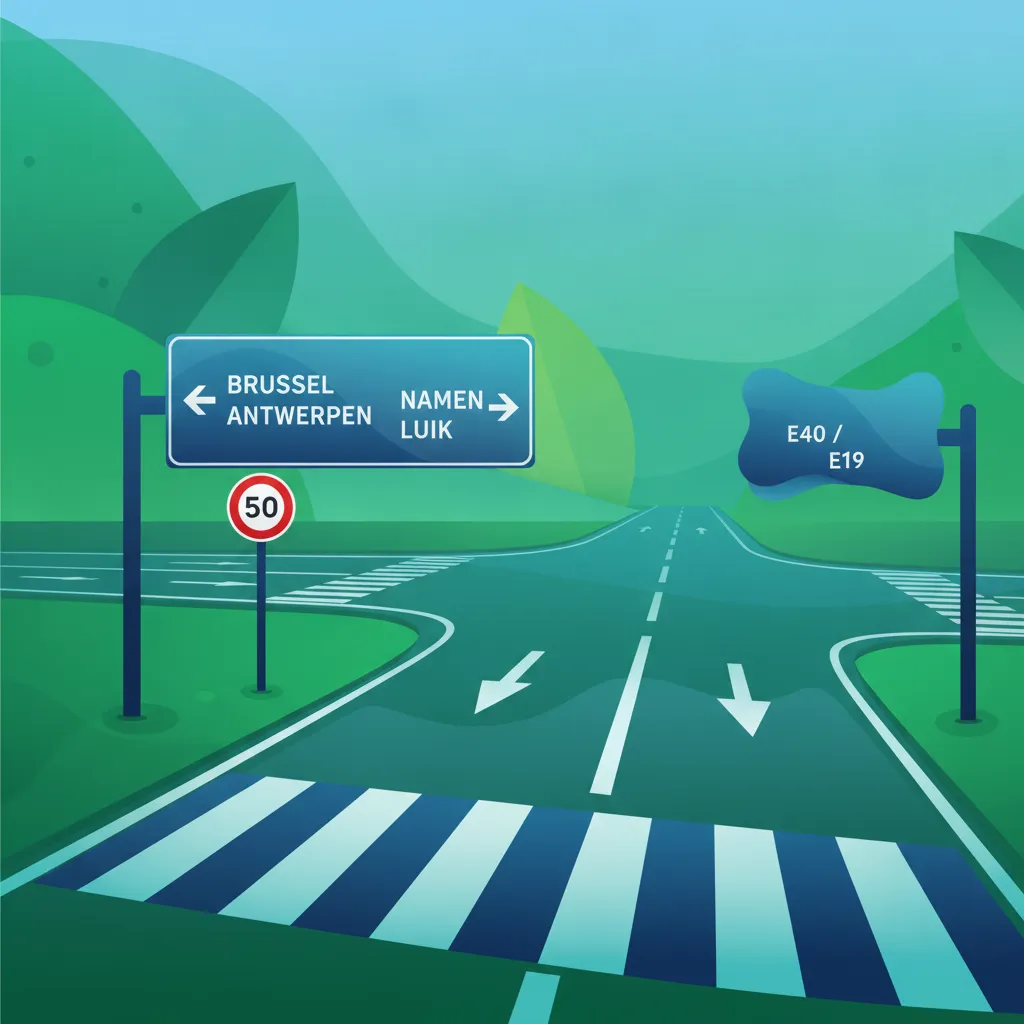
This lesson explains the role of information signs and road markings in guiding road users. It covers directional signs that help with navigation and markings that delineate lanes, pedestrian crossings, and zones for specific users like cyclists. Learners will understand how to use this information to maintain correct lane positioning and navigate their route efficiently and safely.
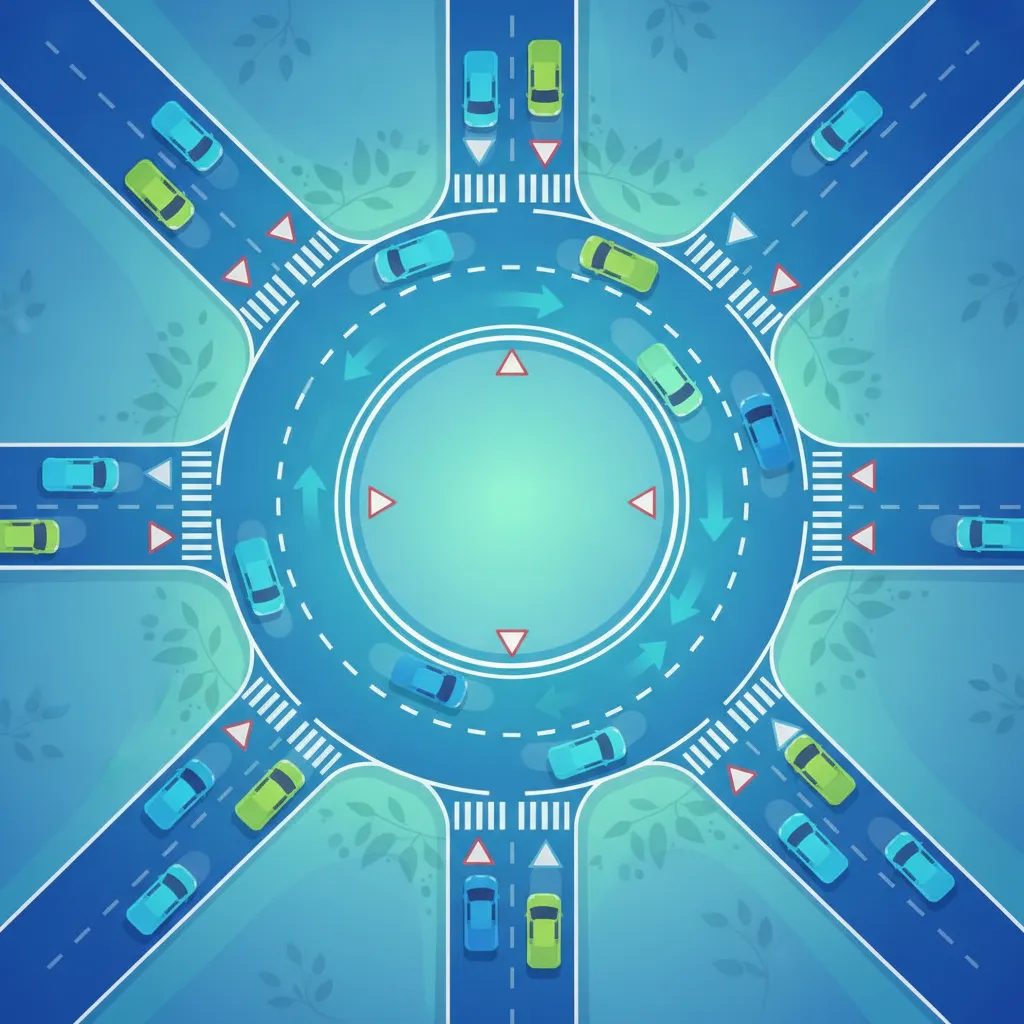
Roundabouts are a key feature of Belgian traffic management. This lesson explains how to approach, enter, navigate, and exit a roundabout safely, with a focus on yielding priority to traffic already circulating. Learners will also study correct lane positioning on multi-lane roundabouts and the appropriate use of signals.
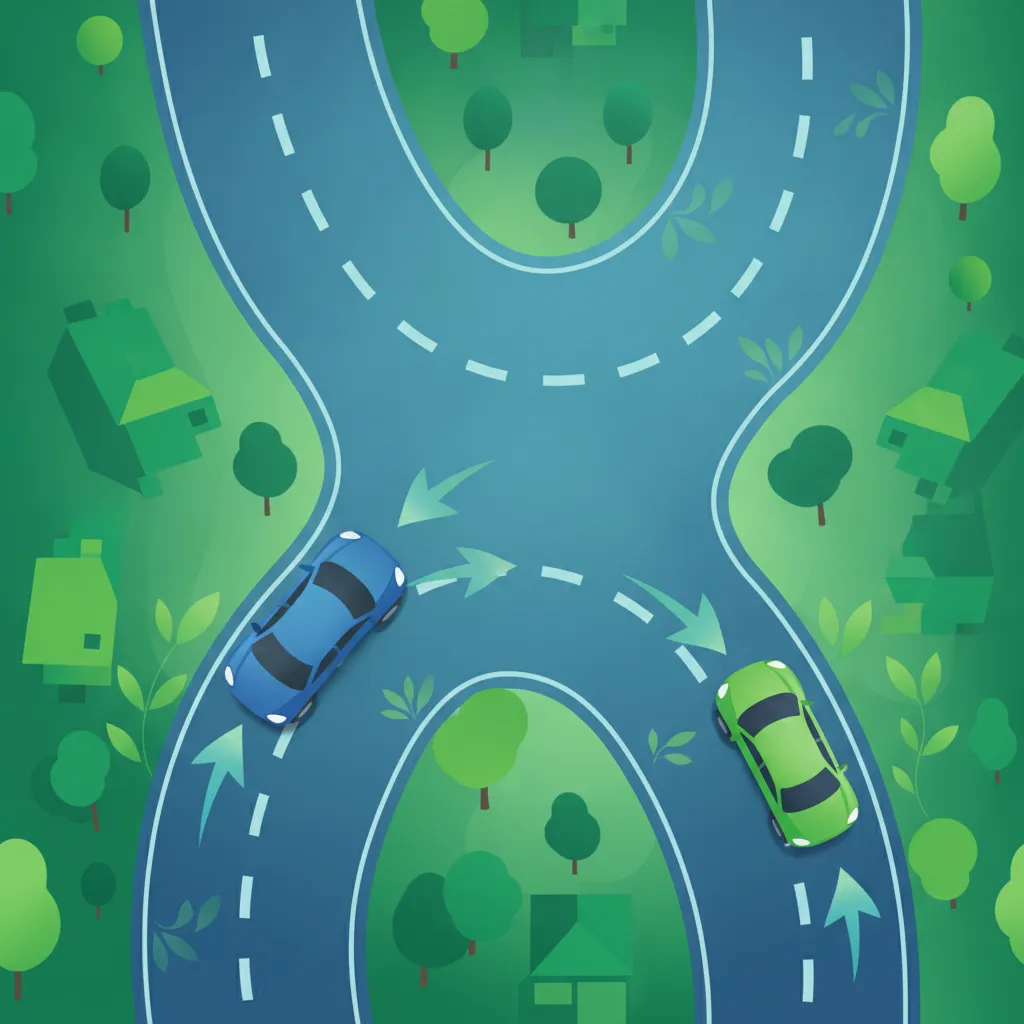
This lesson focuses on basic manoeuvres, covering the proper use of indicators, safe lane positioning, and correct steering for turns. Learners will study the importance of checking blind spots and maintaining appropriate speed for a smooth transition when changing lanes. It also addresses turning at intersections and signaling intentions clearly to other road users.

This lesson provides specific instructions for navigating roundabouts, a common feature on Belgian roads. It covers the rules of priority upon entry, the correct lane choice based on the intended exit, and the proper use of signals. Learners will understand how to safely circulate and exit, while being mindful of other vehicles, particularly larger ones with significant blind spots.
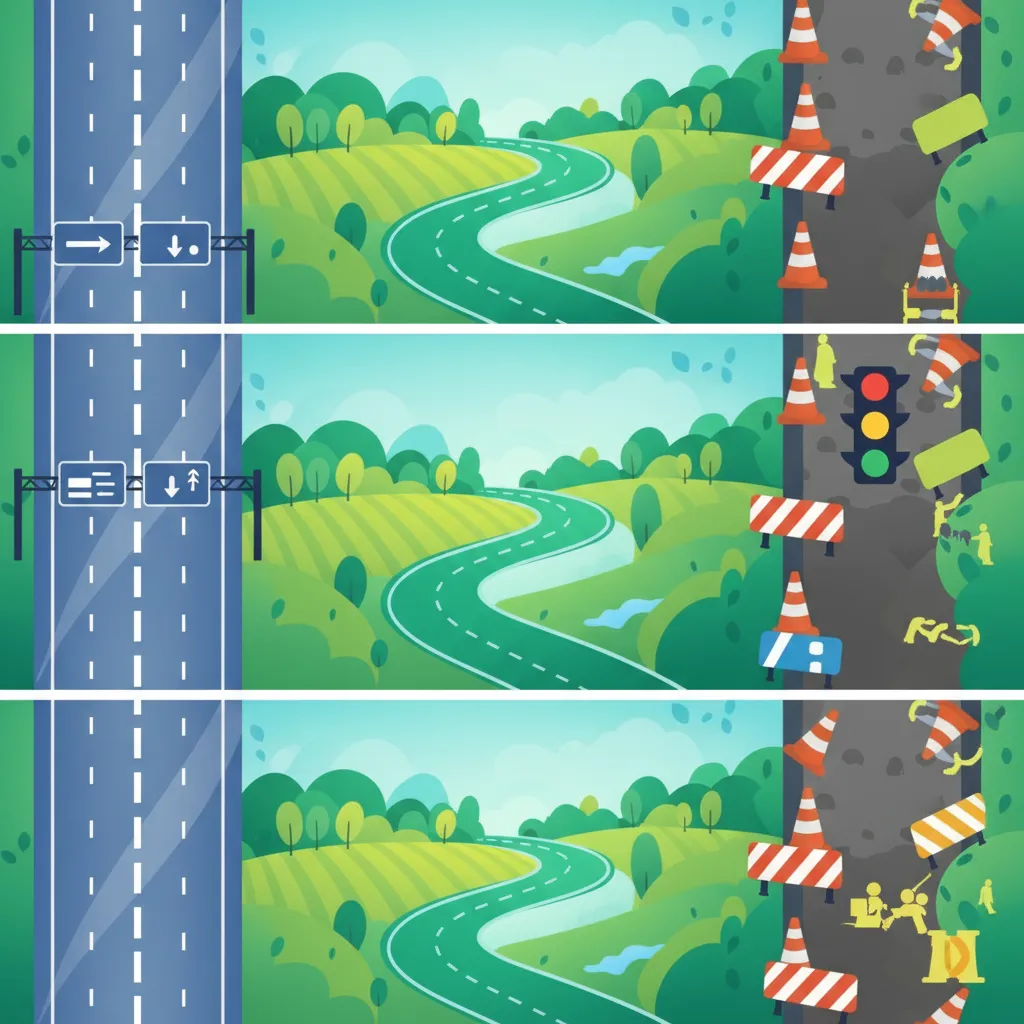
This lesson covers the specific challenges of driving on motorways, rural roads, and navigating roadworks. Learners will review lane discipline on high-speed roads and identify hazards common to rural roads, such as sharp bends and wildlife. It also explains the importance of adjusting speed and following temporary signage in construction zones.
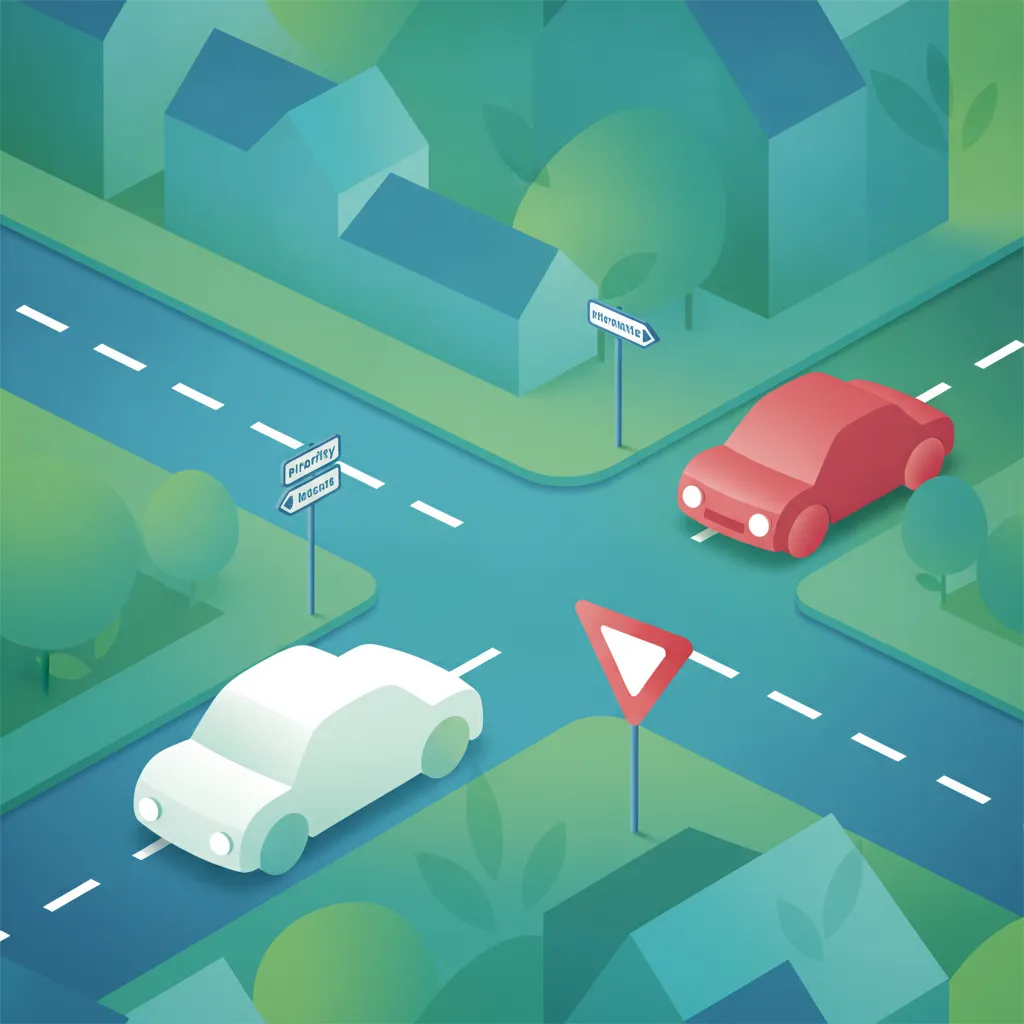
This lesson focuses on the distinction between the default priority from the right and designated priority roads, explaining how drivers should yield or proceed. Learners will discover the specific signs that indicate a priority road and when that priority ends. Understanding these concepts is essential for predictable and safe road use at intersections.
See how directional symbols and arrows on the road guide drivers in common traffic situations. This lesson connects theoretical knowledge of lane markings to practical application, helping you navigate Belgian roads more safely and efficiently. Essential for understanding complex junctions.
This lesson covers the specific challenges of driving on motorways, rural roads, and navigating roadworks. Learners will review lane discipline on high-speed roads and identify hazards common to rural roads, such as sharp bends and wildlife. It also explains the importance of adjusting speed and following temporary signage in construction zones.
Roundabouts are a key feature of Belgian traffic management. This lesson explains how to approach, enter, navigate, and exit a roundabout safely, with a focus on yielding priority to traffic already circulating. Learners will also study correct lane positioning on multi-lane roundabouts and the appropriate use of signals.
This lesson introduces the various types of road surface markings and their specific legal meanings in Belgium. Topics include the rules for solid and broken lines, double lines, and special markings for pedestrian zones, bus lanes, and tramways. Understanding these markings is essential for maintaining correct lane discipline and executing safe overtaking maneuvers.
This lesson explains the role of information signs and road markings in guiding road users. It covers directional signs that help with navigation and markings that delineate lanes, pedestrian crossings, and zones for specific users like cyclists. Learners will understand how to use this information to maintain correct lane positioning and navigate their route efficiently and safely.

This lesson focuses on warning signs designed to alert drivers to potential hazards ahead. Topics include warnings for sharp curves, steep gradients, slippery surfaces, and zones with high pedestrian or wildlife activity. Learners will understand how to correctly interpret these signs and adjust their driving behavior to maintain safety on the road.
This lesson provides specific instructions for navigating roundabouts, a common feature on Belgian roads. It covers the rules of priority upon entry, the correct lane choice based on the intended exit, and the proper use of signals. Learners will understand how to safely circulate and exit, while being mindful of other vehicles, particularly larger ones with significant blind spots.
This lesson focuses on basic manoeuvres, covering the proper use of indicators, safe lane positioning, and correct steering for turns. Learners will study the importance of checking blind spots and maintaining appropriate speed for a smooth transition when changing lanes. It also addresses turning at intersections and signaling intentions clearly to other road users.
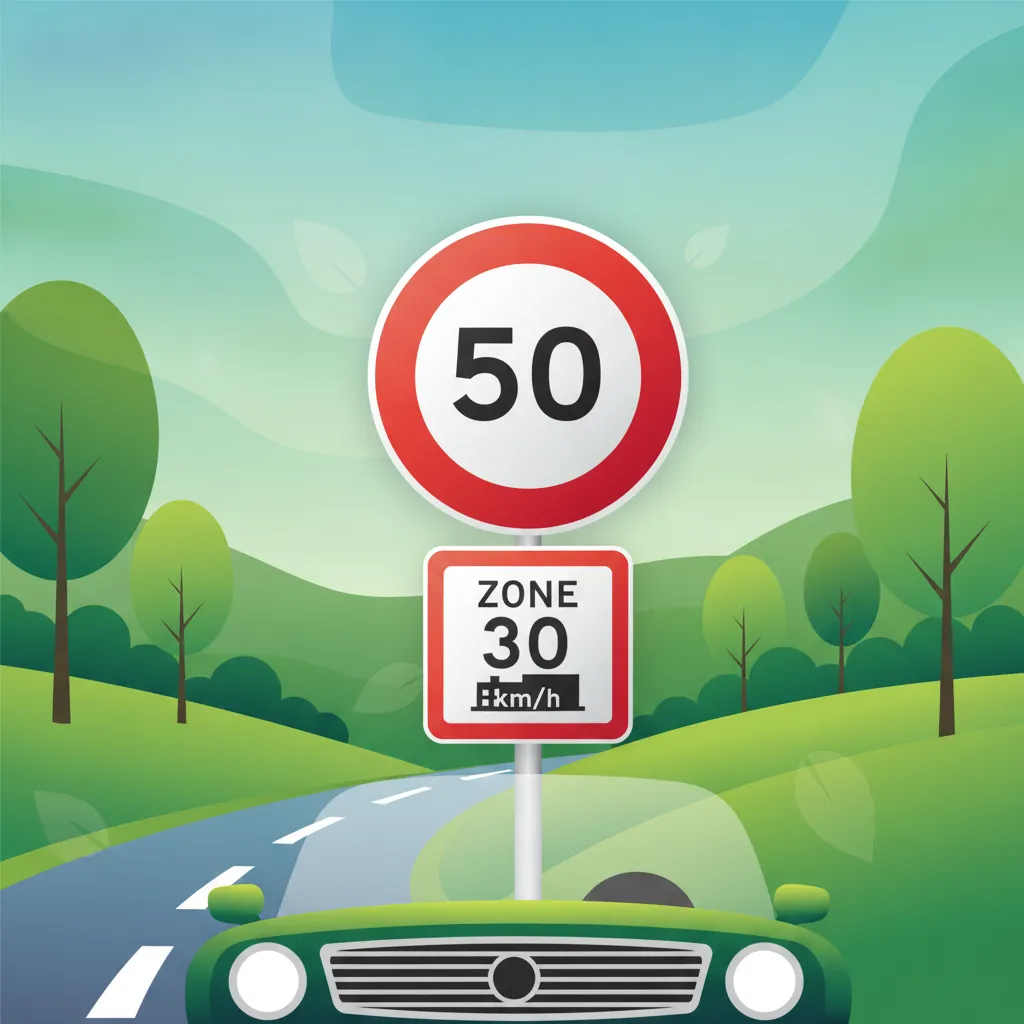
In this lesson, learners explore the full range of regulatory signs used throughout Belgium to enforce traffic laws. It covers signs that prescribe actions, such as stop and give way, as well as those that restrict actions, like speed limits and overtaking bans. Understanding these signs enables drivers to comply accurately with enforced traffic regulations.
This lesson examines the operation of traffic light systems in Belgium, clarifying the meaning of red, amber, and green signals, including flashing lights and directional arrows. It details a motorcyclist's legal obligations when approaching and navigating signal-controlled intersections. The content also addresses specialized signals for pedestrians and trams that riders must recognize and respond to correctly.
The focus of this lesson is on maintaining proper lane discipline, especially on motorways and other high-speed roads. Learners will explore the rules for changing lanes, overtaking, and positioning in the correct lane based on speed and traffic flow. Emphasis is placed on safe merging techniques and adherence to all lane markings for fluid traffic movement.
Find clear answers to common questions learners have about Directional Symbols and Arrows. Learn how the lesson is structured, which driving theory objectives it supports, and how it fits into the overall learning path of units and curriculum progression in Belgium. These explanations help you understand key concepts, lesson flow, and exam focused study goals.
No. If a lane is marked with a directional arrow, you must follow the direction indicated by that arrow. Deviating from the indicated path is a traffic violation.
Road surface markings and vertical signs should be read together. If there is a conflict, generally, official traffic signs hold higher authority, but you should always aim to comply with both to ensure safe navigation.
You must follow the arrow and turn right. You cannot force a lane change at the last second to go straight, as this is dangerous. You must continue in the direction of the arrow and find a safe place to turn around or reroute.
Yes, questions about road surface markings and directional arrows are common. You will often see images of intersections and must choose the correct path based on the markings present.
Ready to focus your Belgian driving theory revision? Utilize our powerful search tool to pinpoint exact topics, road signs, or difficulty levels. Engage with practice questions that directly address your learning needs and solidify your understanding of Belgian traffic laws for your upcoming exam.