
This lesson covers the fundamental priority rules that govern traffic flow at intersections throughout Belgium. You will learn how to apply the principle of priority from the right and understand how specific signs override general rules to prepare for your Category B exam.
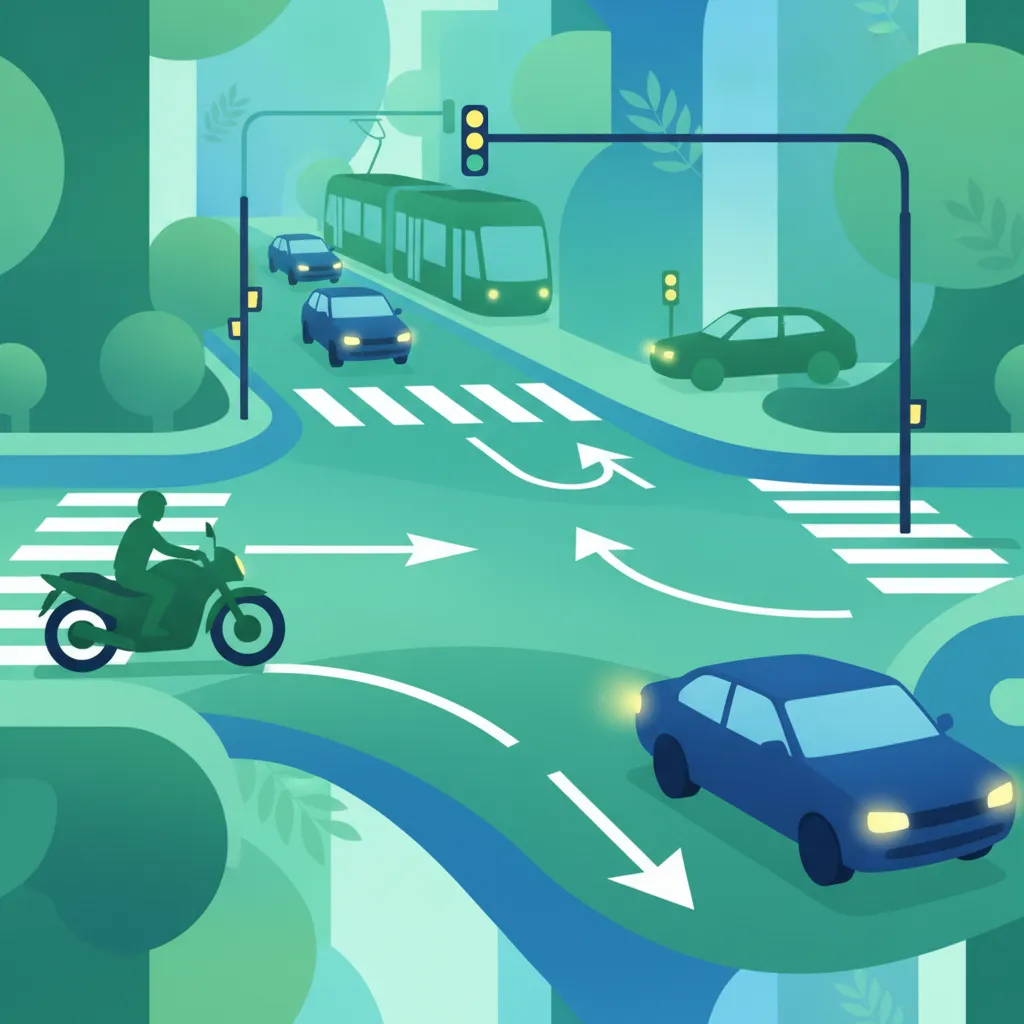
Lesson content overview
Understanding general priority rules is fundamental for every driver navigating Belgian roads, particularly for those preparing for the Belgian Category B driving licence theoretical exam. These rules establish a clear framework for determining which vehicle has the right-of-way, preventing collisions, and ensuring smooth traffic flow. This comprehensive lesson will delve into the foundational principles of traffic priority, including the critical concept of "priority from the right," the overriding authority of traffic signs and signals, and specific obligations to yield or stop. Mastering these principles is not just a legal requirement but a crucial aspect of safe and responsible driving.
Traffic priority rules are the backbone of an organized and safe road network. Without them, every intersection and merging point would become a chaotic free-for-all, leading to constant conflict and accidents. In Belgium, these rules are designed to minimize uncertainty, reduce the cognitive load on drivers, and create predictable traffic patterns. They dictate who must give way and who may proceed, ensuring that even in complex situations, there is a clear legal guideline for drivers to follow. This predictability is vital for all road users, from pedestrians to heavy goods vehicles.
The principle of priority from the right is a cornerstone of Belgian traffic law and applies widely at uncontrolled intersections. It is the default rule when no other signs or signals are present to indicate priority.
At any intersection or crossroads without traffic signs, signals, or road markings indicating otherwise, drivers must give way to vehicles approaching from their immediate right.
This means if two vehicles arrive at an uncontrolled intersection at roughly the same time, the vehicle approaching from the left of the other vehicle must yield. The vehicle on the right has the right to proceed first. This rule is designed to be simple and universally applicable, ensuring that drivers always know who has priority in the absence of explicit instructions.
Practical Application: Imagine a simple four-way intersection with no signs, traffic lights, or road markings. If you are approaching from the south, and another car is approaching from the east, that car is on your right-hand side. Therefore, you must yield to the car from the east, allowing it to proceed first.
This fundamental rule applies specifically at:
Drivers often make critical errors when applying this rule:
Always assume "priority from the right" unless explicitly overridden by traffic signs, signals, or road markings. Never guess based on the appearance of the road.
While priority from the right is a crucial default rule, it is often superseded by more specific instructions given by traffic signals and signs. This establishes a clear hierarchy of control on the road.
Understanding this hierarchy is vital. For example, a red traffic light means you must stop, even if you are on a priority road or if there's no traffic approaching from your right.
One of the most common signs that explicitly dictates priority is the Yield sign. It directly overrides the principle of priority from the right.
When you encounter a Yield sign (sign B1), you are explicitly instructed to give way to all traffic on the intersecting road. This means:
The Stop sign is an even more stringent instruction than the Yield sign, demanding a complete halt before proceeding.
Upon seeing a Stop sign (sign B5), your actions are clearly defined:
A common violation is the "rolling stop," where a driver merely slows down significantly without coming to a complete halt. This is illegal and extremely dangerous, as it reduces the time available to properly assess traffic conditions and react to hazards. A rolling stop can lead to fines and points on a license, but more importantly, it greatly increases the risk of a collision.
Certain roads are designated as priority roads, indicating that traffic on these routes has precedence over traffic entering or crossing from intersecting roads.
When driving on a priority road (indicated by sign B9):
If you are approaching a priority road from a side road, you will typically encounter either a Yield sign (B1) or a Stop sign (B5), instructing you to give way to traffic on the priority road.
The End of Priority Road sign (B11) informs drivers that the priority status of the road has ceased. After this sign, standard priority rules (such as priority from the right) will apply again unless new signs or signals indicate otherwise.
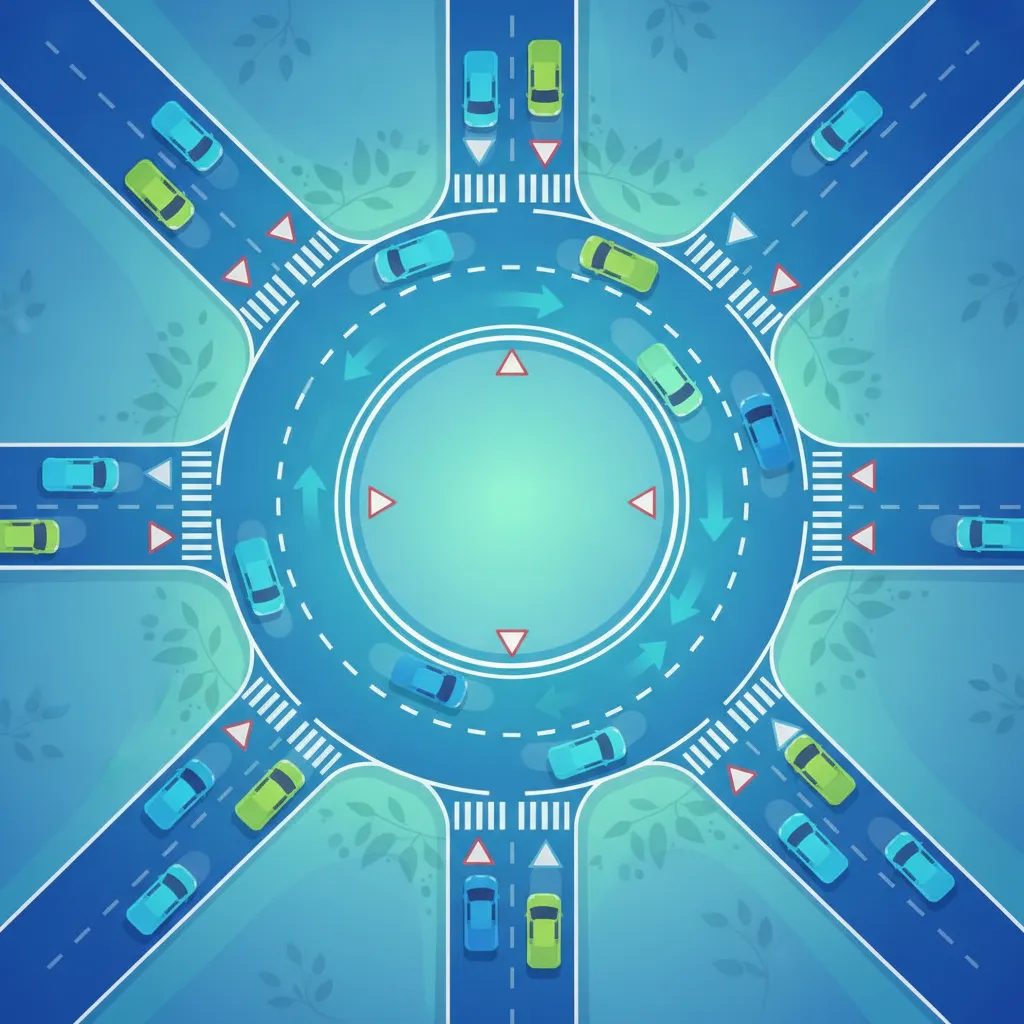
Roundabouts are designed to improve traffic flow and safety at intersections by allowing traffic to circulate continuously. However, specific priority rules apply.
In Belgium, the default rule for roundabouts is that drivers entering the roundabout must yield to traffic already circulating within it.
While the rules are clear, their application requires constant vigilance and adaptation to changing conditions:
The system of priority rules in Belgium is meticulously designed for safety and efficiency:
Mastering the general priority rules is essential for safe, lawful, and confident driving on Belgian roads.
By diligently applying these principles and maintaining constant situational awareness, drivers contribute to a safer environment for themselves and all other road users.
This lesson covers the fundamental priority rules that govern Belgian traffic, with priority from the right being the default rule at uncontrolled intersections when no other signs or signals are present. The lesson establishes a clear hierarchy of traffic control where police directives, traffic lights, traffic signs, and road markings all take precedence over general priority rules in descending order. Key signs covered include the Yield sign (B1), Stop sign (B5), and Priority road sign (B9), each with specific legal obligations for drivers. The lesson also addresses roundabouts, where entering traffic must always yield to vehicles already circulating, and emphasizes that safety and constant situational awareness remain essential even when technically having priority.
A short set of high-value points that capture the most important learning from this lesson.
Priority from the right (Voorrang van Rechts) is the default rule at uncontrolled intersections, meaning you must yield to vehicles approaching from your immediate right when no signs or signals are present
The hierarchy of traffic control overrides all general rules: police directives take priority over everything, then traffic lights, then traffic signs, then road markings, with general priority rules applying last
Yield signs (B1) require you to give way to ALL traffic on the intersecting road, not just from one direction, and you must slow down and be prepared to stop
Stop signs (B5) legally require a complete halt with all wheels stopped, not merely slowing down, before proceeding when safe
Priority roads (B9) give you right-of-way over intersecting traffic, but you must still obey traffic lights and remain vigilant for drivers who may not yield
Explore all units and lessons included in this driving theory course.
Never assume priority based on road size or appearance; if there are no signs, priority from the right applies regardless of whether a road looks more important
A rolling stop at a Stop sign is illegal in Belgium and just as dangerous as failing to yield at all
At roundabouts, you must yield to ALL traffic already circulating within the roundabout before entering
Emergency vehicles with blue lights and sirens always have absolute priority regardless of any other signs or signals
Vulnerable road users such as pedestrians and cyclists require extra caution even if you technically have priority
Assuming a wider or busier-looking road has automatic priority without checking for priority signs or signals
Treating a Yield sign (B1) as merely a suggestion to slow down rather than a legal obligation to give way
Entering a roundabout without yielding to circulating traffic because drivers are focused on vehicles waiting at other entries
Failing to make a complete stop at Stop signs, instead performing a rolling stop which is illegal
Yielding only to traffic from the left or right individually at a Yield sign, forgetting the obligation to yield to ALL traffic on the intersecting road
Lesson content overview
A short set of high-value points that capture the most important learning from this lesson.
Priority from the right (Voorrang van Rechts) is the default rule at uncontrolled intersections, meaning you must yield to vehicles approaching from your immediate right when no signs or signals are present
The hierarchy of traffic control overrides all general rules: police directives take priority over everything, then traffic lights, then traffic signs, then road markings, with general priority rules applying last
Yield signs (B1) require you to give way to ALL traffic on the intersecting road, not just from one direction, and you must slow down and be prepared to stop
Stop signs (B5) legally require a complete halt with all wheels stopped, not merely slowing down, before proceeding when safe
Priority roads (B9) give you right-of-way over intersecting traffic, but you must still obey traffic lights and remain vigilant for drivers who may not yield
Explore all units and lessons included in this driving theory course.
Never assume priority based on road size or appearance; if there are no signs, priority from the right applies regardless of whether a road looks more important
A rolling stop at a Stop sign is illegal in Belgium and just as dangerous as failing to yield at all
At roundabouts, you must yield to ALL traffic already circulating within the roundabout before entering
Emergency vehicles with blue lights and sirens always have absolute priority regardless of any other signs or signals
Vulnerable road users such as pedestrians and cyclists require extra caution even if you technically have priority
Assuming a wider or busier-looking road has automatic priority without checking for priority signs or signals
Treating a Yield sign (B1) as merely a suggestion to slow down rather than a legal obligation to give way
Entering a roundabout without yielding to circulating traffic because drivers are focused on vehicles waiting at other entries
Failing to make a complete stop at Stop signs, instead performing a rolling stop which is illegal
Yielding only to traffic from the left or right individually at a Yield sign, forgetting the obligation to yield to ALL traffic on the intersecting road
Explore search topics learners often look for when studying General Priority Rules. These topics reflect common questions about road rules, driving situations, safety guidance, and lesson level theory preparation for learners in Belgium.
Browse additional driving theory lessons that cover connected traffic rules, road signs, and common driving situations related to this topic. Improve your understanding of how different rules interact across everyday traffic scenarios.
Explore situations where the standard 'priority from the right' rule does not apply in Belgium. Understand special cases for priority roads, roundabouts, and specific traffic signs that override default rules. Essential for safe navigation.
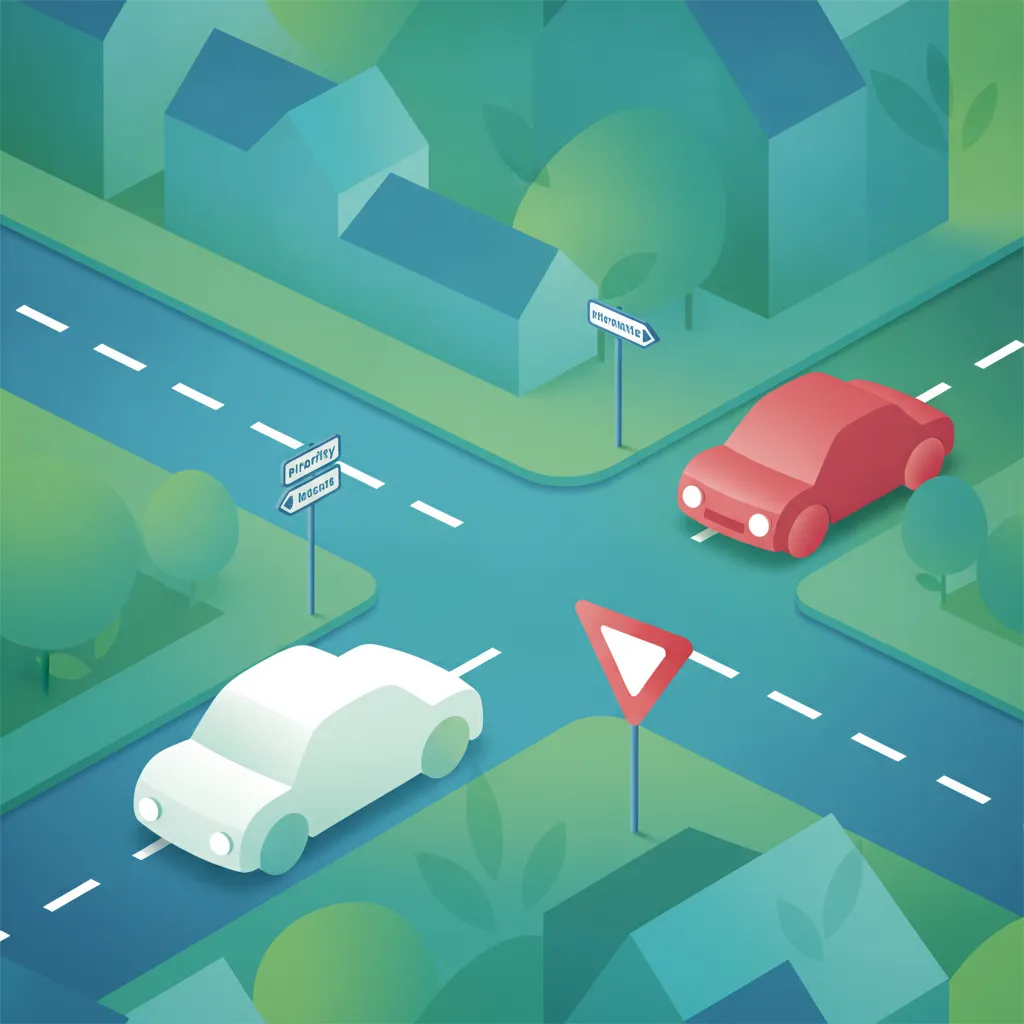
This lesson focuses on the distinction between the default priority from the right and designated priority roads, explaining how drivers should yield or proceed. Learners will discover the specific signs that indicate a priority road and when that priority ends. Understanding these concepts is essential for predictable and safe road use at intersections.
This lesson delves into the complex priority rules that govern Belgian roadways, with a strong focus on the default 'priority from the right' principle. It explains how to interpret priority signs, such as 'give way' and 'stop', and apply the correct right-of-way at various types of junctions. You will learn the hierarchy of road users and the specific rules for yielding in different traffic scenarios.
This lesson introduces the core principles of priority that govern traffic flow in Belgium, with a primary focus on the 'priority from the right' rule. It explains how to identify priority roads indicated by signs and how to act at uncontrolled intersections where the default rule applies. Understanding these rules is critical for AM riders to navigate junctions, intersections, and roundabouts safely and without conflict.
This lesson details the safe and systematic approach to different types of intersections, both signal-controlled and uncontrolled. It explains how to use road signs and markings to determine right-of-way and when to stop or yield. The importance of comprehensive scanning for traffic from all directions and adjusting approach speed is emphasized to ensure safe passage.

This lesson provides detailed guidance on navigating various intersections, focusing on yielding behaviors at give way signs and mandatory stops at stop signs. Learners will explore how traffic lights override other priority rules and the importance of granting right-of-way to pedestrians and cyclists. The lesson emphasizes safe crossing procedures and correct yielding.

This lesson focuses on the rules governing pedestrian crossings, including marked zebra crossings and signal-controlled crossings. Special attention is given to school zones and residential areas where pedestrian activity is high. Learners will understand how to recognize and respect pedestrian priority in various crossing scenarios to ensure their safety.
This lesson provides a systematic approach to navigating intersections, emphasizing the importance of observation, speed control, and correct positioning. It reinforces the application of priority-from-the-right and other right-of-way rules in real-world junction scenarios. You will learn effective visual scanning techniques to anticipate the actions of other road users and ensure a safe passage.

This lesson details the specific rights and responsibilities of motorcyclists within the Belgian road system, focusing on the correct application of priority rules and safe overtaking. It covers the legal requirements for signaling intentions and adhering to proper road etiquette to ensure smooth traffic flow. The content emphasizes how riders must balance their rights with their safety obligations toward all other road users.
Roundabouts are a key feature of Belgian traffic management. This lesson explains how to approach, enter, navigate, and exit a roundabout safely, with a focus on yielding priority to traffic already circulating. Learners will also study correct lane positioning on multi-lane roundabouts and the appropriate use of signals.
Understand Belgian priority rules through real-world driving scenarios. Learn to identify priority from the right, yield situations, and correct right-of-way application at intersections and roundabouts with practical examples.
This lesson focuses on the distinction between the default priority from the right and designated priority roads, explaining how drivers should yield or proceed. Learners will discover the specific signs that indicate a priority road and when that priority ends. Understanding these concepts is essential for predictable and safe road use at intersections.
This lesson delves into the complex priority rules that govern Belgian roadways, with a strong focus on the default 'priority from the right' principle. It explains how to interpret priority signs, such as 'give way' and 'stop', and apply the correct right-of-way at various types of junctions. You will learn the hierarchy of road users and the specific rules for yielding in different traffic scenarios.
This lesson introduces the core principles of priority that govern traffic flow in Belgium, with a primary focus on the 'priority from the right' rule. It explains how to identify priority roads indicated by signs and how to act at uncontrolled intersections where the default rule applies. Understanding these rules is critical for AM riders to navigate junctions, intersections, and roundabouts safely and without conflict.
This lesson provides detailed guidance on navigating various intersections, focusing on yielding behaviors at give way signs and mandatory stops at stop signs. Learners will explore how traffic lights override other priority rules and the importance of granting right-of-way to pedestrians and cyclists. The lesson emphasizes safe crossing procedures and correct yielding.
This lesson details the safe and systematic approach to different types of intersections, both signal-controlled and uncontrolled. It explains how to use road signs and markings to determine right-of-way and when to stop or yield. The importance of comprehensive scanning for traffic from all directions and adjusting approach speed is emphasized to ensure safe passage.
This lesson provides a systematic approach to navigating intersections, emphasizing the importance of observation, speed control, and correct positioning. It reinforces the application of priority-from-the-right and other right-of-way rules in real-world junction scenarios. You will learn effective visual scanning techniques to anticipate the actions of other road users and ensure a safe passage.
Roundabouts are a key feature of Belgian traffic management. This lesson explains how to approach, enter, navigate, and exit a roundabout safely, with a focus on yielding priority to traffic already circulating. Learners will also study correct lane positioning on multi-lane roundabouts and the appropriate use of signals.
This lesson focuses on the rules governing pedestrian crossings, including marked zebra crossings and signal-controlled crossings. Special attention is given to school zones and residential areas where pedestrian activity is high. Learners will understand how to recognize and respect pedestrian priority in various crossing scenarios to ensure their safety.
This lesson provides specific instructions for navigating roundabouts, a common feature on Belgian roads. It covers the rules of priority upon entry, the correct lane choice based on the intended exit, and the proper use of signals. Learners will understand how to safely circulate and exit, while being mindful of other vehicles, particularly larger ones with significant blind spots.
This lesson covers the specific challenges of driving on motorways, rural roads, and navigating roadworks. Learners will review lane discipline on high-speed roads and identify hazards common to rural roads, such as sharp bends and wildlife. It also explains the importance of adjusting speed and following temporary signage in construction zones.
Find clear answers to common questions learners have about General Priority Rules. Learn how the lesson is structured, which driving theory objectives it supports, and how it fits into the overall learning path of units and curriculum progression in Belgium. These explanations help you understand key concepts, lesson flow, and exam focused study goals.
It means that at an intersection where no signs or markings indicate otherwise, you must give way to drivers approaching from your right. This is a fundamental rule in Belgian traffic law and a common topic in the Category B theory exam.
No. Roundabouts in Belgium are typically controlled by specific signs like the 'give way' sign or traffic circles rules, where traffic already on the roundabout usually has priority. Always look for signs at the entry.
The instructions of a police officer always override all other signs, markings, and general priority rules. You must follow their signals immediately, even if they contradict permanent road signs.
You are on a priority road if you see the diamond-shaped yellow and white priority sign. This sign indicates that you have the right of way over cross-traffic until the next intersection or until an end-of-priority sign is displayed.
Ready to focus your Belgian driving theory revision? Utilize our powerful search tool to pinpoint exact topics, road signs, or difficulty levels. Engage with practice questions that directly address your learning needs and solidify your understanding of Belgian traffic laws for your upcoming exam.