This lesson guides you through the complexities of navigating intersections and applying correct yielding behaviors on Belgian roads. It builds on your knowledge of traffic signs and road markings, preparing you for critical questions on the official Belgian Category B theoretical exam.

Lesson content overview
Intersections are crucial points on any road network where traffic streams converge, cross, or diverge. Mastering their navigation is fundamental for any driver seeking a Belgian Category B Driving Licence, as incorrect yielding or stopping is a leading cause of traffic incidents. This lesson provides detailed guidance on understanding priority rules, interpreting road signs, and safely maneuvering through various types of intersections.
By understanding the hierarchy of traffic controls and the specific requirements of different signs and signals, you will develop the skills necessary to make safe and predictable decisions, contributing to orderly traffic flow and preventing collisions. This knowledge builds upon your understanding of basic road signs and traffic signals, preparing you for more complex scenarios such as roundabouts and interactions with vulnerable road users.
An intersection is any place where two or more roads meet or cross. These points are inherently complex due to the potential for conflicting vehicle movements. Without clear rules and predictable driver behavior, intersections would be chaotic and dangerous. The primary goal of intersection rules is to establish a clear "right-of-way," indicating which driver or road user has priority to proceed, thus minimizing confusion and the risk of accidents.
Effective navigation of intersections requires constant vigilance, accurate assessment of traffic situations, and a thorough understanding of Belgian traffic regulations. Your ability to correctly interpret signs, signals, and road markings, and to anticipate the actions of other road users, will directly impact your safety and the safety of those around you.
In Belgium, as in many other countries, there is a strict hierarchy of controls that dictates who has the right-of-way at an intersection. Understanding this hierarchy is paramount, as it determines which instruction to follow when multiple control devices might seem to apply. The general order of priority, from highest to lowest, is:
Adhering to this hierarchy is crucial for predictable and safe driving.
Traffic light signals are designed to manage complex intersections by assigning specific times for different traffic streams to proceed. When present and operational, traffic lights completely supersede any road signs (such as Stop or Give Way signs) that might also be present at the same intersection. This means that if a traffic light is green, you may proceed, even if there is a Stop sign on your approach; conversely, if the light is red, you must stop, even if your road is otherwise designated as a priority road.
Always scan for traffic lights first when approaching an intersection. If they are active, their instructions are binding, regardless of any other signs.
A Stop sign requires a mandatory and complete halt before proceeding. It is a control device designed for locations where visibility is often restricted or where merging into traffic requires absolute certainty of a clear path. Unlike a Give Way sign, a Stop sign demands that your vehicle comes to a full stop, no matter if there appears to be no cross-traffic.
The Give Way sign, often known as a Yield sign, indicates that drivers must allow other traffic, typically on the intersecting road, to pass before entering or crossing the intersection. This sign does not necessarily require a full stop if the path is clear, but it mandates slowing down significantly and being prepared to stop to grant priority to others.
The rule of priority from the right is the fundamental default rule in Belgian traffic law. At any uncontrolled intersection—an intersection without police officers, traffic lights, specific priority signs, or clear road markings dictating otherwise—drivers must give way to any vehicle approaching from their right-hand side. This rule ensures that there is always a default mechanism for determining right-of-way, preventing uncertainty in the absence of explicit instructions.
The Give Way sign is an inverted red-bordered white triangle. It is one of the most common signs you will encounter at intersections, particularly on minor roads merging into busier routes. Understanding its precise meaning and how to react to it is essential for safe driving.
When you encounter a Give Way sign, it signifies that you are approaching a junction where cross-traffic (or merging traffic) has priority over your vehicle. This does not always mean you must stop; rather, it means you must adjust your speed and be prepared to stop if necessary to allow other road users with priority to proceed safely. The primary responsibility is on you to ensure that your entry into the intersection does not impede or endanger anyone else.
The sign is often accompanied by a white triangular road marking painted on the road surface, reinforcing the yielding instruction. This marking indicates the precise point behind which you should be prepared to stop if necessary.
To properly navigate an intersection controlled by a Give Way sign, follow these steps:
A frequent mistake is performing a "rolling yield" or simply slowing down without truly assessing the traffic situation. This can lead to misjudging the speed of oncoming vehicles or failing to spot cyclists or pedestrians, potentially causing collisions. Another error is yielding only to vehicles and forgetting that pedestrians and cyclists at designated crossings also have priority.
Never assume the other driver will yield. Always verify the situation and proceed only when you are certain it is safe and clear.
The Stop sign is one of the most unambiguous and critical traffic signs. It is an octagonal red sign with the word "STOP" in white. Its presence mandates a full, complete halt of your vehicle.
A Stop sign indicates a location where you must come to a complete standstill before proceeding. These signs are placed at intersections with very limited visibility, at railway crossings, or at points where merging traffic requires maximum caution. The full stop is not optional; it is a legal requirement designed to provide you with ample time to thoroughly check for traffic in all directions, as well as for pedestrians and cyclists, before you move forward.
When a Stop sign is present, you must:
A common violation at Stop signs is the "rolling stop," where a driver slows down but does not bring the vehicle to a complete stop. This is illegal and dangerous, as it reduces the time available for thorough observation and assessment, increasing the risk of a collision. Always ensure your vehicle is stationary before proceeding. Even if the intersection appears empty, the mandatory stop ensures you take the time to confirm its emptiness.
Traffic light signals are electro-mechanical devices that use colored lights to control the flow of traffic at intersections. They are the highest authority in the absence of a police officer, making them critical to understand and obey precisely.
As previously stated, traffic light signals always take precedence over Stop signs, Give Way signs, and the priority from the right rule. If you are at an intersection with both a Stop sign and an active green traffic light, you should follow the green light and proceed. If the traffic light is red, you must stop, regardless of any other signs. This clear hierarchy prevents confusion and ensures smooth, controlled traffic movement.
Even when the light is green, always scan the intersection for unexpected hazards, such as vehicles running a red light or pedestrians crossing against the signal.
Approaching a traffic light requires anticipation. Observe the color of the light well in advance. If it has been green for a long time, be prepared for it to change. If it is red, use the opportunity to check your mirrors and prepare for a smooth start. When the light turns green, do not accelerate immediately; glance left and right to ensure the intersection is clear before proceeding. Be especially mindful of large vehicles that may need more time to clear the intersection.
The "priority from the right" rule is a cornerstone of Belgian traffic law, particularly at junctions not regulated by signs or signals. It is crucial to understand its application and limitations.
At any junction where there are no traffic lights, no specific priority road signs (like a Give Way or Stop sign for your direction, or a priority road sign for the intersecting road), and no police officer directing traffic, the rule of priority from the right applies. This means that a vehicle approaching from your right-hand side has the right-of-way, and you must yield to them.
This rule is designed to create a predictable system in the absence of explicit instructions. It places the responsibility on drivers to constantly assess traffic from their right.
Uncontrolled intersections are typically found in residential areas, rural roads, or older urban districts where traffic volume may not warrant complex signaling. You can identify them by the absence of:
If none of these are present, assume priority from the right applies.
While a fundamental rule, priority from the right has several important exceptions and conditions:
Understanding these exceptions is as vital as knowing the rule itself to prevent common intersection accidents.
Sometimes, you might encounter an intersection where multiple control devices are present simultaneously. For example, a junction might have both a Stop sign and a set of traffic lights. In such situations, it's critical to apply the hierarchy of controls correctly.
The presence of seemingly conflicting devices often arises from changes in traffic management, temporary roadworks, or specific design requirements. A common scenario is a permanent Stop or Give Way sign at an intersection that is also controlled by traffic lights. This is not a contradiction but an indication of what to do if the traffic lights are inactive or flashing amber.
The rule is clear: active traffic light signals always take precedence over road signs. If the traffic lights are operational (displaying red, amber, or green), you must obey the lights, irrespective of any Stop or Give Way signs present. These signs become relevant only if the traffic lights are out of order, switched off, or flashing amber. In such cases, the signs (or the default priority from the right) then dictate the right-of-way.
Adhering to intersection rules is not just about safety; it's a legal obligation for all drivers holding a Belgian Category B Driving Licence. Violations carry significant penalties and are a common cause of theoretical exam failures and real-world accidents.
Violations of intersection rules, such as failing to stop at a Stop sign, not yielding at a Give Way sign, or running a red light, are considered serious offenses in Belgium. They can result in substantial fines, immediate driving bans, and the loss of points on a future points-based license system. Furthermore, causing an accident due to such a violation can lead to more severe legal consequences, including criminal charges.
Intersections are high-risk areas, and certain mistakes are frequently observed. Being aware of these common pitfalls can help you avoid them.
Driving is dynamic, and your approach to intersections must adapt to changing conditions. Factors like weather, lighting, and the presence of vulnerable users demand increased vigilance and altered driving behavior.
In adverse conditions or when vulnerable users are present, always err on the side of caution. It is better to yield unnecessarily than to cause an accident.
Applying theoretical knowledge to real-world driving situations is crucial. Here are a few common scenarios you might encounter:
Mastering the navigation of intersections is a cornerstone of safe driving and a critical component of the Belgian Category B Driving Licence theory program. By consistently applying the hierarchy of controls—obeying police directions first, then traffic lights, followed by road signs, and finally the default priority from the right rule—you ensure predictable and safe interactions with other road users.
Always approach intersections with vigilance, reduce your speed, and be prepared to stop or yield. Pay particular attention to vulnerable road users, and adjust your driving for changing weather and road conditions. By internalizing these rules and maintaining a proactive, cautious attitude, you will contribute significantly to your own safety and the smooth flow of traffic on Belgian roads.
This lesson covers the essential rules for navigating intersections in Belgium, starting with the strict hierarchy where police officers, then traffic lights, then road signs, and finally the default priority from the right dictate right-of-way. Stop signs require a complete mandatory halt, while Give Way signs require slowing and yielding without necessarily stopping if the path is clear. The priority from the right rule is the fundamental default when no explicit control device is present, but it is overridden by any active traffic lights, signs, or police directions. Understanding these rules, properly identifying uncontrolled intersections, and always yielding to vulnerable road users are critical for both passing the theory exam and safe real-world driving.
A short set of high-value points that capture the most important learning from this lesson.
The hierarchy of traffic controls follows a strict order: police officer directions, then traffic lights, then road signs, then road markings, and finally priority from the right as the default rule
Active traffic light signals always override Stop and Give Way signs at the same intersection
A Stop sign requires a complete mandatory halt, while a Give Way sign requires slowing and being prepared to stop without necessarily stopping if the path is clear
Pedestrians at marked crossings and cyclists on their designated paths must always be yielded to, regardless of other signs or signals
At uncontrolled intersections with no signs, signals, or markings, the priority from the right rule applies as the default mechanism for determining right-of-way
Explore all units and lessons included in this driving theory course.
Stop signs (B5) demand a full, complete stop with wheels stationary; a rolling stop is illegal and dangerous
Before proceeding through any intersection, apply the 'look left, right, left' technique to scan for traffic from all directions including vehicles, cyclists, and pedestrians
When encountering both a Stop sign and active traffic lights, follow the traffic lights as they take precedence when active
Priority from the right means yielding to vehicles approaching from your right at any uncontrolled intersection
Trams and emergency vehicles with flashing lights and sirens always have priority regardless of other signs or signals
Performing a rolling stop at a Stop sign instead of bringing the vehicle to a complete halt, which reduces observation time and is illegal
Assuming that a green traffic light guarantees safe passage without checking for hazards such as vehicles running red lights or pedestrians
Failing to check for traffic approaching from the right at uncontrolled intersections because drivers incorrectly assume their road has priority
Misinterpreting mixed controls by following a Stop or Give Way sign when active traffic lights are present and override those signs
Forgetting to yield to pedestrians at marked crossings even when the driver has a technically valid right-of-way over vehicles
Lesson content overview
A short set of high-value points that capture the most important learning from this lesson.
The hierarchy of traffic controls follows a strict order: police officer directions, then traffic lights, then road signs, then road markings, and finally priority from the right as the default rule
Active traffic light signals always override Stop and Give Way signs at the same intersection
A Stop sign requires a complete mandatory halt, while a Give Way sign requires slowing and being prepared to stop without necessarily stopping if the path is clear
Pedestrians at marked crossings and cyclists on their designated paths must always be yielded to, regardless of other signs or signals
At uncontrolled intersections with no signs, signals, or markings, the priority from the right rule applies as the default mechanism for determining right-of-way
Explore all units and lessons included in this driving theory course.
Stop signs (B5) demand a full, complete stop with wheels stationary; a rolling stop is illegal and dangerous
Before proceeding through any intersection, apply the 'look left, right, left' technique to scan for traffic from all directions including vehicles, cyclists, and pedestrians
When encountering both a Stop sign and active traffic lights, follow the traffic lights as they take precedence when active
Priority from the right means yielding to vehicles approaching from your right at any uncontrolled intersection
Trams and emergency vehicles with flashing lights and sirens always have priority regardless of other signs or signals
Performing a rolling stop at a Stop sign instead of bringing the vehicle to a complete halt, which reduces observation time and is illegal
Assuming that a green traffic light guarantees safe passage without checking for hazards such as vehicles running red lights or pedestrians
Failing to check for traffic approaching from the right at uncontrolled intersections because drivers incorrectly assume their road has priority
Misinterpreting mixed controls by following a Stop or Give Way sign when active traffic lights are present and override those signs
Forgetting to yield to pedestrians at marked crossings even when the driver has a technically valid right-of-way over vehicles
Explore search topics learners often look for when studying Intersections and Yielding. These topics reflect common questions about road rules, driving situations, safety guidance, and lesson level theory preparation for learners in Belgium.
Browse additional driving theory lessons that cover connected traffic rules, road signs, and common driving situations related to this topic. Improve your understanding of how different rules interact across everyday traffic scenarios.
Explore common and specific exceptions to standard priority rules at intersections in Belgium. Learn when priority from the right, traffic lights, or signs are overridden by special circumstances or vehicle types for safer driving theory.
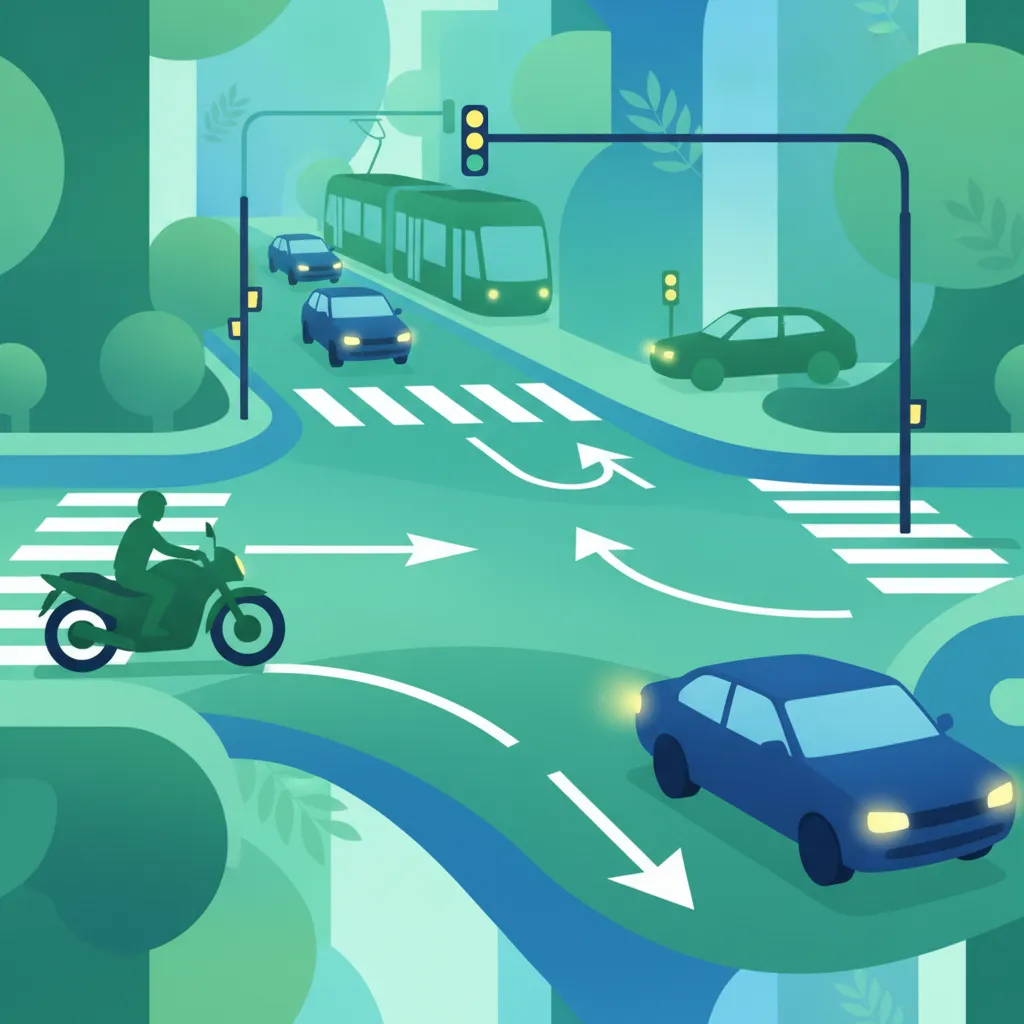
In this lesson, learners will examine the fundamental priority rules that dictate traffic flow at unmarked intersections. The lesson focuses on the principle of priority from the right, the hierarchy of traffic signs and signals, and situations requiring yielding or stopping. Understanding these principles is crucial for safe and lawful navigation of Belgian road networks.
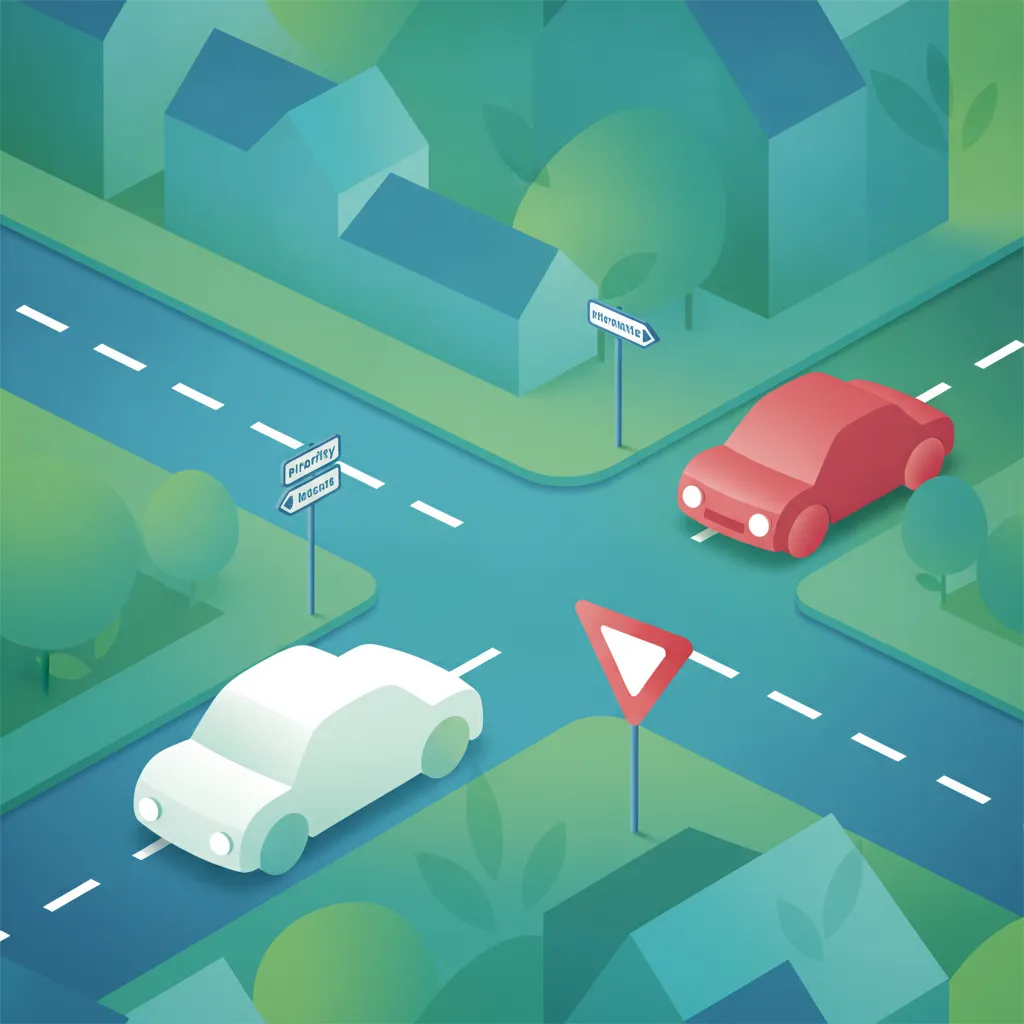
This lesson focuses on the distinction between the default priority from the right and designated priority roads, explaining how drivers should yield or proceed. Learners will discover the specific signs that indicate a priority road and when that priority ends. Understanding these concepts is essential for predictable and safe road use at intersections.
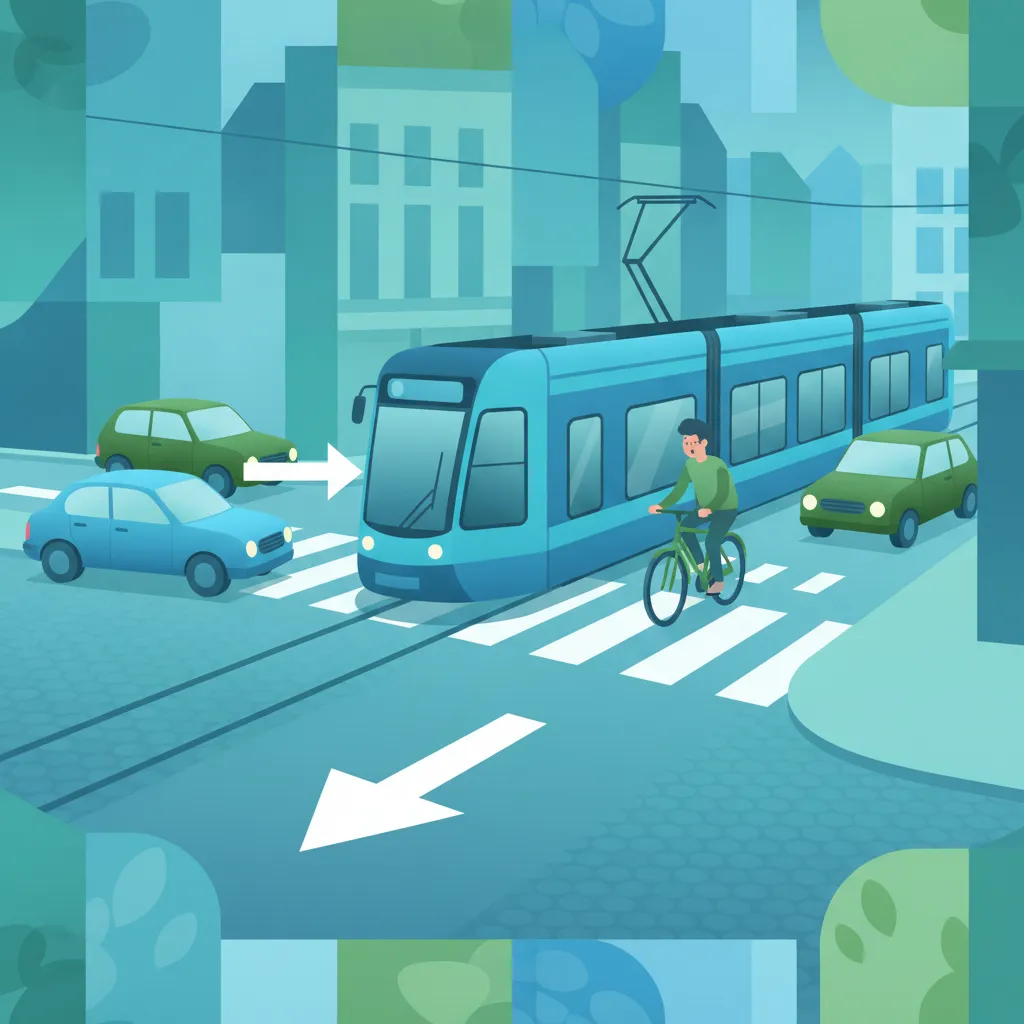
This lesson delves into the complex priority rules that govern Belgian roadways, with a strong focus on the default 'priority from the right' principle. It explains how to interpret priority signs, such as 'give way' and 'stop', and apply the correct right-of-way at various types of junctions. You will learn the hierarchy of road users and the specific rules for yielding in different traffic scenarios.
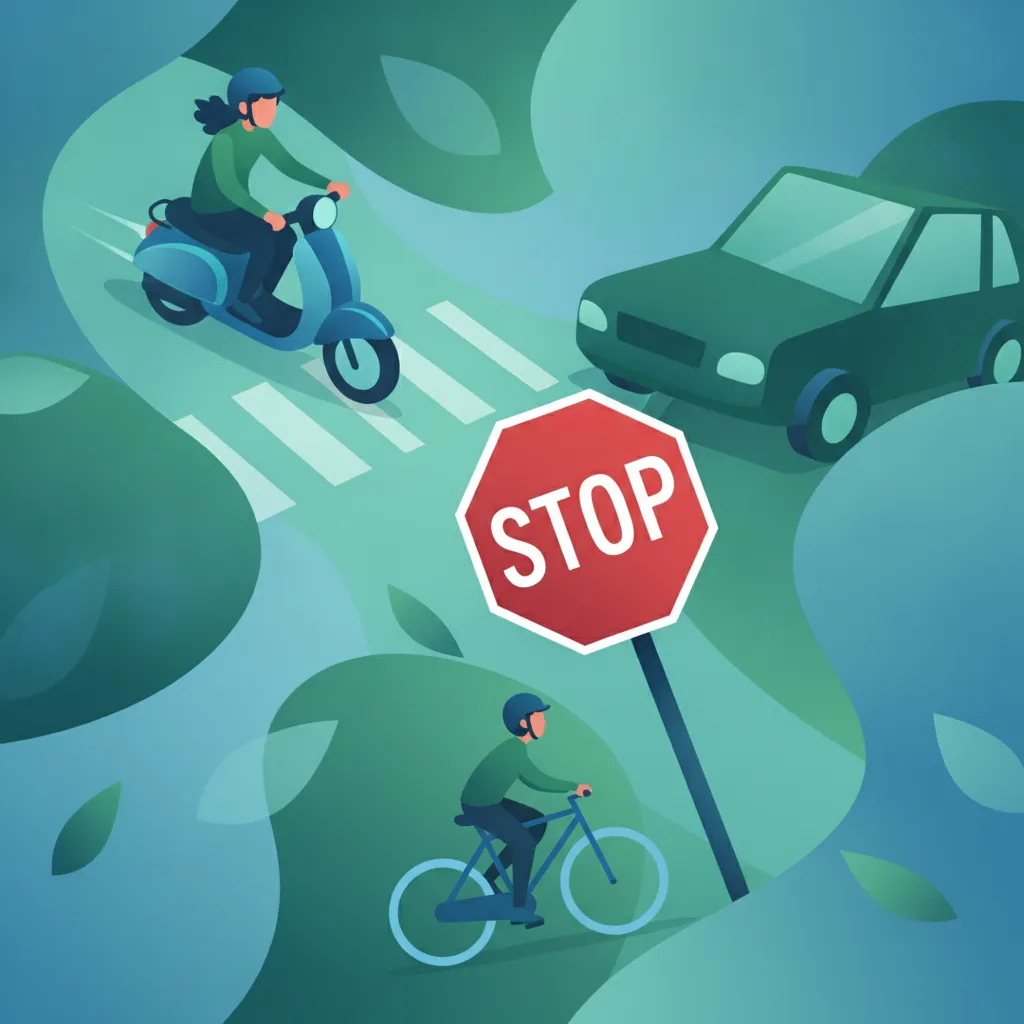
This lesson introduces the core principles of priority that govern traffic flow in Belgium, with a primary focus on the 'priority from the right' rule. It explains how to identify priority roads indicated by signs and how to act at uncontrolled intersections where the default rule applies. Understanding these rules is critical for AM riders to navigate junctions, intersections, and roundabouts safely and without conflict.

This lesson focuses on the rules governing pedestrian crossings, including marked zebra crossings and signal-controlled crossings. Special attention is given to school zones and residential areas where pedestrian activity is high. Learners will understand how to recognize and respect pedestrian priority in various crossing scenarios to ensure their safety.
This lesson details the safe and systematic approach to different types of intersections, both signal-controlled and uncontrolled. It explains how to use road signs and markings to determine right-of-way and when to stop or yield. The importance of comprehensive scanning for traffic from all directions and adjusting approach speed is emphasized to ensure safe passage.
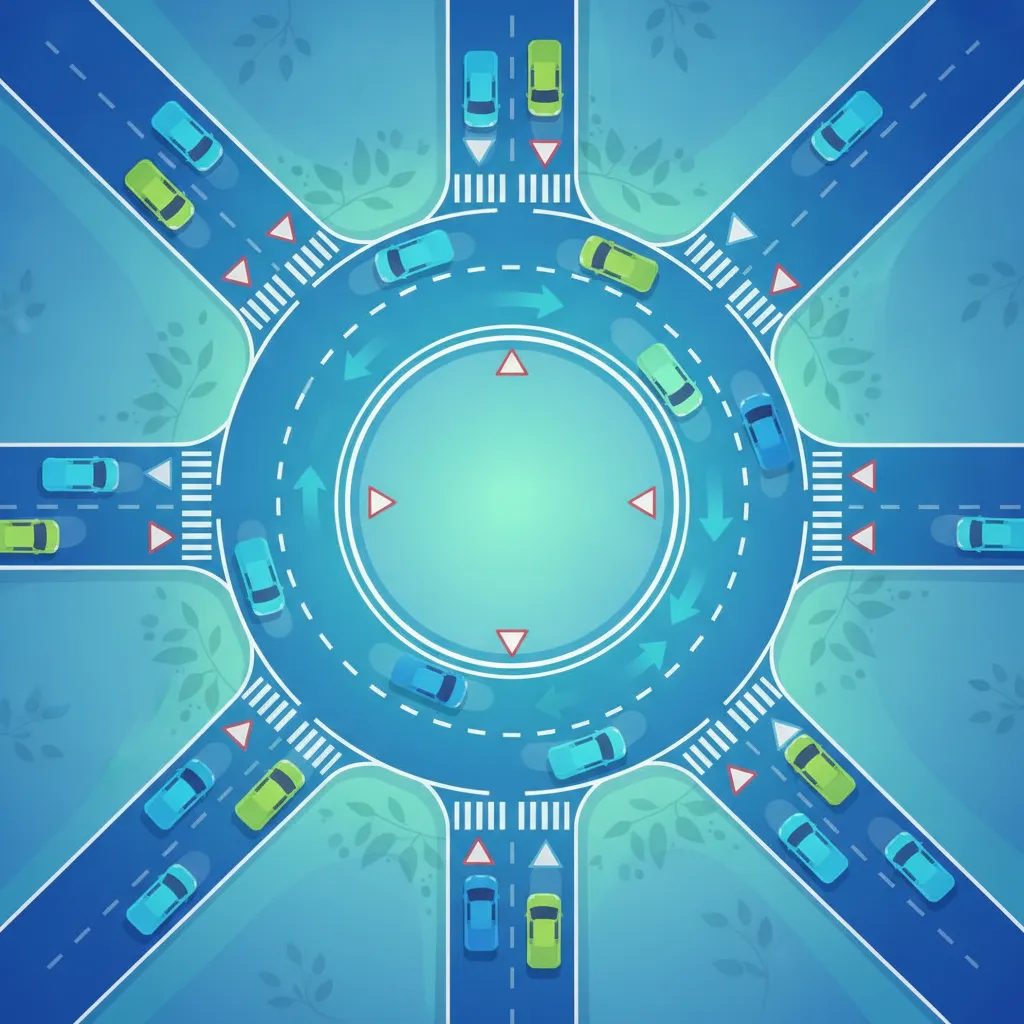
Roundabouts are a key feature of Belgian traffic management. This lesson explains how to approach, enter, navigate, and exit a roundabout safely, with a focus on yielding priority to traffic already circulating. Learners will also study correct lane positioning on multi-lane roundabouts and the appropriate use of signals.
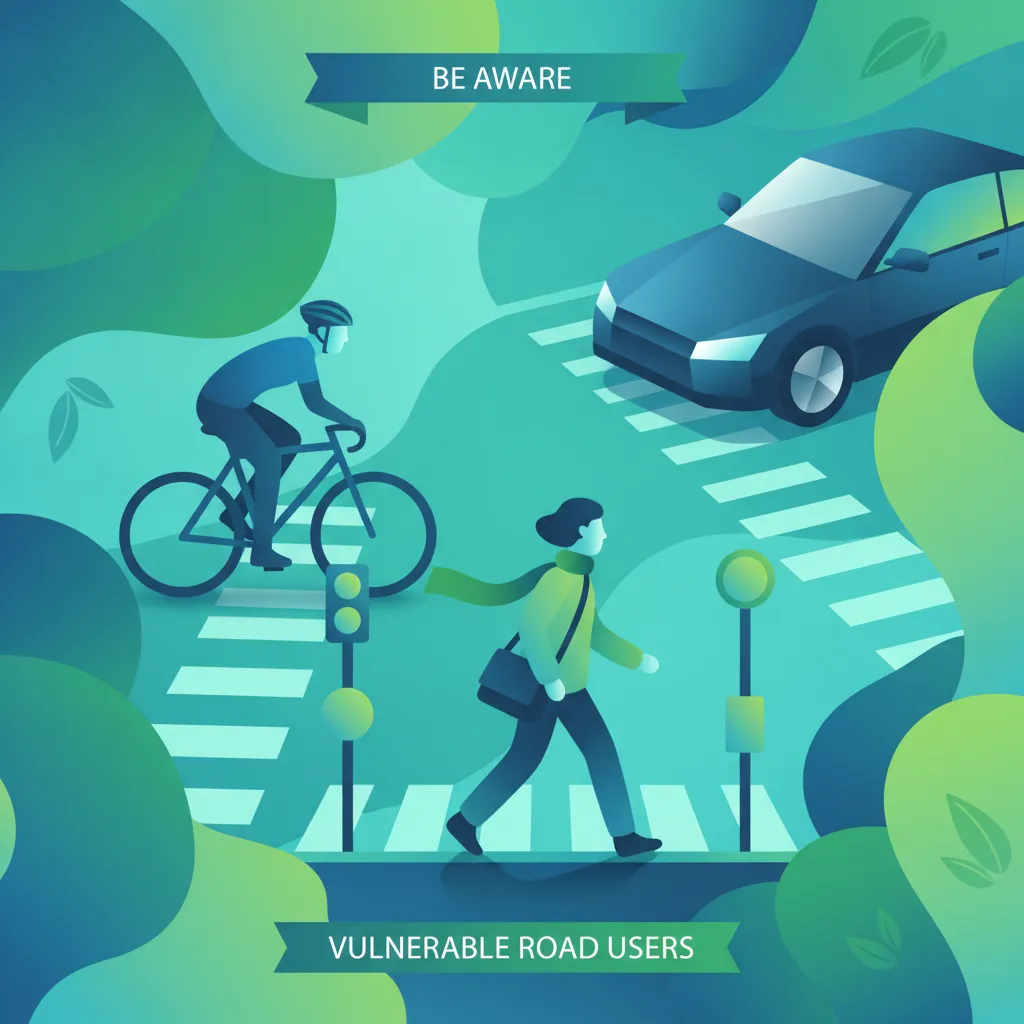
This lesson provides a systematic approach to navigating intersections, emphasizing the importance of observation, speed control, and correct positioning. It reinforces the application of priority-from-the-right and other right-of-way rules in real-world junction scenarios. You will learn effective visual scanning techniques to anticipate the actions of other road users and ensure a safe passage.
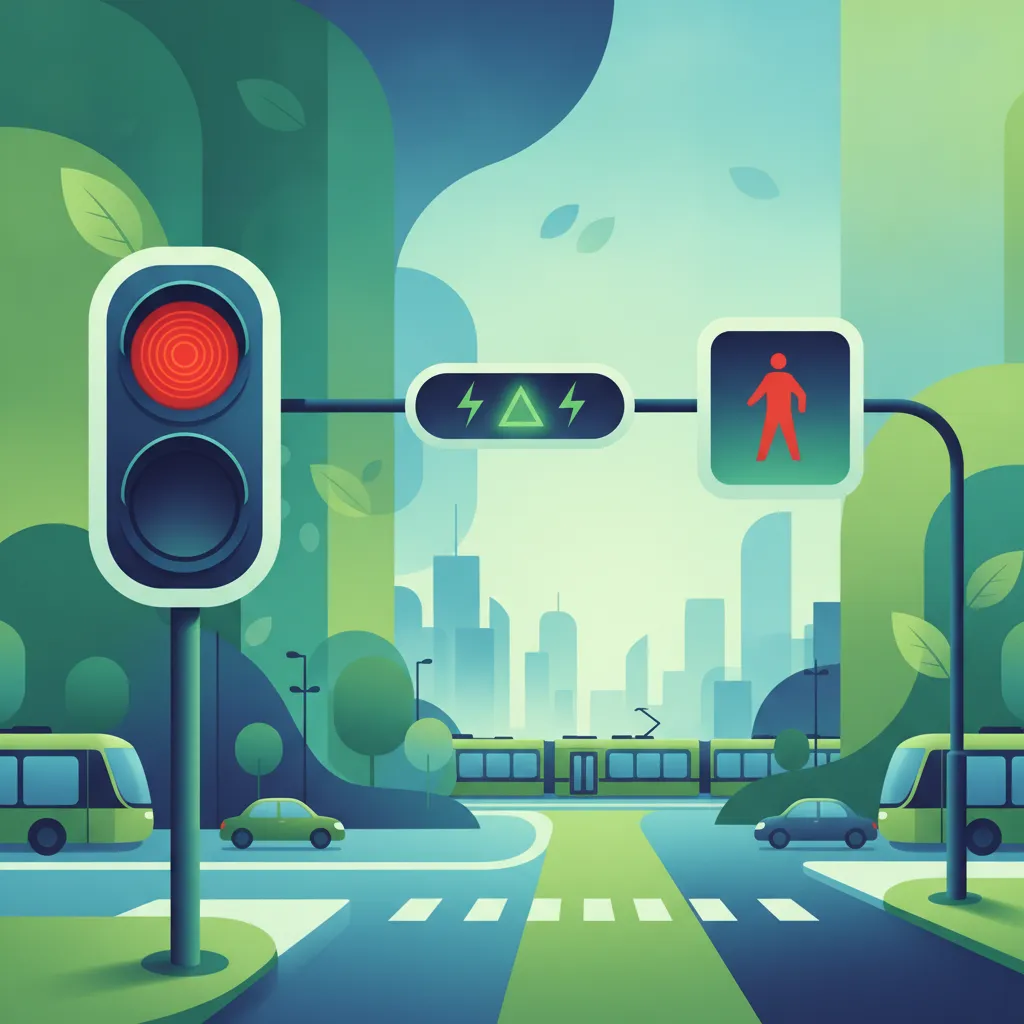
This lesson examines the operation of traffic light systems in Belgium, clarifying the meaning of red, amber, and green signals, including flashing lights and directional arrows. It details a motorcyclist's legal obligations when approaching and navigating signal-controlled intersections. The content also addresses specialized signals for pedestrians and trams that riders must recognize and respond to correctly.

Overtaking safely is a critical driving skill. This lesson explains where and how overtaking is permitted in Belgium, the importance of correct signaling, and maintaining a sufficient speed differential. Learners will understand the rules for passing on motorways and single-carriageway roads, and how to identify zones where overtaking is prohibited.
This lesson explains how to safely navigate more challenging intersections and complex road layouts. It covers multi-lane junctions, unusual configurations, and specific Belgian traffic conventions for urban and rural environments, building on basic yielding principles.
This lesson covers the specific challenges of driving on motorways, rural roads, and navigating roadworks. Learners will review lane discipline on high-speed roads and identify hazards common to rural roads, such as sharp bends and wildlife. It also explains the importance of adjusting speed and following temporary signage in construction zones.
Roundabouts are a key feature of Belgian traffic management. This lesson explains how to approach, enter, navigate, and exit a roundabout safely, with a focus on yielding priority to traffic already circulating. Learners will also study correct lane positioning on multi-lane roundabouts and the appropriate use of signals.
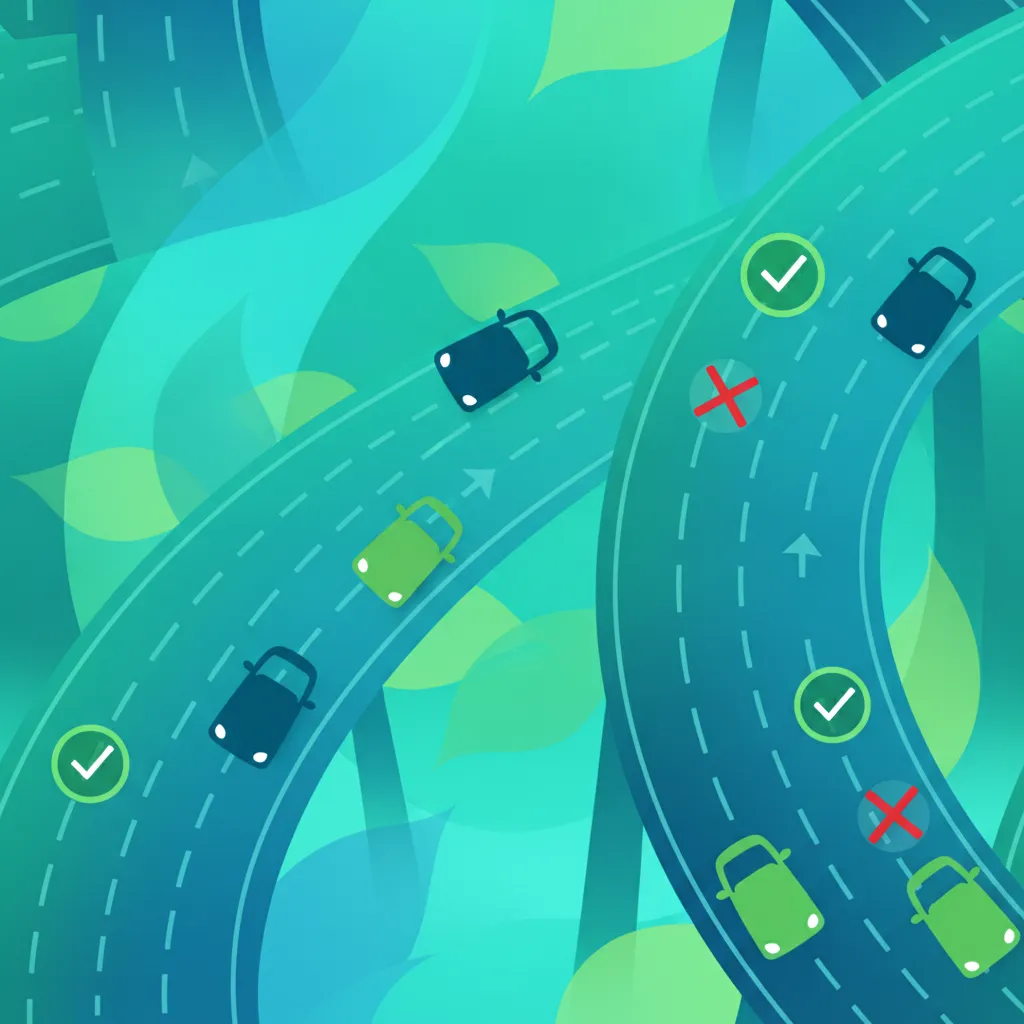
The focus of this lesson is on maintaining proper lane discipline, especially on motorways and other high-speed roads. Learners will explore the rules for changing lanes, overtaking, and positioning in the correct lane based on speed and traffic flow. Emphasis is placed on safe merging techniques and adherence to all lane markings for fluid traffic movement.
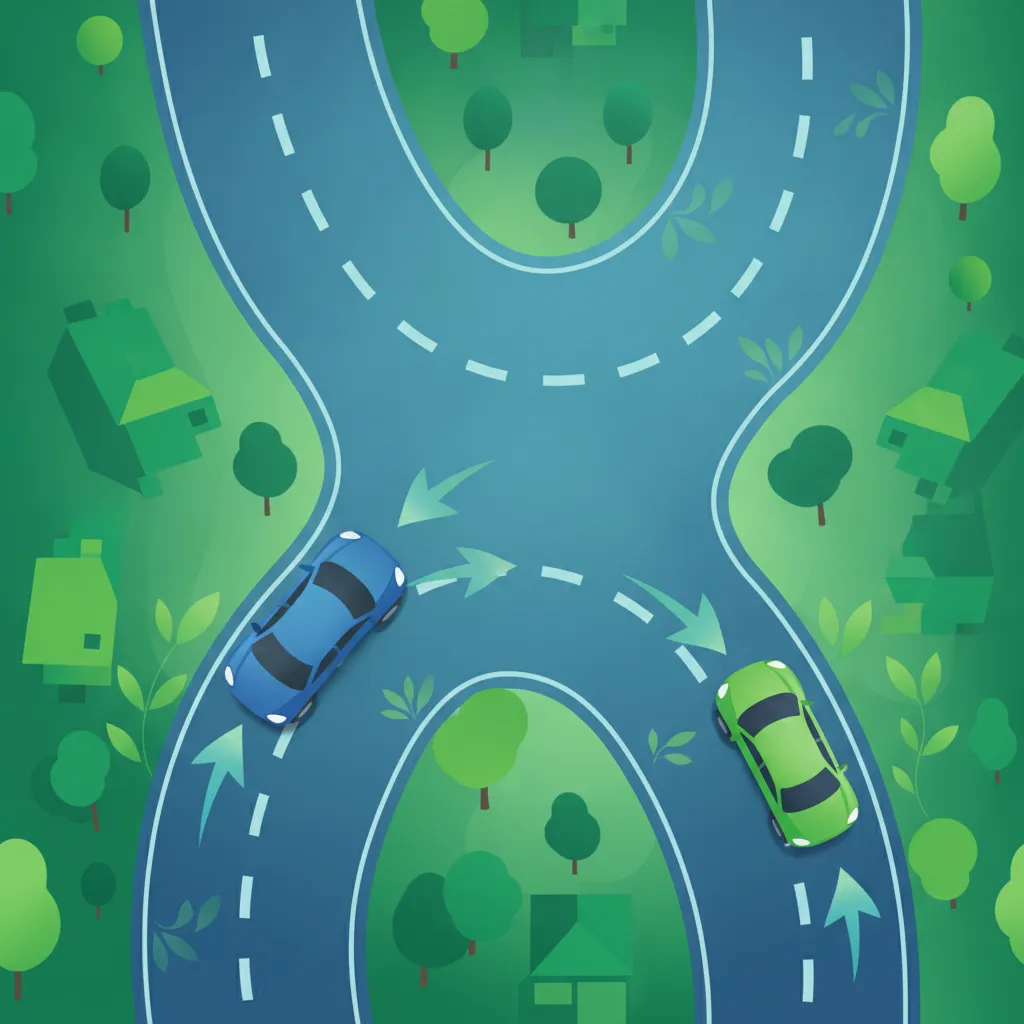
This lesson focuses on basic manoeuvres, covering the proper use of indicators, safe lane positioning, and correct steering for turns. Learners will study the importance of checking blind spots and maintaining appropriate speed for a smooth transition when changing lanes. It also addresses turning at intersections and signaling intentions clearly to other road users.
This lesson provides specific instructions for navigating roundabouts, a common feature on Belgian roads. It covers the rules of priority upon entry, the correct lane choice based on the intended exit, and the proper use of signals. Learners will understand how to safely circulate and exit, while being mindful of other vehicles, particularly larger ones with significant blind spots.
Directional symbols and arrows painted on the road surface guide drivers on permitted lane movements and turning directions. This lesson explains the interpretation of these arrows, covering rules for one-way streets, mandatory turns, and lane-specific instructions. Learners will understand how to comply with these symbols to navigate complex intersections safely and efficiently.
Overtaking safely is a critical driving skill. This lesson explains where and how overtaking is permitted in Belgium, the importance of correct signaling, and maintaining a sufficient speed differential. Learners will understand the rules for passing on motorways and single-carriageway roads, and how to identify zones where overtaking is prohibited.
This lesson provides a systematic approach to navigating intersections, emphasizing the importance of observation, speed control, and correct positioning. It reinforces the application of priority-from-the-right and other right-of-way rules in real-world junction scenarios. You will learn effective visual scanning techniques to anticipate the actions of other road users and ensure a safe passage.
This lesson examines the operation of traffic light systems in Belgium, clarifying the meaning of red, amber, and green signals, including flashing lights and directional arrows. It details a motorcyclist's legal obligations when approaching and navigating signal-controlled intersections. The content also addresses specialized signals for pedestrians and trams that riders must recognize and respond to correctly.
Merging onto motorways requires understanding the dynamics of fast-moving traffic. This lesson covers the correct use of entrance ramps, acceleration lanes, and the technique of matching speed with the flow of traffic. Learners will practice safe merging procedures, including selecting an appropriate gap and yielding to mainline traffic when necessary.
Find clear answers to common questions learners have about Intersections and Yielding. Learn how the lesson is structured, which driving theory objectives it supports, and how it fits into the overall learning path of units and curriculum progression in Belgium. These explanations help you understand key concepts, lesson flow, and exam focused study goals.
Yes, in the Belgian traffic code, instructions given by traffic lights or authorized road officials always take precedence over signs and the general rule of priority from the right.
In the absence of any traffic signs or signals, the default rule in Belgium is priority from the right. You must yield to vehicles approaching from your right side.
Yes, a stop sign requires a complete halt of the vehicle at the stop line or just before the intersection. You must then ensure it is safe to proceed before moving forward.
You must always yield to pedestrians at marked crossings and often to cyclists depending on road markings and signage. Always prioritize vulnerable road users to ensure safety.
Ready to focus your Belgian driving theory revision? Utilize our powerful search tool to pinpoint exact topics, road signs, or difficulty levels. Engage with practice questions that directly address your learning needs and solidify your understanding of Belgian traffic laws for your upcoming exam.