
Understanding the nuances between plug-in hybrids and other electric-assisted vehicles is essential for navigating modern Spanish roads and succeeding in your driving theory test. This guide clarifies how PHEV technology functions and details the DGT environmental labeling system, ensuring you are prepared for questions concerning emission zones and vehicle types. You will learn the practical implications of these technologies to help you drive safely and comply with local regulations.
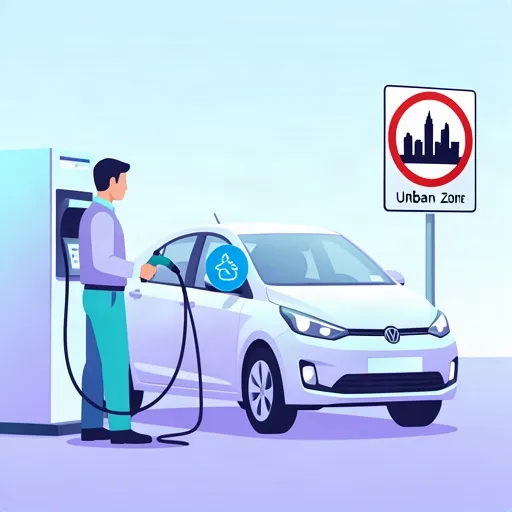
Article content overview
As modern vehicle technology evolves, the Spanish driving theory exam has increasingly integrated questions regarding vehicle propulsion systems. For a learner driver, mastering the distinction between different hybrid systems is not just a technical requirement for the test; it is essential for navigating the complex regulatory landscape of Spanish cities, particularly when entering Low Emission Zones (Zonas de Bajas Emisiones - ZBE).
In the context of current traffic legislation, a Plug-in Hybrid Electric Vehicle (PHEV) is a vehicle equipped with both an internal combustion engine and an electric motor. The defining feature that sets it apart from traditional hybrids is its ability to be charged by connecting it to an external power source, such as a domestic charging point or a public charging station. This dual-source capability allows the vehicle to operate in a fully electric mode for a significant distance, typically sufficient for most urban commutes.
A vehicle that combines a combustion engine and an electric motor, featuring a high-capacity battery that can be recharged by connecting it to an external electrical grid.
Understanding the mechanics of these vehicles is important because the DGT classifies them differently than mild-hybrids (MHEV) or conventional full hybrids (HEV). While they all contribute to reduced emissions, the PHEV’s ability to drive significantly on electricity alone qualifies it for specific environmental benefits and priority access in certain urban scenarios.
The Dirección General de Tráfico (DGT) utilizes an environmental classification system to categorize vehicles based on their potential for pollution. This system is crucial for drivers because it determines whether a vehicle is permitted to enter restricted city centers during high-pollution events or within permanent Low Emission Zones.
| Label | Vehicle Category | Main Characteristic |
|---|---|---|
| 0 Emissions | BEV / PHEV | Electric range of 40 km or more |
| ECO | HEV / PHEV | Hybrid with short electric range or gas/hybrid |
| C | ICE (Modern) | Efficient petrol or diesel vehicles |
| B | ICE (Older) | Less efficient combustion vehicles |
It is a common point of confusion in the theory exam to mistake the labels for various hybrids. Generally, a plug-in hybrid with an electric autonomy of 40 kilometers or more will receive the '0 Emissions' badge, while those with a lower electric-only range are typically classified as 'ECO'. Always verify the technical specifications if you encounter a question regarding specific badge assignments.
When you are behind the wheel of a PHEV, you must remain aware of your vehicle's specific operational requirements. Many modern plug-in hybrids now feature advanced technology like Vehicle-to-Load (V2L), which allows the battery to power external devices. While these features are innovative, the theory exam focuses on your ability to drive safely while complying with emission-related restrictions.
Remember that even with a '0 Emissions' badge, you must obey all standard traffic signals and road markings. Having an environmentally friendly vehicle does not grant exemption from priority rules at junctions or speed limits on motorways.
Drivers must also be familiar with the signage regulating these zones. You may encounter specific signs indicating that access is restricted to vehicles with specific environmental badges, or that parking rates are reduced for electric and hybrid vehicles in regulated parking areas (SER areas).
In the official exam, questions regarding vehicle types often test your understanding of how propulsion technology relates to environmental law. You might be asked to identify which vehicles are exempt from certain urban access restrictions or how the charging of a vehicle affects its classification.
This article covers plug-in hybrid electric vehicles and the DGT environmental badge system essential for the Spanish theory exam. PHEVs differ from conventional hybrids by featuring an externally rechargeable battery that enables significant electric-only driving. The DGT classifies vehicles into four badge categories (0, ECO, C, B) based on emission levels and electric range, with the '0 Emissions' badge requiring at least 40 km of autonomy. These classifications determine access rights to Low Emission Zones in Spanish cities, though all drivers must still follow standard traffic regulations regardless of badge type. Key study points include distinguishing between MHEV, HEV, and PHEV technologies and understanding how badge assignments affect urban driving privileges.
A short set of high-value points that capture the most important ideas from this article.
A PHEV combines a combustion engine with an electric motor and can be recharged from an external power source, unlike conventional hybrids
PHEVs with 40+ km of electric range qualify for the DGT '0 Emissions' badge, giving access to Low Emission Zones
PHEVs with shorter electric-only range are classified as 'ECO' under the DGT system
Environmental badges determine whether a vehicle can enter restricted urban areas during high-pollution events
Owning a '0 Emissions' vehicle does not exempt you from priority rules, speed limits, or traffic signals
MHEV uses a small battery that cannot be charged externally; HEV uses self-charging hybrid power; PHEV can be plugged in externally
The '0 Emissions' badge specifically requires 40 km or more of electric-only range
ZBE (Zonas de Bajas Emisiones) access restrictions are based on the vehicle's environmental badge type
V2L (Vehicle-to-Load) technology allows a PHEV battery to power external devices
Road sign R-120 marks the beginning of Low Emission Zones with badge-based access restrictions
Confusing PHEVs with regular HEVs - only PHEVs can be charged from an external power source
Assuming all plug-in hybrids automatically receive the '0 Emissions' badge - it depends on having 40+ km electric range
Believing that an environmentally friendly badge exempts the driver from standard traffic rules
Confusing MHEV with full hybrids - mild hybrids cannot drive on electricity alone
Misidentifying which badge category applies to specific hybrid vehicles when answering exam questions
Article content overview
A short set of high-value points that capture the most important ideas from this article.
A PHEV combines a combustion engine with an electric motor and can be recharged from an external power source, unlike conventional hybrids
PHEVs with 40+ km of electric range qualify for the DGT '0 Emissions' badge, giving access to Low Emission Zones
PHEVs with shorter electric-only range are classified as 'ECO' under the DGT system
Environmental badges determine whether a vehicle can enter restricted urban areas during high-pollution events
Owning a '0 Emissions' vehicle does not exempt you from priority rules, speed limits, or traffic signals
MHEV uses a small battery that cannot be charged externally; HEV uses self-charging hybrid power; PHEV can be plugged in externally
The '0 Emissions' badge specifically requires 40 km or more of electric-only range
ZBE (Zonas de Bajas Emisiones) access restrictions are based on the vehicle's environmental badge type
V2L (Vehicle-to-Load) technology allows a PHEV battery to power external devices
Road sign R-120 marks the beginning of Low Emission Zones with badge-based access restrictions
Confusing PHEVs with regular HEVs - only PHEVs can be charged from an external power source
Assuming all plug-in hybrids automatically receive the '0 Emissions' badge - it depends on having 40+ km electric range
Believing that an environmentally friendly badge exempts the driver from standard traffic rules
Confusing MHEV with full hybrids - mild hybrids cannot drive on electricity alone
Misidentifying which badge category applies to specific hybrid vehicles when answering exam questions
Explore related topics, search based questions, and concepts that learners often look up when studying PHEV Vehicles and DGT Rules. These themes reflect real search intent and help you understand how this topic connects to wider driving theory knowledge in Spain.
Find clear and practical answers to common questions learners often have about PHEV Vehicles and DGT Rules. This section helps explain difficult points, remove confusion, and reinforce the key driving theory concepts that matter for learners in Spain.
A plug-in hybrid vehicle is defined as having both an internal combustion engine and an electric motor, with a battery that can be recharged by connecting it to an external power source.
No. The DGT badge depends on the vehicle's electric autonomy and emissions levels. PHEVs with a significant electric range typically qualify for the '0 Emissions' label, while regular hybrids (HEVs) usually receive the 'ECO' label.
The theory exam tests your knowledge of how different vehicle types are treated regarding access to restricted zones, such as Zonas de Bajas Emisiones (ZBE), and general safety requirements on Spanish roads.
V2L stands for Vehicle-to-Load. It is a feature that allows the vehicle's battery to power external electrical devices, which is becoming a more common topic in modern vehicle technology discussions.
Now that you have found specific articles, continue to deepen your understanding by exploring related DGT regulations or other driving theory topics. Strengthen your knowledge of road signs, traffic scenarios, and essential Spanish driving procedures to prepare for your official driving license exam.