
Electric scooters, or Personal Mobility Vehicles (VMP), are classified as vehicles under Spanish traffic law, requiring operators to strictly adhere to DGT safety standards. This guide clarifies the prohibition on sidewalk and interurban road use while detailing the new 2026 mandatory certification rules. Mastering these legal boundaries is crucial for both safe urban mobility and success in your official theory examination.
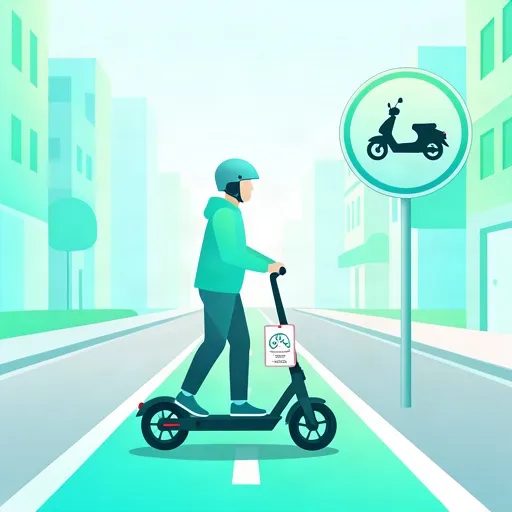
Article content overview
As the use of Personal Mobility Vehicles (VMP), commonly known as electric scooters, continues to grow in urban areas, the Dirección General de Tráfico (DGT) has implemented stricter regulations to ensure road safety. In the Spanish theory exam, it is vital to understand that VMPs are classified as full-fledged vehicles under the Ley sobre Tráfico, Circulación de Vehículos a Motor y Seguridad Vial. This legal classification means that riders are subject to the same traffic rules as drivers of automobiles, including strict adherence to alcohol and drug limits, as well as the prohibition of mobile phone and headphone usage while in motion.
The most frequent mistake learners make regarding VMPs is the assumption that they are treated like bicycles or pedestrians. Current DGT regulations for 2026 are explicit: electric scooters are strictly prohibited from circulating on sidewalks, pedestrian-only zones, and cross-town roads (travesías). Attempting to ride on these surfaces can lead to severe fines and the immediate impoundment of your vehicle.
Furthermore, these vehicles are not authorized to use interurban roads, motorways (autopistas or autovías), or tunnels under any circumstances. Their design and speed capacity are fundamentally incompatible with the flow of high-speed traffic, making them a significant danger to both the rider and other road users. Always remember that, as a driver of a VMP, you must use designated cycle lanes where available, or move within the general traffic flow on urban roads where the speed limit is restricted to 30 km/h or less.
Riding an electric scooter on a sidewalk is a serious traffic violation in Spain. You face a fine of 200€ and your vehicle may be confiscated by local authorities or the Guardia Civil.
For those preparing for the DGT theory exam, it is crucial to recognize that the era of "unregulated" scooters has ended. As of 2026, all VMPs being placed on the market must possess an official DGT certification plaque. This plaque confirms that the vehicle meets the technical requirements for stability, braking, and visibility.
If you are asked about vehicle documentation in your exam, remember that the manufacturer or importer is responsible for obtaining this certificate. Owning a non-compliant or "home-modified" scooter that lacks this verification effectively means the vehicle is not road-legal. During traffic stops, authorities can verify this certification, and failure to present a compliant vehicle can result in fines for the operator.
A vehicle with one or more wheels, equipped with a single seat, and propelled exclusively by electric motors, with a maximum design speed between 6 and 25 km/h.
While the DGT sets the national legal framework for where and how you can ride, municipal ordinances often dictate specific safety requirements, such as the mandatory use of helmets. In many Spanish cities, it is now a legal requirement for all VMP riders to wear an approved helmet, and the DGT strongly recommends it regardless of local city laws.
When riding, you must also prioritize visibility. Your VMP must be equipped with front and rear lights, and you should wear reflective clothing during night hours or in conditions of poor visibility. Even if your specific town has not yet enacted a strict helmet mandate, wearing one is a standard defensive driving practice that significantly reduces the risk of head injury in the event of a collision.
| Prohibited Zones | Permitted Usage Conditions |
|---|---|
| Sidewalks and Pavements | Must follow alcohol and drug limits |
| Motorways and Autovías | Prohibited from using headphones |
| Interurban Roads | Must have DGT certification plaque |
| Pedestrian Zones | Prohibited from using mobile phones |
The DGT frequently uses scenario-based questions to test your knowledge of VMP restrictions. You might see a question asking whether a VMP rider can cross a pedestrian crossing; the correct answer is no, unless they dismount and walk the scooter as a pedestrian. Similarly, you may be tested on the alcohol limits for VMP riders, which are identical to those for car drivers—a critical point that many learners overlook.
To pass your exam, always think of the VMP as a vehicle. If an action is forbidden for a car (such as driving in the wrong direction on a one-way street or driving on a sidewalk), it is also forbidden for a VMP.
Electric scooters (VMPs) in Spain are classified as vehicles under the Ley sobre Tráfico, meaning riders must obey the same traffic rules as car drivers, including alcohol limits and mobile phone prohibitions. They are banned from sidewalks, pedestrian zones, and all interurban roads, but may use cycle lanes or urban roads with 30 km/h limits. Since 2026, all new VMPs require an official DGT certification plaque confirming they meet technical standards for stability, braking, and visibility. Safety equipment includes front and rear lights, reflective clothing at night, and helmets where mandated by municipal ordinance.
A short set of high-value points that capture the most important ideas from this article.
VMPs (electric scooters) are legally classified as vehicles under Spanish traffic law, making riders subject to the same rules as car drivers
Electric scooters are strictly prohibited from sidewalks, pedestrian zones, motorways, autovías, interurban roads, and tunnels
As of 2026, all VMPs must carry an official DGT certification plaque to be road-legal in Spain
VMP riders must use designated cycle lanes where available, or ride within urban traffic on roads with a 30 km/h speed limit or less
Alcohol and drug limits for VMP riders are identical to those for car drivers
Maximum design speed for a VMP is 6-25 km/h; above 25 km/h it loses VMP classification
Sidewalk riding carries a 200€ fine and possible vehicle confiscation by Guardia Civil or local authorities
Municipal ordinances may impose additional requirements like mandatory helmets beyond national DGT rules
VMP riders cannot use pedestrian crossings while mounted; they must dismount and walk the scooter
The manufacturer or importer is responsible for obtaining the DGT certification plaque, not the individual owner
Assuming electric scooters can be ridden like bicycles on sidewalks or pedestrian zones
Forgetting that VMP riders face the same alcohol limits as car drivers (0.5 mg/l breath, 0.3 for new drivers)
Believing that non-certified or home-modified scooters can be legally used on public roads
Assuming VMPs can use motorways or autovías due to their vehicle-like appearance
Neglecting that local municipal helmet requirements apply independently of national DGT rules
Article content overview
A short set of high-value points that capture the most important ideas from this article.
VMPs (electric scooters) are legally classified as vehicles under Spanish traffic law, making riders subject to the same rules as car drivers
Electric scooters are strictly prohibited from sidewalks, pedestrian zones, motorways, autovías, interurban roads, and tunnels
As of 2026, all VMPs must carry an official DGT certification plaque to be road-legal in Spain
VMP riders must use designated cycle lanes where available, or ride within urban traffic on roads with a 30 km/h speed limit or less
Alcohol and drug limits for VMP riders are identical to those for car drivers
Maximum design speed for a VMP is 6-25 km/h; above 25 km/h it loses VMP classification
Sidewalk riding carries a 200€ fine and possible vehicle confiscation by Guardia Civil or local authorities
Municipal ordinances may impose additional requirements like mandatory helmets beyond national DGT rules
VMP riders cannot use pedestrian crossings while mounted; they must dismount and walk the scooter
The manufacturer or importer is responsible for obtaining the DGT certification plaque, not the individual owner
Assuming electric scooters can be ridden like bicycles on sidewalks or pedestrian zones
Forgetting that VMP riders face the same alcohol limits as car drivers (0.5 mg/l breath, 0.3 for new drivers)
Believing that non-certified or home-modified scooters can be legally used on public roads
Assuming VMPs can use motorways or autovías due to their vehicle-like appearance
Neglecting that local municipal helmet requirements apply independently of national DGT rules
Explore related topics, search based questions, and concepts that learners often look up when studying 2026 Electric Scooter VMP Rules. These themes reflect real search intent and help you understand how this topic connects to wider driving theory knowledge in Spain.
Find clear and practical answers to common questions learners often have about 2026 Electric Scooter VMP Rules. This section helps explain difficult points, remove confusion, and reinforce the key driving theory concepts that matter for learners in Spain.
No, it is strictly prohibited to circulate on sidewalks, pedestrian areas, or cross-town roads. VMPs must use authorized lanes or the road where permitted.
No. VMPs are strictly prohibited from circulating on interurban roads, motorways, highways, and tunnels.
As of 2026, all VMPs sold must feature an official DGT certification plaque to verify they meet technical safety standards.
Yes. As a vehicle operator, you are subject to standard traffic rules, including blood alcohol and drug limits, and you are forbidden from using mobile phones or headphones.
While the DGT strongly recommends helmets for all riders, their mandatory use is often determined by local municipal ordinances, which many cities have now enacted.
Now that you have found specific articles, continue to deepen your understanding by exploring related DGT regulations or other driving theory topics. Strengthen your knowledge of road signs, traffic scenarios, and essential Spanish driving procedures to prepare for your official driving license exam.