
Learning how and when you are permitted to reverse is a fundamental part of the Spanish driving theory. This guide clarifies the specific conditions set by the DGT for performing the 'marcha atrás' maneuver safely and legally, ensuring you are prepared for common exam traps regarding distance limits and highway regulations.
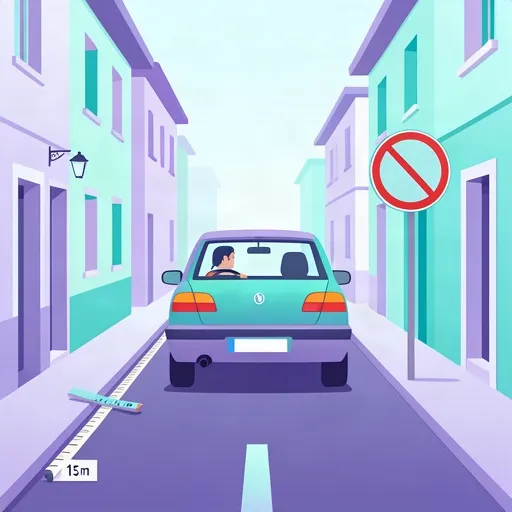
Article content overview
In the context of the Spanish General Vehicle Regulations (Reglamento General de Circulación), reversing, or marcha atrás, is classified as a maneuver that is strictly restricted to protect road safety. Because reversing inherently limits a driver's visibility and control, the Dirección General de Tráfico (DGT) mandates that it should only be performed when absolutely necessary and as a complementary part of other maneuvers, such as parking, stopping, or merging into traffic. Understanding these regulations is not only vital for everyday driving safety but is also a critical component of the DGT theory exam, where questions often test your knowledge of legal limits and prohibitions.
Under Spanish traffic law, the default rule is that driving in reverse is prohibited. This restriction exists because the driver's ability to monitor the environment behind the vehicle is significantly reduced, even with the use of mirrors or sensors. There is no scenario where you can legally choose to reverse simply because you missed your turn, passed an exit, or decided to change your route. In these cases, you must continue forward until you find a safe and legal place to change direction or turn around.
It is strictly prohibited to reverse on motorways (autopistas and autovías) under any circumstances, even if you have missed your exit or are driving in the wrong direction. Attempting to reverse on these high-speed roads is considered a very serious offense that endangers all road users.
When the marcha atrás maneuver is used as a complementary action to parking, stopping, or starting a movement, it is bound by two strict technical constraints. First, the distance covered in reverse must not exceed 15 meters. Second, the maneuver must never invade an intersection. These rules are designed to prevent drivers from obstructing the normal flow of traffic or creating chaotic situations at junctions where other drivers do not expect a vehicle to be moving backward.
While the 15-meter and intersection rules apply to standard maneuvers, there is a legal exception. If a driver finds themselves in a situation where it is impossible to move forward, turn around, or exit a dead-end street in any other way, they are permitted to reverse. In this specific, narrow case, the driver may reverse the minimum distance necessary to clear the path, even if the maneuver requires entering an intersection. However, this is not an excuse for carelessness; the driver is fully responsible for ensuring the path is clear of pedestrians, animals, or other vehicles.
Before initiating a reverse maneuver, the driver must be completely certain that it can be performed without posing a danger to other road users. This involves checking the vehicle's mirrors, turning the head to observe the surroundings, and verifying that no obstacles or pedestrians are in the path. Furthermore, the driver has a legal duty to signal their intention clearly. This can be done using the vehicle's white reversing lights or, in older vehicles or specific circumstances, by extending the left arm with the palm facing backward.
To help you prepare for the DGT theory exam, use the following table to distinguish between the standard requirements and the rare exception for the marcha atrás maneuver.
| Condition | Distance Limit | Intersection Limit |
|---|---|---|
| Standard (Parking/Stopping) | Maximum 15 meters | Prohibited |
| Impossible to proceed forward | Minimum necessary | Permitted |
| Motorways (Autopistas/Autovías) | Strictly Prohibited | Strictly Prohibited |
Spanish traffic law classifies reversing as a strictly restricted maneuver because it reduces driver visibility and control. The default rule is that reversing is prohibited; however, it may be performed as a complementary part of parking, stopping, or starting a movement, subject to a maximum distance of 15 meters and a prohibition on entering intersections. Motorways (autopistas and autovías) have an absolute ban on reversing under any circumstances. The only exception to the 15-meter and intersection rules is when forward movement or turning around is completely impossible, in which case you must reverse only the minimum distance necessary while ensuring the path is clear. Safety requires using mirrors, direct observation, signaling, and slow controlled speed throughout the maneuver.
A short set of high-value points that capture the most important ideas from this article.
Reversing (marcha atrás) is prohibited by default under Spanish traffic law and may only be performed when absolutely necessary.
For complementary maneuvers like parking or stopping, reversing is limited to a maximum distance of 15 meters.
Reversing on motorways (autopistas and autovías) is strictly prohibited under any circumstances.
Before reversing, you must observe mirrors and surroundings, signal with reversing lights, and proceed at a controlled speed.
You may reverse through an intersection only if it is impossible to move forward or turn around by any other means.
The 15-meter rule applies only to standard complementary maneuvers, not to motorways or emergency situations.
Reversing on any type of motorway is an absolute prohibition regardless of the circumstance.
The intersection rule has an exception: you may cross an intersection in reverse only when there is no possible alternative forward movement.
Use both mirrors and direct head checks before initiating any reverse maneuver.
The signaling method uses white reversing lights or, if unavailable, a hand signal with the left arm palm facing backward.
Assuming you may reverse on a motorway if you have missed your exit or are driving in the wrong direction.
Confusing the general prohibition with the exception case—reversing through an intersection is not allowed unless forward movement is impossible.
Thinking that the 15-meter limit applies on motorways; in fact, reversing is completely prohibited on motorways regardless of distance.
Neglecting to signal your intention to reverse, which is a legal duty even for short maneuvers.
Believing that reversing simply because you missed a turn or want to change route is ever permitted.
Article content overview
A short set of high-value points that capture the most important ideas from this article.
Reversing (marcha atrás) is prohibited by default under Spanish traffic law and may only be performed when absolutely necessary.
For complementary maneuvers like parking or stopping, reversing is limited to a maximum distance of 15 meters.
Reversing on motorways (autopistas and autovías) is strictly prohibited under any circumstances.
Before reversing, you must observe mirrors and surroundings, signal with reversing lights, and proceed at a controlled speed.
You may reverse through an intersection only if it is impossible to move forward or turn around by any other means.
The 15-meter rule applies only to standard complementary maneuvers, not to motorways or emergency situations.
Reversing on any type of motorway is an absolute prohibition regardless of the circumstance.
The intersection rule has an exception: you may cross an intersection in reverse only when there is no possible alternative forward movement.
Use both mirrors and direct head checks before initiating any reverse maneuver.
The signaling method uses white reversing lights or, if unavailable, a hand signal with the left arm palm facing backward.
Assuming you may reverse on a motorway if you have missed your exit or are driving in the wrong direction.
Confusing the general prohibition with the exception case—reversing through an intersection is not allowed unless forward movement is impossible.
Thinking that the 15-meter limit applies on motorways; in fact, reversing is completely prohibited on motorways regardless of distance.
Neglecting to signal your intention to reverse, which is a legal duty even for short maneuvers.
Believing that reversing simply because you missed a turn or want to change route is ever permitted.
Explore related topics, search based questions, and concepts that learners often look up when studying Spanish Reversing Laws. These themes reflect real search intent and help you understand how this topic connects to wider driving theory knowledge in Spain.
Find clear and practical answers to common questions learners often have about Spanish Reversing Laws. This section helps explain difficult points, remove confusion, and reinforce the key driving theory concepts that matter for learners in Spain.
No. Reversing on highways (autopistas and autovías) is strictly prohibited at all times, even if you miss an exit or encounter an obstacle.
As a complementary maneuver for parking, stopping, or merging, you cannot reverse more than 15 meters or enter an intersection.
You may exceed these limits only if it is completely impossible to move forward, change direction, or turn around, and you must reverse the minimum distance necessary to clear your path.
You must use the vehicle's reverse (white) lights or, if not equipped or visible, extend your left arm with the palm facing backward to warn other road users.
Now that you have found specific articles, continue to deepen your understanding by exploring related DGT regulations or other driving theory topics. Strengthen your knowledge of road signs, traffic scenarios, and essential Spanish driving procedures to prepare for your official driving license exam.