
This lesson focuses on 'Defensive Strategies in Mixed Traffic Flow', a crucial part of the Hazard Perception & Defensive Driving unit. Understanding how to safely interact with various road users and maintain a protective buffer around your vehicle is essential for passing your Spanish Category B and BE theory exam.

Lesson content overview
Driving in mixed traffic environments, whether in bustling urban centers or on high-speed motorways, demands a proactive and defensive approach. This lesson delves into essential strategies that enable drivers to anticipate hazards, maintain safe operating spaces, and manage visibility limitations effectively. By mastering these techniques, you not only reduce the risk of collisions but also enhance your reaction times, ensuring compliance with the Dirección General de Tráfico (DGT) guidelines for safe driving within Spain.
Understanding these defensive strategies is crucial for all drivers seeking to obtain their Spanish driving license for categories B and BE. The principles discussed here build upon foundational knowledge of basic traffic rules, vehicle controls, speed limits, DGT priority conventions, and the concepts of stopping distance and reaction time.
Defensive driving is more than just following traffic laws; it's a mindset that prioritizes safety by anticipating potential dangers and making proactive decisions to avoid them. In mixed traffic flow, this involves constantly evaluating your surroundings, predicting the actions of other road users, and positioning your vehicle to provide maximum safety. This comprehensive approach is vital for navigating the diverse challenges presented by Spanish roads, from busy city streets with pedestrians and cyclists to fast-moving multi-lane motorways.
The core principles of defensive driving in mixed traffic focus on maintaining adequate space around your vehicle, ensuring clear visibility, and being prepared for unexpected events. By consistently applying these strategies, you can compensate for human perception delays, variations in vehicle dynamics, and adverse environmental influences, thereby fulfilling your legal and ethical safety obligations as a driver.
Maintaining an appropriate following distance is perhaps the most fundamental aspect of defensive driving. It refers to the longitudinal space you keep between your vehicle and the one directly ahead of you. This critical space provides the necessary time for you to perceive a hazard, react, and apply your brakes safely without colliding with the vehicle in front.
Following distance can be measured in terms of time or meters. While a fixed distance might seem intuitive, a time-based measurement is more effective because it automatically adjusts for varying speeds. At higher speeds, your vehicle covers more distance per second, meaning a fixed meter gap would provide less reaction time than at lower speeds. A time-based rule ensures you always have a consistent temporal buffer, irrespective of your speed.
This buffer is essential for safe driving, as it dictates your ability to safely brake if the lead vehicle stops suddenly. Without sufficient following distance, even a moment's inattention can lead to a rear-end collision, which are among the most common types of traffic accidents.
The Two-Second Rule is a widely recommended, time-based metric that helps drivers maintain a safe following distance under normal conditions. It states that you should be able to count "one-one-thousand, two-one-thousand" (or simply "one-one, two-one") from the moment the vehicle ahead of you passes a fixed point, until your own vehicle reaches that same point.
Choose a Fixed Point: Select a stationary object on the side of the road, such as a road sign, a bridge, a tree, or a utility pole.
Wait for the Lead Vehicle: Watch the vehicle directly in front of you as its rear bumper passes your chosen fixed point.
Start Counting: Begin counting "one-one-thousand, two-one-thousand."
Reach the Point: If your vehicle's front bumper reaches the fixed point before you finish counting "two-one-thousand," you are following too closely.
Adjust and Re-check: Reduce your speed to increase the gap, then re-check using a new fixed point until you can comfortably complete the count.
This rule simplifies distance calculation at varying speeds, providing a quick and practical mental check for safe spacing without the need for a measuring device. The DGT strongly advises the use of the two-second rule as a minimum standard for maintaining safety.
While the two-second rule is time-based, it translates to a significant physical distance depending on your speed. For instance, at 80 km/h, a two-second gap is approximately 44 meters of spacing. This illustrates that what feels like a short time translates into a considerable physical buffer, which is vital for safe deceleration and stopping. Many drivers commonly misunderstand the rule as a fixed distance rather than a dynamic time interval, often leading to insufficient gaps at higher speeds.
The two-second rule is a minimum under normal driving conditions. However, conditions are not always normal. Factors like rain, fog, ice, snow, reduced visibility at night, or steep descents significantly increase the distance required to stop your vehicle. Under such adverse conditions, DGT guidelines explicitly require drivers to extend their following distance.
The Three-Second Rule (or even longer, depending on severity) is recommended in these situations. This extra second provides an even greater buffer for perception, reaction, and braking, compensating for reduced tire traction and longer stopping distances. It is a mandatory adaptation under Spanish traffic law, and neglecting this adjustment can be considered reckless.
Always increase your following distance in adverse conditions. Reduced visibility, wet roads, or heavy vehicle loads significantly increase your stopping distance, making the standard two-second rule inadequate.
Beyond just the longitudinal space to the vehicle ahead, a comprehensive defensive strategy involves creating a buffer zone – a multidirectional safety perimeter encompassing your vehicle's immediate space. This zone extends not only in front but also to the rear and sides of your vehicle, providing additional reaction time for unexpected maneuvers by other road users.
The buffer zone allows you to make safe lane changes, react to sudden stops, and navigate traffic without encroaching on adjacent lanes or causing other drivers to react abruptly. A common misunderstanding is to assume a buffer is unnecessary on sparsely trafficked roads; however, maintaining this safety margin is a continuous practice.
Special attention must be paid to maintaining adequate buffer zones when interacting with vulnerable road users such as pedestrians, cyclists, and motorcyclists. These users require more reaction time due to their smaller size, lower speed, and sometimes reduced visibility.
Under Spanish traffic law, when overtaking a cyclist on a shared lane, you must maintain a minimum lateral distance of 1.5 meters. This distance ensures their safety from the wind blast of your vehicle and allows them room to maneuver if necessary. Similar considerations apply to pedestrians and motorcyclists, where ample space should be provided. Always create a larger rear buffer when approaching crosswalks and anticipate the potential for sudden movements.
One of the most significant challenges in maintaining a complete buffer zone is the existence of blind spots. These are areas around your vehicle that are not visible through your rear-view or side mirrors alone. They are typically located to the side and slightly behind your vehicle, making them particularly dangerous during lane changes, merges, or turns.
Every vehicle has blind spots. They are the areas where another vehicle, cyclist, or pedestrian can 'disappear' from your mirror view but has not yet entered your peripheral vision. These zones are critical because an unseen vehicle can lead to a severe side-impact collision. Understanding where your vehicle's blind spots are is the first step towards managing them effectively.
Proper adjustment of your mirrors is fundamental to minimizing blind spots.
Even with perfectly adjusted mirrors, blind spots persist. Therefore, continuous monitoring of your mirrors – checking them frequently, especially before braking, turning, or changing lanes – is a critical habit. Regular mirror checks keep you informed about surrounding traffic and potential hazards.
Relying solely on mirrors is a common and dangerous misunderstanding. Before executing any lane change, merge, or overtaking maneuver, Spanish traffic law mandates that drivers must ensure a safe distance and clear space. This requires a head check (also known as a shoulder check).
A head check involves briefly turning your head to physically look into the blind spot area. This quick glance confirms that no vehicle, motorcycle, or bicycle is hidden from your mirrors. It's a quick, decisive action that takes less than a second but can prevent serious accidents.
Signal Your Intent: Always activate your turn signal well in advance to alert other drivers of your intention to change lanes.
Check Mirrors: Glance at your rear-view and side mirrors to assess traffic flow and identify any approaching vehicles.
Perform Head Check: Briefly turn your head to look over your shoulder in the direction you intend to move. This is a quick glance, not a prolonged stare.
Confirm Clear Space: If the space is clear, proceed smoothly and gradually into the new lane.
Cancel Signal: Once the maneuver is complete, cancel your turn signal.
Skipping a head check, even when traffic appears light, is a common violation that significantly increases the risk of side-swipe collisions.
Defensive driving is not static; it's a dynamic process that requires constant adaptation to changing conditions. The standard two-second rule and general buffer zone principles must be dynamically adjusted based on a variety of contextual variables. This ensures that your safety buffer remains adequate despite factors that could increase your stopping distance or reduce your visibility.
Adverse weather and poor road conditions are primary reasons for extending your safety margins.
Driving in low light conditions presents unique challenges that necessitate dynamic adjustments to your defensive strategies.
Adherence to defensive driving principles is not just a matter of good practice; many are enshrined in Spanish traffic law and DGT regulations. Failure to comply can result in fines and points on your license, in addition to the obvious safety risks.
The DGT strongly recommends the two-second rule as a minimum under normal conditions, and it is a key concept in driver certification exams. While not always a specific legal minimum in meters, Spanish traffic law broadly mandates that drivers must maintain a sufficient distance from the vehicle ahead to stop safely without collision in case of sudden braking. This implies that the spirit of the two-second rule, and its dynamic adjustments, is legally binding.
Furthermore, extended following distances in adverse conditions are explicitly mandatory under Spanish traffic law (e.g., Real Decreto 2822/1998, which governs traffic circulation procedures). This means you are legally obligated to increase your gap in rain, fog, ice, and other conditions that reduce braking efficiency or visibility.
Spanish road traffic regulations make it obligatory for drivers to ensure a safe distance and clear space before changing lanes or merging. This includes performing proper blind-spot checks. Failure to do so can be considered reckless driving and can lead to penalties. The law aims to prevent side-impact collisions caused by unseen vehicles.
When overtaking vulnerable road users such as cyclists, the law is specific: you must maintain a lateral safety distance of at least 1.5 meters on urban and interurban roads, or change lanes completely if possible. Cutting directly in front of a cyclist with minimal spacing is a serious violation.
Even experienced drivers can fall into common traps regarding defensive strategies. Awareness of these errors is the first step to correcting them:
The effectiveness of defensive driving strategies is rooted in fundamental principles of physics, human psychology, and extensive traffic safety research.
Mastering defensive strategies in mixed traffic flow is paramount for becoming a safe and responsible driver in Spain.
By internalizing and applying these defensive strategies, you contribute significantly to road safety, reduce your personal risk of accidents, and ensure a smooth, confident driving experience within Spain.
This lesson covers essential defensive driving strategies for navigating mixed traffic in Spain, focusing on maintaining safe following distances using the two-second rule, creating comprehensive buffer zones in all directions, and managing blind spots through proper mirror use and mandatory head checks. It teaches dynamic adjustment principles for adverse weather, heavy loads, and high-speed conditions, with specific legal requirements including the 1.5-meter lateral distance when overtaking cyclists and extended following distances mandated under Real Decreto 2822/1998. Understanding the physics of stopping distances and human reaction times reinforces why these defensive strategies are critical for both DGT exam success and real-world road safety.
A short set of high-value points that capture the most important learning from this lesson.
The two-second rule is your baseline for following distance under normal conditions, providing adequate time for perception, reaction, and braking.
Buffer zones must extend in all directions—front, rear, and especially lateral—creating a safety perimeter that allows reaction time for unexpected events.
Blind spots require both mirror checks and physical head checks before any lane change, merge, or overtaking maneuver.
Following distance must dynamically increase to three seconds or more in adverse conditions such as rain, fog, snow, ice, or when carrying heavy loads or towing.
When overtaking vulnerable road users like cyclists, you must maintain a minimum lateral distance of 1.5 meters under Spanish traffic law.
Explore all units and lessons included in this driving theory course.
The two-second rule is a time-based measurement, not a fixed distance, so it automatically adjusts as your speed changes.
Spanish traffic law mandates extended following distances in adverse conditions—this is a legal obligation, not just a recommendation.
Your mirrors alone cannot eliminate blind spots; a head check (shoulder check) is legally required before any lateral movement.
Human reaction time averages 1 to 1.5 seconds, which is why the two-second rule provides that critical extra buffer for vehicle response.
Kinetic energy increases with the square of speed—at higher velocities, your stopping distance grows dramatically despite the same time gap.
Tailgating by maintaining less than a one-second gap, which eliminates any meaningful reaction time if the vehicle ahead brakes suddenly.
Applying the same two-second gap regardless of weather conditions, vehicle load, or speed, failing to account for increased stopping distances.
Relying solely on mirrors before lane changes without performing a head check to verify the blind spot is clear.
Passing cyclists without maintaining the required 1.5-meter lateral distance, which is a serious traffic violation under Spanish law.
Miscalculating gaps at high speeds by believing the two-second rule feels sufficient visually when the actual distance may be inadequate.
Lesson content overview
A short set of high-value points that capture the most important learning from this lesson.
The two-second rule is your baseline for following distance under normal conditions, providing adequate time for perception, reaction, and braking.
Buffer zones must extend in all directions—front, rear, and especially lateral—creating a safety perimeter that allows reaction time for unexpected events.
Blind spots require both mirror checks and physical head checks before any lane change, merge, or overtaking maneuver.
Following distance must dynamically increase to three seconds or more in adverse conditions such as rain, fog, snow, ice, or when carrying heavy loads or towing.
When overtaking vulnerable road users like cyclists, you must maintain a minimum lateral distance of 1.5 meters under Spanish traffic law.
Explore all units and lessons included in this driving theory course.
The two-second rule is a time-based measurement, not a fixed distance, so it automatically adjusts as your speed changes.
Spanish traffic law mandates extended following distances in adverse conditions—this is a legal obligation, not just a recommendation.
Your mirrors alone cannot eliminate blind spots; a head check (shoulder check) is legally required before any lateral movement.
Human reaction time averages 1 to 1.5 seconds, which is why the two-second rule provides that critical extra buffer for vehicle response.
Kinetic energy increases with the square of speed—at higher velocities, your stopping distance grows dramatically despite the same time gap.
Tailgating by maintaining less than a one-second gap, which eliminates any meaningful reaction time if the vehicle ahead brakes suddenly.
Applying the same two-second gap regardless of weather conditions, vehicle load, or speed, failing to account for increased stopping distances.
Relying solely on mirrors before lane changes without performing a head check to verify the blind spot is clear.
Passing cyclists without maintaining the required 1.5-meter lateral distance, which is a serious traffic violation under Spanish law.
Miscalculating gaps at high speeds by believing the two-second rule feels sufficient visually when the actual distance may be inadequate.
Explore search topics learners often look for when studying Defensive Strategies in Mixed Traffic Flow. These topics reflect common questions about road rules, driving situations, safety guidance, and lesson level theory preparation for learners in Spain.
Browse additional driving theory lessons that cover connected traffic rules, road signs, and common driving situations related to this topic. Improve your understanding of how different rules interact across everyday traffic scenarios.
Learn essential Spanish driving theory on maintaining safe following distances, creating buffer zones, and managing the space around your vehicle. Understand how to ensure safety in diverse traffic flows for your DGT exam.

This lesson teaches riders the critical importance of maintaining a safe following distance to allow for adequate reaction and braking time. It explains practical methods for judging this distance, such as the 'two-second rule,' and how this gap must be increased in adverse weather or poor visibility. Understanding this principle is fundamental to preventing rear-end collisions, one of the most common types of traffic accidents.

This lesson outlines the core principles of defensive driving, focusing on maintaining a safe following distance, creating a protective space cushion around the vehicle, and anticipating potential hazards. Learners will be taught how to develop contingency plans for unexpected events and employ risk mitigation techniques to actively avoid accidents. The content reinforces the vital importance of remaining vigilant and proactive at all times when driving.

This lesson provides a detailed examination of the components that determine a vehicle’s stopping distance: perception time, reaction time, and braking distance. It outlines how to calculate safe stopping distances under various speeds and road conditions like wet or dry surfaces. Learners will be equipped to compute appropriate safety margins and understand the physics of emergency braking.

This lesson focuses on defensive maneuvers in mixed traffic environments where various vehicles share the road. It outlines lane discipline, appropriate overtaking safety measures, and strategies for maintaining a safety corridor. The content incorporates DGT defensive guidelines, teaching riders to manage space and anticipate unpredictable driver behavior.

This lesson focuses on the critical relationship between speed, following distance, and overall traffic safety on highways. It explains how to calculate a safe following distance based on speed and weather conditions, accounting for a truck's longer stopping distance. The content also teaches strategies for managing speed to adapt smoothly to changing traffic flow, enhancing both safety and fuel efficiency.

This lesson provides strategies for navigating dense and often unpredictable city traffic. It explains how to maintain a safe following distance and position the vehicle correctly in stop-and-go situations to optimize flow and visibility. The content emphasizes the importance of anticipation, patience, and defensive driving techniques to safely manage the challenges of urban congestion.

This lesson focuses on the core principles of defensive driving as they apply to operating a large truck. It explains the importance of managing the space around the vehicle to create a safety buffer and always having an 'escape route' in mind. The content emphasizes anticipating the actions of other road users and being prepared to react calmly and safely to unexpected situations.

This lesson addresses the practical aspects of maneuvering a large vehicle in various environments. It explains concepts like turning radius, off-tracking, and the vehicle's total footprint, which determine the space needed for turns and other maneuvers. Learners will develop the spatial awareness required to navigate tight corners, loading bays, and urban streets while maintaining safe clearance from obstacles.

This lesson focuses on the optimal position for a moped within a traffic lane to maximize visibility and safety. It discusses the importance of maintaining a safety buffer from other vehicles and hazards, particularly the risk posed by the doors of parked cars. The content explains how to use lane positioning strategically to discourage unsafe overtaking and to be clearly seen by drivers in front and behind, especially when approaching intersections.

This lesson introduces fundamental road safety principles applicable to all drivers, with a special emphasis on heavy vehicles. It covers defensive driving techniques, including the importance of anticipating potential hazards and managing speed appropriately for conditions. Learners will also study how to establish and maintain safe following distances and understand the hierarchy of road users to ensure safe interactions.
Explore critical driving theory for Spanish drivers on managing blind spots, perceiving hazards, and using defensive techniques to ensure visibility in mixed traffic. Essential knowledge for the DGT theory test.
This lesson focuses on identifying blind spot zones created by larger vehicles and the rider’s own positioning. It covers effective mirror usage, lateral awareness techniques, and the importance of head checks before lane changes. DGT blind spot guidelines are referenced, emphasizing situational scanning to maintain safety in traffic.

This lesson is focused on the early identification of road hazards through the application of effective scanning techniques and the use of peripheral vision. Learners will practice recognizing visual cues that signal potential dangers, such as erratic vehicle movements, unexpected obstacles, or pedestrian behavior. The module also teaches proactive response strategies designed to mitigate these risks before they can escalate into dangerous situations.
This lesson focuses on defensive maneuvers in mixed traffic environments where various vehicles share the road. It outlines lane discipline, appropriate overtaking safety measures, and strategies for maintaining a safety corridor. The content incorporates DGT defensive guidelines, teaching riders to manage space and anticipate unpredictable driver behavior.
In this lesson, drivers learn how to identify risk zones where potential hazards are likely to develop. The content explains the use of proactive observation and scanning techniques to detect evolving dangers in the driving environment. Learners will practice anticipating the actions of other road users based on traffic patterns and context, adjusting their speed and position accordingly.

This lesson outlines the proper use and legal requirements of vehicle lighting and mirror systems. It covers headlamps, fog lights, turn signals, and brake lights, clarifying when each must be used according to DGT regulations. The lesson also explains the correct adjustment of rearview and side mirrors and strategies for effective blind-spot monitoring.

This lesson covers how environmental conditions such as rain, fog, and darkness affect driving safety. It instructs drivers on adjusting speed, using appropriate lighting, and increasing following distance to compensate for reduced visibility and traction. The lesson incorporates DGT safety recommendations for handling adverse weather to mitigate risk and maintain control.
This lesson outlines the core principles of defensive driving, focusing on maintaining a safe following distance, creating a protective space cushion around the vehicle, and anticipating potential hazards. Learners will be taught how to develop contingency plans for unexpected events and employ risk mitigation techniques to actively avoid accidents. The content reinforces the vital importance of remaining vigilant and proactive at all times when driving.
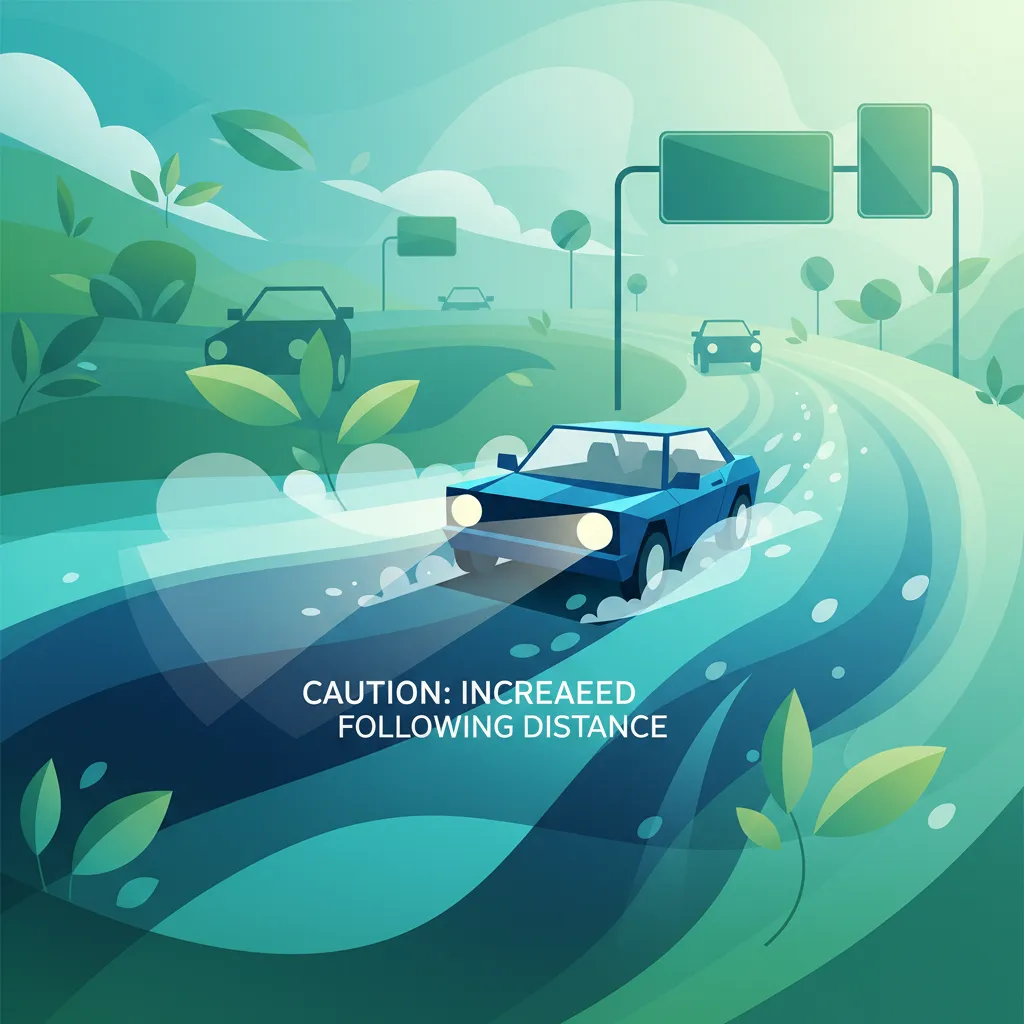
This lesson addresses the specific challenges posed by rain and fog, focusing on reduced visibility and loss of traction. It explains the proper use of windshield wipers and fog lights, and the need to adjust speed and increase following distance. The content covers how to prevent and react to hydroplaning (aquaplaning) to maintain vehicle control.

This lesson provides theoretical guidance on the techniques for safely reversing a heavy vehicle, a high-risk maneuver. It emphasizes the correct use of mirrors, managing extensive blind spots, and the importance of using a spotter when available. The content also breaks down the geometric principles of parallel parking and backing into loading docks, focusing on vehicle positioning and spatial awareness.
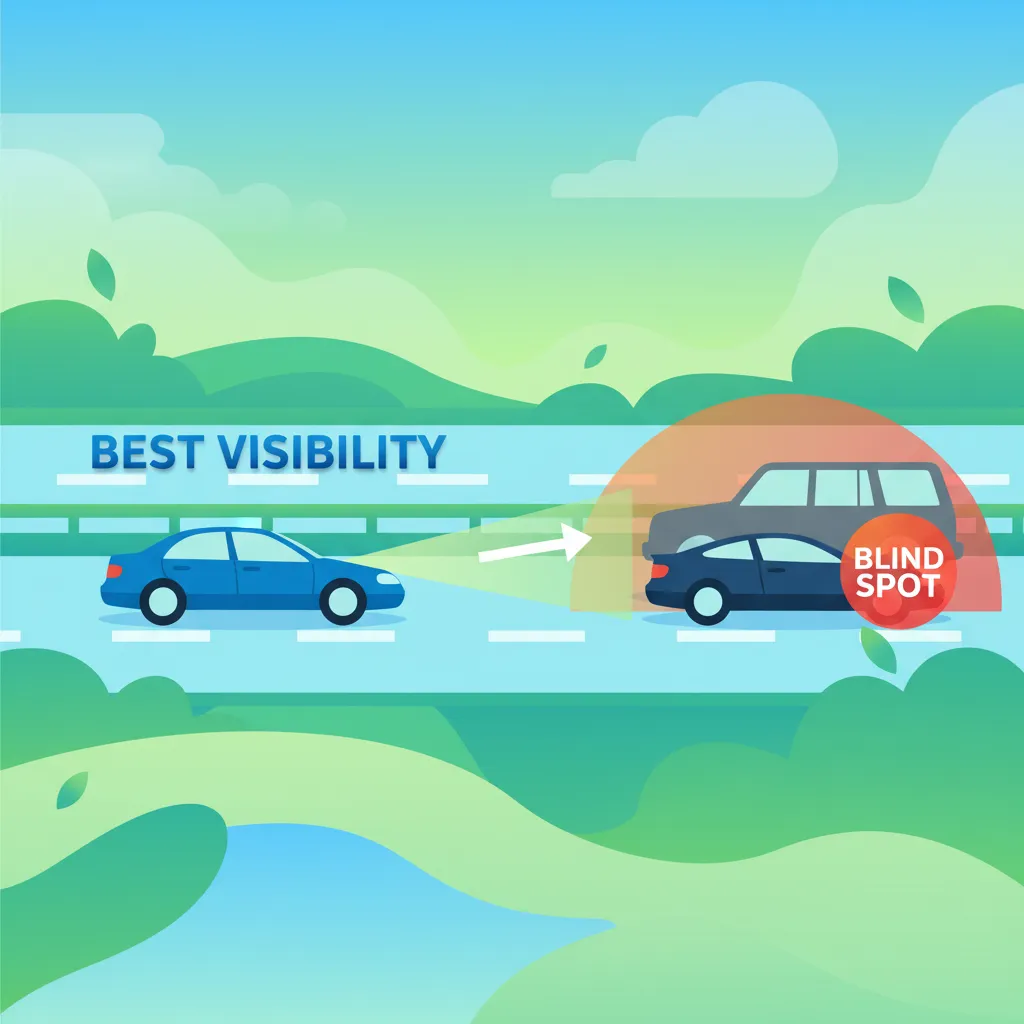
This lesson explores proper lane positioning, emphasizing strategic selection of traffic lanes for optimal visibility. It explains the importance of rider line of sight and peripheral vision in maintaining situational awareness. The content also covers legal aspects of lane splitting and correct usage of road shoulders, abiding by DGT regulations.
Find clear answers to common questions learners have about Defensive Strategies in Mixed Traffic Flow. Learn how the lesson is structured, which driving theory objectives it supports, and how it fits into the overall learning path of units and curriculum progression in Spain. These explanations help you understand key concepts, lesson flow, and exam focused study goals.
The 'two-second rule' is a universally accepted method for maintaining a safe following distance, and it is directly relevant to the Spanish DGT theory exam. You must be able to count 'one thousand one, one thousand two' between the moment the vehicle in front passes a fixed point and when your vehicle reaches the same point. In adverse conditions like rain or fog, or when following larger vehicles, this time gap should be extended.
Common mistakes include relying solely on mirrors without performing head checks, improper mirror adjustment, and assuming other drivers will always yield or stay in their lane. The Spanish theory exam often includes questions testing your awareness of blind spots and the correct procedures to check them before changing lanes or turning.
Mixed traffic includes a variety of road users like cars, motorcycles, cyclists, and pedestrians, each with different speeds and behaviours. A safety buffer gives you crucial time and space to react to sudden stops, unexpected movements, or hazards from any of these users, preventing accidents and ensuring smoother traffic flow. It's a key defensive driving principle tested by the DGT.
In adverse weather such as rain, fog, or snow, road surfaces become slippery, and visibility is reduced. This significantly increases your vehicle's stopping distance. Therefore, you must increase your following distance well beyond the standard two seconds to ensure you have adequate time to brake safely if the vehicle ahead stops suddenly.
While the two-second rule generally applies, you must be particularly vigilant when following motorcycles and cyclists. They can stop more quickly than cars and are more vulnerable. Allow extra space and be aware that they may manoeuvre differently. The DGT emphasizes protecting vulnerable road users, and this is reflected in theory exam questions.
Use our powerful search functionality to pinpoint specific Spanish DGT driving theory practice sets. Filter by road sign categories, traffic law topics, or question difficulty to build custom study sessions and reinforce your knowledge precisely where it matters for your official exam.