
Welcome to the 'Night Driving and Glare Management' lesson, part of the 'Adverse Conditions & Emergencies' unit in your Spanish Driving License Theory course. Driving at night presents unique challenges, from reduced visibility to glare from other vehicles. This lesson will equip you with the essential knowledge and techniques to navigate these conditions safely and confidently, preparing you for specific DGT exam questions on this topic.
Lesson content overview
Driving at night presents unique challenges that significantly increase the risk of accidents. Reduced visibility, the glare from other vehicles' headlights, and the heightened risk of driver fatigue demand specific skills and adherence to strict regulations. This lesson provides a comprehensive guide to navigating nighttime conditions safely and in compliance with the Dirección General de Tráfico (DGT) regulations for the Spanish driving license.
Mastering proper headlight usage, effectively managing glare, recognizing signs of fatigue, and maintaining optimal visual ergonomics are crucial for the safety of all road users. By understanding and applying these principles, drivers can confidently navigate the roads from sunset to sunrise, ensuring both their own safety and that of others.
Proper use of vehicle lighting is fundamental to night driving safety. It ensures your vehicle is visible to others and that you have adequate illumination to perceive hazards, road signs, and the road ahead. DGT regulations clearly define when and how different lighting systems must be used.
In Spain, as with most European countries, the use of low-beam headlights is mandatory during specific periods and under certain conditions. These headlights provide a short, wide illumination cone designed to light the road immediately in front of the vehicle without dazzling oncoming drivers or those ahead.
The standard headlight setting for normal night and reduced visibility driving, providing a short, wide illumination cone. In Spain, this is often referred to as "luces de cruce" or "luces cortas."
When to Use Low-Beam Headlights:
Failing to use low-beam headlights when required is a serious violation of DGT regulations and can result in a fine, as it compromises safety by reducing both your visibility and the visibility of your vehicle to others.
Always verify that your low-beam headlights are activated before starting a night journey or entering a tunnel, even if your vehicle has automatic headlight sensors. These sensors may not always react instantly or accurately to changing light conditions.
High-beam headlights, also known as main beam headlights, provide a longer, brighter, and narrower illumination cone compared to low-beams. They are designed to offer maximum forward visibility on very dark roads.
A powerful headlight setting that projects a longer, brighter illumination cone, intended for use on dark roads without oncoming traffic or vehicles ahead. In Spain, these are called "luces de carretera" or "luces largas."
Appropriate Use of High-Beam Headlights:
When High-Beam Headlights Are Prohibited or Must Be Dimmed:
Incorrect use of high-beam headlights is not only dangerous but also punishable by DGT regulations. Always prioritize the safety and comfort of other road users.
Fog lights are specialized lights designed for use in adverse weather conditions that severely reduce visibility, such as dense fog, heavy rain, or snow. They are positioned low on the vehicle to illuminate the road surface and minimize glare reflection from atmospheric particles.
Auxiliary lights placed low on the vehicle, emitting a wide, low-angle beam designed to penetrate fog, heavy rain, or snow without causing significant glare back towards the driver or to other road users.
When to Use Fog Lights:
Never use fog lights on a clear night or when visibility is good. They can be excessively bright and cause glare for other drivers, especially rear fog lights. Misuse of fog lights is a DGT infraction.
Glare is one of the most significant challenges in night driving. It occurs when bright light enters the eye, reducing visual acuity and potentially causing temporary blindness. Effective glare management is crucial for maintaining safe driving conditions.
Glare can originate from various sources:
The effects of glare range from discomfort to temporary blindness, known as "disability glare." This can lead to:
The most important active measure is the correct and timely dimming of your high-beam headlights.
Anticipate oncoming traffic: As soon as you spot an oncoming vehicle, prepare to switch to low-beam.
Dim early: Switch from high-beam to low-beam when the oncoming vehicle is approximately 150 metres away. Do not wait until the last moment.
Monitor rearview mirrors: If a vehicle approaches from behind with high-beams, adjust your rearview mirror to the anti-glare setting (if available) or subtly move your head to avoid direct glare.
Be mindful when overtaking: If you are overtaking another vehicle, ensure your high-beams are off once you have returned to your lane and are less than 200 metres in front of the overtaken vehicle. Your high-beams could dazzle them through their rearview mirror.
Beyond active dimming, several passive measures can significantly reduce glare and improve your night vision:
Night driving naturally increases the risk of driver fatigue due to the body's natural sleep cycle (circadian rhythm) and the monotonous nature of driving in darkness. Fatigue significantly impairs judgment, reaction time, and visual acuity, making it a major contributing factor to accidents.
It is crucial for drivers to be honest with themselves and recognize the early warning signs of fatigue:
Microsleeps can occur without you realizing you've fallen asleep, leading to catastrophic consequences. If you experience any of these signs, you are already fatigued and must take action.
The DGT, alongside general road safety guidelines, strongly recommends proactive fatigue management:
Beyond external lighting, managing your vehicle's interior environment can significantly impact your night vision, comfort, and overall safety. This aspect of visual ergonomics helps reduce eye strain and improves your ability to react to external stimuli.
Excessive interior light can negatively affect your night vision:
A clean and well-maintained windshield is paramount for clear night vision.
Proper maintenance of your vehicle's lighting system is not just about functionality, but also about safety for others.
Adherence to DGT regulations is not merely about avoiding fines; it is about ensuring collective road safety. Here's a summary of key rules and common violations related to night driving in Spain.
Mandatory Use of Low-Beam Headlights (Dipped Beam):
High-Beam Headlight Usage Conditions (Main Beam):
Dimming High-Beam for Oncoming Traffic and Overtaking:
Use of Fog Lights:
Rest and Fatigue Management (DGT Recommendation):
Weather Conditions:
Road Type:
Interactions with Vulnerable Road Users:
Vehicle State:
Navigating the roads after dark requires a heightened sense of awareness and strict adherence to specific driving practices and DGT regulations.
By integrating these practices into your driving routine, you will significantly enhance your safety and the safety of others on the road during nighttime conditions, ensuring you meet the high standards expected for the Spanish driving license.
This lesson covers essential DGT regulations for night driving in Spain, including mandatory low-beam headlight use from sunset to sunrise, specific distance rules for high-beam dimming (150m for oncoming traffic, 200m when following), and restricted fog light activation based on visibility thresholds. Effective glare management requires proactive headlight dimming, a clean windshield, adjusted mirrors, and proper gaze technique when facing oncoming traffic. Driver fatigue is a major risk at night due to the circadian rhythm; learners should recognize warning signs like yawning, difficulty concentrating, and microsleeps, and take breaks every two hours. Visual ergonomics, including dimmed dashboard lights and well-maintained headlight alignment, further enhance safety during nighttime journeys.
A short set of high-value points that capture the most important learning from this lesson.
Low-beam headlights are mandatory from sunset to sunrise, in tunnels, and whenever visibility is reduced due to fog, rain, snow, or smoke.
High-beam headlights must be dimmed to low-beam when an oncoming vehicle is within 150 metres, and when following or overtaking another vehicle within 200 metres.
Front fog lights require visibility below 100 metres; rear fog lights are reserved for extreme conditions below 50 metres.
Driver fatigue manifests through yawning, heavy eyelids, lane drifting, microsleeps, and difficulty concentrating, requiring immediate rest.
Keep your windshield clean inside and out, dim interior dashboard lights, and use anti-glare rearview mirror settings to minimize glare and eye strain.
Explore all units and lessons included in this driving theory course.
DGT mandates low-beam headlights (luces de cruce) from sunset to sunrise on all public roads in Spain.
High-beam headlights (luces de carretera) are for dark inter-urban roads with no other traffic; prohibited in urban areas at all times.
The 150-metre rule applies to dimming for oncoming traffic; the 200-metre rule applies when driving behind another vehicle.
Take a break of at least 15-20 minutes every two hours during night driving to combat fatigue and maintain alertness.
Avoid staring directly at oncoming headlights; look slightly to the right and focus on the road edge or lane marking.
Driving with high-beam headlights activated in urban areas or when other vehicles are present, causing dangerous glare.
Using fog lights on clear nights or when visibility is only mildly reduced, which dazzles other drivers.
Failing to recognize early fatigue signs and continuing to drive, increasing the risk of microsleeps.
Using a dirty windshield or keeping interior lights bright, which scatter light and intensify glare.
Not dimming high-beam headlights in time when approaching oncoming traffic, waiting until the last possible moment.
Lesson content overview
A short set of high-value points that capture the most important learning from this lesson.
Low-beam headlights are mandatory from sunset to sunrise, in tunnels, and whenever visibility is reduced due to fog, rain, snow, or smoke.
High-beam headlights must be dimmed to low-beam when an oncoming vehicle is within 150 metres, and when following or overtaking another vehicle within 200 metres.
Front fog lights require visibility below 100 metres; rear fog lights are reserved for extreme conditions below 50 metres.
Driver fatigue manifests through yawning, heavy eyelids, lane drifting, microsleeps, and difficulty concentrating, requiring immediate rest.
Keep your windshield clean inside and out, dim interior dashboard lights, and use anti-glare rearview mirror settings to minimize glare and eye strain.
Explore all units and lessons included in this driving theory course.
DGT mandates low-beam headlights (luces de cruce) from sunset to sunrise on all public roads in Spain.
High-beam headlights (luces de carretera) are for dark inter-urban roads with no other traffic; prohibited in urban areas at all times.
The 150-metre rule applies to dimming for oncoming traffic; the 200-metre rule applies when driving behind another vehicle.
Take a break of at least 15-20 minutes every two hours during night driving to combat fatigue and maintain alertness.
Avoid staring directly at oncoming headlights; look slightly to the right and focus on the road edge or lane marking.
Driving with high-beam headlights activated in urban areas or when other vehicles are present, causing dangerous glare.
Using fog lights on clear nights or when visibility is only mildly reduced, which dazzles other drivers.
Failing to recognize early fatigue signs and continuing to drive, increasing the risk of microsleeps.
Using a dirty windshield or keeping interior lights bright, which scatter light and intensify glare.
Not dimming high-beam headlights in time when approaching oncoming traffic, waiting until the last possible moment.
Explore search topics learners often look for when studying Night Driving and Glare Management. These topics reflect common questions about road rules, driving situations, safety guidance, and lesson level theory preparation for learners in Spain.
Browse additional driving theory lessons that cover connected traffic rules, road signs, and common driving situations related to this topic. Improve your understanding of how different rules interact across everyday traffic scenarios.
Understand the official Spanish DGT regulations for using headlights, high-beams, low-beams, and fog lights during night driving and adverse conditions. Essential knowledge for safe driving theory.
This lesson outlines the proper use and legal requirements of vehicle lighting and mirror systems. It covers headlamps, fog lights, turn signals, and brake lights, clarifying when each must be used according to DGT regulations. The lesson also explains the correct adjustment of rearview and side mirrors and strategies for effective blind-spot monitoring.
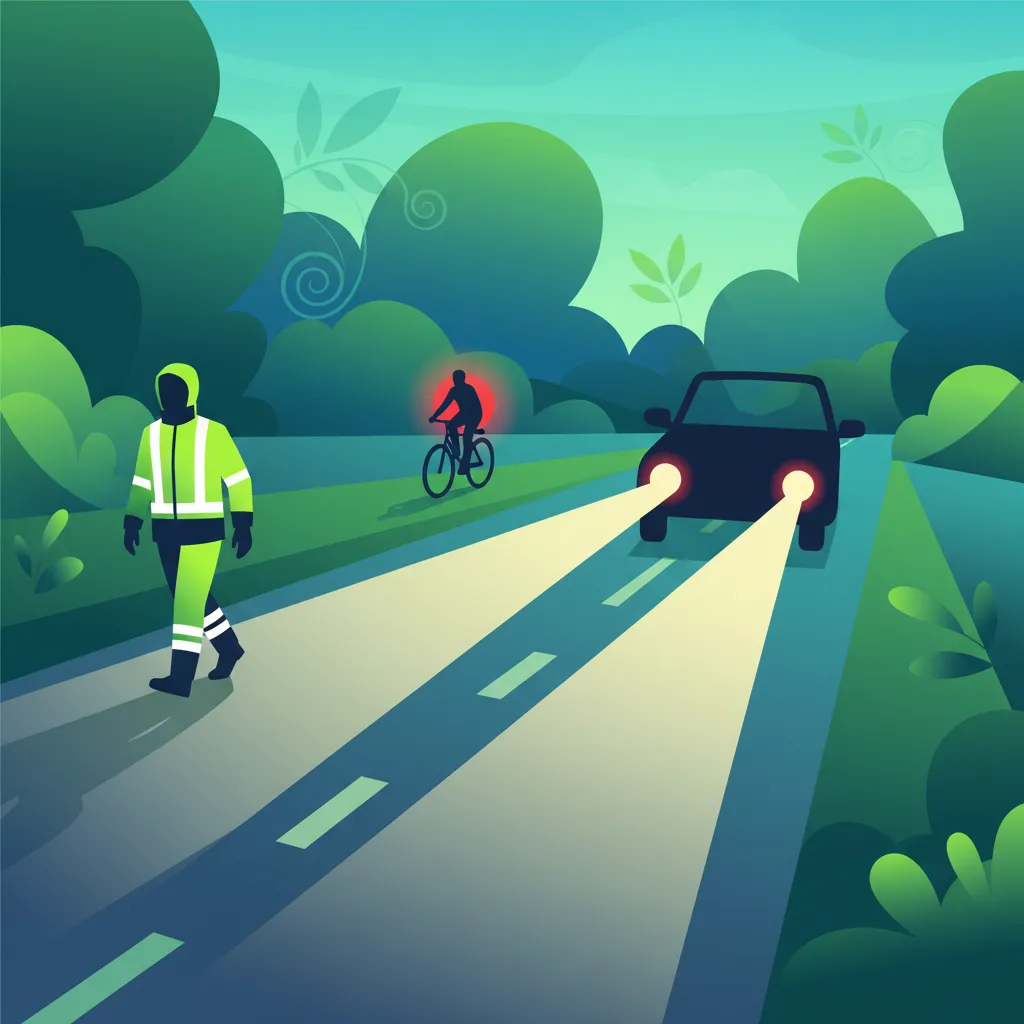
This lesson outlines the mandatory lighting and visibility equipment as per DGT regulations. It covers the correct use of headlights (low and high beams), taillights, and turn signals, ensuring the moped is visible to others, especially at night or in poor weather. The importance of wearing high-visibility or reflective clothing is also emphasized as a critical measure to enhance personal safety by making the rider more conspicuous.
This lesson focuses on safe nighttime riding, covering headlight alignment, rear-light visibility, and the use of reflective gear to enhance conspicuity. It explains DGT night riding requirements, including mandatory lighting standards. Topics also include managing glare from oncoming vehicles and mitigating rider fatigue during low-light conditions.
This lesson covers how environmental conditions such as rain, fog, and darkness affect driving safety. It instructs drivers on adjusting speed, using appropriate lighting, and increasing following distance to compensate for reduced visibility and traction. The lesson incorporates DGT safety recommendations for handling adverse weather to mitigate risk and maintain control.
This lesson addresses the specific challenges posed by rain and fog, focusing on reduced visibility and loss of traction. It explains the proper use of windshield wipers and fog lights, and the need to adjust speed and increase following distance. The content covers how to prevent and react to hydroplaning (aquaplaning) to maintain vehicle control.
Learn to identify and mitigate night driving hazards like driver fatigue and intense glare from other vehicles. Improve your visual ergonomics and reaction time for safer nocturnal journeys based on Spanish driving theory.
This lesson covers how environmental conditions such as rain, fog, and darkness affect driving safety. It instructs drivers on adjusting speed, using appropriate lighting, and increasing following distance to compensate for reduced visibility and traction. The lesson incorporates DGT safety recommendations for handling adverse weather to mitigate risk and maintain control.
Find clear answers to common questions learners have about Night Driving and Glare Management. Learn how the lesson is structured, which driving theory objectives it supports, and how it fits into the overall learning path of units and curriculum progression in Spain. These explanations help you understand key concepts, lesson flow, and exam focused study goals.
According to DGT regulations, you should use high-beam headlights on unlit roads when you are not approaching or following another vehicle. This provides maximum visibility. However, you must switch to low-beam headlights (luces cortas) when you see an oncoming vehicle or when approaching a vehicle from behind to avoid dazzling the other driver.
When meeting an oncoming vehicle on a Spanish road, you must dip your headlights from high beam to low beam as soon as you see the other vehicle's lights, or at least 50 metres before they reach you. This prevents dazzling the other driver and ensures both of you maintain adequate visibility. Once the vehicle has passed, you can switch back to high beam if conditions permit.
To reduce glare, always ensure your headlights are correctly aimed and clean. Dip your headlights when meeting oncoming traffic or following a vehicle. Avoid looking directly at the oncoming headlights; instead, focus on the edge of the road or the right-hand side of your lane. Keeping your windscreen clean also helps reduce scattered light.
The DGT strongly advises drivers to be aware of fatigue, especially during prolonged night driving. Signs include frequent yawning, heavy eyelids, difficulty concentrating, and drifting from your lane. If you experience these symptoms, pull over safely at the earliest opportunity, take a break, perhaps have a caffeinated drink, and rest until you feel fully alert before continuing your journey.
Yes, DGT rules differentiate. In urban areas with adequate street lighting, you generally use low-beam headlights. On unlit rural roads, high beams are permitted when safe to do so. Visibility conditions, traffic, and the presence of other road users are key factors in deciding which beam to use.
Use our powerful search functionality to pinpoint specific Spanish DGT driving theory practice sets. Filter by road sign categories, traffic law topics, or question difficulty to build custom study sessions and reinforce your knowledge precisely where it matters for your official exam.