
When your vehicle breaks down, knowing exactly what to do is crucial for your safety and that of other road users. This lesson from the 'Adverse Conditions & Emergencies' unit in your Complete Spanish Driving License Theory Course covers the official DGT procedures for dealing with breakdowns on Spanish roads. We’ll guide you through safely stopping, signaling your vehicle, and arranging assistance, ensuring you’re prepared for unexpected situations and can navigate them with confidence.
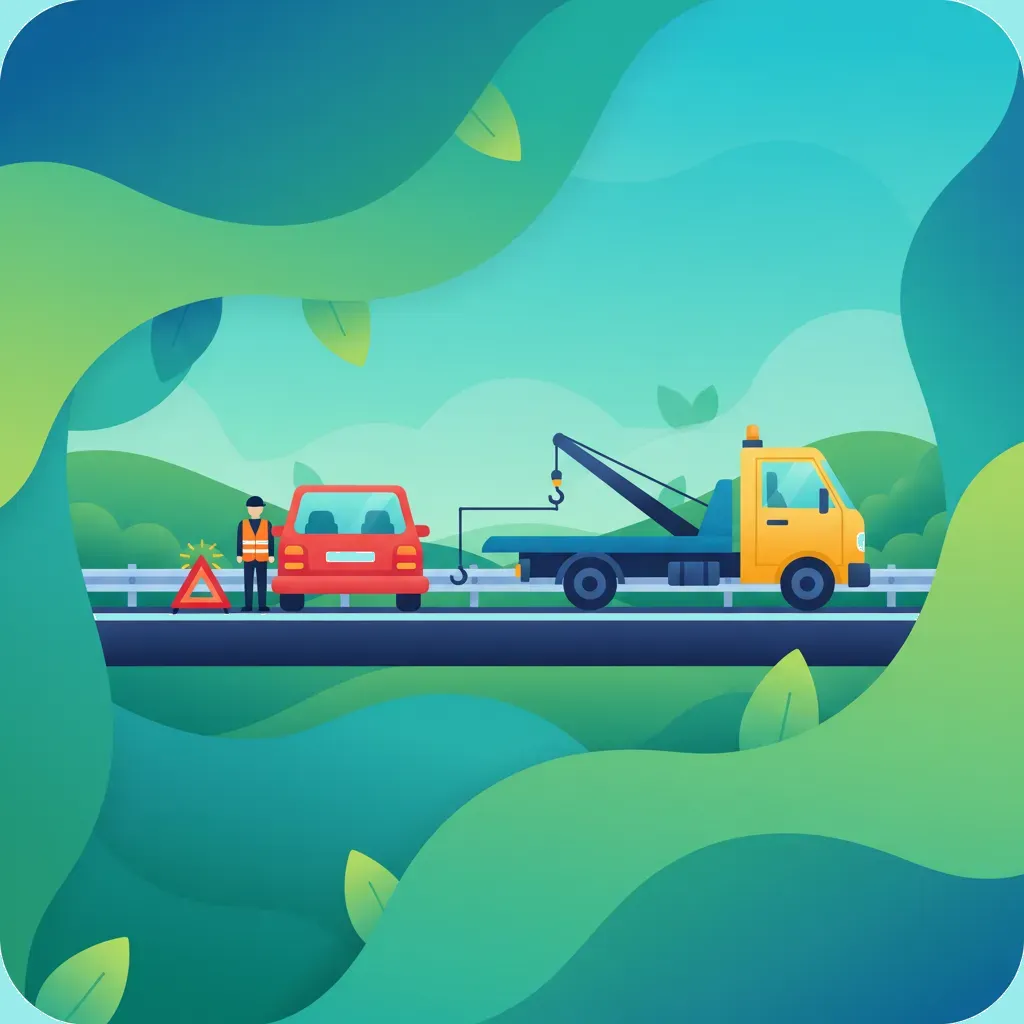
Lesson content overview
Navigating the roads responsibly means being prepared for unexpected events, such as a vehicle breakdown. Knowing the correct procedures to follow during a roadside emergency is crucial for your safety, the safety of your passengers, and other road users. This comprehensive lesson outlines the DGT (Dirección General de Tráfico) regulations and best practices for managing vehicle breakdowns in Spain, ensuring you can react safely and legally when faced with an immobilized vehicle.
Understanding these protocols prevents secondary accidents, minimizes traffic disruption, and ensures you comply with Spanish traffic law, avoiding potential fines and serious risks. We will cover everything from activating hazard warnings and safely positioning your vehicle to deploying warning devices and contacting assistance effectively.
When your vehicle suddenly stops or experiences a significant malfunction on a public road, your immediate actions are critical. The primary goal is to make your vehicle visible and move it to the safest possible location to prevent further hazards.
The very first action you must take when your vehicle is unexpectedly stopped or moving at a significantly reduced speed due to an emergency is to activate your hazard warning lights (also known as emergency lights). These are flashing amber lights, typically activated by a triangular button on your vehicle's dashboard.
Flashing amber lights on a vehicle that indicate it is stopped unexpectedly, experiencing an emergency, or moving at an unusually slow speed, signaling a potential hazard to other road users.
Hazard lights serve as an immediate visual alert to other drivers, indicating that your vehicle poses an unusual situation on the road. They must remain active until your vehicle is safely removed from the roadway or until the emergency situation has passed. It is important to note that, under normal circumstances, hazard lights should not be used while driving, as this can confuse other drivers about your vehicle's status. There are rare exceptions, such as driving in extremely dense fog where visibility is minimal, but generally, their use is reserved for stationary or near-stationary emergency situations.
After activating your hazard lights, the next crucial step is to move your vehicle to the safest possible stopping position. The aim is always to get your vehicle as far away from the flow of traffic as possible, thereby reducing the risk of obstruction and collision.
On motorways (autopistas) and expressways (autovías), which are high-speed roads, the hard shoulder (arcén) is specifically designated for emergency stops. If your vehicle breaks down, you must try to steer it onto the hard shoulder immediately, driving as far to the right as possible. This creates a buffer zone between your vehicle and the fast-moving traffic.
The lane adjacent to the main travel lane on motorways and expressways, typically paved but narrower, intended for emergency stops, breakdown management, and temporary parking in specific situations.
Stopping on the hard shoulder reduces the risk of blocking traffic lanes and minimizes the chance of being involved in a secondary collision. If for some reason you cannot reach the hard shoulder, or if you break down in a travel lane, you must still activate your hazard lights and, as a last resort, exit the vehicle immediately and move to a safe place behind a barrier, if available, or well away from the road, before deploying warning devices.
On urban or rural roads where a hard shoulder may not exist or is very narrow, you should pull over to the extreme right-hand side of the road, as close to the edge as possible. Ensure your vehicle does not block intersections, pedestrian crossings, or access points. If you break down on a curve or a blind spot, try to move your vehicle to a location where it can be seen from a greater distance by approaching traffic, even if this means driving a short distance further at a very low speed if safe to do so.
Once your vehicle is in a safe position, deploying additional warning devices is mandatory under Spanish traffic law (DGT regulations) to enhance visibility and alert oncoming traffic.
The warning triangle (triángulo reflectante) is a portable, reflective amber triangle that must be carried in your vehicle at all times. In the event of a breakdown, you are legally required to place it on the road to warn approaching traffic.
A mandatory portable, reflective amber triangular device used to warn other road users of a stationary vehicle on the roadway, particularly during breakdowns or accidents.
The placement of the warning triangle is crucial for its effectiveness:
The purpose of these distances is to provide approaching drivers with sufficient time to see the warning, react, and safely maneuver around your vehicle. Failing to place the triangle at the correct distance can significantly reduce its effectiveness and increase the risk of collision. Always remember to put on your high-visibility vest before exiting your vehicle to place the triangle.
Incorrect placement of the warning triangle, such as placing it too close to the vehicle or failing to use it entirely, is a common violation that can lead to fines and, more importantly, increase the risk of accidents.
The V16 warning light is a portable, battery-powered amber LED light that has emerged as a modern alternative or supplement to the traditional warning triangle. This device provides high visibility, often with a flashing pattern, and is designed to be easily placed on the highest part of the vehicle (e.g., the roof), making it visible from all directions.
A portable, battery-operated amber LED light device that, when activated and placed on a stopped vehicle, signals its presence to other road users, offering enhanced visibility, particularly in adverse conditions.
As of January 1, 2026, the V16 warning light will become the mandatory warning device in Spain, replacing the warning triangles entirely. Until then, you can use either the warning triangles or the V16 light. If you use a V16 light, ensure it is approved according to DGT regulations and placed in a position where it is highly visible. Like the warning triangle, the V16 light works best when combined with your vehicle's hazard warning lights for maximum conspicuity.
Your personal safety and that of your passengers are paramount during a breakdown. Traffic near a stationary vehicle, especially on high-speed roads, poses a significant risk.
In Spain, it is mandatory to carry at least one high-visibility vest (chaleco reflectante) in your vehicle. More importantly, it is a legal requirement to wear this vest whenever you exit your vehicle on any public road, especially when placing warning devices, checking the vehicle's condition, or waiting for assistance.
A fluorescent vest with reflective strips, legally mandated in Spain for drivers to wear when exiting a stopped vehicle on a public road to significantly increase their visibility to other road users.
The fluorescent material and reflective strips of the vest dramatically increase your visibility, particularly in poor lighting conditions, at night, or in adverse weather. Always put on the vest before stepping out of your vehicle. Keep it within easy reach inside the passenger compartment, not in the boot, so you can access it without exposing yourself to traffic.
After ensuring your vehicle is safely positioned and warning devices are deployed:
In situations where it is unsafe to exit the vehicle (e.g., heavy traffic, no hard shoulder, dangerous location), it might be safer to remain inside with your seatbelt fastened, hazard lights on, and immediately call for assistance. Only exit when it is absolutely safe to do so.
Once you and your passengers are safe, the next step is to contact roadside assistance or emergency services.
The Spanish traffic authority responsible for defining road rules, issuing driving licenses, managing traffic, and ensuring road safety across Spain.
When contacting assistance, be prepared to give:
Always make the call from a safe location, away from the traffic flow. Do not use your mobile phone while still in a dangerous spot on the road.
Adhering to DGT regulations during a breakdown is not only about safety but also about legal compliance. Failure to follow these rules can result in significant fines and increased risks.
Activate Hazard Lights: Immediately turn on your vehicle's hazard warning lights as soon as you stop or slow down unexpectedly.
Safe Stopping Position: Move your vehicle to the hard shoulder or as far off the main road as possible.
Wear High-Visibility Vest: Put on your high-visibility vest before exiting the vehicle on any public road.
Deploy Warning Devices: Place a warning triangle (or V16 light) at the prescribed distance (e.g., 50 metres behind the vehicle on high-speed roads, visible for 100 metres). Use two triangles on two-way conventional roads if your vehicle obstructs both directions of traffic.
Seek Safe Haven: All occupants must move to a safe place away from the immediate vicinity of the vehicle and traffic flow.
Contact Assistance: Call roadside assistance or emergency services as soon as it is safe to do so.
The specific actions you take during a breakdown may need to be adapted based on various conditions.
If you are driving a vehicle in Category BE (e.g., car with a heavy trailer), additional considerations apply:
When a breakdown occurs near areas frequented by vulnerable road users like pedestrians or cyclists (e.g., near schools, residential areas, cycle paths), exercise extra caution. Ensure your warning devices are clearly visible to them, and avoid obstructing their paths. Be aware that they might not react to vehicle warning lights in the same way a driver would.
The detailed DGT breakdown protocols are designed with several core principles in mind, combining physical, psychological, and legal aspects to maximize safety.
Successfully managing a vehicle breakdown involves a systematic approach focused on safety and compliance. Remember these critical steps:
Adhering to these DGT guidelines for vehicle breakdowns and roadside assistance is not just about avoiding fines; it is fundamentally about safeguarding lives and maintaining road safety for all.
This lesson covers the essential DGT procedures for managing a vehicle breakdown in Spain, emphasizing that activating hazard lights immediately and moving the vehicle to the hard shoulder are the first critical steps. The high-visibility vest must be worn before exiting, and warning devices such as the triangle (currently) or V16 light (mandatory from 2026) must be placed at least 50 metres behind the vehicle. All occupants should move to a safe location away from traffic while awaiting assistance, which can be contacted via private breakdown services or the European emergency number 112. Non-compliance with these rules results in fines and, more importantly, significantly increases the risk of secondary collisions.
A short set of high-value points that capture the most important learning from this lesson.
Activate hazard lights immediately when your vehicle stops unexpectedly or moves at significantly reduced speed due to a breakdown.
Always move the vehicle to the hard shoulder (arcén) on motorways and expressways, or as far right as possible on other roads.
Put on your high-visibility vest before exiting the vehicle on any public road.
Place a warning triangle at least 50 metres behind your vehicle, visible from at least 100 metres, on high-speed roads.
Move all occupants to a safe location away from traffic, preferably behind a barrier, before deploying warning devices or calling for help.
Explore all units and lessons included in this driving theory course.
The V16 warning light becomes mandatory in Spain from January 1, 2026, replacing the warning triangle, though both are currently valid.
On two-way conventional roads where your vehicle obstructs both directions, you must use two triangles: one 50m in front and one 50m behind.
The correct sequence is: hazard lights first, then high-visibility vest, then exit vehicle, then deploy warning device.
If it is unsafe to exit (no hard shoulder, heavy traffic), stay inside with seatbelt fastened and hazard lights on while calling for assistance.
When calling for help, always provide your precise location using road number, kilometre marker, and nearest landmark.
Placing the warning triangle too close to the vehicle instead of the required 50-metre distance, reducing other drivers' reaction time.
Exiting the vehicle without wearing the high-visibility vest first, which is both illegal and extremely dangerous.
Using hazard lights while driving under normal conditions, which can confuse other drivers about your vehicle status.
Attempting vehicle repairs in dangerous positions close to traffic instead of waiting for professional assistance.
Remaining inside the vehicle on a hard shoulder in situations where exit is safer, particularly if the vehicle cannot be moved far enough from traffic.
Lesson content overview
A short set of high-value points that capture the most important learning from this lesson.
Activate hazard lights immediately when your vehicle stops unexpectedly or moves at significantly reduced speed due to a breakdown.
Always move the vehicle to the hard shoulder (arcén) on motorways and expressways, or as far right as possible on other roads.
Put on your high-visibility vest before exiting the vehicle on any public road.
Place a warning triangle at least 50 metres behind your vehicle, visible from at least 100 metres, on high-speed roads.
Move all occupants to a safe location away from traffic, preferably behind a barrier, before deploying warning devices or calling for help.
Explore all units and lessons included in this driving theory course.
The V16 warning light becomes mandatory in Spain from January 1, 2026, replacing the warning triangle, though both are currently valid.
On two-way conventional roads where your vehicle obstructs both directions, you must use two triangles: one 50m in front and one 50m behind.
The correct sequence is: hazard lights first, then high-visibility vest, then exit vehicle, then deploy warning device.
If it is unsafe to exit (no hard shoulder, heavy traffic), stay inside with seatbelt fastened and hazard lights on while calling for assistance.
When calling for help, always provide your precise location using road number, kilometre marker, and nearest landmark.
Placing the warning triangle too close to the vehicle instead of the required 50-metre distance, reducing other drivers' reaction time.
Exiting the vehicle without wearing the high-visibility vest first, which is both illegal and extremely dangerous.
Using hazard lights while driving under normal conditions, which can confuse other drivers about your vehicle status.
Attempting vehicle repairs in dangerous positions close to traffic instead of waiting for professional assistance.
Remaining inside the vehicle on a hard shoulder in situations where exit is safer, particularly if the vehicle cannot be moved far enough from traffic.
Explore search topics learners often look for when studying Vehicle Breakdowns, Roadside Assistance, and Safety Protocols. These topics reflect common questions about road rules, driving situations, safety guidance, and lesson level theory preparation for learners in Spain.
Browse additional driving theory lessons that cover connected traffic rules, road signs, and common driving situations related to this topic. Improve your understanding of how different rules interact across everyday traffic scenarios.
Learn the official DGT steps for vehicle breakdowns in Spain. Understand how to safely stop, use warning devices like the triangle or V16 light, and ensure personal safety while waiting for roadside assistance.
This lesson provides a step-by-step guide on what to do when a vehicle breaks down on the road. It explains how to safely bring the truck to a stop, activate hazard warnings, and place reflective warning triangles as required by law. The content also covers the procedures for contacting roadside assistance and communicating the nature of the problem and the vehicle's location accurately.
This lesson outlines the correct and legally required procedures to follow in the event of a traffic incident or accident. It covers the driver's immediate responsibilities at the scene, including securing the area and contacting emergency services. The content details the process for documenting the incident and formally reporting it to the DGT and insurance companies as required by law.
This lesson outlines the mandatory lighting and visibility equipment as per DGT regulations. It covers the correct use of headlights (low and high beams), taillights, and turn signals, ensuring the moped is visible to others, especially at night or in poor weather. The importance of wearing high-visibility or reflective clothing is also emphasized as a critical measure to enhance personal safety by making the rider more conspicuous.
This lesson covers how environmental conditions such as rain, fog, and darkness affect driving safety. It instructs drivers on adjusting speed, using appropriate lighting, and increasing following distance to compensate for reduced visibility and traction. The lesson incorporates DGT safety recommendations for handling adverse weather to mitigate risk and maintain control.
This lesson outlines the proper use and legal requirements of vehicle lighting and mirror systems. It covers headlamps, fog lights, turn signals, and brake lights, clarifying when each must be used according to DGT regulations. The lesson also explains the correct adjustment of rearview and side mirrors and strategies for effective blind-spot monitoring.
This lesson covers the legal overtaking procedures applicable on different road types, focusing on identifying safe passing zones and executing maneuvers correctly. Learners will be taught how to maintain adequate safety distances before, during, and after overtaking. The content includes DGT regulations for overtaking, appropriate signaling, and visibility checks to ensure safe completion of the maneuver.
This lesson focuses on the correct procedures for managing mechanical failures while ensuring the safety of all passengers. Learners will study safe pull-over techniques, the proper use of hazard warning lights, and effective communication with passengers during a breakdown. The content also covers the use of emergency tools, coordination with roadside assistance, and protocols for maintaining a safe environment until help arrives or service is restored.
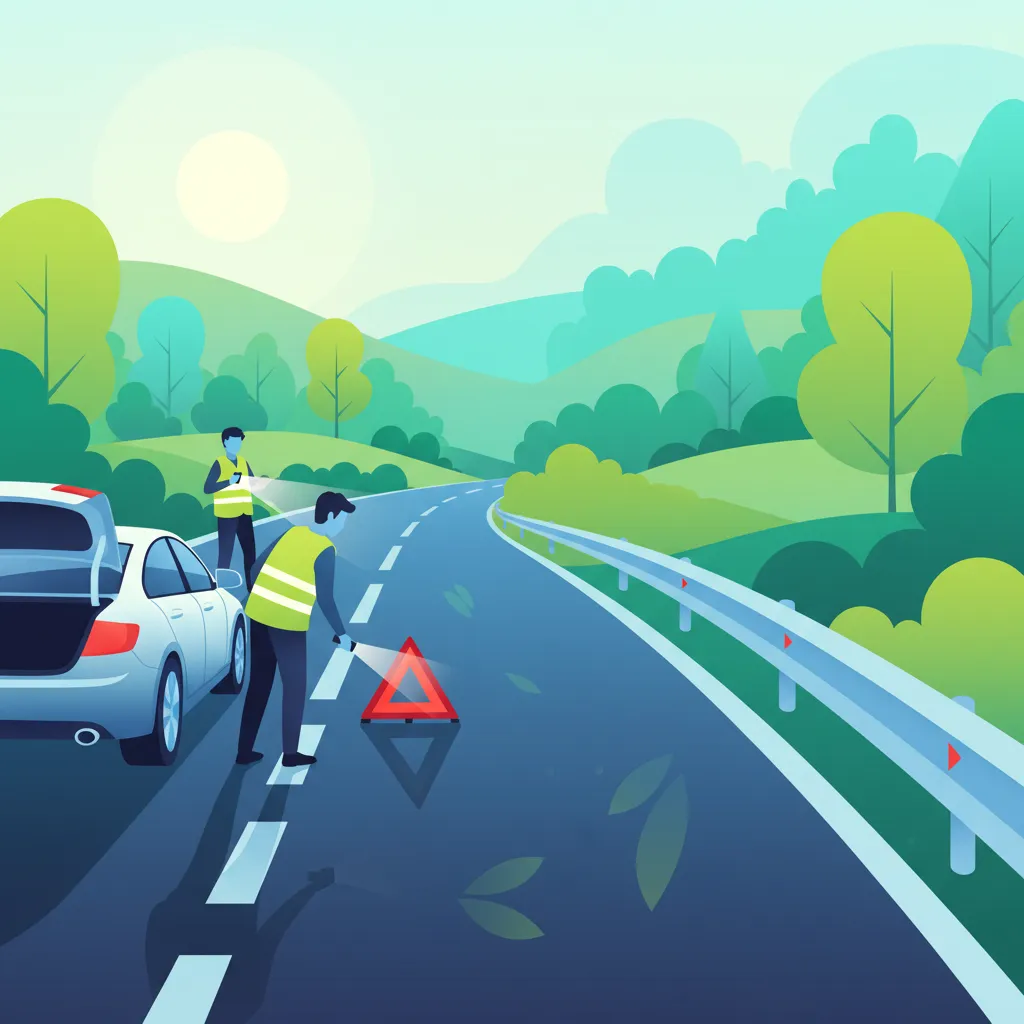
This lesson ensures drivers are familiar with the location and use of all legally required emergency equipment in their vehicle. This includes the first-aid kit, fire extinguisher, warning triangles, and high-visibility safety vest. The content stresses the importance of regularly checking that this equipment is present and in good condition, and it promotes the concept of mental safety drills to prepare for emergency responses.
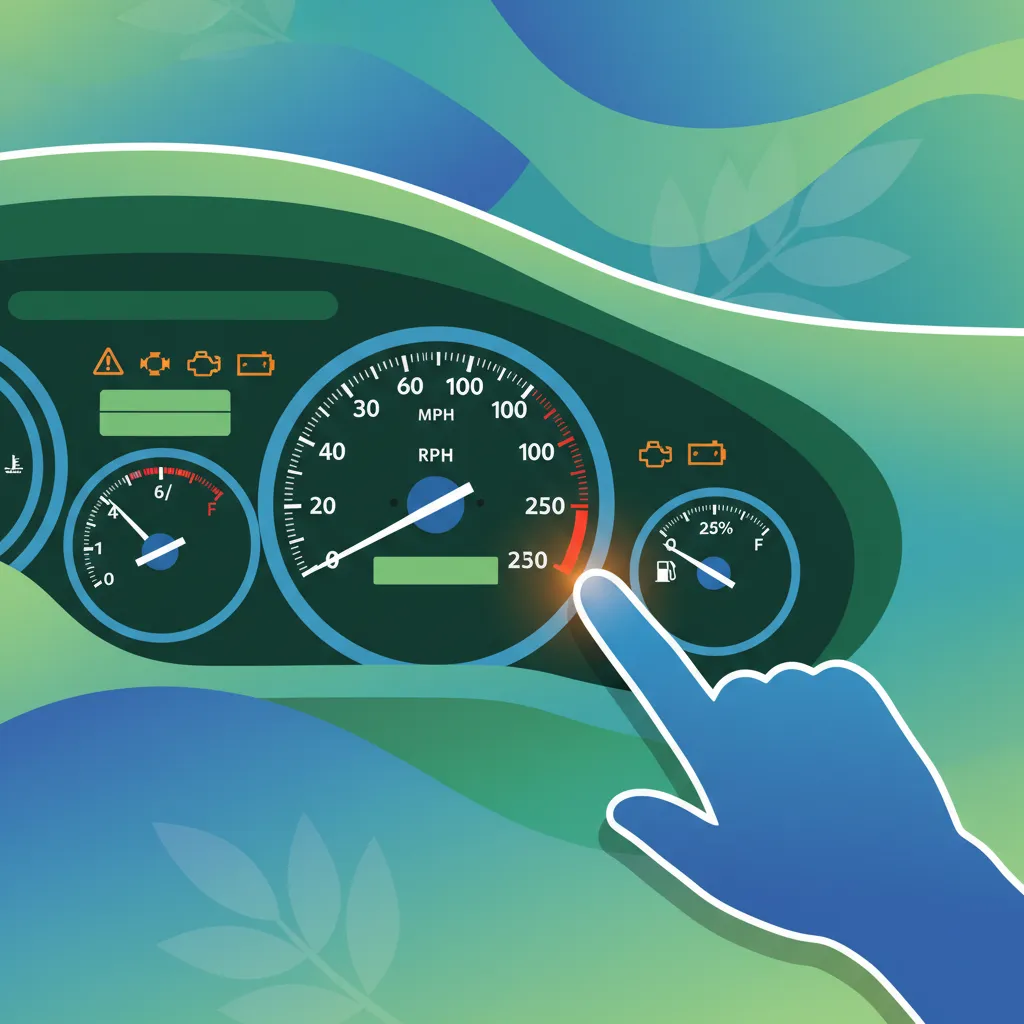
This lesson focuses on the primary components displayed on a vehicle's dashboard and their functional significance. Learners will identify instruments like the speedometer and fuel gauge and understand the meaning of key warning lights, including ABS, oil pressure, and check engine. The lesson explains how to interpret these signals while driving and the immediate actions required upon their illumination.
This lesson outlines procedures for handling emergency situations and accidents. It covers emergency braking techniques, hazard avoidance strategies, and the DGT emergency protocol for accident reporting. Emphasis is placed on rider protective actions, post-crash first aid, roadside safety, and legal obligations after an incident.
This driving theory lesson covers how to react to unexpected roadside emergencies in Spain, from vehicle breakdowns and required safety equipment to general accident procedures and adverse weather driving.
This lesson provides guidance on responding to a road accident, following the 'Protect, Alert, Assist' protocol. It details the steps for securing the scene, notifying emergency services, and providing basic aid if necessary. The content covers the legal responsibilities of the driver, including completing an accident report form (parte amistoso) and exchanging insurance information.
This lesson provides a step-by-step guide on what to do when a vehicle breaks down on the road. It explains how to safely bring the truck to a stop, activate hazard warnings, and place reflective warning triangles as required by law. The content also covers the procedures for contacting roadside assistance and communicating the nature of the problem and the vehicle's location accurately.
This lesson covers how environmental conditions such as rain, fog, and darkness affect driving safety. It instructs drivers on adjusting speed, using appropriate lighting, and increasing following distance to compensate for reduced visibility and traction. The lesson incorporates DGT safety recommendations for handling adverse weather to mitigate risk and maintain control.
This lesson outlines procedures for handling emergency situations and accidents. It covers emergency braking techniques, hazard avoidance strategies, and the DGT emergency protocol for accident reporting. Emphasis is placed on rider protective actions, post-crash first aid, roadside safety, and legal obligations after an incident.
This lesson examines the significant impact of various weather conditions on driving safety, including rain, fog, snow, ice, and high winds. Learners will understand how each condition can affect vehicle traction, reduce visibility, and alter driver perception, learning the appropriate adjustments to speed, following distance, and braking. The module also covers the use of vehicle safety features to mitigate risks in adverse weather.
This lesson addresses the specific challenges posed by rain and fog, focusing on reduced visibility and loss of traction. It explains the proper use of windshield wipers and fog lights, and the need to adjust speed and increase following distance. The content covers how to prevent and react to hydroplaning (aquaplaning) to maintain vehicle control.
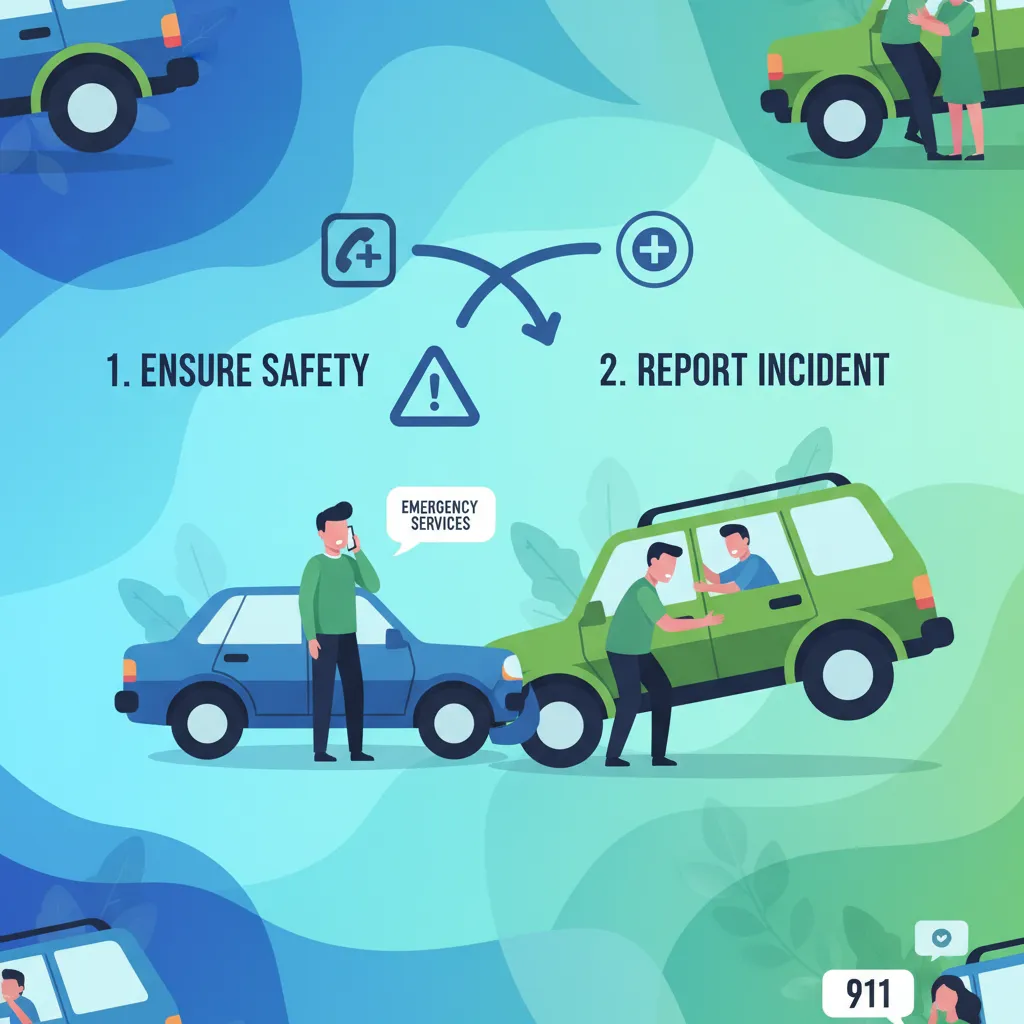
This lesson outlines the comprehensive steps required to safely manage an accident scene, including securing the area and providing immediate aid to any injured parties. Learners will be taught the legal reporting requirements, how to properly notify the DGT, and the specific documentation needed for insurance claims. The module also covers the process for collecting witness statements and interacting effectively with responding police authorities.
This lesson outlines the correct and legally required procedures to follow in the event of a traffic incident or accident. It covers the driver's immediate responsibilities at the scene, including securing the area and contacting emergency services. The content details the process for documenting the incident and formally reporting it to the DGT and insurance companies as required by law.
Find clear answers to common questions learners have about Vehicle Breakdowns, Roadside Assistance, and Safety Protocols. Learn how the lesson is structured, which driving theory objectives it supports, and how it fits into the overall learning path of units and curriculum progression in Spain. These explanations help you understand key concepts, lesson flow, and exam focused study goals.
If your vehicle breaks down on a Spanish motorway, your absolute first priority is safety. Reduce speed and try to pull over onto the hard shoulder (arcén) or the rightmost lane if the hard shoulder is not available. Immediately activate your hazard warning lights. Do not attempt to carry out repairs yourself on the carriageway or hard shoulder. Your next step is to put on your high-visibility vest before exiting the vehicle and move all passengers to a safe location away from traffic, ideally behind a safety barrier if one is present.
In Spain, the traditional breakdown triangle must be placed at a sufficient distance behind the vehicle to warn oncoming traffic, typically 50 metres and visible from 100 metres, on roads outside of motorways. For motorways and dual carriageways, its use is generally discouraged due to extreme danger. The newer V16 emergency warning light, which emits a flashing amber signal and is increasingly replacing the triangle, can be placed on the vehicle's roof or dashboard, providing high visibility without requiring you to exit the vehicle into traffic. Ensure you are aware of the specific regulations for each device and the road type.
Yes, it is mandatory. According to DGT regulations, any person who exits a vehicle involved in a breakdown or accident outside of urban areas, or on motorways and dual carriageways, must wear a high-visibility vest that meets UNE-EN 471 standards. This vest must be kept inside the passenger compartment for easy access, not in the boot. Failure to comply can result in penalties.
You should contact your breakdown assistance provider, which is usually affiliated with your car insurance policy. Alternatively, on motorways and highways, there are emergency telephones (SOS points) that connect you directly to the traffic authorities (DGT or relevant highway management body), who can then dispatch assistance. Always have your policy details or location information ready when you call.
If you break down in a location where it is too dangerous to place a warning device or even safely exit the vehicle, such as on a narrow, busy road or in a tunnel, your priority is to remain inside the vehicle with your seatbelt fastened and activate your hazard lights. Then, use the nearest SOS emergency telephone to report your situation to the authorities. They will manage the traffic and arrange for appropriate assistance.
Use our powerful search functionality to pinpoint specific Spanish DGT driving theory practice sets. Filter by road sign categories, traffic law topics, or question difficulty to build custom study sessions and reinforce your knowledge precisely where it matters for your official exam.