
This lesson prepares you for critical situations on the road by detailing the correct procedures to follow in the event of a traffic accident. Understanding how to protect the scene, alert emergency services, assist others, and complete necessary reports is vital for both safety and legal compliance in Spain, building upon the principles covered in adverse conditions.
Lesson content overview
Encountering a road accident can be a stressful and disorienting experience. However, as a driver in Spain, understanding and adhering to the correct procedures following a collision is paramount. This comprehensive lesson outlines the essential steps to take, focusing on safety, legal compliance, and proper documentation. We will guide you through the Protege, Alerta, Asiste (Protect, Alert, Assist) protocol, the importance of the parte amistoso (joint accident report), and the significant legal consequences of failing to meet your obligations. Mastering these procedures is crucial not only for your safety and that of others but also for ensuring smooth insurance claims and avoiding severe penalties.
In the immediate aftermath of any road accident, your first priority is to prevent further harm. Spanish traffic law mandates a clear three-step protocol: Protege, Alerta, Asiste. This sequence is designed to secure the scene, notify emergency services, and provide initial care to those who are injured, ensuring that a single incident does not escalate into a series of collisions or injuries.
The Protege (Protect) phase is about making the accident scene safe for everyone involved and for approaching traffic. Swift and correct actions here can prevent secondary accidents and protect lives.
Immediately after stopping your vehicle at the scene of an accident or breakdown, the first action you must take is to activate your vehicle's hazard warning lights (luces de emergencia). These flashing lights signal to other road users that there is a stationary vehicle ahead posing a potential obstruction or danger. This is a mandatory requirement under Spanish traffic regulations (Reglamento General de Circulación – Artículo 33) and significantly increases your visibility, especially in adverse weather conditions or at night.
Once your hazard lights are on and you have moved to a safe position, you must place your warning triangle (triángulo de socorro). Every vehicle in Spain is legally required to carry at least one, and it serves as a critical visual warning device.
Position the warning triangle at a minimum distance of 50 metres from the vehicle.
Ensure the triangle is visible from at least 100 metres to approaching traffic.
If the accident occurs on a two-way road or a road with more than one lane in each direction, you must place two warning triangles: one in front of the vehicle and one behind it, following the same distance guidelines.
On motorways (autopistas and autovías) or one-way roads, only one triangle is required, placed behind the vehicle.
From 1st January 2026, the use of warning triangles will be replaced by the V-16 emergency light device. However, until this date, triangles remain mandatory and must be used as described.
If possible and safe to do so, move your vehicle to the hard shoulder or off the main roadway to avoid obstructing traffic. However, if there are injured parties or if moving the vehicle could compromise evidence or worsen the situation, it's generally best to leave it in place until emergency services arrive. Always turn off the engine to prevent fire risks. When exiting your vehicle, always do so from the side closest to the shoulder or pavement, never into the flow of traffic. Wear a high-visibility reflective vest (also mandatory to carry in the vehicle) immediately upon exiting.
The Alerta (Alert) phase involves contacting the appropriate authorities and ensuring that help is dispatched quickly and efficiently.
The European emergency number 112 is your primary point of contact for all emergencies in Spain, including road accidents. You must call 112 if:
Even in minor incidents where no injuries are apparent, calling 112 can be advisable to receive guidance and ensure a formal record, especially if there's any uncertainty.
When you call 112, be prepared to provide precise information to help emergency services respond effectively. This includes:
Stay on the line until the operator tells you it's okay to hang up.
The Asiste (Assist) phase focuses on providing basic help and comfort to anyone who is injured, always within your capabilities and legal limits.
Spanish law, specifically Article 195 of the Reglamento General de Circulación (General Traffic Regulations), imposes a legal duty of assistance (deber de socorro) on all drivers involved in or witnessing an accident. This means you are obligated to help injured persons and prevent further harm. Failure to assist, especially if it leads to injury or death, can result in severe legal consequences, including criminal charges for "abandonment of the scene of an accident" (abandono del lugar del accidente).
While you are not expected to be a medical professional, you should offer basic first aid if you are trained and it is safe to do so. Your primary goals are to:
Consider taking a basic first aid course. Even simple knowledge can make a significant difference in an emergency.
After ensuring safety and alerting authorities, the next critical step is documenting the accident for legal and insurance purposes. This involves either completing a joint accident report form or exchanging information with the other party.
For minor collisions involving only property damage and no injuries, drivers can jointly complete a joint accident report form (parte amistoso). This form serves as crucial evidence for insurance companies and streamlines the claims process. It is a standardized European form, often referred to as a "European Accident Statement."
The parte amistoso is typically divided into several sections:
The parte amistoso is legally binding only if it is signed by all involved drivers. By signing, you are agreeing to the factual account of the accident as described in the form. If there is a disagreement about how the accident occurred, do not sign the parte amistoso. In such cases, you should call 112 to request police attendance so they can document the scene and mediate or provide an official report. Both drivers should keep a copy of the completed and signed form.
Always carry a blank parte amistoso form in your vehicle. Your insurance company can provide one.
Even if you complete a parte amistoso, it's essential to ensure you have exchanged all necessary information with the other driver(s). This is a legal obligation under Article 196 of the Reglamento General de Circulación.
You must exchange the following details:
Crucially, you must also exchange your mandatory vehicle liability insurance (seguro obligatorio) details:
It's advisable to take photos of the other vehicle's registration plate, insurance policy sticker, and any damage, as well as the accident scene itself.
If you collide with a parked vehicle and the owner is not present, you must leave a written note with your name, address, telephone number, and insurance details clearly visible on the vehicle. Failing to do so can be considered abandono del lugar del accidente (leaving the scene) and carry serious penalties. If the other driver is uncooperative, refuses to provide information, or appears to be under the influence, do not engage in confrontation. Instead, call 112 immediately and await police intervention.
Failing to comply with the post-accident procedures outlined above can lead to significant legal repercussions, ranging from administrative fines to criminal charges. Understanding these consequences underscores the importance of acting responsibly and by the law.
Administrative penalties are imposed for infractions of traffic laws. These can include:
puntos): Certain serious infractions will result in the deduction of points from your driving license. Accumulating zero points leads to the suspension or revocation of your license.Under Spanish law, particularly Article 152 of the Ley Orgánica 10/1995 (Código Penal - Criminal Code), abandoning the scene of an accident where bodily injury or death has occurred is a serious criminal offense. This applies even if you were not at fault for the accident itself. Criminal charges can also arise if your negligence or reckless driving directly caused severe injury or death. Depending on the severity, penalties can include imprisonment, heavy fines, and a ban from driving for an extended period.
Beyond administrative and criminal penalties, drivers are also subject to civil liability (responsabilidad civil). This means you are legally responsible for compensating any injured parties for damages caused by your actions, including:
Your mandatory vehicle liability insurance is designed to cover these civil liabilities up to a certain limit. However, if damages exceed your policy limits or if you were driving without insurance (which is a serious offense), you would be personally responsible for the remaining costs.
Understanding the specific articles of the Reglamento General de Circulación (General Traffic Regulations) and related laws is essential for proper accident response.
| Regulation | Rule Statement | Applicability | Legal Status | Rationale |
|---|---|---|---|---|
| Artículo 195 RGC | Drivers must stop immediately after an accident, assist injured persons, and notify authorities. | All collisions, regardless of severity. | Mandatory | Protect life and property, ensure timely assistance. |
| Artículo 196 RGC | Drivers must exchange identification, vehicle registration, and insurance details. | Any road accident involving damage or injury. | Mandatory | Enables liability identification and claims processing. |
| Artículo 197 RGC | If damage is less than a certain threshold and involves third-party property, a joint accident report (parte amistoso) must be issued within 24 hours. | Minor collisions with property damage; no injuries. | Mandatory | Provides legal evidence for insurance claims. |
| Artículo 80 RGC | The warning triangle must be placed at least 50 metres before the vehicle and be visible from 100 metres. Two triangles for two-way roads (front/rear), one for one-way roads (rear). | All accidents where the vehicle is stationary on public roads. | Mandatory | Warns oncoming traffic, prevents secondary accidents. |
| Artículo 33 RGC | Use of hazard lights is required when the vehicle is stopped on the roadway due to an accident or breakdown. | Vehicle stopped on public road. | Mandatory | Increases visibility and alerts other drivers. |
| Ley Orgánica 10/1995 (Código Penal) – Artículo 152 | Abandoning the scene of an accident causing injury is a criminal offense. | Accidents with bodily injury or death. | Mandatory (criminal) | Punishes reckless behavior that endangers lives. |
Even with good intentions, drivers can make critical errors after an accident. Being aware of these common pitfalls can help you avoid them.
parte amistoso) When Required: For minor property damage, failing to fill out this form can complicate or delay insurance claims. Ensure both parties sign and keep a copy.While the PAA protocol forms the core of accident response, specific conditions may require adjustments to your actions.
autopistas and autovías): Due to high speeds, placing the warning triangle at the maximum required distance (50 metres visible from 100 metres) is crucial. Always move to the hard shoulder if possible. Never attempt to cross lanes on foot to place a triangle; prioritize your safety.Proper accident handling is more than just following rules; it's about safeguarding lives, fulfilling your civic duty, and protecting your legal and financial interests. By understanding and diligently applying the Protege, Alerta, Asiste protocol, exchanging information accurately, and completing necessary documentation like the parte amistoso, you contribute to a safer road environment and ensure that the aftermath of an accident is managed as effectively and fairly as possible. This knowledge is an indispensable part of being a responsible driver in Spain and completing your Spanish Driving License Theory Course for Categories B & BE.
This lesson covers the essential accident response procedures required by Spanish traffic law, centred on the Protect-Alert-Assist (PAA) protocol mandated by the Dirección General de Tráfico. Drivers must immediately activate hazard lights, wear their reflective vest, and place warning triangles at the correct distance before calling emergency services (112) to report injuries, significant damage, or uncooperative parties. The legal framework, including Articles 195 and 196 of the Reglamento General de Circulación, establishes a duty of assistance and mandatory information exchange, while the parte amistoso form provides the standard mechanism for documenting minor collisions. Failure to comply can result in administrative fines, loss of licence points, criminal charges for abandonment under Article 152 of the Código Penal, and civil liability for damages.
A short set of high-value points that capture the most important learning from this lesson.
The three-step PAA protocol (Protect, Alert, Assist) is the mandatory sequence for post-accident response in Spain
Activate hazard lights immediately and place warning triangles 50 metres behind your vehicle, visible from at least 100 metres
Call 112 for all accidents involving injuries, significant damage, disputes, or vulnerable road users
The parte amistoso is a jointly signed document that must be completed for minor property-damage-only collisions; both drivers must sign and keep copies
Leaving the scene of an accident without fulfilling your legal duties can result in criminal charges under Article 152 of the Código Penal
Explore all units and lessons included in this driving theory course.
Article 195 RGC imposes a legal duty of assistance on all drivers; you must stop and help injured persons
Article 196 RGC requires exchange of full name, address, DNI/NIE, vehicle registration, and insurance details after any accident
Two warning triangles are required on two-way roads (front and rear), but only one on motorways or one-way roads (rear only)
Never move an injured person unless they face immediate danger from fire, explosion, or oncoming traffic
Article 197 RGC requires that a joint accident report be issued within 24 hours for minor collisions
Leaving the scene of an accident (hit-and-run), even for minor collisions, carries serious criminal penalties
Failing to activate hazard lights or place warning triangles, which greatly increases the risk of secondary collisions
Providing false or incomplete personal, vehicle, or insurance information, which can lead to insurance claim denials
Delaying the call to 112 when injuries are involved; every minute counts in emergency response
Moving an injured person without cause when there is no immediate life-threatening danger, which can worsen spinal or other injuries
Lesson content overview
A short set of high-value points that capture the most important learning from this lesson.
The three-step PAA protocol (Protect, Alert, Assist) is the mandatory sequence for post-accident response in Spain
Activate hazard lights immediately and place warning triangles 50 metres behind your vehicle, visible from at least 100 metres
Call 112 for all accidents involving injuries, significant damage, disputes, or vulnerable road users
The parte amistoso is a jointly signed document that must be completed for minor property-damage-only collisions; both drivers must sign and keep copies
Leaving the scene of an accident without fulfilling your legal duties can result in criminal charges under Article 152 of the Código Penal
Explore all units and lessons included in this driving theory course.
Article 195 RGC imposes a legal duty of assistance on all drivers; you must stop and help injured persons
Article 196 RGC requires exchange of full name, address, DNI/NIE, vehicle registration, and insurance details after any accident
Two warning triangles are required on two-way roads (front and rear), but only one on motorways or one-way roads (rear only)
Never move an injured person unless they face immediate danger from fire, explosion, or oncoming traffic
Article 197 RGC requires that a joint accident report be issued within 24 hours for minor collisions
Leaving the scene of an accident (hit-and-run), even for minor collisions, carries serious criminal penalties
Failing to activate hazard lights or place warning triangles, which greatly increases the risk of secondary collisions
Providing false or incomplete personal, vehicle, or insurance information, which can lead to insurance claim denials
Delaying the call to 112 when injuries are involved; every minute counts in emergency response
Moving an injured person without cause when there is no immediate life-threatening danger, which can worsen spinal or other injuries
Explore search topics learners often look for when studying Accident Procedures, Reporting, and Legal Consequences. These topics reflect common questions about road rules, driving situations, safety guidance, and lesson level theory preparation for learners in Spain.
Browse additional driving theory lessons that cover connected traffic rules, road signs, and common driving situations related to this topic. Improve your understanding of how different rules interact across everyday traffic scenarios.
Understand your legal duties following a road accident in Spain. This lesson covers mandatory reporting, the 'parte amistoso' form, and potential legal consequences from DGT regulations and the penal code.
This lesson details the formal and legal obligations for reporting a traffic accident to the authorities. It clarifies the circumstances under which police must be called to the scene and the procedures for completing the official European Accident Statement form ('parte amistoso'). Understanding these responsibilities ensures that the rider complies with Spanish law and that the incident is properly documented for insurance and liability purposes.
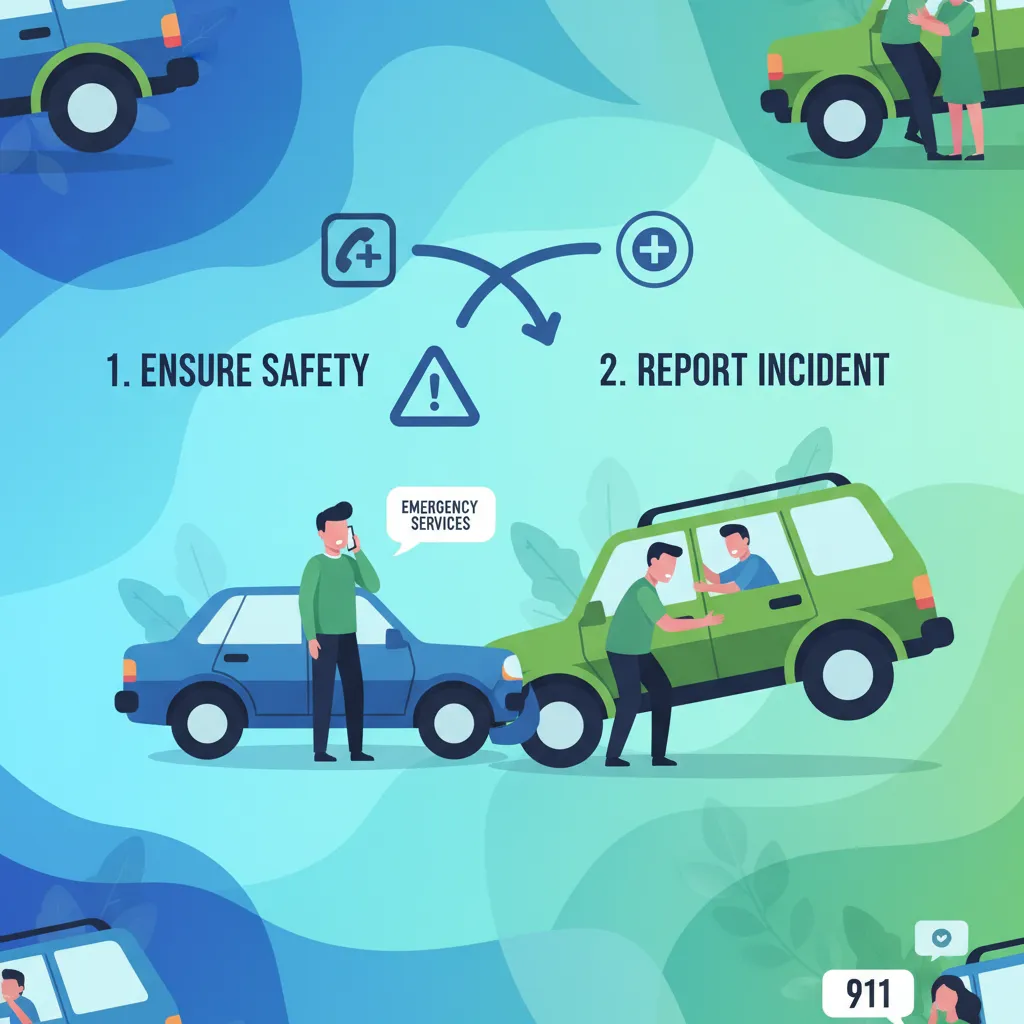
This lesson outlines the comprehensive steps required to safely manage an accident scene, including securing the area and providing immediate aid to any injured parties. Learners will be taught the legal reporting requirements, how to properly notify the DGT, and the specific documentation needed for insurance claims. The module also covers the process for collecting witness statements and interacting effectively with responding police authorities.
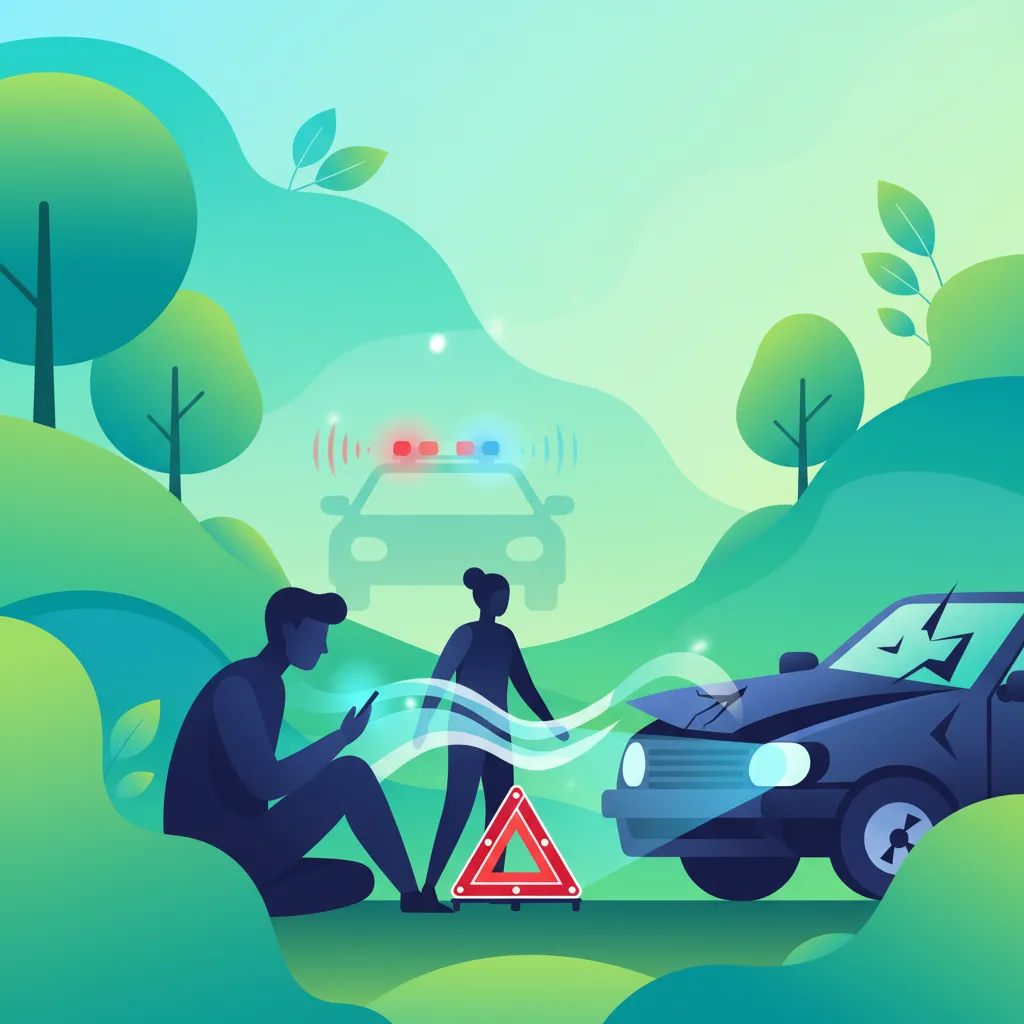
This lesson outlines the correct and legally required procedures to follow in the event of a traffic incident or accident. It covers the driver's immediate responsibilities at the scene, including securing the area and contacting emergency services. The content details the process for documenting the incident and formally reporting it to the DGT and insurance companies as required by law.
This lesson explains the driver's legal and ethical responsibilities when involved in or witnessing an accident. It covers the immediate priorities of protecting the scene from further incidents and providing aid to the injured within one's capabilities. The content details the legal requirements for exchanging information with other parties and reporting the accident to the police and DGT.

This lesson explains the importance of fostering a proactive safety culture within the transport industry. It outlines the official procedures for reporting accidents and incidents to the DGT and other relevant authorities. Learners will understand how to accurately document an incident, their legal obligations at an accident scene, and how risk assessment and preventive measures contribute to overall road safety.
This lesson provides a clear checklist of actions to take in the immediate aftermath of a traffic accident. It prioritizes safety by explaining how to secure the scene and check for injuries before anything else. The content guides learners on the legal requirement to exchange information with other parties involved and the importance of documenting the scene with photos and collecting witness details for insurance and legal purposes.
Learn the critical 'Protege, Alerta, Asiste' (Protect, Alert, Assist) protocol for responding to traffic accidents. This lesson details how to secure the scene, call for help, and provide basic aid safely and legally.
This lesson provides a clear checklist of actions to take in the immediate aftermath of a traffic accident. It prioritizes safety by explaining how to secure the scene and check for injuries before anything else. The content guides learners on the legal requirement to exchange information with other parties involved and the importance of documenting the scene with photos and collecting witness details for insurance and legal purposes.
This lesson outlines the comprehensive steps required to safely manage an accident scene, including securing the area and providing immediate aid to any injured parties. Learners will be taught the legal reporting requirements, how to properly notify the DGT, and the specific documentation needed for insurance claims. The module also covers the process for collecting witness statements and interacting effectively with responding police authorities.
This lesson explains the driver's legal and ethical responsibilities when involved in or witnessing an accident. It covers the immediate priorities of protecting the scene from further incidents and providing aid to the injured within one's capabilities. The content details the legal requirements for exchanging information with other parties and reporting the accident to the police and DGT.
This lesson outlines the correct and legally required procedures to follow in the event of a traffic incident or accident. It covers the driver's immediate responsibilities at the scene, including securing the area and contacting emergency services. The content details the process for documenting the incident and formally reporting it to the DGT and insurance companies as required by law.
This lesson outlines procedures for handling emergency situations and accidents. It covers emergency braking techniques, hazard avoidance strategies, and the DGT emergency protocol for accident reporting. Emphasis is placed on rider protective actions, post-crash first aid, roadside safety, and legal obligations after an incident.
Find clear answers to common questions learners have about Accident Procedures, Reporting, and Legal Consequences. Learn how the lesson is structured, which driving theory objectives it supports, and how it fits into the overall learning path of units and curriculum progression in Spain. These explanations help you understand key concepts, lesson flow, and exam focused study goals.
The 'Protect, Alert, Assist' protocol guides your actions after an accident. 'Protect' means securing the scene to prevent further harm. 'Alert' involves calling emergency services (112) if there are injuries or significant disruption. 'Assist' means providing aid to the injured if you are able and it is safe to do so, without putting yourself at risk.
You must call 112 if there are any injuries, no matter how minor they seem. Also call if the accident causes significant obstruction to traffic, if a driver appears to be under the influence of alcohol or drugs, or if any party refuses to exchange details or behave appropriately.
The 'parte amistoso' is a form used for minor accidents without injuries. It requires both drivers to provide their personal details, vehicle information, insurance details, and a description of the accident, including a diagram. Both parties must sign it, agreeing on the facts, to facilitate insurance claims. Ensure you have a copy to fill out.
You must exchange names, addresses, phone numbers, driving license numbers, and vehicle registration details (license plate). Crucially, exchange your insurance company name and policy number. Always check the other driver's documentation for validity.
Leaving the scene of an accident, especially if there are injuries or significant damage, can lead to serious legal consequences, including fines, suspension of your driving license, and potentially criminal charges. It is a legal requirement to remain at the scene and fulfill your obligations.
You are legally obliged to offer assistance if you are able and it is safe. This does not mean performing complex medical procedures, but rather calling emergency services, making the injured comfortable, and preventing further harm. Do not move an injured person unless there is an immediate danger.
Use our powerful search functionality to pinpoint specific Spanish DGT driving theory practice sets. Filter by road sign categories, traffic law topics, or question difficulty to build custom study sessions and reinforce your knowledge precisely where it matters for your official exam.