
Navigate the complexities of urban bus driving with this unit, focusing on the specific challenges and regulations within Spain's busy cities. You'll learn essential techniques for managing traffic flow, understanding bus lane usage, and handling priority situations, all crucial for both your DGT theory exam and safe, efficient daily operations.
Browse all lessons that make up Urban Bus Driving. Each lesson focuses on specific topics, learning objectives, and core concepts, helping you build essential knowledge and follow a clear, structured progression toward your study goals in Spain.
This lesson investigates the complex patterns of urban traffic flow, with a particular focus on peak hour congestion and its effect on bus schedules. Learners will study route optimization techniques and headway management to maintain consistent service intervals. The material also covers the analysis of lane occupancy, coordination with traffic signals, and strategies for prioritizing public transport during periods of high traffic density.
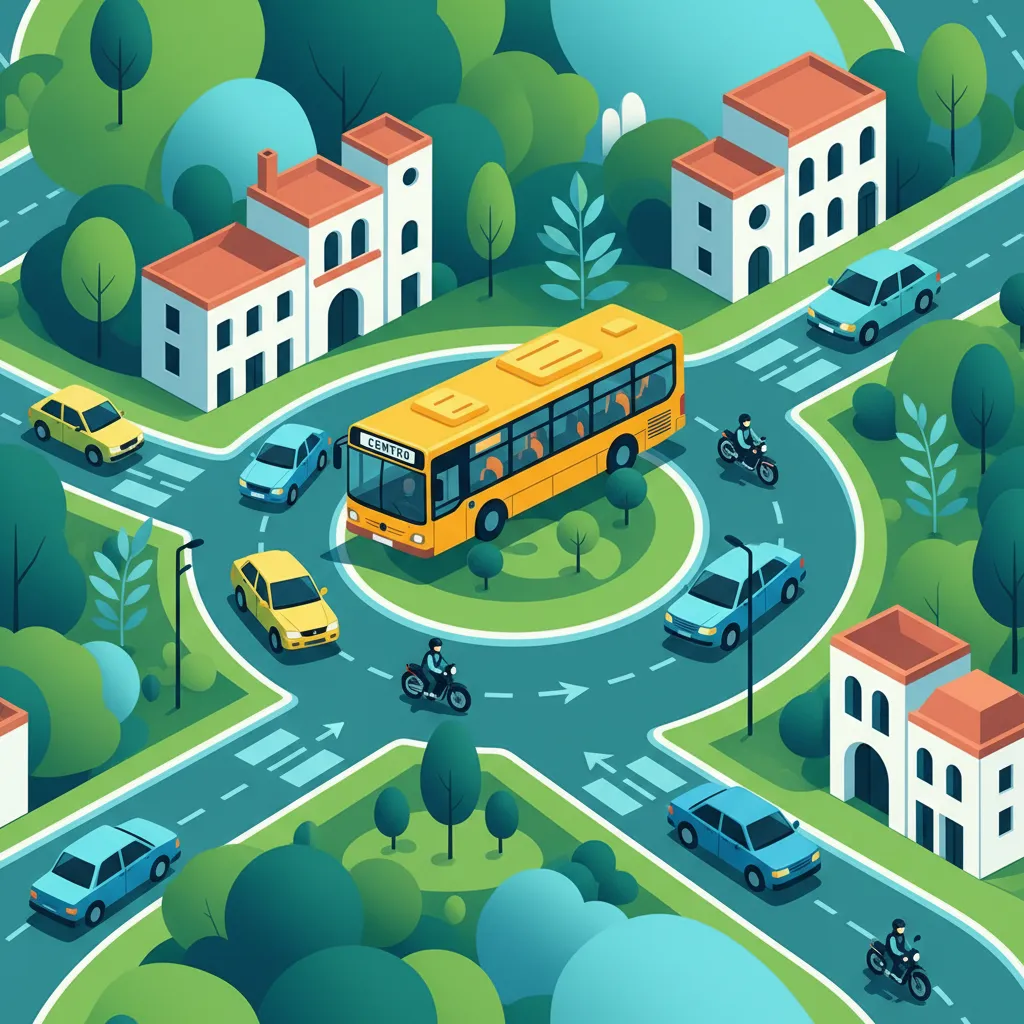
This lesson offers a comprehensive guide to navigating roundabouts in urban settings, explaining the correct protocols for entry, yielding, and circulation. Learners will be taught how to interpret lane markings and signage on multi-lane roundabouts and determine the correct vehicle positioning for safe entry and exit. The content emphasizes full compliance with Spanish city regulations that govern priority and right-of-way at these intersections.
This lesson explores the regulations for dedicated bus lanes in urban environments, detailing the correct interpretation of associated lane markings and traffic signage. Learners will understand the specified times of operation, rules for sharing lanes with other vehicles, and the legal consequences of unauthorized entry. The module also provides clear guidelines for entering and exiting bus lanes at designated points to maintain traffic flow.
This lesson outlines the best practices for precise vehicle positioning at urban bus stops and ensuring safe interaction with passengers. It covers the management of approach speed, correct alignment with the curb, and effective communication during boarding and alighting processes. Learners will also study how stopping maneuvers impact surrounding traffic flow and the importance of maintaining safety distances for efficient service.
Explore high-intent keywords and long-tail search topics learners use when researching Urban Bus Driving. These terms reflect how people search for reliable study materials, structured explanations, and unit-level theory preparation support in Spain.
Find clear answers to the most common questions learners ask about Urban Bus Driving. Understand how the unit is organized, what learning goals it supports, and how it contributes to your study progression with structured explanations and practical guidance tailored for learners in Spain.
In Spain, bus lanes are typically reserved for public transport vehicles, including buses. Their use is governed by specific signage and traffic regulations. Violating these rules can result in fines. This unit covers the relevant signage and conditions under which you can legally use these lanes to improve service efficiency.
Driving a bus in urban traffic presents unique challenges due to the vehicle's size, weight, and maneuverability limitations. You must account for larger blind spots, longer braking distances, and the need for wider turning radii. This unit focuses on techniques to manage these differences, especially in stop-and-go traffic and complex intersections.
Buses, especially public transport services, often have specific priority rights in urban traffic, particularly at intersections and when entering traffic flow. You need to understand the signage and signaling that grant this priority. This unit details these rules to ensure you can navigate intersections safely and efficiently, while also respecting other road users.
Navigating roundabouts with a bus requires careful planning due to its size and turning circle. You need to choose the correct lane well in advance, signal appropriately, and be aware of other vehicles, especially smaller ones that might be less predictable. This unit provides specific guidance on safe roundabout entry and exit procedures for buses.
Congestion management involves anticipating traffic slowdowns, maintaining a schedule despite delays, and communicating effectively with passengers. This unit explores strategies for navigating congested areas smoothly, making informed decisions about routes where possible, and ensuring passenger comfort and safety during prolonged stops or slow-moving traffic.
All included lessons
Lessons in Urban Bus Driving
See who benefits most from studying Urban Bus Driving. This overview explains how the unit supports different learning needs, what level of knowledge is helpful before starting, and how it fits into the overall study path in Spain.
This unit is ideal for aspiring professional bus drivers preparing for their D or D1 category Spanish DGT theory exam. It's particularly beneficial for those who may not have prior experience driving large vehicles in dense city environments and need to understand specific urban traffic dynamics and regulations.

Begin your preparation for the Spanish DGT driving licence exam today. Browse our full curriculum to find guided courses, detailed lessons on traffic legislation, road signs, and essential driving practices. Start learning systematically and confidently.
Explore DGT Theory Courses & CurriculumExplore all units and lessons included in this driving theory course.
Begin your preparation for the Spanish DGT driving licence exam today. Browse our full curriculum to find guided courses, detailed lessons on traffic legislation, road signs, and essential driving practices. Start learning systematically and confidently.
Explore DGT Theory Courses & Curriculum