
This lesson is crucial for professional bus and coach drivers preparing for their D/D1 licenses in Spain. It breaks down the complexities of navigating urban roundabouts, ensuring you understand Spanish priority rules and safe maneuvering techniques. Mastering this topic is vital for passing your DGT theory exam and driving safely in city environments.
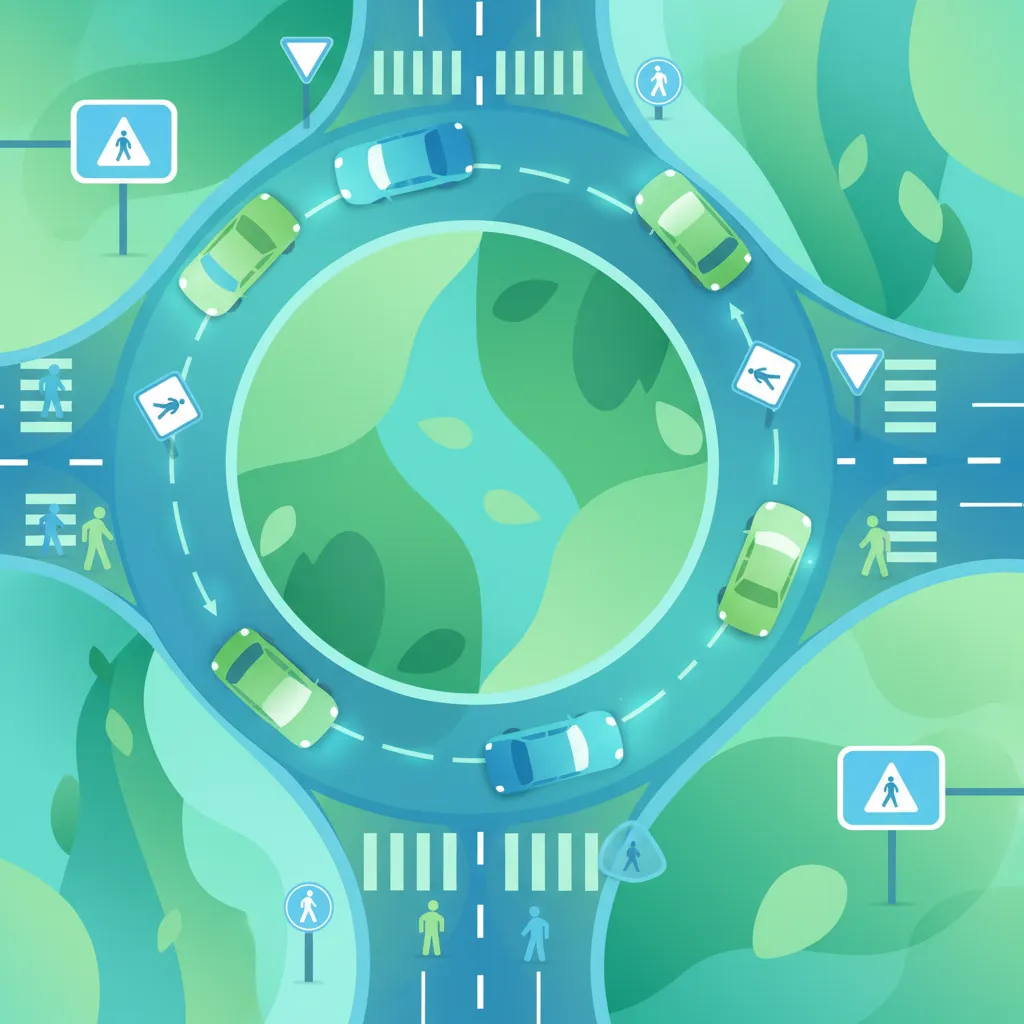
Lesson content overview
Navigating roundabouts (known as glorietas in Spanish) is a daily reality for professional bus and coach drivers in urban settings across Spain. A thorough understanding of their structure, priority rules, and specific operational demands for large passenger vehicles is paramount. This lesson offers a comprehensive guide, ensuring full compliance with the Spanish General Traffic Regulations (Reglamento General de Circulación – RGC) and promoting safe, efficient, and professional driving practices essential for Category D and D1 driving licenses.
Roundabouts are designed to improve traffic flow and reduce the severity of collisions compared to traditional intersections. However, their effectiveness hinges on every driver understanding and adhering to a set of core principles. For bus and coach drivers, these principles are amplified due to vehicle size, passenger safety, and extended stopping distances.
The most fundamental rule at any roundabout in Spain is that vehicles already circulating within the roundabout have absolute priority over those attempting to enter. This principle is clearly indicated by the "Give Way" sign. Professional drivers must approach roundabouts with caution, prepared to stop if necessary, and only enter when a safe gap in traffic permits. This avoids disrupting the flow of vehicles already inside and prevents potential collisions.
Multi-lane roundabouts are common in urban areas and require precise lane discipline. Each lane typically serves a specific range of exits. Selecting the correct lane before entering the roundabout is critical. Once inside, drivers of large vehicles must maintain their chosen lane and avoid changing lanes, as this creates conflict points and is often illegal and highly dangerous. Proper lane discipline ensures smooth circulation and minimizes congestion.
Buses and coaches, due to their considerable length and width, require special attention to positioning. Drivers must maintain a central trajectory within their chosen lane, avoiding encroachment on adjacent lanes or the central island. Managing the vehicle's turning radius effectively is key to navigating the curve of the roundabout without compromising safety or impeding other road users. This proactive positioning helps mitigate blind spots and ensures clear passage.
Traffic signs and road markings provide crucial information for navigating roundabouts safely. Drivers must be proficient in interpreting signs such as the "Give Way" sign, the "Roundabout" sign, and especially lane direction arrows painted on the road surface. These visual cues dictate right-of-way, appropriate speed, and the correct lane for intended exits, ensuring predictable behavior from all road users.
Reduced speed is essential for safe roundabout navigation. In urban settings, the general speed limit within roundabouts is typically 30 km/h, unless specific signage indicates a lower limit (e.g., 20 km/h in highly congested or pedestrian-heavy zones). Professional drivers must decelerate well before entry, maintain the appropriate speed while circulating, and only accelerate once safely exiting the roundabout. This allows ample reaction time and accommodates the larger turning radius of a bus or coach.
The safety of vulnerable road users (VRUs), including pedestrians and cyclists, is a paramount concern. Many urban roundabouts feature marked pedestrian crossings, often on the central island or at exit points. Bus and coach drivers must be highly vigilant, always prepared to yield to pedestrians in designated crossing zones. Cyclists may also use the outer lane, and drivers must maintain a safe lateral distance to prevent side-swipes or close calls.
Adherence to specific articles within the Spanish General Traffic Regulations (RGC) is not merely a recommendation; it is a legal obligation for all drivers, especially professionals. These regulations form the bedrock of safe roundabout operation.
Statement: Vehicles entering a roundabout (glorieta) must yield to traffic already circulating within it. Applicability: This rule applies universally to all roundabouts, regardless of the number of lanes or their specific design. Rationale: This article prevents collisions by establishing a clear hierarchy of right-of-way, ensuring continuous flow for vehicles already engaged in the maneuver. Implications for Bus/Coach Drivers: Professional drivers, despite operating larger vehicles, are not exempt from this rule. They must stop at the línea de cedencia (yield line) if necessary, check traffic flow carefully, and only enter when a sufficiently large and safe gap is present, considering their vehicle's longer stopping distance.
Statement: Drivers must follow lane markings and arrows. Lane changes inside a roundabout are generally prohibited and discouraged. Applicability: This is especially critical for multi-lane roundabouts. Rationale: Strict lane discipline minimizes conflict points, reduces the need for sudden braking, and maintains an ordered traffic flow, which is crucial in congested urban environments. Implications for Bus/Coach Drivers: Due to their size, bus and coach drivers must be meticulous in selecting the correct lane before entering the roundabout. A large vehicle changing lanes unexpectedly can create significant danger for smaller vehicles and motorcycles. Once a lane is chosen, it must be maintained until the point of exit.
Attempting to switch lanes within a roundabout is a common cause of accidents involving large vehicles and is explicitly discouraged by traffic regulations due to the inherent dangers it poses to other road users, especially those in blind spots.
Statement: The default speed limit within urban roundabouts is 30 km/h unless otherwise specified by signage. Applicability: All urban roundabouts. Rationale: Lower speeds provide drivers with more time to react, assess traffic, and safely maneuver, which is particularly important for vehicles with larger turning radii and longer braking distances like buses and coaches. Implications for Bus/Coach Drivers: Professional drivers must adjust their speed well in advance, taking into account the vehicle's weight and potential passenger load, which can affect braking efficiency. Exceeding this limit compromises safety and control.
Statement: Drivers must consider their vehicle's dimensions, including length, width, and turning radius, and ensure they do not exceed lane boundaries or infringe on other road users' space. Applicability: All roads, but especially critical in the confined spaces and curves of roundabouts. Rationale: This ensures that large vehicles can navigate safely without causing damage, impeding traffic, or creating hazards for adjacent lanes or infrastructure (like the central island). Implications for Bus/Coach Drivers: Buses and coaches have significantly larger turning radii than private cars. Drivers must anticipate this, taking a wider path within their lane (while still respecting lane markings) to avoid hitting the central island or encroaching on the next lane. This often means staying further from the inner edge of the lane.
Statement: Pedestrians have priority when crossing marked zones within roundabouts. Cyclists, when present, also require special consideration. Applicability: Roundabouts with marked pedestrian crossings and those frequently used by cyclists. Rationale: This article protects the most vulnerable users of the road network, acknowledging their increased risk in traffic. Implications for Bus/Coach Drivers: High vigilance is required. Drivers must actively scan for pedestrians and cyclists, particularly when entering or exiting the roundabout. Reducing speed and being prepared to stop is crucial whenever VRUs are present or might appear.
Successful navigation of multi-lane urban roundabouts as a professional driver involves a systematic approach, starting well before entry and extending through the exit maneuver.
The choice of entry lane is paramount and dictated by your intended exit. Lane markings and overhead signs will guide you.
For taking the first exit, you should generally use the outermost lane (the lane furthest from the central island) for entry. This allows for a smooth, direct path out of the roundabout.
If you intend to go straight (second exit) or take an exit that is not the immediate first, you should typically use the inner lane(s) for entry. This position allows you to circulate past the first exit safely without interfering with vehicles taking the immediate right.
For exits further along or if you intend to make a U-turn (effectively taking the last exit), you should use the innermost lane of the roundabout. This minimizes potential conflicts with vehicles exiting sooner.
Always check for lane arrows painted on the road surface or on overhead signs before entering. These are the definitive guides for lane selection and must be strictly followed.
Once the correct lane is selected:
Exiting requires careful planning and execution:
Professional drivers must be prepared for a range of scenarios and challenges when navigating urban roundabouts.
The rules governing roundabouts are not arbitrary; they are meticulously designed to enhance safety and optimize traffic flow. Understanding the underlying rationale reinforces the importance of compliance.
Proper positioning within a lane, especially for large vehicles, ensures that the driver has a clear view of their surroundings and reduces blind spots where smaller vehicles, cyclists, or pedestrians might be obscured. Conversely, proper positioning by the bus also makes it more visible to other road users.
The mandated lower speeds in roundabouts are directly linked to human reaction time (typically around 2.5 seconds, including perception and decision-making) and vehicle stopping distances. For a heavy bus or coach, increased mass means significantly longer stopping distances, making reduced speed crucial for preventing collisions.
When all drivers follow the rules—yielding, maintaining lanes, and signaling correctly—traffic flow becomes predictable. This predictability reduces the cognitive load for all road users, allows for smoother merging and exiting, and minimizes the need for sudden braking or evasive maneuvers.
The weight of passengers and cargo directly impacts a bus or coach's handling characteristics. An increase in load can extend braking distances by approximately 10% per 100 kg. It also subtly alters the vehicle's center of gravity, affecting its stability during turns. Professional drivers must constantly factor this "load effect" into their speed and positioning decisions.
Mastering urban roundabouts is a critical skill for professional bus and coach drivers. It requires continuous attention to detail, adherence to legal frameworks, and an understanding of vehicle dynamics. By internalizing these principles, you will contribute to safer roads and more efficient public transport operations in Spain.
This lesson covers the essential rules for navigating urban roundabouts in Spain as a professional bus or coach driver, with emphasis on yielding protocols, lane discipline, and vehicle-specific considerations. Key principles include absolute priority for circulating traffic, mandatory lane maintenance inside the roundabout, and a default 30 km/h speed limit in urban settings. The content addresses the unique challenges of large vehicles, including extended turning radii, longer braking distances, and load effects that require proactive gap selection and wider lane positioning. Understanding RGC articles 44, 40, 53, 6, and 54 provides the legal framework for safe roundabout operation, while awareness of vulnerable road users and adverse conditions ensures comprehensive preparation for both the DGT theory exam and real-world driving.
A short set of high-value points that capture the most important learning from this lesson.
Vehicles already circulating inside a roundabout have absolute priority over those attempting to enter (RGC Article 44)
Lane selection must be made before entry and the chosen lane must be maintained until the point of exit
Urban roundabout speed limit defaults to 30 km/h unless signage indicates otherwise (RGC Article 53)
Bus and coach drivers must account for larger turning radii and longer stopping distances compared to smaller vehicles
Pedestrians and cyclists have priority in designated crossing zones within and at the exits of roundabouts
Explore all units and lessons included in this driving theory course.
Yield at the línea de cedencia and only enter when a safe gap permits, considering your vehicle's longer stopping distance
Lane changes inside a roundabout are generally prohibited and dangerous, especially for large vehicles
Use the outer lane for immediate first exits; use inner lanes for straight-ahead or subsequent exits
Heavy loads increase braking distances by approximately 10% per 100 kg, requiring earlier deceleration
Signal right after passing the exit immediately before your intended exit, or before entering if it is the first exit
Entering the roundabout without yielding to circulating traffic, the primary cause of roundabout collisions
Attempting to change lanes inside the roundabout, which creates dangerous conflict points and is often illegal
Selecting the wrong entry lane for your intended exit, forcing unsafe maneuvers or missed exits
Neglecting to yield to pedestrians in marked crossing zones on the central island or at exit points
Approaching roundabouts at excessive speed, reducing reaction time and increasing stopping distance
Lesson content overview
A short set of high-value points that capture the most important learning from this lesson.
Vehicles already circulating inside a roundabout have absolute priority over those attempting to enter (RGC Article 44)
Lane selection must be made before entry and the chosen lane must be maintained until the point of exit
Urban roundabout speed limit defaults to 30 km/h unless signage indicates otherwise (RGC Article 53)
Bus and coach drivers must account for larger turning radii and longer stopping distances compared to smaller vehicles
Pedestrians and cyclists have priority in designated crossing zones within and at the exits of roundabouts
Explore all units and lessons included in this driving theory course.
Yield at the línea de cedencia and only enter when a safe gap permits, considering your vehicle's longer stopping distance
Lane changes inside a roundabout are generally prohibited and dangerous, especially for large vehicles
Use the outer lane for immediate first exits; use inner lanes for straight-ahead or subsequent exits
Heavy loads increase braking distances by approximately 10% per 100 kg, requiring earlier deceleration
Signal right after passing the exit immediately before your intended exit, or before entering if it is the first exit
Entering the roundabout without yielding to circulating traffic, the primary cause of roundabout collisions
Attempting to change lanes inside the roundabout, which creates dangerous conflict points and is often illegal
Selecting the wrong entry lane for your intended exit, forcing unsafe maneuvers or missed exits
Neglecting to yield to pedestrians in marked crossing zones on the central island or at exit points
Approaching roundabouts at excessive speed, reducing reaction time and increasing stopping distance
Explore search topics learners often look for when studying Roundabouts and Priority Rules in Urban Settings. These topics reflect common questions about road rules, driving situations, safety guidance, and lesson level theory preparation for learners in Spain.
Browse additional driving theory lessons that cover connected traffic rules, road signs, and common driving situations related to this topic. Improve your understanding of how different rules interact across everyday traffic scenarios.
Explore complex scenarios and advanced techniques for navigating multi-lane roundabouts in Spain. This lesson covers intricate priority situations, lane discipline for large vehicles, and common challenges faced by professional drivers, enhancing your understanding beyond basic principles.
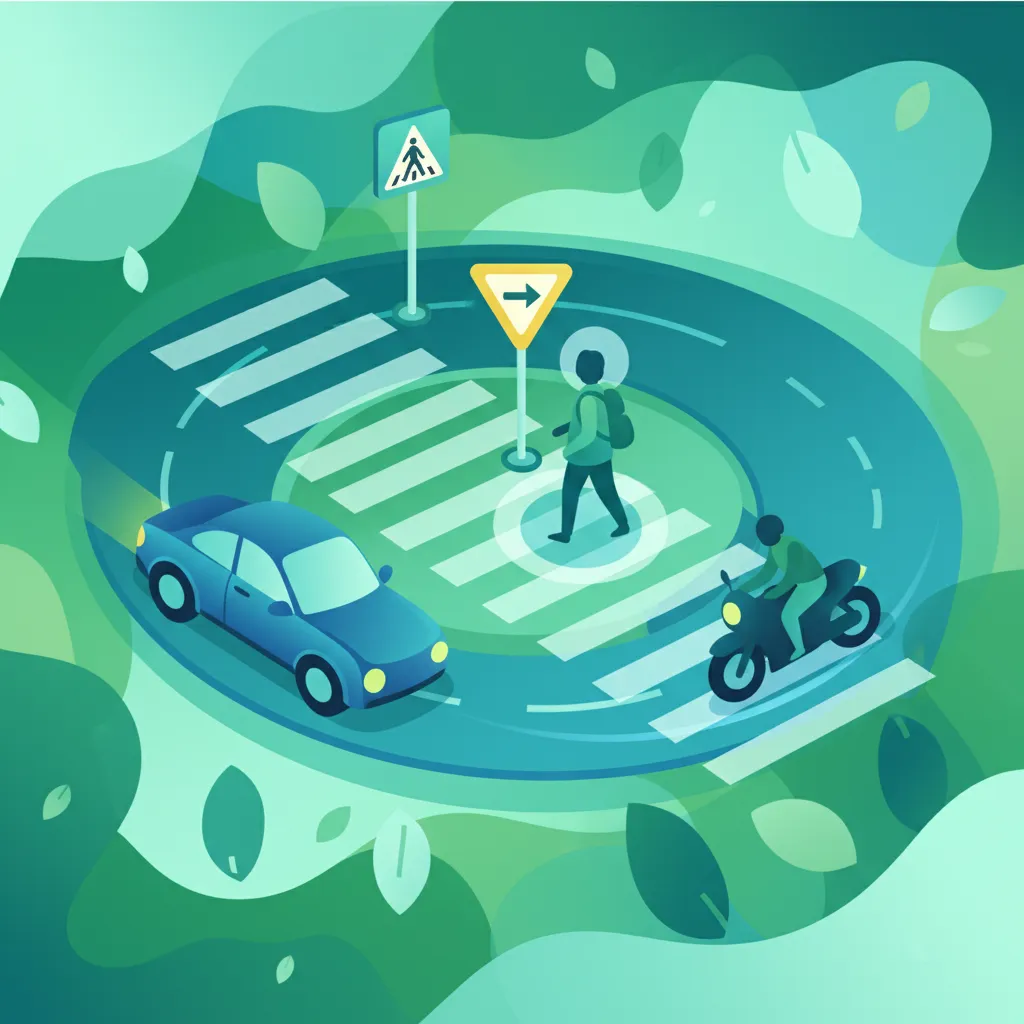
This lesson outlines the proper techniques for negotiating roundabouts and signal-controlled intersections in Spain. It explains priority rules at entry, lane selection based on the intended exit, and yielding to circulating traffic. The content also covers compliance with traffic signals and DGT regulations, including handling cyclist crossings.
This lesson focuses on the yielding hierarchy that governs roundabout usage in Spain. It clarifies that vehicles already circulating have priority over those entering and explains the proper lane positioning based on the intended exit. The content includes the correct use of signals for changing lanes and exiting, and safe merging techniques.
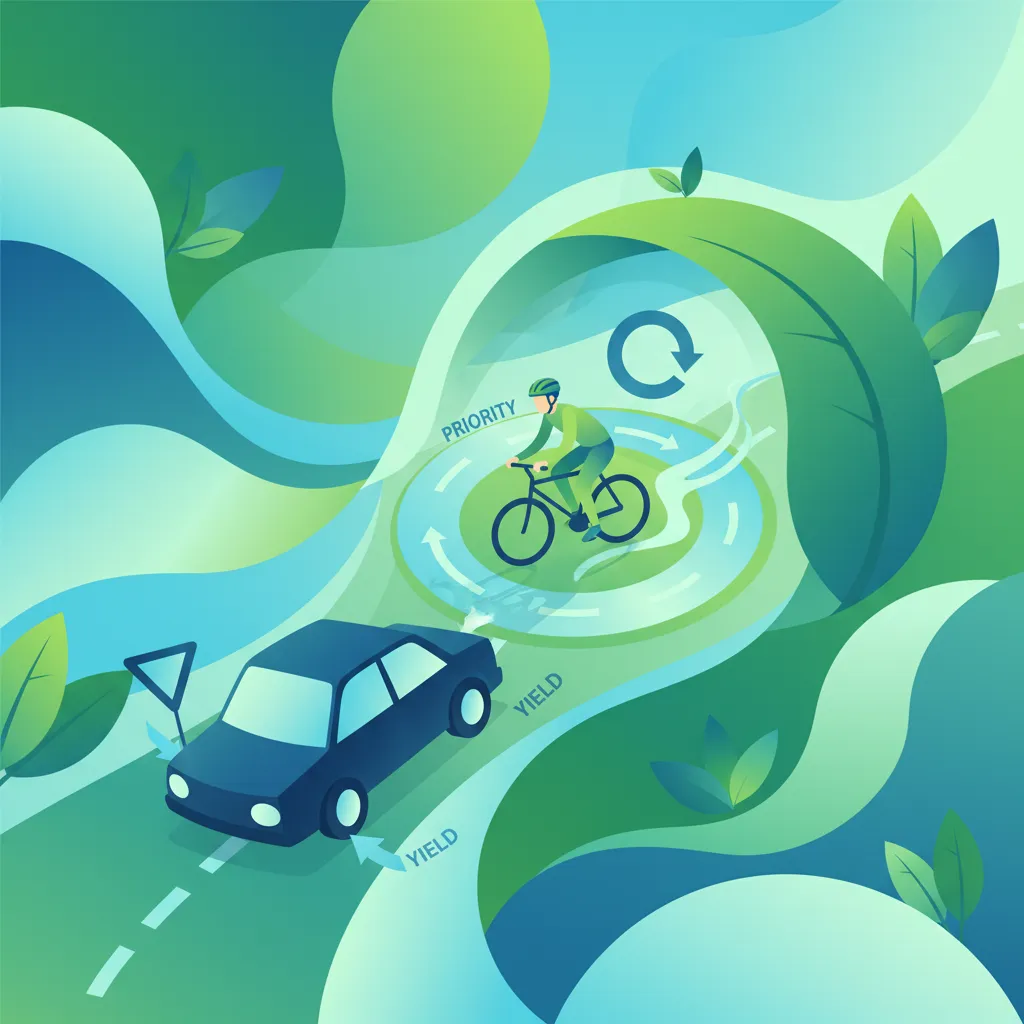
This lesson clarifies the primary rule for roundabouts: all vehicles entering must yield to traffic already on the circular roadway. It explains how to approach a roundabout, select the appropriate lane based on the intended exit, and merge safely into the flow of traffic. Proper signaling before exiting is also covered, ensuring other drivers can anticipate the rider's movements for a smooth and safe negotiation of the junction.
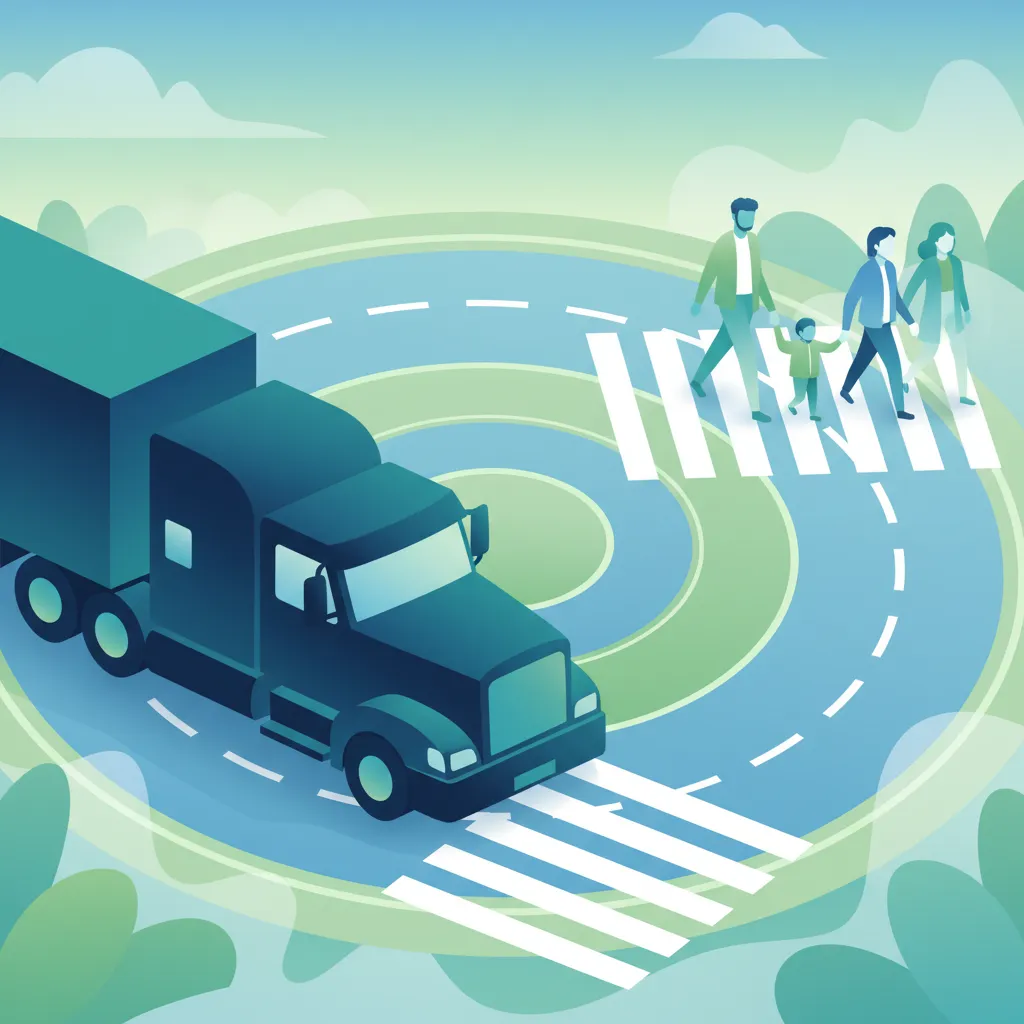
This lesson examines the interaction between large vehicles, such as trucks, and vulnerable road users within roundabouts. It addresses the wide turning radius of heavy vehicles, the importance of checking blind spots, and the correct yielding behavior toward pedestrians and cyclists. Learners will understand how to maintain safe distances and anticipate the movements of different road users.
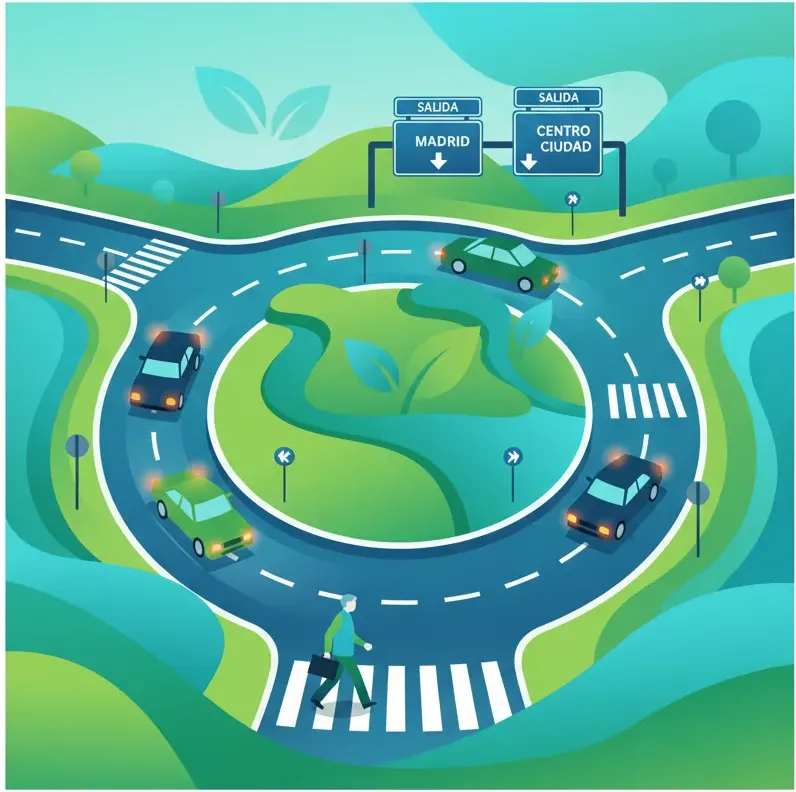
This lesson provides specific instructions on how to safely navigate complex junctions such as roundabouts and intersections with a large vehicle. It explains the rules of priority, the correct lane to use based on the intended exit, and the importance of proper vehicle positioning to account for off-tracking. The content also covers clear signaling to communicate intentions to other road users for safe and efficient passage.
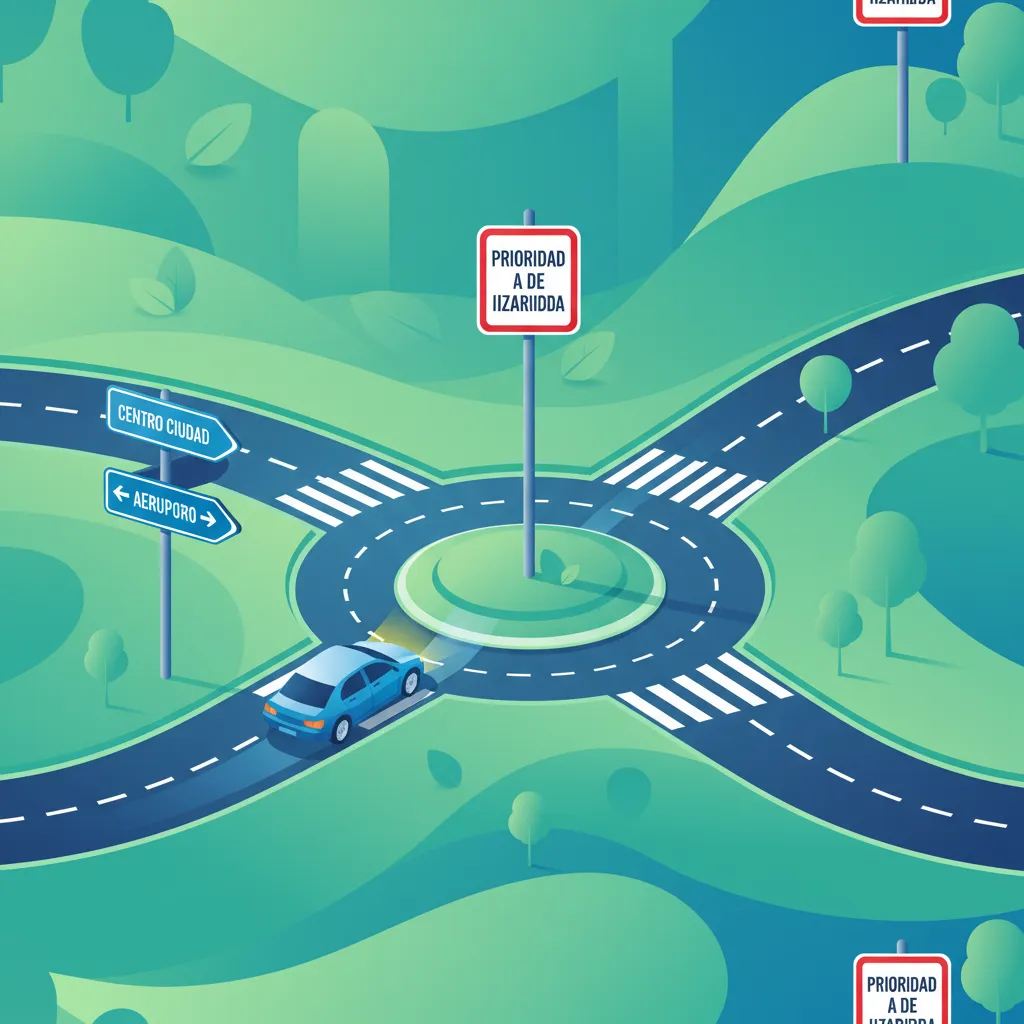
This lesson presents the variety of signs that guide drivers through roundabout navigation. It explains the significance of the roundabout warning symbol, priority signs, lane arrows, and directional signs placed before and within the roundabout. Mastery of roundabout signage ensures that drivers follow legal requirements and maintain safe traffic flow.
This lesson defines proper lane discipline on highways, emphasizing correct lane positioning and the rule to drive in the right-hand lane except when overtaking. It details safe merging onto main carriageways from an acceleration lane and effective exit strategies using deceleration lanes. Learners will understand DGT merge rules and the importance of signaling lane changes early.
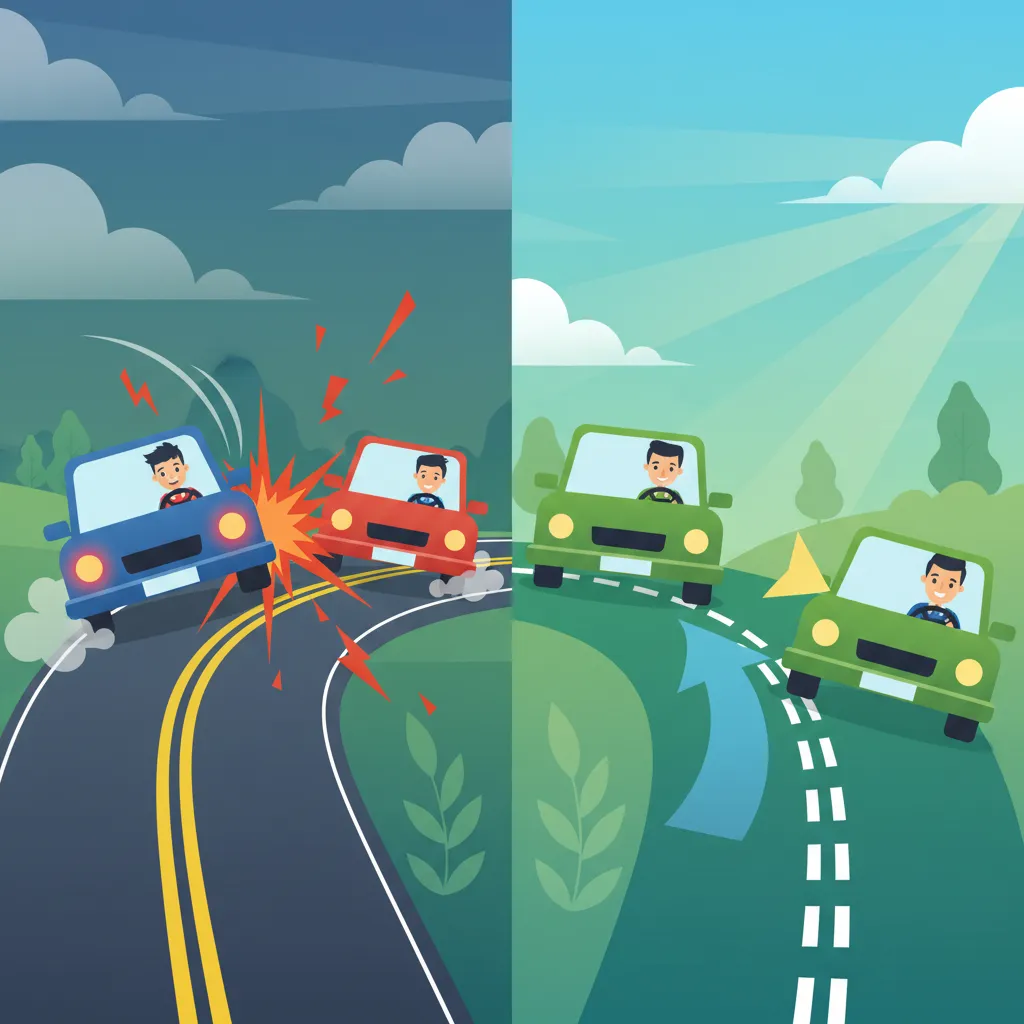
This lesson addresses common errors made by drivers when using roundabouts and presents corrective strategies. It covers issues such as entering from the wrong lane, failing to yield to circulating traffic, exceeding the recommended speed, and not signaling an exit correctly. By understanding these mistakes, drivers can improve their roundabout proficiency and reduce accident risk.

This lesson presents advanced cornering scenarios common on Spanish roads, such as mountain hairpins and high-speed autovía exits. It outlines specific techniques for descent control, ascent maneuvers, and safely merging into traffic after cornering. Interaction with cyclists and emergency cornering strategies are also covered in accordance with DGT regulations.
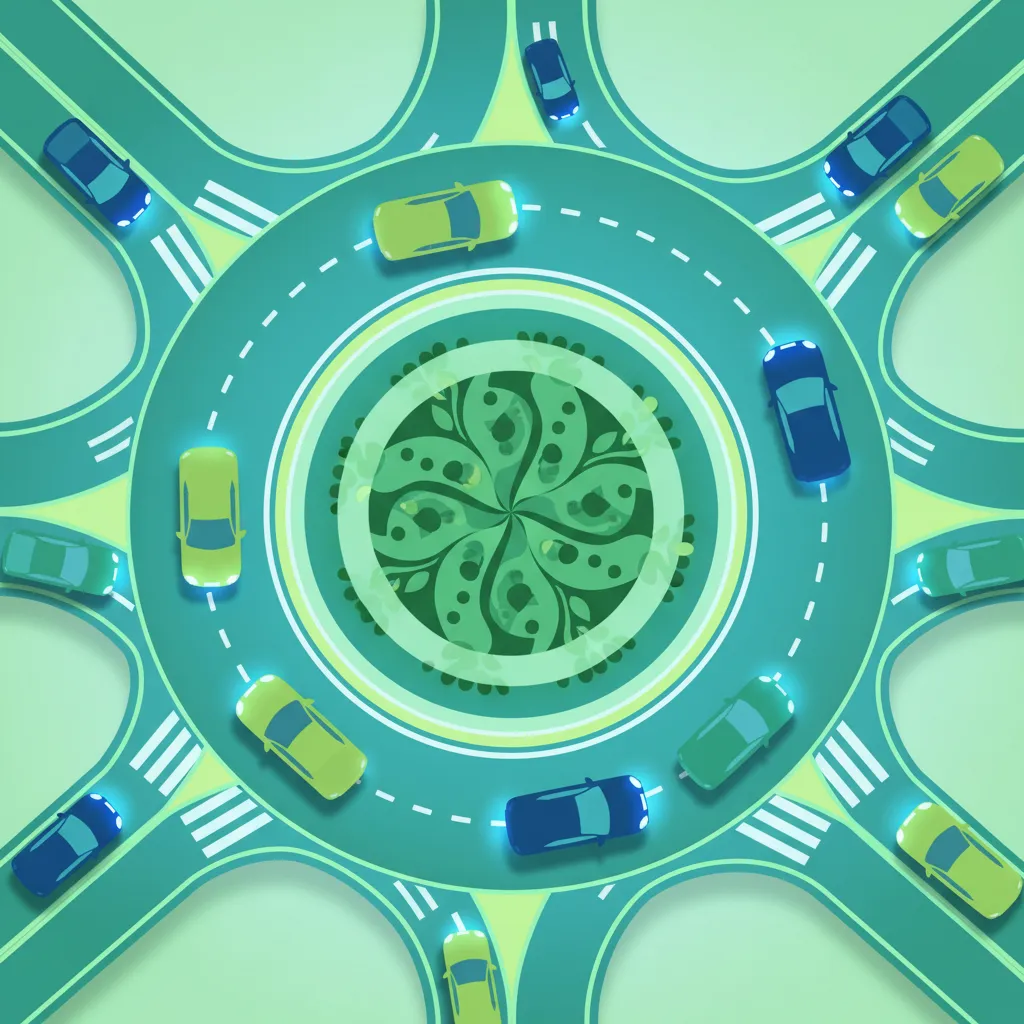
This lesson examines the structural components of a typical Spanish roundabout, describing the central island, entry and circulating lanes, and the placement of yield signs. It outlines how DGT standards dictate the geometric design and entry/exit points to ensure smooth traffic flow. Understanding these design elements enables drivers to anticipate vehicle movements and navigate safely.
Understand typical errors and misunderstandings drivers make at urban roundabouts in Spain. This lesson uses practical scenarios to illustrate correct procedures, focusing on how professional drivers can avoid common violations and ensure safe passage.
This lesson addresses common errors made by drivers when using roundabouts and presents corrective strategies. It covers issues such as entering from the wrong lane, failing to yield to circulating traffic, exceeding the recommended speed, and not signaling an exit correctly. By understanding these mistakes, drivers can improve their roundabout proficiency and reduce accident risk.
This lesson examines the interaction between large vehicles, such as trucks, and vulnerable road users within roundabouts. It addresses the wide turning radius of heavy vehicles, the importance of checking blind spots, and the correct yielding behavior toward pedestrians and cyclists. Learners will understand how to maintain safe distances and anticipate the movements of different road users.
This lesson clarifies the primary rule for roundabouts: all vehicles entering must yield to traffic already on the circular roadway. It explains how to approach a roundabout, select the appropriate lane based on the intended exit, and merge safely into the flow of traffic. Proper signaling before exiting is also covered, ensuring other drivers can anticipate the rider's movements for a smooth and safe negotiation of the junction.
This lesson examines the structural components of a typical Spanish roundabout, describing the central island, entry and circulating lanes, and the placement of yield signs. It outlines how DGT standards dictate the geometric design and entry/exit points to ensure smooth traffic flow. Understanding these design elements enables drivers to anticipate vehicle movements and navigate safely.
This lesson presents the variety of signs that guide drivers through roundabout navigation. It explains the significance of the roundabout warning symbol, priority signs, lane arrows, and directional signs placed before and within the roundabout. Mastery of roundabout signage ensures that drivers follow legal requirements and maintain safe traffic flow.
This lesson focuses on the yielding hierarchy that governs roundabout usage in Spain. It clarifies that vehicles already circulating have priority over those entering and explains the proper lane positioning based on the intended exit. The content includes the correct use of signals for changing lanes and exiting, and safe merging techniques.
This lesson outlines the proper techniques for negotiating roundabouts and signal-controlled intersections in Spain. It explains priority rules at entry, lane selection based on the intended exit, and yielding to circulating traffic. The content also covers compliance with traffic signals and DGT regulations, including handling cyclist crossings.
This lesson provides specific instructions on how to safely navigate complex junctions such as roundabouts and intersections with a large vehicle. It explains the rules of priority, the correct lane to use based on the intended exit, and the importance of proper vehicle positioning to account for off-tracking. The content also covers clear signaling to communicate intentions to other road users for safe and efficient passage.

This lesson provides strategies for navigating tight, confined environments such as multi-story car parks and narrow urban lanes. It emphasizes the importance of slow and controlled movements, constant observation, and a thorough understanding of the vehicle's dimensions and turning circle. Learners will develop the skills to maneuver with precision while avoiding obstacles.
This lesson focuses on low-speed manoeuvres within congested urban traffic, detailing techniques for navigating tight corners and weaving through traffic. Learners analyze urban traffic flow, pedestrian zones, and cyclist interactions to anticipate hazards. The lesson also explains DGT regulations regarding slow-speed movement and lane positioning.
Find clear answers to common questions learners have about Roundabouts and Priority Rules in Urban Settings. Learn how the lesson is structured, which driving theory objectives it supports, and how it fits into the overall learning path of units and curriculum progression in Spain. These explanations help you understand key concepts, lesson flow, and exam focused study goals.
In Spain, vehicles already circulating within the roundabout generally have priority over those entering. You must yield to any vehicles already on the roundabout before entering, regardless of their lane. This rule is critical for maintaining smooth traffic flow and preventing collisions.
Your lane choice depends on your intended exit. Generally, if you are taking the first exit or going straight ahead, you should use the right-hand lane. For exits further around or a U-turn, you should use the left-hand lane, signalling your intention clearly. Always observe road signs and markings specific to the roundabout.
While general priority rules apply, buses, due to their size and maneuverability limitations, may need to exercise greater caution. Drivers must be aware of blind spots and ensure they have ample space before entering or changing lanes. The primary rule remains: yield to traffic already on the roundabout.
Common mistakes include entering without yielding, incorrect lane usage for the intended exit, failing to signal turns, and not anticipating other drivers' actions. For large vehicles like buses, misjudging turning radius or not giving enough space for other vehicles are also risks.
To exit a roundabout, you must be in the correct lane for your exit well in advance. Signal your intention to exit clearly to the right. Check your mirrors and blind spots for any cyclists or motorcycles that might be beside you before moving into the exit lane. Avoid abrupt lane changes.
Use our powerful search functionality to pinpoint specific Spanish DGT driving theory practice sets. Filter by road sign categories, traffic law topics, or question difficulty to build custom study sessions and reinforce your knowledge precisely where it matters for your official exam.