
This unit prepares you for critical on-road emergencies, covering everything from mechanical failures and accidents to fire incidents. You'll learn standardized procedures for reporting, safe passenger evacuation, basic first aid, and how to effectively use emergency equipment and contact services, all vital for professional bus drivers in Spain.
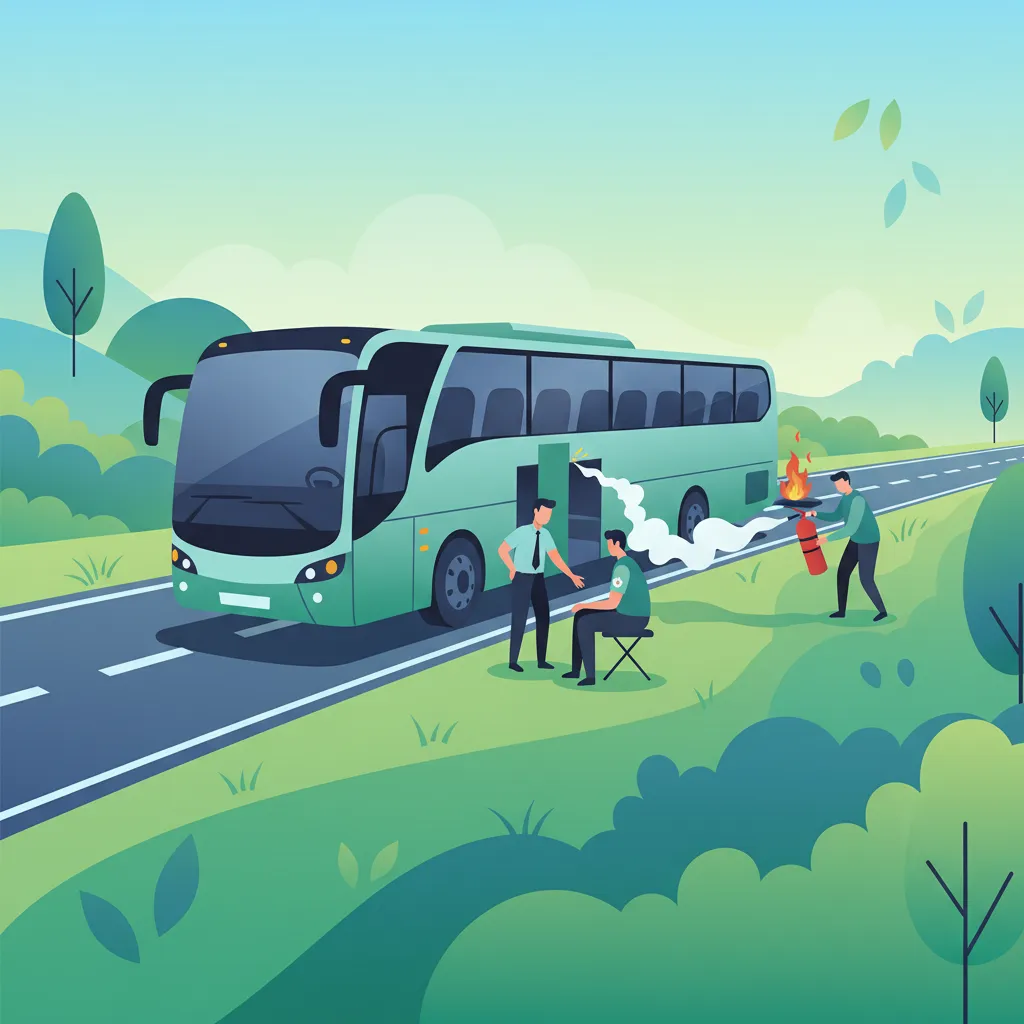
Browse all lessons that make up Emergency & Evacuation. Each lesson focuses on specific topics, learning objectives, and core concepts, helping you build essential knowledge and follow a clear, structured progression toward your study goals in Spain.
This lesson outlines the comprehensive steps required to safely manage an accident scene, including securing the area and providing immediate aid to any injured parties. Learners will be taught the legal reporting requirements, how to properly notify the DGT, and the specific documentation needed for insurance claims. The module also covers the process for collecting witness statements and interacting effectively with responding police authorities.
This lesson examines the locations and proper use of all emergency exits on buses and coaches, as well as the development and execution of clear evacuation plans. Learners will explore the designation of passenger assembly points, the interpretation of emergency signage, and procedures for assisting passengers with reduced mobility. The content emphasizes the value of conducting regular evacuation drills and delivering pre-trip safety briefings.
This lesson provides fundamental knowledge on fire safety, including the correct operation of various types of fire extinguishers and methods for early fire detection. Learners will also cover essential first aid basics, such as CPR techniques, methods for controlling severe bleeding, and the management of shock. The module emphasizes the importance of a rapid emergency response and the appropriate use of safety equipment to protect passengers and crew.
This lesson focuses on the correct procedures for managing mechanical failures while ensuring the safety of all passengers. Learners will study safe pull-over techniques, the proper use of hazard warning lights, and effective communication with passengers during a breakdown. The content also covers the use of emergency tools, coordination with roadside assistance, and protocols for maintaining a safe environment until help arrives or service is restored.
Explore high-intent keywords and long-tail search topics learners use when researching Emergency & Evacuation. These terms reflect how people search for reliable study materials, structured explanations, and unit-level theory preparation support in Spain.
Find clear answers to the most common questions learners ask about Emergency & Evacuation. Understand how the unit is organized, what learning goals it supports, and how it contributes to your study progression with structured explanations and practical guidance tailored for learners in Spain.
As a bus driver in Spain, you must first ensure the safety of yourself and your passengers, securing the scene if possible. Then, you are legally required to report the accident to the relevant authorities, typically by calling 112. You'll need to provide details such as the location, time, vehicles involved, and any injuries. Documenting the scene and exchanging information with other parties is also essential for official reporting and insurance purposes.
Passenger evacuation should be orderly and swift. First, assess the immediate danger and determine the safest exit route. Instruct passengers calmly but firmly to leave their belongings and proceed to the nearest available emergency exit or door. Guide them away from the vehicle to a safe assembly point, ensuring no one is left behind and accounting for vulnerable passengers. Familiarize yourself with the bus's specific emergency exit locations and procedures.
For the DGT theory exam, basic first aid knowledge includes understanding how to assess a casualty's condition (ABC - Airway, Breathing, Circulation), perform CPR if necessary, manage bleeding, treat for shock, and immobilize suspected fractures. It’s also vital to know when and how to use any onboard first-aid kit and to clearly communicate with emergency medical services when they arrive.
Professional bus drivers must be familiar with operating emergency exits (including roof hatches), using the fire extinguisher effectively, knowing the location and use of the first-aid kit, and understanding how to operate hazard warning lights and triangle reflectors. For breakdowns, knowing how to safely stop the vehicle and signal for assistance is also key.
If you experience a mechanical failure on a Spanish highway (autovía or autopista), activate your hazard warning lights immediately. Pull over to the right-hand shoulder (arcén) as far as possible. Turn off the engine and exit the vehicle only if it is safe to do so, preferably from the passenger side. Place the warning triangle at the appropriate distance behind your vehicle and call for roadside assistance via the emergency number 112 or your service provider.
Fire safety is extremely important. Drivers must know the location and proper operation of fire extinguishers onboard. Understanding potential fire risks, such as engine overheating or electrical faults, and knowing the immediate actions to take – like stopping the vehicle safely, evacuating passengers, and attempting to extinguish small fires only if safe to do so – is critical for preventing serious incidents.
All included lessons
Lessons in Emergency & Evacuation
See who benefits most from studying Emergency & Evacuation. This overview explains how the unit supports different learning needs, what level of knowledge is helpful before starting, and how it fits into the overall study path in Spain.
This unit is crucial for all aspiring professional bus and coach drivers preparing for the Spanish DGT Category D and D1 theory exams. It’s especially important for learners who need to master emergency protocols, accident management, and passenger safety in large vehicles, ensuring they meet the rigorous standards for public transport operation in Spain.

Begin your preparation for the Spanish DGT driving licence exam today. Browse our full curriculum to find guided courses, detailed lessons on traffic legislation, road signs, and essential driving practices. Start learning systematically and confidently.
Explore DGT Theory Courses & CurriculumExplore all units and lessons included in this driving theory course.
Begin your preparation for the Spanish DGT driving licence exam today. Browse our full curriculum to find guided courses, detailed lessons on traffic legislation, road signs, and essential driving practices. Start learning systematically and confidently.
Explore DGT Theory Courses & Curriculum