
This lesson focuses on navigating the complexities of urban traffic flow, especially during peak congestion. You'll learn essential techniques for maintaining bus service schedules, managing vehicle movement, and understanding how to operate efficiently within busy city environments, all critical for your D and D1 license preparation.
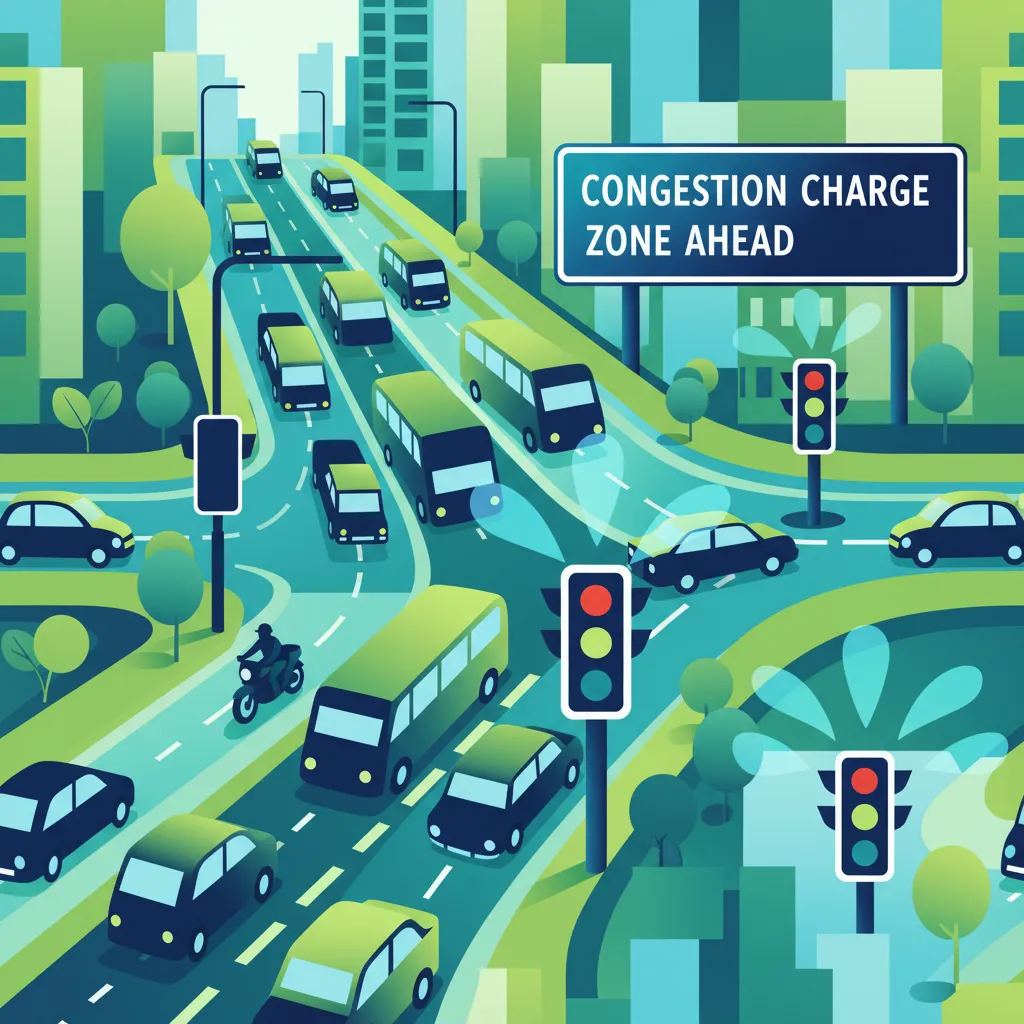
Lesson content overview
Driving a professional bus or coach in urban environments presents unique challenges, particularly when navigating dense city traffic and managing congestion. This lesson, part of your Professional Bus and Coach Theory for Spanish Driving License – Category D & D1 curriculum, will equip you with essential knowledge and strategies for maintaining efficient and safe operations amidst the complex patterns of urban traffic flow. Mastering these dynamics is crucial for adhering to timetables, reducing operational costs, and ensuring passenger comfort and safety.
Effective congestion management goes beyond simply reacting to traffic jams; it involves a deep understanding of how traffic systems work, how specific measures like bus lanes and signal priority influence flow, and how your driving decisions impact overall service reliability. By understanding the principles behind urban traffic, you can anticipate challenges, apply preventative strategies, and contribute to smoother public transport services.
Urban traffic flow is a dynamic and intricate system, shaped by vehicle interactions, road infrastructure, and traffic signal timings. For professional bus and coach drivers, understanding these underlying principles is fundamental to operating safely and efficiently. These concepts help in predicting traffic behavior, making informed decisions, and utilizing advanced traffic management tools effectively.
Traffic flow theory is the scientific study of how vehicles move on roadways, exploring the relationships between traffic speed, density, and volume. At its core, the flow-density relationship describes how adding more vehicles (increasing density) to a road segment initially increases the traffic flow up to a certain point. However, beyond a critical density, adding more vehicles leads to a decrease in average speed and thus, a reduction in the overall traffic flow, culminating in congestion. This inverse relationship means that as the number of vehicles on the road increases, the average speed of each vehicle decreases.
Understanding this theory helps drivers anticipate areas where congestion is likely to form, such as near intersections, on steep inclines, or at lane merges. Professional drivers must recognize that aggressive acceleration or sudden braking in congested conditions can create "shockwaves" that propagate backward, worsening the stop-and-go patterns for vehicles behind. A steady, moderate speed, even in heavy traffic, contributes to a smoother and more stable traffic flow for all road users, including other buses.
Headway management is the practice of maintaining a consistent time interval between consecutive buses operating on the same route. This principle is vital for preventing buses from "bunching" together, where multiple buses arrive at a stop at roughly the same time, followed by long gaps in service. Consistent headways ensure that passengers experience reliable and predictable service, minimizing their wait times at stops.
For professional drivers, this means more than simply adhering to a timetable. It often requires dynamic adjustments based on real-time traffic conditions. If a bus falls behind schedule, the driver might need to make up time where safely possible, while a bus running ahead might need to hold at a stop for a brief period to allow the preceding bus to re-establish the correct interval. This delicate balance, performed within legal speed limits and traffic rules, is crucial for overall service regularity.
Lane occupancy analysis assesses how different vehicle types utilize road space during various periods, particularly peak hours. This analysis often highlights the need for dedicated bus lanes, which are specific lanes reserved exclusively for buses, and sometimes taxis or other public transport vehicles, during designated hours. These lanes are typically marked with specific road signs—a blue background with a white bus symbol, often accompanied by indications of operational hours.
Professional drivers must have a clear understanding of when and how to use these dedicated lanes. In Spain, DGT regulations permit bus use of reserved lanes, but these lanes may be conditional, meaning they are only active during specified hours (e.g., morning rush hour). Entering a bus lane outside its operational hours, or when it is not explicitly designated for buses, can lead to fines and traffic violations. Proper use of bus lanes improves travel time reliability for public transport and reduces interference with general traffic flow.
Traffic signal coordination, also known as progression, involves synchronizing traffic lights along a corridor to create a "green wave." This allows traffic, including buses, to move smoothly through multiple intersections without stopping, significantly reducing stop-and-go conditions. For bus drivers, effective signal coordination means more reliable travel times and improved schedule adherence.
An advanced form of signal coordination specifically for public transport is Transit Signal Priority (TSP). TSP systems use on-board equipment in buses to communicate with traffic signals, requesting preferential treatment. This can involve extending a green light phase, shortening a red light, or providing an early green signal for an approaching bus. While TSP aims to improve bus punctuality, drivers must always remember that it does not override a solid red indication. You must still obey the displayed signal and be prepared to stop if the light is red, even if a TSP request has been made.
In cities like Seville, studies have shown that buses equipped with TSP can experience an average delay reduction of up to 12% at key intersections, significantly improving service punctuality.
The number and distribution of passengers on a bus or coach significantly affect its dynamic characteristics, particularly acceleration, braking, and overall handling. A fully loaded bus has a much greater mass than an empty one, which directly influences its kinetic energy. This increased mass translates into longer stopping distances and slower acceleration.
Professional drivers must constantly account for the current passenger load factor—the ratio of actual passengers to the vehicle's legal capacity—especially in congested urban traffic. Maintaining safe following distances becomes even more critical with a heavy load, as the vehicle requires more time and space to decelerate safely. Drivers should also anticipate subtle changes in the vehicle's center of gravity and handling during turns or uneven road surfaces. Understanding these physical principles is essential for safe driving and preventing incidents.
Peak-hour congestion is a predictable daily occurrence in most urban areas, characterized by demand for road space exceeding available capacity. For bus and coach drivers, navigating these periods effectively requires foresight, adaptive driving techniques, and an understanding of the available management strategies.
Congestion can broadly be categorized into two types:
To mitigate the impact of peak-hour congestion, transport operators employ strategies like route optimization and schedule buffering. Route optimization involves analyzing traffic patterns and adjusting bus routes to avoid known bottlenecks or to leverage dedicated infrastructure like bus lanes more effectively.
Schedule buffering involves building extra time into timetables at specific points along a route, especially just before or during anticipated congestion zones. This allows buses to absorb minor delays without falling significantly behind schedule, helping to maintain consistent headways and punctuality. Drivers should be aware of these buffer times and use them judiciously to re-establish their position relative to the timetable. Effective communication with the central dispatch is vital in dynamically adjusting to unfolding traffic situations.
Operating buses and coaches in Spanish cities requires strict adherence to specific DGT (Dirección General de Tráfico) regulations designed to manage urban traffic and prioritize public transport. Understanding and complying with these rules is not only a legal requirement but also fundamental to safe and efficient operation.
Dedicated bus lanes are a cornerstone of urban public transport efficiency in Spain. These lanes are clearly marked with a blue sign featuring a white bus symbol (often signs S-50 or S-51 depending on the exact context) and may include supplementary panels indicating the operational hours.
Rule 1 – Use of Dedicated Bus Lanes: Buses may use lanes marked with a bus lane sign (blue background, white bus symbol) during the hours indicated by the accompanying sign. This applies only when the lane is explicitly designated for buses; otherwise, it must be treated as a normal lane. Violation of this rule incurs a fine. For example, entering a bus lane at 8:00 when the sign shows “07:00‑10:00” is correct. Staying in a bus lane at 17:00 when the sign indicates an “off‑peak prohibition” is incorrect.
Drivers must be vigilant about the specific conditions attached to each bus lane. Some are active 24/7, while others, often called conditional bus lanes, operate only during peak hours or specific days. Misinterpreting these conditions can lead to fines and obstruct the flow of general traffic, defeating the purpose of these specialized lanes.
Transit Signal Priority (TSP) systems are increasingly common in Spanish cities, designed to give buses a time advantage at intersections. When a bus equipped with TSP approaches a traffic light, it may transmit a request to the signal controller. If granted, this can result in an extended green phase or an early green for the bus.
Rule 2 – Transit Signal Priority (TSP) Acceptance: When a bus receives a green extension via TSP, the driver must continue through the intersection, provided the signal displays a green aspect. TSP does not override a solid red light. The driver must always obey the displayed signal. Ignoring a green extension may be considered non-compliance with traffic flow rules. For instance, if TSP adds 2 seconds to a green phase, the driver proceeds. Stopping at a red light despite a TSP request is incorrect, as it causes unnecessary delay.
It is a common misunderstanding that TSP guarantees a green light. Drivers must remain alert and prepared to stop, as other factors (e.g., emergency vehicle pre-emption, pedestrian crossing requests) can override a TSP request. The ultimate authority is always the visible traffic signal.
Maintaining an adequate safe following distance is paramount for all drivers, but it becomes critically important for professional bus and coach drivers due to the vehicle's size, weight, and passenger load. In congested urban traffic, the risk of rear-end collisions significantly increases.
Rule 3 – Maintaining Safe Following Distance: In congested traffic, a bus must keep at least a two-second time headway behind the preceding vehicle. This interval should be adjusted for load, weather, and road conditions. While this is a recommended practice rather than a formal decree, it is enforced via accident liability. For example, when the vehicle ahead begins to decelerate, a professional bus driver gently brakes to maintain the two-second interval, rather than following too closely and risking a collision.
A fully loaded bus or coach requires a significantly longer braking distance compared to an empty one. This is because greater mass necessitates more force and time to decelerate. Drivers must continuously assess their speed, the traffic conditions ahead, and the weight of their vehicle to ensure sufficient stopping distance. On wet roads, this margin must be further increased, perhaps to three seconds or more.
Proper positioning at bus stops is essential for passenger safety, efficient boarding and alighting, and maintaining smooth traffic flow. Incorrect stopping can obstruct other traffic, create hazards for pedestrians, and make it difficult for passengers, especially those with reduced mobility, to use the service.
Rule 4 – Stop Positioning at Bus Stops: Buses must stop within the marked bus stop zone, aligning the front door with the designated stop line or marked area. This applies to all designated bus stops, regardless of traffic density. Failure to do so can lead to fines and obstruction of traffic. A correct example involves the bus pulling fully into the stop zone, allowing passengers to board safely. Stopping beyond the stop line, blocking the lane, is an incorrect practice.
Drivers should approach bus stops carefully, using turn signals appropriately, and ensuring the bus is parallel to the curb and fully within the designated zone. This attention to detail contributes to a professional image and minimizes delays caused by passengers having to walk to the bus or other vehicles being blocked.
Passenger capacity and vehicle load limits are not mere recommendations; they are strict regulatory requirements for professional transport. Each bus or coach has a legally approved maximum capacity, indicated on its vehicle registration document. Exceeding this limit compromises the vehicle's stability, braking performance, and structural integrity, significantly increasing accident risk.
Rule 5 – Passenger Capacity and Load Limits: The total passenger load must not exceed the vehicle’s approved maximum capacity as indicated on the vehicle registration. This is mandatory for all journeys, especially critical during rush hour. Overloading compromises vehicle stability and braking. A driver correctly monitors boarding and restricts entry once capacity is reached. Allowing more passengers than permitted risks fines and serious safety issues.
Professional drivers have a responsibility to monitor passenger numbers, especially during peak periods or at busy stops. If the vehicle reaches its maximum capacity, the driver must politely but firmly restrict further boarding, explaining the safety regulations to passengers. This adherence to load limits is a fundamental aspect of passenger safety and legal compliance.
Professional bus drivers frequently encounter specific challenges and common pitfalls in congested urban environments. Awareness of these can help prevent violations and ensure smoother operations.
A frequent violation is entering a bus lane during prohibited hours. While bus lanes are a privilege for public transport, their usage is strictly regulated. A driver who uses a reserved lane when the accompanying sign indicates it's for regular traffic (e.g., outside peak hours or on weekends) faces fines and contributes to general traffic obstruction. Always confirm the operational hours displayed on the signage.
Another common issue arises with ignoring a green wave (TSP). A bus driver might stop at a red light despite the on-board system indicating a green extension from TSP. This not only causes unnecessary downstream delays for the bus service but also wastes the efficiency benefits provided by the traffic management system. Always proceed through a green signal, even if it feels like an extended duration due to TSP.
Improper headway maintenance is a key cause of service disruption. When one bus is delayed, subsequent buses can "bunch together," creating long gaps in service. This leads to increased passenger wait times and frustration. It's crucial for drivers to communicate with dispatch and make safe, dynamic adjustments to maintain even service intervals, rather than trying to simply catch up to an ahead-of-schedule bus or waiting excessively.
Overloading passengers is a serious violation. Allowing more passengers than the vehicle's legal capacity not only contravenes DGT regulations but also significantly compromises the bus's braking performance, handling, and stability. This increases the risk of accidents, especially in stop-and-go urban traffic, and can lead to severe penalties.
Stopping beyond the stop line or outside the designated bus stop zone is another common issue. This can block the lane, causing traffic buildup, obstructing sightlines for other drivers, and posing a risk of rear-end collisions. It also makes boarding difficult for passengers, especially those with mobility issues. Always position the bus accurately within the marked zone.
A dangerous oversight is the failure to adjust braking for heavy load. Drivers accustomed to an empty or lightly loaded bus might not anticipate the significantly longer stopping distances required when the vehicle is full. This can lead to following too closely and subsequent collisions due to sudden stops by lead vehicles. Always increase your safety margin and start braking earlier with a loaded bus.
Driving conditions in urban environments are rarely static. Professional drivers must constantly adapt their strategies based on a range of contextual variations, from environmental factors to the presence of vulnerable road users.
Adverse weather, particularly rain, significantly reduces road friction, drastically increasing stopping distances and reducing visibility. In these conditions, drivers must proactively increase their safety margin, extending the recommended two-second following distance to three seconds or more. They must also reduce speed, especially when approaching intersections or bus stops, and ensure all lights are functioning correctly to improve visibility for other road users.
Nighttime driving significantly reduces visibility of lane markings, traffic signs, and other road users. Drivers must rely more on reflectors and ensure their headlights are correctly aligned. In urban areas, glare from oncoming traffic or streetlights can also be a challenge. Increased caution is required when entering or exiting bus lanes, as their boundaries may be less distinct in poor light. The use of appropriate lighting (e.g., dipped headlights) is crucial.
The type of urban road dictates specific driving tactics:
The physical state of the bus or coach impacts its performance:
Urban environments are shared spaces, particularly with vulnerable road users such as cyclists and pedestrians. These individuals are often present near bus stops and intersections. Drivers must exercise extreme caution, reduce speed, and be prepared for unexpected movements when pulling into or out of bus stops, making turns, or navigating areas with high foot traffic. Always give ample space to cyclists and pedestrians, recognizing their limited protection.
Let's consider how these concepts apply in real-world driving situations for professional bus and coach drivers in Spain.
Scenario: Morning Rush Hour on a Rainy Urban Corridor
Scenario: Approaching a TSP-Equipped Intersection
Scenario: Unexpected Road Works Reducing Lane Capacity
Scenario: Reaching a Stop with Exceeded Passenger Demand
Successfully navigating urban traffic and managing congestion is a critical skill for any professional bus and coach driver in Spain. By integrating the knowledge from this lesson, you can significantly enhance your operational efficiency, safety, and passenger satisfaction.
Remember to:
This lesson builds upon your foundational knowledge of vehicle handling and passenger safety, and it prepares you for advanced topics in hazard perception and emergency procedures. By consistently applying these principles, you contribute to a more efficient, reliable, and safer public transport system in urban areas.
This lesson covers the essential skills for professional bus and coach drivers managing urban traffic in Spain. It explains traffic flow theory, where increased vehicle density eventually reduces speed and causes congestion, and emphasizes smooth driving to prevent shockwaves. Headway management is critical for maintaining consistent bus service intervals and preventing bunching. Dedicated bus lanes improve reliability but must be used only during indicated hours. Transit Signal Priority (TSP) helps buses at intersections but never overrides red signals. Drivers must maintain safe following distances, adjust braking for heavy loads, position correctly at stops, and strictly adhere to passenger capacity limits. Understanding recurring versus non-recurring congestion helps drivers anticipate and mitigate delays.
A short set of high-value points that capture the most important learning from this lesson.
Traffic flow follows an inverse relationship between vehicle density and speed, where exceeding a critical density causes congestion and reduces overall flow.
Headway management maintains consistent intervals between buses to prevent bunching and ensure reliable passenger service.
Dedicated bus lanes (marked with blue signs featuring a bus symbol) are only usable during the hours indicated on accompanying signage.
Transit Signal Priority (TSP) extends green phases or provides early greens for approaching buses but never overrides a solid red signal.
Passenger load must never exceed the vehicle's legally approved capacity as indicated on the registration document.
Explore all units and lessons included in this driving theory course.
Bus lane usage: entering during permitted hours is correct; staying in during off-peak prohibition is incorrect (Example: correct at 08:00 when sign shows 07:00-10:00).
TSP behavior: proceed through a green extended by TSP; stopping at a red light despite a TSP request causes unnecessary delay.
Following distance: maintain at least a two-second time headway in congested traffic, extending to three or more seconds when loaded or in adverse conditions.
Stop positioning: align the front door with the designated stop line or marked area within the bus stop zone.
Recurring congestion occurs predictably during morning and evening commuting periods; non-recurring congestion results from incidents, weather, or road works.
Entering a bus lane during prohibited hours, such as using a reserved lane outside peak hours when the sign indicates specific operational times.
Stopping at a green light extended by TSP, which negates the efficiency benefit and disrupts coordinated traffic flow.
Allowing buses to bunch together by failing to communicate with dispatch or make safe dynamic adjustments to maintain headway.
Overloading passengers beyond the vehicle's legal capacity, which compromises braking performance, stability, and violates DGT regulations.
Stopping beyond the designated bus stop zone or stop line, which blocks lanes, obstructs sightlines, and creates hazards for passengers and other traffic.
Lesson content overview
A short set of high-value points that capture the most important learning from this lesson.
Traffic flow follows an inverse relationship between vehicle density and speed, where exceeding a critical density causes congestion and reduces overall flow.
Headway management maintains consistent intervals between buses to prevent bunching and ensure reliable passenger service.
Dedicated bus lanes (marked with blue signs featuring a bus symbol) are only usable during the hours indicated on accompanying signage.
Transit Signal Priority (TSP) extends green phases or provides early greens for approaching buses but never overrides a solid red signal.
Passenger load must never exceed the vehicle's legally approved capacity as indicated on the registration document.
Explore all units and lessons included in this driving theory course.
Bus lane usage: entering during permitted hours is correct; staying in during off-peak prohibition is incorrect (Example: correct at 08:00 when sign shows 07:00-10:00).
TSP behavior: proceed through a green extended by TSP; stopping at a red light despite a TSP request causes unnecessary delay.
Following distance: maintain at least a two-second time headway in congested traffic, extending to three or more seconds when loaded or in adverse conditions.
Stop positioning: align the front door with the designated stop line or marked area within the bus stop zone.
Recurring congestion occurs predictably during morning and evening commuting periods; non-recurring congestion results from incidents, weather, or road works.
Entering a bus lane during prohibited hours, such as using a reserved lane outside peak hours when the sign indicates specific operational times.
Stopping at a green light extended by TSP, which negates the efficiency benefit and disrupts coordinated traffic flow.
Allowing buses to bunch together by failing to communicate with dispatch or make safe dynamic adjustments to maintain headway.
Overloading passengers beyond the vehicle's legal capacity, which compromises braking performance, stability, and violates DGT regulations.
Stopping beyond the designated bus stop zone or stop line, which blocks lanes, obstructs sightlines, and creates hazards for passengers and other traffic.
Explore search topics learners often look for when studying City Traffic Flow and Congestion Management. These topics reflect common questions about road rules, driving situations, safety guidance, and lesson level theory preparation for learners in Spain.
Browse additional driving theory lessons that cover connected traffic rules, road signs, and common driving situations related to this topic. Improve your understanding of how different rules interact across everyday traffic scenarios.
Explore advanced techniques for managing urban traffic flow and congestion beyond basic principles. This lesson covers complex scenarios like adaptive signal control, public transport priority systems in depth, and real-world case studies relevant to Spanish DGT regulations for bus drivers.

This lesson outlines the best practices for precise vehicle positioning at urban bus stops and ensuring safe interaction with passengers. It covers the management of approach speed, correct alignment with the curb, and effective communication during boarding and alighting processes. Learners will also study how stopping maneuvers impact surrounding traffic flow and the importance of maintaining safety distances for efficient service.
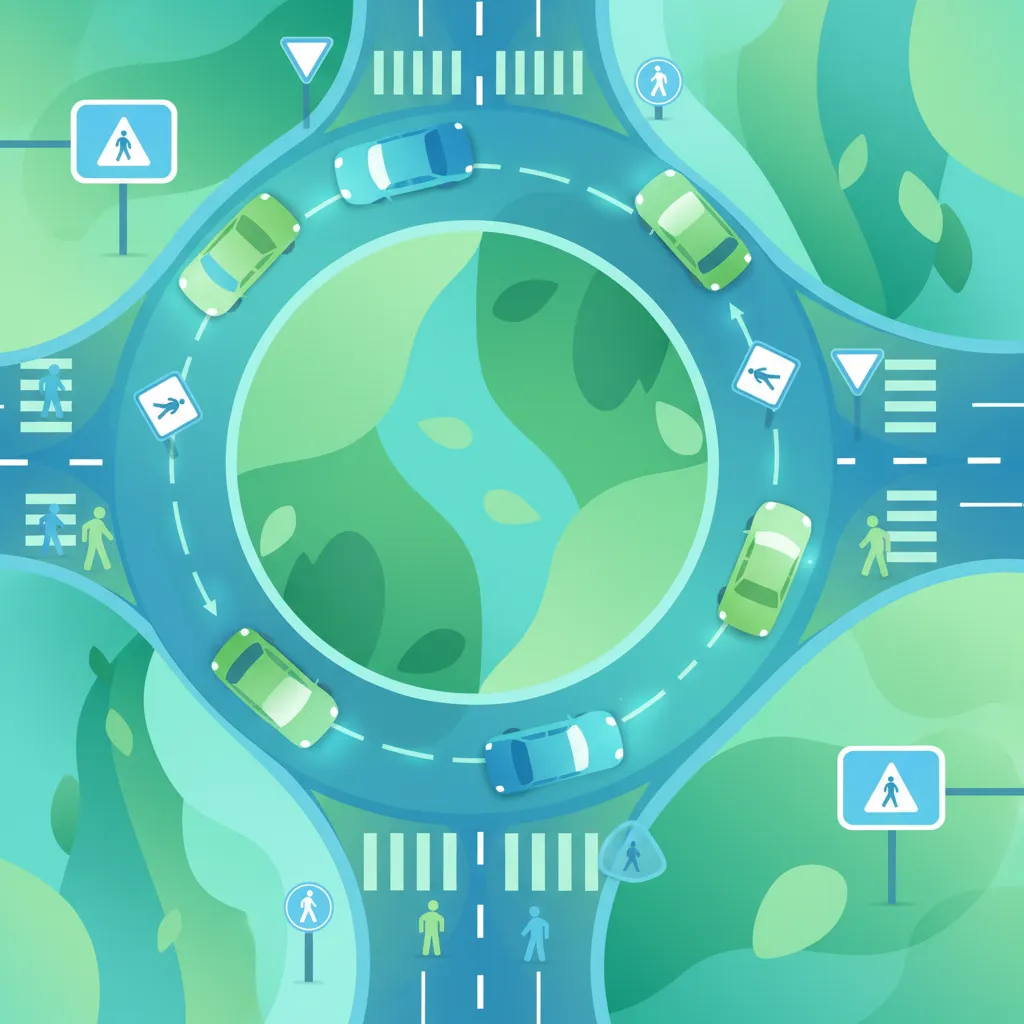
This lesson offers a comprehensive guide to navigating roundabouts in urban settings, explaining the correct protocols for entry, yielding, and circulation. Learners will be taught how to interpret lane markings and signage on multi-lane roundabouts and determine the correct vehicle positioning for safe entry and exit. The content emphasizes full compliance with Spanish city regulations that govern priority and right-of-way at these intersections.
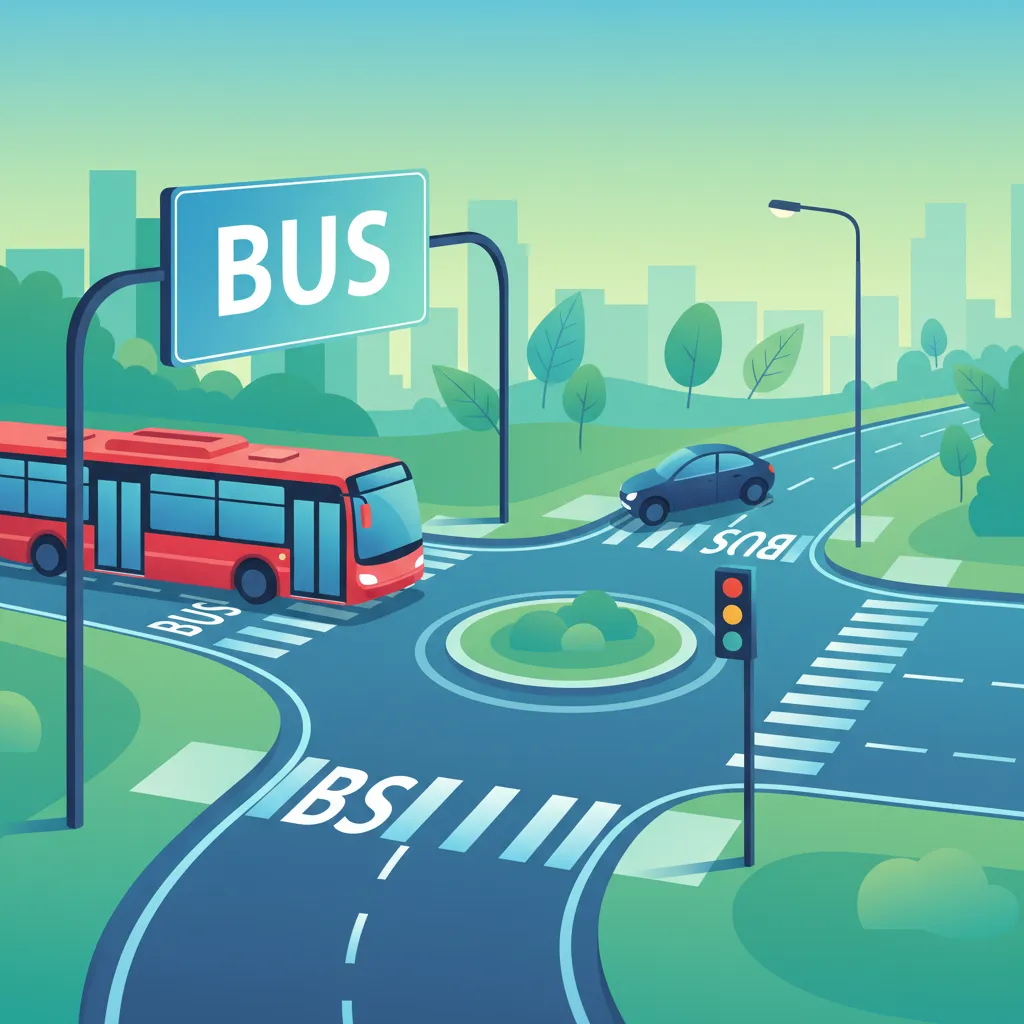
This lesson explores the regulations for dedicated bus lanes in urban environments, detailing the correct interpretation of associated lane markings and traffic signage. Learners will understand the specified times of operation, rules for sharing lanes with other vehicles, and the legal consequences of unauthorized entry. The module also provides clear guidelines for entering and exiting bus lanes at designated points to maintain traffic flow.

This lesson provides strategies for navigating dense and often unpredictable city traffic. It explains how to maintain a safe following distance and position the vehicle correctly in stop-and-go situations to optimize flow and visibility. The content emphasizes the importance of anticipation, patience, and defensive driving techniques to safely manage the challenges of urban congestion.

This lesson addresses various strategies to optimize passenger boarding times, focusing on coordinated door operation, managing queues, and implementing priority boarding for eligible individuals. Learners will explore techniques for rapid fare verification, safe and efficient wheelchair assistance, and overall time management to reduce stop dwell times. The goal is to improve service punctuality while maintaining high standards of safety and passenger satisfaction.

This lesson outlines the core principles of defensive driving, focusing on maintaining a safe following distance, creating a protective space cushion around the vehicle, and anticipating potential hazards. Learners will be taught how to develop contingency plans for unexpected events and employ risk mitigation techniques to actively avoid accidents. The content reinforces the vital importance of remaining vigilant and proactive at all times when driving.

This lesson addresses overtaking procedures and lane discipline specifically for large coaches, emphasizing correct lane positioning and safe passing practices on multi-lane highways. It covers the legal rules for overtaking, the critical need for comprehensive blind spot checks before changing lanes, and the importance of signaling intentions early. Learners will also be taught how to maintain appropriate safety gaps when maneuvering around slower-moving traffic.

In this lesson, learners will acquire the necessary skills to maneuver buses and coaches within confined areas such as narrow city streets, bus depots, and passenger terminals. It details techniques for reverse driving, tight cornering, and parallel parking, emphasizing the critical importance of blind spot awareness and precise low-speed control. The content focuses on developing spatial awareness to avoid collisions while maintaining passenger comfort.

This lesson addresses the dynamics of traffic conflicts, teaching drivers how to resolve right-of-way disputes and de-escalate potentially tense situations on the road. Learners will explore negotiation tactics, safe yielding practices, and strategies for remaining calm when encountering aggressive behavior from other drivers. The module emphasizes proper road etiquette and proactive conflict avoidance to help maintain a safe and courteous traffic environment.
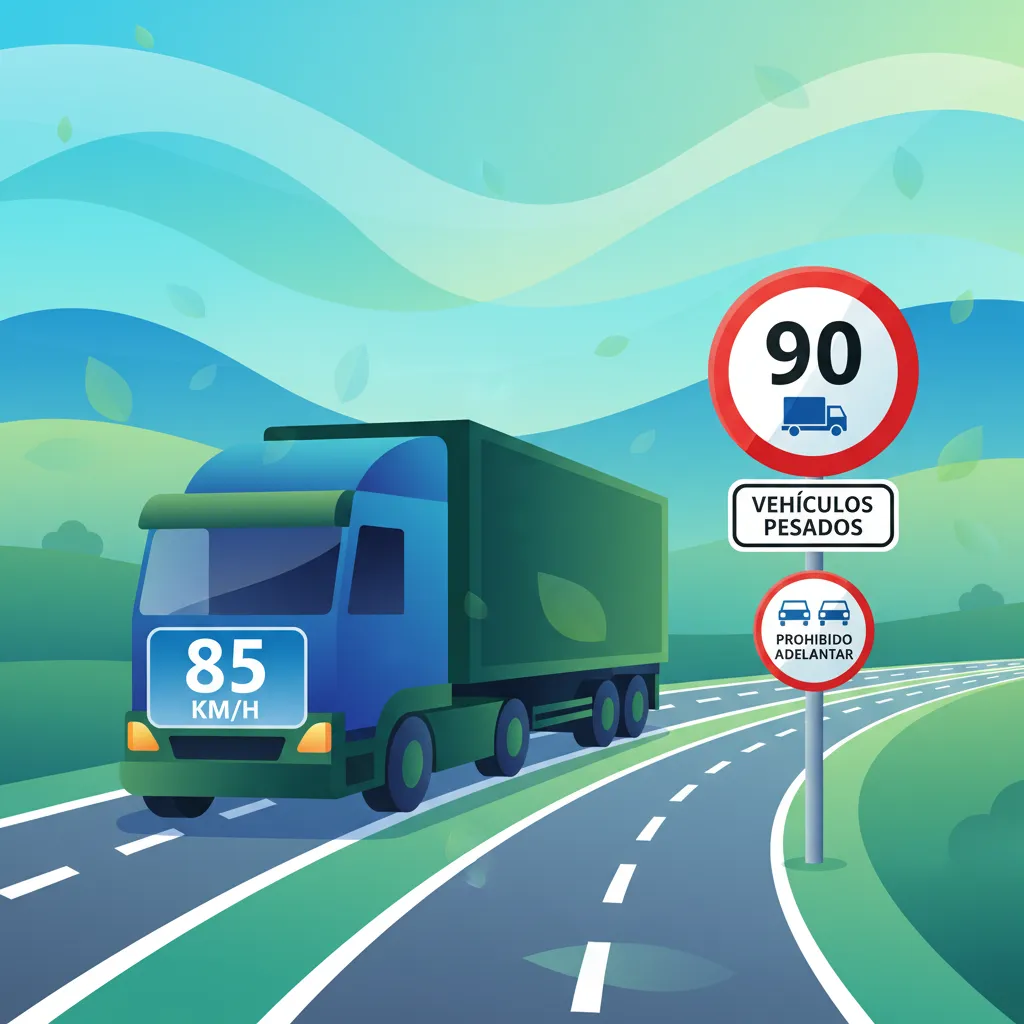
This lesson details the specific legal speed limits that apply to heavy passenger vehicles on Spanish highways, including variable speed zones that adjust based on traffic and weather conditions. Learners will understand the methods for speed monitoring, the function of speed control devices, and the legal consequences of non-compliance. The content also provides guidance on calculating a safe operating speed based on vehicle load and road conditions.
Learn essential theory on safely interacting with vulnerable road users like pedestrians and cyclists in busy Spanish city traffic. This lesson focuses on hazard perception, appropriate speed adjustments, and right-of-way rules specifically for bus drivers.
This lesson offers a comprehensive guide to navigating roundabouts in urban settings, explaining the correct protocols for entry, yielding, and circulation. Learners will be taught how to interpret lane markings and signage on multi-lane roundabouts and determine the correct vehicle positioning for safe entry and exit. The content emphasizes full compliance with Spanish city regulations that govern priority and right-of-way at these intersections.

This lesson explores the design and legal requirements of pedestrian crossings in Spanish urban areas. It clarifies the rules at zebra crossings, signal-controlled crossings, and areas where cyclists or other vulnerable users share space. The content explains the required safety distances and signage indicating crossing zones to ensure drivers respect all road users.
This lesson outlines the core principles of defensive driving, focusing on maintaining a safe following distance, creating a protective space cushion around the vehicle, and anticipating potential hazards. Learners will be taught how to develop contingency plans for unexpected events and employ risk mitigation techniques to actively avoid accidents. The content reinforces the vital importance of remaining vigilant and proactive at all times when driving.
This lesson outlines the best practices for precise vehicle positioning at urban bus stops and ensuring safe interaction with passengers. It covers the management of approach speed, correct alignment with the curb, and effective communication during boarding and alighting processes. Learners will also study how stopping maneuvers impact surrounding traffic flow and the importance of maintaining safety distances for efficient service.
This lesson explores the regulations for dedicated bus lanes in urban environments, detailing the correct interpretation of associated lane markings and traffic signage. Learners will understand the specified times of operation, rules for sharing lanes with other vehicles, and the legal consequences of unauthorized entry. The module also provides clear guidelines for entering and exiting bus lanes at designated points to maintain traffic flow.

This lesson addresses the critical skill of safely sharing the road with other vulnerable users like pedestrians, cyclists, and other motorcyclists. It emphasizes the need for increased awareness, speed adaptation, and providing ample space when passing. The content covers DGT regulations regarding minimum passing distances and highlights the importance of making eye contact to ensure mutual awareness and prevent common urban accidents.

This lesson is focused on the early identification of road hazards through the application of effective scanning techniques and the use of peripheral vision. Learners will practice recognizing visual cues that signal potential dangers, such as erratic vehicle movements, unexpected obstacles, or pedestrian behavior. The module also teaches proactive response strategies designed to mitigate these risks before they can escalate into dangerous situations.

This lesson focuses on the critical skill of safely interacting with vulnerable road users, such as pedestrians and cyclists, in an urban setting. It highlights the extensive blind spots around a truck and teaches drivers to be extra vigilant, especially at intersections and crosswalks. The content covers the legal requirements for yielding and the importance of making eye contact to confirm intentions.

This lesson examines the interaction between large vehicles, such as trucks, and vulnerable road users within roundabouts. It addresses the wide turning radius of heavy vehicles, the importance of checking blind spots, and the correct yielding behavior toward pedestrians and cyclists. Learners will understand how to maintain safe distances and anticipate the movements of different road users.
Find clear answers to common questions learners have about City Traffic Flow and Congestion Management. Learn how the lesson is structured, which driving theory objectives it supports, and how it fits into the overall learning path of units and curriculum progression in Spain. These explanations help you understand key concepts, lesson flow, and exam focused study goals.
Headway management refers to maintaining a consistent time or distance between successive buses operating on the same route. This ensures a regular service for passengers and helps to prevent bunching (buses arriving too close together) or long gaps between services, especially during congested periods.
Coordinating with traffic signals involves understanding how they are timed and, where possible, how to influence them (e.g., through dedicated bus lanes or priority systems). Effective coordination helps buses move through intersections more smoothly, reducing delays caused by red lights and improving overall journey times in congested urban areas.
The exam may include scenarios testing your knowledge of how to navigate congestion, priority rules for buses in urban settings, understanding of bus lanes, and how to manage passenger expectations during delays. Questions often focus on safety and efficiency in busy city traffic.
Route optimisation involves using real-time traffic information, understanding typical congestion patterns at different times of day, and potentially utilizing less congested alternative streets where permissible. The goal is to balance directness with predictability, ensuring passengers can rely on your service.
Lane occupancy refers to the space a vehicle occupies on the road. For buses, it's important to be aware of how your vehicle's size affects surrounding traffic and to use lanes efficiently, especially in multi-lane scenarios or during congestion. This also relates to understanding where buses are permitted to travel, such as in dedicated bus lanes.
Use our powerful search functionality to pinpoint specific Spanish DGT driving theory practice sets. Filter by road sign categories, traffic law topics, or question difficulty to build custom study sessions and reinforce your knowledge precisely where it matters for your official exam.