
Welcome to the Highway Coach Driving unit! This module prepares you for the specific challenges and regulations of operating coaches on Spain's autovías and autopistas. You'll learn crucial rules regarding speed limits, lane usage, and overtaking, alongside essential strategies for fuel efficiency and trip planning, ensuring you're exam-ready and a safer driver.
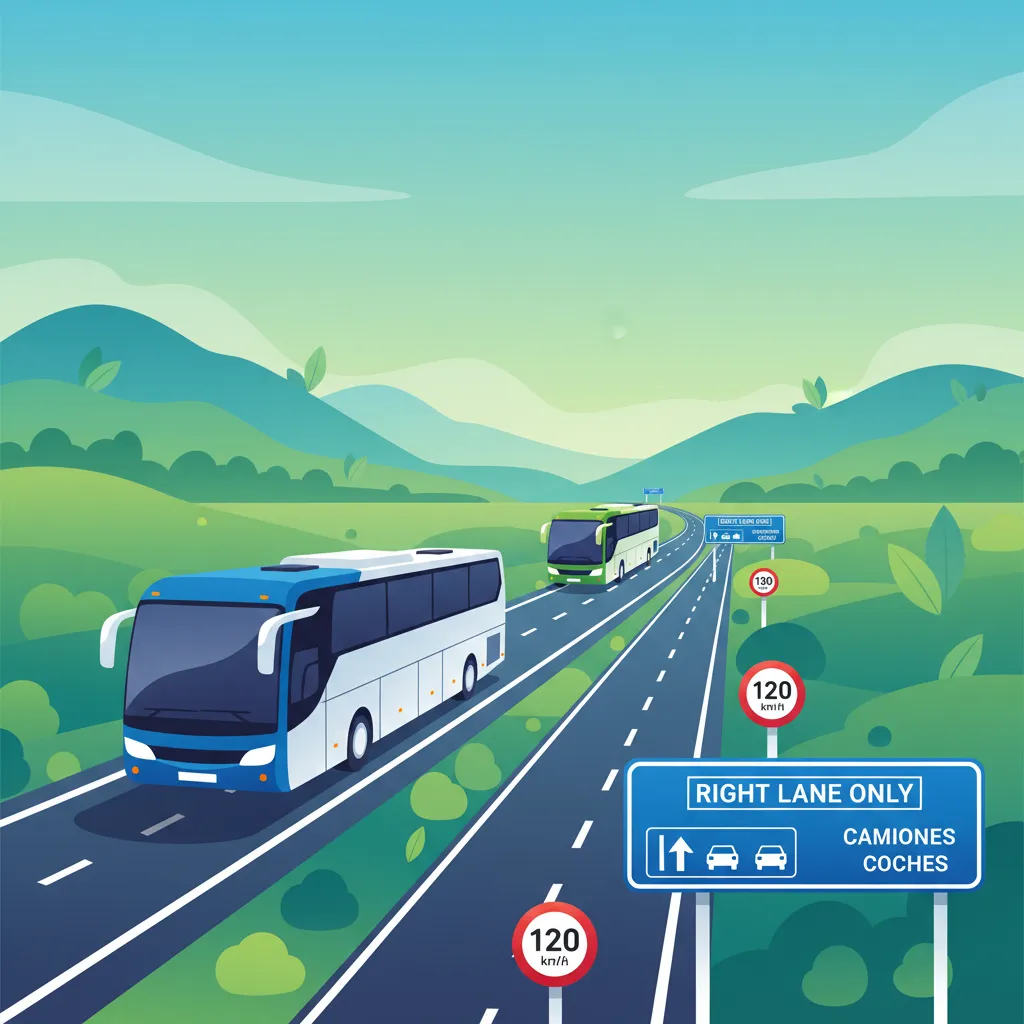
Browse all lessons that make up Highway Coach Driving. Each lesson focuses on specific topics, learning objectives, and core concepts, helping you build essential knowledge and follow a clear, structured progression toward your study goals in Spain.
This lesson explains the classification differences between Spanish autovías and autopistas, detailing the specific speed limits and lane restrictions applicable to coaches on each. Learners will become proficient in interpreting motorway signage, adhering to minimum speed requirements, and recognizing vehicle type restrictions as enforced by the DGT. The module also covers the correct procedures for using entry and exit ramps to ensure safe and fluid traffic flow.
This lesson details the specific legal speed limits that apply to heavy passenger vehicles on Spanish highways, including variable speed zones that adjust based on traffic and weather conditions. Learners will understand the methods for speed monitoring, the function of speed control devices, and the legal consequences of non-compliance. The content also provides guidance on calculating a safe operating speed based on vehicle load and road conditions.
This lesson addresses overtaking procedures and lane discipline specifically for large coaches, emphasizing correct lane positioning and safe passing practices on multi-lane highways. It covers the legal rules for overtaking, the critical need for comprehensive blind spot checks before changing lanes, and the importance of signaling intentions early. Learners will also be taught how to maintain appropriate safety gaps when maneuvering around slower-moving traffic.
This lesson introduces various eco-driving techniques designed to improve fuel efficiency while ensuring a smooth ride for passengers. It covers principles such as gentle throttle control, strategic coasting, and the effective use of cruise control for speed stabilization on long stretches. Learners will also understand how gear selection, aerodynamic drag, and advance route planning contribute to reducing overall fuel consumption.
Explore high-intent keywords and long-tail search topics learners use when researching Highway Coach Driving. These terms reflect how people search for reliable study materials, structured explanations, and unit-level theory preparation support in Spain.
Find clear answers to the most common questions learners ask about Highway Coach Driving. Understand how the unit is organized, what learning goals it supports, and how it contributes to your study progression with structured explanations and practical guidance tailored for learners in Spain.
On autovías and autopistas, the general speed limit for buses and coaches (vehicles for carrying passengers) is 100 km/h. For vehicles with trailers, the limit is 90 km/h. It's crucial to always check road signs, as temporary or specific limits may apply. Understanding these limits is a key part of the DGT theory exam.
Lane discipline for a coach means staying in the right-most lane unless overtaking or preparing to exit. Avoid unnecessary lane changes. On roads with three or more lanes, you must use the two right-most lanes. This ensures smoother traffic flow and enhances safety for larger vehicles.
Coaches can overtake on Spanish highways using the lane to the left of the one they are currently occupying. The overtaking manoeuvre must be completed safely and efficiently, without endangering other traffic. After overtaking, the coach must return to its original lane as soon as it is safe to do so, usually the right-most lane.
Fuel efficiency is important for both economic and environmental reasons. Smooth acceleration, maintaining a steady speed, anticipating traffic to avoid braking and accelerating unnecessarily, and proper gear selection can significantly reduce fuel consumption. This is often a topic covered in relation to safe and professional driving practices for the DGT exam.
Effective planning for rest stops is vital for driver fatigue management and passenger comfort. Routes should be planned to include designated service areas or rest stops at regular intervals, typically every two hours of driving or as required by regulations on driving hours. This ensures drivers can rest adequately and passengers have opportunities for breaks.
Both autovías and autopistas are high-speed motorways where coaches are permitted. Autopistas are typically toll roads (de pago), while autovías are generally toll-free. The driving rules, including speed limits and lane discipline for coaches, are largely the same on both types of roads, as defined by the DGT.
All included lessons
Lessons in Highway Coach Driving
See who benefits most from studying Highway Coach Driving. This overview explains how the unit supports different learning needs, what level of knowledge is helpful before starting, and how it fits into the overall study path in Spain.
This unit is essential for individuals preparing for their Spanish DGT Category D or D1 driving licence theory exams. It is particularly beneficial for those who need to understand the unique demands of long-distance coach operation on high-speed roads, including professional drivers seeking to refresh their knowledge or new aspirants.

Begin your preparation for the Spanish DGT driving licence exam today. Browse our full curriculum to find guided courses, detailed lessons on traffic legislation, road signs, and essential driving practices. Start learning systematically and confidently.
Explore DGT Theory Courses & CurriculumExplore all units and lessons included in this driving theory course.
Begin your preparation for the Spanish DGT driving licence exam today. Browse our full curriculum to find guided courses, detailed lessons on traffic legislation, road signs, and essential driving practices. Start learning systematically and confidently.
Explore DGT Theory Courses & Curriculum