
This lesson is crucial for all aspiring professional bus and coach drivers seeking Category D and D1 licenses in Spain. It provides a detailed understanding of the specific speed limits that apply to heavy passenger vehicles on various Spanish roads, including autovías and autopistas. Mastering these regulations is essential for passing your DGT theory exam and ensuring safe, compliant driving in your professional career.
Lesson content overview
Operating a heavy passenger vehicle, such as a bus or coach, in Spain requires a comprehensive understanding of specific speed limits and regulations. These rules, distinct from those for lighter vehicles, are designed to ensure the safety of all road users, reflecting the unique dynamics and challenges associated with transporting numerous passengers. This lesson provides an in-depth guide for aspiring professional drivers holding or seeking a Spanish driving license – Category D & D1, covering standard limits, variable speed zones, the impact of vehicle load, and the legal consequences of non-compliance.
Speed limits for buses and coaches are meticulously established by Spanish legislation, primarily the Reglamento General de Circulación (RGC), to mitigate risks inherent in larger, heavier vehicles. Unlike cars, heavy vehicles have significantly longer stopping distances, a higher centre of gravity, and their performance is greatly influenced by the number of passengers and cargo weight. Adhering to these limits is not merely a legal obligation but a cornerstone of professional, safe, and efficient driving.
Mastery of these speed regulations is crucial for passing the DGT (Dirección General de Tráfico) theoretical exam for Category D/D1 licenses and for maintaining a clean professional driving record.
The rationale behind specialized speed limits for heavy vehicles revolves around several critical factors. From a safety perspective, reduced speeds significantly lessen the severity of potential accidents and allow for greater maneuverability in challenging situations. Physically, the increased mass and load of a bus or coach directly translate to greater kinetic energy, demanding longer distances to decelerate or stop. This is why Spanish legislation sets specific, often lower, limits for vehicles over 3.5 tonnes and for passenger transport vehicles. These regulations are interconnected with broader topics such as Vehicle Handling & Dimensions, Highway Coach Driving – Autovía and Autopista Regulations, Fuel Efficiency and Driving Smoothness, and Hazard Perception, forming a holistic approach to safe professional driving.
The highest speed legally permitted for a specific class of vehicle on a given type of road under normal driving conditions.
Drivers must always comply with the Maximum Authorized Speed (MAS). Exceeding these limits not only carries severe legal penalties but also drastically increases the risk of accidents, compromising passenger safety and the driver's professional integrity.
Fixed legal speed limits apply to buses and coaches (Category D and D1 vehicles) under normal driving conditions on various road categories across Spain. These limits are mandatory and form the baseline for all professional driving operations.
Within urban areas, the default speed limit for all vehicles, including buses and coaches, is generally 50 km/h. However, it is common for this limit to be further reduced in specific zones, particularly those with high pedestrian traffic, residential areas, or near schools.
Always pay close attention to local signage, as temporary or permanent reductions below the default 50 km/h are frequent in city environments.
On conventional two-lane roads outside urban areas, the standard speed limit for heavy vehicles such as buses and coaches (Category D) is 80 km/h. This limit is lower than that for light vehicles, reflecting the increased challenges in braking and overtaking on these types of roads.
An example of correct practice would be a city bus traveling on a suburban road, where it must respect the 80 km/h limit, even if cars are permitted to drive at 90 km/h. Drivers must avoid the common misunderstanding that all vehicle types share the same speed limits on these roads.
Spanish highways, classified as Autovías (dual carriageways) and Autopistas (freeways), have specific speed limits for heavy passenger vehicles that are lower than those for light vehicles.
This distinction is critical. A coach driving on an autopista, for instance, must not exceed 110 km/h, even if road signs display 120 km/h for other vehicles. Special signs can further reduce these speeds, such as a temporary "80 km/h" sign on an autopista due to roadworks or specific conditions.
A type of Spanish dual carriageway that may have at-grade intersections and is often part of the national road network, typically free to use.
A type of Spanish freeway, usually with controlled access, grade-separated intersections, and often a toll charge.
While standard speed limits provide a baseline, actual driving conditions can necessitate immediate adjustments. Variable Speed Limits (VSL) address this by dynamically altering the maximum permissible speed based on real-time factors like weather, traffic, or incidents.
Variable Speed Limits are displayed on electronic message signs, often integrated into overhead gantries or lane-specific displays on autovías and autopistas. When a VSL is active, it supersedes any static or standard speed limit for that section of the road. Drivers must obey the displayed VSL until another VSL sign indicates a change or the standard limit signs become applicable again.
VSLs are typically triggered by specific conditions:
For a bus driver, this means seeing a sign displaying "70 km/h" on an autovía during heavy rain obligates compliance, regardless of the standard 90 km/h limit. Ignoring VSL signage because a static sign indicates a higher limit is a common and dangerous misunderstanding that leads to severe penalties.
While legal speed limits define the maximum permissible speed, a truly professional driver understands that the "safe" operating speed can be considerably lower, especially when considering the vehicle's load and prevailing road conditions. This concept of Load-Adjusted Speed is paramount for the safe operation of buses and coaches.
The dynamics of a bus or coach change significantly when carrying passengers and cargo. Several factors influence the need to adjust speed:
A fully-loaded coach (e.g., 50 passengers) will require a significantly longer braking distance than an empty one. On steep descents, this can be critical. Professional DGT guidelines recommend that operators adjust speed based on passenger load and road gradient, potentially reducing speed by up to 10 km/h for a full load on downhill grades.
Assess Vehicle Load: Determine the approximate number of passengers and weight of luggage. Consider if the vehicle is fully or partially loaded.
Evaluate Road Conditions: Consider road gradient (uphill/downhill), sharpness of curves, and surface condition (dry, wet, icy).
Monitor Vehicle Performance: Pay attention to brake responsiveness, engine strain, and vehicle stability.
Proactively Reduce Speed: Even if within the legal MAS, reduce speed on steep descents and sharp curves, especially with a heavy load. Aim to maintain a stable, controlled speed using engine braking where appropriate.
Failing to adjust speed for load, particularly on downhill sections, is a common error. For example, a coach descending a 5% grade with a full passenger load might need to maintain 80 km/h even if the standard limit is 90 km/h, to prevent brake overheating and ensure safe control.
Compliance with speed limits in Spain is rigorously enforced through a variety of technological systems. Professional drivers must be aware of these devices and understand how they operate to avoid infractions.
The DGT employs several tools to detect and measure vehicle speeds:
Professional drivers should understand that average-speed cameras penalize if the average speed over a stretch exceeds the limit, not just instantaneous speeding. Driving at 120 km/h for short bursts on a 10 km LTV-enforced stretch where the limit for buses is 110 km/h will result in a fine if the overall average speed exceeds 110 km/h.
Drivers should always assume that speed is being monitored. Ignorance of the enforcement method is not a valid defense against a penalty. Awareness of common speed trap locations and LTV zones (often indicated by specific DGT signage) is part of responsible professional driving. Compliance with speed checks by authorities is mandatory; refusal is a separate offense.
Breaching speed limits as a professional driver in Spain carries significant administrative penalties, as stipulated by Spanish traffic law. These consequences are designed to deter dangerous driving behaviors and uphold road safety standards.
The severity of penalties scales with how much the driver exceeds the speed limit:
For professional drivers holding a Category D or D1 license, accumulating penalty points ("puntos") has direct implications for their livelihood. A total of 12 points are initially assigned to a license; losing too many points can lead to the suspension or revocation of the driving license, rendering the individual unable to perform their professional duties.
Professional drivers cannot afford to assume that penalty points are irrelevant. They directly affect licensing eligibility and employability.
Fines can be issued by police on the spot, by automated enforcement systems (like radars and LTVs), or through a judicial process. There are often discounts for prompt payment, but accepting this waiver typically means forfeiting the right to appeal. The Reglamento de Transporte de Pasajeros (RTC) also mandates professional drivers to log significant speed violations in the vehicle's telematics system, enabling fleet monitoring and internal disciplinary actions.
Effective speed management extends beyond fixed rules, requiring drivers to adapt to a myriad of dynamic conditions that can change the safe and legal operating speed.
Adverse weather dramatically impacts road safety and necessitates significant speed reductions:
The design and environment of a road play a crucial role in determining appropriate speeds:
The condition and loading of the bus or coach are paramount:
In areas with high pedestrian or cyclist traffic, professional drivers must exercise extreme caution:
Understanding the direct consequences of speed choices is fundamental for professional drivers. Every decision regarding speed has immediate and long-term effects on safety, vehicle performance, and legal standing.
Ignoring Variable Speed Limits (VSLs) when conditions are adverse (e.g., fog, heavy rain) is particularly dangerous. It can exacerbate hazards, leading to:
Mastering speed limits for heavy passenger vehicles is a non-negotiable aspect of professional bus and coach driving in Spain. It involves not only knowing the fixed statutory limits but also dynamically adjusting speed based on load, weather, traffic, and road conditions. Adherence to these principles ensures passenger safety, legal compliance, and the longevity of a professional driving career. This knowledge is foundational for more advanced driving skills, such as safe overtaking and efficient driving techniques.
This lesson covers the specific speed limits for Category D and D1 buses and coaches across all Spanish road types, emphasizing that heavy vehicles always face lower limits than light vehicles. It explains how Variable Speed Limits work and why they supersede static signs during adverse conditions. The content details load-adjusted speed calculations, teaching drivers to account for passenger weight, road gradient, and vehicle dynamics when determining safe operating speeds. A critical section covers speed enforcement in Spain, including fixed radar, average-speed cameras (LTV), and the penalty structure ranging from fines and point deductions to license suspension for serious violations. Finally, it reinforces that professional drivers must continuously adapt their speed based on weather, traffic, and vehicle condition, not just legal maximums.
A short set of high-value points that capture the most important learning from this lesson.
Category D and D1 vehicles face lower speed limits than light vehicles on every road type in Spain: 50 km/h urban, 80 km/h conventional roads, 90 km/h on autovías, and 110 km/h on autopistas.
Variable Speed Limits (VSL) on electronic signs always override static posted limits when active, requiring real-time compliance.
Safe operating speed depends on vehicle load, road gradient, and weather conditions, and may need to be significantly below the legal Maximum Authorized Speed.
Average-speed cameras (LTV) calculate average speed over a distance, so brief speed bursts followed by slower driving will still trigger fines if the overall average exceeds the limit.
Speed violations for professional drivers carry escalating penalties that directly threaten their Category D license and livelihood.
Explore all units and lessons included in this driving theory course.
Autovías and autopistas both impose a 10 km/h lower limit for heavy vehicles compared to light vehicles (90 vs 100 km/h and 110 vs 120 km/h respectively).
When fully loaded, a bus or coach has a higher centre of gravity and significantly longer braking distance, requiring proactive speed reduction on curves and descents.
Brake fade occurs when heavy loads overheat brakes on long descents, and load-adjusted speed guidelines recommend reducing speed by up to 10 km/h for full loads on downhill grades.
Ignoring active VSL signage due to a higher static limit is a dangerous misunderstanding that leads to severe penalties.
Professional drivers start with 12 penalty points; accumulating too many points results in license suspension and loss of professional driving eligibility.
Assuming the speed limit for cars also applies to buses on conventional roads (cars may travel 90 km/h while buses must not exceed 80 km/h).
Believing that momentary speed bursts are safe under average-speed camera zones, when the LTV calculates average speed over the entire measured distance.
Failing to reduce speed on curves or downhill sections when the vehicle is fully loaded, increasing rollover and brake-overheating risk.
Ignoring variable speed limit signs during adverse weather, thinking the standard static limit is the only rule that applies.
Assuming that knowledge of fixed radar locations is sufficient for compliance, while ignoring portable radar units, police spot checks, and LTV zones.
Lesson content overview
A short set of high-value points that capture the most important learning from this lesson.
Category D and D1 vehicles face lower speed limits than light vehicles on every road type in Spain: 50 km/h urban, 80 km/h conventional roads, 90 km/h on autovías, and 110 km/h on autopistas.
Variable Speed Limits (VSL) on electronic signs always override static posted limits when active, requiring real-time compliance.
Safe operating speed depends on vehicle load, road gradient, and weather conditions, and may need to be significantly below the legal Maximum Authorized Speed.
Average-speed cameras (LTV) calculate average speed over a distance, so brief speed bursts followed by slower driving will still trigger fines if the overall average exceeds the limit.
Speed violations for professional drivers carry escalating penalties that directly threaten their Category D license and livelihood.
Explore all units and lessons included in this driving theory course.
Autovías and autopistas both impose a 10 km/h lower limit for heavy vehicles compared to light vehicles (90 vs 100 km/h and 110 vs 120 km/h respectively).
When fully loaded, a bus or coach has a higher centre of gravity and significantly longer braking distance, requiring proactive speed reduction on curves and descents.
Brake fade occurs when heavy loads overheat brakes on long descents, and load-adjusted speed guidelines recommend reducing speed by up to 10 km/h for full loads on downhill grades.
Ignoring active VSL signage due to a higher static limit is a dangerous misunderstanding that leads to severe penalties.
Professional drivers start with 12 penalty points; accumulating too many points results in license suspension and loss of professional driving eligibility.
Assuming the speed limit for cars also applies to buses on conventional roads (cars may travel 90 km/h while buses must not exceed 80 km/h).
Believing that momentary speed bursts are safe under average-speed camera zones, when the LTV calculates average speed over the entire measured distance.
Failing to reduce speed on curves or downhill sections when the vehicle is fully loaded, increasing rollover and brake-overheating risk.
Ignoring variable speed limit signs during adverse weather, thinking the standard static limit is the only rule that applies.
Assuming that knowledge of fixed radar locations is sufficient for compliance, while ignoring portable radar units, police spot checks, and LTV zones.
Explore search topics learners often look for when studying Speed Limits for Heavy Vehicles. These topics reflect common questions about road rules, driving situations, safety guidance, and lesson level theory preparation for learners in Spain.
Browse additional driving theory lessons that cover connected traffic rules, road signs, and common driving situations related to this topic. Improve your understanding of how different rules interact across everyday traffic scenarios.
Explore advanced speed regulations for buses and coaches on Spanish roads. Understand variable speed limits, load adjustments, and dynamic management based on real-time conditions for professional drivers.
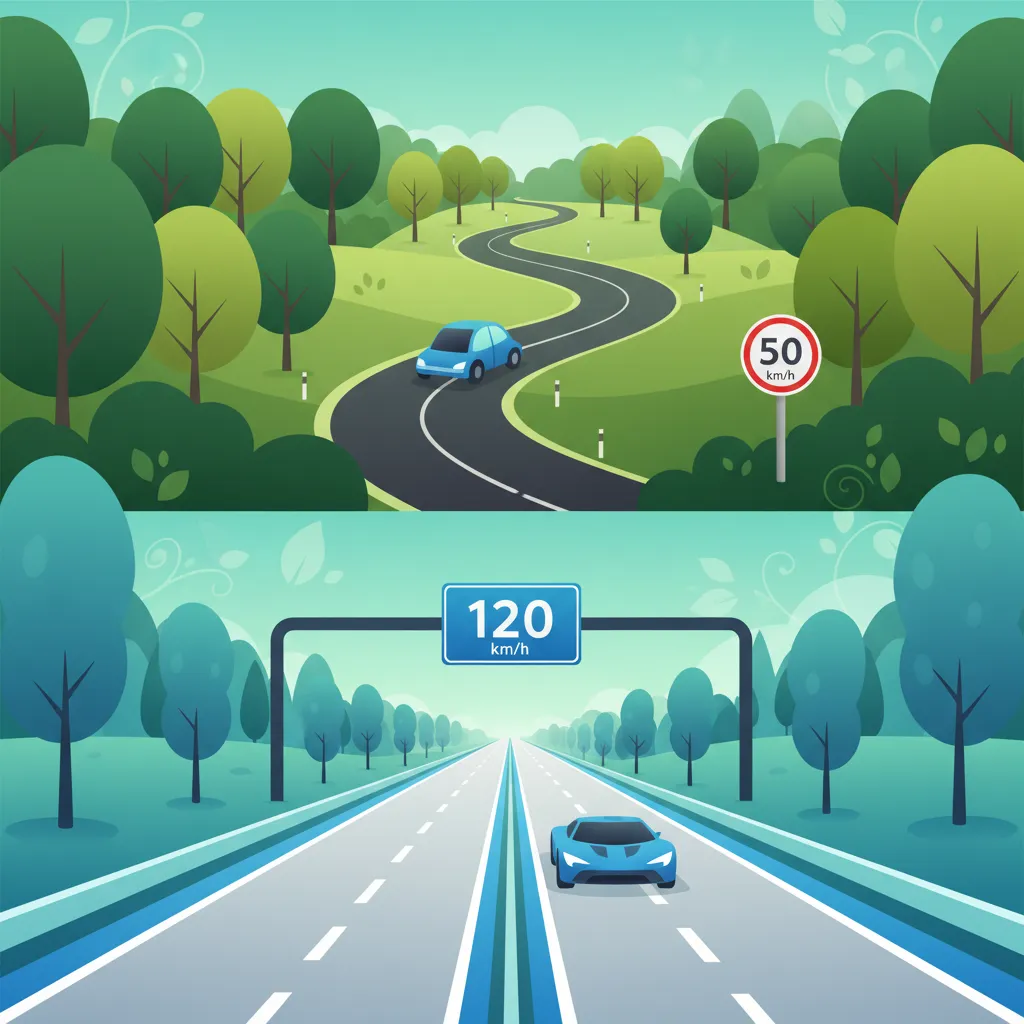
In this lesson, the different speed limits applied to rural roads and autovías (highways) are examined. Learners will understand the classification of road types and the DGT-mandated speed limits for each, including how to interpret variable speed limit signs. The lesson also includes techniques for maintaining speed control and adapting to road conditions and traffic flow.

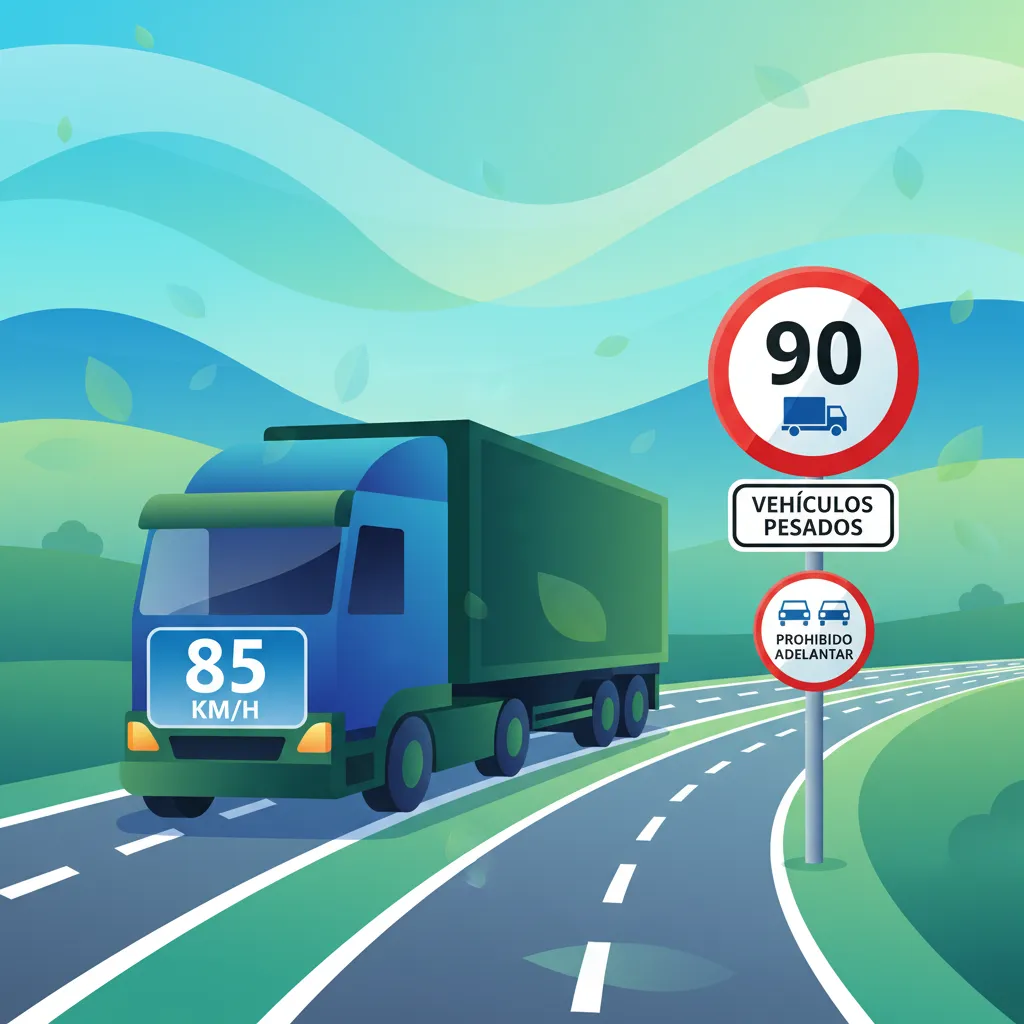
This lesson explains the specific legal framework governing truck operations on Spain's high-speed road network. It details the different speed limits for trucks on autovías versus autopistas and the regulations regarding which lanes heavy vehicles are permitted to use. Learners will also understand how to interpret specific highway signage relevant to commercial vehicles and any applicable toll regulations.
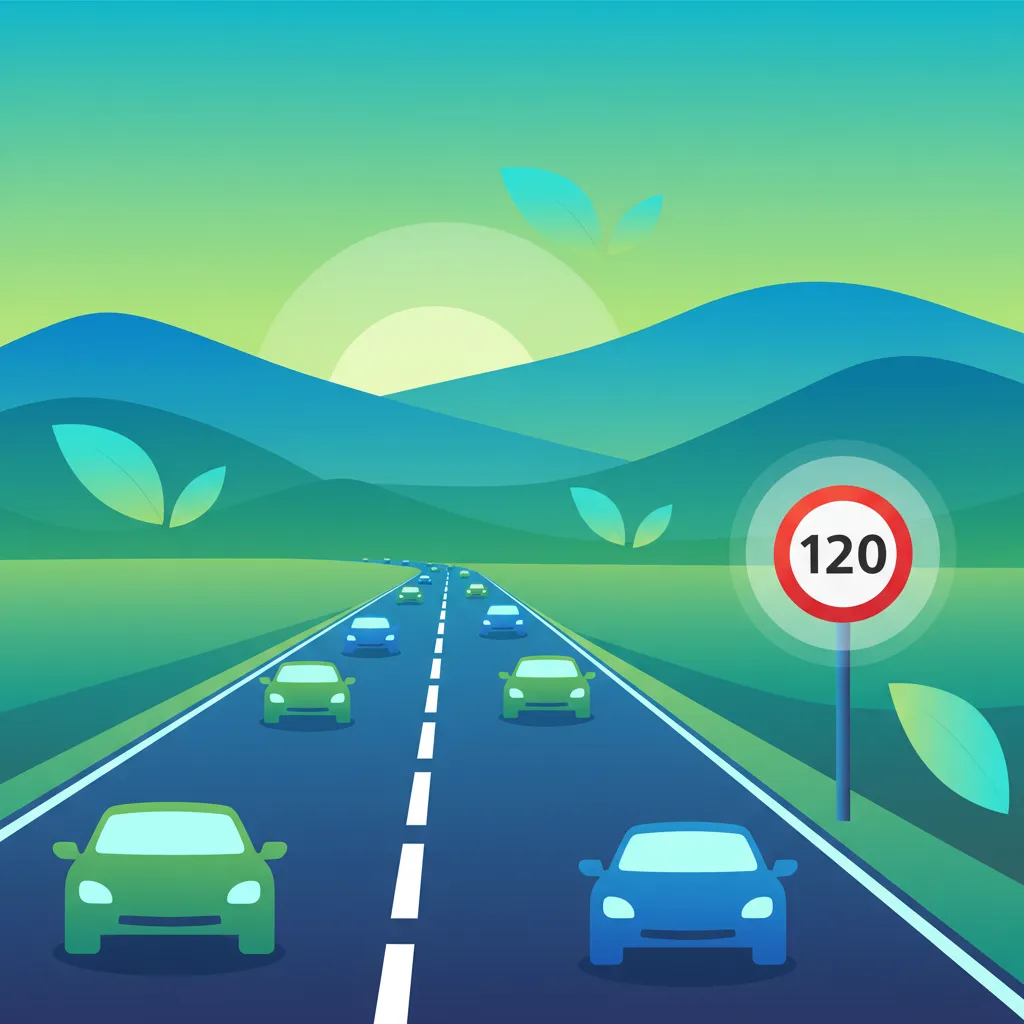
This lesson focuses on the critical relationship between speed, following distance, and overall traffic safety on highways. It explains how to calculate a safe following distance based on speed and weather conditions, accounting for a truck's longer stopping distance. The content also teaches strategies for managing speed to adapt smoothly to changing traffic flow, enhancing both safety and fuel efficiency.
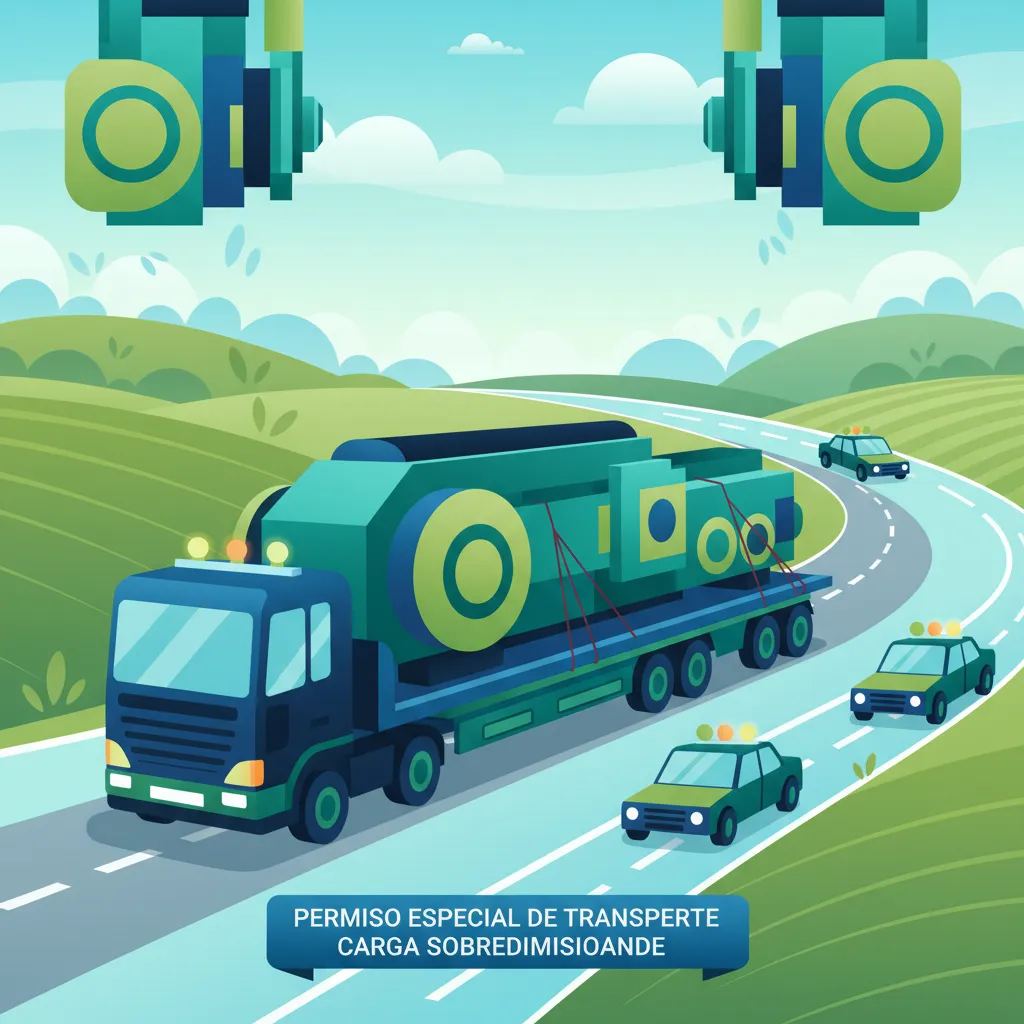
This lesson addresses the special regulations that apply to transporting loads that exceed standard legal dimensions or weight. It explains the process for obtaining the necessary special permits from the DGT and other authorities. The content also covers the requirements for route planning, the use of escort vehicles (pilot cars), and the mandatory signage and lighting for the vehicle.
This lesson provides a broad overview of the key traffic regulations in Spain that directly impact professional truck drivers. It details the rules of priority at intersections, the interpretation of different road markings, and the principles of correct lane discipline. Furthermore, it explains the specific speed limits applicable to heavy vehicles and the legal protocols for safe overtaking and signaling.
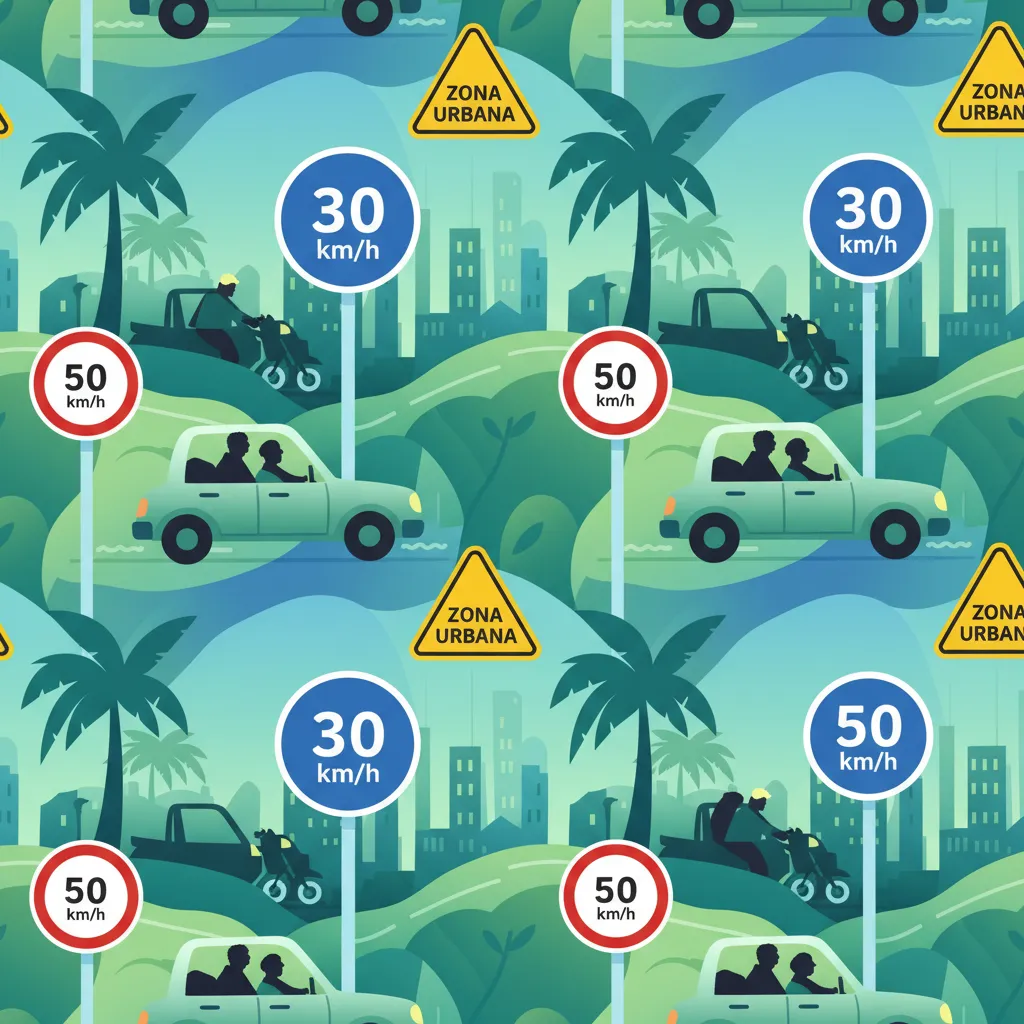
This lesson outlines the speed limits applicable to different types of urban streets and the corresponding road signs that communicate them. It explains the interpretation of speed zone markings, signs indicating reduced speed areas like 30 km/h zones, and the rationale behind speed enforcement in city settings. Learners will understand how to maintain compliance to enhance safety for all road users.
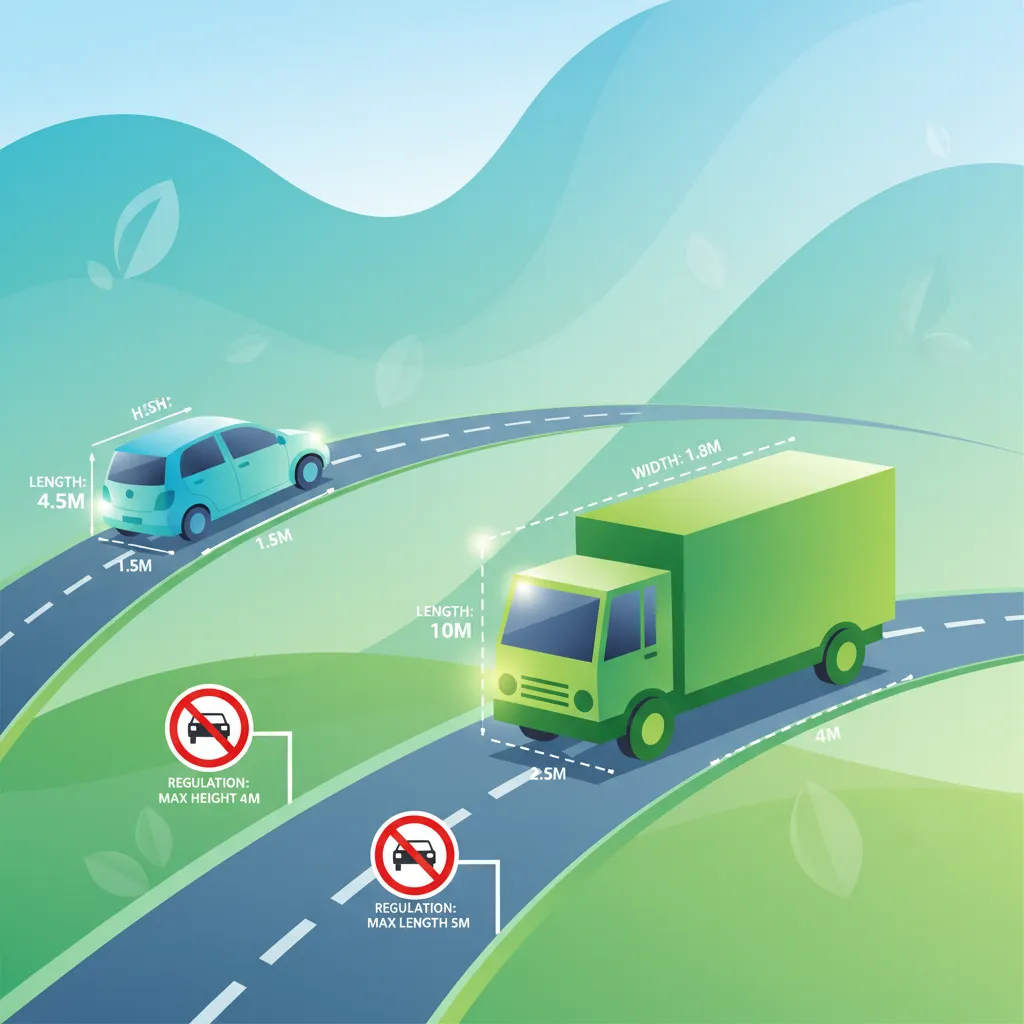
This lesson provides a detailed breakdown of the maximum permissible length, width, and height for heavy vehicles according to Spanish and EU regulations. It explains how these dimensions are measured and how they affect vehicle classification and route planning. The content emphasizes the critical importance of respecting clearance signs for bridges, tunnels, and other overhead structures to prevent accidents.
Understand the critical link between speed, braking distances, and vehicle dynamics for heavy passenger vehicles in Spain. Learn about the consequences of exceeding limits and ensuring passenger safety.
This lesson focuses on the critical relationship between speed, following distance, and overall traffic safety on highways. It explains how to calculate a safe following distance based on speed and weather conditions, accounting for a truck's longer stopping distance. The content also teaches strategies for managing speed to adapt smoothly to changing traffic flow, enhancing both safety and fuel efficiency.

This lesson explores the direct relationship between a vehicle's load and its braking and acceleration performance. It explains how increased mass significantly increases the vehicle's inertia, resulting in longer stopping distances and slower acceleration. Understanding these physical principles helps drivers adjust their driving style, such as increasing following distances, to compensate for the effects of a heavy load.

This lesson provides a detailed examination of the components that determine a vehicle’s stopping distance: perception time, reaction time, and braking distance. It outlines how to calculate safe stopping distances under various speeds and road conditions like wet or dry surfaces. Learners will be equipped to compute appropriate safety margins and understand the physics of emergency braking.

This lesson addresses the dynamics of accelerating, braking, and turning while towing a trailer. It explains how to adjust for increased load inertia, the impact on stopping distances, and the need for wider turns to account for off-tracking. The content outlines DGT speed guidelines specific to towing and emphasizes smooth control to ensure stability.
This lesson focuses on the coordination of acceleration and deceleration to maintain vehicle stability. It explains how to modulate the accelerator pedal for smooth acceleration and how to apply the brake pedal for controlled deceleration. The content covers the role of the ABS system, the calculation of stopping distances, and the importance of maintaining stability during speed changes.

This lesson introduces fundamental road safety principles applicable to all drivers, with a special emphasis on heavy vehicles. It covers defensive driving techniques, including the importance of anticipating potential hazards and managing speed appropriately for conditions. Learners will also study how to establish and maintain safe following distances and understand the hierarchy of road users to ensure safe interactions.

This lesson covers the critical regulations concerning vehicle weight, including Gross Vehicle Weight (GVW) and individual axle load limits. Learners will understand how to calculate tare weight and maximum payload to avoid overloading. The content also explains how proper weight distribution is essential for vehicle stability, braking efficiency, and minimizing road surface damage.
This lesson provides a broad overview of the key traffic regulations in Spain that directly impact professional truck drivers. It details the rules of priority at intersections, the interpretation of different road markings, and the principles of correct lane discipline. Furthermore, it explains the specific speed limits applicable to heavy vehicles and the legal protocols for safe overtaking and signaling.
This lesson explains the specific legal framework governing truck operations on Spain's high-speed road network. It details the different speed limits for trucks on autovías versus autopistas and the regulations regarding which lanes heavy vehicles are permitted to use. Learners will also understand how to interpret specific highway signage relevant to commercial vehicles and any applicable toll regulations.

This lesson focuses on the core principles of defensive driving as they apply to operating a large truck. It explains the importance of managing the space around the vehicle to create a safety buffer and always having an 'escape route' in mind. The content emphasizes anticipating the actions of other road users and being prepared to react calmly and safely to unexpected situations.
Find clear answers to common questions learners have about Speed Limits for Heavy Vehicles. Learn how the lesson is structured, which driving theory objectives it supports, and how it fits into the overall learning path of units and curriculum progression in Spain. These explanations help you understand key concepts, lesson flow, and exam focused study goals.
While most general speed limits apply to both Category D (buses) and D1 (minibuses), there can be specific nuances depending on the vehicle's maximum authorised mass or whether it's operating on a regular service line. This lesson details these distinctions to ensure full compliance for both categories.
Variable speed limits, often displayed on electronic signs, must be strictly adhered to by all vehicles, including buses and coaches. These limits typically adjust based on traffic density, weather conditions, or road incidents. Professional drivers for Category D and D1 vehicles must be extra vigilant and adapt their speed immediately for safety and compliance.
Exceeding speed limits in Spain as a professional D/D1 driver can result in significant fines, penalty points on your licence, and potentially the suspension of your driving privileges. For serious infractions, it can also lead to legal proceedings and jeopardise your employment. Compliance is paramount for professional integrity.
Yes, many heavy vehicles in Spain, including buses and coaches, are legally required to be fitted with a speed limiter and a tachograph. The speed limiter prevents the vehicle from exceeding a certain speed, while the tachograph records driving time, rest periods, and speed, ensuring compliance with DGT and EU regulations.
Calculating a safe speed involves assessing factors like vehicle weight, passenger count, weather (rain, fog, wind), road surface (wet, icy), visibility, and the vehicle's braking capability. Even if under the legal limit, a professional driver must always reduce speed if conditions warrant, prioritizing safety above all else. This lesson provides guidance on these critical judgements.
Use our powerful search functionality to pinpoint specific Spanish DGT driving theory practice sets. Filter by road sign categories, traffic law topics, or question difficulty to build custom study sessions and reinforce your knowledge precisely where it matters for your official exam.