
Welcome to the 'Overtaking and Lane Discipline' lesson, a key part of our Professional Bus and Coach Theory curriculum for Spain. Building on your understanding of highway driving, this module focuses specifically on the safe practices required for large passenger vehicles, ensuring you meet DGT standards.

Lesson content overview
Operating a professional bus or coach (Category D & D1) demands exceptional skill and adherence to traffic regulations, especially concerning overtaking and maintaining lane discipline. These maneuvers, critical for maintaining safe traffic flow and preventing collisions, are significantly different when driving a large, heavy passenger vehicle compared to a standard car. This lesson provides an in-depth guide to safe and lawful overtaking practices and proper lane usage on multi-lane highways in Spain, ensuring compliance with the Reglamento General de Circulación (RGC) and prioritizing passenger safety.
For professional bus and coach drivers, understanding and executing correct overtaking procedures and maintaining strict lane discipline are fundamental to road safety. The unique dimensions, weight, and operational characteristics of large passenger vehicles necessitate a more cautious and systematic approach to these maneuvers. This section outlines the core principles that underpin safe and legal driving practices for coaches on Spanish roads.
Driving a coach requires a heightened awareness of several key principles to ensure safe overtaking and lane discipline. These principles act as a foundational checklist for every professional driver.
Successful and safe overtaking requires a detailed understanding of several interconnected concepts. This section breaks down the specific actions and considerations involved in these critical driving maneuvers for professional coach drivers.
Overtaking is a systematic process that involves passing a slower vehicle and safely returning to your original lane. For coaches, this process is extended and demands greater precision due to the vehicle's size and inertia. In Spain, which drives on the right, overtaking is generally performed on the left side of the vehicle being passed. The only exception is if the slower vehicle is indicating a left turn and can safely shift to the right, or in certain urban situations where traffic allows overtaking on the right.
Assess the Situation: Before committing, evaluate the road conditions (visibility, weather, road surface), traffic density, upcoming road signs or markings (e.g., "no overtaking" zones), and the speed differential between your coach and the vehicle ahead. Ensure you have enough power and space to complete the maneuver efficiently and safely.
Check Mirrors and Blind Spots: Perform a thorough check of your rear-view and side mirrors. Crucially, follow this with an "over-the-shoulder" glance to visually confirm that your blind spots are clear of any other vehicles, particularly motorcycles or bicycles that can be easily obscured.
Signal Early: Activate your turn indicator well in advance – at least 150 metres or approximately 5 seconds before initiating the lane change on highways. This gives other drivers ample warning of your intentions.
Change Lanes Smoothly: Once certain the path is clear, steer smoothly into the adjacent lane, maintaining a consistent speed. Avoid abrupt movements that could destabilize the coach or surprise other drivers.
Accelerate and Maintain Lateral Clearance: Accelerate to pass the slower vehicle, ensuring you maintain a safe lateral clearance (side distance). For vulnerable road users, this should be at least 1.5 metres. Keep an eye on your mirrors to track the position of the overtaken vehicle.
Return to Original Lane Safely: Once you can see the entire front of the overtaken vehicle in your right-hand mirror, signal your intention to return to the right-most lane. Perform another mirror and blind spot check to ensure the lane is clear before smoothly steering back. Deactivate your signal.
A common misunderstanding among drivers is assuming that an overtaking maneuver can be executed without a thorough blind spot check, or attempting to overtake on the right lane on a multi-lane road unless specifically permitted by traffic conditions (e.g., in heavy, slow-moving traffic where lanes are designated for specific directions).
Blind spots are areas around a vehicle that are not visible to the driver, either directly or through the mirrors. For large coaches, these blind spots are significantly larger and more critical than those of smaller vehicles. They typically extend along the sides, particularly the rear-right side of the coach, making motorcycles, bicycles, or even smaller cars completely disappear from view.
The practical meaning of a blind spot check for a coach driver is to always perform a physical head turn (an over-the-shoulder glance) to the right (and left, if changing to the left-most lane) before any lateral movement. This includes lane changes, merging, turning, or pulling away from the curb. Relying solely on mirrors is a dangerous mistake. Spanish traffic law (Reglamento General de Circulación, Article 24) explicitly states that drivers must ensure a maneuver can be performed safely, which implicitly requires checking all potential hazards, including those in blind spots.
Lane discipline refers to the correct and safe use of traffic lanes according to regulations, road conditions, and vehicle type. For heavy vehicles like coaches on multi-lane highways (Autovías and Autopistas), maintaining proper lane discipline is crucial for traffic flow, reducing congestion, and preventing accidents.
The fundamental rule in Spain is to keep to the right-most lane unless actively overtaking another vehicle or when directed otherwise by road signs or markings. This practice, known as "lane keeping," allows faster-moving traffic to use the left lanes for overtaking without being impeded. Once an overtaking maneuver is completed, the coach driver must return to the right-most lane as soon as it is safe to do so.
The practice of using road lanes appropriately, maintaining the correct lane for speed and vehicle type, and adhering to traffic regulations to ensure smooth traffic flow and safety.
Common misunderstandings include cruising in the middle or left lanes unnecessarily, which can force other vehicles to overtake on the right (an illegal maneuver in normal circumstances) or cause frustration and road rage. RGC Article 36 specifically regulates lane usage for heavy vehicles, reinforcing the requirement to keep to the rightmost lane.
A safety gap is the minimum distance, both in time and space, that a driver must maintain between their vehicle and others, particularly when performing maneuvers like overtaking. For coaches, due to their mass and longer braking distances, maintaining an adequate safety gap is even more critical.
This safety gap applies not only to the vehicle in front but also to the space behind your coach before returning to the original lane after overtaking. You must be able to see the overtaken vehicle's headlights clearly in your right-hand mirror before steering back into the lane.
Always increase your safety gap in adverse conditions. In rain, fog, or on slippery surfaces, extend the gap to at least 3 seconds, or even more, to account for reduced traction and visibility.
A common misunderstanding is that a shorter gap is acceptable at lower speeds. While braking distances are shorter at lower speeds, the principle of reaction time (perception, decision, action) remains constant, meaning a consistent temporal gap is always safer. Furthermore, drivers must consider the load of the coach; a fully loaded coach has significantly increased stopping distances, necessitating even larger safety gaps.
Signalling is the act of using your vehicle's turn indicators to communicate your intentions to other road users. For coach drivers, early and correct signalling is an indispensable safety measure that dramatically reduces the risk of collisions and promotes smooth traffic flow. It provides advance warning, allowing others to anticipate your actions and adjust their driving accordingly.
The Reglamento General de Circulación (RGC Article 16) mandates that drivers must signal their intention to change lanes or direction at least 150 metres before the maneuver on highways (Autovías and Autopistas), or for approximately 5 seconds in other situations.
Early signalling is not just a legal requirement but a fundamental aspect of defensive driving and hazard perception. It aligns with human factors principles, as it leverages predictability to reduce cognitive load and reaction time for everyone on the road.
Compliance with the Reglamento General de Circulación (RGC) is mandatory for all drivers in Spain, and professional coach drivers must have an intricate understanding of the specific articles pertaining to overtaking and lane discipline for heavy vehicles.
| Rule (RGC Article) | Statement | Applicability | Legal Status | Rationale | Example (Correct) | Example (Incorrect) |
|---|---|---|---|---|---|---|
| Art. 16 | Signal intention to change lane at least 150 m before manoeuvre on highways. | Autovías, autopistas, dual carriageways. | Mandatory. | Provides advance warning to surrounding traffic. | Coach signals left 200 m before overtaking a slower vehicle. | Coach signals left only 30 m before lane change. |
| Art. 24 | Overtaking must be performed safely, ensuring no conflict with oncoming traffic. | All road types with overtaking. | Mandatory. | Prevents collisions by requiring full safety checks. | Coach checks mirrors, blind spots, signals, and overtakes when safe and clear. | Coach overtakes in a zone with limited visibility (e.g., a blind bend). |
| Art. 36 | Heavy vehicles (including coaches) must keep to the rightmost lane unless overtaking. | Highways, dual carriageways (3+ lanes). | Mandatory. | Keeps faster traffic flowing and reduces congestion. | Coach cruises in the right lane, uses the middle lane to overtake, then returns right. | Coach cruises in the leftmost lane for extended periods, impeding faster traffic. |
| Art. 45 | Overtaking is prohibited in zones marked with double solid lines, near intersections, and in tunnels. | All road types (specific areas). | Mandatory. | Visibility and safety constraints in high-risk areas. | Coach respects "no overtaking" signs and solid lines. | Coach attempts overtaking within a tunnel or across a double solid line. |
| Art. 73 | Distance between vehicles shall be maintained to allow safe stopping; 2-second rule recommended for heavy vehicles. | All traffic situations. | Recommended (must not impede safe stopping). | Provides adequate reaction time for all road users. | Coach maintains a 2-second gap behind the vehicle ahead before initiating overtake. | Coach follows too closely, less than 1-second gap, especially before overtaking. |
Understanding common mistakes is as crucial as knowing the correct procedures. Professional coach drivers must be vigilant to avoid these violations, which frequently lead to dangerous situations and legal penalties.
The decision to overtake and the manner in which it is executed must always be adapted to the prevailing conditions. A professional coach driver assesses numerous factors before initiating any lateral movement or overtaking procedure.
The way a professional coach driver approaches overtaking and lane discipline has direct, tangible consequences and benefits, affecting not only their own safety and career but also the well-being of passengers and other road users.
The rules and best practices for overtaking and lane discipline are not arbitrary; they are rooted in fundamental principles of physics, human psychology, and statistical safety analysis.
This lesson has underscored the critical importance of mastering overtaking and lane discipline for professional bus and coach drivers operating under Spanish regulations. These maneuvers, though routine, demand meticulous attention to detail, proactive safety measures, and strict adherence to the Reglamento General de Circulación (RGC).
The core process for safe overtaking involves:
Drivers must also be prepared to adjust their techniques based on contextual variations such as adverse weather, reduced visibility at night, specific road types (urban vs. rural highways), the coach's load, and the presence of vulnerable road users. Avoiding common violations like late blind-spot checks, insufficient safety gaps, and improper lane choice is paramount.
The rationale behind these rules is rooted in ensuring maximum visibility, adequate reaction time, and stable vehicle dynamics for large, heavy passenger vehicles. By diligently applying these principles, coach drivers not only comply with legal obligations but also significantly enhance the safety and comfort of their passengers and contribute positively to overall road safety.
This lesson covers the essential overtaking and lane discipline procedures that professional coach drivers (Category D/D1) must master for safe operation on Spanish roads. The overtaking process is systematic: assess conditions, perform comprehensive mirror and blind spot checks (including a physical head turn), signal at least 150 metres early, change lanes smoothly, maintain safe lateral clearance of at least 1.5 metres for vulnerable users, and return to the right lane only when the overtaken vehicle is fully visible in mirrors. Lane discipline requires keeping to the right-most lane unless actively overtaking, with a minimum 2-second safety gap that must increase to 3 seconds in adverse weather. Key violations to avoid include skipping blind spot checks, maintaining inadequate safety gaps, lane hogging, overtaking in prohibited zones, and late signalling.
A short set of high-value points that capture the most important learning from this lesson.
Safe overtaking requires a systematic six-step process: assess conditions, check mirrors and blind spots, signal at least 150m before, change lanes smoothly, accelerate maintaining lateral clearance, and return to the right lane when the overtaken vehicle is visible in your mirror.
Blind spot checks for coaches require a physical over-the-shoulder head turn—not just mirror checks—because the vehicle's large size creates extensive blind zones that can hide motorcycles and bicycles.
Lane discipline for heavy vehicles on Spanish highways means keeping to the right-most lane at all times unless actively overtaking, then returning as soon as it is safe.
Heavy coaches must maintain a minimum 2-second temporal safety gap (approximately 45-50 metres at 80 km/h) and extend this to 3 seconds in adverse weather conditions.
Early signalling at least 150 metres or 5 seconds before lane changes on highways is mandatory and reduces surprise for other road users, promoting predictable traffic flow.
Explore all units and lessons included in this driving theory course.
The 2-second rule: choose a fixed point, count 'one-thousand-one, one-thousand-two'—your coach should not reach that point before you finish counting.
When overtaking vulnerable road users (motorcyclists, cyclists), maintain a minimum lateral clearance of 1.5 metres.
Return to the right lane after overtaking only when you can see the entire front of the overtaken vehicle in your right-hand mirror.
Lane hogging—cruising in middle or left lanes unnecessarily—is a violation of RGC Article 36 and impedes faster traffic.
A fully loaded coach has significantly longer stopping distances and reduced acceleration, requiring proportionally larger safety gaps.
Relying solely on mirrors without performing the mandatory over-the-shoulder head check, which can miss vehicles, motorcycles, or cyclists in the coach's large blind spots.
Attempting to overtake with an inadequate safety gap, leaving insufficient time and space to react if the overtaken vehicle brakes suddenly.
Cruising in the middle or left lanes on multi-lane highways without overtaking, creating congestion and forcing other vehicles into unsafe maneuvers.
Overtaking in prohibited zones such as areas with double solid lines, tunnels, or near intersections where visibility is restricted.
Activating turn signals only metres before initiating a lane change, depriving other drivers of adequate warning time.
Lesson content overview
A short set of high-value points that capture the most important learning from this lesson.
Safe overtaking requires a systematic six-step process: assess conditions, check mirrors and blind spots, signal at least 150m before, change lanes smoothly, accelerate maintaining lateral clearance, and return to the right lane when the overtaken vehicle is visible in your mirror.
Blind spot checks for coaches require a physical over-the-shoulder head turn—not just mirror checks—because the vehicle's large size creates extensive blind zones that can hide motorcycles and bicycles.
Lane discipline for heavy vehicles on Spanish highways means keeping to the right-most lane at all times unless actively overtaking, then returning as soon as it is safe.
Heavy coaches must maintain a minimum 2-second temporal safety gap (approximately 45-50 metres at 80 km/h) and extend this to 3 seconds in adverse weather conditions.
Early signalling at least 150 metres or 5 seconds before lane changes on highways is mandatory and reduces surprise for other road users, promoting predictable traffic flow.
Explore all units and lessons included in this driving theory course.
The 2-second rule: choose a fixed point, count 'one-thousand-one, one-thousand-two'—your coach should not reach that point before you finish counting.
When overtaking vulnerable road users (motorcyclists, cyclists), maintain a minimum lateral clearance of 1.5 metres.
Return to the right lane after overtaking only when you can see the entire front of the overtaken vehicle in your right-hand mirror.
Lane hogging—cruising in middle or left lanes unnecessarily—is a violation of RGC Article 36 and impedes faster traffic.
A fully loaded coach has significantly longer stopping distances and reduced acceleration, requiring proportionally larger safety gaps.
Relying solely on mirrors without performing the mandatory over-the-shoulder head check, which can miss vehicles, motorcycles, or cyclists in the coach's large blind spots.
Attempting to overtake with an inadequate safety gap, leaving insufficient time and space to react if the overtaken vehicle brakes suddenly.
Cruising in the middle or left lanes on multi-lane highways without overtaking, creating congestion and forcing other vehicles into unsafe maneuvers.
Overtaking in prohibited zones such as areas with double solid lines, tunnels, or near intersections where visibility is restricted.
Activating turn signals only metres before initiating a lane change, depriving other drivers of adequate warning time.
Explore search topics learners often look for when studying Overtaking and Lane Discipline. These topics reflect common questions about road rules, driving situations, safety guidance, and lesson level theory preparation for learners in Spain.
Browse additional driving theory lessons that cover connected traffic rules, road signs, and common driving situations related to this topic. Improve your understanding of how different rules interact across everyday traffic scenarios.
Explore advanced concepts in overtaking and lane discipline for Category D/D1 coaches. Covers complex highway scenarios, specific RGC regulations, and best practices for safe passing maneuvers on Spanish autovías and autopistas.
This lesson covers the legal overtaking procedures applicable on different road types, focusing on identifying safe passing zones and executing maneuvers correctly. Learners will be taught how to maintain adequate safety distances before, during, and after overtaking. The content includes DGT regulations for overtaking, appropriate signaling, and visibility checks to ensure safe completion of the maneuver.
This lesson focuses on the principles of safe lane selection and overtaking on multi-lane roads and highways. It covers the importance of maintaining proper lane discipline and the legal protocols for executing a safe pass, including checking blind spots and ensuring sufficient speed differential. The content also stresses the need for clear signaling and judging adequate space before returning to the original lane.
This lesson provides a broad overview of the key traffic regulations in Spain that directly impact professional truck drivers. It details the rules of priority at intersections, the interpretation of different road markings, and the principles of correct lane discipline. Furthermore, it explains the specific speed limits applicable to heavy vehicles and the legal protocols for safe overtaking and signaling.
This lesson defines proper lane discipline on highways, emphasizing correct lane positioning and the rule to drive in the right-hand lane except when overtaking. It details safe merging onto main carriageways from an acceleration lane and effective exit strategies using deceleration lanes. Learners will understand DGT merge rules and the importance of signaling lane changes early.
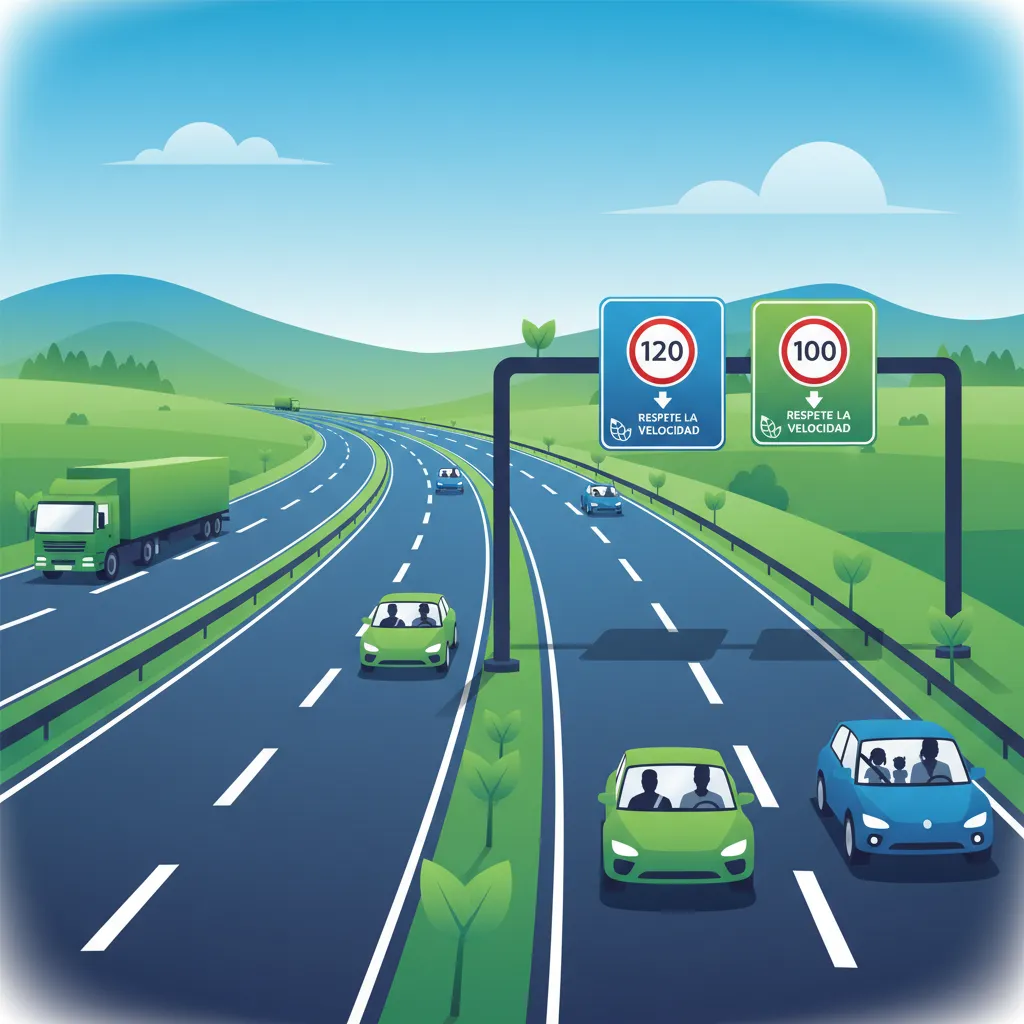
This lesson explains the classification differences between Spanish autovías and autopistas, detailing the specific speed limits and lane restrictions applicable to coaches on each. Learners will become proficient in interpreting motorway signage, adhering to minimum speed requirements, and recognizing vehicle type restrictions as enforced by the DGT. The module also covers the correct procedures for using entry and exit ramps to ensure safe and fluid traffic flow.

This lesson provides a detailed guide to performing safe and legal overtaking maneuvers on the highway. It places strong emphasis on the techniques for thoroughly checking the large blind spots around a truck before initiating a lane change. The content also covers judging the necessary speed differential and distance required to complete the pass and return to the lane safely.

This lesson introduces the visual language of road markings, focusing on the distinction between solid and broken lines and what they permit regarding lane changes and overtaking. It explains the meaning of directional arrows painted on the road surface, which guide drivers into the correct lane for their intended maneuver. Understanding these markings is crucial for maintaining proper lane discipline and navigating complex intersections and multi-lane roads.

This lesson explains the specific legal framework governing truck operations on Spain's high-speed road network. It details the different speed limits for trucks on autovías versus autopistas and the regulations regarding which lanes heavy vehicles are permitted to use. Learners will also understand how to interpret specific highway signage relevant to commercial vehicles and any applicable toll regulations.
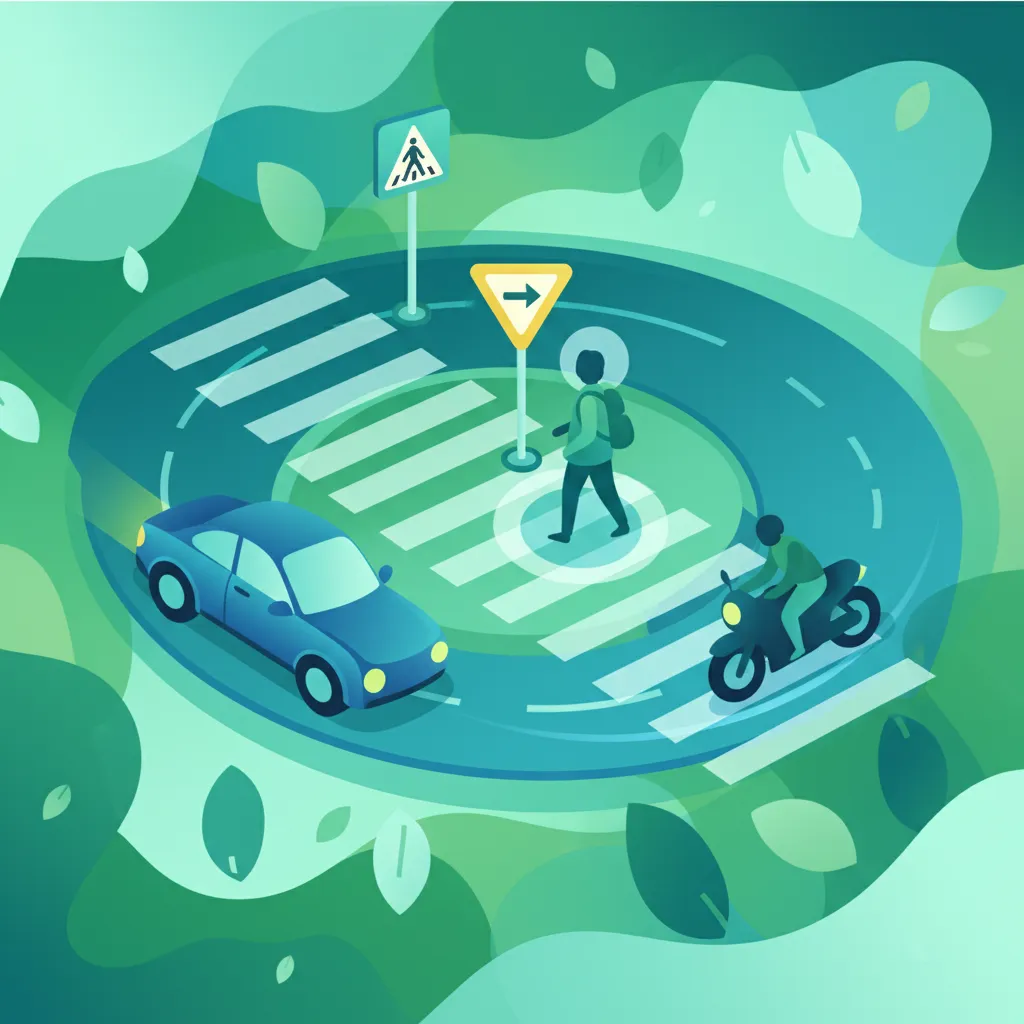
This lesson outlines the proper techniques for negotiating roundabouts and signal-controlled intersections in Spain. It explains priority rules at entry, lane selection based on the intended exit, and yielding to circulating traffic. The content also covers compliance with traffic signals and DGT regulations, including handling cyclist crossings.
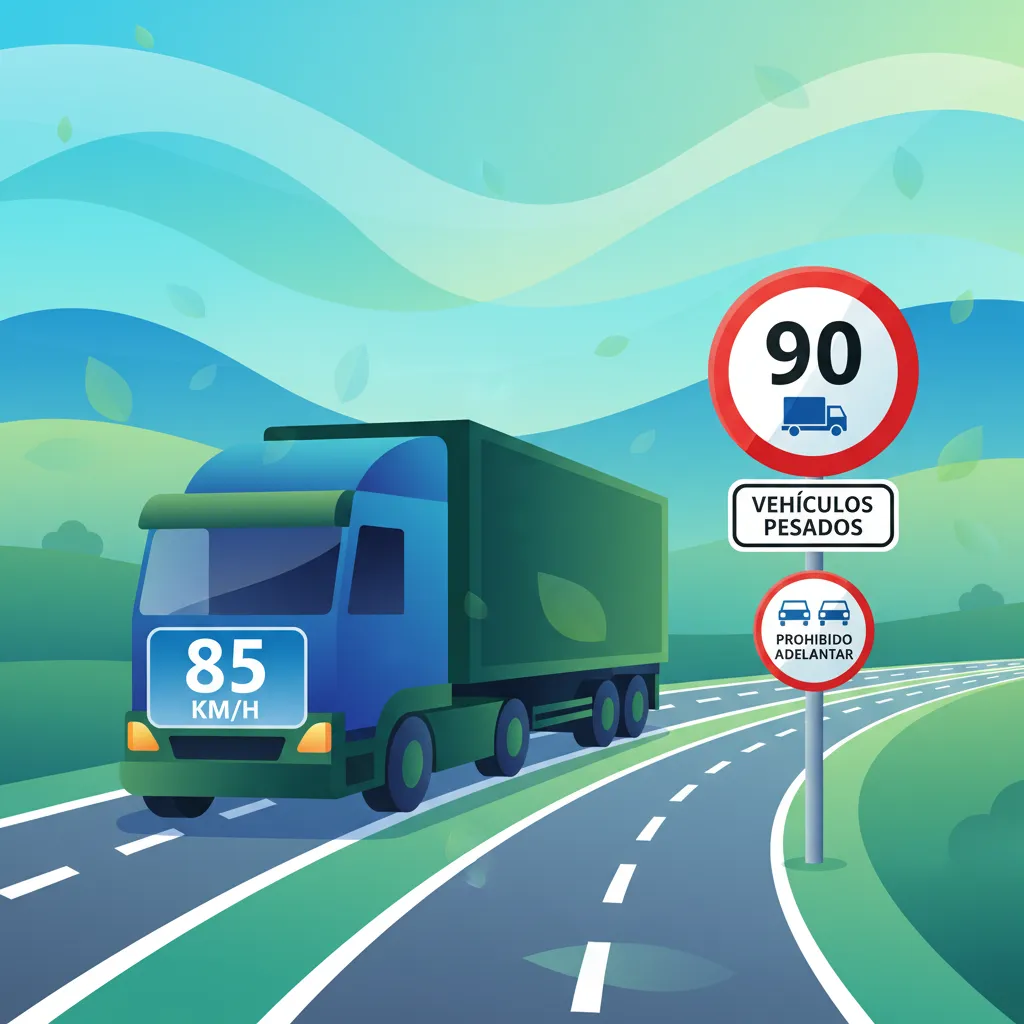
This lesson details the specific legal speed limits that apply to heavy passenger vehicles on Spanish highways, including variable speed zones that adjust based on traffic and weather conditions. Learners will understand the methods for speed monitoring, the function of speed control devices, and the legal consequences of non-compliance. The content also provides guidance on calculating a safe operating speed based on vehicle load and road conditions.
Understand the most frequent errors and inherent hazards related to overtaking and lane discipline for coach drivers. Learn to identify and mitigate risks associated with blind spots, safety gaps, and complex traffic situations on Spanish roads.

This lesson is focused on the early identification of road hazards through the application of effective scanning techniques and the use of peripheral vision. Learners will practice recognizing visual cues that signal potential dangers, such as erratic vehicle movements, unexpected obstacles, or pedestrian behavior. The module also teaches proactive response strategies designed to mitigate these risks before they can escalate into dangerous situations.

This lesson outlines the core principles of defensive driving, focusing on maintaining a safe following distance, creating a protective space cushion around the vehicle, and anticipating potential hazards. Learners will be taught how to develop contingency plans for unexpected events and employ risk mitigation techniques to actively avoid accidents. The content reinforces the vital importance of remaining vigilant and proactive at all times when driving.
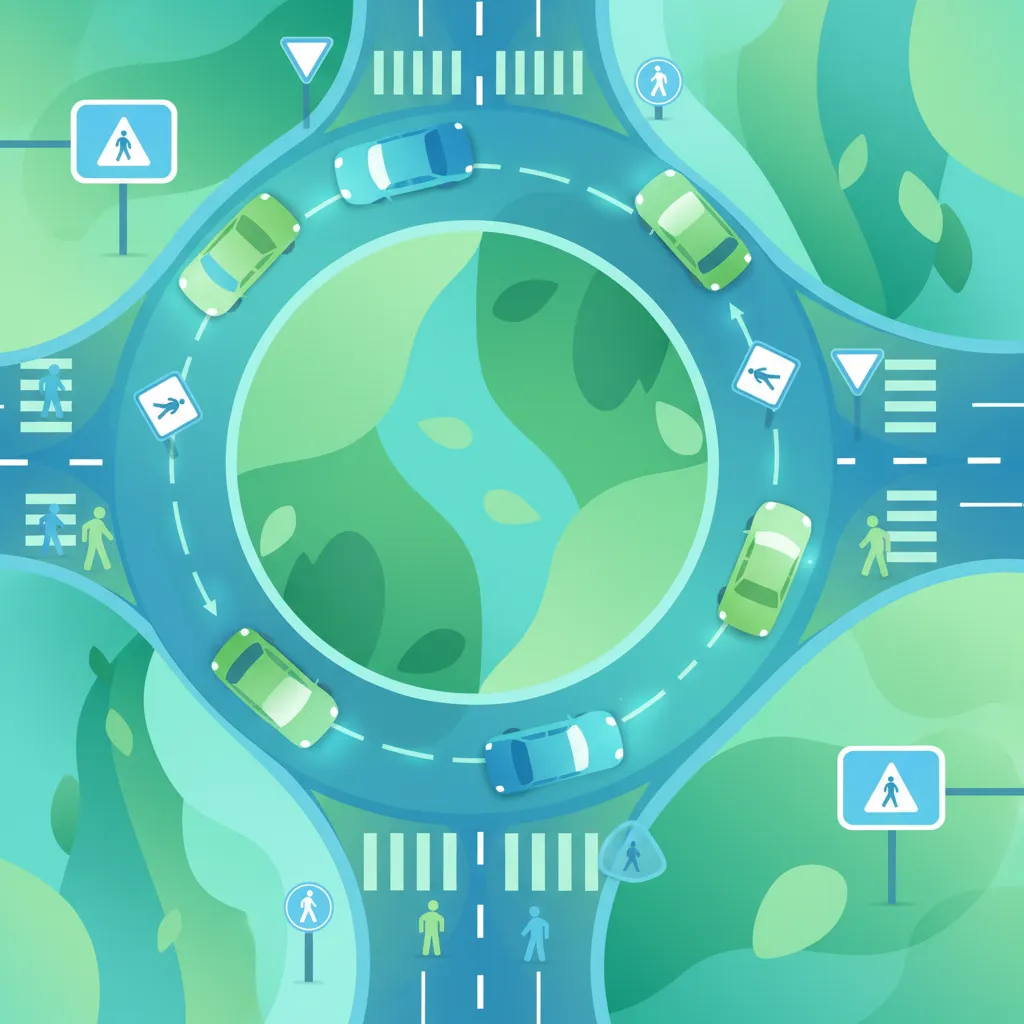
This lesson offers a comprehensive guide to navigating roundabouts in urban settings, explaining the correct protocols for entry, yielding, and circulation. Learners will be taught how to interpret lane markings and signage on multi-lane roundabouts and determine the correct vehicle positioning for safe entry and exit. The content emphasizes full compliance with Spanish city regulations that govern priority and right-of-way at these intersections.
This lesson focuses on the principles of safe lane selection and overtaking on multi-lane roads and highways. It covers the importance of maintaining proper lane discipline and the legal protocols for executing a safe pass, including checking blind spots and ensuring sufficient speed differential. The content also stresses the need for clear signaling and judging adequate space before returning to the original lane.
This lesson explores the regulations for dedicated bus lanes in urban environments, detailing the correct interpretation of associated lane markings and traffic signage. Learners will understand the specified times of operation, rules for sharing lanes with other vehicles, and the legal consequences of unauthorized entry. The module also provides clear guidelines for entering and exiting bus lanes at designated points to maintain traffic flow.

In this lesson, learners will acquire the necessary skills to maneuver buses and coaches within confined areas such as narrow city streets, bus depots, and passenger terminals. It details techniques for reverse driving, tight cornering, and parallel parking, emphasizing the critical importance of blind spot awareness and precise low-speed control. The content focuses on developing spatial awareness to avoid collisions while maintaining passenger comfort.

This lesson focuses on interaction dynamics with larger vehicles like cars, trucks, and buses, detailing their specific blind spot zones. Strategies for safely sharing lanes, overtaking etiquette, and proper approach when a bus stops are covered. The lesson also includes guidance on merging onto acceleration lanes following DGT policies.
This lesson provides a detailed guide to performing safe and legal overtaking maneuvers on the highway. It places strong emphasis on the techniques for thoroughly checking the large blind spots around a truck before initiating a lane change. The content also covers judging the necessary speed differential and distance required to complete the pass and return to the lane safely.
This lesson defines proper lane discipline on highways, emphasizing correct lane positioning and the rule to drive in the right-hand lane except when overtaking. It details safe merging onto main carriageways from an acceleration lane and effective exit strategies using deceleration lanes. Learners will understand DGT merge rules and the importance of signaling lane changes early.

This lesson outlines the best practices for precise vehicle positioning at urban bus stops and ensuring safe interaction with passengers. It covers the management of approach speed, correct alignment with the curb, and effective communication during boarding and alighting processes. Learners will also study how stopping maneuvers impact surrounding traffic flow and the importance of maintaining safety distances for efficient service.
Find clear answers to common questions learners have about Overtaking and Lane Discipline. Learn how the lesson is structured, which driving theory objectives it supports, and how it fits into the overall learning path of units and curriculum progression in Spain. These explanations help you understand key concepts, lesson flow, and exam focused study goals.
For buses and coaches, blind spots are significantly larger than for cars. Critical areas include the immediate sides of the vehicle, the rear sides, and directly behind the bus. Always use your mirrors extensively and, when safe, physically turn your head to check these areas before initiating any lane change or overtaking maneuver.
In Spain, it is illegal to overtake a bus or coach in specific situations, such as on narrow roads where insufficient space exists, at sharp bends, on crests of hills, or when visibility is poor due to fog or rain. Additionally, overtaking is prohibited in areas with solid white lines or specific 'no overtaking' road signs.
Always signal your intention to change lanes or overtake well in advance using your vehicle's indicators. For buses, ensure the signal is clearly visible to other road users. Maintain the signal throughout the maneuver until you have safely completed the lane change or overtaking.
A safe overtaking distance for a bus depends on its speed, the speed of the vehicle being overtaken, and road conditions. Generally, you need enough space to accelerate past the slower vehicle and return to your lane without cutting it off. A common rule of thumb is to ensure you have a clear passing lane with ample acceleration space, maintaining a safe gap to the vehicle in front once you’ve completed the maneuver.
Yes, lane discipline for buses and coaches requires extra caution. Buses typically should use the right-hand lane on multi-lane highways unless overtaking or preparing to turn left. Due to their size and slower acceleration, maintaining a consistent position and avoiding unnecessary lane changes is crucial for safety and traffic flow.
Use our powerful search functionality to pinpoint specific Spanish DGT driving theory practice sets. Filter by road sign categories, traffic law topics, or question difficulty to build custom study sessions and reinforce your knowledge precisely where it matters for your official exam.