
This lesson details crucial accident management procedures, building upon your understanding of safe driving practices in the context of professional bus and coach operations. As part of the 'Emergency & Evacuation' unit, it prepares you for critical situations beyond the scope of everyday driving, ensuring you can handle accidents safely and compliantly with DGT regulations for your Category D or D1 license.
Lesson content overview
As a professional driver of Category D and D1 vehicles, operating a bus or coach, you carry immense responsibility for the safety of your passengers and other road users. Accidents, while hopefully rare, are an unfortunate reality of driving. Knowing precisely how to act in the immediate aftermath of a collision or incident is not just a matter of professional competence; it is a legal and moral imperative. This lesson provides a comprehensive guide to accident procedures and reporting, specifically tailored to the Spanish legal framework.
The actions you take following an accident can significantly impact the outcome for injured parties, the validity of insurance claims, and your own legal standing. This module builds upon foundational knowledge from units such as "Emergency & Evacuation" and "Licensing & Responsibilities," integrating practical steps with the critical legal duties that define your role. Our focus is on systematic, legally mandated responses, prioritizing safety, preserving evidence, and ensuring timely, accurate reporting to all relevant authorities, including the Dirección General de Tráfico (DGT).
The moments immediately following an accident are critical. Your primary goal is to prevent further harm and protect everyone involved. This involves a sequence of actions designed to secure the scene, assist the injured, and manage your passengers safely.
Upon realizing an accident has occurred, your first actions must focus on making the scene safe for yourself, your passengers, and other road users. This proactive approach prevents secondary collisions, which can often be more severe than the initial incident. The Spanish Reglamento General de Circulación (RGC) outlines clear requirements for scene safety.
Activate Hazard Lights: Immediately switch on your vehicle's hazard warning lights (intermitentes de emergencia). This alerts approaching traffic to a potential obstruction or danger ahead.
Position Warning Triangles: Exit the vehicle safely, wearing a high-visibility reflective vest (chaleco reflectante) if required by law or if visibility is poor. Place approved warning triangles (triángulos de preseñalización de peligro) at appropriate distances.
For urban roads, place a triangle at least 30 meters behind your vehicle, ensuring it is visible from at least 100 meters away. On open roads or motorways, place one triangle at least 50 meters behind the vehicle and, if possible, another 50 meters in front, both clearly visible from 100 meters. In conditions of poor visibility, such as fog or heavy rain, increase these distances to provide earlier warning to other drivers.
Assess and Mitigate Further Risks: Before anything else, quickly evaluate the scene for immediate dangers like fuel leaks, fire, or unstable vehicles. If your bus is stable and not a hazard, consider turning off the engine to prevent fire. If the vehicle is in a dangerous position, such as obstructing a lane on a fast road, and it is safe to do so, attempt to move it to a safer location (e.g., hard shoulder) only if it's a minor incident and moving it doesn't compromise evidence or worsen injuries.
Road Block Procedures (If Necessary): If the accident is severe and completely blocks the road, and you are trained and equipped, you may need to implement basic road block procedures to divert traffic or completely stop it until emergency services arrive.
Failing to secure the scene properly can lead to administrative fines and, more critically, contribute to further accidents. The correct placement of warning devices is not merely a formality; it directly reduces the risk of secondary collisions.
Once the immediate scene is secured, your absolute priority shifts to the welfare of any injured parties. Article 195 of the Spanish Penal Code mandates a legal duty to assist injured persons. As a professional driver, you are expected to provide aid within your capabilities and arrange for professional medical help.
Assess for Injuries: Systematically check your passengers and any other individuals involved in the accident for visible injuries. Start with those who appear most distressed or immobile.
Call Emergency Services (112): Immediately contact Spain's universal emergency number, 112. Clearly state your exact location, the type of vehicles involved, the number of injured persons, and the nature of their injuries. Provide details about any immediate dangers (e.g., fire, overturned vehicle).
Render Basic First Aid: Utilize the on-board first-aid kit (botiquín de primeros auxilios). Apply direct pressure to bleeding wounds, help individuals into a stable recovery position if unconscious but breathing, and provide reassurance. Do not move severely injured persons unless their life is in immediate danger (e.g., from fire or impending collapse).
Never administer medication or attempt complex medical procedures unless you are medically trained and qualified to do so. Your role is to stabilize and support until professional help arrives.
Stabilize the Vehicle (if needed): If the vehicle is on an incline or seems unstable, engage the emergency brake firmly. Chock the wheels if you have appropriate equipment and it is safe to do so, especially on snow or ice.
Your quick and competent action in providing first aid can significantly reduce the severity of injuries and potentially save lives. Even basic assistance, coupled with a prompt call to 112, fulfills your legal and ethical obligations.
In certain accident scenarios, particularly if the vehicle is damaged, unstable, or at risk (e.g., fire), you may need to evacuate your passengers. This procedure is covered in depth in the "Emergency Exits and Evacuation Plans" lesson, but it’s crucial to integrate it into your immediate accident response.
Prioritize passenger safety during evacuation. Ensure a clear and safe path is available, away from traffic and other hazards. Account for all passengers, especially those with reduced mobility or requiring special assistance. Maintain calm and clear communication, guiding them to a designated safe assembly point.
Beyond immediate scene management and first aid, a professional driver has stringent legal obligations regarding accident reporting in Spain. Timely and accurate notification to the DGT and other entities is crucial for legal compliance, insurance processing, and maintaining your professional record.
In Spain, certain accidents require formal notification to the Directorate General of Traffic (DGT - Dirección General de Tráfico). This is typically done through a specific accident report form, commonly referred to as the "Parte de Accidente."
The official accident report form required by Spanish authorities, which details the circumstances, parties involved, and damages of a traffic incident. It is essential for legal and insurance purposes.
DGT Order 2/2016 stipulates that any accident causing injury, death, or significant vehicle damage (typically exceeding €600, though this can vary by region or specific DGT circular) must be reported.
Complete the Accident Report Form (Formulario 145): This form gathers essential data, including the date, time, and location of the accident, details of all vehicles and drivers involved, passenger information, a description of the damages, and a sketch of the accident scene.
Submit Within 24 Hours: For professional drivers, it is generally mandatory to submit this form, or at least initiate the reporting process, to the DGT within 24 hours of the accident. This can often be done electronically or by submitting the physical form at a DGT office.
Keep a Copy: Always retain a copy of the completed "Parte de Accidente" for your records, your employer, and your insurance company.
Delaying this report beyond the legal timeframe can lead to significant administrative penalties, impact your insurance claim, and potentially affect your professional driving license record. It is vital not to confuse this mandatory DGT filing with any internal company incident reports, although both are important.
In addition to DGT reporting, as a professional driver, you have obligations to your employer and the insurance provider.
Notify Your Employer: As soon as it is safe and practical, inform your employer or fleet manager about the accident. Provide them with a concise overview of the situation, including any injuries, vehicle damage, and the presence of authorities. Your employer will have internal protocols for incident management and may assist with further reporting.
Notify Your Insurer: You must inform your vehicle's insurance company about the accident within the timeframe specified in your policy, which is commonly 7 days in Spain. Failure to notify within this period can lead to complications or even denial of your claim.
Prepare the "Informe de Siniestro": This is the insurance claim report (Informe de Siniestro) and will require the "Parte de Accidente" along with all collected evidence (photos, witness statements, medical certificates if applicable). Provide all information truthfully and comprehensively.
The underlying logic here is to ensure all parties are aware of the incident, allowing for proper investigations, legal compliance, and timely processing of any financial liabilities or compensation claims.
Accurate and unbiased evidence is crucial for reconstructing the events of an accident, establishing fault, and facilitating a smooth insurance claim process. As the driver, you are often the first person on the scene and therefore play a key role in preserving this vital information.
Visual evidence provides an objective record of the accident scene that can be invaluable.
Take Comprehensive Photographs: Use a smartphone or camera to take numerous photos.
Create a Scene Sketch: Even a simple hand-drawn sketch can provide clarity.
These visual records supplement written reports and can be critical in disputes, especially if statements from parties conflict.
Witnesses who are not directly involved in the accident can provide impartial accounts of what occurred. Their statements can corroborate your version of events or provide new perspectives.
Identify Witnesses: Look for bystanders, passengers from other vehicles, or pedestrians who may have observed the accident.
Obtain Contact Details: Politely ask for their full name, phone number, and email address.
Request Brief Statements: Ask witnesses to provide a brief written or recorded account of what they saw. Focus on objective facts rather than opinions. If they prefer not to write, quickly jot down their key observations yourself, and ask them to confirm its accuracy.
Passenger Statements: While your own passengers are important, their statements might be considered less impartial than independent bystanders. However, their accounts of vehicle movements or interior events can still be valuable.
Neglecting to collect witness details is a common mistake that can weaken your case significantly, as these individuals may be hard to locate later.
Once you have gathered all necessary evidence, you will need to compile it for your insurance claim. This package of documentation ensures the validity of your claim and helps cover financial responsibility.
Completed "Parte de Accidente": The primary DGT report.
Photographs and Videos: All visual evidence collected at the scene.
Witness Statements: Contact details and accounts from all available witnesses.
Damage Estimates: Obtain professional repair estimates for your bus and any other damaged property.
Medical Certificates: If there were injuries, medical reports and certificates detailing the extent of injuries and treatment received.
Driver's License and Vehicle Documentation: Copies of your driving license, the bus's registration (permiso de circulación), and the vehicle's insurance policy.
Submitting a complete and accurate claim file promptly, typically within 7 days, is paramount. Delays or incomplete documentation can result in claim denials or protracted settlement processes.
In many accident scenarios, especially those involving injuries or significant damage, police authorities will attend the scene. Your interaction with them is a critical part of the post-accident procedure.
When police (Guardia Civil or Policía Local) arrive, your role shifts to full cooperation with their investigation. They are there to establish facts, enforce traffic law, and ensure public safety.
Present Required Documents: Have your driver's license, the vehicle's registration documents, and insurance papers readily accessible.
Provide a Truthful Statement: Give a clear, factual, and concise account of what happened. Stick to what you personally observed. Avoid speculation, admitting fault prematurely, or making accusations.
Answer Questions Honestly: Respond to all questions from the officers to the best of your knowledge. If you don't know an answer, state that you don't know.
Review and Sign Reports: If requested to sign a police report or statement, read it carefully before signing. Ensure it accurately reflects your account. If you disagree with any part, request corrections or note your disagreement.
Request a Copy: Politely ask for a copy of the police report (Parte Policial) once it's available. This document is often essential for insurance claims and legal proceedings.
Your cooperation facilitates an accurate and fair investigation. Any obstruction or refusal to provide a statement when legally required can lead to penalties. If the accident is severe or involves serious legal implications, you have the right to request the presence of an attorney before giving a detailed statement.
While you must cooperate, you also have rights. Understanding these can prevent misunderstandings or undue pressure.
As a driver in Spain, you have the right to remain silent regarding self-incriminating information, though you are generally obligated to provide factual details about the incident. For serious accidents, it is advisable to consult with legal counsel as soon as possible.
Police officers are obligated to collect statements from all involved parties and witnesses. Their official report (Parte Policial) will be a key document in any subsequent legal or insurance process. Ensure you understand any directives they give regarding the movement of vehicles or other actions at the scene.
Accident procedures are not one-size-fits-all. The context of the accident – including weather, road type, vehicle state, and the presence of vulnerable users – dictates specific adjustments to your actions.
Adverse weather significantly complicates accident management, primarily by reducing visibility and making the scene more hazardous.
The environment where the accident occurs also influences the best course of action.
When an accident involves vulnerable road users such as pedestrians, cyclists, or motorcyclists, specific protocols apply.
Your duty of care extends to all individuals involved, with particular emphasis on those most vulnerable.
Understanding common mistakes and their consequences is crucial for preventing them. As a professional driver, adherence to procedures is not optional.
For professional drivers, non-compliance not only carries personal legal and financial risks but can also jeopardize your employment and Category D/D1 license.
Managing a traffic accident as a professional bus or coach driver demands a methodical, calm, and legally compliant approach. Your actions are not only crucial for the immediate safety of all involved but also for the accurate resolution of legal and insurance matters.
By consistently applying the principles of scene safety, providing immediate aid, diligently collecting evidence, adhering to DGT and insurance reporting timelines, and cooperating professionally with authorities, you fulfill your extensive responsibilities. Remember that adapting your procedures to varying conditions, such as adverse weather or specific road types, is also a mark of a highly competent and responsible driver.
Mastery of these accident procedures is a cornerstone of professional driving in Spain, safeguarding lives, ensuring legal compliance, and protecting your professional standing.
This lesson covers the systematic approach professional bus and coach drivers must follow after an accident in Spain, beginning with scene safety through hazard lights and correctly placed warning triangles, followed by first aid provision and emergency service notification via 112. It outlines the mandatory legal reporting path: the Parte de Accidente submitted to the DGT within 24 hours, employer notification, and insurer claim (Informe de Siniestro) within 7 days. Evidence collection—including photographs, scene sketches, and witness statements—is essential for insurance validity and fault determination. The lesson also addresses adapting procedures to adverse weather, different road types (urban versus motorway), and special considerations for vulnerable road users, while warning against common pitfalls like unsecured scenes, delayed reporting, and incomplete documentation that can result in criminal charges, fines, or insurance denial.
A short set of high-value points that capture the most important learning from this lesson.
Secure the scene first: activate hazard lights, place warning triangles at 30m (urban) or 50m+ (motorway), and wear a high-visibility vest before exiting the vehicle.
Immediately call emergency services (112), provide exact location, vehicle types, injury count and nature, and do not administer medication beyond basic first aid.
The legal duty to assist injured persons under Article 195 of the Spanish Penal Code requires active involvement until professional help arrives.
Submit the Parte de Accidente (Formulario 145) to the DGT within 24 hours and notify your insurer within 7 days, keeping copies for all parties.
Collect comprehensive visual evidence (photos of overall scene, vehicle damage, road conditions, landmarks) and obtain witness contact details before leaving the scene.
Explore all units and lessons included in this driving theory course.
Triangle distances: minimum 30m on urban roads, 50m on open roads, 100m on motorways or in poor visibility—all visible from 100m.
The Parte de Accidente (official DGT accident report form) must reach the DGT within 24 hours; the insurance claim (Informe de Siniestro) must be filed within 7 days.
Never move severely injured persons unless their life is in immediate danger; helmets on motorcyclists should only be removed by medical professionals unless breathing is compromised.
When interacting with police, stick to observable facts, avoid admitting fault, request a copy of the Parte Policial, and note any disagreements before signing.
Omisión de Socorro (failure to assist) is a criminal offense in Spain—failing to call 112 or secure the scene can lead to criminal charges beyond fines.
Placing warning triangles too close (under 30m) or failing to wear the reflective vest when placing them, which reduces their effectiveness and still results in fines.
Delaying the DGT report beyond 24 hours, which can incur substantial fines, invalidate insurance claims, and negatively affect professional driving records.
Neglecting to collect independent witness contact details at the scene, making it difficult to prove fault in insurance or legal disputes later.
Moving the vehicle from its post-accident position before evidence is documented, potentially compromising critical evidence for fault determination.
Assuming the vehicle's eCall system replaces the driver's obligation to manually call 112 and report the accident details to emergency services.
Lesson content overview
A short set of high-value points that capture the most important learning from this lesson.
Secure the scene first: activate hazard lights, place warning triangles at 30m (urban) or 50m+ (motorway), and wear a high-visibility vest before exiting the vehicle.
Immediately call emergency services (112), provide exact location, vehicle types, injury count and nature, and do not administer medication beyond basic first aid.
The legal duty to assist injured persons under Article 195 of the Spanish Penal Code requires active involvement until professional help arrives.
Submit the Parte de Accidente (Formulario 145) to the DGT within 24 hours and notify your insurer within 7 days, keeping copies for all parties.
Collect comprehensive visual evidence (photos of overall scene, vehicle damage, road conditions, landmarks) and obtain witness contact details before leaving the scene.
Explore all units and lessons included in this driving theory course.
Triangle distances: minimum 30m on urban roads, 50m on open roads, 100m on motorways or in poor visibility—all visible from 100m.
The Parte de Accidente (official DGT accident report form) must reach the DGT within 24 hours; the insurance claim (Informe de Siniestro) must be filed within 7 days.
Never move severely injured persons unless their life is in immediate danger; helmets on motorcyclists should only be removed by medical professionals unless breathing is compromised.
When interacting with police, stick to observable facts, avoid admitting fault, request a copy of the Parte Policial, and note any disagreements before signing.
Omisión de Socorro (failure to assist) is a criminal offense in Spain—failing to call 112 or secure the scene can lead to criminal charges beyond fines.
Placing warning triangles too close (under 30m) or failing to wear the reflective vest when placing them, which reduces their effectiveness and still results in fines.
Delaying the DGT report beyond 24 hours, which can incur substantial fines, invalidate insurance claims, and negatively affect professional driving records.
Neglecting to collect independent witness contact details at the scene, making it difficult to prove fault in insurance or legal disputes later.
Moving the vehicle from its post-accident position before evidence is documented, potentially compromising critical evidence for fault determination.
Assuming the vehicle's eCall system replaces the driver's obligation to manually call 112 and report the accident details to emergency services.
Explore search topics learners often look for when studying Accident Procedures and Reporting. These topics reflect common questions about road rules, driving situations, safety guidance, and lesson level theory preparation for learners in Spain.
Browse additional driving theory lessons that cover connected traffic rules, road signs, and common driving situations related to this topic. Improve your understanding of how different rules interact across everyday traffic scenarios.
Learn the official DGT accident reporting process for professional drivers in Spain. Covers legal timelines, required documentation like the 'Parte de Accidente', and notifications to authorities and insurers after a crash.
This lesson outlines the correct and legally required procedures to follow in the event of a traffic incident or accident. It covers the driver's immediate responsibilities at the scene, including securing the area and contacting emergency services. The content details the process for documenting the incident and formally reporting it to the DGT and insurance companies as required by law.
This lesson focuses on the legal duty of care that professional bus drivers owe to their passengers, emphasizing the obligation to ensure safe transport. It examines the specific traffic laws applicable to heavy vehicles and the consequences of violations, such as fines and license sanctions. The content also details the mandatory procedures for reporting incidents and the essential insurance coverage required by the DGT.

This lesson explains the importance of fostering a proactive safety culture within the transport industry. It outlines the official procedures for reporting accidents and incidents to the DGT and other relevant authorities. Learners will understand how to accurately document an incident, their legal obligations at an accident scene, and how risk assessment and preventive measures contribute to overall road safety.
This lesson provides guidance on responding to a road accident, following the 'Protect, Alert, Assist' protocol. It details the steps for securing the scene, notifying emergency services, and providing basic aid if necessary. The content covers the legal responsibilities of the driver, including completing an accident report form (parte amistoso) and exchanging insurance information.

This lesson details the formal and legal obligations for reporting a traffic accident to the authorities. It clarifies the circumstances under which police must be called to the scene and the procedures for completing the official European Accident Statement form ('parte amistoso'). Understanding these responsibilities ensures that the rider complies with Spanish law and that the incident is properly documented for insurance and liability purposes.
This lesson details the critical documents necessary for the legal operation of a passenger transport vehicle, such as the vehicle registration, driver's license, and insurance policy. It explains the function of the technical inspection certificate (ITV) and the necessity of maintaining accurate driver logbooks and records. Understanding these documentation requirements is essential for passing compliance audits and ensuring lawful operation.
This lesson details the legal requirements for the use of seatbelts and child restraint systems in buses and coaches, as stipulated by DGT regulations. It specifies the age and size limits for various restraint devices and explains the verification checks drivers must perform. Learners will also review safety statistics that highlight the importance of correct usage and understand the legal penalties associated with non-compliance.
Understand critical steps for securing accident scenes, including using warning triangles and hazard lights. Learn essential first aid and passenger evacuation techniques to ensure safety immediately following a collision.
This lesson provides guidance on responding to a road accident, following the 'Protect, Alert, Assist' protocol. It details the steps for securing the scene, notifying emergency services, and providing basic aid if necessary. The content covers the legal responsibilities of the driver, including completing an accident report form (parte amistoso) and exchanging insurance information.
This lesson examines the locations and proper use of all emergency exits on buses and coaches, as well as the development and execution of clear evacuation plans. Learners will explore the designation of passenger assembly points, the interpretation of emergency signage, and procedures for assisting passengers with reduced mobility. The content emphasizes the value of conducting regular evacuation drills and delivering pre-trip safety briefings.
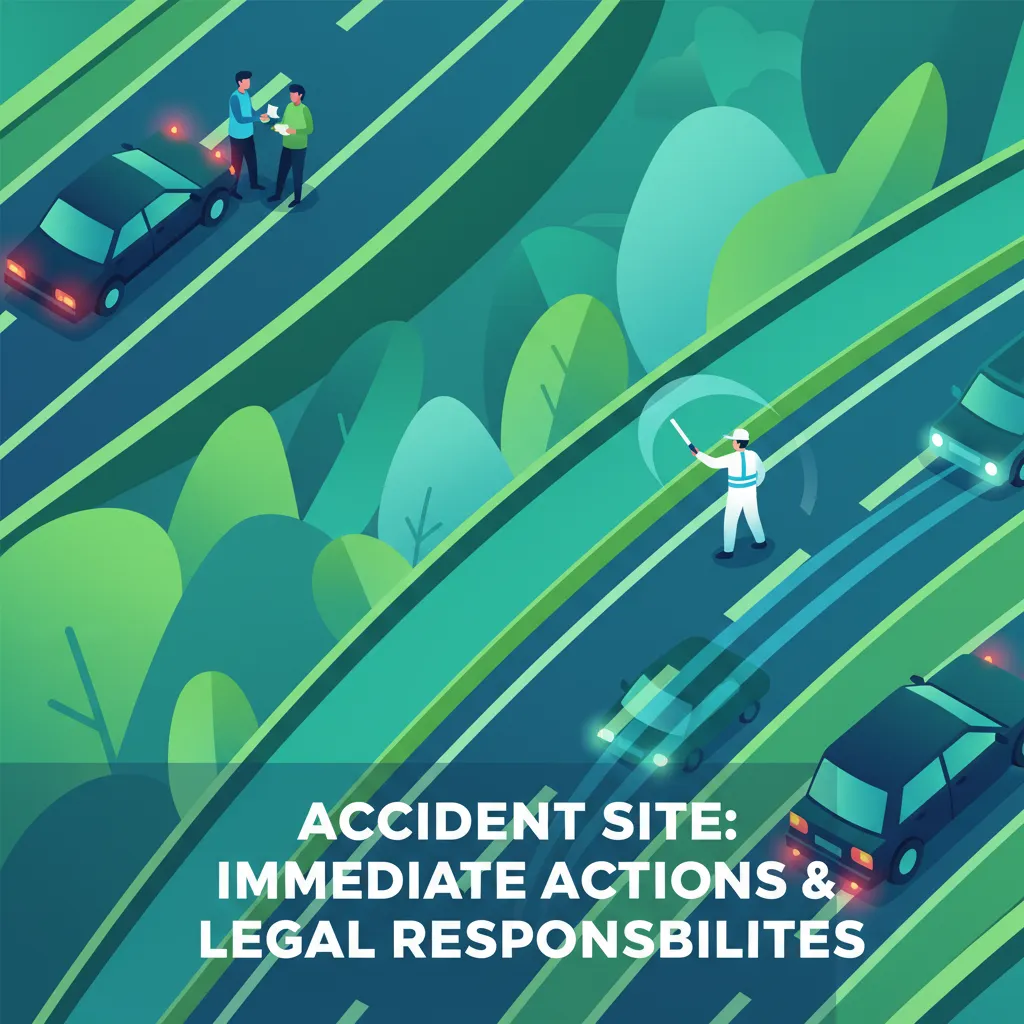
This lesson explains the driver's legal and ethical responsibilities when involved in or witnessing an accident. It covers the immediate priorities of protecting the scene from further incidents and providing aid to the injured within one's capabilities. The content details the legal requirements for exchanging information with other parties and reporting the accident to the police and DGT.
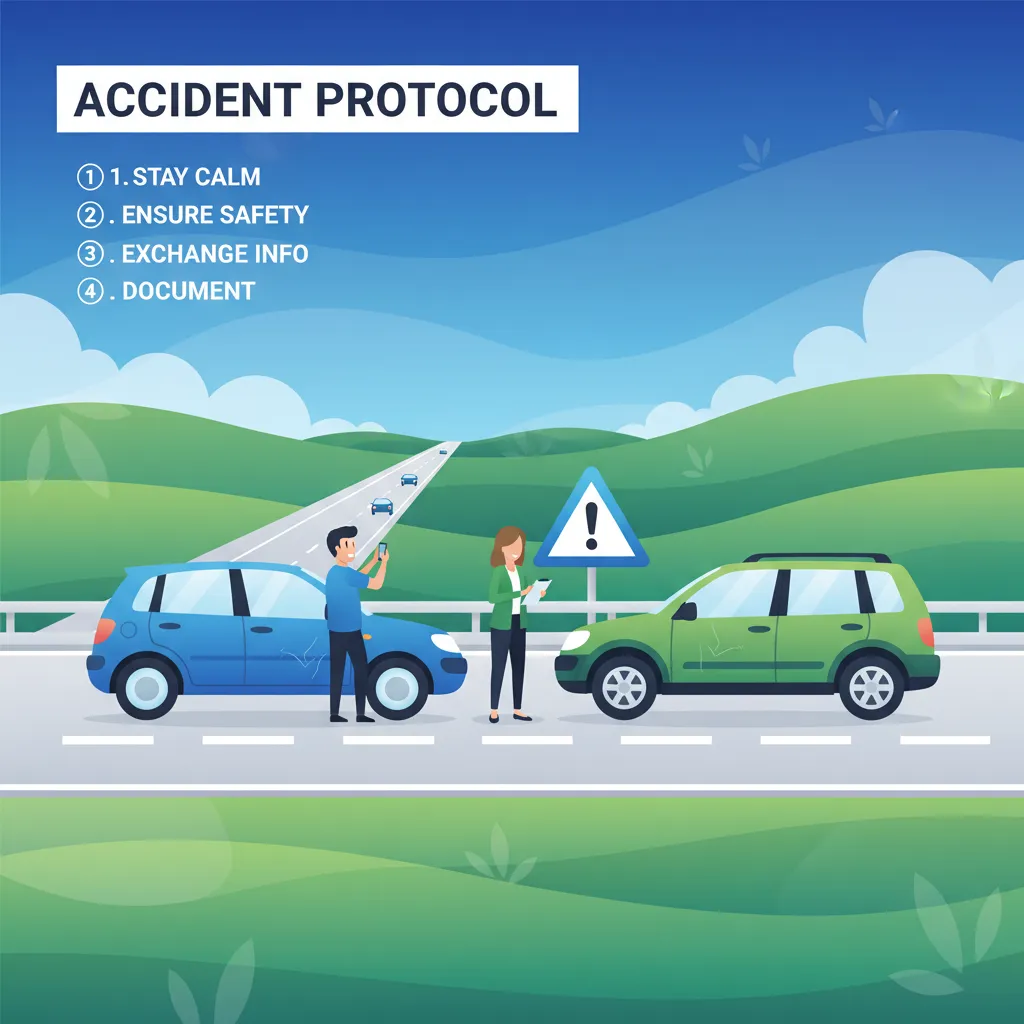
This lesson provides a clear checklist of actions to take in the immediate aftermath of a traffic accident. It prioritizes safety by explaining how to secure the scene and check for injuries before anything else. The content guides learners on the legal requirement to exchange information with other parties involved and the importance of documenting the scene with photos and collecting witness details for insurance and legal purposes.

This lesson provides fundamental knowledge on fire safety, including the correct operation of various types of fire extinguishers and methods for early fire detection. Learners will also cover essential first aid basics, such as CPR techniques, methods for controlling severe bleeding, and the management of shock. The module emphasizes the importance of a rapid emergency response and the appropriate use of safety equipment to protect passengers and crew.
This lesson outlines the correct and legally required procedures to follow in the event of a traffic incident or accident. It covers the driver's immediate responsibilities at the scene, including securing the area and contacting emergency services. The content details the process for documenting the incident and formally reporting it to the DGT and insurance companies as required by law.
This lesson outlines procedures for handling emergency situations and accidents. It covers emergency braking techniques, hazard avoidance strategies, and the DGT emergency protocol for accident reporting. Emphasis is placed on rider protective actions, post-crash first aid, roadside safety, and legal obligations after an incident.
Find clear answers to common questions learners have about Accident Procedures and Reporting. Learn how the lesson is structured, which driving theory objectives it supports, and how it fits into the overall learning path of units and curriculum progression in Spain. These explanations help you understand key concepts, lesson flow, and exam focused study goals.
The absolute first priority is the safety of yourself, your passengers, and other road users. This means assessing the situation, ensuring no immediate further danger (like fire or unstable vehicle position), and then taking steps to secure the scene if safe to do so. Only after immediate safety concerns are addressed should you consider providing aid and reporting.
You must report accidents to the DGT if there are injuries, significant damage to vehicles or property, or if traffic is being obstructed. Minor incidents between vehicles without injuries might be handled directly through insurance, but it's always best to err on the side of caution, especially when operating a commercial passenger vehicle. Check the specific requirements for Category D/D1 vehicles.
For insurance claims, you'll need details from all involved parties: names, contact information, vehicle registration numbers, insurance policy numbers, and a clear description of the accident, including date, time, and location. Collecting witness details is also vital. Accurate reporting to the DGT often forms the basis of these claims.
Cooperate fully and calmly with police or Guardia Civil. Provide them with accurate information about the accident and your driving license. They will manage the scene and conduct their investigation. Follow their instructions regarding vehicle movement or traffic control. Your professional conduct is important.
If the accident causes mechanical failure, you must ensure the vehicle is moved to a safe location if possible without causing further danger. If the vehicle is not drivable and poses a hazard, you will need to call for roadside assistance and potentially a tow truck, while ensuring passengers are evacuated to a safe place. Report this as part of the accident details.
Use our powerful search functionality to pinpoint specific Spanish DGT driving theory practice sets. Filter by road sign categories, traffic law topics, or question difficulty to build custom study sessions and reinforce your knowledge precisely where it matters for your official exam.