
This lesson covers critical DGT regulations for safely navigating complex junctions like roundabouts and intersections, specifically for Category C and C1 truck drivers. Building on fundamental road rules, you'll learn how to manage priority, select the correct lane, and account for your vehicle's size to ensure safe passage. Mastering these skills is vital for both your theory exam and everyday professional driving.
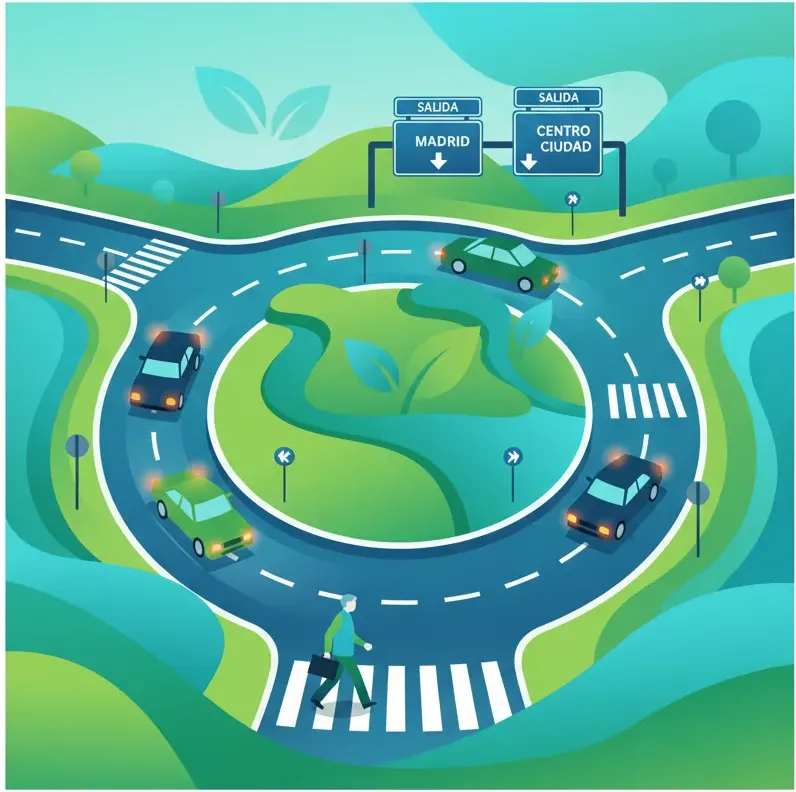
Lesson content overview
This lesson covers the essential DGT regulations for safely navigating roundabouts and intersections with Category C/C1 vehicles in Spain. Key topics include priority rules where circulating traffic has precedence in roundabouts, strict lane discipline prohibiting lane changes inside the junction for heavy vehicles, and the physics of off-tracking which requires anticipating the rear wheels cutting inside the front wheels' path. The content emphasizes mandatory early signaling at least 50 metres before roundabout entry, comprehensive blind spot checks across A-, B-, and C-zones, and load-related adjustments affecting stopping distance and stability. Learners will also find specific guidance on handling environmental conditions, recognizing vulnerable road users, and avoiding the ten most common violations that lead to accidents or exam failures.
A short set of high-value points that capture the most important learning from this lesson.
Circulating vehicles inside a roundabout have priority over those attempting to enter, per DGT Order 319/99 Annex I.
Trucks over 3,500 kg must select the lane matching their intended exit before entering and may not change lanes inside the roundabout (DGT Circular 1/2020).
Off-tracking causes rear wheels to follow a tighter arc than front wheels, requiring drivers to position further from inner curbs to prevent rear encroachment.
Turn signals must be activated at least 50 metres before entering a roundabout and maintained throughout the maneuver.
Drivers must perform physical head checks to supplement mirror checks, as blind zones (A-, B-, C-zones) can hide cyclists, pedestrians, and other vehicles.
Explore all units and lessons included in this driving theory course.
DGT Technical Specification 8/1992 requires drivers to observe minimum turning circles and allow sufficient space for their vehicle's off-tracking footprint.
For the first exit (immediate right), position in the rightmost lane and signal right; for subsequent exits, position in the lane aligning with your intended exit before entry.
Heavier loads increase stopping distance and can affect vehicle stability during turns, requiring slower speeds and smoother braking at junctions.
Signal your exit by activating the right turn signal as you pass the exit before your intended one, not when you are already at your exit.
At signal-controlled intersections, heavy vehicles require earlier braking anticipation due to increased braking distance.
Entering a roundabout without yielding to circulating traffic, assuming entry is free or underestimating approaching vehicle speed.
Changing lanes inside a roundabout, which is prohibited for trucks over 3,500 kg and creates side-swipe risks with other vehicles.
Attempting to enter a junction with insufficient gap for the truck's length, causing the vehicle to stop mid-junction and block traffic.
Failing to signal the exit from a roundabout, leaving other drivers uncertain about your intentions and increasing collision risk.
Relying solely on mirrors without performing head checks, leading to missed cyclists, pedestrians, or motorcyclists in blind zones.
Lesson content overview
A short set of high-value points that capture the most important learning from this lesson.
Circulating vehicles inside a roundabout have priority over those attempting to enter, per DGT Order 319/99 Annex I.
Trucks over 3,500 kg must select the lane matching their intended exit before entering and may not change lanes inside the roundabout (DGT Circular 1/2020).
Off-tracking causes rear wheels to follow a tighter arc than front wheels, requiring drivers to position further from inner curbs to prevent rear encroachment.
Turn signals must be activated at least 50 metres before entering a roundabout and maintained throughout the maneuver.
Drivers must perform physical head checks to supplement mirror checks, as blind zones (A-, B-, C-zones) can hide cyclists, pedestrians, and other vehicles.
Explore all units and lessons included in this driving theory course.
DGT Technical Specification 8/1992 requires drivers to observe minimum turning circles and allow sufficient space for their vehicle's off-tracking footprint.
For the first exit (immediate right), position in the rightmost lane and signal right; for subsequent exits, position in the lane aligning with your intended exit before entry.
Heavier loads increase stopping distance and can affect vehicle stability during turns, requiring slower speeds and smoother braking at junctions.
Signal your exit by activating the right turn signal as you pass the exit before your intended one, not when you are already at your exit.
At signal-controlled intersections, heavy vehicles require earlier braking anticipation due to increased braking distance.
Entering a roundabout without yielding to circulating traffic, assuming entry is free or underestimating approaching vehicle speed.
Changing lanes inside a roundabout, which is prohibited for trucks over 3,500 kg and creates side-swipe risks with other vehicles.
Attempting to enter a junction with insufficient gap for the truck's length, causing the vehicle to stop mid-junction and block traffic.
Failing to signal the exit from a roundabout, leaving other drivers uncertain about your intentions and increasing collision risk.
Relying solely on mirrors without performing head checks, leading to missed cyclists, pedestrians, or motorcyclists in blind zones.
Explore search topics learners often look for when studying Navigating Roundabouts and Intersections. These topics reflect common questions about road rules, driving situations, safety guidance, and lesson level theory preparation for learners in Spain.
Browse additional driving theory lessons that cover connected traffic rules, road signs, and common driving situations related to this topic. Improve your understanding of how different rules interact across everyday traffic scenarios.
Understand the critical DGT rules for right-of-way at intersections and roundabouts. Learn how to manage truck off-tracking to ensure safe passage through complex junctions in Spain.
This lesson addresses the crucial 'priority to the right' rule that governs traffic at intersections without signs or signals. It explains that drivers must yield to any vehicle approaching from their right-hand side. The content provides practical examples of how to assess traffic, determine the correct order of passage, and proceed with caution to safely navigate these common but potentially confusing intersections.

This lesson analyzes the various intersection configurations found in Spanish cities, such as controlled and uncontrolled junctions. It explains the hierarchy of right-of-way, detailing when vehicles must yield, when pedestrians have priority, and how traffic signs dictate movement. Learners are guided through DGT signage conventions that determine priority at each intersection type.
This lesson provides a broad overview of the key traffic regulations in Spain that directly impact professional truck drivers. It details the rules of priority at intersections, the interpretation of different road markings, and the principles of correct lane discipline. Furthermore, it explains the specific speed limits applicable to heavy vehicles and the legal protocols for safe overtaking and signaling.
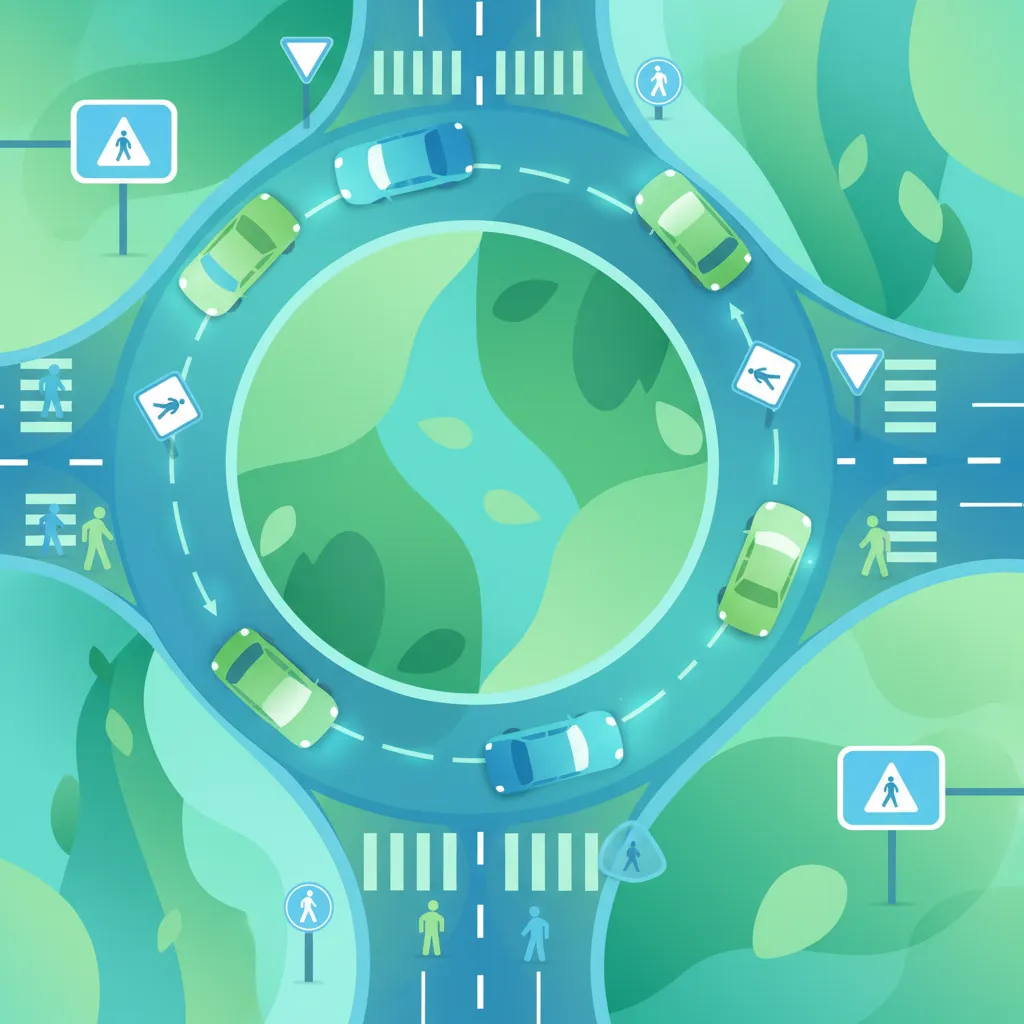
This lesson offers a comprehensive guide to navigating roundabouts in urban settings, explaining the correct protocols for entry, yielding, and circulation. Learners will be taught how to interpret lane markings and signage on multi-lane roundabouts and determine the correct vehicle positioning for safe entry and exit. The content emphasizes full compliance with Spanish city regulations that govern priority and right-of-way at these intersections.

This lesson examines the interaction between large vehicles, such as trucks, and vulnerable road users within roundabouts. It addresses the wide turning radius of heavy vehicles, the importance of checking blind spots, and the correct yielding behavior toward pedestrians and cyclists. Learners will understand how to maintain safe distances and anticipate the movements of different road users.

This lesson focuses on the principles of safe lane selection and overtaking on multi-lane roads and highways. It covers the importance of maintaining proper lane discipline and the legal protocols for executing a safe pass, including checking blind spots and ensuring sufficient speed differential. The content also stresses the need for clear signaling and judging adequate space before returning to the original lane.

This lesson focuses on the yielding hierarchy that governs roundabout usage in Spain. It clarifies that vehicles already circulating have priority over those entering and explains the proper lane positioning based on the intended exit. The content includes the correct use of signals for changing lanes and exiting, and safe merging techniques.

This lesson clarifies the primary rule for roundabouts: all vehicles entering must yield to traffic already on the circular roadway. It explains how to approach a roundabout, select the appropriate lane based on the intended exit, and merge safely into the flow of traffic. Proper signaling before exiting is also covered, ensuring other drivers can anticipate the rider's movements for a smooth and safe negotiation of the junction.
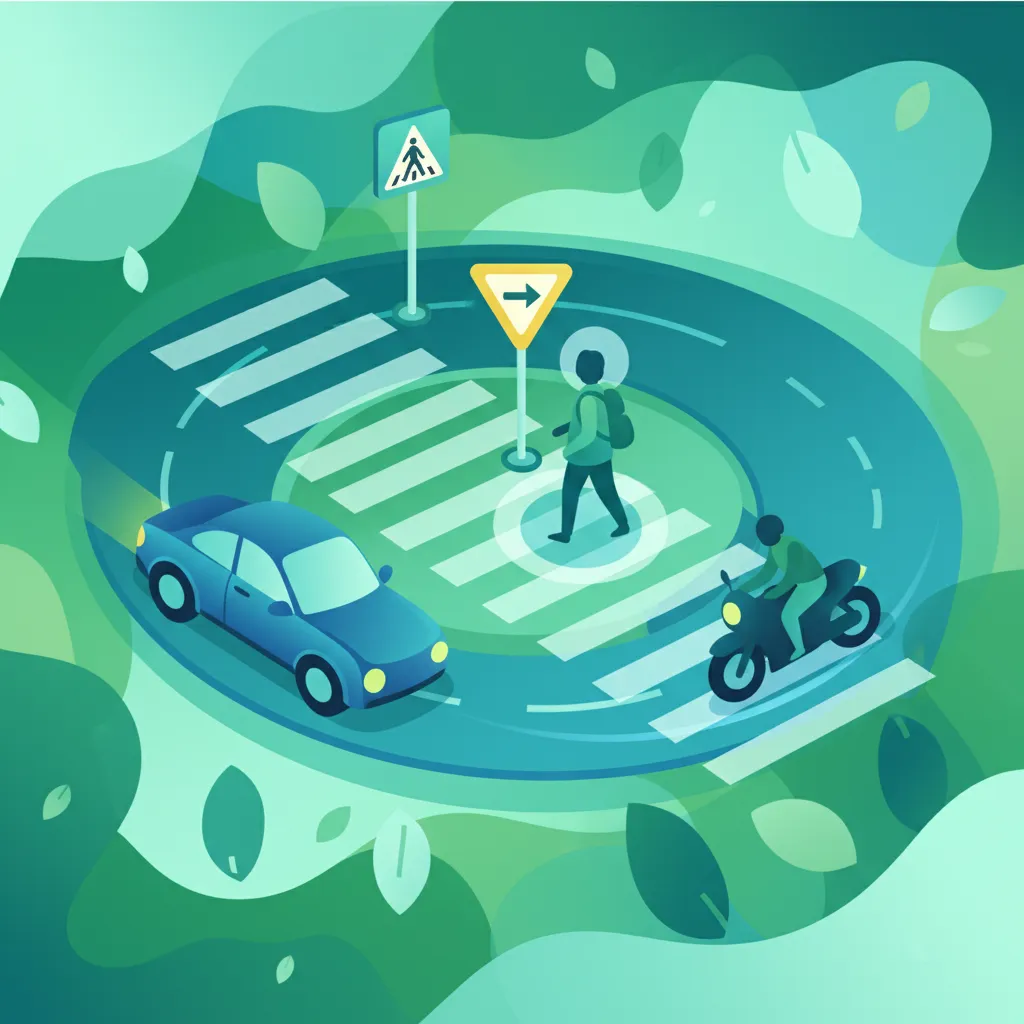
This lesson outlines the proper techniques for negotiating roundabouts and signal-controlled intersections in Spain. It explains priority rules at entry, lane selection based on the intended exit, and yielding to circulating traffic. The content also covers compliance with traffic signals and DGT regulations, including handling cyclist crossings.
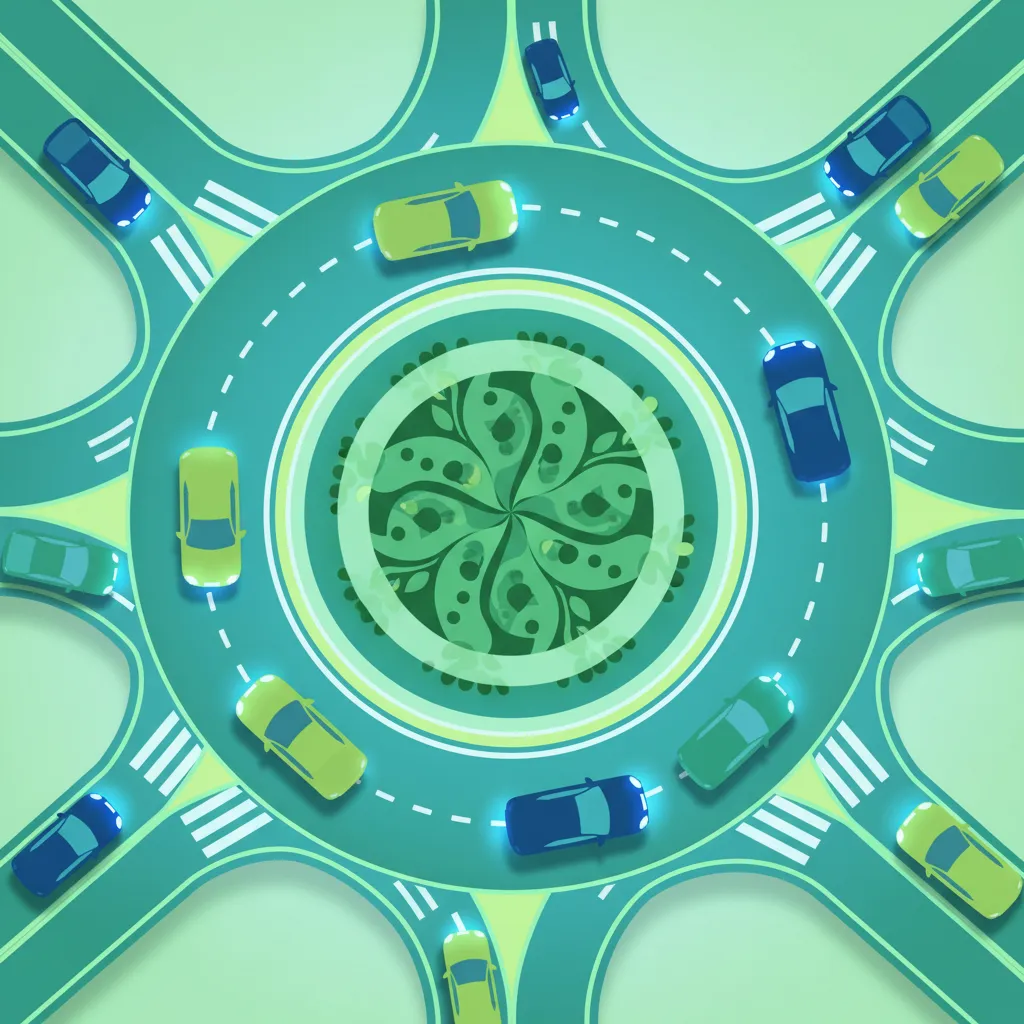
This lesson examines the structural components of a typical Spanish roundabout, describing the central island, entry and circulating lanes, and the placement of yield signs. It outlines how DGT standards dictate the geometric design and entry/exit points to ensure smooth traffic flow. Understanding these design elements enables drivers to anticipate vehicle movements and navigate safely.
Master DGT guidance on compensating for truck blind spots and understanding how cargo load impacts stability and braking. Essential theory for safe junction navigation with heavy vehicles.

This lesson provides a detailed guide to performing safe and legal overtaking maneuvers on the highway. It places strong emphasis on the techniques for thoroughly checking the large blind spots around a truck before initiating a lane change. The content also covers judging the necessary speed differential and distance required to complete the pass and return to the lane safely.

This lesson focuses on the critical skill of safely interacting with vulnerable road users, such as pedestrians and cyclists, in an urban setting. It highlights the extensive blind spots around a truck and teaches drivers to be extra vigilant, especially at intersections and crosswalks. The content covers the legal requirements for yielding and the importance of making eye contact to confirm intentions.
This lesson focuses on the principles of safe lane selection and overtaking on multi-lane roads and highways. It covers the importance of maintaining proper lane discipline and the legal protocols for executing a safe pass, including checking blind spots and ensuring sufficient speed differential. The content also stresses the need for clear signaling and judging adequate space before returning to the original lane.

This lesson provides theoretical guidance on the techniques for safely reversing a heavy vehicle, a high-risk maneuver. It emphasizes the correct use of mirrors, managing extensive blind spots, and the importance of using a spotter when available. The content also breaks down the geometric principles of parallel parking and backing into loading docks, focusing on vehicle positioning and spatial awareness.

This lesson focuses on the core principles of defensive driving as they apply to operating a large truck. It explains the importance of managing the space around the vehicle to create a safety buffer and always having an 'escape route' in mind. The content emphasizes anticipating the actions of other road users and being prepared to react calmly and safely to unexpected situations.

This lesson teaches drivers how to proactively identify potential road hazards, from potholes and debris to unpredictable driver behavior. It provides specific guidance on how to adjust driving techniques to cope with adverse weather conditions such as heavy rain, fog, high winds, and icy roads. The content focuses on managing reduced visibility and traction to maintain vehicle control and safety.

This lesson focuses on interaction dynamics with larger vehicles like cars, trucks, and buses, detailing their specific blind spot zones. Strategies for safely sharing lanes, overtaking etiquette, and proper approach when a bus stops are covered. The lesson also includes guidance on merging onto acceleration lanes following DGT policies.

This lesson outlines the proper use and legal requirements of vehicle lighting and mirror systems. It covers headlamps, fog lights, turn signals, and brake lights, clarifying when each must be used according to DGT regulations. The lesson also explains the correct adjustment of rearview and side mirrors and strategies for effective blind-spot monitoring.
This lesson examines the interaction between large vehicles, such as trucks, and vulnerable road users within roundabouts. It addresses the wide turning radius of heavy vehicles, the importance of checking blind spots, and the correct yielding behavior toward pedestrians and cyclists. Learners will understand how to maintain safe distances and anticipate the movements of different road users.

This lesson addresses the practical aspects of maneuvering a large vehicle in various environments. It explains concepts like turning radius, off-tracking, and the vehicle's total footprint, which determine the space needed for turns and other maneuvers. Learners will develop the spatial awareness required to navigate tight corners, loading bays, and urban streets while maintaining safe clearance from obstacles.
Find clear answers to common questions learners have about Navigating Roundabouts and Intersections. Learn how the lesson is structured, which driving theory objectives it supports, and how it fits into the overall learning path of units and curriculum progression in Spain. These explanations help you understand key concepts, lesson flow, and exam focused study goals.
For standard intersections with traffic lights in Spain, the signals dictate priority. You must obey the traffic lights. If the light is green, proceed with caution and yield to vehicles already within the intersection or pedestrians crossing. If the light is red, stop. In the absence of lights, general priority rules apply, meaning vehicles on the right usually have priority, unless signs indicate otherwise.
A truck's size, particularly its length and width, significantly impacts roundabout navigation. You must be aware of your vehicle's turning radius and off-tracking. This means you may need to take a wider path on entry or exit, and potentially use multiple lanes on larger roundabouts to complete your turn safely without hitting curbs, other vehicles, or road furniture. Always check signage and road markings for specific lane guidance for large vehicles.
In Spain, you must signal your intention to turn right or left well in advance of reaching the roundabout or intersection. For roundabouts, signal right if taking an exit that requires you to go right or straight on in some multi-lane configurations, and indicate left if going left or making a U-turn. Always signal again to the right when passing the exit before yours to indicate you are leaving the roundabout. At intersections, signal clearly in the direction you intend to go.
Off-tracking refers to the tendency of the rear wheels of a truck to follow a path inside the path of the front wheels when turning. This is critical at junctions because it means the rear of your trailer or truck can swing out wider than the front. Understanding and anticipating off-tracking is essential to avoid hitting curbs, parked cars, or other obstacles when making turns, especially on tighter Spanish streets or at complex intersections.
Yes, for multi-lane roundabouts, the DGT generally requires you to choose the lane appropriate to your intended exit before entering. Typically, the right lane is for exits to the right or straight ahead, and the left lane is for turns to the left or U-turns. However, always pay close attention to road signs and markings (including arrows on the road) as they override general rules and may specify lane usage for different exits. Ensure you signal correctly and check for other vehicles, especially cyclists.
Use our powerful search functionality to pinpoint specific Spanish DGT driving theory practice sets. Filter by road sign categories, traffic law topics, or question difficulty to build custom study sessions and reinforce your knowledge precisely where it matters for your official exam.