
Welcome to the 'Vehicle Dimensions & Limitations' unit. This lesson focuses on the critical DGT regulations for vehicle weight, axle load, and tare. Mastering these rules is essential for safe operation and compliance with Spanish law, directly impacting your Category C and C1 driving theory exam preparation.
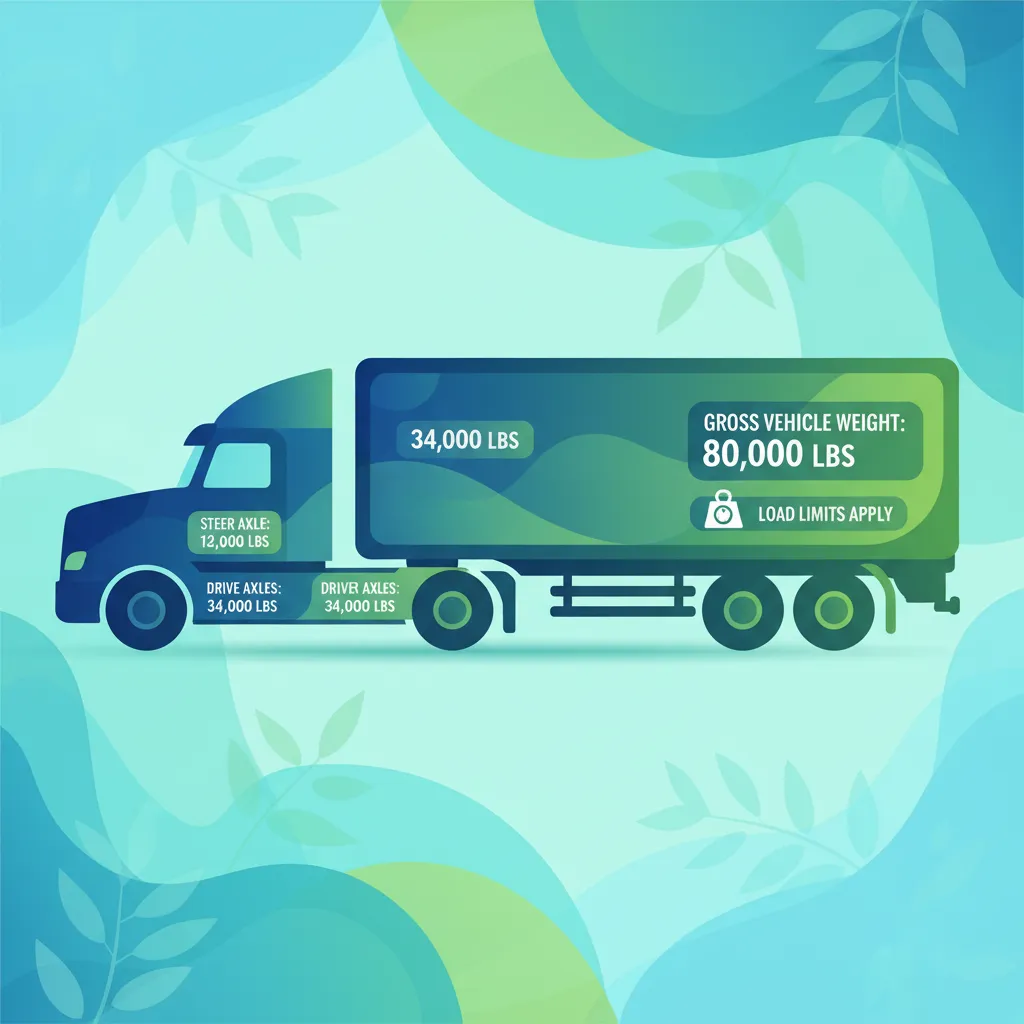
Lesson content overview
For professional drivers holding a Category C or C1 licence in Spain, a comprehensive understanding of vehicle weight regulations is paramount. This lesson, part of the Official DGT Theory Course for Spanish Truck Licence Category C & C1, delves into the critical legal and technical framework governing how much a truck can weigh. Correct weight management is not merely about avoiding fines; it is fundamental to road safety, preventing accidents, preserving infrastructure, and ensuring the longevity of your vehicle.
This chapter will explain key concepts such as Gross Vehicle Weight (GVW), tare weight, and maximum payload, alongside the crucial rules for individual axle load limits and proper weight distribution. We will explore how these principles are applied in practice, their impact on vehicle dynamics, and the specific regulations enforced by the Dirección General de Tráfico (DGT) and the Reglamento General de Circulación (RGC). Mastering these concepts is essential for safe, compliant, and efficient professional driving.
Gross Vehicle Weight (GVW), known in Spanish as Masa Máxima Autorizada (MMA) or Peso Máximo Autorizado (PMA), is the total permissible weight of a vehicle when fully loaded. This includes the vehicle's own empty weight (tare), its cargo, passengers, fuel, and any accessories. The GVW is a critical figure determined by the vehicle manufacturer and stipulated in the vehicle's registration certificate (Permiso de Circulación) and by DGT regulations.
Understanding GVW is fundamental because it sets the absolute upper limit for your vehicle's total mass on the road. Exceeding this limit is a serious offence with significant safety and legal implications. The DGT specifies different maximum GVWs based on the vehicle category and the number of axles, ensuring that vehicles operate safely within design limits and compatible with road infrastructure. For instance, Category C1 vehicles are restricted to a lower GVW than Category C trucks.
The maximum authorized GVW varies significantly between licence categories and vehicle configurations. For drivers with a Category C1 licence, the maximum permissible GVW is limited to 3,500 kg. This restriction is in place to ensure that C1 licence holders operate vehicles that are appropriate for their licensing level, typically smaller rigid trucks.
For Category C licence holders, who drive heavier vehicles, the GVW limits are higher and depend primarily on the number of axles. For example, a two-axle rigid truck typically has a maximum GVW of 18,000 kg, while a three-axle rigid truck might be allowed up to 26,000 kg. Articulated vehicles, such as a tractor unit with a semi-trailer, can have significantly higher GVW limits, often reaching 40,000 kg for a five-axle combination. These limits are precisely detailed in the DGT's "Peso máximo autorizado" tables. It is crucial for drivers to know their specific vehicle's registered GVW and to never assume that adding more axles automatically increases the legal GVW without official approval and re-registration.
Exceeding the GVW not only carries substantial legal penalties but also severely compromises your vehicle's safety, leading to reduced braking efficiency and increased stopping distances, diminished steering control, and accelerated wear on tyres and suspension components.
Tare weight, or Tara in Spanish, refers to the weight of the vehicle when it is empty but ready for operation. This includes the weight of the chassis, body, engine, all standard equipment, fluids such as oil, coolant, and a full fuel tank. Importantly, it excludes cargo, passengers beyond the driver, and any non-permanently installed equipment.
The tare weight is a fundamental figure for calculating how much cargo you can legally carry. It provides a baseline that, when subtracted from the Gross Vehicle Weight (GVW), yields the maximum permissible payload. The declared tare weight is recorded in the vehicle's technical specification sheet and registration documents.
An accurate tare weight is essential for correct load planning. If the declared tare weight is less than the actual tare weight, you risk inadvertently overloading the vehicle. Common misunderstandings include ignoring the weight of additional equipment such as a liftgate, a spare tyre, or even specific tools that were not part of the original manufacturer's declared tare. Any modifications that permanently alter the vehicle's empty weight, such as installing a refrigerated unit, an additional fuel tank, or a crane, must be declared to the DGT. The vehicle will then need to be re-certified, and its technical specification sheet updated to reflect the new tare weight. Failure to do so can lead to operating with incorrect weight limits and potential legal issues.
Start with the Declared Tare: Refer to your vehicle's registration certificate (Permiso de Circulación) or technical inspection card (Ficha Técnica).
Add Permanent Modifications: Account for any equipment added since the last inspection (e.g., specific toolboxes, liftgates, auxiliary fuel tanks) that are not included in the declared tare.
Factor in Operational Fluids: Ensure the fuel tank is full, and all other fluids (oil, coolant, AdBlue) are at their operational levels.
Consider the Driver: While legally payload, for practical loading calculations, often the driver's weight is considered part of the operational empty weight, leaving pure cargo for payload.
Use a Weighbridge: For the most accurate measurement, weigh the empty vehicle on a certified public weighbridge. This eliminates estimation errors.
Payload, or Carga Útil in Spanish, represents the maximum weight of cargo, passengers, and any optional equipment that a vehicle is legally allowed to carry. It is calculated by subtracting the tare weight from the Gross Vehicle Weight (GVW). This figure is crucial for logistics and loading operations, as it directly determines how much freight can be transported in a single journey.
For example, if a truck has a GVW of 18,000 kg and a tare weight of 8,000 kg, its maximum payload is 10,000 kg. This 10,000 kg must accommodate the weight of the goods, any additional passengers, and any temporary equipment not accounted for in the tare weight.
It is a common misunderstanding to assume that as long as the total weight of the vehicle and its cargo remains below the GVW, the vehicle is compliant. However, payload calculations must always respect not only the overall GVW but also the individual axle load limits. It is entirely possible to be within the total GVW limit but still exceed the maximum permissible load on one or more axles due to improper weight distribution.
Therefore, professional drivers must consider both the total payload and how that payload will be distributed across the vehicle's axles. A cargo that is too heavy and concentrated on one part of the vehicle, such as only on the rear axles, can lead to dangerous overloading of those specific axles, even if the total weight is acceptable. This necessitates careful planning of cargo placement.
While GVW sets the overall weight limit for a vehicle, individual axle load limits are equally, if not more, critical for safety and infrastructure protection. Axle load refers to the total weight imposed on a single axle or a group of axles. These limits are stipulated by Spanish legislation (RGC Articles 71-71-3 to 71-71-6) to prevent axle collapse, tyre blowouts, excessive wear on road surfaces, and damage to bridges and other road structures.
Drivers must ensure that after loading, no single axle or axle group exceeds its specified maximum weight. This often requires careful distribution of cargo, even if the total GVW is within limits. Overloading an axle can lead to dangerous handling characteristics, premature tyre failure, and severe damage to the vehicle's suspension and chassis.
Spanish regulations distinguish between different types of axles, each with its own specific load limits:
Always check the official DGT tables for the most current and precise numeric limits, as these values can be subject to periodic updates or specific vehicle category variations.
It's a common error to believe that if the Gross Vehicle Weight (GVW) is compliant, then axle loads are automatically compliant. This is incorrect. Drivers must actively calculate and monitor individual axle loads, making adjustments to cargo placement as necessary to avoid exceeding these crucial limits.
Beyond simply not exceeding total weight or individual axle limits, professional drivers must understand the concept of weight distribution ratio. This ratio describes the proportion of the total Gross Vehicle Weight (GVW) carried by each axle. Proper weight distribution is crucial for maintaining optimal vehicle dynamics, including stability, steering responsiveness, braking efficiency, and even tyre wear.
An unbalanced load can lead to a host of problems. If too much weight is concentrated on the front axle, it can lead to heavy steering, increased tyre wear on the front tyres, and potential damage to the steering components. Conversely, if too much weight is placed on the rear axles, the front end may become too light, reducing steering authority and traction, which is particularly dangerous in adverse weather conditions or during emergency braking. This can also increase the risk of jack-knifing in articulated vehicles.
While not always explicitly legislated as a precise percentage, vehicle manufacturers provide guidelines and DGT technical specifications often mandate a minimum load on the front steering axle. This is typically in the range of 10% to 12% of the GVW. This ensures adequate grip for steering and braking. For example, a 30-ton truck should ideally have approximately 3.0 to 3.6 tons on its front axle.
Drivers should use manufacturer's loading diagrams and their experience to plan cargo placement. When loading, heavy items should generally be placed centrally and low to the ground to maintain a low center of gravity. Cargo should then be distributed evenly from front to back and side to side, ensuring that both GVW and individual axle load limits are respected. Tools like onboard weigh systems can provide real-time axle load readings, aiding in precise distribution.
Driving a heavy commercial vehicle often involves encountering specific load restrictions that apply to particular sections of road, bridges, tunnels, or other infrastructure. These restrictions are put in place by national, regional, or local authorities to protect the structural integrity of these constructions from damage caused by excessively heavy vehicles. It is vital for professional drivers to be aware of and strictly adhere to these limits, which are often lower than the general national axle load or GVW limits.
These restrictions are typically indicated by specific road signs. A common sign indicates a maximum weight per axle.
Drivers must always be vigilant for such signage. Ignoring these posted limits not only risks severe structural damage to infrastructure, which can have significant economic and public safety consequences, but also carries heavy fines and penalties for the driver and transport company.
Never assume that national GVW limits automatically apply on all bridges or urban roads. Local ordinances and specific infrastructure designs can impose much stricter limits. Always check signage, especially before entering urban areas, crossing older bridges, or traversing tunnels.
Route planning tools often incorporate these restrictions, allowing drivers to select routes that are suitable for their vehicle's weight. If a route with a restriction cannot be avoided, it may necessitate adjusting the load or, in extreme cases, finding an alternative, longer route that accommodates the vehicle's weight.
The DGT (Dirección General de Tráfico) is the Spanish traffic authority responsible for setting and enforcing regulations related to vehicle operation, including weight limits. These rules are primarily enshrined in the Reglamento General de Circulación (RGC), the General Traffic Regulation. Adherence to these regulations is mandatory for all professional drivers operating in Spain.
The RGC provides specific articles governing vehicle weights:
Familiarity with the specific articles of the RGC related to vehicle weight is highly recommended. These legal foundations underpin all practical aspects of load management and compliance.
Understanding weight regulations in theory is one thing; applying them in real-world driving situations is another. Here are some scenarios that illustrate the practical application of weight management principles.
Scenario: You are driving a 2-axle delivery truck (Category C1 licence) in a city center. Your truck's GVW is 3,500 kg, and its tare weight is 2,000 kg. This leaves you with a maximum payload of 1,500 kg. The front single axle has a limit of 7,000 kg, and the rear single axle has a limit of 8,000 kg. You need to pick up 1,000 kg of various goods.
Correct Behavior: You calculate that 1,000 kg of cargo is well within your 1,500 kg payload limit. You distribute the goods carefully, placing heavier items towards the center of the cargo area, ensuring approximately 10% of the total GVW (350 kg) is on the front axle for stable steering, and the remaining 2,650 kg is on the rear axle. Both axles are well within their individual limits, and the total GVW is 3,000 kg, which is below 3,500 kg.
Incorrect Behavior: You load all 1,000 kg of goods directly over the rear axle, perhaps because it's easier. Now, your front axle might be too light, compromising steering. More critically, while the total GVW is still only 3,000 kg, the rear axle's load (2,000 kg tare on rear + 1,000 kg cargo = 3,000 kg) might still be within its limit, but the distribution is poor, affecting stability and braking, especially when turning or braking hard.
Scenario: You are transporting 25,000 kg of goods on a 5-axle articulated vehicle (tractor unit with semi-trailer). Your vehicle's total GVW is 40,000 kg, and its tare weight (tractor + trailer) is 15,000 kg. This allows a maximum payload of 25,000 kg. You've loaded your full payload.
Correct Behavior: Before starting the journey, you use an onboard weigh system or visit a weighbridge to ensure your cargo is evenly distributed. The front axle of the tractor unit should carry approximately 10-12% of the total GVW (around 4,000-4,800 kg). The remaining weight is distributed across the drive axles and the trailer axles, ensuring none of them exceed their individual or tandem/tridem limits. This balance ensures optimal steering response, stable braking, and even tyre wear over the long distance.
Incorrect Behavior: The loading crew places all the heavy goods at the very front of the semi-trailer. This overloads the fifth wheel coupling and, consequently, the rear axles of the tractor unit and the front axle of the trailer, while the rear axles of the trailer may be underloaded. This imbalance leads to reduced steering effectiveness, increased risk of 'jack-knifing', and excessive wear on the tractor's drive tyres and suspension.
Overloading is a serious offence that can lead to severe consequences, both for safety and legal compliance. Professional drivers must be vigilant to avoid these common violations:
While weight limits are static figures, their impact on driving dynamics is highly conditional, influenced by external factors such as weather, road type, and the vehicle's own condition. Professional drivers must account for these variations.
When operating an overloaded vehicle near pedestrians or cyclists, the increased stopping distances and reduced maneuverability heighten the risk of severe collisions. This underscores the ethical responsibility drivers have to manage vehicle weight safely in all environments.
Understanding and adhering to weight limits, axle load distribution, and tare weight regulations is not merely a bureaucratic requirement; it is a cornerstone of professional driving in Spain and internationally. The intricate relationship between a vehicle's mass, its distribution, and the physics of motion dictates its safety, efficiency, and impact on public infrastructure.
Safety Outcomes:
Infrastructure Protection:
Legal and Economic Compliance:
In conclusion, mastering vehicle weight management is an ongoing responsibility that requires vigilance, precise calculation, and a deep understanding of the underlying principles. It directly links to other crucial aspects of professional driving, including braking performance, load securing, route planning, and safe maneuvering. By prioritising correct weight practices, professional drivers not only ensure their own safety but also contribute to the safety of all road users and the integrity of the road network.
This lesson covers the essential Spanish DGT regulations on vehicle weight for Category C and C1 truck drivers, including the definitions and calculations of GVW (MMA), tare weight, and payload. It specifies that Category C1 vehicles are limited to 3,500 kg GVW while Category C vehicles can reach up to 40,000 kg depending on axle configuration. The lesson emphasises that both total GVW and individual axle load limits must be checked separately, with typical limits of approximately 10,000 kg for single axles, 19,000 kg for tandem axles, and 27,000 kg for tridem axles. Proper weight distribution targeting 10-12% of GVW on the front axle is critical for vehicle stability, braking efficiency, and steering control. The lesson also covers bridge load restrictions, the requirement to declare permanent modifications to DGT, and the severe penalties for overloading violations under the RGC.
A short set of high-value points that capture the most important learning from this lesson.
Gross Vehicle Weight (GVW/MMA) is the absolute legal maximum total mass including tare, cargo, fuel, passengers, and accessories.
Payload is calculated as GVW minus tare weight, and represents the maximum cargo weight you can legally carry.
Individual axle load limits (single ~10,000 kg, tandem ~19,000 kg, tridem ~27,000 kg) must be checked separately from total GVW compliance.
Weight distribution should place approximately 10-12% of GVW on the front steering axle for adequate steering and braking grip.
Bridge and infrastructure load restrictions are often lower than national limits and must be respected independently.
Explore all units and lessons included in this driving theory course.
Category C1 vehicles are limited to 3,500 kg GVW; Category C limits vary by axle count (2-axle: 18,000 kg, 3-axle: 26,000 kg, 5-axle: up to 40,000 kg).
Any permanent modification that changes tare weight (e.g., liftgate, refrigeration unit) must be declared to DGT and the vehicle re-certified.
A vehicle can be within total GVW limits but still violate individual axle load limits through poor cargo distribution.
Bridge load restrictions are posted on road signs and must be checked before crossing; never assume national limits apply everywhere.
RGC Articles 72-4, 72-5, 71-71-3 to 71-71-6, 29-2, and 37-2 govern weight limits, axle loads, bridge restrictions, and modification declarations.
Assuming that if total GVW is compliant, all axle loads are automatically compliant; drivers must actively verify each axle.
Loading cargo without accounting for additional permanent equipment, resulting in understated tare and overestimated payload capacity.
Ignoring posted bridge and tunnel weight restrictions and assuming national GVW limits apply universally.
Placing heavy cargo only over rear axles to simplify loading, which overloads those axles and lightens the front axle excessively.
Failing to declare vehicle modifications to DGT, leading to incorrect official tare weight and potential inadvertent overloading.
Lesson content overview
A short set of high-value points that capture the most important learning from this lesson.
Gross Vehicle Weight (GVW/MMA) is the absolute legal maximum total mass including tare, cargo, fuel, passengers, and accessories.
Payload is calculated as GVW minus tare weight, and represents the maximum cargo weight you can legally carry.
Individual axle load limits (single ~10,000 kg, tandem ~19,000 kg, tridem ~27,000 kg) must be checked separately from total GVW compliance.
Weight distribution should place approximately 10-12% of GVW on the front steering axle for adequate steering and braking grip.
Bridge and infrastructure load restrictions are often lower than national limits and must be respected independently.
Explore all units and lessons included in this driving theory course.
Category C1 vehicles are limited to 3,500 kg GVW; Category C limits vary by axle count (2-axle: 18,000 kg, 3-axle: 26,000 kg, 5-axle: up to 40,000 kg).
Any permanent modification that changes tare weight (e.g., liftgate, refrigeration unit) must be declared to DGT and the vehicle re-certified.
A vehicle can be within total GVW limits but still violate individual axle load limits through poor cargo distribution.
Bridge load restrictions are posted on road signs and must be checked before crossing; never assume national limits apply everywhere.
RGC Articles 72-4, 72-5, 71-71-3 to 71-71-6, 29-2, and 37-2 govern weight limits, axle loads, bridge restrictions, and modification declarations.
Assuming that if total GVW is compliant, all axle loads are automatically compliant; drivers must actively verify each axle.
Loading cargo without accounting for additional permanent equipment, resulting in understated tare and overestimated payload capacity.
Ignoring posted bridge and tunnel weight restrictions and assuming national GVW limits apply universally.
Placing heavy cargo only over rear axles to simplify loading, which overloads those axles and lightens the front axle excessively.
Failing to declare vehicle modifications to DGT, leading to incorrect official tare weight and potential inadvertent overloading.
Explore search topics learners often look for when studying Weight Limits, Axle Load Distribution, and Tare. These topics reflect common questions about road rules, driving situations, safety guidance, and lesson level theory preparation for learners in Spain.
Browse additional driving theory lessons that cover connected traffic rules, road signs, and common driving situations related to this topic. Improve your understanding of how different rules interact across everyday traffic scenarios.
Learn the critical DGT regulations on truck axle load limits, GVW, and tare weight in Spain. This lesson explains how to calculate payload and the importance of proper weight distribution for vehicle stability and safety.
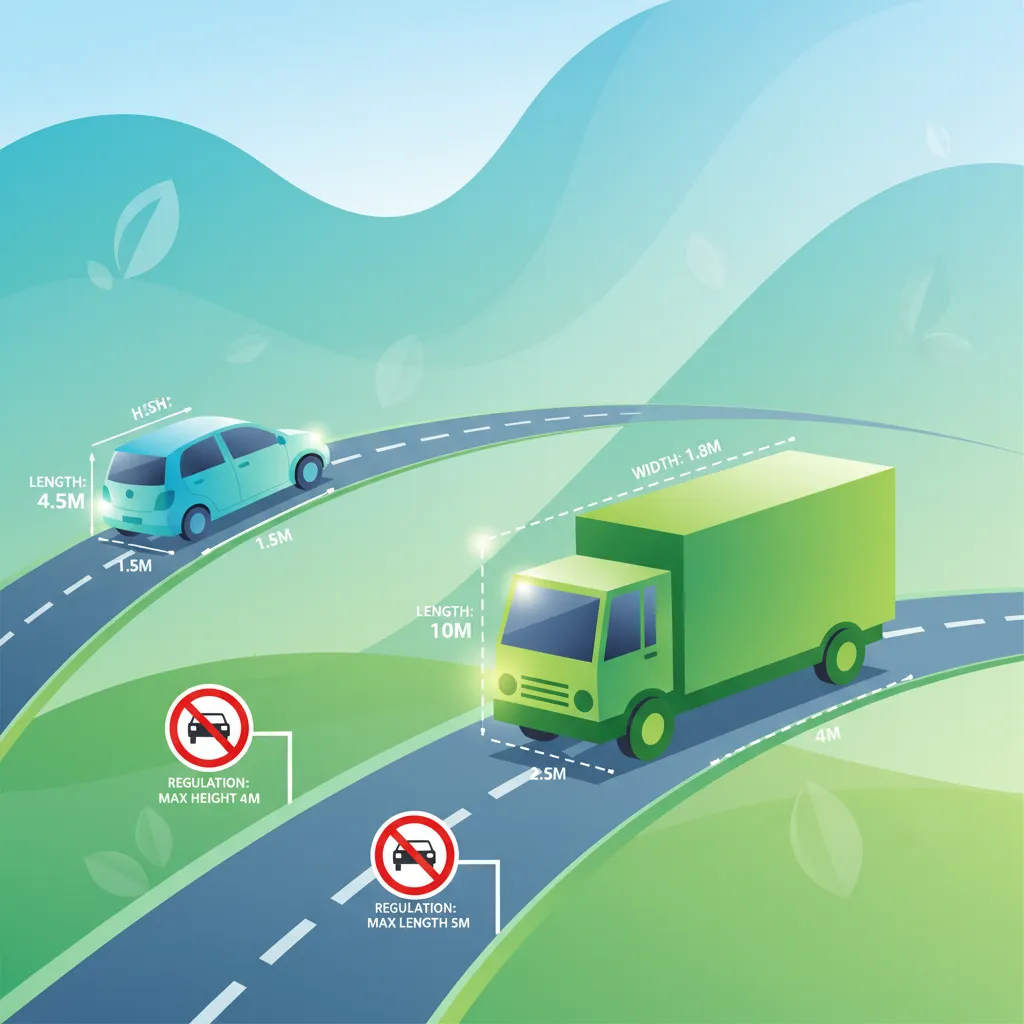
This lesson provides a detailed breakdown of the maximum permissible length, width, and height for heavy vehicles according to Spanish and EU regulations. It explains how these dimensions are measured and how they affect vehicle classification and route planning. The content emphasizes the critical importance of respecting clearance signs for bridges, tunnels, and other overhead structures to prevent accidents.
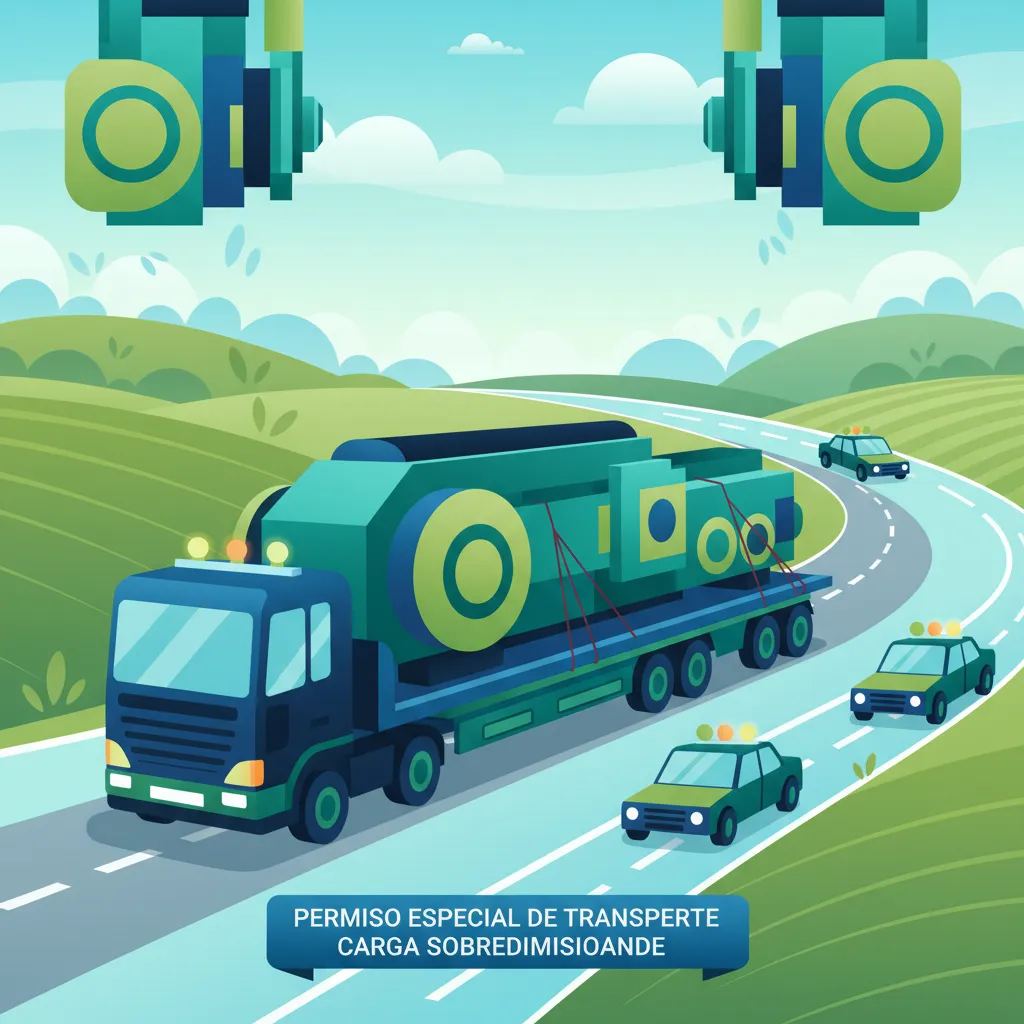
This lesson addresses the special regulations that apply to transporting loads that exceed standard legal dimensions or weight. It explains the process for obtaining the necessary special permits from the DGT and other authorities. The content also covers the requirements for route planning, the use of escort vehicles (pilot cars), and the mandatory signage and lighting for the vehicle.
This lesson explains the critical importance of proper weight distribution and adherence to load limits for buses and coaches, focusing on gross vehicle weight and axle load regulations. It describes how passenger and cargo placement affects the centre of gravity, which in turn influences vehicle stability during acceleration, braking, and cornering. Learners will be taught best practices for load planning to ensure compliance and maintain safe handling.

This lesson explains the physical concept of the center of gravity and its critical importance in heavy vehicle stability. It details how the placement and distribution of cargo can raise or lower the center of gravity, affecting rollover risk and handling. The content also covers factors that contribute to vehicle sway and the principles of load balancing to maintain control during turns and maneuvers.
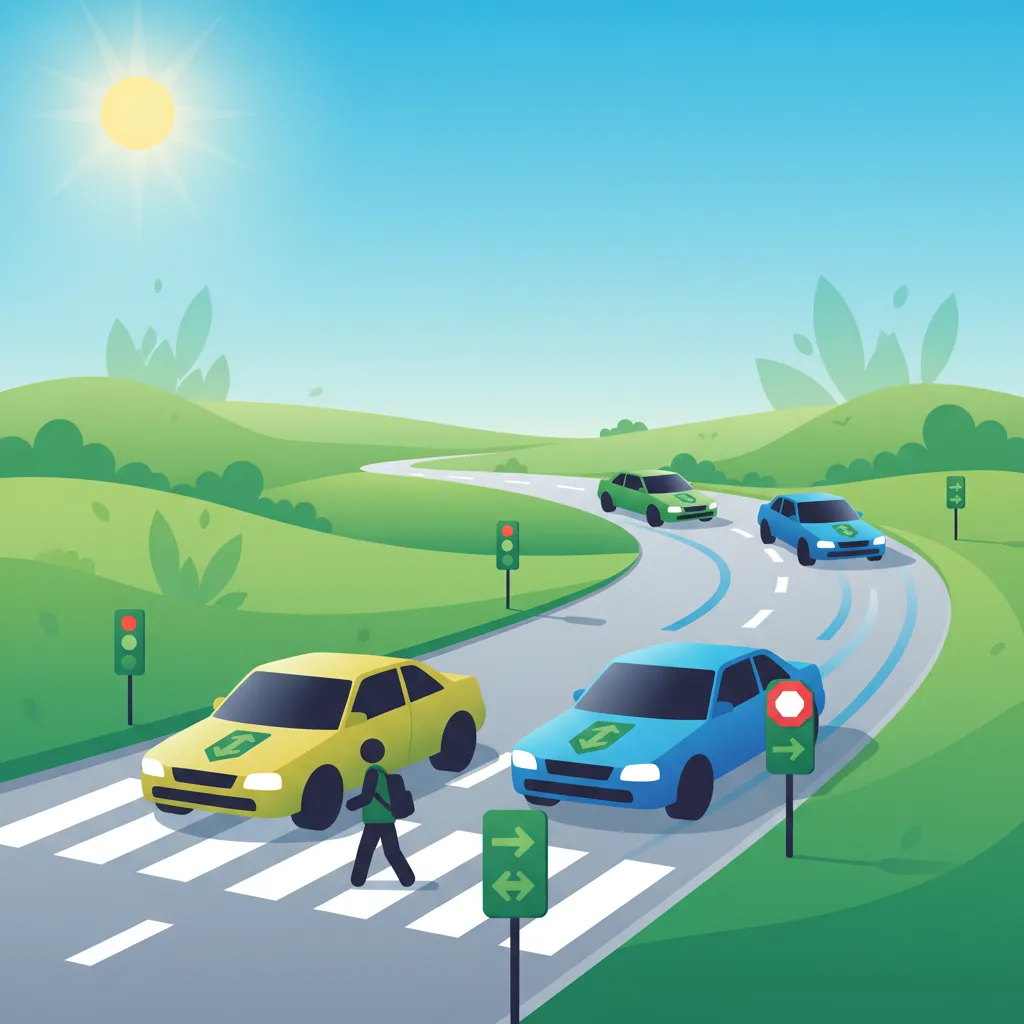
This lesson provides a broad overview of the key traffic regulations in Spain that directly impact professional truck drivers. It details the rules of priority at intersections, the interpretation of different road markings, and the principles of correct lane discipline. Furthermore, it explains the specific speed limits applicable to heavy vehicles and the legal protocols for safe overtaking and signaling.

This lesson details the strict EU and Spanish regulations governing drivers' working hours, driving times, and mandatory rest periods. It explains how to use a tachograph to record activity and ensure compliance with daily and weekly limits. The content also provides practical strategies for managing fatigue to maintain driver alertness and prevent accidents, a critical aspect of professional road safety.

This lesson focuses on the specific restrictions that heavy vehicles face on public infrastructure and in urban centers. It covers how to interpret signs indicating weight limits for bridges and height restrictions for tunnels and overpasses. The content also explains the various municipal regulations that can restrict truck access to certain urban areas, such as low-emission zones or time-based delivery windows.
Explore Spanish DGT rules on specific load restrictions for bridges, tunnels, and urban areas. Understand how vehicle weight affects road infrastructure and the consequences of non-compliance.
This lesson focuses on the specific restrictions that heavy vehicles face on public infrastructure and in urban centers. It covers how to interpret signs indicating weight limits for bridges and height restrictions for tunnels and overpasses. The content also explains the various municipal regulations that can restrict truck access to certain urban areas, such as low-emission zones or time-based delivery windows.
This lesson addresses the special regulations that apply to transporting loads that exceed standard legal dimensions or weight. It explains the process for obtaining the necessary special permits from the DGT and other authorities. The content also covers the requirements for route planning, the use of escort vehicles (pilot cars), and the mandatory signage and lighting for the vehicle.
This lesson provides a detailed breakdown of the maximum permissible length, width, and height for heavy vehicles according to Spanish and EU regulations. It explains how these dimensions are measured and how they affect vehicle classification and route planning. The content emphasizes the critical importance of respecting clearance signs for bridges, tunnels, and other overhead structures to prevent accidents.

This lesson explains the specific legal framework governing truck operations on Spain's high-speed road network. It details the different speed limits for trucks on autovías versus autopistas and the regulations regarding which lanes heavy vehicles are permitted to use. Learners will also understand how to interpret specific highway signage relevant to commercial vehicles and any applicable toll regulations.
This lesson provides a broad overview of the key traffic regulations in Spain that directly impact professional truck drivers. It details the rules of priority at intersections, the interpretation of different road markings, and the principles of correct lane discipline. Furthermore, it explains the specific speed limits applicable to heavy vehicles and the legal protocols for safe overtaking and signaling.
This lesson focuses on the critical relationship between speed, following distance, and overall traffic safety on highways. It explains how to calculate a safe following distance based on speed and weather conditions, accounting for a truck's longer stopping distance. The content also teaches strategies for managing speed to adapt smoothly to changing traffic flow, enhancing both safety and fuel efficiency.
This lesson explains the physical concept of the center of gravity and its critical importance in heavy vehicle stability. It details how the placement and distribution of cargo can raise or lower the center of gravity, affecting rollover risk and handling. The content also covers factors that contribute to vehicle sway and the principles of load balancing to maintain control during turns and maneuvers.
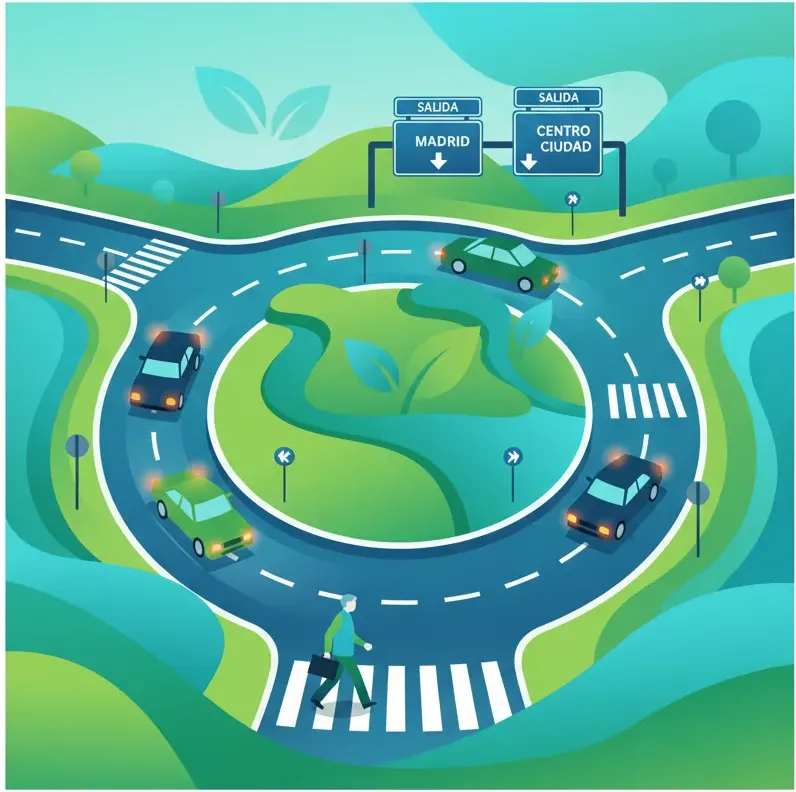
This lesson provides specific instructions on how to safely navigate complex junctions such as roundabouts and intersections with a large vehicle. It explains the rules of priority, the correct lane to use based on the intended exit, and the importance of proper vehicle positioning to account for off-tracking. The content also covers clear signaling to communicate intentions to other road users for safe and efficient passage.
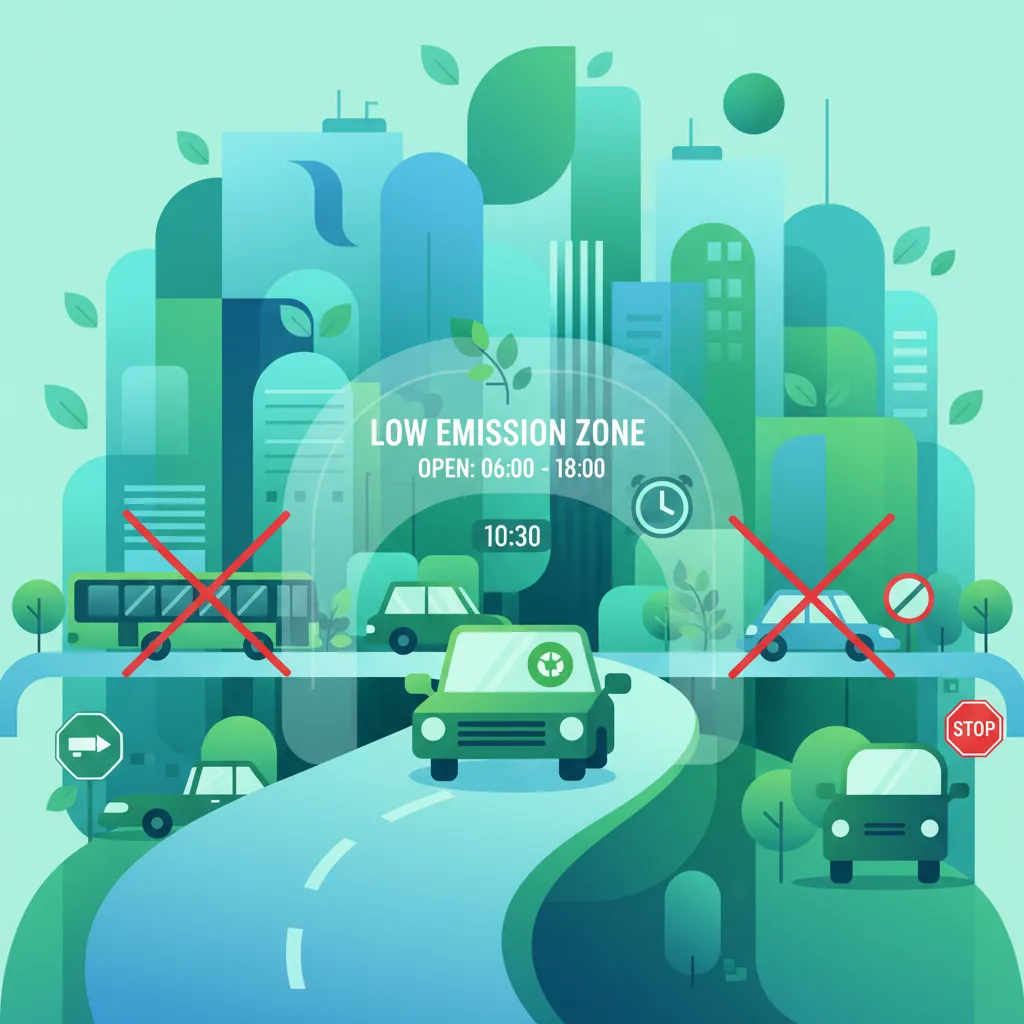
This lesson explains the various access restrictions that trucks face in modern cities. It covers the rules and requirements for entering low-emission zones (LEZ), including necessary vehicle standards and permits. The content also details time-window restrictions, where deliveries are only permitted during specific hours of the day to reduce congestion, requiring careful logistical planning.

This lesson introduces fundamental road safety principles applicable to all drivers, with a special emphasis on heavy vehicles. It covers defensive driving techniques, including the importance of anticipating potential hazards and managing speed appropriately for conditions. Learners will also study how to establish and maintain safe following distances and understand the hierarchy of road users to ensure safe interactions.
Find clear answers to common questions learners have about Weight Limits, Axle Load Distribution, and Tare. Learn how the lesson is structured, which driving theory objectives it supports, and how it fits into the overall learning path of units and curriculum progression in Spain. These explanations help you understand key concepts, lesson flow, and exam focused study goals.
Tare weight (peso en vacío) is the weight of the truck itself, unladen. Payload (carga útil) is the maximum weight of the goods the truck can carry. Gross Vehicle Weight (GVW) or Masa Máxima Autorizada (MMA) is the maximum allowed total weight of the truck plus its payload, as specified by the DGT.
DGT regulations specify maximum permissible weights for each axle or axle group. These limits depend on the axle type, suspension, and the vehicle's design, ensuring that the load is distributed to prevent damage to roads and bridges. Exceeding these limits is illegal and unsafe.
Proper weight distribution, ensuring the load is centred and balanced, is crucial for maintaining the truck's stability. Incorrect distribution, especially towards the rear, can lead to instability during braking or cornering, increasing the risk of accidents. It also affects steering and tyre wear.
Exceeding legal weight limits (GVW or axle loads) can result in significant fines from the DGT or Guardia Civil, potential vehicle impoundment, and points deductions from the driver's licence. It also poses serious safety risks and can cause damage to road infrastructure.
The Gross Vehicle Weight (GVW or MMA) and tare weight are typically found on the vehicle's identification plate, often located in the driver's cabin or on the chassis. This information is also detailed in the vehicle's registration documents (ficha técnica).
Use our powerful search functionality to pinpoint specific Spanish DGT driving theory practice sets. Filter by road sign categories, traffic law topics, or question difficulty to build custom study sessions and reinforce your knowledge precisely where it matters for your official exam.