
The R-6 road sign signifies that you have priority over oncoming vehicles. It's crucial to understand this sign before entering a conflict point, such as a narrow section of road or a junction, where traffic from both directions might interact. When you encounter this sign, you can proceed, but always be prepared to yield if the situation demands it, ensuring safe passage for all road users and successful navigation through Spanish traffic rules. Remember to always interpret this sign in conjunction with road markings and actual visibility.
This R-6 sign is crucial for navigating narrow Spanish roads; it dictates that you have priority over oncoming vehicles. Proper interpretation of this traffic sign is vital for safe driving and is a common topic in theory test revision.
The sign for priority over oncoming traffic is a Spanish priority sign that settles who must yield or who has right of way. Because priority conflicts happen at junctions and narrow sections, these signs must be understood before you enter the conflict area. The message can require a complete stop, a reduction of speed with yielding, or recognition that your road has priority over another movement. Misreading a priority sign creates immediate risk, so it should always be checked together with road markings and the actual visibility of cross traffic.
This priority sign tells you how right of way works in relation to priority over oncoming traffic. You must read it before entering the conflict point so you can yield, stop, or proceed correctly.
Get clear, practical answers to the most common questions about the R-6 - Priority over Oncoming Traffic road sign. Learn how the sign works, what rules it represents, and how it affects real driving situations. This FAQ strengthens your understanding and supports accurate decision making for the Spanish driving theory exam in Spain.
The R-6 sign indicates that your vehicle has the right of way over oncoming traffic. This usually applies in areas where the road narrows and only one vehicle can pass at a time. You are permitted to proceed while oncoming traffic must wait.
When you see the R-6 sign, you have priority. You can proceed through the narrow section or conflict point. However, always approach slowly enough to stop if necessary and be aware of your surroundings and any other road users. Make eye contact to confirm the situation before proceeding.
The R-6 sign is typically placed before stretches of road where two-way traffic cannot easily pass each other simultaneously, such as narrow bridges, tunnels, or construction zones. It helps manage traffic flow and prevent potential collisions by clearly defining who has the right of way.
A common mistake is assuming priority and not slowing down or checking the situation. Learners might also fail to interpret the sign in conjunction with road markings or other signs, or they might pressure oncoming traffic to yield when the sign clearly indicates they should wait.
While the R-6 sign grants you priority, you must still exercise caution. If an oncoming vehicle is already in the narrow section or conflict point and it's unsafe for both of you to proceed, you must wait for them to clear the area. Your priority is conditional on safety.
A clear reference image of the R-6 - Priority over Oncoming Traffic road sign used in Spain.
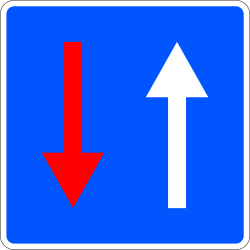
The R-6 - Priority over Oncoming Traffic road sign may also be known by these alternative names or terms.
The R-6 - Priority over Oncoming Traffic road sign is part of the Priority Signs category, which groups together signs with similar rules and functions.
Comparing signs like 'Priority over Oncoming Traffic' with similar ones sharpens your recognition skills. This focused traffic sign comparison is key for accurate theory test revision and preventing costly errors.
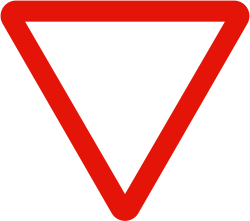
Master the R-1 'Give Way' sign to navigate Spanish junctions safely.
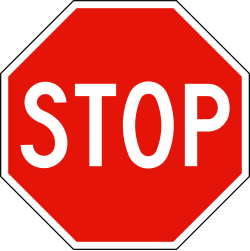
The R-2 'Stop' sign means you must always yield, and often stop completely, at Spanish junctions.
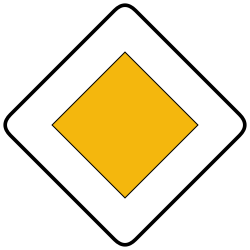
The R-3 Priority Road sign ensures clarity on who has right of way.
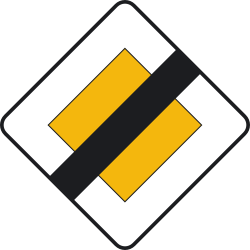
The R-4 Sign Marks the End of Your Priority Road
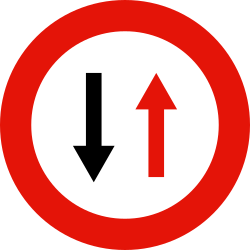
This is the R-5 road sign: Give Way to Oncoming Traffic
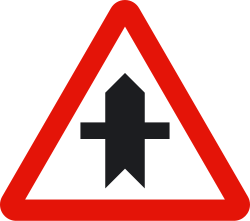
Prepare for intersections with priority ahead using the P-1 warning sign.

Prepare for a level crossing or moving bridge ahead with the P-10a warning sign.

Prepare for a level crossing or moving bridge on your left with the P-10b warning sign.
Connect visual signage with the specific Spanish traffic laws and priority rules required to pass your theory test. Explore detailed articles and practice sets that explain how these regulatory markers influence daily driving on local roads.
Learners will discover the legal hierarchy of road surfaces and why the standard priority-to-the-right rule does not apply when transitioning from a dirt path to a paved street. This guide clarifies the responsibilities of both the driver on the main road and the driver entering from an unpaved area to ensure safe traffic flow. Mastering these nuances is essential for passing the DGT theory exam and maintaining hazard perception skills in rural and semi-rural Spanish environments.
Understand the distinct pathways to obtaining motorcycle licenses in Spain, covering the AM, A1, A2, and full A permits. This guide breaks down the age, experience, and testing requirements for each category, clarifying crucial differences and common areas of confusion, such as the specific conditions under which a B license can be used for smaller vehicles. This knowledge is vital for succeeding in the DGT theory exam and for safe, legal motorcycling.
Master Spain's Strictest Distraction Rule and Safeguard Your Driving Licence Points.
Master the 'Alphabet' of Spanish Driving Permits for Your Theory Exam
The sign for give way is a Spanish priority sign that settles who must yield or who has right of way. Because priority conflicts happen at junctions and narrow sections, these signs must be understood before you enter the conflict area. The message can require a complete stop, a reduction of speed with yielding, or recognition that your road has priority over another movement. Misreading a priority sign creates immediate risk, so it should always be checked together with road markings and the actual visibility of cross traffic.
The sign for stop is a Spanish priority sign that settles who must yield or who has right of way. Because priority conflicts happen at junctions and narrow sections, these signs must be understood before you enter the conflict area. The message can require a complete stop, a reduction of speed with yielding, or recognition that your road has priority over another movement. Misreading a priority sign creates immediate risk, so it should always be checked together with road markings and the actual visibility of cross traffic.
You've explored the complete list of Spanish road signs. Now, deepen your understanding by reviewing specific sign groups or testing your knowledge with practice questions. Fully prepare for your DGT driving theory exam and confidently navigate Spanish roads.
Browse All Spanish Road Signs