
This lesson provides critical knowledge on how to react effectively if you are involved in or witness a road accident in Switzerland. You will learn the mandatory steps for securing the scene, providing first aid, and alerting the appropriate emergency services, which is a vital component of your Category B theory exam.
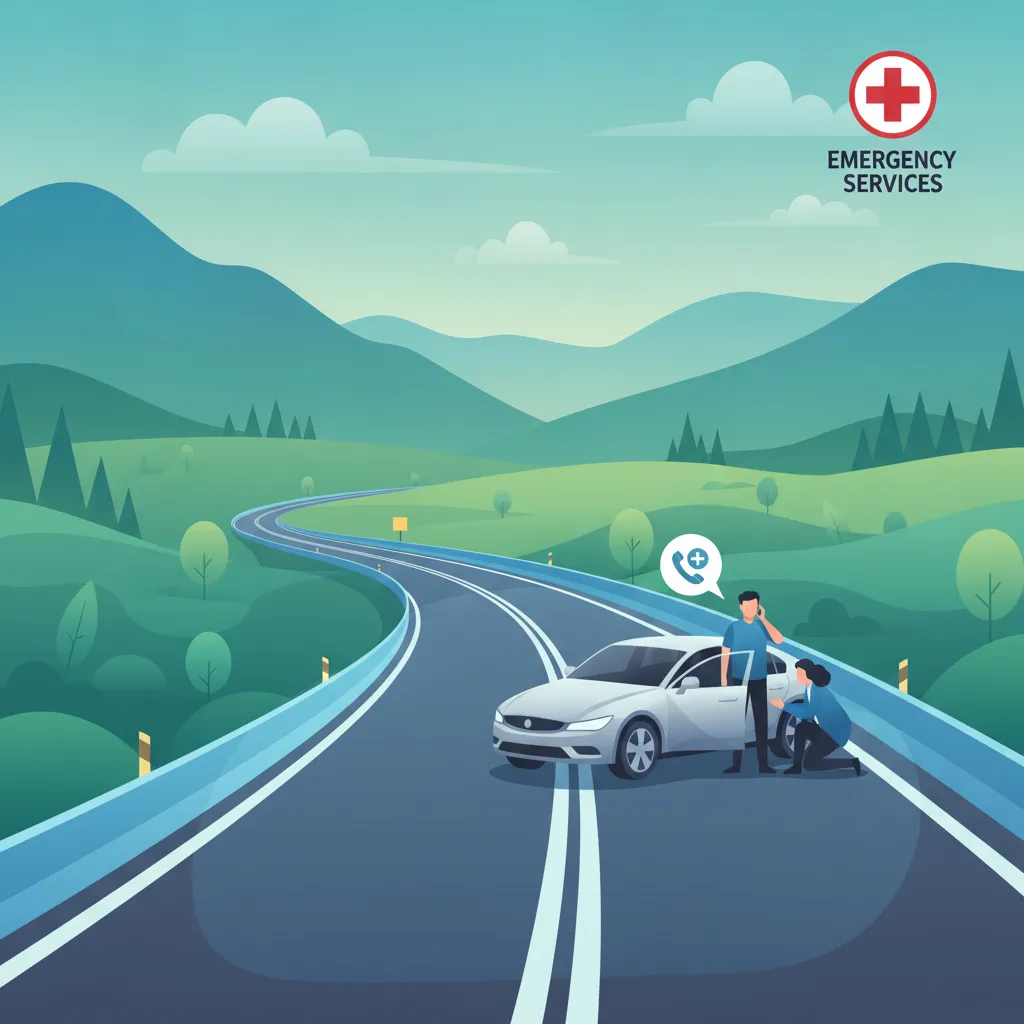
Lesson content overview
Responding effectively to a traffic accident is a critical skill for every driver. While prevention is paramount, knowing how to act correctly in an emergency can significantly reduce injuries, prevent secondary incidents, and fulfill your legal obligations as a road user in Switzerland. This lesson provides an in-depth understanding of the procedures and responsibilities involved in emergency response, from immediate personal safety to coordinating with professional services.
The moments immediately following a traffic accident are crucial. Your first priority must always be your own safety and the safety of any passengers, followed by securing the accident scene to prevent further collisions. Hasty or ill-informed actions can lead to additional dangers.
Activate Hazard Warning Lights: Immediately turn on your vehicle's hazard warning lights to alert approaching traffic to a potential obstruction or danger. This is a universal signal for distress or a stationary hazard.
Assess Personal Safety: Before attempting to assist anyone else, quickly assess if your immediate surroundings are safe. If your vehicle is in a dangerous position (e.g., in the middle of a fast lane or on a blind bend), move it to the safest possible location, such as the hard shoulder or off the roadway, if it is still drivable and safe to do so.
Wear Your High-Visibility Vest: Before exiting your vehicle on a public road, always put on your high-visibility vest. This makes you much more visible to other drivers, especially in low light or adverse weather conditions, significantly reducing the risk of being struck by oncoming traffic.
Place the Warning Triangle: Once you have exited your vehicle safely and are wearing your high-visibility vest, retrieve your warning triangle. This reflective device must be placed at a specific distance behind your vehicle to provide an early warning for other road users. The required distance varies depending on the type of road.
Turn Off Engines and Secure Vehicles: If safe to do so, turn off the engines of all involved vehicles and remove the keys from the ignition. This prevents accidental movement and reduces the risk of fire, especially if there are fuel leaks.
These initial steps are designed to protect you, your passengers, and other road users from further harm. Only once these immediate safety measures are in place should you proceed to assess the situation and provide assistance to others.
As a driver, you have a legal and moral obligation to provide assistance to accident victims, provided it does not put your own life at risk. Basic first aid knowledge can be the difference between life and death while waiting for emergency medical services (EMS). The focus of first aid is to sustain life and prevent the condition of the injured person from worsening.
Basic medical assistance techniques performed by non-medical personnel to sustain life and prevent further injury until professional medical help arrives.
Ensuring a clear airway is the most critical first step for an unconscious person. An obstructed airway can lead to brain damage or death within minutes.
Significant blood loss can quickly become life-threatening. Prompt action to control bleeding is vital.
If a victim is unconscious but breathing normally, they should be placed in the recovery position. This position helps keep the airway open and prevents them from choking on vomit or fluids.
Kneel beside the person.
Place the arm nearest to you at a right angle to their body, with the hand palm-up.
Bring their far arm across their chest and hold the back of their hand against their cheek nearest to you.
With your other hand, grasp their far leg just above the knee and pull it up so their foot is flat on the ground.
Keeping their hand pressed against their cheek, pull on the bent knee to gently roll the person towards you onto their side.
Adjust the top leg so that both the hip and knee are bent at right angles.
Make sure the airway remains open by tilting the head back and checking their breathing regularly.
Important Note: Never move an injured person unless absolutely necessary to ensure their safety (e.g., from an immediate fire hazard) or to manage their airway. Moving victims, especially those with suspected spinal injuries, can cause further, irreversible harm.
Once immediate safety measures are in place and first aid is being administered, contacting emergency services is the next critical step. In Switzerland, specific numbers are used for different types of emergencies.
Dedicated telephone numbers for reaching emergency services, ensuring rapid dispatch of appropriate resources.
When calling an emergency number, remain calm and provide clear, concise information. This helps dispatchers send the correct resources quickly.
What happened? Briefly describe the nature of the emergency (e.g., "traffic accident with injuries," "vehicle fire," "car breakdown").
Where are you? Provide the most precise location possible. This includes the road name, number, direction of travel, nearest town, motorway kilometre marker, or distinctive landmarks.
How many people are involved/injured? State the number of vehicles and people involved, and an estimate of the number and severity of injuries.
Are there any special hazards? Mention any risks like fuel leaks, smoke, fire, or trapped persons.
Your name and contact number: Provide your details, and remain on the line until the dispatcher tells you it's okay to hang up.
Keep Your Phone Available: Keep your phone charged and with you. Emergency services may call you back for more information or updates.
Properly securing the accident scene is vital to prevent secondary collisions and ensure the safety of all individuals present. Swiss law mandates the use of specific equipment for this purpose.
A warning triangle is a reflective safety device that must be carried in every vehicle in Switzerland. It is placed on the road to warn approaching traffic of an obstruction or incident ahead.
The distance at which the warning triangle must be placed varies depending on the road type and speed limits:
Always place the triangle facing oncoming traffic. Ensure it is visible from a sufficient distance, taking into account bends, hills, and adverse weather conditions. If necessary, place it further back than the minimum requirement.
In Switzerland, it is mandatory to wear a reflective high-visibility vest whenever you exit a stationary vehicle on a public road, regardless of whether it's an emergency or a routine stop. This includes situations like a breakdown, an accident, or changing a tire.
A fluorescent garment with reflective striping designed to increase the wearer's visibility to other road users, especially in low light or adverse weather.
The vest should be stored in an easily accessible location within the vehicle, such as the glove compartment or under the seat, so you can put it on before leaving the vehicle. This simple measure significantly enhances your conspicuity and reduces the risk of being hit by passing traffic.
Beyond initial safety measures, effective accident scene management involves minimizing further risks and preserving evidence.
Swiss law clearly outlines when an accident must be reported to the police. Failing to comply with these reporting obligations can lead to significant legal consequences.
The statutory duty to notify authorities (police or emergency services) about accidents that meet specific criteria, such as personal injury, death, or significant property damage.
You are legally required to report an accident to the police or emergency services under the following conditions:
For minor collisions where the damage is clearly below CHF 1,200 and no one is injured, an official police report is generally not mandatory. In such cases, the parties involved can exchange details (names, addresses, insurance information, license plate numbers) and directly report to their respective insurance companies. However, if there is any doubt about the extent of damage, or if one party insists, it is always advisable to call the police.
Once emergency services arrive at the scene, your role shifts to cooperation and providing factual information. Effective interaction facilitates their work and ensures proper documentation.
Understanding the specific Swiss regulations regarding accident response is crucial for every driver. Non-compliance can lead to severe penalties, including fines, penalty points, and even license suspension.
Emergency response procedures need to be adapted based on various contextual factors, including weather conditions, road type, vehicle state, and the presence of vulnerable road users.
This lesson covers the complete Swiss emergency response procedure for road accidents, beginning with immediate safety actions like activating hazard lights, wearing high-visibility vests, and placing warning triangles at road-specific distances. It then details essential first aid skills including airway management, CPR, controlling bleeding, and the recovery position, emphasizing that you should never move injured persons unless absolutely necessary. The lesson clarifies Swiss emergency numbers (144 for medical, 112/117/118 for other services) and the critical information to provide when calling. Finally, it outlines legal reporting obligations under Swiss law, including the CHF 1,200 property damage threshold, and stresses the importance of remaining at the scene and cooperating fully with emergency services.
A short set of high-value points that capture the most important learning from this lesson.
Activate hazard lights immediately after any accident to warn approaching traffic of a stationary vehicle.
Always place the warning triangle at the correct distance: 30m on rural roads, 50m on highways, and 100m on motorways.
In Switzerland, call 144 for medical emergencies with injuries, and use 112 for police, fire, or general emergencies.
Swiss law requires wearing a high-visibility vest before exiting any stationary vehicle on a public road, regardless of the reason.
Accidents involving personal injury, death, or property damage exceeding CHF 1,200 must be reported to the police.
Explore all units and lessons included in this driving theory course.
Warning triangle distances: rural 30m, highway 50m, motorway 100m — always place facing oncoming traffic.
144 is the ambulance/medical emergency number; 112 is the pan-European general emergency number; 117 and 118 are Swiss-specific for police and fire.
Never move an injured person unless they are in immediate danger, as this can cause irreversible spinal damage.
The recovery position keeps the airway open for an unconscious but breathing person — arm at right angle, hand against cheek, roll toward you.
If third-party property is damaged and the owner is not present, you must report to police even if you leave contact details.
Placing the warning triangle too close to the vehicle, especially on motorways where 100m is required, reducing reaction time for other drivers.
Believing the high-visibility vest is optional — it is mandatory every time you exit a stationary vehicle on any public road.
Calling only 112 instead of 144 when there are serious injuries, which can delay critical medical response.
Leaving an accident scene after minor property damage without reporting, which becomes a hit-and-run offense if damage exceeds CHF 1,200.
Providing vague location information to emergency services, which delays their arrival and can worsen outcomes for injured parties.
Lesson content overview
A short set of high-value points that capture the most important learning from this lesson.
Activate hazard lights immediately after any accident to warn approaching traffic of a stationary vehicle.
Always place the warning triangle at the correct distance: 30m on rural roads, 50m on highways, and 100m on motorways.
In Switzerland, call 144 for medical emergencies with injuries, and use 112 for police, fire, or general emergencies.
Swiss law requires wearing a high-visibility vest before exiting any stationary vehicle on a public road, regardless of the reason.
Accidents involving personal injury, death, or property damage exceeding CHF 1,200 must be reported to the police.
Explore all units and lessons included in this driving theory course.
Warning triangle distances: rural 30m, highway 50m, motorway 100m — always place facing oncoming traffic.
144 is the ambulance/medical emergency number; 112 is the pan-European general emergency number; 117 and 118 are Swiss-specific for police and fire.
Never move an injured person unless they are in immediate danger, as this can cause irreversible spinal damage.
The recovery position keeps the airway open for an unconscious but breathing person — arm at right angle, hand against cheek, roll toward you.
If third-party property is damaged and the owner is not present, you must report to police even if you leave contact details.
Placing the warning triangle too close to the vehicle, especially on motorways where 100m is required, reducing reaction time for other drivers.
Believing the high-visibility vest is optional — it is mandatory every time you exit a stationary vehicle on any public road.
Calling only 112 instead of 144 when there are serious injuries, which can delay critical medical response.
Leaving an accident scene after minor property damage without reporting, which becomes a hit-and-run offense if damage exceeds CHF 1,200.
Providing vague location information to emergency services, which delays their arrival and can worsen outcomes for injured parties.
Explore search topics learners often look for when studying Emergency Response: First Aid, Accident Reporting, and Interaction with Emergency Services. These topics reflect common questions about road rules, driving situations, safety guidance, and lesson level theory preparation for learners in Switzerland.
Browse additional driving theory lessons that cover connected traffic rules, road signs, and common driving situations related to this topic. Improve your understanding of how different rules interact across everyday traffic scenarios.
Understand your legal duties for reporting traffic accidents in Switzerland, including when to contact police, monetary thresholds for damage, and the consequences of non-compliance. Essential driving theory for all drivers.
This lesson clarifies the legal requirements for reporting traffic incidents in Switzerland. It provides guidance on how to interact with police and emergency personnel, providing clear and accurate information. Understanding these procedures helps ensure the incident is documented correctly for legal and insurance purposes.
This lesson outlines the legal repercussions for breaking traffic laws in Switzerland. It details the system of fines and administrative measures, including the potential for license withdrawal for serious offenses. The content also explains a rider's legal duties after being involved in an accident, including reporting and insurance obligations.
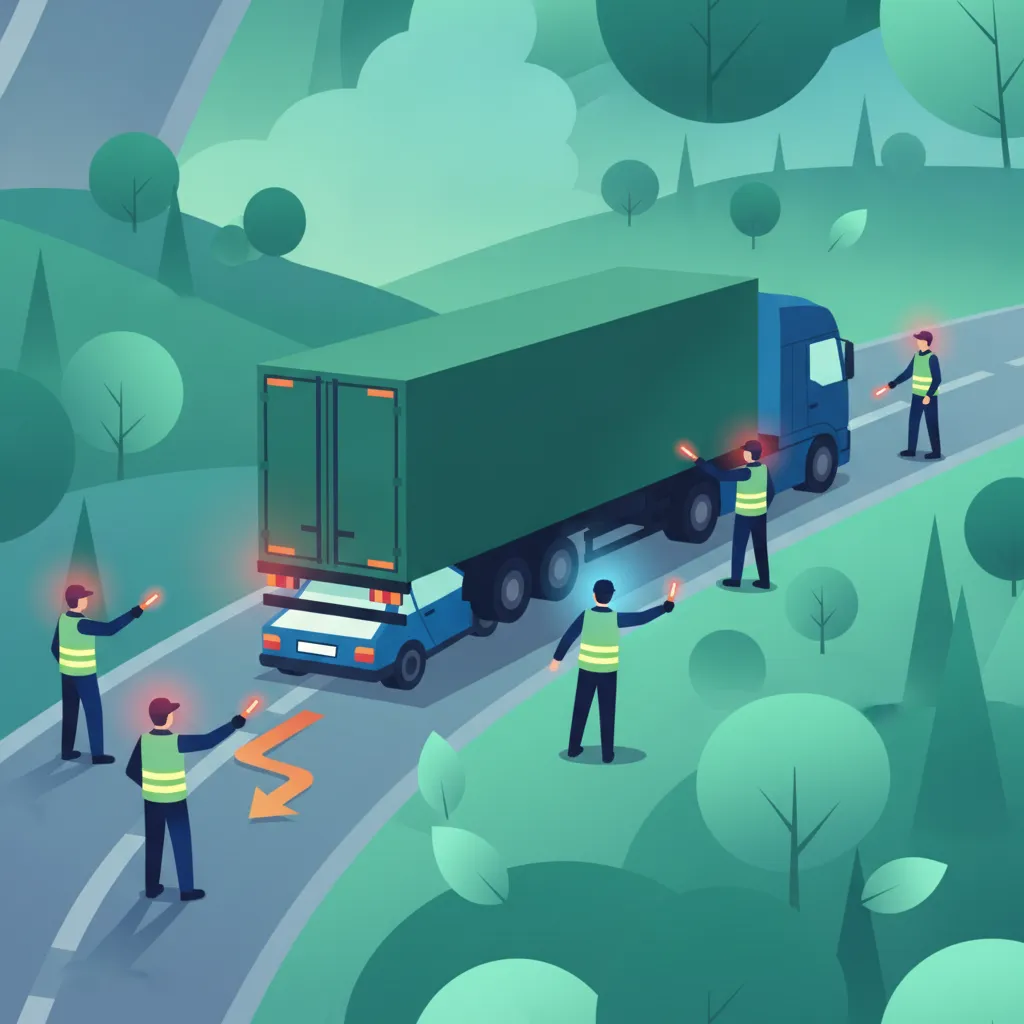
This lesson provides a structured guide for managing the scene of a road traffic accident. It covers the internationally recognized priorities: assess for danger, make the scene safe, send for help by calling emergency services (112), and provide first aid to the injured if trained to do so. It also details the legal requirement to stop and exchange information after being involved in a collision.
This lesson outlines the legal and administrative repercussions of committing traffic violations or being involved in an accident. It covers the system of fines, licence points, and potential licence revocation under Swiss law. Understanding these consequences reinforces the importance of lawful and responsible riding.
This lesson covers the immediate actions to take following a collision. The priorities are to prevent further incidents by securing the scene, to assess the situation for injuries, and to alert the emergency services. You will learn the correct procedures for making the area safe for yourself, your passengers, and other road users.
This lesson emphasizes the broad responsibilities of holding a driver's licence in Switzerland, including adherence to traffic laws and maintaining vehicle roadworthiness. It covers legal obligations related to insurance, registration, and reporting accidents, as well as the consequences of violations. The content reinforces the duty of care drivers owe to all other road users.

The driver is legally responsible for the roadworthiness of their vehicle at the start of and during every journey. This lesson outlines the formal process for reporting any identified defects to the transport manager or maintenance staff. It stresses the critical rule that a vehicle with a known safety-critical defect must not be driven until it has been professionally repaired and declared safe.
Learn essential first aid steps, how to safely secure an accident scene using warning triangles and high-visibility vests, and understand when to call emergency numbers 144 and 112. Crucial driving theory for accident response.
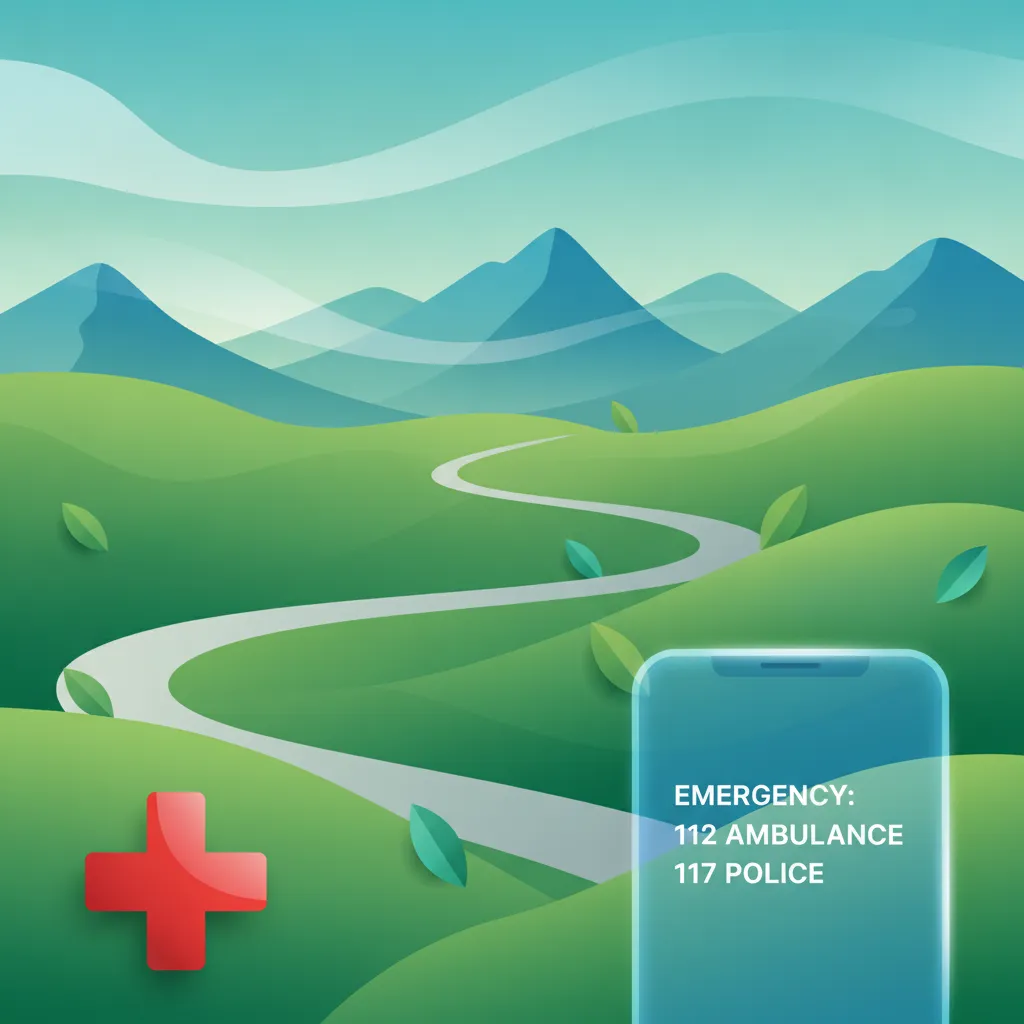
This lesson equips riders with essential knowledge for responding to an accident. It covers how to secure the scene to prevent further incidents, assess any casualties, and provide basic first aid. Crucially, it explains the difference between the general emergency number (112) and the medical emergency number (144) and what information to give the operator.
After stopping for an emergency, making the scene safe is the top priority. This lesson details the procedure: activate hazard warning lights, put on high-visibility clothing before exiting the cab, and place the warning triangle at the correct distance behind the vehicle (at least 100m on motorways). This warns approaching traffic and creates a safer environment for the driver and emergency responders.
This lesson equips riders with essential first-aid knowledge and procedures for managing an accident scene. It covers how to secure the area to prevent further incidents, assess injuries, and provide basic care like controlling bleeding. The steps for effectively communicating with emergency services are also detailed.
This lesson covers the immediate actions to take following a collision. The priorities are to prevent further incidents by securing the scene, to assess the situation for injuries, and to alert the emergency services. You will learn the correct procedures for making the area safe for yourself, your passengers, and other road users.
This lesson clarifies the legal requirements for reporting traffic incidents in Switzerland. It provides guidance on how to interact with police and emergency personnel, providing clear and accurate information. Understanding these procedures helps ensure the incident is documented correctly for legal and insurance purposes.
This lesson provides a structured guide for managing the scene of a road traffic accident. It covers the internationally recognized priorities: assess for danger, make the scene safe, send for help by calling emergency services (112), and provide first aid to the injured if trained to do so. It also details the legal requirement to stop and exchange information after being involved in a collision.
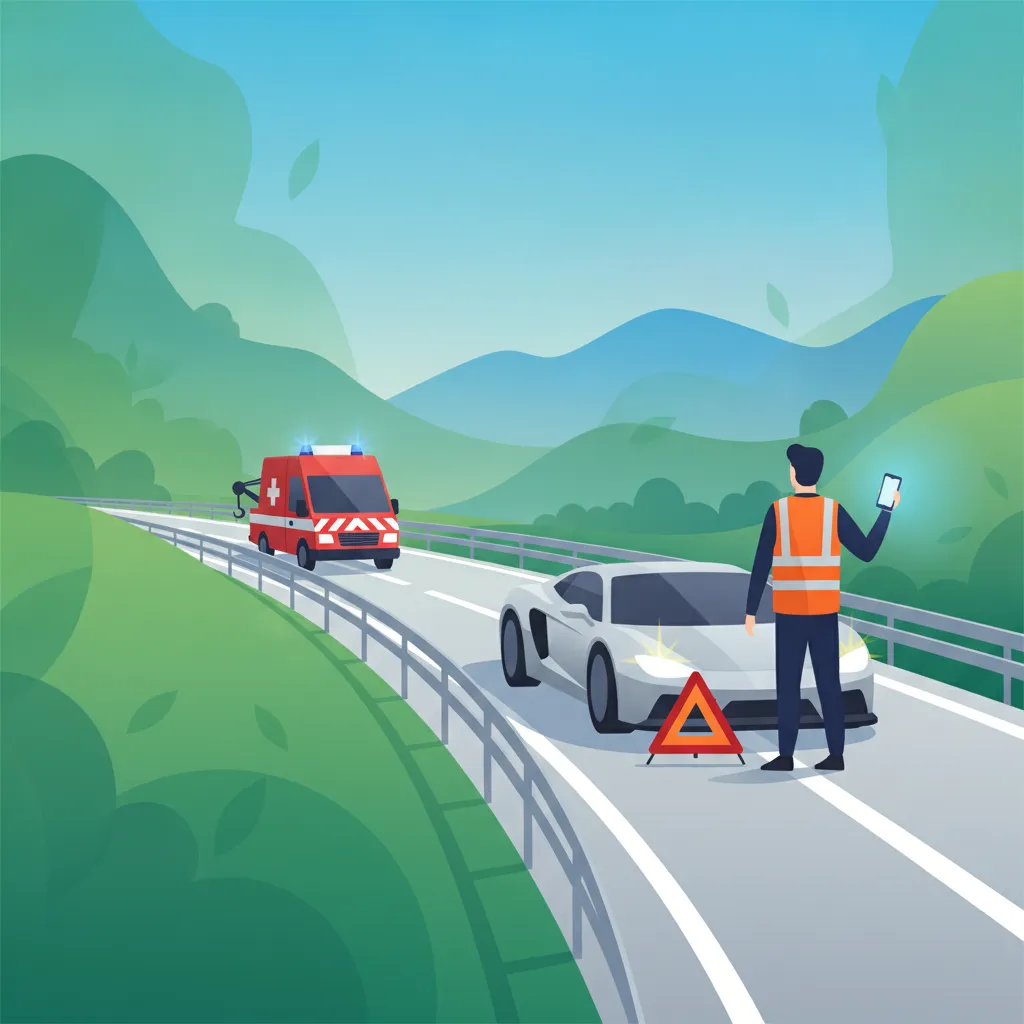
A breakdown can be a dangerous situation, especially on a busy road or motorway. This lesson provides a clear, sequential guide to follow. It includes pulling over to a safe location, activating hazard lights, placing the warning triangle, ensuring passenger safety, and contacting the appropriate services for assistance.
Find clear answers to common questions learners have about Emergency Response: First Aid, Accident Reporting, and Interaction with Emergency Services. Learn how the lesson is structured, which driving theory objectives it supports, and how it fits into the overall learning path of units and curriculum progression in Switzerland. These explanations help you understand key concepts, lesson flow, and exam focused study goals.
You must call the police if anyone is injured, if there is significant property damage, or if the other party involved leaves the scene. Even in minor accidents, calling the police is recommended if there is a dispute regarding fault.
112 is the general European emergency number that connects to the police, while 144 is the dedicated number for medical emergencies and ambulances. Both can be used, but 144 is the most direct for medical support.
On motorways, you should place the warning triangle at least 100 meters behind your vehicle to provide sufficient warning to approaching traffic. On regular roads, 50 meters is usually sufficient.
Yes, under Swiss law, you are required to assist others in an emergency as long as it does not put your own life at significant risk. This includes calling for help and performing basic first aid if you are trained to do so.
Pinpoint specific Swiss traffic rules, road signs, or driving situations you need to master. Use the practice search to start a focused revision session now and build confidence for your official driving theory exam.