
This lesson explores how your physical and mental state directly impacts your driving performance on Swiss roads. You will learn to recognize signs of driver fatigue, the dangers of in-vehicle distractions, and strategies to manage stress, all of which are critical for passing your Category B theory exam and staying safe.

Lesson content overview
Driving a vehicle safely is a complex task that demands continuous attention, quick reaction times, and sound judgment. While external factors like road conditions and traffic are significant, internal human factors such as distraction, fatigue, and stress play an equally critical role in a driver's ability to maintain safety. This lesson, part of your Comprehensive Swiss Driving Theory Course for Category B License, explores these psychological and physiological states, explaining how they impair driving performance and outlining strategies to mitigate their risks. Understanding and managing these human elements is fundamental to enhancing road safety for yourself and others.
Distraction is a primary cause of road accidents worldwide, diverting a driver's attention away from the crucial task of operating a vehicle safely. It can manifest in various forms, each presenting unique dangers. Recognizing these types of distractions is the first step toward effective prevention.
Driver distraction occurs when a driver's focus is shifted from the road and driving task to something else. This can be as simple as adjusting the radio or as complex as engaging in a deep conversation. The human brain has a limited capacity for attention, meaning that multitasking, especially while driving, significantly compromises safety. Even brief moments of inattention can have severe consequences, particularly at higher speeds.
Visual distraction is perhaps the most obvious and easily recognizable form of distraction. It occurs when your eyes leave the road to focus on something else. This could involve looking at a passenger, glancing at a mobile phone, reading a map, or observing roadside advertising. Even a quick glance away can be dangerous; at 100 km/h, a car travels approximately 28 metres per second. A two-second glance away means you have driven nearly 60 metres without seeing the road.
Manual distraction involves taking one or both hands off the steering wheel. Common examples include eating or drinking, adjusting the air conditioning, tuning the radio, or, critically, holding a mobile phone. While modern vehicles often have steering wheel controls to minimise this, any activity that compromises your grip on the wheel or your ability to react swiftly to steering inputs increases risk. Maintaining control of the vehicle requires both hands to be ready for immediate action.
Cognitive distraction is often underestimated because it is not visibly apparent. It occurs when your mind is preoccupied with thoughts or activities unrelated to driving, even if your eyes remain on the road and hands on the wheel. Examples include engaging in an intense conversation with a passenger, daydreaming, planning future events, or thinking about personal problems. While hands-free devices reduce visual and manual distractions, they do not eliminate cognitive load, as the mental engagement of a conversation still draws resources away from monitoring the traffic environment.
Mobile phone use while driving is a significant source of all three types of distraction: visual (looking at the screen), manual (holding the device), and cognitive (engaging in conversation or text comprehension). Recognising this danger, Swiss law has specific regulations regarding mobile phone use.
Swiss Road Traffic Act, Article 54, prohibits the use of handheld mobile phones while driving. This means you cannot hold your phone to make a call, send a text, check directions, or interact with it in any way that requires holding the device.
While hands-free systems (e.g., Bluetooth headsets, integrated car systems) are permitted, it is crucial to understand that they do not eliminate the cognitive distraction. Engaging in a complex or emotionally charged conversation can still impair your focus and reaction time. Drivers should strive to keep conversations short and simple, especially in challenging traffic conditions, and avoid initiating or accepting calls during critical driving moments.
Modern vehicles are equipped with sophisticated in-vehicle systems, including infotainment, navigation, and Advanced Driver Assistance Systems (ADAS). While designed to enhance convenience and safety, these systems can become sources of distraction if not used responsibly.
Mitigation Strategy: Always configure your in-vehicle systems (navigation, radio) before you begin driving. If adjustments are necessary during a journey, use voice commands where available, or pull over safely to make more complex changes.
Fatigue is a dangerous physiological and mental state that significantly impairs driving ability, often with consequences similar to or even worse than driving under the influence of alcohol. It reduces alertness, slows reaction times, and degrades decision-making skills.
Driving while fatigued means your body and mind are not operating at their optimal level. This can be due to a lack of adequate sleep, driving for extended periods without breaks, or performing demanding tasks prior to driving. The risks associated with fatigued driving include difficulty concentrating, impaired judgment, slower reactions to hazards, and even falling asleep at the wheel.
Fatigue can manifest in different forms, each requiring specific attention:
One of the most perilous consequences of severe fatigue is experiencing microsleeps. During a microsleep, a driver briefly loses consciousness, even if their eyes remain open. At 100 km/h, a car travels approximately 28 metres per second. A microsleep lasting just two seconds means you would have travelled 56 metres blindly, completely unaware of your surroundings or any changing road conditions. This is often enough distance to drift into another lane, miss a critical hazard, or even leave the road.
To combat driving fatigue effectively, a proactive approach is essential:
Plan Your Journey: Ensure you are well-rested before starting any long trip. Avoid driving when you would normally be asleep, especially between 02:00 and 06:00, which is the period of the "circadian low" when alertness is naturally lowest.
Take Regular Breaks: During long journeys, stop at least every two hours for a break of 15-20 minutes. Get out of the vehicle, stretch, walk around, and refresh yourself. Even a short nap (20 minutes) can significantly restore alertness.
Stay Hydrated and Eat Lightly: Dehydration can contribute to fatigue. Drink water and avoid heavy meals that can make you feel drowsy.
Recognize Early Signs: Pay attention to signs of fatigue such as yawning, rubbing your eyes, difficulty focusing, drifting lanes, or missing exits. If you experience these symptoms, it's time to take a break.
Avoid Relying on Stimulants: While coffee or energy drinks might provide a temporary boost, they only mask the symptoms of fatigue and do not eliminate the underlying tiredness. The effects are temporary, and you may experience a "crash" later.
Your body's natural sleep-wake cycle, known as the circadian rhythm, dictates periods of high and low alertness. For most people, alertness naturally dips between 02:00 and 06:00, regardless of how much sleep they've had. This makes driving during these hours particularly risky, as your body is biologically programmed for sleep. Shift workers, whose schedules disrupt their natural circadian rhythm, are at an even higher risk of fatigue-related accidents.
Stress is a psychological response to perceived threats or pressures, and it can significantly impact a driver's behavior and judgment. While a certain level of alertness is beneficial, excessive stress can lead to dangerous decisions and aggressive driving.
Driving stress refers to the emotional and physical tension experienced by a driver due to challenging or demanding road situations. It's a natural human response, but when not managed effectively, it can impair concentration, decision-making, and reaction times, potentially leading to road rage or dangerous maneuvers.
Stress on the road can stem from various sources:
The physiological and psychological effects of stress can severely degrade driving performance:
Effective stress management is vital for safe driving. Here are some strategies:
Swiss traffic law is designed to ensure safety by regulating driver behavior, particularly concerning factors that impair attention and control. Drivers are expected to maintain full control of their vehicle and their faculties at all times.
The most direct legal regulation regarding human factors is the prohibition of handheld mobile phone use.
Beyond specific prohibitions, Swiss law places a broad "general duty of care" on all road users.
While specific mandatory rest periods for private Category B drivers are generally advisory rather than punitive, they are strongly encouraged and contribute to fulfilling the general duty of care.
The general duty of care also extends to the use of in-vehicle systems.
Understanding the theoretical aspects of human factors is critical, but it is equally important to recognise how these factors play out in real-world driving situations and their potential consequences.
Failure to manage distraction, fatigue, and stress can lead to direct legal penalties and increased accident risk:
The impact of human factors is often amplified by external conditions. Drivers must adjust their management strategies accordingly.
Human factors pose an elevated risk when interacting with vulnerable road users, who are less protected in a collision.
Effective management of human factors relies on several core principles:
Understanding how human factors influence driving performance is a cornerstone of safe driving and essential for your Swiss Category B theoretical exam. By applying the principles discussed in this lesson, you can significantly reduce your risk of accidents and become a more responsible road user.
This lesson covers three critical human factors affecting Swiss drivers: distraction (visual, manual, and cognitive), fatigue (acute, chronic, and monotonous types including microsleeps), and stress. It details how mobile phone use under Swiss Article 54 is illegal when handheld, how reaction times degrade proportionally to speed, and how circadian rhythms make night driving inherently riskier. Effective management requires planning breaks every two hours, setting up all vehicle systems before driving, and maintaining emotional regulation to avoid aggressive responses. Understanding these factors is essential for passing the Swiss Category B theory exam and developing the situational awareness needed for safe driving.
A short set of high-value points that capture the most important learning from this lesson.
Driver distraction occurs in three forms: visual (eyes off road), manual (hands off wheel), and cognitive (mind off driving), each impairing safety independently or combined.
Swiss law under Article 54 of the Road Traffic Act prohibits holding any mobile phone while driving, though hands-free systems are permitted but do not eliminate cognitive distraction.
Fatigue degrades driving ability to levels comparable to or worse than alcohol impairment, with microsleeps of just 2 seconds at 100 km/h covering 56 metres blind.
The body's circadian rhythm creates natural alertness dips between 02:00 and 06:00, making night driving significantly riskier regardless of sleep quality.
Stress, fatigue, and distraction each amplify each other, narrowing attention to 'tunnel vision' and increasing reaction times while degrading decision-making.
Explore all units and lessons included in this driving theory course.
A two-second glance at a phone at 100 km/h means travelling approximately 60 metres without seeing the road.
Take a break of at least 15-20 minutes every two hours during long journeys, and avoid driving between 02:00 and 06:00 when circadian alertness is lowest.
Hands-free mobile use reduces visual and manual distraction but does not eliminate cognitive load from the conversation itself.
Swiss law imposes a general duty of care requiring drivers to manage their physical and mental state, including fatigue and stress, at all times.
ADAS features like lane-keep assist are safety aids, not substitutes for driver attention; over-reliance can cause cognitive distraction.
Assuming hands-free phone use is completely safe because it eliminates visual and manual distraction, ignoring persistent cognitive load.
Relying on coffee or energy drinks to counteract fatigue, when these only mask symptoms temporarily without addressing underlying tiredness.
Believing that being stopped at a red light exempts holding a phone for any interaction, when the Swiss prohibition applies whenever the vehicle is in motion.
Neglecting to configure navigation or infotainment before starting a trip, then attempting to adjust these systems while driving in complex traffic.
Overestimating ability to fight off drowsiness by 'pushing through', when microsleeps can occur without the driver noticing before danger arises.
Lesson content overview
A short set of high-value points that capture the most important learning from this lesson.
Driver distraction occurs in three forms: visual (eyes off road), manual (hands off wheel), and cognitive (mind off driving), each impairing safety independently or combined.
Swiss law under Article 54 of the Road Traffic Act prohibits holding any mobile phone while driving, though hands-free systems are permitted but do not eliminate cognitive distraction.
Fatigue degrades driving ability to levels comparable to or worse than alcohol impairment, with microsleeps of just 2 seconds at 100 km/h covering 56 metres blind.
The body's circadian rhythm creates natural alertness dips between 02:00 and 06:00, making night driving significantly riskier regardless of sleep quality.
Stress, fatigue, and distraction each amplify each other, narrowing attention to 'tunnel vision' and increasing reaction times while degrading decision-making.
Explore all units and lessons included in this driving theory course.
A two-second glance at a phone at 100 km/h means travelling approximately 60 metres without seeing the road.
Take a break of at least 15-20 minutes every two hours during long journeys, and avoid driving between 02:00 and 06:00 when circadian alertness is lowest.
Hands-free mobile use reduces visual and manual distraction but does not eliminate cognitive load from the conversation itself.
Swiss law imposes a general duty of care requiring drivers to manage their physical and mental state, including fatigue and stress, at all times.
ADAS features like lane-keep assist are safety aids, not substitutes for driver attention; over-reliance can cause cognitive distraction.
Assuming hands-free phone use is completely safe because it eliminates visual and manual distraction, ignoring persistent cognitive load.
Relying on coffee or energy drinks to counteract fatigue, when these only mask symptoms temporarily without addressing underlying tiredness.
Believing that being stopped at a red light exempts holding a phone for any interaction, when the Swiss prohibition applies whenever the vehicle is in motion.
Neglecting to configure navigation or infotainment before starting a trip, then attempting to adjust these systems while driving in complex traffic.
Overestimating ability to fight off drowsiness by 'pushing through', when microsleeps can occur without the driver noticing before danger arises.
Explore search topics learners often look for when studying Human Factors: Distraction, Fatigue, and Stress. These topics reflect common questions about road rules, driving situations, safety guidance, and lesson level theory preparation for learners in Switzerland.
Browse additional driving theory lessons that cover connected traffic rules, road signs, and common driving situations related to this topic. Improve your understanding of how different rules interact across everyday traffic scenarios.
Explore the critical impact of distraction, fatigue, and stress on your driving ability. Understand the psychological and physiological effects and learn effective management strategies for safer driving in Switzerland.

Fatigue is a major cause of accidents in the transport industry. This lesson teaches drivers to identify the early warning signs of tiredness, such as frequent yawning, heavy eyelids, and difficulty concentrating. It emphasizes that the only effective cure for fatigue is sleep and reinforces the legal and personal responsibility to take required breaks and never drive while tired.
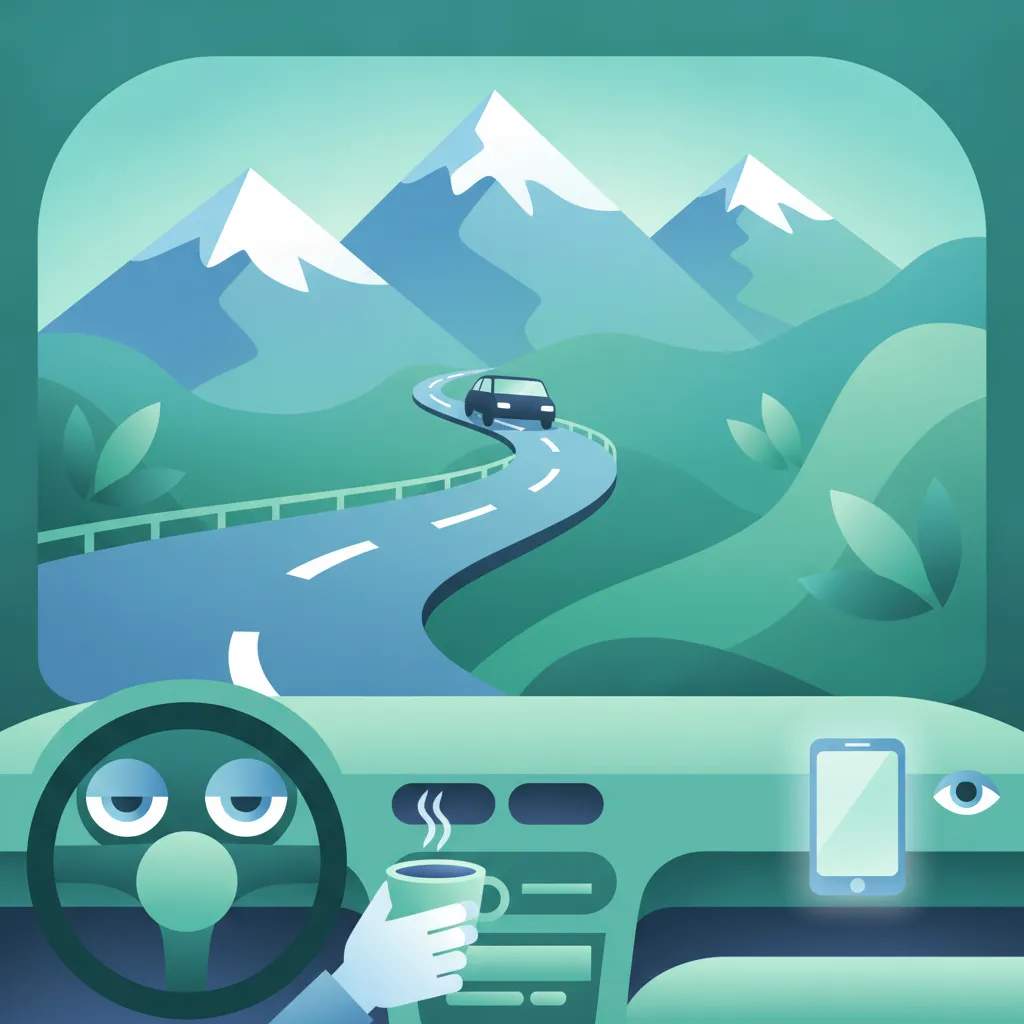
Fatigue is a major cause of serious accidents involving professional drivers. This lesson teaches you to recognize the early warning signs of tiredness in yourself. It covers the Swiss rules on driving hours and rest periods, and provides practical strategies for staying alert and avoiding distractions while driving.

This lesson explains how various human factors can negatively impact a rider's performance. It details the effects of fatigue, alcohol, and certain medications on reaction time, judgment, and coordination. The content emphasizes the importance of self-awareness and making the responsible decision not to ride when impaired.

Tourists are often unfamiliar with local traffic rules and may be distracted by sightseeing, leading to unpredictable behavior. This lesson teaches drivers to be extra cautious in these zones. It focuses on anticipating sudden crossings, being aware of other tour vehicles, and maintaining a large safety bubble around the bus.

This lesson introduces defensive driving principles, focusing on hazard anticipation, continuous scanning, and proactive positioning. You will learn how to anticipate potential hazards by observing traffic patterns and maintaining situational awareness. Emphasis is placed on proactive speed management to avoid dangerous situations before they arise.

This lesson focuses on the impact of alcohol, drugs, and medication on driving ability. You will learn the legal blood alcohol concentration limits and the zero-tolerance policy for beginner drivers. The content also covers how certain medications may affect performance and the importance of declaring health conditions that could impair safe driving.

This lesson examines the impact of weather and visibility on driving safety and speed selection. It covers how fog, rain, snow, and darkness affect visibility and reaction times, providing guidelines on adjusting speed. It also includes strategies for improving visibility, such as proper headlamp use, to ensure you can adapt to varying weather conditions.

For professional drivers, the rules regarding intoxicating substances are extremely strict. This lesson explains the severe effects of alcohol and illegal drugs on driving ability and the serious legal consequences of being caught under their influence. It also highlights the importance of checking with a doctor or pharmacist whether any prescribed or over-the-counter medication can cause drowsiness or otherwise impair driving.

This lesson focuses on warning signs that alert drivers to potential hazards ahead, such as curves, steep descents, and roadwork zones. You will understand how these signs prompt anticipatory driving behavior, allowing for adjustments in speed and position. The content also discusses the typical placement of warning signs to help you react safely to changing conditions.

This lesson examines the impact of various weather conditions on driving safety. It explains how to adjust speed in low visibility and the risks of aquaplaning in heavy rain. The content also covers using snow chains in snowy conditions, handling icy surfaces, and dealing with strong winds, particularly on bridges and open roads.
Understand Swiss legal regulations concerning driver distraction and fatigue, and explore real-world scenarios to see the consequences of impaired driving on the road and for your license.
Fatigue is a major cause of accidents in the transport industry. This lesson teaches drivers to identify the early warning signs of tiredness, such as frequent yawning, heavy eyelids, and difficulty concentrating. It emphasizes that the only effective cure for fatigue is sleep and reinforces the legal and personal responsibility to take required breaks and never drive while tired.
Fatigue is a major cause of serious accidents involving professional drivers. This lesson teaches you to recognize the early warning signs of tiredness in yourself. It covers the Swiss rules on driving hours and rest periods, and provides practical strategies for staying alert and avoiding distractions while driving.
For professional drivers, the rules regarding intoxicating substances are extremely strict. This lesson explains the severe effects of alcohol and illegal drugs on driving ability and the serious legal consequences of being caught under their influence. It also highlights the importance of checking with a doctor or pharmacist whether any prescribed or over-the-counter medication can cause drowsiness or otherwise impair driving.
This lesson explains how various human factors can negatively impact a rider's performance. It details the effects of fatigue, alcohol, and certain medications on reaction time, judgment, and coordination. The content emphasizes the importance of self-awareness and making the responsible decision not to ride when impaired.
This lesson outlines the legal repercussions for breaking traffic laws in Switzerland. It details the system of fines and administrative measures, including the potential for license withdrawal for serious offenses. The content also explains a rider's legal duties after being involved in an accident, including reporting and insurance obligations.

This lesson focuses on general driving safety in areas with a high concentration of children. It stresses the importance of significantly reducing speed, being prepared for unexpected events, and scanning for children between parked cars. The driver must exhibit maximum vigilance in these high-risk environments at all times.

For professional drivers, traffic violations can have career-altering consequences beyond standard fines. This lesson details the heightened penalties for infringements such as speeding, overloading, insecure loads, and violations of driving time regulations. It outlines the process of warnings, license suspension or withdrawal, and potential criminal liability, emphasizing the importance of strict legal compliance in the transport industry.
This lesson focuses on the impact of alcohol, drugs, and medication on driving ability. You will learn the legal blood alcohol concentration limits and the zero-tolerance policy for beginner drivers. The content also covers how certain medications may affect performance and the importance of declaring health conditions that could impair safe driving.
This lesson outlines the legal and administrative repercussions of committing traffic violations or being involved in an accident. It covers the system of fines, licence points, and potential licence revocation under Swiss law. Understanding these consequences reinforces the importance of lawful and responsible riding.
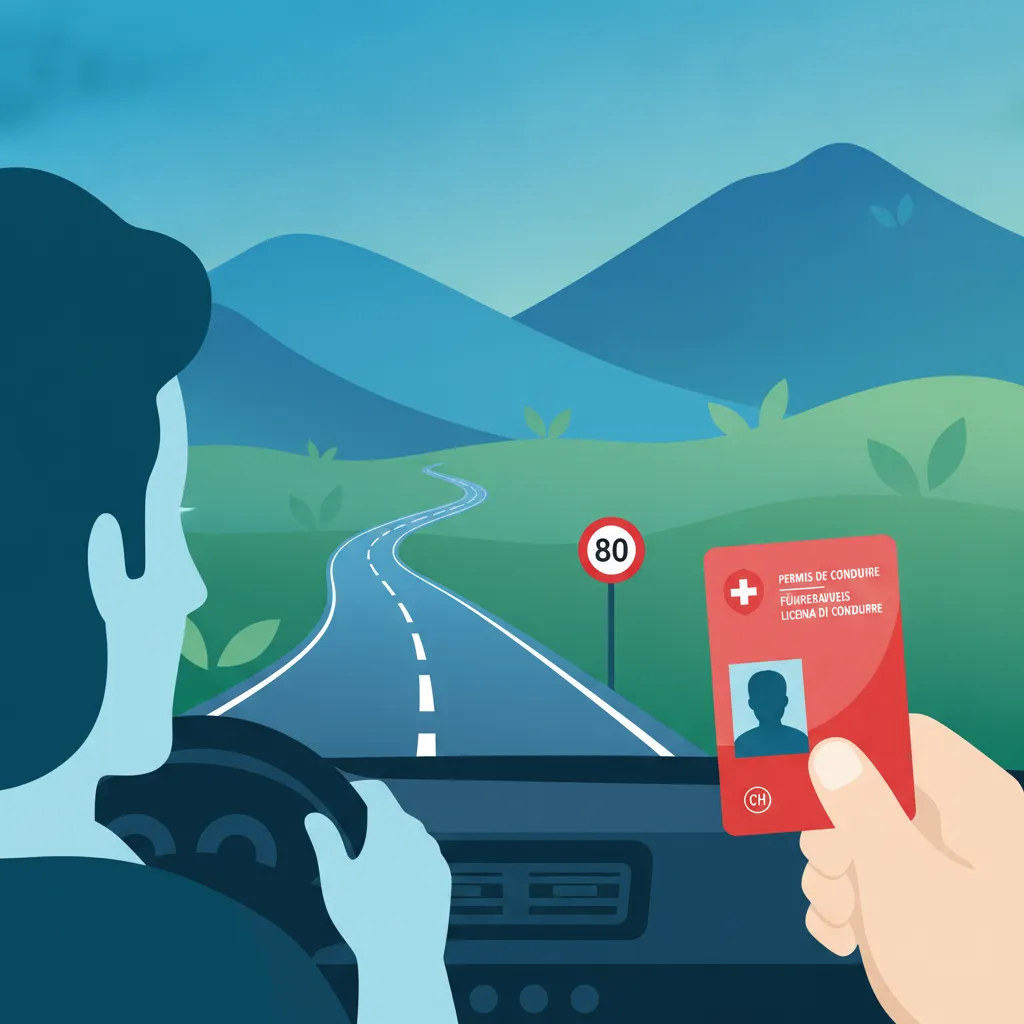
This lesson emphasizes the broad responsibilities of holding a driver's licence in Switzerland, including adherence to traffic laws and maintaining vehicle roadworthiness. It covers legal obligations related to insurance, registration, and reporting accidents, as well as the consequences of violations. The content reinforces the duty of care drivers owe to all other road users.
Find clear answers to common questions learners have about Human Factors: Distraction, Fatigue, and Stress. Learn how the lesson is structured, which driving theory objectives it supports, and how it fits into the overall learning path of units and curriculum progression in Switzerland. These explanations help you understand key concepts, lesson flow, and exam focused study goals.
Fatigue is a major contributor to road accidents. The exam tests your awareness of the signs of sleepiness and your knowledge of legal and practical ways to manage it, ensuring you know when it is unsafe to continue driving.
Distraction, such as using a phone or adjusting vehicle settings, diverts your attention from the traffic environment. This increases your perception-reaction time significantly, which can be the difference between avoiding an accident or being involved in one.
Yes, using a handheld mobile device while driving is strictly prohibited and can lead to heavy fines and entries in your traffic record. This lesson emphasizes the cognitive distraction caused by any mobile use, even hands-free, which impacts your focus.
The best approach is to maintain a safe distance, anticipate the actions of others, and avoid aggressive responses. Learning to acknowledge your stress and choosing to remain calm ensures that your decision-making stays sharp and defensive.
Pinpoint specific Swiss traffic rules, road signs, or driving situations you need to master. Use the practice search to start a focused revision session now and build confidence for your official driving theory exam.