
This lesson provides critical knowledge on how to respond if you encounter or are involved in a road accident while riding your moped or e-bike. Understanding these procedures is a mandatory component of Swiss traffic theory, ensuring you can act safely and decisively to help yourself and others in an emergency.
Lesson content overview
As a moped (Category M) rider in Switzerland, understanding how to react effectively to a road accident is crucial. This lesson provides essential knowledge on securing an accident scene, assessing casualties, providing basic first aid, and correctly contacting emergency services. Your prompt and appropriate actions can significantly prevent further injury, reduce trauma severity, and potentially save lives. This knowledge builds on your understanding of traffic safety and legal responsibilities, preparing you to handle emergency situations with confidence.
When an accident occurs, your immediate priority shifts from riding to ensuring safety and providing assistance. Swiss traffic law places a clear obligation on drivers to stop, secure the scene, and render aid. Ignoring these duties can lead to severe legal penalties. This chapter will guide you through the systematic steps required to manage an accident situation effectively, focusing on both practical first aid and correct communication with professional responders.
Remember the "ABC" priority in casualty assessment: Airway, Breathing, Circulation. This systematic approach helps you address the most life-threatening conditions first.
Responding to an accident requires a structured approach. The sequence of actions is critical: first, secure the scene to prevent further incidents, then assess and care for any casualties, and finally, contact emergency services with precise information.
The very first action you must take after an accident is to ensure the scene is safe. This protects you, any casualties, and other road users from additional collisions or injuries. Secondary accidents are often more severe than the initial incident.
If you are involved in or witness an accident, pull your moped over to the side of the road or a safe spot as quickly and safely as possible. Avoid stopping directly in the traffic lane unless absolutely necessary to prevent a hazard.
Immediately after stopping, switch on your hazard lights. These flashing lights warn other drivers of a potential obstruction or danger ahead, especially in low visibility conditions or at night. This simple step significantly increases your visibility and signals an emergency.
A warning triangle is a reflective sign that must be placed to alert oncoming traffic. The placement distance depends on the type of road:
Safely pull your moped to the side of the road, away from immediate traffic flow.
Activate your moped's hazard lights to warn other road users.
Place your warning triangle at the appropriate distance (30m urban, 50m open road) behind the accident site to alert oncoming traffic.
Ensure your own safety before approaching any casualties.
Once the scene is secured, your next crucial step is to assess any casualties. This rapid initial evaluation, known as the Primary Survey, focuses on identifying and addressing life-threatening conditions using the ABC mnemonic: Airway, Breathing, Circulation.
Approach the casualty cautiously and try to get a response. Ask loudly, "Are you okay? Can you hear me?" Gently tap their shoulder. If they respond, try to determine what happened and if they are in pain. If there is no response, they are unconscious.
Always assume a potential spinal injury in an unconscious accident victim, especially if they were involved in a fall or collision. Avoid unnecessary movement.
An open airway is vital for breathing. If the casualty is unconscious, their tongue might fall back and block their airway.
Once the airway is open, check if the person is breathing normally.
After confirming airway and breathing, check for severe bleeding. Large blood loss can be life-threatening.
Basic first aid aims to preserve life, prevent further injury, and promote recovery until professional medical help arrives. Your actions should be calm and purposeful, following the principles of your primary survey.
For an unconscious person, an open airway is paramount. If you've already performed the head-tilt chin-lift (or jaw-thrust for suspected spinal injury) during assessment, maintain it. Ensure the position keeps the airway clear without causing further injury.
Direct pressure is the most effective way to control external bleeding.
If a casualty is unconscious but breathing normally, place them in the recovery position. This stable side-lying position helps keep their airway open and prevents them from choking on vomit or fluids.
Kneel beside the casualty and ensure both their legs are straight.
Place the arm nearest to you at a right angle to their body, with their hand palm-up.
Bring their other arm across their chest and hold the back of their hand against the cheek nearest to you.
With your other hand, grasp the far leg just above the knee and pull it up, keeping the foot on the ground.
Carefully roll the casualty towards you onto their side by pulling on the raised knee.
Adjust the upper leg so that both the hip and knee are bent at right angles.
Tilt the head back to ensure the airway remains open.
Continue to monitor the casualty's responsiveness, breathing, and any bleeding until emergency services arrive. Note any changes in their condition to report to the paramedics.
Knowing the correct emergency number to call is vital for a rapid and appropriate response. In Switzerland, there are two primary numbers to be aware of: 112 and 144.
The pan-European general emergency number, connecting callers to police, fire, or medical services.
You should call 112 for any general emergency that requires immediate assistance from police, fire brigade, or medical services. This includes:
The direct medical emergency number in Switzerland, specifically for calling an ambulance and medical personnel.
You should call 144 when there is a clear medical emergency that requires an ambulance and specialized medical personnel. This is the direct line for urgent medical assistance. Use 144 for:
While 112 can connect you to medical services, calling 144 directly for a medical emergency can sometimes result in a slightly faster dispatch of an ambulance, as it bypasses the initial triage of a general emergency operator. If in doubt, 112 is always a safe choice, but for clear medical emergencies, 144 is often preferred in Switzerland.
When you call an emergency number, the dispatcher needs precise and calm information to send the correct resources quickly. Prepare yourself to provide the following essential details:
Exact Location: Provide the precise address, road name, kilometer marker, nearest landmark, or cross-street. If you're unsure, look for street signs or use GPS on your phone.
Nature of the Incident: Briefly describe what happened (e.g., "moped-car collision," "cyclist fell").
Number of Casualties: State how many people are injured.
Condition of Casualties: Describe their state (e.g., "one unconscious but breathing," "one with severe leg bleeding," "conscious and complaining of back pain").
Any Immediate Hazards: Mention potential dangers like fire, leaking fuel, unstable vehicles, or traffic blockage.
Your Name and Contact Number: In case they need to call you back.
Stay on the line until the operator tells you it's okay to hang up. They may have further questions or provide instructions.
In Switzerland, specific laws govern a driver's actions after an accident. Adhering to these obligations is not only a moral duty but a legal requirement.
According to Swiss Road Traffic Act Article 61 (or equivalent), any driver involved in an accident must stop immediately, secure the scene, and, if necessary, provide assistance. This obligation applies regardless of who is at fault. Failure to stop or secure the scene can lead to severe penalties.
Beyond securing the scene, drivers have a duty to assist injured persons, provided they can do so without endangering themselves. This includes performing basic first aid and contacting emergency services. Leaving a casualty unattended, assuming someone else will help, is a serious offense.
While not explicitly a "rule" for all accidents, contacting emergency services promptly and using the correct numbers (112 or 144) is an integral part of your duty to assist. It ensures that professional help arrives as quickly as possible, fulfilling your legal and moral responsibilities.
Even with good intentions, mistakes can happen in a stressful emergency situation. Being aware of common pitfalls can help you respond more effectively.
Emergency situations are rarely textbook. Your actions must adapt to the specific context of the accident.
When accidents involve pedestrians, cyclists, or other vulnerable road users, extra care is paramount. They are more exposed to injury. Ensure they are moved to a safe location away from traffic if possible and if their injuries permit movement without worsening their condition. Prioritize their assessment and care.
Being prepared for an accident means knowing what to do, what numbers to call, and your legal responsibilities.
Your ability to remain calm and follow these steps can make a profound difference in the outcome of an accident, both for the casualties and for your own legal standing.
This lesson teaches Swiss moped riders how to respond effectively to road accidents, beginning with scene safety through hazard lights and warning triangle placement at specific distances. Learners are guided through the ABC primary survey method to assess and prioritize casualty care, including airway management techniques, controlling severe bleeding, and placing unconscious breathing victims in the recovery position. The critical distinction between emergency numbers 112 (general emergencies including police and fire) and 144 (direct medical ambulance line) is emphasized, with guidance on exactly what information to communicate to dispatchers. Swiss traffic law obligations are clearly outlined, making this content essential preparation for both the theory exam and real-world emergency response.
A short set of high-value points that capture the most important learning from this lesson.
Secure the accident scene immediately using hazard lights and warning triangle placed at least 30m in urban areas or 50m on open roads
Assess casualties using the ABC method: check Airway first, then Breathing, then Circulation for life-threatening conditions
Call 144 directly for medical emergencies requiring an ambulance; use 112 for general emergencies or when unsure which service is needed
Provide precise information to emergency operators including exact location, number and condition of casualties, and any hazards present
Swiss law requires all drivers to stop, secure the scene, and provide assistance regardless of fault in any accident
Explore all units and lessons included in this driving theory course.
Warning triangle distance: 30 meters in urban areas, 50 meters on open roads and highways
ABC priority: Airway must be open before checking Breathing, which must be confirmed before assessing Circulation
Use jaw-thrust instead of head-tilt chin-lift when spinal injury is suspected to avoid neck movement
For severe bleeding, apply firm direct pressure and elevate the limb above heart level without removing embedded objects
Stay on the line with emergency operators until instructed to hang up—they may have additional questions or instructions
Placing the warning triangle too close (e.g., within 10 meters on a highway), giving following traffic insufficient reaction time
Moving an unconscious casualty without checking for spinal injury, potentially causing permanent damage
Calling 112 for a severe medical emergency when 144 would directly dispatch an ambulance faster
Providing vague location information like 'somewhere on the main road,' which delays emergency services from finding the scene
Placing an unconscious but breathing person on their back without using the recovery position, risking airway obstruction from vomit
Lesson content overview
A short set of high-value points that capture the most important learning from this lesson.
Secure the accident scene immediately using hazard lights and warning triangle placed at least 30m in urban areas or 50m on open roads
Assess casualties using the ABC method: check Airway first, then Breathing, then Circulation for life-threatening conditions
Call 144 directly for medical emergencies requiring an ambulance; use 112 for general emergencies or when unsure which service is needed
Provide precise information to emergency operators including exact location, number and condition of casualties, and any hazards present
Swiss law requires all drivers to stop, secure the scene, and provide assistance regardless of fault in any accident
Explore all units and lessons included in this driving theory course.
Warning triangle distance: 30 meters in urban areas, 50 meters on open roads and highways
ABC priority: Airway must be open before checking Breathing, which must be confirmed before assessing Circulation
Use jaw-thrust instead of head-tilt chin-lift when spinal injury is suspected to avoid neck movement
For severe bleeding, apply firm direct pressure and elevate the limb above heart level without removing embedded objects
Stay on the line with emergency operators until instructed to hang up—they may have additional questions or instructions
Placing the warning triangle too close (e.g., within 10 meters on a highway), giving following traffic insufficient reaction time
Moving an unconscious casualty without checking for spinal injury, potentially causing permanent damage
Calling 112 for a severe medical emergency when 144 would directly dispatch an ambulance faster
Providing vague location information like 'somewhere on the main road,' which delays emergency services from finding the scene
Placing an unconscious but breathing person on their back without using the recovery position, risking airway obstruction from vomit
Explore search topics learners often look for when studying First Aid Basics and Emergency Contact Numbers. These topics reflect common questions about road rules, driving situations, safety guidance, and lesson level theory preparation for learners in Switzerland.
Browse additional driving theory lessons that cover connected traffic rules, road signs, and common driving situations related to this topic. Improve your understanding of how different rules interact across everyday traffic scenarios.
Learn the essential steps for securing a road accident scene in Switzerland and providing immediate first aid. This covers scene safety, casualty assessment, and initial care until professional help arrives, crucial for Category M riders.
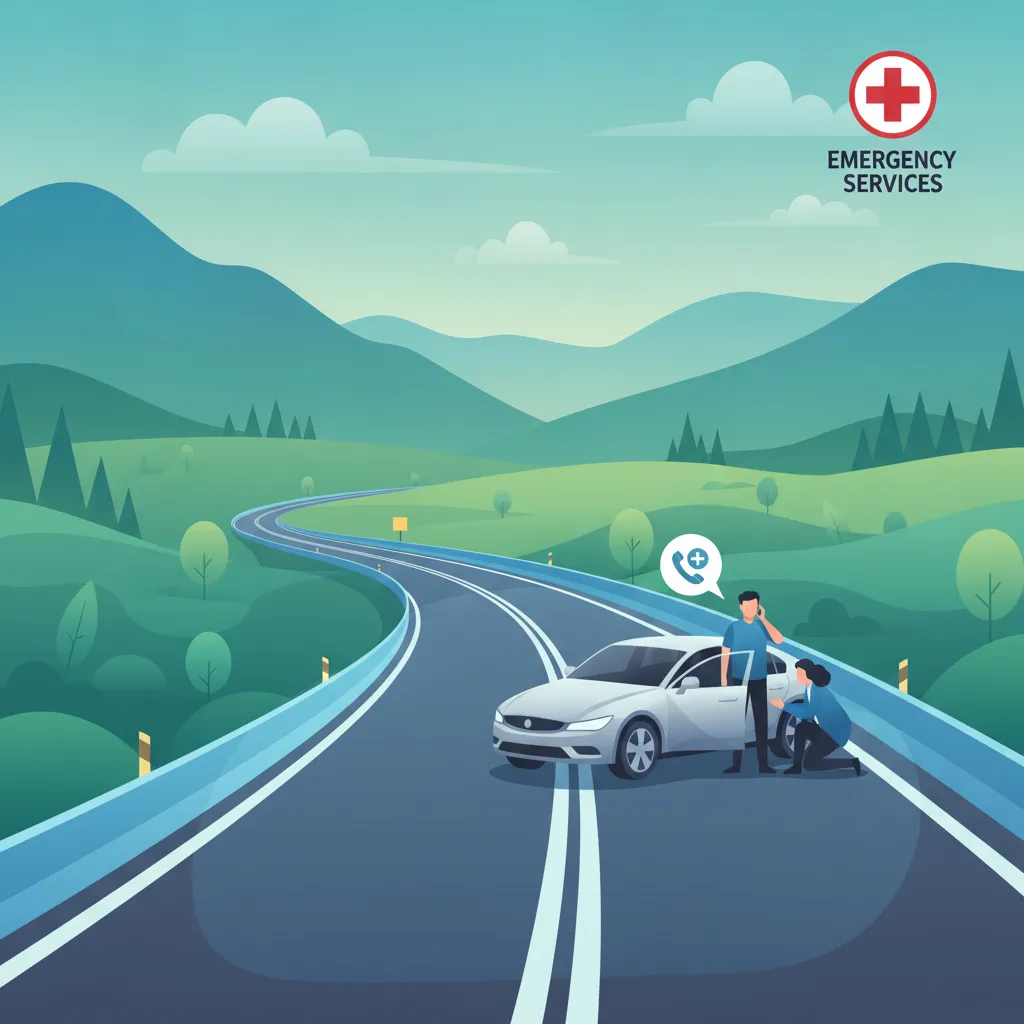
This lesson covers essential first aid skills and the procedures for reporting accidents in Switzerland. It details the use of emergency numbers 112 and 144, the correct placement of warning triangles, and the use of high-visibility vests. The content outlines the steps for securing an accident scene, providing assistance, and coordinating with emergency services.
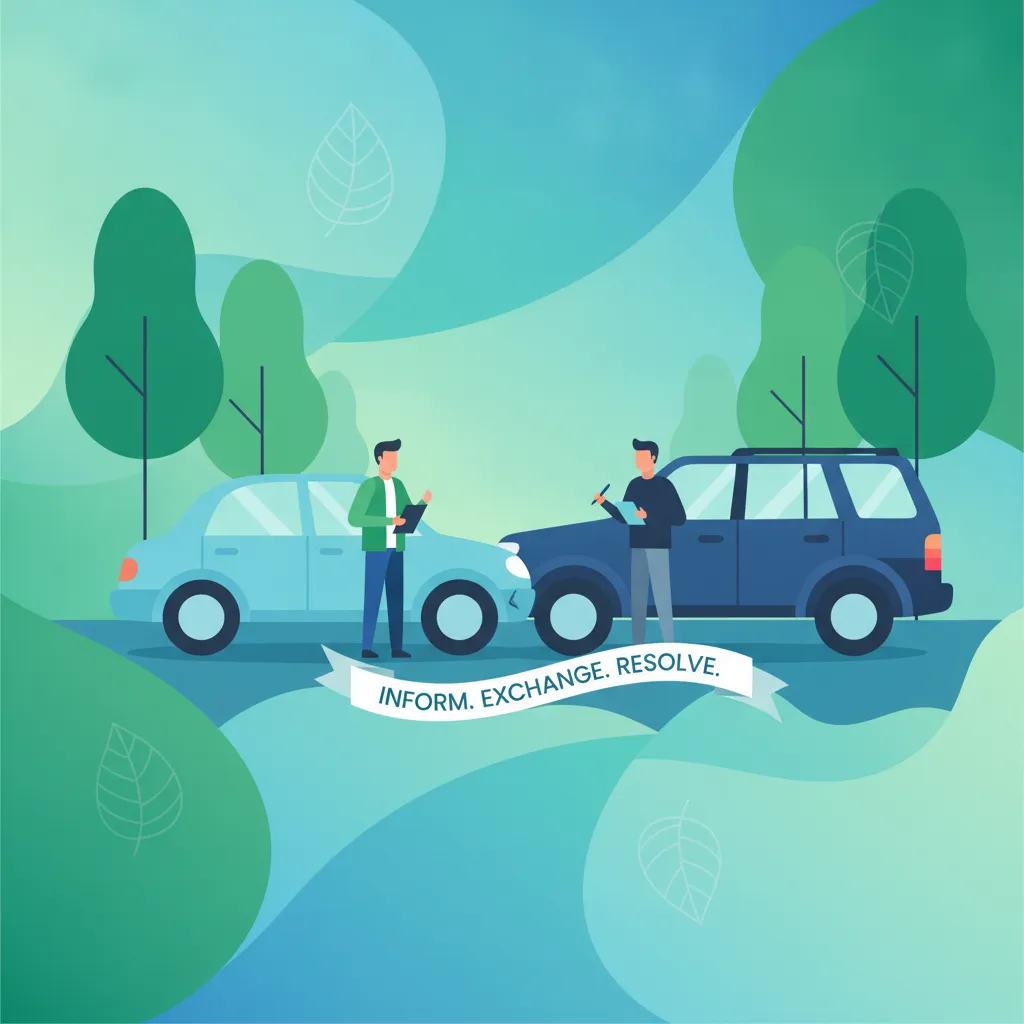
This lesson covers the immediate actions to take following a collision. The priorities are to prevent further incidents by securing the scene, to assess the situation for injuries, and to alert the emergency services. You will learn the correct procedures for making the area safe for yourself, your passengers, and other road users.
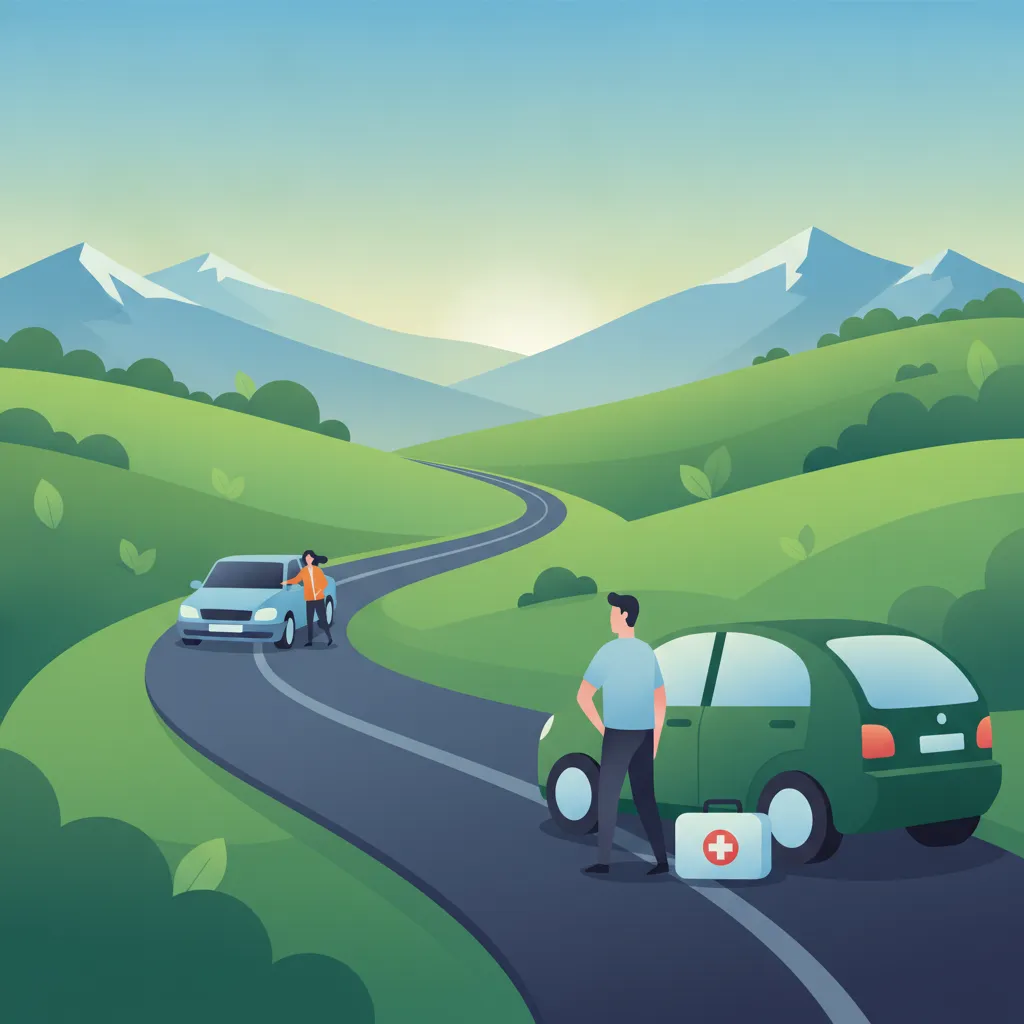
This lesson equips riders with essential first-aid knowledge and procedures for managing an accident scene. It covers how to secure the area to prevent further incidents, assess injuries, and provide basic care like controlling bleeding. The steps for effectively communicating with emergency services are also detailed.
After stopping for an emergency, making the scene safe is the top priority. This lesson details the procedure: activate hazard warning lights, put on high-visibility clothing before exiting the cab, and place the warning triangle at the correct distance behind the vehicle (at least 100m on motorways). This warns approaching traffic and creates a safer environment for the driver and emergency responders.
This lesson provides a structured guide for managing the scene of a road traffic accident. It covers the internationally recognized priorities: assess for danger, make the scene safe, send for help by calling emergency services (112), and provide first aid to the injured if trained to do so. It also details the legal requirement to stop and exchange information after being involved in a collision.
This lesson clarifies the legal requirements for reporting traffic incidents in Switzerland. It provides guidance on how to interact with police and emergency personnel, providing clear and accurate information. Understanding these procedures helps ensure the incident is documented correctly for legal and insurance purposes.

Losing part of a load on the road creates an immediate and serious hazard for other drivers. This lesson outlines the driver's responsibilities: stop in a safe place, assess the situation from a safe distance, and immediately alert the police. The driver's primary role is to warn other road users and not to attempt to retrieve the load from a live carriageway.
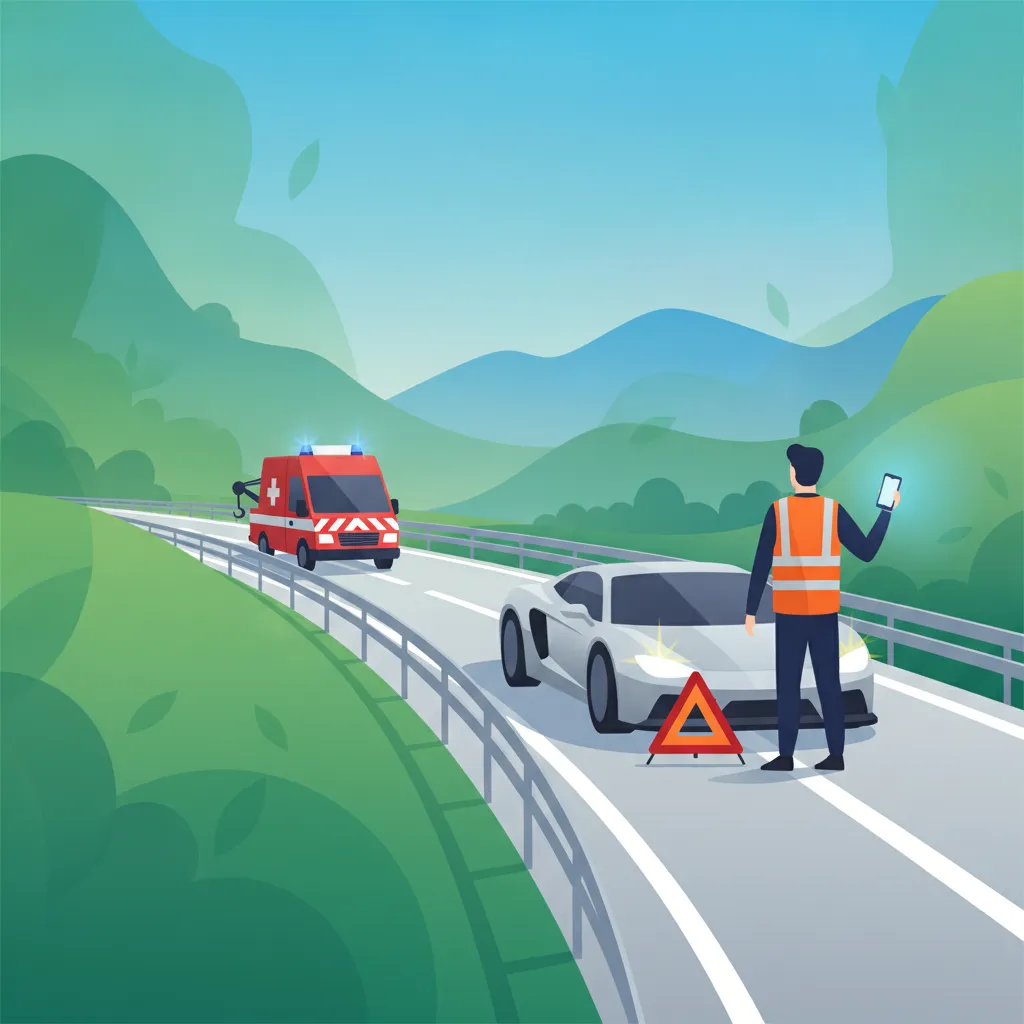
A breakdown can be a dangerous situation, especially on a busy road or motorway. This lesson provides a clear, sequential guide to follow. It includes pulling over to a safe location, activating hazard lights, placing the warning triangle, ensuring passenger safety, and contacting the appropriate services for assistance.
This lesson provides clear, actionable steps for managing a motorcycle breakdown safely. It covers moving the vehicle to a safe location, making yourself visible to other traffic with hazard lights and reflective gear, and contacting breakdown services. Following a proper protocol minimizes risk in a vulnerable situation.
This lesson outlines the steps a driver should take when a passenger becomes ill or requires medical attention. It covers safely stopping the vehicle, making an emergency call to the correct number (144/112), and providing basic assistance until professional help arrives. The focus is on a calm, systematic response to a stressful situation.
Understand the critical difference between Switzerland's emergency numbers 112 and 144. Learn what information to provide emergency operators for a rapid and accurate response after an accident.
This lesson covers essential first aid skills and the procedures for reporting accidents in Switzerland. It details the use of emergency numbers 112 and 144, the correct placement of warning triangles, and the use of high-visibility vests. The content outlines the steps for securing an accident scene, providing assistance, and coordinating with emergency services.
Effective communication is vital during an emergency. This lesson teaches you what critical information to provide when calling emergency services, including precise location and the nature of the incident. It also covers techniques for communicating with passengers to provide reassurance and instruction, helping to maintain calm and order.
This lesson clarifies the legal requirements for reporting traffic incidents in Switzerland. It provides guidance on how to interact with police and emergency personnel, providing clear and accurate information. Understanding these procedures helps ensure the incident is documented correctly for legal and insurance purposes.
After stopping for an emergency, making the scene safe is the top priority. This lesson details the procedure: activate hazard warning lights, put on high-visibility clothing before exiting the cab, and place the warning triangle at the correct distance behind the vehicle (at least 100m on motorways). This warns approaching traffic and creates a safer environment for the driver and emergency responders.
This lesson outlines the steps a driver should take when a passenger becomes ill or requires medical attention. It covers safely stopping the vehicle, making an emergency call to the correct number (144/112), and providing basic assistance until professional help arrives. The focus is on a calm, systematic response to a stressful situation.

This lesson focuses on general driving safety in areas with a high concentration of children. It stresses the importance of significantly reducing speed, being prepared for unexpected events, and scanning for children between parked cars. The driver must exhibit maximum vigilance in these high-risk environments at all times.
In the event of a fire or other serious danger, a driver must be able to lead an evacuation. This lesson covers the decision-making process, how to use all available emergency exits, and the importance of clear, authoritative communication to guide passengers. The goal is to move everyone to a safe location away from the vehicle and any traffic.
This lesson covers the immediate actions to take following a collision. The priorities are to prevent further incidents by securing the scene, to assess the situation for injuries, and to alert the emergency services. You will learn the correct procedures for making the area safe for yourself, your passengers, and other road users.
This lesson focuses on warning signs that alert drivers to potential hazards ahead, such as curves, steep descents, and roadwork zones. You will understand how these signs prompt anticipatory driving behavior, allowing for adjustments in speed and position. The content also discusses the typical placement of warning signs to help you react safely to changing conditions.
This lesson focuses on strategies for safely interacting with non-standard traffic common on rural roads. It covers how to anticipate the behaviour of slow-moving farm equipment and tourist vehicles, and the legal requirement to yield to emergency services. The importance of patience and safe passing opportunities is stressed.
Find clear answers to common questions learners have about First Aid Basics and Emergency Contact Numbers. Learn how the lesson is structured, which driving theory objectives it supports, and how it fits into the overall learning path of units and curriculum progression in Switzerland. These explanations help you understand key concepts, lesson flow, and exam focused study goals.
Call 112 for the general emergency services (police, fire, or rescue). Use 144 specifically when immediate medical assistance or an ambulance is required for injured persons.
Prioritize your own safety first. Secure the accident scene by turning on hazard lights and placing a warning triangle if necessary, then call for professional help before attempting any first aid.
Yes, basic knowledge of emergency procedures, hazard response, and knowing which emergency number to dial is a standard part of the Swiss theory curriculum to ensure rider safety.
Yes, in Switzerland, all road users have a legal obligation to stop and assist if they are involved in or are the first to reach an accident scene, provided it does not put their own life in extreme danger.
Pinpoint specific Swiss traffic rules, road signs, or driving situations you need to master. Use the practice search to start a focused revision session now and build confidence for your official driving theory exam.