
This lesson details the specific legal framework governing new drivers in Switzerland during the probationary period. You will learn about mandatory restrictions that help ensure safety while you gain experience as a holder of a Category B learner permit or initial license. Understanding these regulations is vital for both passing the official theory exam and maintaining your license during the critical first years of driving.
Lesson content overview
Navigating the roads in Switzerland as a new driver comes with specific responsibilities and restrictions designed to ensure safety during the initial learning phase. This lesson provides a comprehensive overview of the conditions attached to a probationary driving licence, focusing on crucial regulations such as the mandatory beginner-driver badge, the strict zero-tolerance alcohol policy, and adjusted speed limits. Adhering to these rules is not merely a legal obligation but a vital step towards developing safe driving habits and mitigating the higher accident risks associated with novice drivers.
The period following the issuance of your provisional licence and before obtaining a full, unrestricted licence is known as the probationary period. This phase is critical for new drivers to gain experience under structured, safer conditions. Understanding these regulations is paramount for anyone undertaking the Comprehensive Swiss Driving Theory Course for Category B License, as they form a foundational element of responsible road participation.
In Switzerland, after successfully passing the practical driving examination for a Category B licence, new drivers are typically issued a probationary licence. This licence is not a full, unrestricted driving privilege but rather a temporary document that comes with a set of specific conditions. The primary goal of this probationary period is to allow novice drivers to accumulate sufficient driving experience under controlled circumstances, thereby reducing their accident risk and fostering responsible behaviour.
The standard probationary period typically lasts for three years from the date of licence issuance. During this time, drivers are subject to stricter rules than experienced drivers. These temporary, elevated conditions serve as a protective measure for both the beginner driver and other road users. The regulations are legally mandated by Swiss traffic law to facilitate a safe and gradual transition to full driving privileges, emphasizing prevention and the cultivation of responsible conduct.
Remember that the probationary period is a crucial time for developing advanced driving skills and reflexes. It's an opportunity to solidify your knowledge and practice safe road behaviour without the added pressure of higher-risk scenarios.
While a probationary licence grants you the ability to drive independently, it differs significantly from a full driving licence. The main distinctions lie in the specific restrictions imposed, such as mandatory visual indicators on the vehicle, a complete prohibition on alcohol consumption, and adjusted speed limits. These conditions aim to compensate for the beginner driver's relative lack of experience and reduced ability to anticipate and react to complex traffic situations. The legal intent is clear: to provide a structured path to full driving privileges, ensuring that new drivers meet a higher standard of safety and compliance before they are granted unrestricted access to the roads.
One of the most recognizable requirements for beginner drivers in Switzerland is the mandatory display of the "L" sign, often referred to as the beginner-driver badge. This visual indicator plays a critical role in road safety by clearly communicating the driver's probationary status to other road users. Understanding its purpose, correct usage, and associated regulations is essential for all new drivers.
The "L" sign is a triangular, red-bordered badge featuring a prominent white "L" (for "Learner" or "Probationary Driver") against a white background. Its primary purpose is to visually alert other drivers, pedestrians, and law enforcement that the vehicle is being operated by a driver with limited experience. This awareness allows other road users to exercise greater caution, anticipate potentially slower reactions, and be more understanding of cautious driving behaviour, thereby contributing to overall road safety. The badge serves as a universal signal of a driver in training or probation.
The beginner-driver badge must be affixed to the rear of the vehicle in a manner that ensures its clear visibility at all times. This means it should not be obscured by dirt, vehicle accessories, or cargo. It must be permanently displayed whenever a driver holding a probationary licence is operating the vehicle. There are no exceptions for specific times of day, traffic conditions, or when accompanied by an experienced driver or instructor. The badge must be easily identifiable from a reasonable distance by anyone behind the vehicle.
Common misunderstandings include believing the badge is optional after a certain period or thinking it can be removed when driving with a professional instructor. This is incorrect; the badge must be visible at all times during the probationary period.
Failure to display the mandatory "L" badge is a violation of traffic law and carries legal consequences. Non-compliance can result in a fine and the assignment of penalty points to the driver's record. Given that beginner drivers are subject to a stricter penalty point system, this can have a more significant impact on their licence status than for experienced drivers. The rule exists to enhance safety through clear communication; therefore, its enforcement is taken seriously.
One of the most stringent and non-negotiable rules for beginner drivers in Switzerland is the zero-tolerance alcohol policy. This policy applies throughout the entire probationary licence period and is designed to eliminate one of the most significant risk factors in road accidents for novice drivers: alcohol impairment.
The zero-tolerance rule dictates that a beginner driver must maintain a blood alcohol concentration (BAC) of 0.0 per mille (‰) while operating a vehicle. This means that any detectable amount of alcohol in the bloodstream is considered a violation. Unlike experienced drivers, who typically have a legal limit of 0.5‰ BAC, probationary drivers have no legal allowance for alcohol consumption before driving. Even a single small alcoholic drink can result in a measurable BAC, making it illegal for a probationary driver to get behind the wheel.
The amount of alcohol present in a person's blood, typically expressed as a percentage or per mille (‰). A 0.0‰ BAC means no alcohol is detected.
Violating the zero-tolerance alcohol rule carries severe penalties. These can include substantial fines, immediate licence suspension or revocation, and the accrual of penalty points. For probationary drivers, accumulating points quickly can lead to early licence revocation and a requirement to undergo additional training or retesting. The legal system treats any alcohol consumption by beginner drivers as a serious offence due to the heightened risk it poses.
The rationale behind the zero-tolerance policy is rooted in safety statistics and physiological facts. Novice drivers, due to their limited experience, are more susceptible to the impairing effects of alcohol, even at very low concentrations. Alcohol affects judgment, reaction time, coordination, and visual acuity – all critical skills for safe driving. For an inexperienced driver, even minimal impairment can drastically increase the probability and severity of an accident. By enforcing zero tolerance, the law aims to ensure that beginner drivers operate vehicles with their cognitive functions fully intact, thus significantly reducing crash probability.
Do not assume that the general 0.5‰ limit applies to beginners. This is a common and dangerous misunderstanding. Any detectable BAC for a probationary driver will result in legal action.
Beyond the general speed limits posted on Swiss roads, beginner drivers holding a probationary licence are subject to additional, lower speed thresholds for certain road types. These probationary speed limits are a crucial component of risk mitigation, designed to provide novice drivers with more time to react, process information, and respond to hazards.
In urban areas, where standard speed limits are typically 50 km/h, beginner drivers must adhere to a reduced limit of 45 km/h. This slight reduction allows for increased reaction time in complex city environments characterized by frequent intersections, varied traffic, pedestrians, and cyclists. The lower speed also lessens the severity of potential impacts in built-up areas.
On rural roads, where the standard speed limit is generally 80 km/h, probationary drivers are restricted to 70 km/h. These roads often present winding paths, blind spots, and sudden changes in terrain, making a reduced speed limit particularly beneficial for drivers still developing their observation and hazard perception skills.
When driving on motorways, which typically have a standard speed limit of 120 km/h, beginner drivers must not exceed 100 km/h. Motorways involve higher speeds, complex merging, and fast-moving traffic, demanding quick decision-making and excellent vehicle control. The 100 km/h limit helps to reduce the kinetic energy of the vehicle, providing a larger safety margin and more reaction time in high-speed situations, thereby significantly lowering crash severity potential.
The energy possessed by a moving object due to its motion. It increases exponentially with speed, meaning a small increase in speed can lead to a significant increase in kinetic energy and, consequently, crash severity.
Probationary speed limits are strictly enforced through speed cameras and police patrols. Exceeding these reduced limits, even by a small margin, will result in fines and penalty points. For beginner drivers, these penalties are often more severe, reflecting the increased responsibility during their probationary period. It is crucial to always be aware of the applicable probationary limit, which supersedes any higher standard limit that might be posted or generally applicable to experienced drivers.
The Swiss penalty point system is designed to track driver behaviour and encourage adherence to traffic laws. For beginner drivers holding a probationary licence, this system is applied with additional rigor, meaning infractions carry greater weight and can lead to more severe consequences, including premature licence revocation.
During the probationary period, specific traffic violations often result in a higher number of penalty points for beginner drivers compared to experienced licence holders. This heightened accountability serves to reinforce the seriousness of compliance and accelerate corrective measures if risky behaviour persists. For instance, violations like speeding, driving under the influence of alcohol (even minimally), or failing to display the "L" badge can lead to a rapid accumulation of points.
The accumulation of a certain number of penalty points within the probationary period can trigger a licence revocation. Typically, if a beginner driver accrues four or more penalty points, their probationary licence may be revoked. Such a revocation is not merely a temporary suspension; it often requires the driver to restart the entire licensing process, including potentially re-attending theory courses, passing new examinations, and extending their probationary period once a new licence is issued. This stringent consequence underscores the importance of maintaining an impeccable driving record during the initial years.
Certain serious violations, such as severe speeding offences or any detectable blood alcohol concentration, can lead to immediate and substantial consequences, even if the total penalty points threshold has not yet been met. These immediate actions might include outright licence revocation without prior warnings, mandatory participation in traffic psychological courses, or extended periods of driving prohibition. The law aims to swiftly remove high-risk drivers from the road, especially those who demonstrate a disregard for fundamental safety rules early in their driving career.
While statutory probationary limits and rules provide a baseline for beginner drivers, responsible driving often requires further adjustments based on prevailing conditions. Novice drivers must learn to assess various contextual factors and adapt their driving behaviour proactively for enhanced safety.
Adverse weather conditions, such as heavy rain, fog, snow, or ice, significantly reduce visibility and increase stopping distances. Beginner drivers must not only adhere to their probationary speed limits but must also reduce their speed further to ensure safe operation. In conditions of poor visibility, reducing speed well below the posted limit, maintaining increased following distances, and using appropriate lighting (e.g., dipped beams, fog lights) become critical for safety.
The weight of a vehicle, whether from passengers or cargo, directly affects its handling, acceleration, and most critically, its braking distance. A heavily loaded vehicle requires a longer distance to stop and may respond differently to steering inputs. Beginner drivers should account for this by further reducing their speed, especially on descents or when approaching turns. For example, if the probationary limit on a rural road is 70 km/h, a beginner driving a heavily loaded vehicle might prudently reduce their speed to 60 km/h or even lower to maintain safe control.
The total distance a vehicle travels from the moment a driver perceives a hazard to the moment the vehicle comes to a complete stop. It is comprised of reaction distance and braking distance, both of which increase with speed and vehicle load.
When driving in areas with a high presence of vulnerable road users—such as pedestrians, cyclists, or children—beginner drivers must exercise extreme caution. Even when adhering to probationary speed limits, additional speed reduction is often necessary. These situations demand heightened awareness, anticipating unpredictable movements, and being prepared to stop immediately. The "L" badge, in such contexts, reminds others of the driver's inexperience, but it does not absolve the beginner driver of the responsibility to prioritize the safety of vulnerable road users.
When accompanied by a qualified driving instructor, certain restrictions, particularly related to speed or specific manoeuvres, might be temporarily relaxed under direct supervision. However, the mandatory display of the "L" badge remains an absolute requirement, even during lessons. The instructor's presence provides an immediate safety net, allowing the beginner driver to practice more advanced skills or drive in varied conditions while still informing other road users of their learning status. It is crucial to clarify with your instructor which rules, if any, are temporarily adjusted during supervised practice.
The comprehensive set of rules and restrictions for beginner drivers in Switzerland is not arbitrary. Every regulation is underpinned by robust safety insights and a clear understanding of the challenges faced by novice drivers. These measures collectively aim to create a safer driving environment during the most critical period of a driver's development.
Statistics consistently show that younger and inexperienced drivers are disproportionately involved in road accidents. This higher accident risk is attributed to several factors, including:
The probationary restrictions directly address these factors. Reduced speed limits provide more time for hazard perception and reaction. The zero-tolerance alcohol policy ensures optimal cognitive function, while the "L" badge alerts others, creating a more forgiving traffic environment.
Beyond immediate risk reduction, the probationary period serves as a foundational training ground for lifelong responsible driving habits. By enforcing strict adherence to rules from the outset, the system encourages:
This structured approach helps new drivers internalize the importance of road safety, legal compliance, and consideration for other road users, fostering a responsible driving attitude that extends far beyond the probationary period.
The regulations are grounded in the Swiss Road Traffic Act (SVG) and associated ordinances, forming a robust legal framework that shapes safe driving habits among novice drivers.
The probationary licence period is an integral and beneficial stage in becoming a competent and safe driver in Switzerland. The specific restrictions on beginner drivers—including the mandatory "L" badge, the absolute zero-tolerance alcohol rule, and adjusted speed limits—are all carefully designed to reduce accident risks and nurture responsible driving behaviour. By understanding and diligently adhering to these regulations, new drivers not only comply with legal obligations but also actively contribute to their own safety and the safety of all road users.
Remember that this period is an opportunity to consolidate your skills, gain confidence, and internalize the principles of defensive driving. Respecting the rules, being adaptable to various road and weather conditions, and maintaining an acute awareness of your surroundings will ensure a smooth and successful transition to a full driving licence. Safe driving is a lifelong commitment, and your probationary period is the vital first step on that journey.
This lesson covers the essential probationary licence conditions for new Swiss Category B drivers, including the mandatory display of the beginner-driver badge, the strict zero-tolerance alcohol policy requiring 0.0‰ BAC, and reduced speed limits specific to probationary drivers. The three-year probationary period enforces stricter penalty consequences, with four or more penalty points potentially leading to licence revocation and mandatory retesting. Understanding these regulations is critical for legal compliance and road safety during the early driving years.
A short set of high-value points that capture the most important learning from this lesson.
The probationary licence period in Switzerland lasts three years and imposes stricter rules than a full licence, including mandatory visual indicators and reduced privileges.
The red-bordered white 'L' badge must be displayed on the rear of the vehicle at all times during the probationary period, with no exceptions for time of day or accompanying passengers.
Beginner drivers must maintain 0.0‰ blood alcohol concentration while driving, unlike experienced drivers who have a 0.5‰ legal limit.
Probationary speed limits are set lower than standard limits: 45 km/h in urban areas, 70 km/h on rural roads, and 100 km/h on motorways.
Accumulating four or more penalty points during the probationary period can result in licence revocation and require restarting the entire licensing process.
Explore all units and lessons included in this driving theory course.
The zero-tolerance alcohol rule means absolutely no detectable alcohol in the bloodstream, not even a single small drink before driving.
The 'L' badge remains mandatory even when driving with a professional instructor or during night driving.
Penalty points are doubled or higher for probationary drivers compared to experienced drivers for the same violations.
Speed restrictions apply specifically to probationary drivers and supersede any higher standard posted limits for experienced drivers.
The probationary period is designed to develop safe driving habits through structured restrictions while gaining experience under safer conditions.
Assuming the standard 0.5‰ alcohol limit applies to beginners, when in fact any detectable BAC results in legal action.
Believing the 'L' badge is optional after getting comfortable with driving, or that it can be removed when accompanied by an instructor.
Forgetting that probationary speed limits replace standard limits rather than supplement them, and still driving at 50/80/120 km/h.
Underestimating the severity of penalty point accumulation, not realizing how quickly four points can lead to licence revocation.
Failing to further reduce speed in adverse weather or when carrying heavy loads, assuming the probationary speed limits alone are sufficient.
Lesson content overview
A short set of high-value points that capture the most important learning from this lesson.
The probationary licence period in Switzerland lasts three years and imposes stricter rules than a full licence, including mandatory visual indicators and reduced privileges.
The red-bordered white 'L' badge must be displayed on the rear of the vehicle at all times during the probationary period, with no exceptions for time of day or accompanying passengers.
Beginner drivers must maintain 0.0‰ blood alcohol concentration while driving, unlike experienced drivers who have a 0.5‰ legal limit.
Probationary speed limits are set lower than standard limits: 45 km/h in urban areas, 70 km/h on rural roads, and 100 km/h on motorways.
Accumulating four or more penalty points during the probationary period can result in licence revocation and require restarting the entire licensing process.
Explore all units and lessons included in this driving theory course.
The zero-tolerance alcohol rule means absolutely no detectable alcohol in the bloodstream, not even a single small drink before driving.
The 'L' badge remains mandatory even when driving with a professional instructor or during night driving.
Penalty points are doubled or higher for probationary drivers compared to experienced drivers for the same violations.
Speed restrictions apply specifically to probationary drivers and supersede any higher standard posted limits for experienced drivers.
The probationary period is designed to develop safe driving habits through structured restrictions while gaining experience under safer conditions.
Assuming the standard 0.5‰ alcohol limit applies to beginners, when in fact any detectable BAC results in legal action.
Believing the 'L' badge is optional after getting comfortable with driving, or that it can be removed when accompanied by an instructor.
Forgetting that probationary speed limits replace standard limits rather than supplement them, and still driving at 50/80/120 km/h.
Underestimating the severity of penalty point accumulation, not realizing how quickly four points can lead to licence revocation.
Failing to further reduce speed in adverse weather or when carrying heavy loads, assuming the probationary speed limits alone are sufficient.
Explore search topics learners often look for when studying Beginner‑Driver Restrictions and Probationary Licence Conditions. These topics reflect common questions about road rules, driving situations, safety guidance, and lesson level theory preparation for learners in Switzerland.
Browse additional driving theory lessons that cover connected traffic rules, road signs, and common driving situations related to this topic. Improve your understanding of how different rules interact across everyday traffic scenarios.
Explore how beginner driver rules and probationary licence conditions apply to special Swiss road situations like adverse weather, mountain roads, motorways, and tunnels. Learn essential adjustments for safe driving.
Explore the probationary phase that follows the acquisition of a Category B licence, including the specific restrictions imposed on new drivers. This lesson outlines the zero tolerance policy for alcohol and the potential consequences of infractions during this period. It also discusses the process for remedial training and the conditions for full licence renewal.

This lesson focuses on driving on mountain roads, addressing steep gradients, hairpin bends, and altitude-related challenges. You will learn proper techniques for climbing ascents and using engine braking on descents. The content also covers the use of snow chains, recognizing avalanche risks, and interpreting mountain road signs for safe alpine navigation.
This lesson examines the impact of weather and visibility on driving safety and speed selection. It covers how fog, rain, snow, and darkness affect visibility and reaction times, providing guidelines on adjusting speed. It also includes strategies for improving visibility, such as proper headlamp use, to ensure you can adapt to varying weather conditions.
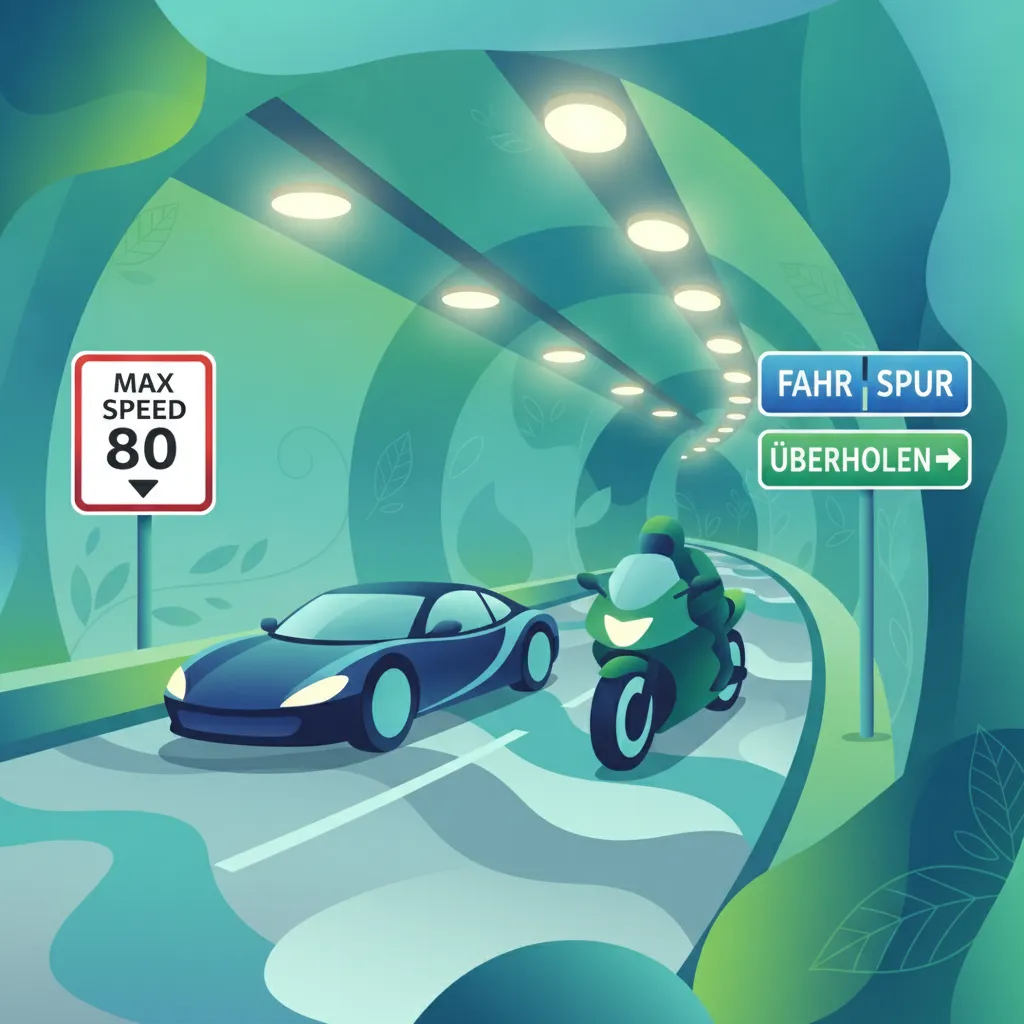
Tunnels are enclosed environments where incidents can quickly escalate. This lesson outlines the specific rules for tunnel driving: remove sunglasses, turn on dipped headlights, maintain a safe following distance, and tune the radio to the indicated frequency. It also covers the critical emergency procedures to follow in the event of a fire or breakdown inside a tunnel.

This lesson examines the impact of various weather conditions on driving safety. It explains how to adjust speed in low visibility and the risks of aquaplaning in heavy rain. The content also covers using snow chains in snowy conditions, handling icy surfaces, and dealing with strong winds, particularly on bridges and open roads.
This lesson explores the rules for driving on motorways and navigating tunnels. It covers entry and exit procedures, lane discipline, minimum speed requirements, and overtaking protocols on high-speed roads. For tunnels, the content explains speed limits, lighting, emergency exits, and ventilation requirements for safe travel.

This lesson explores the typical features of rural and alpine roads, such as narrow lanes, sharp bends, and significant elevation changes. It discusses the need for heightened awareness due to limited sight distances and the potential for unexpected hazards like wildlife or agricultural vehicles. Riders will learn to adapt their speed and positioning for these challenging conditions.

Driving in the Alps requires a high level of skill and vehicle sympathy. This lesson covers techniques for climbing steep gradients by selecting the correct gear to maintain momentum without straining the engine. It reiterates the critical importance of using low gears and auxiliary brakes for descending, to ensure the service brakes remain cool and effective for the entire descent.
This lesson details how adverse weather conditions like rain, fog, and snow affect motorcycle safety. It explains how wet surfaces reduce tyre grip, requiring smoother control inputs and longer braking distances. Strategies for managing reduced visibility in fog and the extreme hazards of riding on snow and ice are also covered.
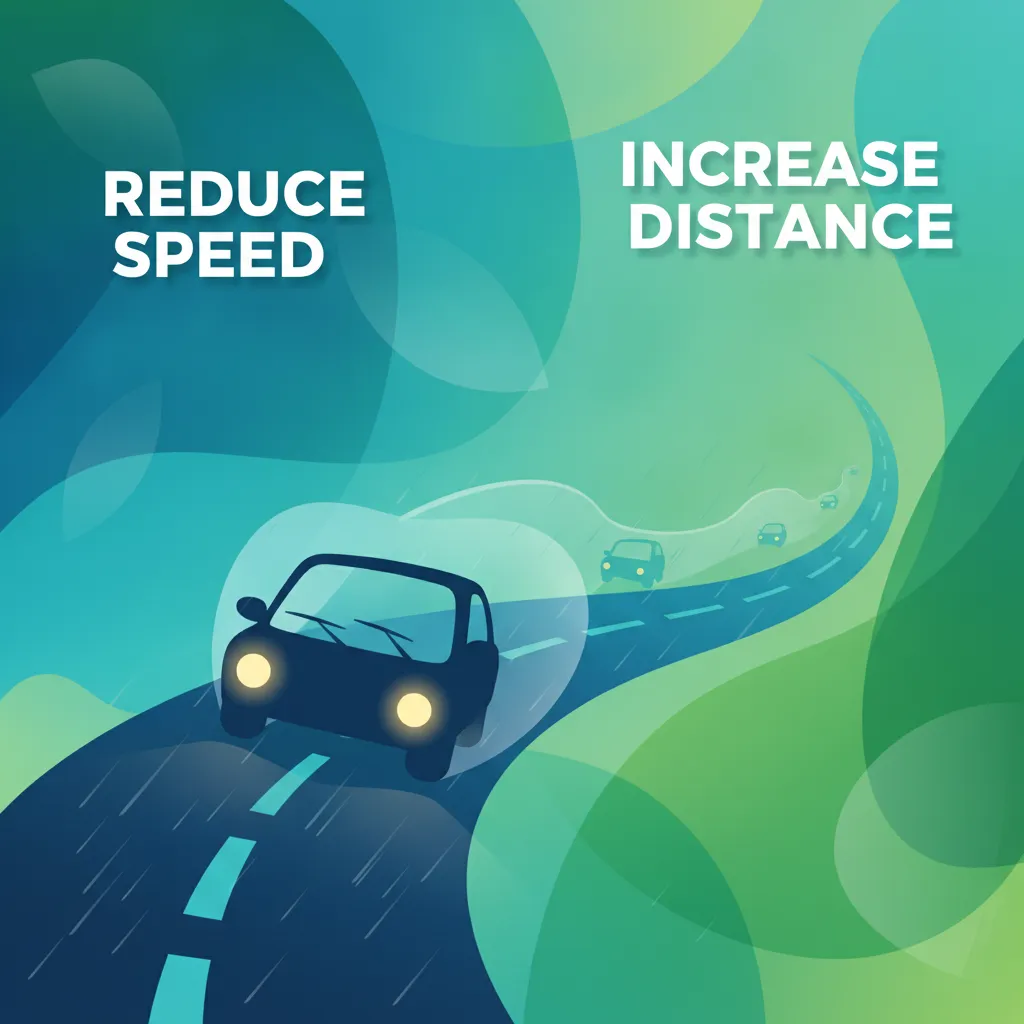
Weather has a profound impact on vehicle handling and visibility. This lesson teaches you how to reduce speed, increase following distances, and use controls smoothly to maintain traction in poor conditions. It also covers the legal requirements and practical application of snow chains in winter.
Understand the severe legal consequences and penalty point system for beginner drivers in Switzerland. Learn about licence revocation triggers and immediate penalties for serious traffic violations during the probationary period.

This lesson explains the Swiss penalty points system, detailing how points are assigned for various traffic violations. You will understand the thresholds for point accumulation and the legal consequences, such as licence suspension. The content also covers fine structures and the administrative process for point assessment for all driver license types.
Explore the probationary phase that follows the acquisition of a Category B licence, including the specific restrictions imposed on new drivers. This lesson outlines the zero tolerance policy for alcohol and the potential consequences of infractions during this period. It also discusses the process for remedial training and the conditions for full licence renewal.
This lesson outlines the legal repercussions for breaking traffic laws in Switzerland. It details the system of fines and administrative measures, including the potential for license withdrawal for serious offenses. The content also explains a rider's legal duties after being involved in an accident, including reporting and insurance obligations.
This lesson outlines the legal and administrative repercussions of committing traffic violations or being involved in an accident. It covers the system of fines, licence points, and potential licence revocation under Swiss law. Understanding these consequences reinforces the importance of lawful and responsible riding.

For professional drivers, traffic violations can have career-altering consequences beyond standard fines. This lesson details the heightened penalties for infringements such as speeding, overloading, insecure loads, and violations of driving time regulations. It outlines the process of warnings, license suspension or withdrawal, and potential criminal liability, emphasizing the importance of strict legal compliance in the transport industry.
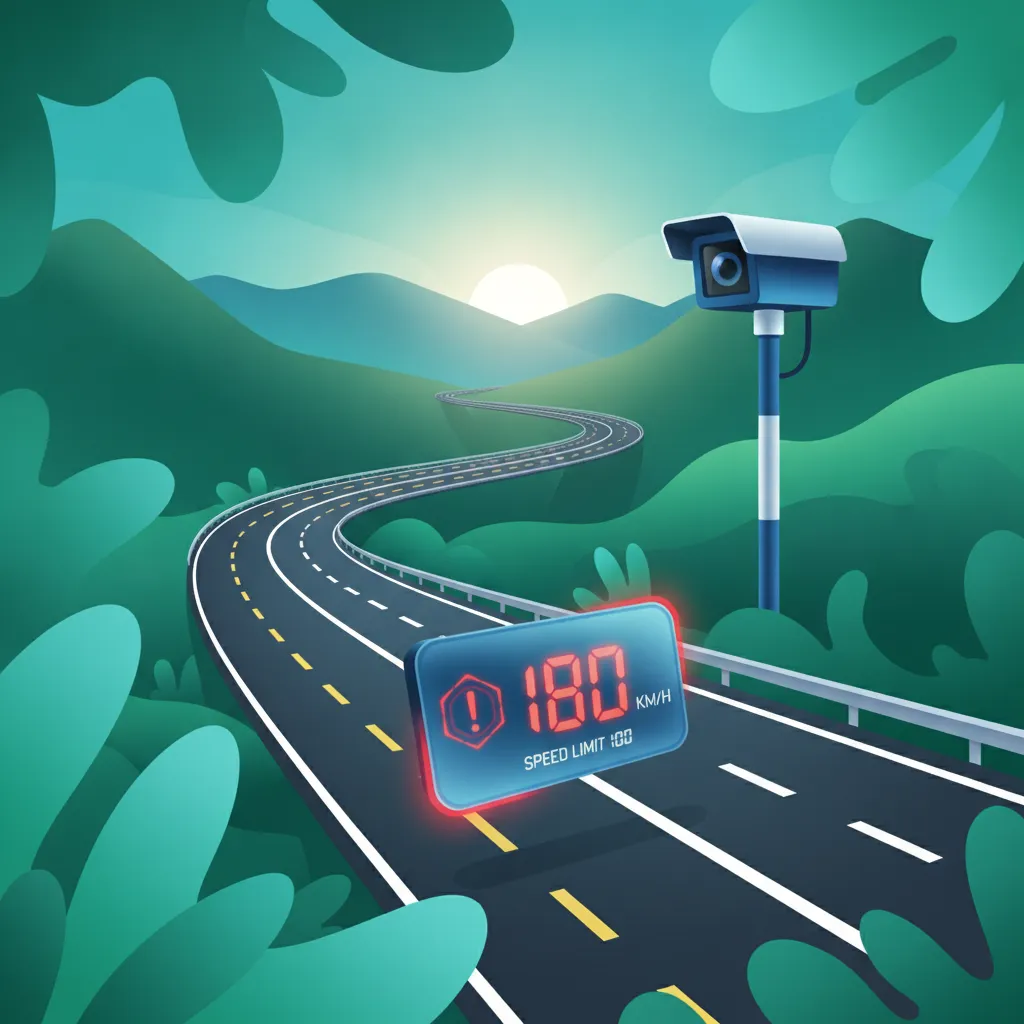
This lesson explores the various methods of speed enforcement in Switzerland, including speed cameras and police checks. It explains the legal consequences of speeding, such as fines, penalty points, and possible licence suspension. Understanding enforcement mechanisms helps drivers maintain compliance with the law and avoid legal repercussions.
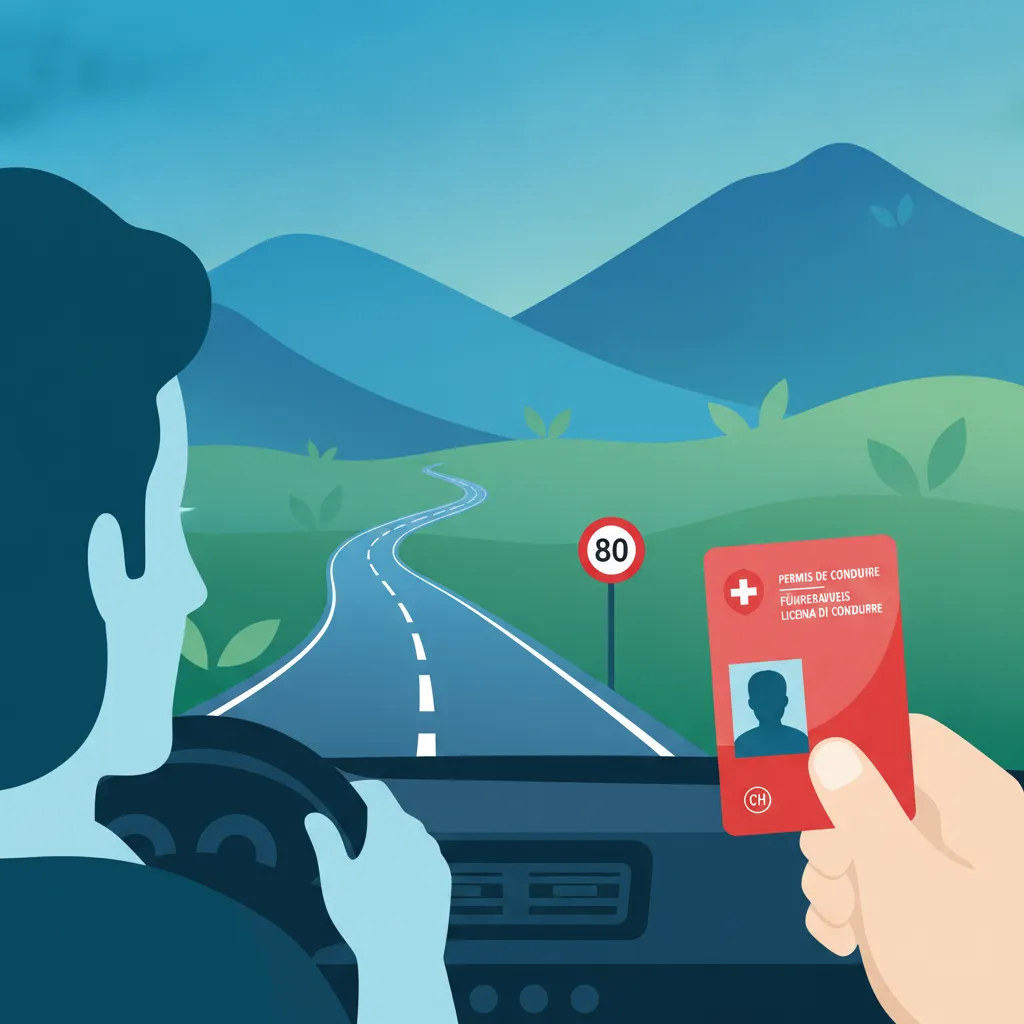
This lesson emphasizes the broad responsibilities of holding a driver's licence in Switzerland, including adherence to traffic laws and maintaining vehicle roadworthiness. It covers legal obligations related to insurance, registration, and reporting accidents, as well as the consequences of violations. The content reinforces the duty of care drivers owe to all other road users.
Find clear answers to common questions learners have about Beginner‑Driver Restrictions and Probationary Licence Conditions. Learn how the lesson is structured, which driving theory objectives it supports, and how it fits into the overall learning path of units and curriculum progression in Switzerland. These explanations help you understand key concepts, lesson flow, and exam focused study goals.
The probationary period lasts for three years from the date you receive your first definitive Category B driving licence.
Yes, during the probationary period, there is a strictly enforced zero-tolerance policy for alcohol, meaning you must not have any alcohol in your system while driving.
Serious violations can lead to an extension of your probationary period by one year or the complete revocation of your driving licence, requiring you to restart the process.
While the requirement for a specific 'L' learner badge ends once you pass your test, you must remain aware of all other legal obligations and professional conduct expected of a licensed driver.
Pinpoint specific Swiss traffic rules, road signs, or driving situations you need to master. Use the practice search to start a focused revision session now and build confidence for your official driving theory exam.