
This lesson details the legal responsibilities you hold as a licensed driver under Swiss road law. It covers essential obligations regarding vehicle maintenance, insurance, and the reporting of incidents, forming a crucial foundation for your Category B exam and safe driving career.
Lesson content overview
Driving in Switzerland is a privilege that comes with significant legal obligations and a fundamental duty of care towards all other road users. Holding a Category B driving licence means you are entrusted with the responsibility to operate a vehicle safely, legally, and with consideration for public safety. This comprehensive lesson details the essential responsibilities every driver must uphold to ensure compliance with Swiss traffic laws and contribute to an orderly and safe road environment.
The core principle governing all driver actions in Switzerland is the "duty of care." This concept dictates that every driver must act with reasonable prudence and caution to prevent harm to others. This duty extends beyond simply following rules; it involves anticipating potential hazards, adapting to changing conditions, and making decisions that prioritize the safety and well-being of all individuals sharing the road. A Category B driving licence signifies not just permission to drive, but an ongoing commitment to upholding these standards.
The legal and ethical obligation for drivers to act with reasonable prudence and caution to avoid causing harm or injury to other road users, property, or the environment.
Adhering to legal requirements, such as maintaining vehicle roadworthiness, possessing valid insurance, and understanding accident reporting procedures, forms the backbone of a responsible driving practice. These regulations are designed to protect public safety, ensure fair compensation in the event of incidents, and maintain the integrity of the Swiss road network. Non-compliance can lead to severe legal penalties, including fines, licence suspensions, and even criminal charges, underscoring the critical importance of understanding and fulfilling these duties.
Your Category B driving licence is your legal authorisation to operate specific vehicles in Switzerland. It is crucial to understand its scope, maintain its validity, and adhere to any special conditions that may apply, such as during the probationary period.
A Swiss Category B driving licence permits you to drive motor vehicles (excluding motorcycles and certain commercial vehicles) with a maximum authorised mass (MAM) of up to 3,500 kg. These vehicles can be designed to carry no more than eight passengers in addition to the driver. This category also generally includes the authority to drive agricultural tractors up to 1,250 kg. Understanding these limits is fundamental to legally operating a vehicle.
Always verify the specific entitlements listed on your physical driving licence. While Category B has a general definition, any specific endorsements or restrictions will be noted there.
New drivers in Switzerland typically receive a probationary driving licence (Lernfahrausweis) for the first three years after passing their practical exam. This period is designed to foster safe driving habits and includes stricter regulations. One of the most visible requirements is the display of the "P" plate.
An initial driving licence valid for three years, issued to new drivers in Switzerland, subject to stricter rules and requiring display of a "P" plate. It mandates additional training courses within this period.
Holders of a probationary licence must display a blue "P" plate on the rear of their vehicle, clearly visible to other road users. This plate signifies that the driver is still in their probationary period and may be subject to certain restrictions, such as specific speed limits on motorways for accompanying learners (though not for probationary drivers themselves, the P-plate serves as an indicator of new driver status). Failing to display the "P" plate is a minor offence that can result in a fine.
It is the driver's responsibility to ensure their licence remains valid. This includes renewing it before its expiration date and updating any personal details, such as a change of address or name. Driving with an expired or invalid licence is illegal and can lead to penalties. If your licence is suspended or revoked due to serious infractions, you are strictly prohibited from driving.
A fundamental responsibility of every driver is to ensure their vehicle is always in a safe and roadworthy condition. This is not just about personal safety but also about protecting other road users and complying with Swiss traffic laws. The primary mechanism for ensuring this is the Motorfahrzeugkontrolle (MFK), or Periodic Technical Inspection.
Vehicle roadworthiness refers to the legal requirement that a vehicle meets specific technical and mechanical standards for safe operation on public roads. This includes critical components like brakes, tyres, steering, lighting, suspension, and emissions systems. A vehicle that is not roadworthy poses a significant risk of accident and environmental damage.
The MFK is a mandatory inspection conducted by the Strassenverkehrsamt (Road Traffic Office) to verify that a vehicle complies with all safety and environmental regulations.
A mandatory periodic technical inspection of a vehicle by the Swiss Road Traffic Office to ensure it meets safety, technical, and environmental standards for legal operation on public roads.
For private cars (Category B vehicles), the first MFK is typically required four years after the vehicle's initial registration. Subsequent inspections are then usually required every three years. However, for commercial vehicles or specific vehicle types, the frequency may be annual. It is the vehicle owner's responsibility to ensure the MFK is carried out within the stipulated timeframe. You will typically receive a notification for your upcoming inspection, but ultimately, it is your responsibility to ensure it is completed.
During an MFK, inspectors meticulously examine various aspects of the vehicle, including:
If your vehicle fails the MFK, you will be given a deadline to repair the defects and present the vehicle for a re-inspection. Driving a vehicle with an expired MFK, or one that has failed and not yet been re-inspected, is illegal. It can result in fines and may lead to the vehicle being ordered off the road until it passes the inspection. Furthermore, if an accident occurs due to a known vehicle defect that would have been identified by an MFK, your insurance coverage might be affected.
Even between MFK inspections, drivers have an ongoing responsibility to maintain their vehicle. This includes:
Neglecting these basic maintenance tasks can compromise safety and may be considered a breach of your duty of care, potentially leading to legal repercussions if an accident occurs.
Before a vehicle can be legally operated on public roads in Switzerland, it must meet specific insurance and registration requirements. These obligations are in place to ensure accountability and provide financial protection for all road users.
In Switzerland, it is legally mandatory for every motor vehicle to have valid third-party liability insurance (Haftpflichtversicherung). This insurance covers damages you might cause to other people (personal injury) or their property (property damage) in an accident. Without this insurance, you cannot register your vehicle or legally drive it.
Mandatory insurance in Switzerland that covers personal injury and property damage caused to third parties by the insured vehicle in an accident.
When registering a vehicle, you will need proof of valid liability insurance, typically provided by an electronic verification number (eVB-Nummer) from your insurer directly to the Strassenverkehrsamt. Driving without valid liability insurance is a serious offence that can lead to immediate penalties, heavy fines, vehicle seizure, and potential criminal charges.
While not legally mandatory, many drivers opt for comprehensive insurance (Kaskoversicherung). This type of insurance covers damages to your own vehicle, such as theft, vandalism, fire, or collision damage. It is important not to confuse this optional coverage with the mandatory liability insurance.
Every motor vehicle intended for use on public roads in Switzerland must be officially registered with the relevant Strassenverkehrsamt.
The official process of recording a vehicle with the Swiss Road Traffic Office, resulting in the issuance of licence plates and granting legal permission for road use.
Initial registration is required for new or imported vehicles. When a vehicle changes ownership (e.g., through sale), the new owner must complete a transfer of ownership registration. This ensures that the vehicle's legal owner is always documented, which is crucial for accountability in the event of accidents or offences.
Upon successful registration, your vehicle will be issued official Swiss licence plates, which must be displayed correctly on the front and rear of the vehicle. You are also legally required to carry your vehicle's registration documents (Fahrzeugausweis) whenever you are driving. Driving an unregistered vehicle or one without correctly displayed plates is illegal and can lead to fines and possible impoundment.
In the unfortunate event of a road traffic accident, Swiss law imposes clear obligations on drivers involved. Your actions immediately after an accident can have significant legal and insurance implications.
Regardless of the severity, drivers involved in any collision must immediately:
Stop Safely: Pull over to a safe location if possible, switch off the engine.
Secure the Scene: Turn on your hazard warning lights and place a warning triangle (if available and safe to do so) at an appropriate distance to alert approaching traffic.
Provide Assistance: Check for injured persons and provide first aid if competent. Call emergency services (112, 117, 144) immediately if there are injuries, deaths, or significant property damage.
Exchange Data: With other parties involved, exchange essential information: full names, addresses, phone numbers, vehicle registration numbers, insurance company details, and driver’s licence numbers.
Document the Scene: If safe, take photos of the accident scene, vehicle positions, damages, road conditions, and any relevant signs or markings.
You are legally obliged to notify the police immediately for any accident involving:
For minor accidents where there are no injuries and only minor property damage, and all parties agree on the circumstances, it is generally sufficient to exchange details and report the incident to your respective insurance company within 24 hours. However, if there is any doubt or dispute, it is always safer to call the police.
Failure to stop at the scene of an accident, provide assistance, or report it as required, can lead to severe penalties. This includes charges for hit-and-run (Fahrerflucht), which carries criminal penalties, heavy fines, and the revocation of your driving licence. Not exchanging data after a minor collision can also result in fines and affect insurance claims.
Understanding the legal consequences associated with traffic violations and non-compliance with driver obligations is critical for responsible driving. Switzerland employs a strict system of penalties designed to deter unsafe behavior and maintain road safety.
Violations of Swiss traffic laws can result in various penalties, ranging from minor fines to the accumulation of licence points.
Minor infringements are typically handled with on-the-spot fines or penalty notices. These are usually fixed amounts for specific violations, such as minor speeding offences or incorrect parking.
Switzerland operates a system where certain traffic offences result in points being added to a driver's licence. The number of points depends on the severity of the offence. Accumulating a specific number of points within a defined period can lead to licence suspension or revocation. This system aims to penalize repeat offenders and promote consistent safe driving habits.
A penalty system in Switzerland where points are added to a driver's licence for specific traffic offences; accumulating too many points can lead to licence suspension or revocation.
More serious offences, or the accumulation of points, can lead to your driving licence being suspended for a period or, in severe cases, permanently revoked.
Driving while your licence is suspended or revoked is a grave offence that incurs very severe penalties, including substantial fines, longer periods of disqualification, and even imprisonment.
Certain offences, such as driving under the influence of alcohol or drugs (BAC exceeding 0.5‰), dangerous driving causing injury or death, or hit-and-run incidents, are considered criminal acts. These can result in:
Switzerland has a zero-tolerance policy for new drivers (probationary licence holders) regarding alcohol, meaning a BAC of 0.1‰ or higher is strictly prohibited. For experienced drivers, the legal limit is 0.5‰. Driving under the influence of illicit drugs is always prohibited.
A crucial aspect of a driver's duty of care is the heightened responsibility towards vulnerable road users. These include pedestrians, cyclists, motorcyclists, children, and the elderly, who are at a greater risk of serious injury in a collision due to their lack of protection.
Drivers must exercise extra caution and anticipate the actions of these groups.
Children and the elderly are particularly vulnerable due to their unpredictable behaviour or reduced reaction times.
A responsible driver consistently adapts their driving behaviour and vehicle management to various external factors. These include weather conditions, the type of road, and the state of their vehicle (e.g., when loaded or towing).
Adverse weather significantly impacts driving conditions and demands increased caution:
Your responsibilities vary depending on the road environment:
When your vehicle is loaded or towing a trailer, your responsibilities increase due to altered vehicle dynamics:
Being a responsible driver in Switzerland involves a continuous commitment to safety, legal compliance, and a strong sense of duty of care. By consistently adhering to these principles, you contribute to a safer and more orderly road environment for everyone.
This lesson establishes the foundational legal responsibilities for Swiss Category B drivers, covering vehicle roadworthiness requirements through the MFK inspection system, mandatory insurance obligations, and the specific rules governing probationary licences including P-plate display and alcohol restrictions. It details the procedural requirements following accidents, from immediate scene safety to reporting obligations that vary by accident severity, and explains the consequences of non-compliance including the points system, fines, and potential licence revocation. The content emphasises the heightened duty of care toward vulnerable road users such as pedestrians, cyclists, and motorcyclists, requiring adapted driving behaviour in various conditions. Understanding these obligations is essential for both passing the Category B theory exam and maintaining a safe, lawful driving record in Switzerland.
A short set of high-value points that capture the most important learning from this lesson.
The duty of care is the core principle requiring drivers to act with prudence and caution to prevent harm to all road users.
Probationary licence holders must display a blue P-plate for three years and are subject to stricter rules, including zero alcohol tolerance.
The MFK (Motorfahrzeugkontrolle) is mandatory: first inspection at four years, then every three years for private vehicles.
Valid third-party liability insurance (Haftpflichtversicherung) is legally required before a vehicle can be registered or driven.
Drivers must adapt behaviour to protect vulnerable road users, including maintaining a minimum 1.5m distance when passing cyclists.
Explore all units and lessons included in this driving theory course.
First MFK due four years after initial registration, then every three years; driving with expired inspection is illegal.
New drivers on probationary licence face zero alcohol tolerance (0.1‰); experienced drivers have a 0.5‰ limit.
Police must be called immediately for accidents involving injury, death, significant property damage, unclear circumstances, or wildlife.
Hit-and-run (Fahrerflucht) is a criminal offence carrying severe penalties including licence revocation and imprisonment.
The points system (Verkehrsregelnpunkte) can lead to suspension or revocation if too many points are accumulated.
Assuming minor accidents without injury do not require any reporting; all accidents require data exchange and most require insurer notification within 24 hours.
Forgetting to display the P-plate as a probationary driver, which is a prosecutable offence even if unintentional.
Confusing optional comprehensive insurance (Kaskoversicherung) with mandatory third-party liability insurance (Haftpflichtversicherung).
Underestimating the MFK deadline and driving with an expired inspection, which can void insurance coverage after an accident.
Not adapting speed or following distance for weather conditions, assuming legal speed limits alone guarantee safety.
Lesson content overview
A short set of high-value points that capture the most important learning from this lesson.
The duty of care is the core principle requiring drivers to act with prudence and caution to prevent harm to all road users.
Probationary licence holders must display a blue P-plate for three years and are subject to stricter rules, including zero alcohol tolerance.
The MFK (Motorfahrzeugkontrolle) is mandatory: first inspection at four years, then every three years for private vehicles.
Valid third-party liability insurance (Haftpflichtversicherung) is legally required before a vehicle can be registered or driven.
Drivers must adapt behaviour to protect vulnerable road users, including maintaining a minimum 1.5m distance when passing cyclists.
Explore all units and lessons included in this driving theory course.
First MFK due four years after initial registration, then every three years; driving with expired inspection is illegal.
New drivers on probationary licence face zero alcohol tolerance (0.1‰); experienced drivers have a 0.5‰ limit.
Police must be called immediately for accidents involving injury, death, significant property damage, unclear circumstances, or wildlife.
Hit-and-run (Fahrerflucht) is a criminal offence carrying severe penalties including licence revocation and imprisonment.
The points system (Verkehrsregelnpunkte) can lead to suspension or revocation if too many points are accumulated.
Assuming minor accidents without injury do not require any reporting; all accidents require data exchange and most require insurer notification within 24 hours.
Forgetting to display the P-plate as a probationary driver, which is a prosecutable offence even if unintentional.
Confusing optional comprehensive insurance (Kaskoversicherung) with mandatory third-party liability insurance (Haftpflichtversicherung).
Underestimating the MFK deadline and driving with an expired inspection, which can void insurance coverage after an accident.
Not adapting speed or following distance for weather conditions, assuming legal speed limits alone guarantee safety.
Explore search topics learners often look for when studying Driver Responsibilities and Legal Obligations. These topics reflect common questions about road rules, driving situations, safety guidance, and lesson level theory preparation for learners in Switzerland.
Browse additional driving theory lessons that cover connected traffic rules, road signs, and common driving situations related to this topic. Improve your understanding of how different rules interact across everyday traffic scenarios.
Explore the detailed legal obligations for Swiss drivers, including probationary licence rules, accident reporting procedures, and the consequences of traffic violations. Understand your duty of care and maintain compliance with Swiss traffic law.
Explore the probationary phase that follows the acquisition of a Category B licence, including the specific restrictions imposed on new drivers. This lesson outlines the zero tolerance policy for alcohol and the potential consequences of infractions during this period. It also discusses the process for remedial training and the conditions for full licence renewal.
This lesson explores the specific restrictions that apply during the probationary licence period for beginner drivers. It covers the legal requirement for a beginner driver badge, zero tolerance for alcohol, and speed limitations. Understanding these regulations helps new drivers comply with legal obligations and reduce accident risk during the early driving phase.

This lesson explains the Swiss penalty points system, detailing how points are assigned for various traffic violations. You will understand the thresholds for point accumulation and the legal consequences, such as licence suspension. The content also covers fine structures and the administrative process for point assessment for all driver license types.
This lesson outlines the legal repercussions for breaking traffic laws in Switzerland. It details the system of fines and administrative measures, including the potential for license withdrawal for serious offenses. The content also explains a rider's legal duties after being involved in an accident, including reporting and insurance obligations.
This lesson outlines the legal and administrative repercussions of committing traffic violations or being involved in an accident. It covers the system of fines, licence points, and potential licence revocation under Swiss law. Understanding these consequences reinforces the importance of lawful and responsible riding.
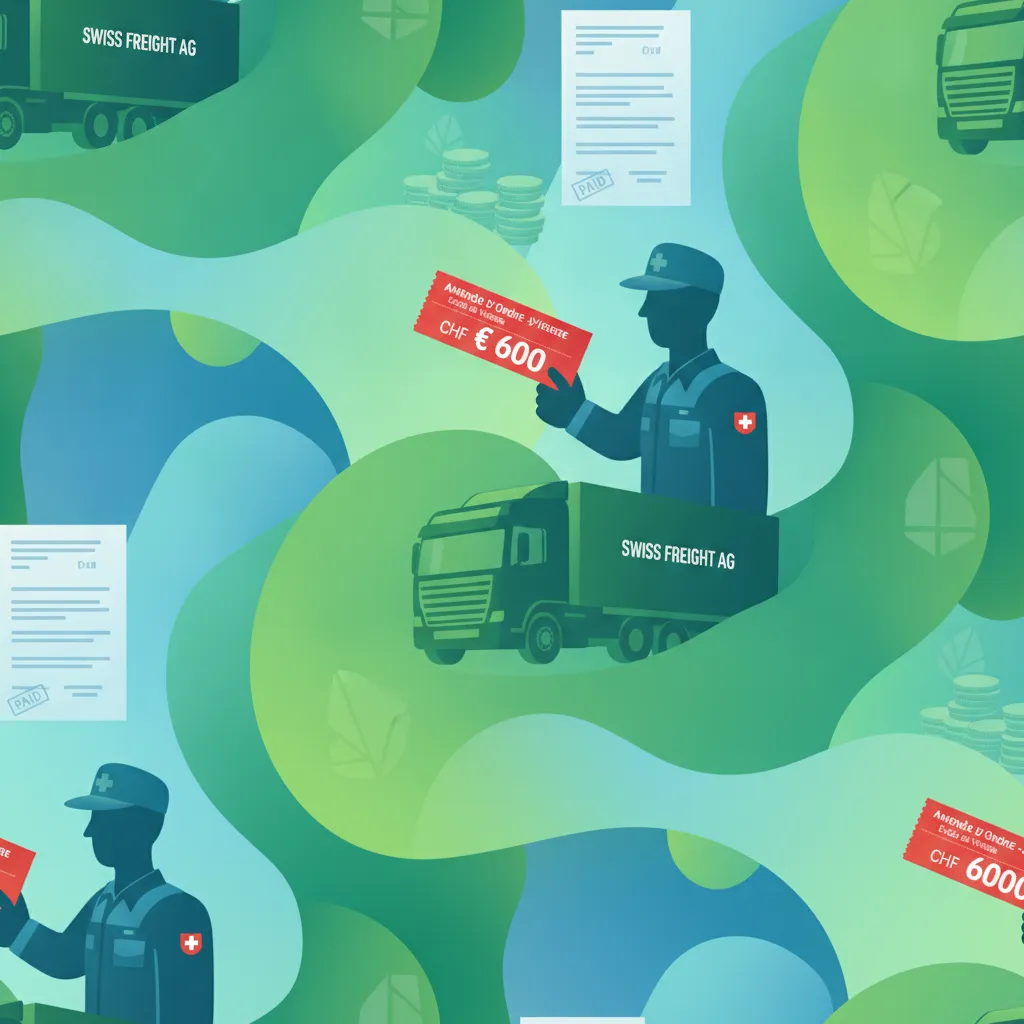
For professional drivers, traffic violations can have career-altering consequences beyond standard fines. This lesson details the heightened penalties for infringements such as speeding, overloading, insecure loads, and violations of driving time regulations. It outlines the process of warnings, license suspension or withdrawal, and potential criminal liability, emphasizing the importance of strict legal compliance in the transport industry.
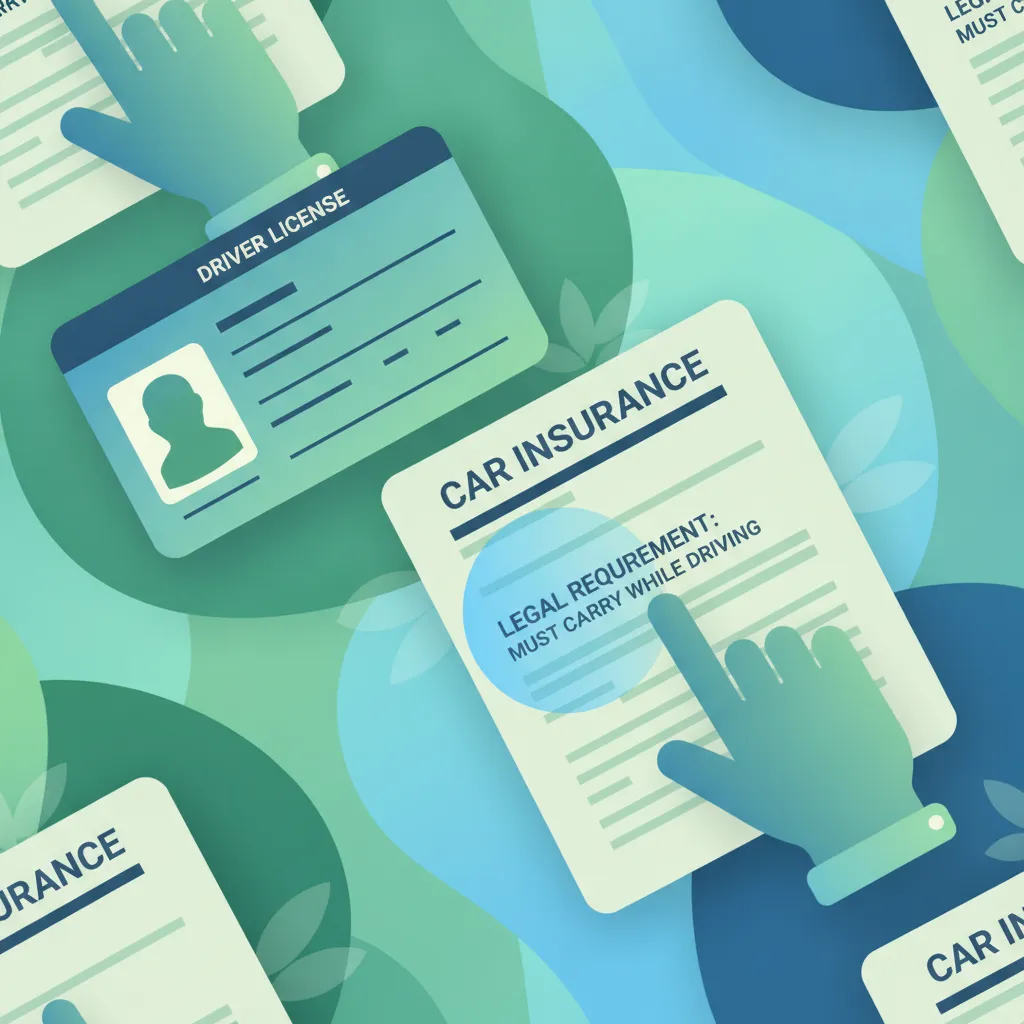
This lesson outlines the mandatory documentation required during any professional transport journey in Switzerland. Drivers must be able to present the vehicle registration document ('Fahrzeugausweis'), their valid driving license, and the OACP qualification card upon request. It also touches upon transport-specific documents like consignment notes, which are crucial for legal compliance during roadside inspections by authorities.
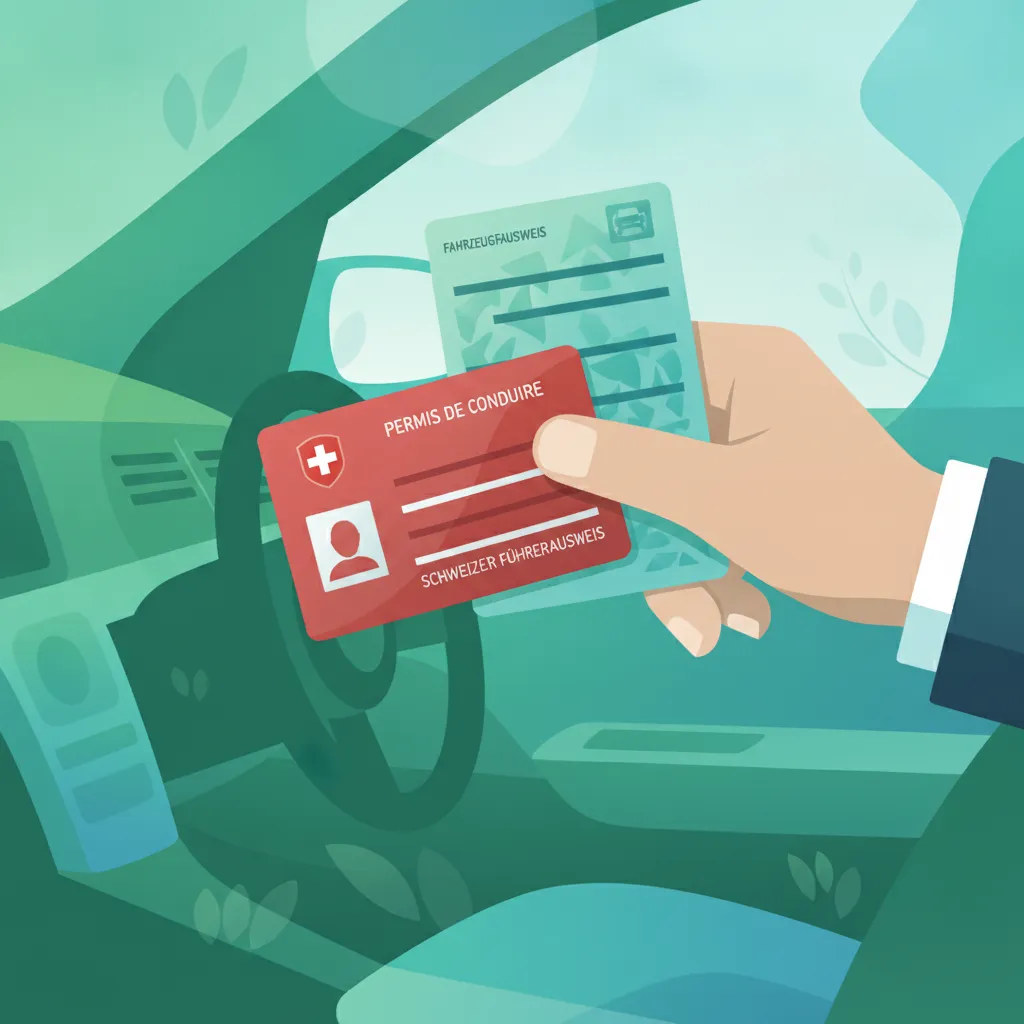
This lesson details the specific documents that must be present in the vehicle and on the driver's person during service. It covers the driving license, OACP card, vehicle registration, and tachograph records. You will learn the importance of ensuring all paperwork is current and correct to ensure legal compliance at all times.
The driver is legally responsible for the roadworthiness of their vehicle at the start of and during every journey. This lesson outlines the formal process for reporting any identified defects to the transport manager or maintenance staff. It stresses the critical rule that a vehicle with a known safety-critical defect must not be driven until it has been professionally repaired and declared safe.
Understand the heightened duty of care required for vulnerable road users like pedestrians and cyclists in Switzerland. Learn how to adapt your driving responsibilities for various weather conditions, road types, and vehicle loads.

This lesson examines the impact of various weather conditions on driving safety. It explains how to adjust speed in low visibility and the risks of aquaplaning in heavy rain. The content also covers using snow chains in snowy conditions, handling icy surfaces, and dealing with strong winds, particularly on bridges and open roads.
Weather has a profound impact on vehicle handling and visibility. This lesson teaches you how to reduce speed, increase following distances, and use controls smoothly to maintain traction in poor conditions. It also covers the legal requirements and practical application of snow chains in winter.

This lesson focuses on general driving safety in areas with a high concentration of children. It stresses the importance of significantly reducing speed, being prepared for unexpected events, and scanning for children between parked cars. The driver must exhibit maximum vigilance in these high-risk environments at all times.
Pedestrians, cyclists, motorcyclists, and e-scooter riders are extremely vulnerable in any interaction with a heavy vehicle. This lesson instills a defensive mindset, teaching drivers to be hyper-aware of VRUs, especially near junctions, crossings, and cycle lanes. It focuses on anticipation and giving VRUs extra space, as they can be unpredictable and are often hidden in blind spots.
This lesson examines the impact of weather and visibility on driving safety and speed selection. It covers how fog, rain, snow, and darkness affect visibility and reaction times, providing guidelines on adjusting speed. It also includes strategies for improving visibility, such as proper headlamp use, to ensure you can adapt to varying weather conditions.

This lesson trains drivers to look beyond other vehicles and actively search for pedestrians, cyclists, and motorcyclists, especially those who may be distracted or unaware. It covers common behavioral patterns of different VRU groups. The goal is to see potential hazards developing early and create time and space to react safely.

This lesson focuses on driving on mountain roads, addressing steep gradients, hairpin bends, and altitude-related challenges. You will learn proper techniques for climbing ascents and using engine braking on descents. The content also covers the use of snow chains, recognizing avalanche risks, and interpreting mountain road signs for safe alpine navigation.
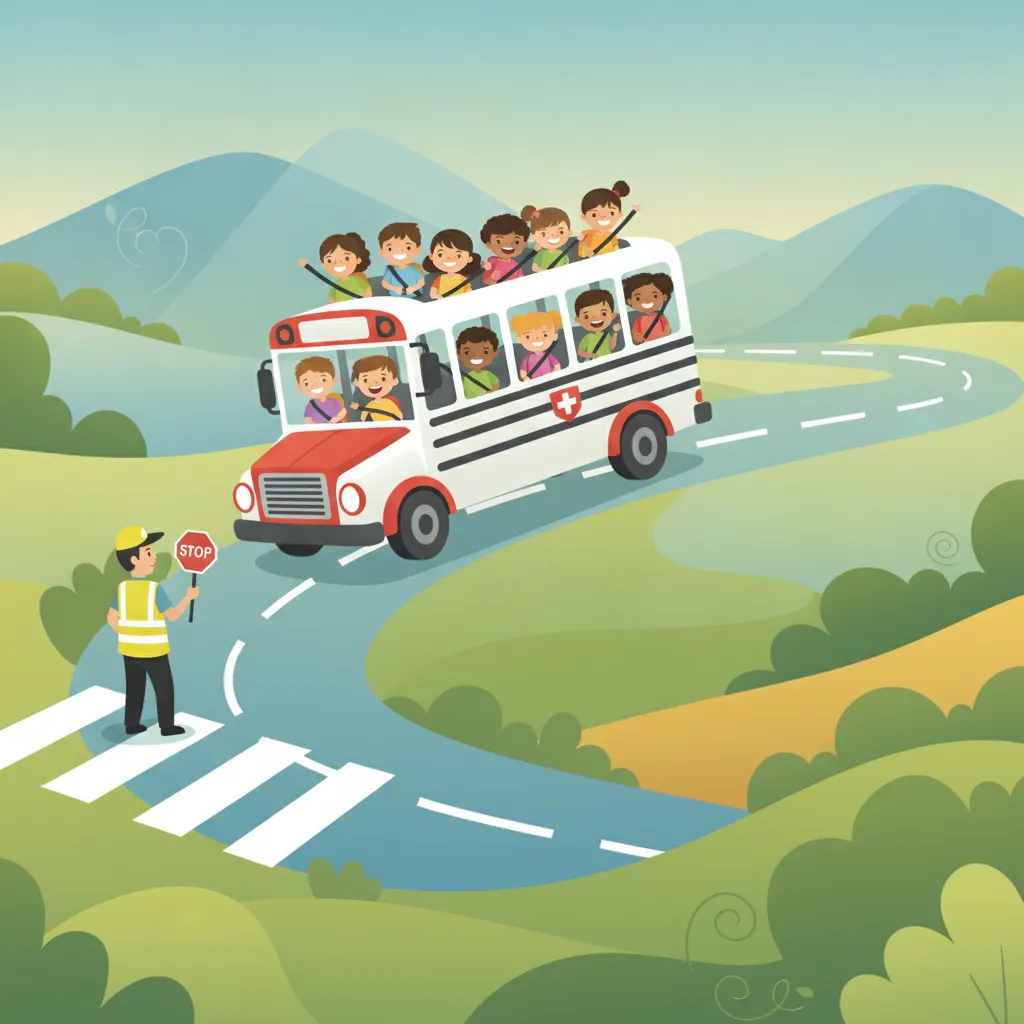
Transporting children carries the highest level of responsibility. This lesson covers the specific legal requirements for school buses in Switzerland, including the use of special signs and warning lights. It details the safe procedures for stopping, boarding, and alighting, and the driver's role in supervising children.
Motorway driving requires constant concentration due to high speeds. This lesson emphasizes the importance of staying in the right-hand lane unless overtaking and the specific restrictions on lorry overtaking in Switzerland. It reinforces the need for a following distance of at least four seconds to compensate for the vehicle's long stopping distance and provides guidance on safely merging and exiting.
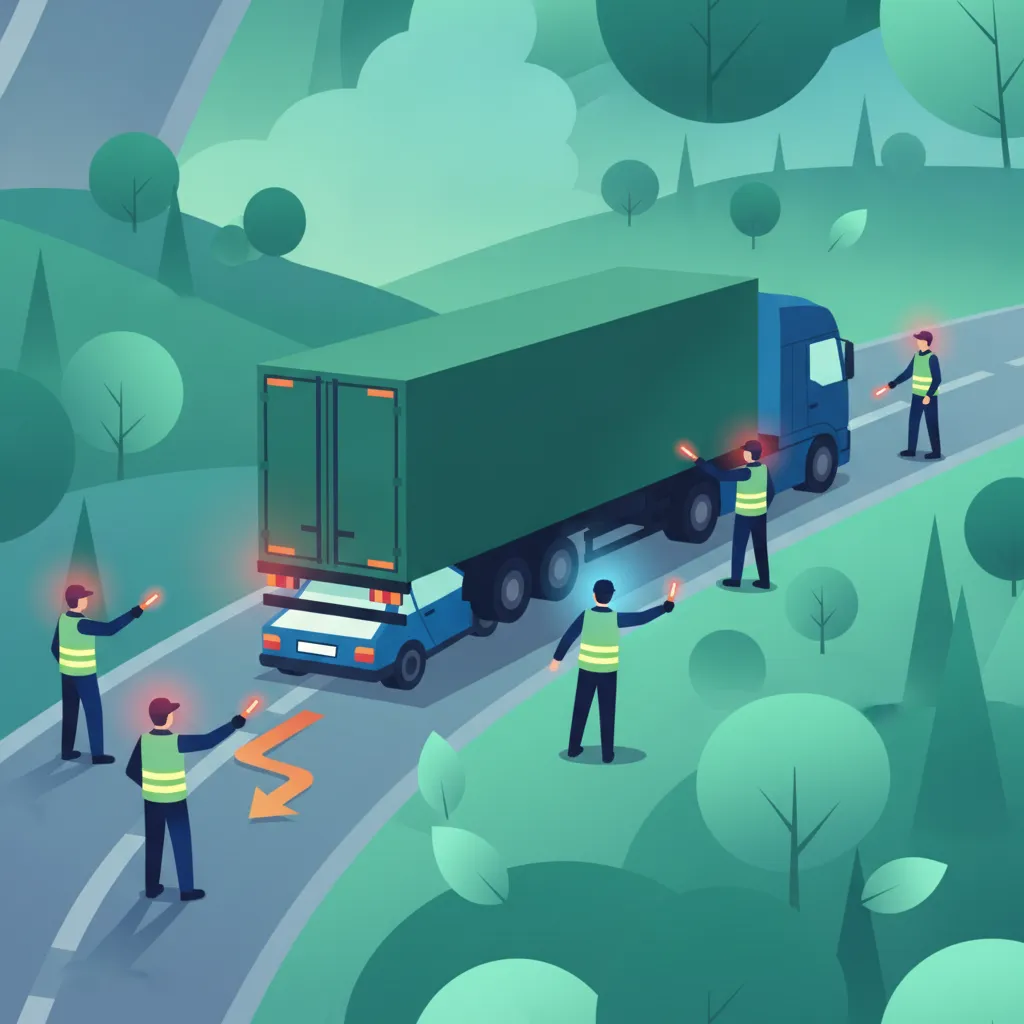
This lesson provides a structured guide for managing the scene of a road traffic accident. It covers the internationally recognized priorities: assess for danger, make the scene safe, send for help by calling emergency services (112), and provide first aid to the injured if trained to do so. It also details the legal requirement to stop and exchange information after being involved in a collision.
Find clear answers to common questions learners have about Driver Responsibilities and Legal Obligations. Learn how the lesson is structured, which driving theory objectives it supports, and how it fits into the overall learning path of units and curriculum progression in Switzerland. These explanations help you understand key concepts, lesson flow, and exam focused study goals.
The primary responsibility is to ensure the safety of all road users by complying with traffic rules, maintaining your vehicle in a safe, roadworthy condition at all times, and driving with constant attention and foresight.
Yes, third-party liability insurance is mandatory for all motor vehicles in Switzerland. You must be able to provide proof of insurance coverage as part of your legal obligations as a vehicle owner and driver.
You must stop immediately, secure the scene, assist injured persons, and call the police if anyone is hurt or if significant property damage has occurred. Failure to stop and report is a serious legal violation.
It is your legal duty to ensure that essential components like tires, brakes, and lights are in good working order. Operating a vehicle that does not meet safety standards is an offence and can lead to fines or licence suspension.
Pinpoint specific Swiss traffic rules, road signs, or driving situations you need to master. Use the practice search to start a focused revision session now and build confidence for your official driving theory exam.