
This lesson addresses one of the most critical safety aspects of operating a heavy vehicle in Switzerland: the right-turn conflict. You will learn how to identify, mitigate, and manage the extensive blind spots that pose a danger to cyclists and pedestrians in urban environments. This knowledge is essential for your Category C or C1 theory exam and for ensuring professional safety on Swiss roads.

Lesson content overview
Operating heavy goods vehicles, such as those in Categories C and C1, demands heightened awareness and specialized skills, particularly when executing right-turn maneuvers. These turns present one of the most critical conflict points with vulnerable road users, especially cyclists. The sheer size and numerous blind spots inherent to large vehicles dramatically increase the risk of collision, making meticulous attention to detail not just a recommendation, but a mandatory safety protocol.
This lesson provides a detailed analysis of right-turn conflicts, highlighting the specific dangers cyclists face. It emphasizes the necessity for a slow approach, repeated mirror checks, and a proactive assumption that a cyclist may be present in a blind spot, even if not immediately visible. Mastering these techniques is fundamental to preventing serious incidents and ensuring the safety of all road users.
A right-turn conflict occurs when a heavy goods vehicle (HGV) turns right, and its trajectory potentially collides with a cyclist positioned in the vehicle's nearside blind spot. This scenario is particularly dangerous for Category C and C1 drivers due to the vehicle's dimensions, which create significant areas outside the driver's direct field of vision.
These conflicts can be categorized: a static conflict involves a cyclist already present and stationary in the blind spot, while a dynamic conflict occurs when a cyclist enters the blind spot while the heavy vehicle is preparing for or executing the turn. In both cases, the driver's primary challenge is the obstructed view, demanding specific actions to mitigate risk.
The nearside blind spot is an area adjacent to the passenger side of a heavy goods vehicle that cannot be seen directly by the driver or through standard mirrors, even if properly adjusted. This hidden zone extends along the side of the vehicle and sometimes slightly to the front. Its size and shape are influenced by the vehicle's design, length, and the presence of any trailers.
For heavy goods vehicles, the nearside blind spot is often substantially larger than in passenger cars, making it easy for a cyclist to be completely concealed. As the vehicle begins to turn, the angle changes, and parts of the road that were previously visible might become obscured, creating a dynamic blind spot. This means a cyclist who was visible moments before might suddenly disappear from view. Drivers must understand that relying solely on a quick glance is insufficient; the blind spot is a continuously changing risk zone.
Cyclists are particularly vulnerable in right-turn conflicts for several reasons. Their smaller size makes them harder to spot, especially against complex urban backgrounds. They often ride close to the curb or on dedicated cycle paths, which can place them directly within an HGV's nearside blind spot. Furthermore, cyclists are unprotected in a collision; even a low-speed impact from a heavy vehicle can result in severe, life-threatening injuries.
Swiss traffic law places a high duty of care on drivers of larger, heavier vehicles, recognizing their potential to cause greater harm. This means heavy vehicle operators are expected to take extra precautions to protect vulnerable road users like cyclists and pedestrians. Ignoring this responsibility can lead to severe legal consequences, in addition to the tragic human cost.
Successfully navigating right turns with a heavy goods vehicle, especially in urban environments, requires strict adherence to several core principles. These are designed to compensate for the inherent visibility challenges and protect vulnerable road users.
A cornerstone of safe heavy vehicle operation is the assumption of presence. This principle dictates that, when approaching a right turn, you must mentally assume a cyclist is present in your nearside blind spot until you can definitively confirm the area is clear. It's a proactive mindset that guards against complacency and overconfidence.
This means you should not proceed based on the absence of a cyclist in a quick glance, but rather on the confirmed absence through diligent checking. This active assumption forces you to slow down, dedicate more time to observation, and remain prepared to stop at any moment.
Speed management is critical before and during any right-turn maneuver. You must reduce your vehicle's speed to a level that allows you to stop safely within the visible distance of your nearside blind spot. This might mean slowing to a crawl – a speed significantly below the posted limit – even if the road appears clear.
The purpose of extreme speed reduction is twofold:
Turning at excessive speed is a common and dangerous mistake that eliminates the safety margin needed to account for unexpected cyclists. The larger your vehicle and the heavier its load, the more critical this slow-speed approach becomes.
Effective mirror checks are non-negotiable for safe right turns. It's not enough to check your mirrors once; you must engage in continuous monitoring throughout the entire maneuver. This involves checking your external side mirrors and, if applicable, your interior rear-view mirror, not just before, but also during and after the turn.
Before the Turn: As you approach the intersection, check all mirrors (especially the nearside side mirror) to identify any cyclists riding alongside or approaching from behind. Signal your intention to turn.
During the Turn: Continuously glance at your nearside side mirror as you begin to turn. The blind spot dynamically changes, and a cyclist could enter it or become visible as your vehicle's angle shifts. This is the most critical phase for repeated checks.
After the Turn: Once you have completed the turn and are straightening your vehicle, perform a final mirror check to ensure no new hazards have appeared and that your path is clear.
Repeated mirror checks are essential because cyclists can appear quickly, and the blind spot is dynamic. Your goal is to maintain continuous situational awareness, accounting for any road user who might enter your intended path.
Executing a safe right turn in a heavy goods vehicle, particularly in areas frequented by cyclists, requires a systematic approach.
Operating heavy goods vehicles in Switzerland requires strict adherence to specific traffic regulations, particularly those concerning vulnerable road users. These rules reinforce the principles of right-turn safety.
According to Swiss Road Traffic Regulations (VRV), drivers preparing to make a right turn are legally obliged to yield to any cyclist who may be in the nearside blind spot, regardless of whether the cyclist is immediately visible. This rule applies at all intersections, unsignalised junctions, and during urban delivery maneuvers where cyclists may be present. This is a mandatory requirement, reflecting the legal duty of care for vulnerable road users.
The law mandates that drivers must check their nearside side mirror and rear-view mirror before initiating a right turn and continue to monitor them throughout the maneuver. Furthermore, drivers must reduce their speed to a level that allows for a full stop within the visible range of the nearside blind spot. These are not mere suggestions but mandatory steps to ensure that hidden cyclists are detected and that the vehicle can stop safely if needed.
If, after all checks, you cannot confirm that your blind spot is clear of cyclists, Swiss regulations require you to stop and wait until you are absolutely certain the path is clear. Proceeding when in doubt is a serious violation and carries high risks. This obligation underscores the principle of assumption of presence and the paramount importance of safety over expediency.
Even experienced drivers can fall into dangerous habits when making right turns with heavy vehicles. Recognizing and actively avoiding these common mistakes is crucial for safety.
Right-turn safety is not a one-size-fits-all procedure. Environmental and vehicle conditions require drivers to adapt their techniques to maintain the highest level of safety.
The potential consequences of a right-turn conflict are severe. For the cyclist, a collision with a heavy goods vehicle can lead to catastrophic injuries or fatalities. Due to the mass and momentum of Category C and C1 vehicles, even a low-speed impact can be devastating.
For the heavy vehicle driver, an accident can result in:
These potential outcomes underscore that meticulous right-turn safety procedures are not merely guidelines, but critical measures to protect human lives and maintain professional integrity.
This lesson addresses the critical right-turn conflict between heavy goods vehicles and cyclists, a major source of serious collisions in urban environments. It teaches that the nearside blind spot on Category C and C1 vehicles is dynamic and large, requiring the driver to assume a cyclist is present until proven otherwise through continuous mirror monitoring. Safe execution demands significant speed reduction before and during the turn, yielding to any detected cyclist, and adapting techniques for weather, road type, and vehicle configuration. Swiss traffic law mandates these precautions as a legal duty of care toward vulnerable road users, with severe consequences for violations.
A short set of high-value points that capture the most important learning from this lesson.
Right-turn conflicts occur when a heavy vehicle's trajectory intersects with a cyclist hidden in the nearside blind spot, and static and dynamic variants exist based on when the cyclist enters the danger zone.
The nearside blind spot on heavy vehicles is substantially larger than in passenger cars and changes dynamically as the vehicle turns, meaning a cyclist visible moments ago can disappear from view.
Adopt the assumption of presence: always assume a cyclist is in your blind spot until definitively confirmed clear through comprehensive checks.
Speed must be reduced to a crawl before and during any right turn, allowing you to stop within the visible range of your blind spot.
Swiss law imposes a legal duty of care on heavy vehicle drivers to yield to cyclists in nearside blind spots, requiring mandatory mirror checks and speed control before initiating turns.
Explore all units and lessons included in this driving theory course.
The nearside blind spot extends along the passenger side of the vehicle, cannot be seen directly or through standard mirrors, and is larger on Category C/C1 vehicles than on passenger cars.
Mirror checks must occur before, during, and after the turn; a single glance before turning is insufficient as the blind spot shifts continuously.
When driving with a trailer, off-tracking means the rear wheels follow a tighter path than the front, creating additional blind spots that require extended mirror monitoring.
If the blind spot cannot be confirmed clear after all checks, Swiss regulations require you to stop and wait rather than proceed.
Environmental conditions such as rain, fog, snow, dusk, and night demand increased mirror check frequency and even slower speeds.
Relying on a single mirror check before turning, believing the path is clear because a cyclist was not immediately visible.
Turning at excessive speed, which eliminates reaction time and the stopping distance needed to avoid a hidden cyclist.
Assuming the path is clear based on the absence of visible cyclists rather than confirming absence through diligent, repeated checking.
Improper mirror adjustment that fails to minimize blind spots, leaving critical areas around the vehicle unseen.
Neglecting head checks when mirrors do not provide complete coverage of areas directly alongside the cab.
Lesson content overview
A short set of high-value points that capture the most important learning from this lesson.
Right-turn conflicts occur when a heavy vehicle's trajectory intersects with a cyclist hidden in the nearside blind spot, and static and dynamic variants exist based on when the cyclist enters the danger zone.
The nearside blind spot on heavy vehicles is substantially larger than in passenger cars and changes dynamically as the vehicle turns, meaning a cyclist visible moments ago can disappear from view.
Adopt the assumption of presence: always assume a cyclist is in your blind spot until definitively confirmed clear through comprehensive checks.
Speed must be reduced to a crawl before and during any right turn, allowing you to stop within the visible range of your blind spot.
Swiss law imposes a legal duty of care on heavy vehicle drivers to yield to cyclists in nearside blind spots, requiring mandatory mirror checks and speed control before initiating turns.
Explore all units and lessons included in this driving theory course.
The nearside blind spot extends along the passenger side of the vehicle, cannot be seen directly or through standard mirrors, and is larger on Category C/C1 vehicles than on passenger cars.
Mirror checks must occur before, during, and after the turn; a single glance before turning is insufficient as the blind spot shifts continuously.
When driving with a trailer, off-tracking means the rear wheels follow a tighter path than the front, creating additional blind spots that require extended mirror monitoring.
If the blind spot cannot be confirmed clear after all checks, Swiss regulations require you to stop and wait rather than proceed.
Environmental conditions such as rain, fog, snow, dusk, and night demand increased mirror check frequency and even slower speeds.
Relying on a single mirror check before turning, believing the path is clear because a cyclist was not immediately visible.
Turning at excessive speed, which eliminates reaction time and the stopping distance needed to avoid a hidden cyclist.
Assuming the path is clear based on the absence of visible cyclists rather than confirming absence through diligent, repeated checking.
Improper mirror adjustment that fails to minimize blind spots, leaving critical areas around the vehicle unseen.
Neglecting head checks when mirrors do not provide complete coverage of areas directly alongside the cab.
Explore search topics learners often look for when studying Right-Turn Conflicts and Specific Dangers for Cyclists. These topics reflect common questions about road rules, driving situations, safety guidance, and lesson level theory preparation for learners in Switzerland.
Browse additional driving theory lessons that cover connected traffic rules, road signs, and common driving situations related to this topic. Improve your understanding of how different rules interact across everyday traffic scenarios.
Understand the critical risks heavy goods vehicles pose to cyclists and pedestrians during turns. Learn essential Swiss theory for safe urban driving and protecting vulnerable road users, focusing on blind spots and right-turn maneuvers.

Pedestrians, cyclists, motorcyclists, and e-scooter riders are extremely vulnerable in any interaction with a heavy vehicle. This lesson instills a defensive mindset, teaching drivers to be hyper-aware of VRUs, especially near junctions, crossings, and cycle lanes. It focuses on anticipation and giving VRUs extra space, as they can be unpredictable and are often hidden in blind spots.

Rural roads present challenges like narrow lanes, poor surfaces, sharp bends, and limited visibility. This lesson teaches drivers how to position their large vehicle to maximize space and visibility, anticipate oncoming traffic at blind corners, and be aware of specific rural hazards. These hazards include slow-moving agricultural vehicles, animals on the road, and concealed farm entrances.

Turning a long vehicle requires careful planning and execution. This lesson covers the correct procedure: approach, observation, signalling, and positioning the vehicle correctly to allow for the trailer's off-tracking without mounting the kerb. It also highlights the need for constant mirror checks throughout the turn to monitor for cyclists or other vulnerable road users who may enter the danger zone.

Urban driving requires heightened awareness and careful planning. This lesson covers the challenges of narrow streets, heavy traffic, and the need to identify designated loading and unloading zones. It emphasizes the importance of planning routes in advance to account for time-based access restrictions and to avoid unsuitable roads.

This lesson explores the specific considerations for cyclists and pedestrians, who are among the most vulnerable road users. It covers the proper use of bicycle lanes, the minimum safe overtaking distance for cyclists, and the legal requirements for yielding at pedestrian crossings. The content reinforces the need for heightened vigilance around these users.

Motorway driving requires constant concentration due to high speeds. This lesson emphasizes the importance of staying in the right-hand lane unless overtaking and the specific restrictions on lorry overtaking in Switzerland. It reinforces the need for a following distance of at least four seconds to compensate for the vehicle's long stopping distance and provides guidance on safely merging and exiting.

This lesson focuses on general driving safety in areas with a high concentration of children. It stresses the importance of significantly reducing speed, being prepared for unexpected events, and scanning for children between parked cars. The driver must exhibit maximum vigilance in these high-risk environments at all times.

Heavy goods vehicles are fitted with specific safety structures to mitigate the severity of collisions with smaller vehicles and vulnerable road users. This lesson explains the function of the rear underrun bar, which prevents cars from going underneath the truck in a rear-end collision. It also covers side guards, which are designed to stop cyclists and pedestrians from falling under the vehicle's wheels during a side impact.

Construction sites and industrial areas are non-public roads with their own set of rules and hazards. This lesson covers the need to follow site-specific safety instructions, be aware of moving plant machinery and personnel on the ground, and assess ground conditions. It highlights that reversing is often required and should be done with a signaller wherever possible.

This lesson trains drivers to look beyond other vehicles and actively search for pedestrians, cyclists, and motorcyclists, especially those who may be distracted or unaware. It covers common behavioral patterns of different VRU groups. The goal is to see potential hazards developing early and create time and space to react safely.
Master essential techniques for managing extensive blind spots in Swiss urban environments when driving heavy goods vehicles. Focus on mirror usage, situational awareness, and safe maneuvering to prevent collisions with cyclists and pedestrians.
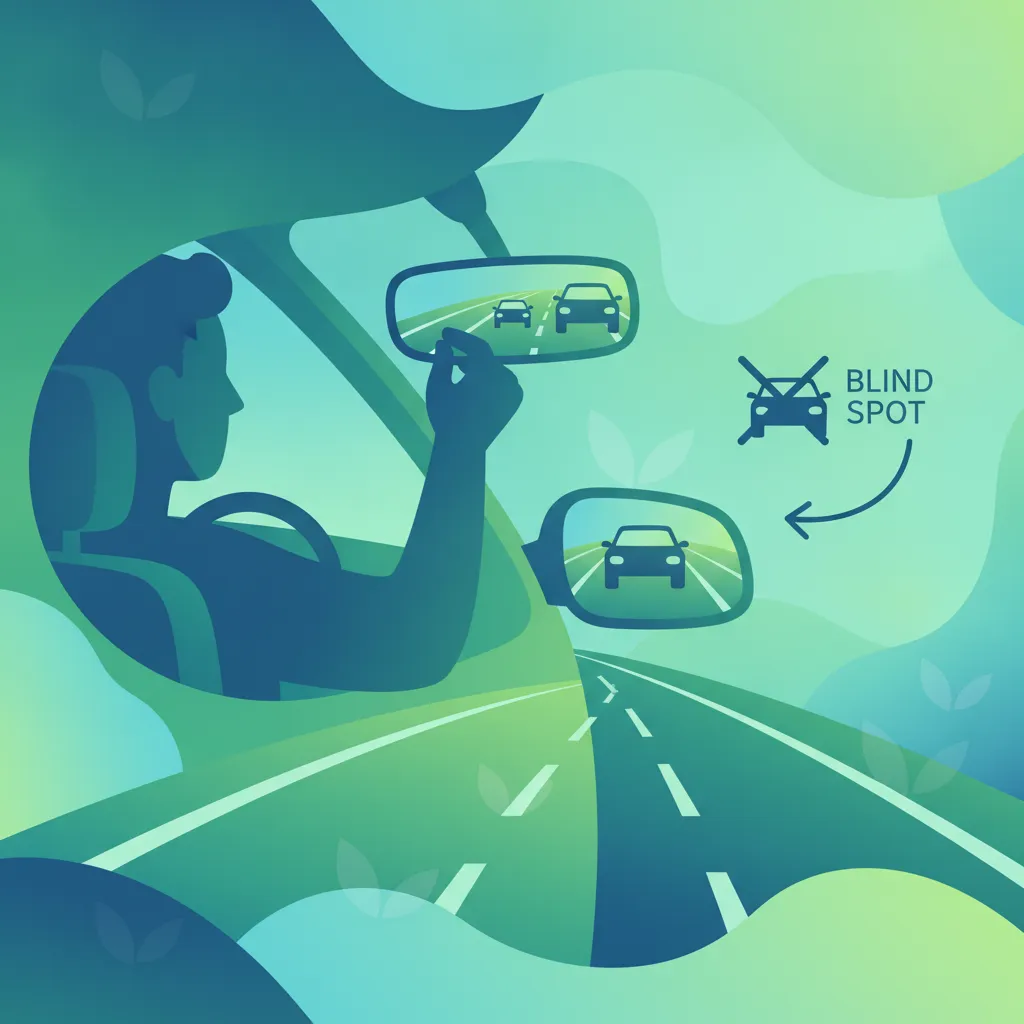
Despite the complex mirror systems, large areas around a truck remain hidden from the driver's view. This lesson maps out these significant blind spots: directly in front, behind, and along both sides of the vehicle. It teaches drivers to be constantly aware of these 'no-zones' and to anticipate that smaller vehicles, cyclists, or pedestrians may be hidden within them, especially before changing lanes or turning.

Buses and coaches have significant blind spots to the front, sides, and rear. This lesson maps out these 'no-zones' and teaches a continuous and active scanning process using all available mirrors and direct vision. The goal is to minimize the time any other road user spends undetected in a blind spot.

This lesson covers the systematic use of rearview and side mirrors, combined with head checks, to maintain full awareness of surrounding traffic. It emphasizes frequent observation to detect vehicles in blind spots, especially during lane changes and turns. The content also details the proper timing for head checks and the role of scanning techniques in preventing collisions.

A lorry is equipped with multiple mirrors (up to six) to cover different fields of view. This lesson explains the function of each type: the main mirrors, wide-angle mirrors, and close-proximity (kerb and front) mirrors. It stresses the importance of adjusting them properly before every journey and developing a routine of constantly scanning all mirrors to maintain situational awareness.

This lesson focuses on safe reversing techniques, emphasizing the use of mirrors, rearview cameras, and checking rear visibility. You will learn to control reversing speed and safely reverse around corners or in narrow spaces. The content also outlines the necessary safety checks to perform before and during any reversing maneuver to prevent accidents.
Turning a long vehicle requires careful planning and execution. This lesson covers the correct procedure: approach, observation, signalling, and positioning the vehicle correctly to allow for the trailer's off-tracking without mounting the kerb. It also highlights the need for constant mirror checks throughout the turn to monitor for cyclists or other vulnerable road users who may enter the danger zone.

This lesson focuses on mitigating the risk of collisions at intersections, particularly from vehicles turning across the rider's path. It teaches defensive strategies such as positioning for visibility, anticipating driver actions, and using head checks to be aware of surrounding traffic. Managing your own and others' blind spots is presented as a crucial survival skill.

Reversing is the most dangerous manoeuvre a large vehicle can perform and should be avoided whenever possible. This lesson details a safe system of work for when reversing is unavoidable. It covers the importance of a 360-degree check before starting, the use of a banksman, and how to interpret standard hand signals.
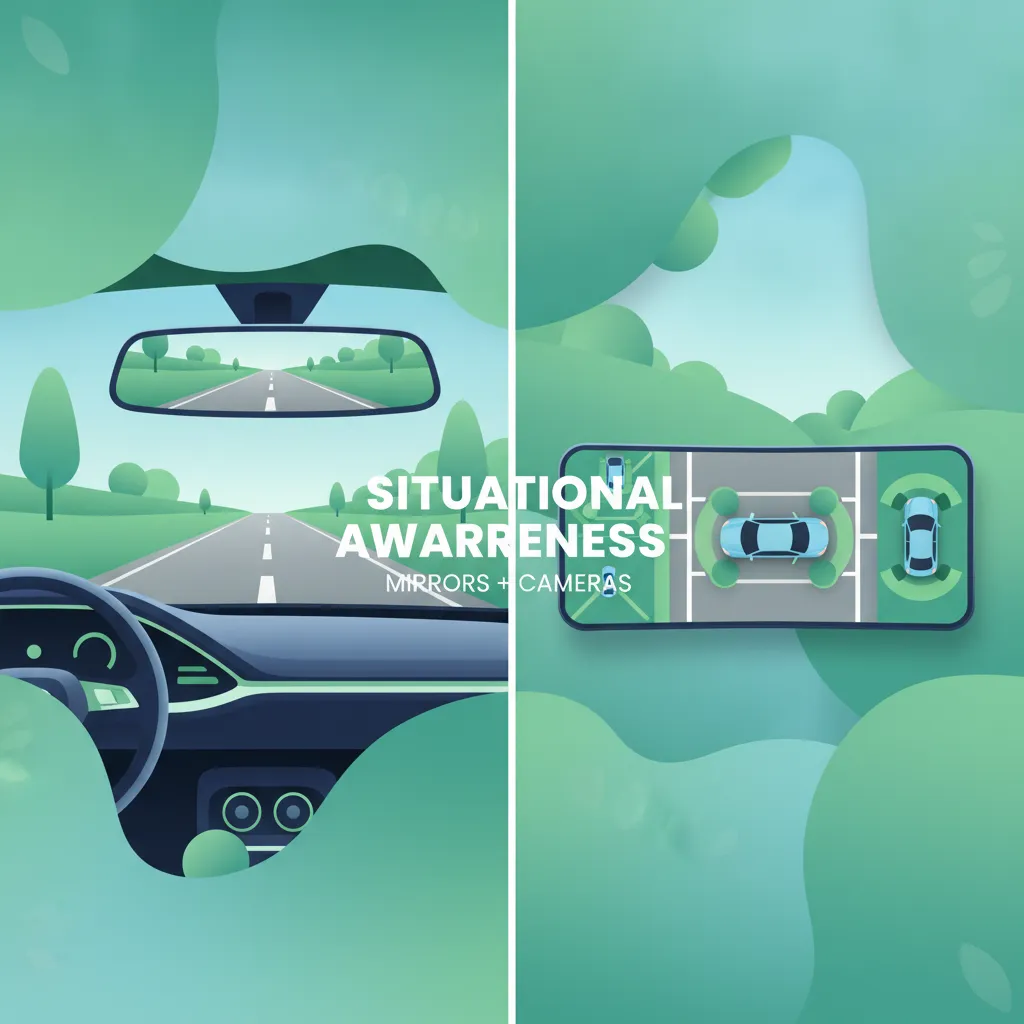
Passenger vehicles are equipped with multiple mirrors, each designed for a specific purpose. This lesson explains how to correctly use standard, wide-angle, and kerb-side mirrors to build a complete picture of the surroundings. It also covers how modern camera systems supplement, but do not replace, the fundamental skill of effective mirror use.
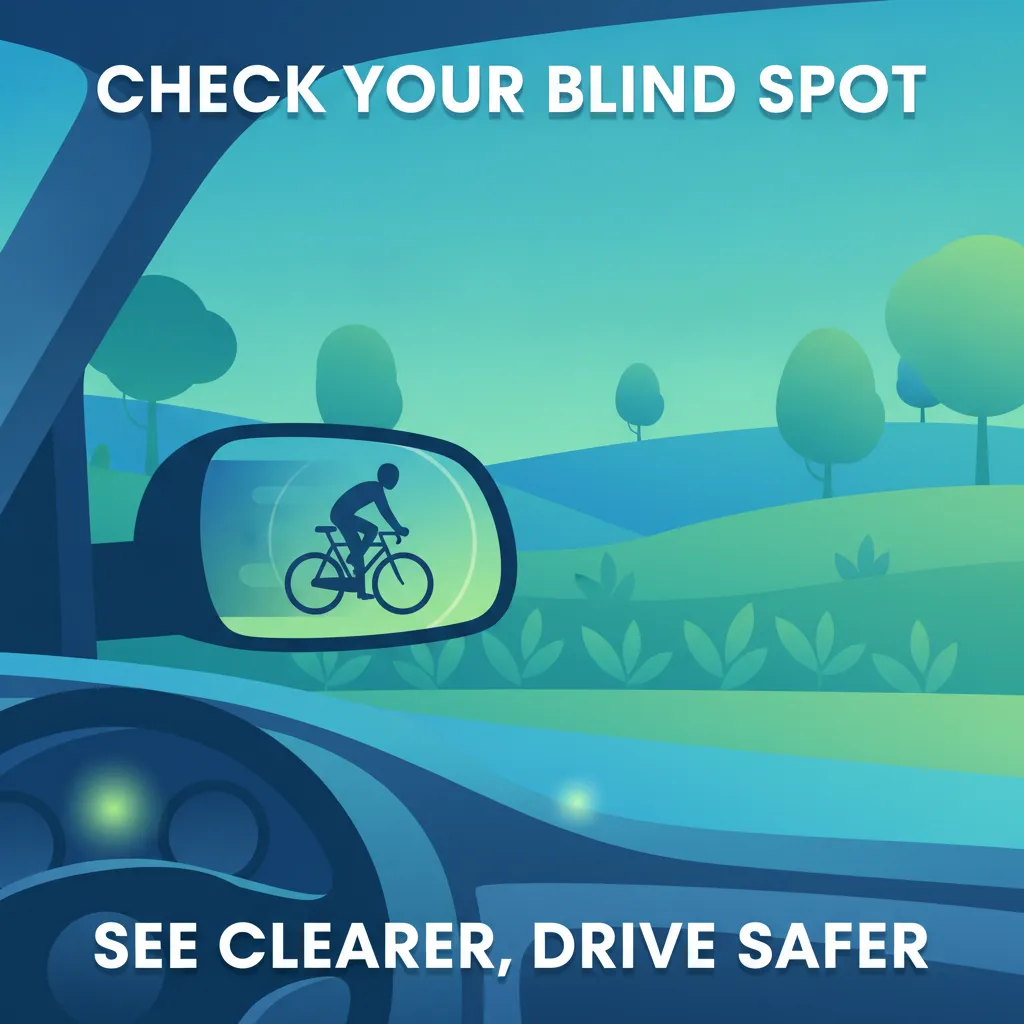
This lesson teaches the correct techniques for positioning and using mirrors to maintain situational awareness. It emphasizes that mirrors alone are insufficient and must be supplemented with physical shoulder and head checks to cover blind spots. Combining these observation methods is essential for making safe lane changes and maneuvers in traffic.
Find clear answers to common questions learners have about Right-Turn Conflicts and Specific Dangers for Cyclists. Learn how the lesson is structured, which driving theory objectives it supports, and how it fits into the overall learning path of units and curriculum progression in Switzerland. These explanations help you understand key concepts, lesson flow, and exam focused study goals.
Because cyclists often attempt to overtake on the nearside as the lorry slows down to turn right. Due to the size of the lorry and the position of the blind spots, the driver may not see the cyclist, leading to severe accidents.
You must use all required mirrors (front, side, and kerb view) systematically before you begin the turn and check them repeatedly while performing the maneuver. If in doubt, wait and ensure the area is clear.
Priority rules can be complex in Switzerland. Regardless of who has the formal right of way, the professional driver of a heavy vehicle has a heightened duty of care to ensure the safety of vulnerable road users who may be in danger.
By positioning your vehicle slightly to the right before starting the turn, you can physically block a cyclist from attempting to squeeze into the space between your vehicle and the kerb.
Pinpoint specific Swiss traffic rules, road signs, or driving situations you need to master. Use the practice search to start a focused revision session now and build confidence for your official driving theory exam.