
This lesson is essential for Category D drivers, focusing on the physics of large vehicle movement during turns. You will explore how to manage swept path and tail swing to ensure passenger safety and avoid damaging infrastructure, building a foundation for the advanced manoeuvring skills required in Unit 8.

Lesson content overview
Navigating a large passenger vehicle, such as a bus or coach, requires a profound understanding of its unique physical dynamics. Unlike smaller cars, these vehicles demand significantly more space when turning, due to phenomena known as the "swept path" and "rear overhang" (often called "tail swing"). Mastering these concepts is not just about avoiding minor bumps; it's about ensuring the safety of your passengers, other road users, and the vehicle itself, especially within the confines of Switzerland's varied urban and rural environments.
This lesson delves into the critical geometric and dynamic principles that govern how a bus or coach moves during a turn. You will learn how the rear of your vehicle behaves differently from the front, allowing you to anticipate its full spatial footprint and manoeuvre safely in challenging situations like intersections, bus terminals, and busy city streets.
For drivers pursuing a Swiss Category D driving license, a deep grasp of swept path and rear overhang is paramount. Buses and coaches, with their considerable length and wheelbase, exhibit specific turning characteristics that, if misjudged, can lead to serious consequences. Collisions with kerbs, street furniture, parked vehicles, and, most critically, pedestrians or cyclists, are often direct results of failing to account for these movements. This knowledge forms a fundamental building block for safe operation in confined spaces and for executing precise turning manoeuvres required for professional passenger transport.
To effectively manage a large vehicle during turns, it is essential to first understand the core terminology and physics involved. Each concept plays a distinct role in determining the overall space your bus or coach will occupy.
The swept path refers to the trajectory followed by the outermost rear wheel of a vehicle as it makes a turn. When a bus or coach turns, its rear wheels do not follow the exact same path as its front wheels. Instead, the rear wheels cut inside the arc traced by the front wheels, creating a shorter radius. This inward tracking means that the total area covered by the vehicle during a turn is wider than the vehicle itself.
Understanding the swept path is vital because it defines the absolute minimum width of the turning space required for the vehicle's wheels. If this path is not kept clear, the rear wheels could mount a kerb, strike a signpost, or even encroach onto a pedestrian zone, leading to damage or injury. Swiss road traffic law strictly prohibits mounting kerbs with any part of the vehicle, underscoring the importance of accurate swept path management.
Beyond the swept path of the wheels, another critical factor is the rear overhang, commonly known as tail swing. This refers to the lateral distance that the extreme rear end of the vehicle (the roof, rear bumper, or rear corner) swings outwards, or sometimes inwards, beyond the trajectory of the rear wheels during a turn. Because the vehicle's body extends significantly behind its rear axle, this section of the bus or coach can move substantially out of the primary turning arc.
For a bus or coach, particularly a long one, the tail swing can be considerable. During a right turn, for instance, the rear-left corner of the vehicle will swing outwards, potentially sweeping across a pavement or into an adjacent lane. Conversely, during a left turn, the rear-right corner will swing outwards. Failure to account for this outward swing can result in hitting pedestrians, cyclists, road signs, streetlights, or other vehicles. This dynamic is especially pronounced in rigid (non-articulated) long vehicles where the entire body rotates around a fixed point.
The pivot point is the geometric reference point around which the rear overhang rotates during a turn. For most buses and coaches, this point is located near the rear axle. The further the rear of the vehicle extends past this pivot point (i.e., the longer the rear overhang), the greater the lateral displacement, or tail swing, will be during a turn.
Understanding the pivot point helps drivers mentally calculate the maximum sweep radius of the tail. By being aware of where this point is located on their specific vehicle, professional drivers can better anticipate the exact trajectory of the rear corners and adjust their entry into a turn accordingly to maintain safe clearances. It is a critical aspect for calibrating turn positions and ensuring that the vehicle's rear does not become an unexpected hazard.
The turning circle represents the smallest possible circular path a vehicle can negotiate. It is typically measured by the path of the outer front wheel. However, for a complete understanding of the space required, the turning circle must encompass not just the front wheels, but also the entire swept path of the rear wheels and the maximum extent of the rear overhang.
The turning circle dictates the minimum road width and intersection radius a bus or coach needs to complete a turn without requiring additional adjustments or encroaching onto other lanes or pavements. Professional drivers must be acutely aware of their vehicle's turning circle specifications, as road designs (e.g., lane widths, intersection geometries) are often created to accommodate specific vehicle sizes.
Blind spot management is the continuous process of monitoring areas around the vehicle that cannot be directly seen from the driver's seat. This is particularly critical during turns when dealing with the swept path and rear overhang. The areas most vulnerable to tail swing collisions are often located in the driver's blind spots.
Effective blind spot management for large vehicles involves more than just quick glances. It requires a systematic approach of checking mirrors, utilising camera systems (if equipped), and making physical head checks, especially before and during a turn.
Proper adjustment of all mirrors (side, wide-angle, and kerb mirrors) is fundamental to allow the driver to see the entire length of the vehicle's side and rear corners, particularly as they swing during a turn. This vigilance is crucial for detecting pedestrians, cyclists, or obstacles that might enter the swept path or tail swing area.
In Switzerland, professional drivers of Category D vehicles are bound by strict regulations to ensure the safety of all road users and the integrity of infrastructure. While manoeuvring, it is a mandatory requirement that the swept path and rear overhang of the vehicle do not make contact with any obstacles, pedestrians, cyclists, or other road users. Furthermore, mounting the kerb with any part of the vehicle is strictly prohibited.
These rules apply to all turning manoeuvres, including negotiating intersections, entering and exiting bus stops, changing lanes, and reversing. Non-compliance can lead to severe penalties, including fines, license points, and, in the event of an accident, significant legal liability. The rationale behind these regulations is to prevent serious injury to vulnerable road users and to protect the substantial public investment in road infrastructure. Adhering to these principles ensures the safe and responsible operation of large passenger vehicles within the Swiss road network.
Remember: Even minor contact with a kerb can indicate a significant misjudgement of space and can damage tyres, suspension, and steering components, potentially compromising vehicle safety.
Even experienced drivers can face challenges when dealing with the complexities of swept path and rear overhang. Being aware of common pitfalls can help in preventing accidents.
Misjudging the turning radius is a frequent cause of kerb mounting. This often happens when a driver initiates a turn too early or too sharply, causing the rear wheels or the rear overhang to clip or ride up onto the pavement. This can damage the vehicle and endanger pedestrians. To avoid this, always aim for a wider entry into the turn, providing ample space for the rear of the vehicle to track correctly.
Failing to adequately check blind spots before and during a turn is a major risk factor. Cyclists or pedestrians can quickly enter the area swept by the rear overhang, especially in urban environments. A systematic mirror check combined with a quick head turn (if practical and safe) and reliance on camera systems is essential.
Attempting to turn on a road segment that is too narrow for the bus's dimensions can force the driver to encroach into oncoming traffic lanes or to perform a multi-point turn unexpectedly. Always assess the turn's feasibility well in advance. If in doubt, choose an alternative route or be prepared to stop and reassess, perhaps even requesting assistance if available.
An unevenly loaded bus, or one with a significantly unbalanced passenger distribution, can subtly alter the vehicle's handling characteristics. While less dramatic than with cargo, this can influence body roll and slightly affect the effective turning radius, potentially leading to misjudgements in tight turns. Always be mindful of the vehicle's overall stability.
Driving in adverse weather conditions such as heavy rain, fog, or at night significantly reduces visibility. This diminishes the driver's ability to accurately perceive distances and the precise movement of the vehicle's rear. In such conditions, reducing speed, increasing reliance on mirrors and camera systems, and enhancing vigilance are critical.
Roadside furniture, parked vehicles, construction barriers, and utility poles pose static hazards. Drivers must proactively account for these objects and ensure the tail swing clears them with a safe margin. This often means sacrificing an earlier turn initiation for a wider, safer approach.
For drivers of articulated buses (D1E, DE categories), the dynamics of tail swing are even more complex due to the additional articulation point and the trailer's own overhang. The trailer's rear can swing independently, requiring even greater caution and a more expansive turning path.
Mirrors that are not correctly adjusted can severely limit the driver's field of vision, particularly concerning the rear corners of the vehicle. Drivers must regularly check and adjust their mirrors to ensure optimal visibility of the swept path and tail swing areas.
The principles of swept path and rear overhang remain constant, but their practical application varies significantly depending on the driving environment and conditions.
Let's explore how these concepts apply in typical driving situations for a Swiss Category D driver.
Challenge: The driver needs to make a left turn onto a narrow street, ensuring the front of the bus clears parked cars on the left and the rear overhang avoids striking the kerb or a pedestrian waiting at the corner.
Correct Action: The driver slows down, checks the left-side mirrors and blind spots. They position the bus slightly towards the right of their lane before initiating the turn, allowing for a wider sweep. This provides enough room for the front wheels to clear the corner and ensures the rear wheels track clear of the kerb and the tail swing clears the pedestrian and lamppost on the right. Throughout the turn, the driver continuously monitors mirrors, especially the right rear mirror, to watch for tail swing clearance.
Incorrect Action: The driver turns too sharply or too early, aiming for the inner corner of the intersection. The front of the bus might clear, but the rear-right corner (tail swing) sweeps outward, mounting the kerb, potentially striking the pedestrian or the lamppost.
Challenge: A coach with a trailer is making a right turn on a winding rural road, possibly in light rain, and needs to account for the increased length and the trailer's specific tail swing.
Correct Action: The driver significantly reduces speed, especially given the wet conditions. Before initiating the turn, the driver checks all mirrors, paying extra attention to the rear of the trailer. They position the coach well to the left side of their lane, taking a wider approach to the right turn. This wider entry ensures that both the coach's rear and the trailer's rear clear the hedge and fence without incident. The driver monitors the trailer's path through side and rear-view mirrors throughout the turn.
Incorrect Action: The driver approaches the turn without adequately widening their entry or fails to account for the trailer's additional overhang. As the coach turns, the trailer's rear corner collides with the fence or scrapes the hedge.
Challenge: Making a right turn in low light conditions near a busy pedestrian zone, where visibility of the tail swing and potential obstacles is reduced.
Correct Action: The driver activates appropriate lighting (low beams, fog lights if necessary), reduces speed considerably, and prioritises the safety of pedestrians. They activate any available rear-view or side-view camera systems. Before and during the turn, intense mirror checks are performed to monitor the rear-left corner for tail swing and to ensure no pedestrian steps into its path. The bus is positioned to give a generous clearance from the pavement, anticipating the outward swing.
Incorrect Action: The driver relies only on headlights, overestimating their ability to see the vehicle's full dimensions in the dark. The rear overhang comes dangerously close to or brushes against a pedestrian or the street vendor's stall, causing an incident.
Mastering swept path and rear overhang is fundamental for any professional Swiss Category D driver. Remember these critical takeaways:
By consistently applying these principles, you will enhance your driving precision, significantly reduce the risk of accidents, and fulfil your duty of care as a professional bus and coach driver in Switzerland.
Mastering swept path and rear overhang is fundamental for Swiss Category D drivers operating buses and coaches. The rear wheels follow a tighter path than the front wheels (swept path), while the rear body swings outward beyond those wheels (tail swing), meaning the total turning envelope is significantly wider than the vehicle itself. Drivers must position their vehicle appropriately before turns, continuously monitor blind spots, and always maintain clearance from kerbs, pedestrians, cyclists, and infrastructure. Swiss regulations strictly enforce prohibition against kerb mounting or striking obstacles, with particular vigilance required in urban environments, during adverse weather, and when handling articulated vehicle combinations where trailer dynamics add further complexity.
A short set of high-value points that capture the most important learning from this lesson.
The swept path is the trajectory of the rear wheels during a turn, which tracks inside the front wheels, creating a wider overall turning envelope
Rear overhang (tail swing) causes the rear body of the vehicle to swing outwards beyond the rear wheel trajectory, requiring extra clearance space
The pivot point, typically near the rear axle, determines the radius of the tail swing and helps drivers anticipate rear corner movement
Swiss traffic law strictly prohibits mounting kerbs or striking any obstacles with any part of the vehicle during manoeuvres
Blind spot management through systematic mirror checks, camera systems, and physical head turns is essential when turning large vehicles
Explore all units and lessons included in this driving theory course.
During a right turn, the rear-left corner swings outward; during a left turn, the rear-right corner swings outward, and this swing extends beyond the rear wheel path
The turning circle must account for swept path AND tail swing combined, not just the front wheel trajectory
Articulated vehicle combinations (D1E, DE) have additional independent trailer overhang dynamics requiring even wider turning clearance
In adverse weather or low visibility, depth perception is reduced, necessitating slower approach speeds and increased reliance on mirrors and cameras
Position the vehicle slightly away from the intended turn direction before initiating to allow a wider, safer sweep
Initiating a turn too sharply or too early, causing the rear wheels or overhang to clip the kerb or strike obstacles
Failing to perform systematic blind spot checks before and during turns, allowing pedestrians or cyclists to enter the tail swing area unnoticed
Attempting turns on road segments too narrow for the vehicle's dimensions without assessing feasibility in advance
Misjudging the additional overhang requirements when driving articulated vehicles without accounting for the trailer's independent swing
Relying solely on headlights or direct vision at night or in poor weather without adequately using mirrors and camera systems
Lesson content overview
A short set of high-value points that capture the most important learning from this lesson.
The swept path is the trajectory of the rear wheels during a turn, which tracks inside the front wheels, creating a wider overall turning envelope
Rear overhang (tail swing) causes the rear body of the vehicle to swing outwards beyond the rear wheel trajectory, requiring extra clearance space
The pivot point, typically near the rear axle, determines the radius of the tail swing and helps drivers anticipate rear corner movement
Swiss traffic law strictly prohibits mounting kerbs or striking any obstacles with any part of the vehicle during manoeuvres
Blind spot management through systematic mirror checks, camera systems, and physical head turns is essential when turning large vehicles
Explore all units and lessons included in this driving theory course.
During a right turn, the rear-left corner swings outward; during a left turn, the rear-right corner swings outward, and this swing extends beyond the rear wheel path
The turning circle must account for swept path AND tail swing combined, not just the front wheel trajectory
Articulated vehicle combinations (D1E, DE) have additional independent trailer overhang dynamics requiring even wider turning clearance
In adverse weather or low visibility, depth perception is reduced, necessitating slower approach speeds and increased reliance on mirrors and cameras
Position the vehicle slightly away from the intended turn direction before initiating to allow a wider, safer sweep
Initiating a turn too sharply or too early, causing the rear wheels or overhang to clip the kerb or strike obstacles
Failing to perform systematic blind spot checks before and during turns, allowing pedestrians or cyclists to enter the tail swing area unnoticed
Attempting turns on road segments too narrow for the vehicle's dimensions without assessing feasibility in advance
Misjudging the additional overhang requirements when driving articulated vehicles without accounting for the trailer's independent swing
Relying solely on headlights or direct vision at night or in poor weather without adequately using mirrors and camera systems
Explore search topics learners often look for when studying Understanding Swept Path and Rear Overhang (Tail Swing). These topics reflect common questions about road rules, driving situations, safety guidance, and lesson level theory preparation for learners in Switzerland.
Browse additional driving theory lessons that cover connected traffic rules, road signs, and common driving situations related to this topic. Improve your understanding of how different rules interact across everyday traffic scenarios.
Learn advanced techniques for managing swept path and rear overhang during complex turns in Swiss urban and rural environments. Essential for safe bus and coach manoeuvring in challenging situations.
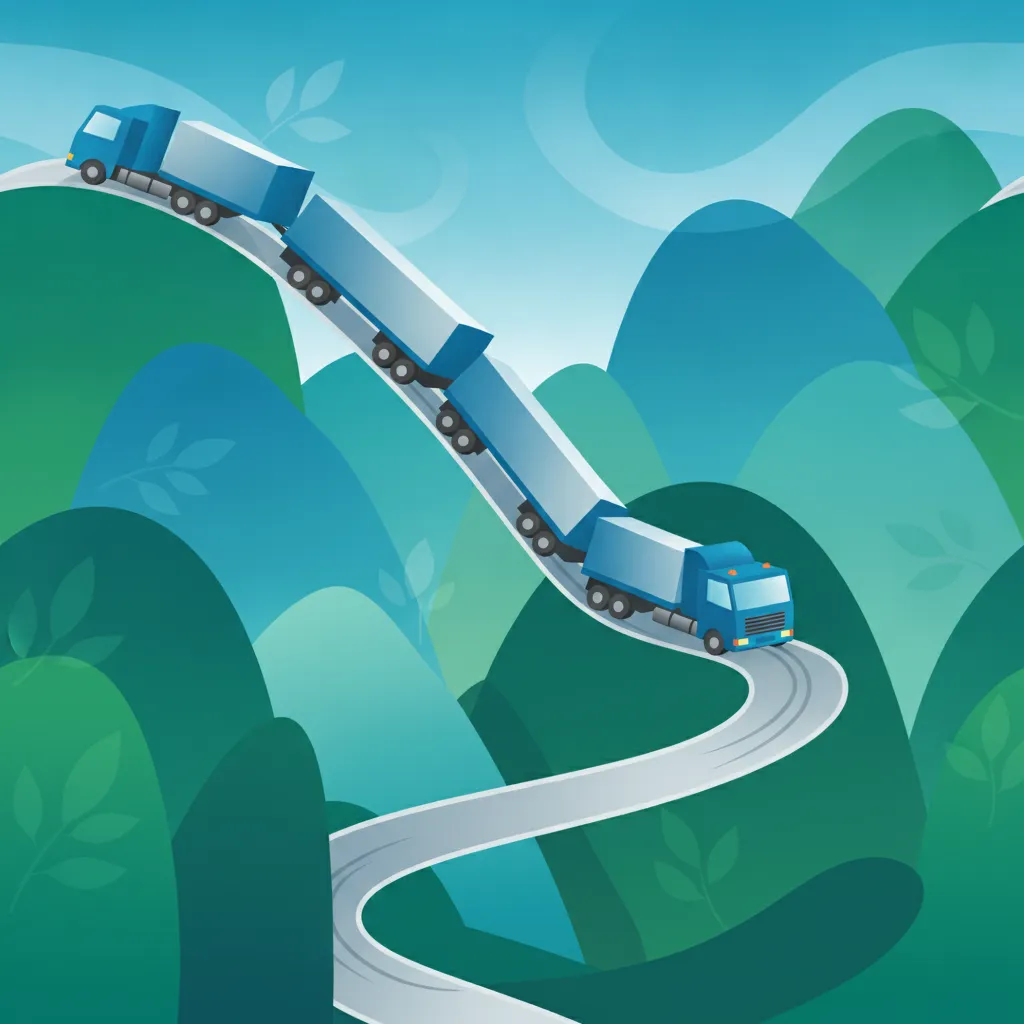
Adding a trailer (D1E) or driving an articulated bus (DE) changes the vehicle's dynamics significantly. This lesson covers the key differences in handling, braking, and reversing. It explains the concept of the pivot point and how to manage the increased length and swept path when turning and manoeuvring.
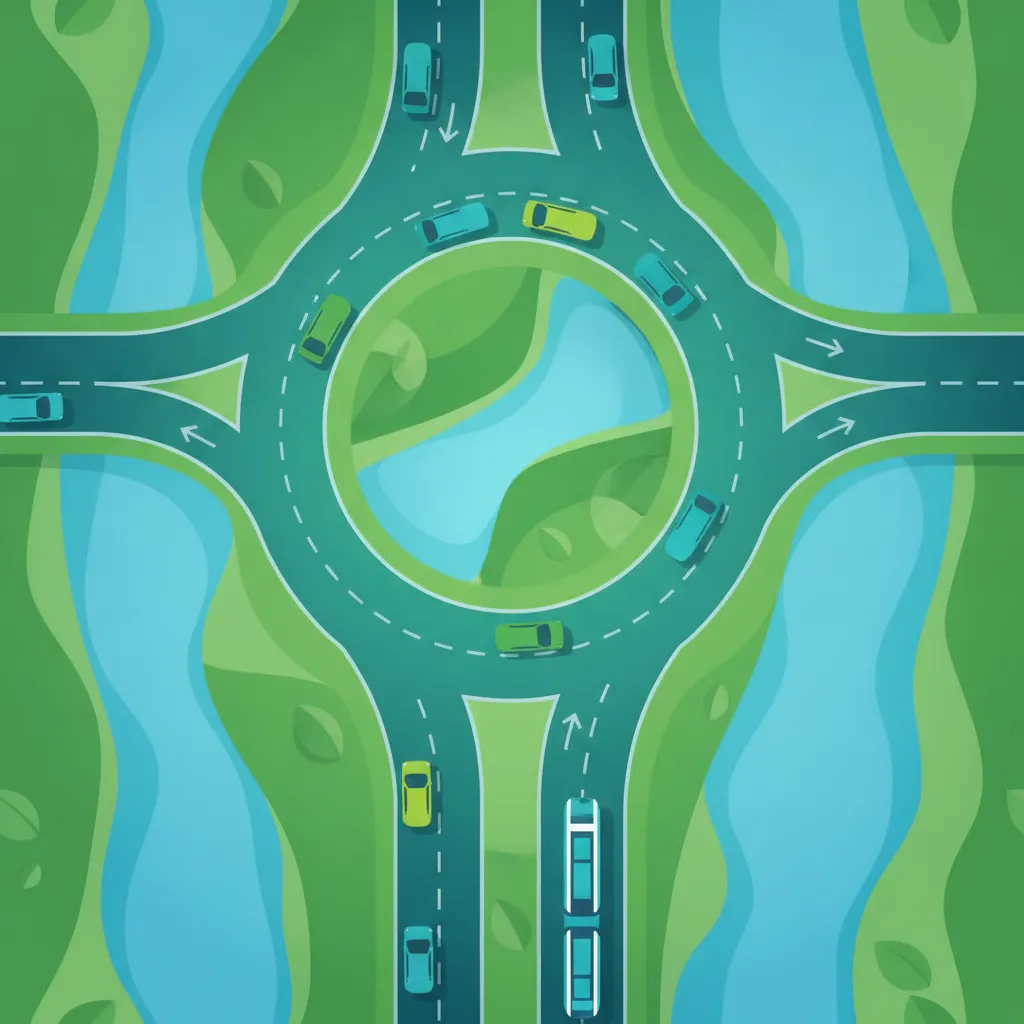
The size of a bus requires careful planning when negotiating complex intersections. This lesson teaches the importance of early lane selection, clear signalling, and comprehensive observation. It provides specific techniques for managing the vehicle's swept path through multi-lane roundabouts and other challenging urban junctions.
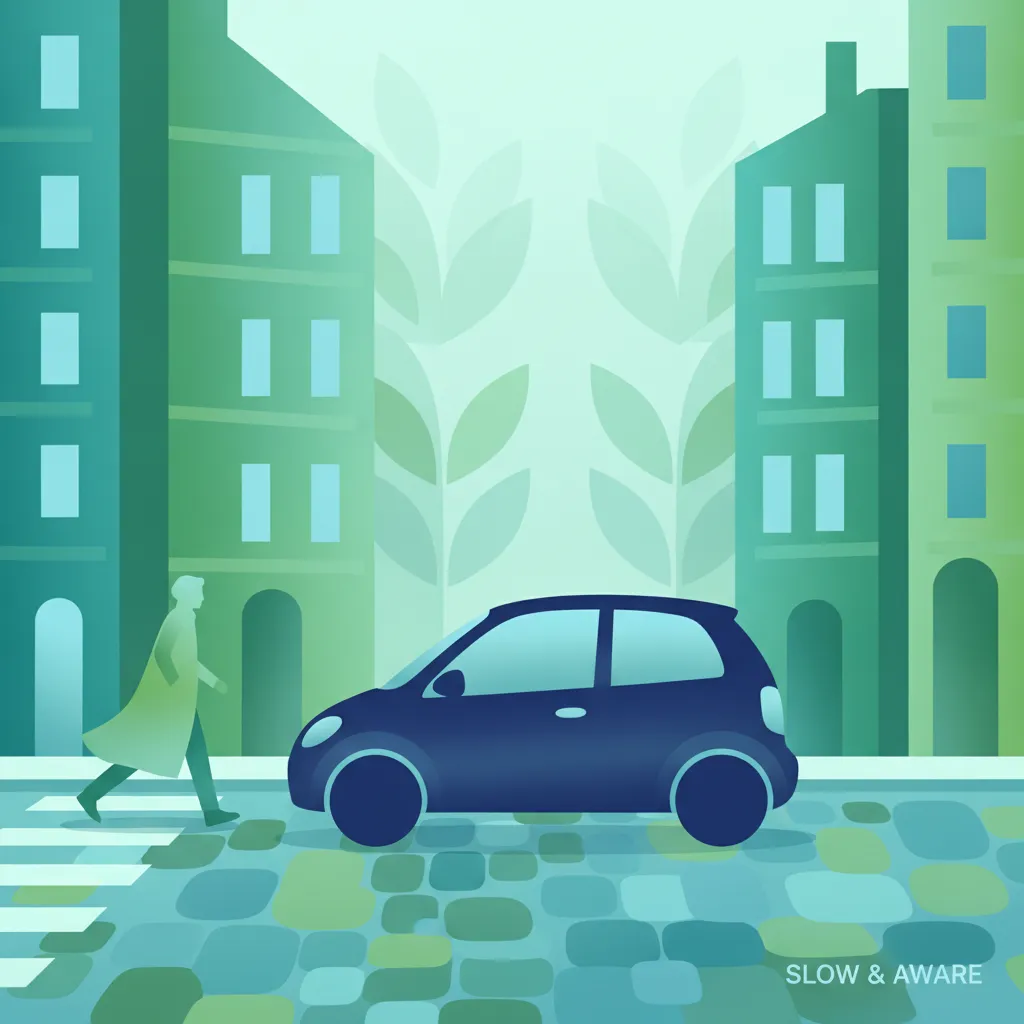
Driving a bus in older parts of a city requires exceptional spatial awareness and precise control. This lesson focuses on assessing clearances, managing front and rear overhang, and negotiating tight turns around parked cars and buildings. A key theme is slow, careful, and deliberate manoeuvring to avoid contact.
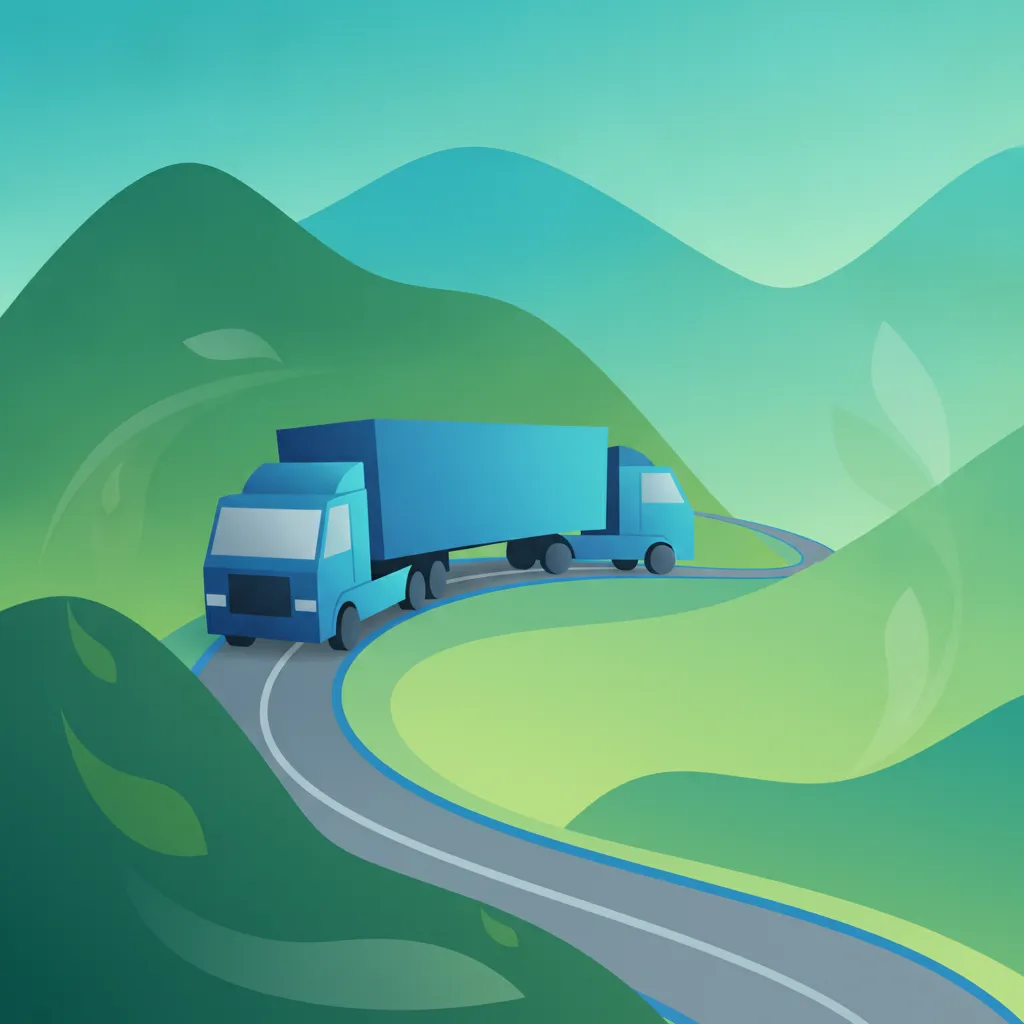
Buses have a high centre of gravity, making them susceptible to rollover forces. This lesson explains how factors like passenger load, luggage placement, and speed affect vehicle stability. Understanding these principles is essential for safe cornering, navigating roundabouts, and handling the vehicle in strong crosswinds.

Reversing is the most dangerous manoeuvre a large vehicle can perform and should be avoided whenever possible. This lesson details a safe system of work for when reversing is unavoidable. It covers the importance of a 360-degree check before starting, the use of a banksman, and how to interpret standard hand signals.
Buses and coaches have significant blind spots to the front, sides, and rear. This lesson maps out these 'no-zones' and teaches a continuous and active scanning process using all available mirrors and direct vision. The goal is to minimize the time any other road user spends undetected in a blind spot.
Motorway driving involves high speeds and requires constant concentration. This lesson covers correct lane discipline, safe procedures for joining and leaving the motorway, and techniques for overtaking other large vehicles. Maintaining appropriate speed and a safe following distance is emphasized throughout.

This lesson moves beyond simply staying within the lines, teaching how to actively position your vehicle within the lane to manage risk. You will learn to create a 'safety cushion' of space around your bus. This proactive approach improves your reaction time and gives other road users more space, reducing the likelihood of conflicts.

When a long vehicle makes a sharp turn, the rear overhang swings out in a wide arc. This lesson illustrates the danger of rear swing, particularly when pulling away from a kerb or turning in confined spaces. Drivers must be aware of this effect and use their mirrors to check for pedestrians, cyclists, or obstacles in the path of the swinging rear of the vehicle or trailer.

A key aspect of professionalism is the ability to provide a smooth ride. This lesson explains how harsh inputs to the accelerator, brakes, and steering can affect passenger comfort and safety. You will learn anticipation and vehicle control techniques to minimize G-forces and ensure a stable, pleasant journey for everyone on board.
Understand typical errors drivers make when dealing with swept path and rear overhang, and learn how to avoid common hazards like kerb mounting and blind spot collisions in Swiss traffic.
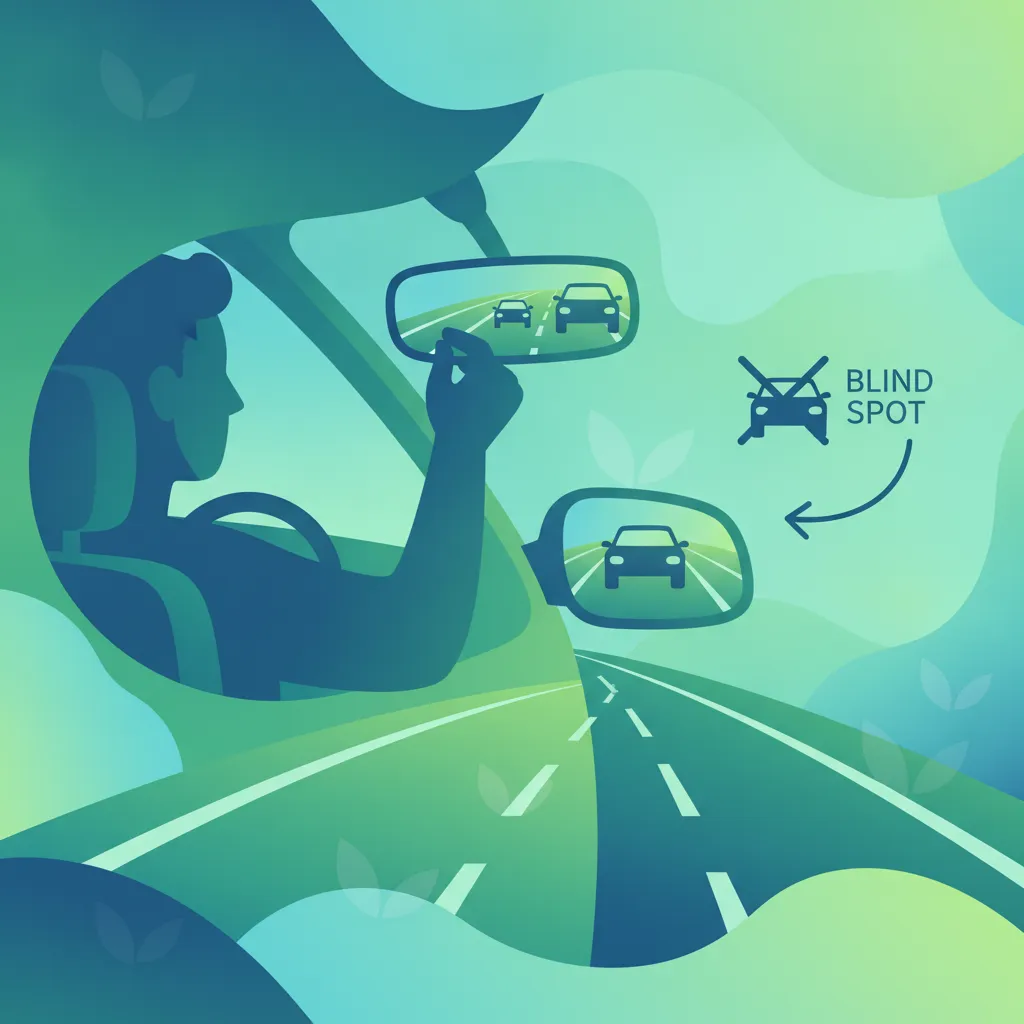
Despite the complex mirror systems, large areas around a truck remain hidden from the driver's view. This lesson maps out these significant blind spots: directly in front, behind, and along both sides of the vehicle. It teaches drivers to be constantly aware of these 'no-zones' and to anticipate that smaller vehicles, cyclists, or pedestrians may be hidden within them, especially before changing lanes or turning.
Turning a long vehicle requires careful planning and execution. This lesson covers the correct procedure: approach, observation, signalling, and positioning the vehicle correctly to allow for the trailer's off-tracking without mounting the kerb. It also highlights the need for constant mirror checks throughout the turn to monitor for cyclists or other vulnerable road users who may enter the danger zone.
The left-hand turn (in Switzerland) is a moment of high risk, as a cyclist can easily be hidden in the vehicle's nearside blind spot. This lesson provides a detailed analysis of this scenario, mandating a slow approach and meticulous, repeated mirror checks before and during the turn. It emphasizes that the driver must assume a cyclist could be there, even if one isn't immediately visible.
Buses and coaches have significant blind spots to the front, sides, and rear. This lesson maps out these 'no-zones' and teaches a continuous and active scanning process using all available mirrors and direct vision. The goal is to minimize the time any other road user spends undetected in a blind spot.
Departing from a bus stop is a high-risk manoeuvre. This lesson details the critical sequence of actions: checking all passengers are clear of the doors, performing a comprehensive mirror and blind spot check, signalling, and waiting for a safe gap in traffic. This systematic approach is essential for preventing collisions with overtaking vehicles, cyclists, or pedestrians.
Reversing is the most dangerous manoeuvre a large vehicle can perform and should be avoided whenever possible. This lesson details a safe system of work for when reversing is unavoidable. It covers the importance of a 360-degree check before starting, the use of a banksman, and how to interpret standard hand signals.
A stopped bus creates a significant visual obstruction for other road users. This lesson focuses on the risk of pedestrians stepping out from in front of the bus and cyclists passing unexpectedly on either side. It reinforces the need for exhaustive mirror and blind spot checks before moving off to prevent tragic 'pull-away' accidents.
This lesson focuses on safe interaction with large vehicles. It highlights the significant blind spots (or 'no-zones') around trucks and buses and teaches riders how to position themselves to remain visible. The content also provides guidance on overtaking large vehicles safely and anticipating their wide turning radius at intersections.
This lesson focuses on mitigating the risk of collisions at intersections, particularly from vehicles turning across the rider's path. It teaches defensive strategies such as positioning for visibility, anticipating driver actions, and using head checks to be aware of surrounding traffic. Managing your own and others' blind spots is presented as a crucial survival skill.
Pedestrians, cyclists, motorcyclists, and e-scooter riders are extremely vulnerable in any interaction with a heavy vehicle. This lesson instills a defensive mindset, teaching drivers to be hyper-aware of VRUs, especially near junctions, crossings, and cycle lanes. It focuses on anticipation and giving VRUs extra space, as they can be unpredictable and are often hidden in blind spots.
Find clear answers to common questions learners have about Understanding Swept Path and Rear Overhang (Tail Swing). Learn how the lesson is structured, which driving theory objectives it supports, and how it fits into the overall learning path of units and curriculum progression in Switzerland. These explanations help you understand key concepts, lesson flow, and exam focused study goals.
Because the rear axle is fixed, the rear corner of a long vehicle follows a path that swings outside of the path taken by the front wheels. This is known as tail swing and poses a significant risk to anyone standing near the corner of the bus.
Swept path refers to the inner area covered by the vehicle during a turn, where the rear wheels follow a shorter radius than the front wheels. Tail swing refers to the outer movement of the rear corner of the vehicle, which can hit objects outside the intended turning path.
Proper approach positioning is key. You must delay your turn until the front wheels have passed the corner point, ensuring you have enough space to accommodate the inward tracking of the rear wheels without mounting the kerb.
Yes, the theory exam often uses scenarios where you must identify the safest path through a junction. You are expected to demonstrate knowledge of how a long vehicle's length affects turn geometry to avoid hazards.
Pinpoint specific Swiss traffic rules, road signs, or driving situations you need to master. Use the practice search to start a focused revision session now and build confidence for your official driving theory exam.