
This lesson focuses on the high-risk procedures required when pulling away from bus stops in a professional passenger vehicle. It provides a systematic approach to verifying safety, ensuring that you can protect pedestrians, cyclists, and traffic before re-entering the flow of the road. By mastering these steps, you build the foundation for safe driving expected in your Swiss Category D theory examination.
Lesson content overview
Departing from a bus stop is a critical manoeuvre that demands the full attention and skill of a professional driver. For holders of a Swiss Category D Driving License, understanding and meticulously executing the procedures for ensuring safe alighting and subsequently re-entering traffic from the kerb is paramount. This lesson delves into the systematic approach required to prevent collisions, protect vulnerable road users, and comply with strict Swiss traffic regulations.
Leaving a bus stop is inherently a high-risk manoeuvre due to the dynamic interplay of various road users. A bus or coach occupies a significant amount of road space, and its departure can easily conflict with overtaking vehicles, approaching cyclists, or even pedestrians who may still be near the vehicle. Errors during this phase can lead to serious accidents, passenger injuries, and legal consequences. Therefore, a driver's duty of care mandates a systematic, multi-step process to ensure complete situational awareness and clear communication of intentions.
Swiss road traffic rules, particularly the Road Traffic Act (Strassenverkehrsgesetz, SVG) and the Road Traffic Ordinance (Verkehrsregelverordnung, VRV, often referred to as StVO), establish clear obligations for professional drivers of passenger-carrying vehicles. These regulations are designed to protect all road users and ensure the smooth flow of traffic. Non-compliance with these provisions, such as those regarding passenger safety, mirror checks, or signalling, can result in fines, penalty points, or liability in the event of an accident. As a Category D driver, a thorough understanding of these laws is essential for safe and responsible operation.
This lesson is an integral part of your Swiss Category D Driving License Theory Course (Bus & Coach), building upon foundational knowledge of vehicle control, mirror systems, and general road safety concepts, especially concerning vulnerable road users.
Before any movement of the bus can occur, the absolute priority is to ensure that all passengers have safely and completely alighted from the vehicle and are clear of the doors. This step is not merely a formality but a critical safety measure that prevents passengers from being struck by the moving bus.
Passenger clearance verification is a meticulous process that requires both visual and auditory confirmation. As the driver, you must remain stationary until every passenger has stepped onto the pavement and moved a safe distance away from the bus doors and the immediate bus stop area.
Visual Confirmation: After the doors have opened and passengers begin to alight, actively look through the door windows and use relevant interior mirrors to observe passengers exiting the vehicle. Pay close attention to children, elderly passengers, or individuals with mobility aids who may require more time.
Auditory Confirmation: Listen for footfalls, the sounds of doors closing, or any verbal cues indicating that passengers are clear. The absence of movement or sound near the doors, combined with visual confirmation, signals readiness.
Door Closure and Interlock Systems: Once all passengers are confirmed clear, safely close the doors. Modern buses are equipped with door interlock systems that prevent the vehicle from moving if the doors are not fully closed and secured. Never attempt to override or force these systems.
Associated Rules: Swiss road traffic law (StVO Art. 20a) explicitly requires drivers of passenger vehicles to ensure passengers are safely off the vehicle before departure. This legal mandate underscores the importance of your direct observation. Assuming passengers have cleared simply because the doors have opened or closed is a common misunderstanding that can lead to severe consequences.
Once passenger clearance is confirmed and the doors are securely closed, the next crucial step is to gain a complete understanding of the traffic situation around your bus. This involves a systematic and thorough inspection of your mirrors, followed by a physical blind-spot check. Due to the size and design of buses, significant blind spots exist, making these checks indispensable.
The "Look-Last" mirror check is a prescribed sequence for systematically scanning all available mirrors before initiating any manoeuvre, including departure from a bus stop. This method ensures you gain a comprehensive picture of surrounding traffic conditions.
Interior Rearview Mirror: Begin by checking your interior rearview mirror. This provides an overview of traffic directly behind your bus and allows you to observe any passengers still moving within the cabin, though the primary focus here is external traffic.
Left Exterior Mirror: Shift your gaze to the left exterior mirror. This is crucial for monitoring the lane you intend to merge into and identifying any overtaking vehicles, motorcycles, or cyclists approaching from behind on your left side.
Right Exterior Mirror: Finally, check your right exterior mirror. This mirror helps you monitor the immediate area alongside the right side of your bus, especially near the kerb, for pedestrians or cyclists who might unexpectedly approach.
Each glance should last at least 1 to 1.5 seconds to allow your brain sufficient time to process the information. Rapid, fleeting glances are ineffective and can lead to missed hazards. Swiss regulations (StVO Art. 44) mandate that drivers must use mirrors before making any manoeuvre.
Even with perfectly adjusted mirrors, large vehicles like buses have inherent blind spots – areas around the vehicle that are not visible directly or through mirrors. These zones are particularly dangerous because they can easily conceal vulnerable road users such as cyclists, motorcyclists, or pedestrians.
An area around a vehicle that cannot be seen by the driver directly or indirectly through the vehicle's mirrors. These areas are particularly hazardous as they can hide other road users, especially vulnerable ones.
The Role of Physical Head Turns: After completing your systematic mirror checks, you must perform physical head turns to survey these blind spots.
This combination of comprehensive mirror checks and physical blind-spot surveillance provides the fullest possible situational awareness, drastically reducing the risk of collision with unseen road users. StVO Art. 30 specifies that drivers must check blind spots before any direction change.
Once you have confirmed passenger clearance and established a complete picture of your surroundings through mirror and blind-spot checks, the next step is to communicate your intentions to other road users. This involves signalling appropriately and, crucially, yielding when necessary.
Activating your turn indicator is not just a suggestion; it is a mandatory requirement under Swiss traffic law (StVO Art. 40) before any change of direction or lane positioning, including departure from a bus stop.
Activate your turn indicator before you begin to move. This provides other road users with ample warning, allowing them to adjust their speed or position accordingly.
One of the most critical aspects of safely departing from a bus stop is correctly assessing the traffic gap and knowing when to yield. As a bus driver, you must evaluate the speed, distance, and relative position of approaching traffic to determine whether a safe opportunity exists to re-enter the flow of traffic.
After confirming passenger clearance, completing thorough checks, signalling your intent, and identifying a safe gap, the final stage is to execute a smooth and controlled re-entry into traffic.
This controlled approach to re-entry not only enhances safety but also contributes to efficient traffic flow and reflects your professionalism as a Category D driver. It reduces the chances of dangerous overtaking manoeuvres by other drivers and ensures a comfortable ride for your passengers.
The principles of safe alighting and departure remain constant, but their application must be adapted to various prevailing conditions. Professional drivers must consider environmental factors, road types, vehicle characteristics, and the presence of vulnerable road users.
Understanding common pitfalls is key to avoiding them. Professional drivers must be aware of typical mistakes that lead to incidents during bus stop departures.
The safe alighting of passengers and the subsequent departure from the kerb are fundamental responsibilities for every professional driver holding a Swiss Category D Driving License. This lesson has detailed the critical sequence of actions required:
By adopting this systematic, multi-step approach and adapting it to prevailing conditions, you significantly reduce the risk of collisions, protect vulnerable road users, and uphold the highest standards of professional driving. Adherence to Swiss traffic laws is not merely a legal obligation but a cornerstone of your duty of care as a bus and coach driver.
Safe departure from a bus stop requires a strict sequence: first confirm all passengers have completely cleared the vehicle and doors are closed, then perform a systematic Look-Last mirror check followed by head turns to cover blind spots, activate your turn indicator before moving, and only proceed when a safe gap exists in traffic while yielding to overtaking vehicles as required by StVO Art. 30. Adapt your gap assessment and acceleration to weather conditions, road type, and vehicle load, always prioritising vulnerable road users such as cyclists and pedestrians who may be hidden in blind spots or near the kerb. This systematic approach reduces collision risk, protects all road users, and satisfies both safety standards and Swiss Category D theory exam requirements.
A short set of high-value points that capture the most important learning from this lesson.
Passenger clearance is a legal requirement under Swiss law—verify all passengers have fully exited and moved away from the doors before any movement.
The mandatory Look-Last mirror check sequence (interior, then left exterior, then right exterior) must be followed by physical head turns to survey blind spots.
Turn indicators must be activated before moving and kept on continuously until the bus has fully merged into traffic.
Gap assessment requires dynamic evaluation of approaching traffic speed, distance, and the bus's own acceleration capabilities before re-entering.
Procedures must be adapted to conditions: larger gaps in poor weather, gentler acceleration on slippery surfaces, and extra vigilance for vulnerable road users.
Explore all units and lessons included in this driving theory course.
StVO Art. 20a mandates passenger clearance verification; StVO Art. 30 requires yielding to overtaking traffic; StVO Art. 40 mandates signalling before any manoeuvre.
Door interlock systems prevent vehicle movement when doors are not fully closed—never attempt to override them.
Each mirror glance should last 1 to 1.5 seconds for effective information processing.
Physical head turns are essential even with perfectly adjusted mirrors because buses have significant inherent blind spots.
Blind spot checks include both left shoulder glance (for cyclists in the merge lane) and right shoulder glance (for pedestrians near the kerb).
Premature departure—moving before all passengers have cleared the doors or before doors are fully closed.
Skipping physical blind spot head turns and relying solely on mirrors to check areas alongside and behind the bus.
Late signalling—activating the indicator only as movement begins, or turning it off before full lane merge.
Incorrect gap assessment—underestimating approaching vehicle speed or misjudging the distance needed for a heavy bus to accelerate.
Misinterpreting local signage—failing to recognize signs that alter priority rules at specific bus stops or in bus lanes.
Lesson content overview
A short set of high-value points that capture the most important learning from this lesson.
Passenger clearance is a legal requirement under Swiss law—verify all passengers have fully exited and moved away from the doors before any movement.
The mandatory Look-Last mirror check sequence (interior, then left exterior, then right exterior) must be followed by physical head turns to survey blind spots.
Turn indicators must be activated before moving and kept on continuously until the bus has fully merged into traffic.
Gap assessment requires dynamic evaluation of approaching traffic speed, distance, and the bus's own acceleration capabilities before re-entering.
Procedures must be adapted to conditions: larger gaps in poor weather, gentler acceleration on slippery surfaces, and extra vigilance for vulnerable road users.
Explore all units and lessons included in this driving theory course.
StVO Art. 20a mandates passenger clearance verification; StVO Art. 30 requires yielding to overtaking traffic; StVO Art. 40 mandates signalling before any manoeuvre.
Door interlock systems prevent vehicle movement when doors are not fully closed—never attempt to override them.
Each mirror glance should last 1 to 1.5 seconds for effective information processing.
Physical head turns are essential even with perfectly adjusted mirrors because buses have significant inherent blind spots.
Blind spot checks include both left shoulder glance (for cyclists in the merge lane) and right shoulder glance (for pedestrians near the kerb).
Premature departure—moving before all passengers have cleared the doors or before doors are fully closed.
Skipping physical blind spot head turns and relying solely on mirrors to check areas alongside and behind the bus.
Late signalling—activating the indicator only as movement begins, or turning it off before full lane merge.
Incorrect gap assessment—underestimating approaching vehicle speed or misjudging the distance needed for a heavy bus to accelerate.
Misinterpreting local signage—failing to recognize signs that alter priority rules at specific bus stops or in bus lanes.
Explore search topics learners often look for when studying Ensuring Safe Alighting and Departure from the Kerb. These topics reflect common questions about road rules, driving situations, safety guidance, and lesson level theory preparation for learners in Switzerland.
Browse additional driving theory lessons that cover connected traffic rules, road signs, and common driving situations related to this topic. Improve your understanding of how different rules interact across everyday traffic scenarios.
Learn critical Swiss Category D driving theory on safely departing bus stops. This includes comprehensive checks for blind spots and specific hazards related to cyclists and pedestrians, ensuring compliance with traffic laws.
Pedestrians, cyclists, motorcyclists, and e-scooter riders are extremely vulnerable in any interaction with a heavy vehicle. This lesson instills a defensive mindset, teaching drivers to be hyper-aware of VRUs, especially near junctions, crossings, and cycle lanes. It focuses on anticipation and giving VRUs extra space, as they can be unpredictable and are often hidden in blind spots.

This lesson trains drivers to look beyond other vehicles and actively search for pedestrians, cyclists, and motorcyclists, especially those who may be distracted or unaware. It covers common behavioral patterns of different VRU groups. The goal is to see potential hazards developing early and create time and space to react safely.
A stopped bus creates a significant visual obstruction for other road users. This lesson focuses on the risk of pedestrians stepping out from in front of the bus and cyclists passing unexpectedly on either side. It reinforces the need for exhaustive mirror and blind spot checks before moving off to prevent tragic 'pull-away' accidents.

This lesson focuses on general driving safety in areas with a high concentration of children. It stresses the importance of significantly reducing speed, being prepared for unexpected events, and scanning for children between parked cars. The driver must exhibit maximum vigilance in these high-risk environments at all times.

This lesson focuses on safe interaction with large vehicles. It highlights the significant blind spots (or 'no-zones') around trucks and buses and teaches riders how to position themselves to remain visible. The content also provides guidance on overtaking large vehicles safely and anticipating their wide turning radius at intersections.

Buses and coaches have significant blind spots to the front, sides, and rear. This lesson maps out these 'no-zones' and teaches a continuous and active scanning process using all available mirrors and direct vision. The goal is to minimize the time any other road user spends undetected in a blind spot.

This lesson moves beyond simply staying within the lines, teaching how to actively position your vehicle within the lane to manage risk. You will learn to create a 'safety cushion' of space around your bus. This proactive approach improves your reaction time and gives other road users more space, reducing the likelihood of conflicts.
Driving a bus in older parts of a city requires exceptional spatial awareness and precise control. This lesson focuses on assessing clearances, managing front and rear overhang, and negotiating tight turns around parked cars and buildings. A key theme is slow, careful, and deliberate manoeuvring to avoid contact.

Rural driving requires a different mindset from urban driving. This lesson covers how to position your vehicle on narrow roads, how to use passing places effectively, and how to anticipate hazards like slow-moving farm machinery, animals, and concealed junctions. Managing vehicle width and height is a key focus.
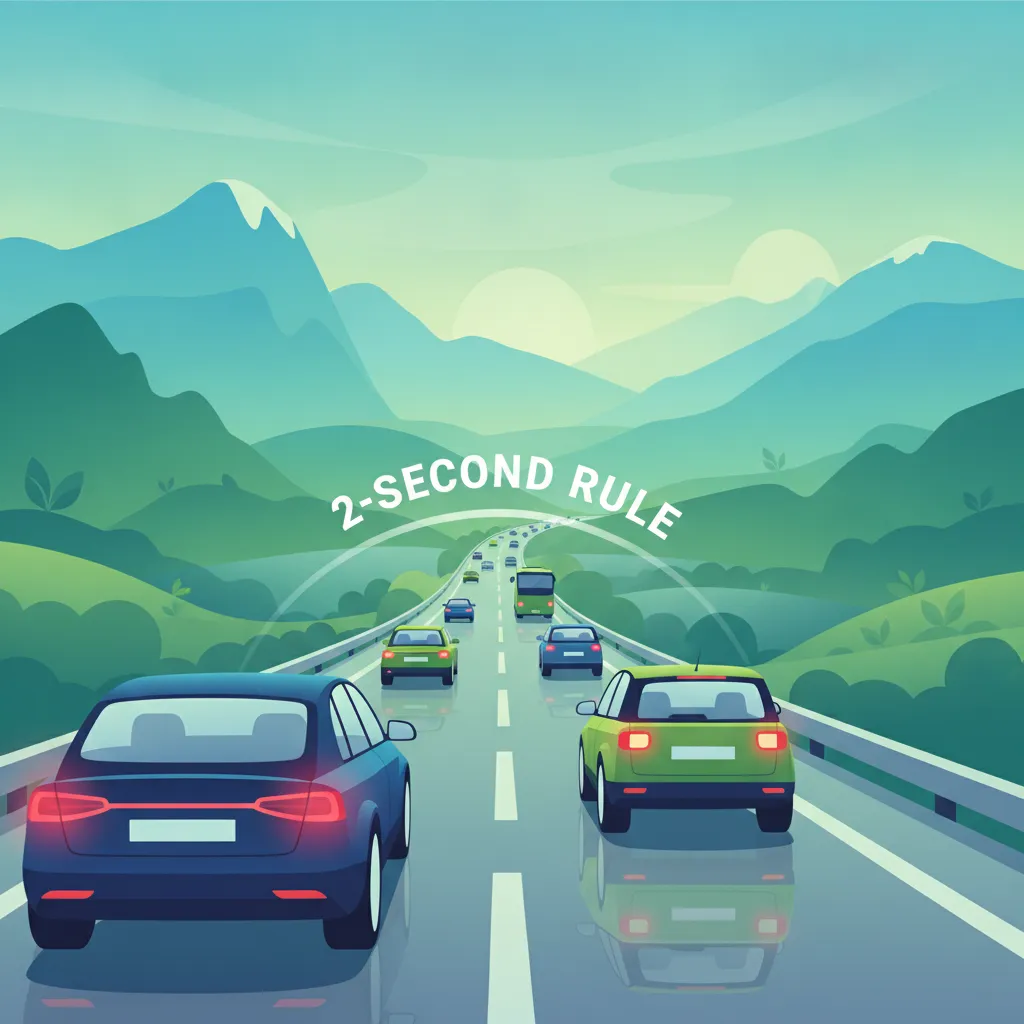
Buses and coaches require significantly more distance to stop than cars. This lesson explains why the 'two-second rule' is insufficient and teaches the appropriate methods for calculating a safe gap in various conditions. Maintaining an adequate safety cushion is one of the most important defensive driving skills.
Explore advanced Category D driving theory for bus stop departures in Switzerland. Understand how weather, road types, and vehicle loads impact safe manoeuvres, focusing on real-world challenges and detailed explanations.
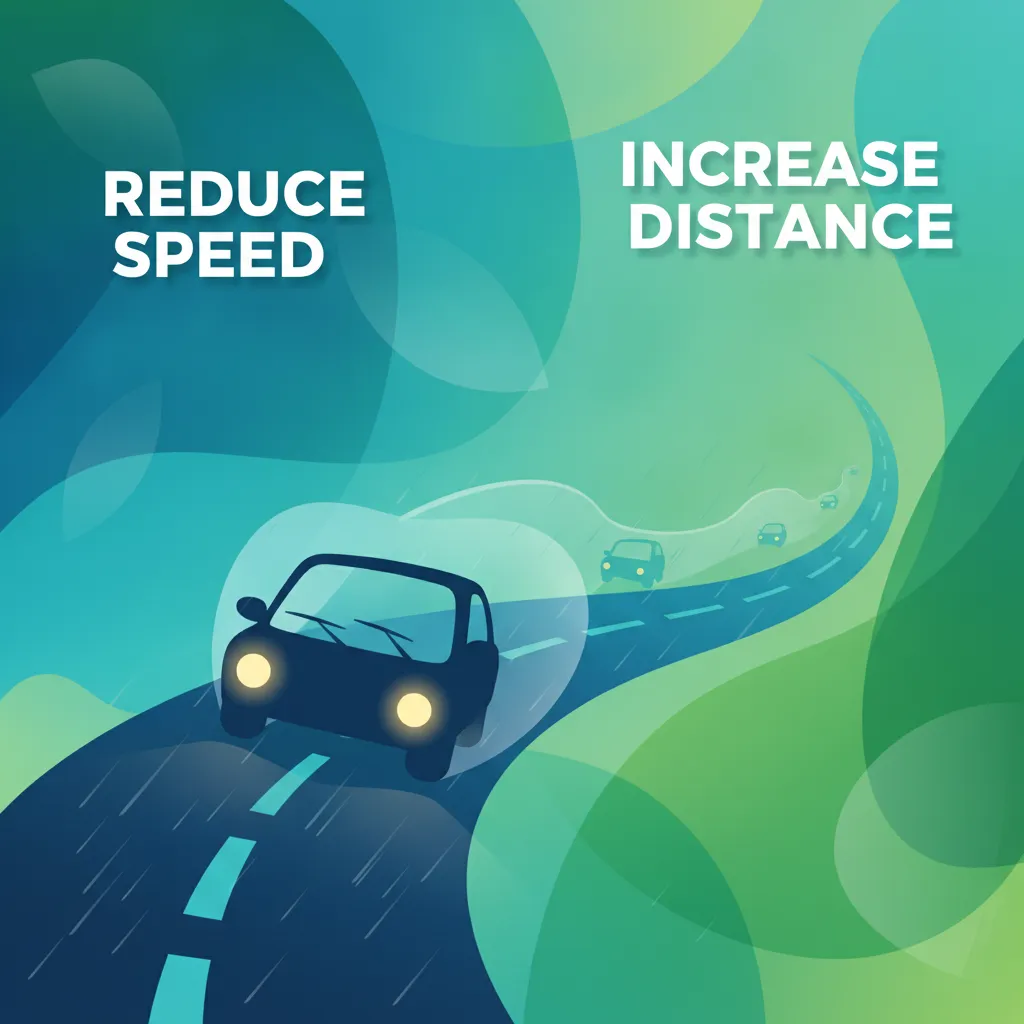
Weather has a profound impact on vehicle handling and visibility. This lesson teaches you how to reduce speed, increase following distances, and use controls smoothly to maintain traction in poor conditions. It also covers the legal requirements and practical application of snow chains in winter.

Driving a large vehicle on mountain passes is a demanding skill. This lesson covers selecting the correct gear for both ascents and descents to maintain control and avoid overheating the brakes. It also explains the specific priority rules that apply on mountain roads and the importance of being aware of sudden weather changes.
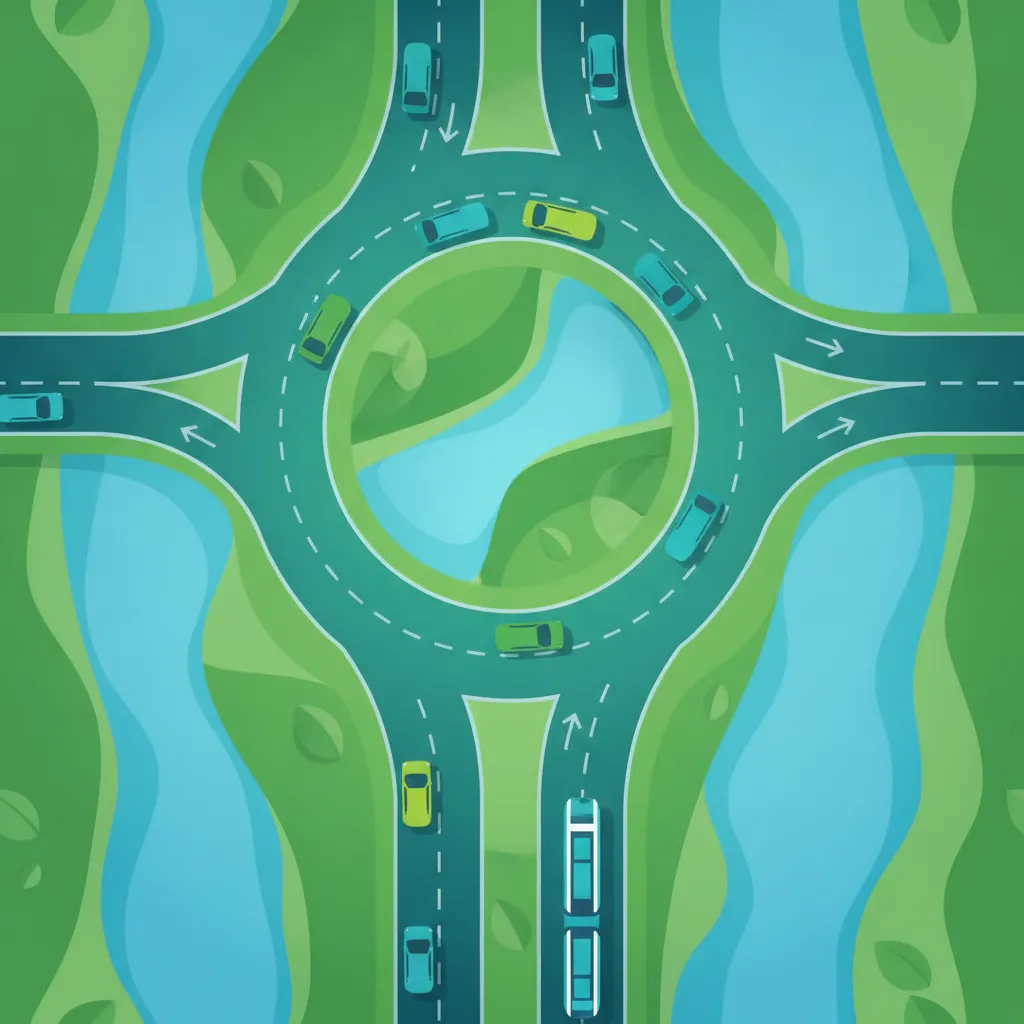
The size of a bus requires careful planning when negotiating complex intersections. This lesson teaches the importance of early lane selection, clear signalling, and comprehensive observation. It provides specific techniques for managing the vehicle's swept path through multi-lane roundabouts and other challenging urban junctions.

Wet or icy roads drastically reduce tyre grip and can double or triple braking distances. This lesson stresses the importance of significantly reducing overall speed and increasing following distances in such conditions. It advises on using brakes with extreme care to avoid skidding and explains how the vehicle's retarder should be used with caution as it can cause the drive wheels to lock up on slippery surfaces.
Rural driving requires a different mindset from urban driving. This lesson covers how to position your vehicle on narrow roads, how to use passing places effectively, and how to anticipate hazards like slow-moving farm machinery, animals, and concealed junctions. Managing vehicle width and height is a key focus.

This lesson focuses on driving on mountain roads, addressing steep gradients, hairpin bends, and altitude-related challenges. You will learn proper techniques for climbing ascents and using engine braking on descents. The content also covers the use of snow chains, recognizing avalanche risks, and interpreting mountain road signs for safe alpine navigation.

This lesson covers complex manoeuvres such as three-point turns, U-turns, and parking in tight spaces. You will learn the step-by-step process for performing a three-point turn and the legal requirements for a U-turn. The content also provides guidance for parking in confined areas, ensuring proper lane usage and positioning during these manoeuvres.
Driving a bus in older parts of a city requires exceptional spatial awareness and precise control. This lesson focuses on assessing clearances, managing front and rear overhang, and negotiating tight turns around parked cars and buildings. A key theme is slow, careful, and deliberate manoeuvring to avoid contact.
This lesson examines the impact of weather and visibility on driving safety and speed selection. It covers how fog, rain, snow, and darkness affect visibility and reaction times, providing guidelines on adjusting speed. It also includes strategies for improving visibility, such as proper headlamp use, to ensure you can adapt to varying weather conditions.
This lesson introduces defensive driving principles, focusing on hazard anticipation, continuous scanning, and proactive positioning. You will learn how to anticipate potential hazards by observing traffic patterns and maintaining situational awareness. Emphasis is placed on proactive speed management to avoid dangerous situations before they arise.
Find clear answers to common questions learners have about Ensuring Safe Alighting and Departure from the Kerb. Learn how the lesson is structured, which driving theory objectives it supports, and how it fits into the overall learning path of units and curriculum progression in Switzerland. These explanations help you understand key concepts, lesson flow, and exam focused study goals.
Professional drivers must account for the vehicle's length and rear overhang. A 'look-last' check before moving prevents accidents with cyclists who may be in your blind spot, ensuring total safety before the vehicle enters the traffic flow.
You must only depart once all passengers have safely boarded or alighted, the doors are fully closed and interlocked, and you have confirmed that the road ahead and alongside is clear of traffic, pedestrians, and cyclists.
When driving a DE combination, you must account for a much larger swept path and longer tail swing. Your observation period must be extended to ensure the trailer is clear of the kerb and stationary obstacles before steering into the lane.
While public transport often has priority in certain situations, you are still responsible for ensuring it is safe to move. Always signal early and wait for a clear gap; do not force your way into traffic, as this creates a significant hazard.
Pinpoint specific Swiss traffic rules, road signs, or driving situations you need to master. Use the practice search to start a focused revision session now and build confidence for your official driving theory exam.