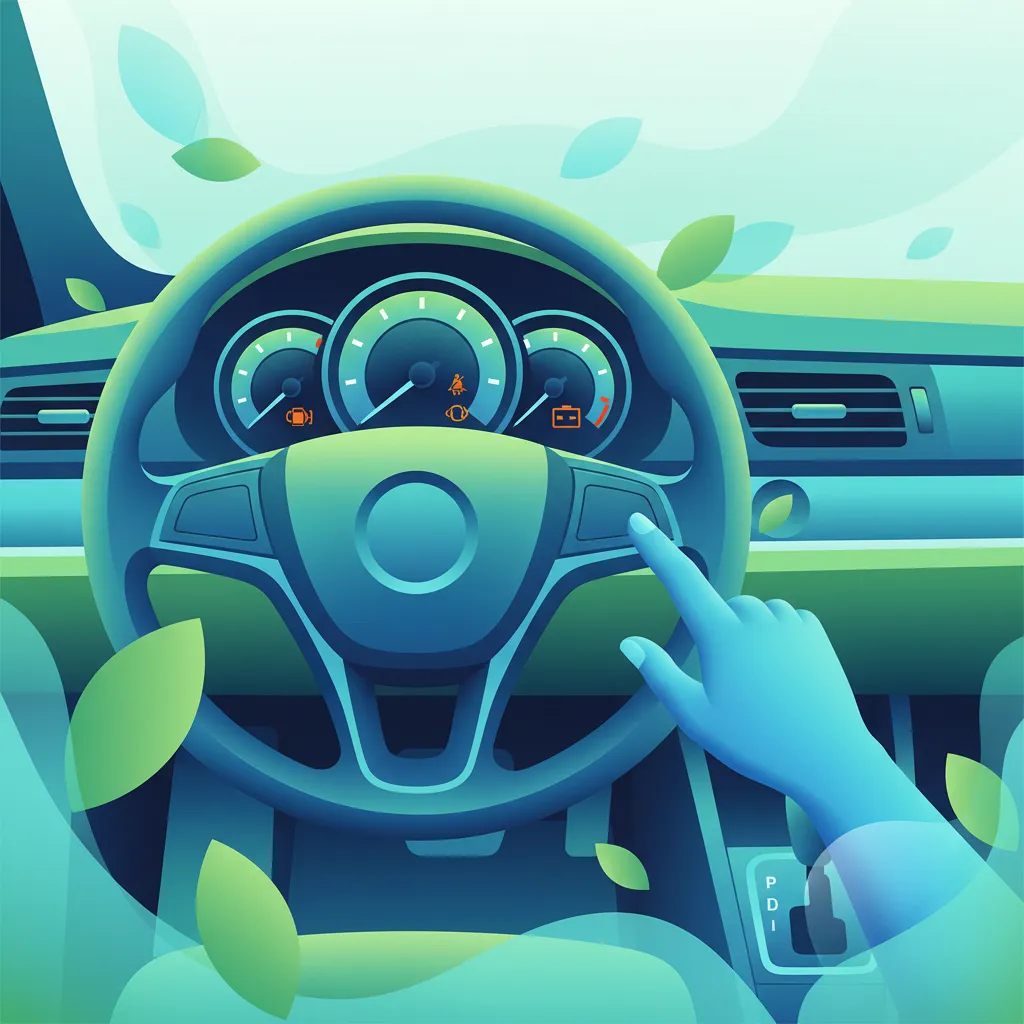
Welcome to the 'Vehicle Basics & Controls' unit! Understanding your vehicle is fundamental to safe driving and passing your Spanish DGT theory exam. This unit covers everything from dashboard indicators and lighting systems to transmission types and essential safety equipment, ensuring you know your car inside and out.
Browse all lessons that make up Vehicle Basics & Controls. Each lesson focuses on specific topics, learning objectives, and core concepts, helping you build essential knowledge and follow a clear, structured progression toward your study goals in Spain.
This lesson focuses on the primary components displayed on a vehicle's dashboard and their functional significance. Learners will identify instruments like the speedometer and fuel gauge and understand the meaning of key warning lights, including ABS, oil pressure, and check engine. The lesson explains how to interpret these signals while driving and the immediate actions required upon their illumination.
This lesson compares manual and automatic transmissions, detailing the mechanical principles behind each system. It explains clutch operation and gear selection for manual vehicles, while describing the torque converter and shifting patterns in automatic gearboxes. The content addresses the impact of each transmission type on fuel efficiency, driver control, and overall vehicle dynamics.
This lesson outlines the proper use and legal requirements of vehicle lighting and mirror systems. It covers headlamps, fog lights, turn signals, and brake lights, clarifying when each must be used according to DGT regulations. The lesson also explains the correct adjustment of rearview and side mirrors and strategies for effective blind-spot monitoring.
This lesson focuses on essential safety equipment and routine maintenance tasks required for legal road operation. It explains the correct use of seat belts, airbags, and child restraints, as well as the importance of maintaining proper tire pressure and brake condition. Additionally, it clarifies the legal vehicle inspection (ITV) process mandated by the DGT to ensure roadworthiness.
This lesson introduces the different fuel types available and their environmental implications, including gasoline, diesel, and hybrid systems. It explains the specific emissions standards (Euro) applicable in Spain and the concept of low-emission zones (ZBE). Learners will understand the regulatory requirements for vehicles in these areas and strategies for reducing fuel consumption through eco-driving.
Explore high-intent keywords and long-tail search topics learners use when researching Vehicle Basics & Controls. These terms reflect how people search for reliable study materials, structured explanations, and unit-level theory preparation support in Spain.
Find clear answers to the most common questions learners ask about Vehicle Basics & Controls. Understand how the unit is organized, what learning goals it supports, and how it contributes to your study progression with structured explanations and practical guidance tailored for learners in Spain.
For the DGT theory exam, focus on understanding the warning lights that indicate critical issues: the brake system warning light, engine oil pressure warning, battery charge warning, and the engine coolant temperature warning. Recognizing these and knowing their immediate implications for safety is paramount.
While the terms autovía and autopista both refer to high-speed roads, there are no specific vehicle requirements that differ solely based on this distinction for the B license category. However, understanding speed limits and general vehicle condition is crucial for all road types.
It is important to understand the fundamental differences between manual and automatic transmissions, as questions may arise regarding their operation, particularly in relation to gear changes, clutch use, and starting on inclines. While you only need to pass for the category of license you are testing for (manual transmission is standard for B), understanding both concepts aids overall driving knowledge.
Spanish law requires vehicles to carry specific safety equipment, including two high-visibility vests (one for each occupant exiting the vehicle in an emergency), and two warning triangles. Checking your vehicle has these, along with functioning seatbelts and the correct spare tire or repair kit, is essential.
ITV stands for Inspección Técnica de Vehículos, the mandatory technical inspection for vehicles in Spain. It ensures the vehicle meets safety and environmental standards. The frequency depends on the vehicle's age and type, with newer passenger cars requiring their first ITV after four years, then every two years until they are ten years old, and annually thereafter.
While a deep dive into engine mechanics isn't required, you should understand basic concepts like the difference between petrol and diesel engines, and how they relate to emissions. Understanding the purpose of essential fluids like oil and coolant, and their related warning lights, is also important for safety.
All included lessons
Lessons in Vehicle Basics & Controls
See who benefits most from studying Vehicle Basics & Controls. This overview explains how the unit supports different learning needs, what level of knowledge is helpful before starting, and how it fits into the overall study path in Spain.
This unit is designed for all aspiring drivers preparing for the Spanish B category driving license theory exam. It's particularly beneficial for beginners who need a solid foundation in vehicle operation and for those who want a thorough understanding of vehicle systems beyond just the legal rules.

Begin your preparation for the Spanish DGT driving licence exam today. Browse our full curriculum to find guided courses, detailed lessons on traffic legislation, road signs, and essential driving practices. Start learning systematically and confidently.
Explore DGT Theory Courses & CurriculumExplore all units and lessons included in this driving theory course.
Begin your preparation for the Spanish DGT driving licence exam today. Browse our full curriculum to find guided courses, detailed lessons on traffic legislation, road signs, and essential driving practices. Start learning systematically and confidently.
Explore DGT Theory Courses & Curriculum