
Welcome to the 'Vehicle Components and Dashboard Indicators' lesson, part of Unit 2: Vehicle Basics & Controls in your Complete Spanish Driving License Theory Course. This lesson is crucial for understanding how your vehicle communicates its status while driving. Mastering these indicators is essential for safe operation and passing your DGT theory exam for categories B and BE.
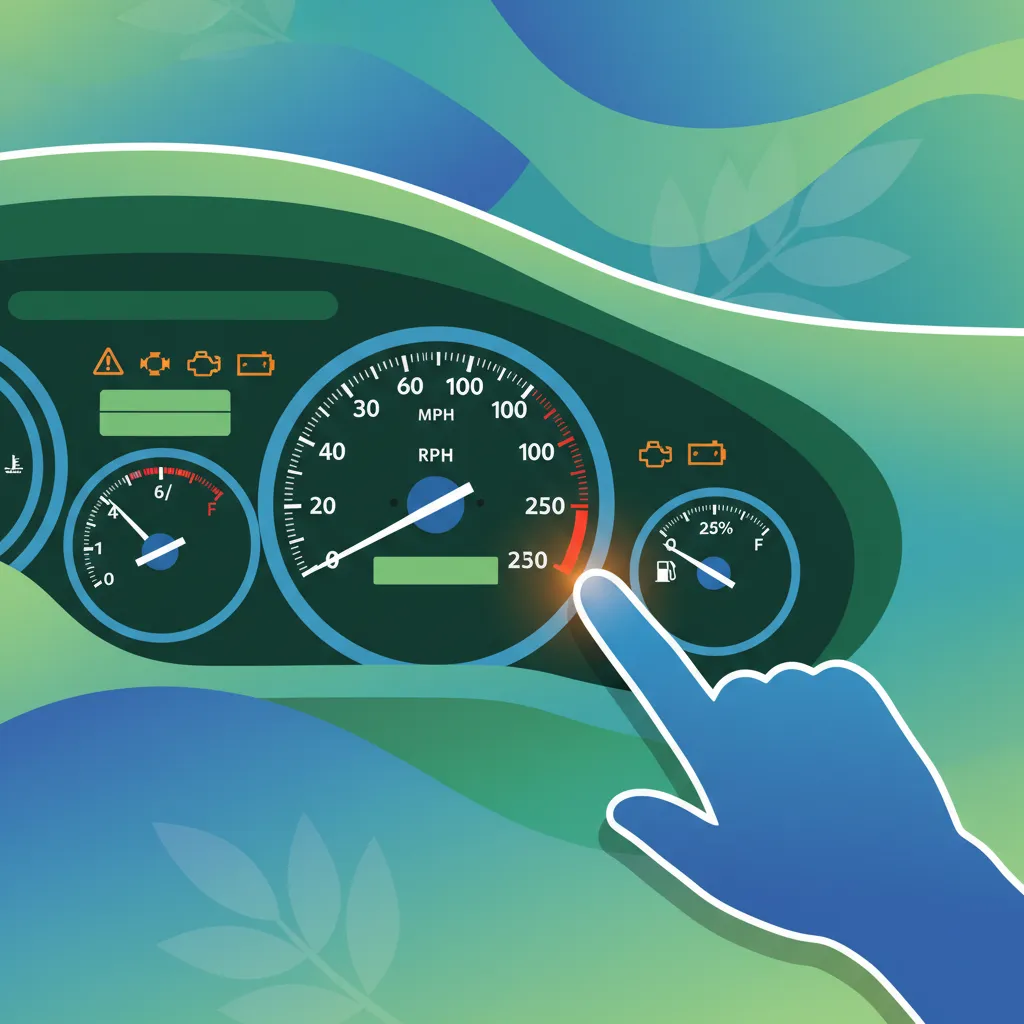
Lesson content overview
Navigating the roads safely in Spain, especially for categories B and BE driving licenses, requires more than just knowing traffic laws and mastering vehicle controls. A crucial skill for every driver is the ability to interpret the vehicle's dashboard. This central display panel acts as your vehicle's primary communication hub, providing continuous feedback on its performance, operational status, and any potential issues that may arise.
Understanding these signals allows you to monitor your vehicle in real-time, respond correctly to warnings, and maintain safe operation under all conditions. Misinterpreting or ignoring dashboard indicators can lead to mechanical failure, dangerous situations, and even legal penalties under DGT (Dirección General de Tráfico) regulations. This lesson will guide you through the primary instruments and warning lights you'll encounter, explaining their functional significance and the actions required upon their illumination.
Your vehicle's dashboard features several fundamental instruments that provide vital operational data. Monitoring these gauges is essential for making informed decisions while driving and ensuring your vehicle functions correctly.
The speedometer is arguably the most critical instrument on your dashboard, displaying your vehicle's speed. In Spain, this is typically measured in kilometres per hour (km/h). Speedometers can be either analog, featuring a needle pointing to numerical markings on a dial, or digital, showing your speed as a precise numerical readout.
Accurate speed monitoring is paramount for complying with posted speed limits, a fundamental requirement under Article 81 of the Spanish Road Code (Código de Circulación). Maintaining a safe speed also allows you to react effectively to changing road conditions and maintain appropriate following distances. While generally reliable, speedometer readings can be slightly affected by non-standard tire sizes, which can lead to minor inaccuracies.
Often integrated near the speedometer, especially in manual transmission vehicles, is the tachometer. This instrument displays the engine's revolutions per minute (RPM). The tachometer helps drivers select the correct gear to optimize fuel efficiency and prevent over-revving or lugging the engine, which can cause damage or reduce performance.
The fuel gauge provides a critical indication of the amount of fuel remaining in your vehicle's tank. Typically, it features markers for "E" (Empty) and "F" (Full), with a needle or digital bars indicating the current level. Many modern vehicles also include a warning light that illuminates when the fuel level is critically low.
Ensuring your vehicle has sufficient fuel for your journey is a basic responsibility of the driver. Running out of fuel can lead to a loss of power, leaving you stranded in a potentially dangerous location, such as on a motorway or a busy intersection. While not always directly prohibited by specific DGT articles to run out of fuel, it can lead to dangerous situations and vehicle immobilization, which traffic police may address.
Do not wait until the needle is on "E" to refuel. Plan your stops and refuel when the gauge indicates a quarter tank or less to avoid unexpected motor stalls and ensure you always have enough reserve.
The engine temperature gauge monitors the temperature of the engine's coolant. This gauge usually displays a range, often marked with a "C" for cold and an "H" for hot, with a normal operating zone in the middle. Maintaining the engine within this normal temperature range is vital for its longevity and performance.
If the temperature gauge moves into the red zone or a red warning light illuminates, it signifies that the engine is overheating. Overheating can rapidly cause severe and costly engine damage. According to Spanish R.D. 2822/1976 (General Vehicle Regulations), if the engine temperature warning lamp (red) illuminates, the driver must stop the vehicle safely and allow the engine to cool down before proceeding. Ignoring this warning can lead to complete engine failure.
Red warning lights on your dashboard indicate a serious issue that demands immediate attention. These are not merely suggestions; they often signify conditions that could lead to significant vehicle damage, loss of control, or immediate danger. Ignoring a red warning light can have severe consequences, both for your safety and your vehicle's integrity.
The oil pressure warning light is one of the most critical indicators on your dashboard. When this red light illuminates, it signals that the engine's oil pressure has fallen below a safe operating threshold. Engine oil is essential for lubricating moving parts, preventing friction, and dissipating heat.
A loss of oil pressure means the engine is not being adequately lubricated, which can lead to rapid and catastrophic damage, potentially causing the engine to seize (stop completely and permanently). Under Article 113 of the Spanish Road Code, if the oil pressure light illuminates while driving, you must stop the vehicle as soon as it can be done safely and turn off the engine. Continuing to drive is strictly prohibited. After stopping, check the oil level if safe to do so, but do not restart the engine without resolving the issue.
This warning light, often depicted as a car battery symbol, indicates a problem with the vehicle's electrical charging system. If it illuminates, it means the alternator (which recharges the battery while the engine runs) is not functioning correctly, or there's an issue with the battery itself.
If this light is red, it signals a serious charging fault. You should stop the vehicle as soon as safely possible, as the battery will eventually drain, leading to a loss of electrical power. This can affect critical systems like power steering, lights, and even the engine itself, making the vehicle unsafe to control. If the light is amber, it might indicate a less critical but still important issue, such as a temporary charging problem. In this case, you should consider reducing the electrical load (e.g., turning off the radio or air conditioning) and seek professional inspection soon.
Amber or yellow warning lights typically indicate a less critical issue than red lights but still require your attention. These lights often signal a malfunction in a specific system or suggest that maintenance is required. While they don't usually demand an immediate stop, they should not be ignored.
The ABS warning light, represented by the letters "ABS" within a circle, illuminates if there is a fault in the Anti-Lock Braking System. The ABS is designed to prevent your wheels from locking up during hard braking, allowing you to maintain steering control, especially on slippery surfaces.
If this light remains illuminated after starting the engine or comes on while driving, it means the ABS may not function correctly. However, your regular braking system will still operate, though you will not have the anti-lock feature. There is no immediate DGT requirement to stop, but you must be aware of reduced braking performance, particularly on wet or low-traction roads. You should adjust your driving style, avoid sudden or harsh braking, and have the system inspected by a qualified mechanic promptly.
Often depicted as an outline of an engine, the Check Engine Light (sometimes called the Malfunction Indicator Lamp, or MIL) illuminates when the vehicle's Engine Control Unit (ECU) detects a malfunction in the engine or emissions system. This could range from a minor issue, like a loose fuel cap, to a more severe problem affecting engine performance or emissions.
When this amber light comes on, it's not always mandatory to stop immediately. However, you should monitor your vehicle's performance closely. If the light flashes, or if you notice other symptoms such as a loss of power, unusual noises, or smoke, you should stop safely and have the vehicle inspected. Otherwise, schedule maintenance as soon as possible. Continuing to drive with the Check Engine Light on can lead to increased fuel consumption, reduced engine life, and potentially more serious damage or failure to pass vehicle emissions inspections.
Beyond critical warnings, your dashboard also features various lights and symbols that provide important information about your vehicle's current status and remind you of essential safety practices. Understanding these helps ensure compliance with DGT regulations and promotes overall road safety.
This light, often a red or yellow symbol of a person wearing a seat belt, flashes or remains illuminated if a driver or passenger is not buckled up when the vehicle is in motion. It's often accompanied by an audible chime.
According to Article 37 of the Spanish Road Code, all drivers and passengers must wear seat belts at all times when the vehicle is in motion. Failure to comply can result in fines and points on your driving license. Always ensure all occupants are properly buckled before starting your journey.
This indicator, typically a light showing an overhead view of a car with an open door, illuminates when one or more doors (including the boot or bonnet in some vehicles) are not fully closed.
Driving with an open door is a significant safety hazard; it can lead to objects falling out, passengers being injured, or the door swinging open unexpectedly and causing an accident. Ensure all doors are securely latched before driving. While not a direct DGT article, traffic police will enforce safe operation, and an open door is considered unsafe.
The handbrake indicator, often a red symbol with an exclamation mark inside a circle, lights up when the parking brake is engaged. It may also illuminate if the brake fluid level is low, but its primary function is to remind you that the handbrake is on.
You must release the parking brake before attempting to drive. Driving with the handbrake engaged can cause excessive wear to the brake pads and shoes, reduce braking efficiency, and potentially lead to overheating or even brake failure.
These green arrows, typically located on either side of the speedometer, flash when you activate your vehicle's turn signals (intermitentes). One arrow flashes for a left turn/lane change, and the other for a right turn/lane change.
Turn signals are crucial for communicating your intentions to other road users. According to Article 82 of the Spanish Road Code, you must activate your turn signal at least three seconds before executing a turn or lane change. Failing to signal, or failing to cancel the signal after completing a maneuver, can lead to confusion, increased accident risk, and potential fines.
This green indicator, often shaped like a headlight with parallel lines pointing horizontally, illuminates when your vehicle's high beam (luces largas) headlights are active.
High beams provide maximum illumination for driving on unlit roads but can temporarily blind oncoming drivers or those you are following. Article 47 of the Spanish Road Code mandates that you must switch to dipped beam (luces cortas) within 150 metres of approaching an oncoming vehicle or when following another vehicle closely. They should also not be used in urban areas where street lighting is adequate.
The DGT places clear responsibilities on drivers to understand and react appropriately to dashboard warnings. Compliance is not just about avoiding penalties; it's fundamental to road safety and vehicle integrity.
| Rule | Applicability | Legal Status | Rationale | Correct Application | Incorrect Application |
|---|---|---|---|---|---|
| Oil Pressure Warning | Red light during operation | Mandatory (DGT) | Prevent catastrophic engine damage | Stop vehicle safely, turn off engine, check oil level before proceeding | Continue driving, risking engine seizure and breakdown |
| ABS Warning Light | Amber light remains on | Mandatory to acknowledge | Informs driver of reduced braking stability | Adjust driving style, avoid hard braking on slippery surfaces, seek repair | Ignore warning and brake aggressively, increasing accident risk |
| Check Engine Light | Amber or red light (without severe symptoms) | Mandatory to address | Indicates potential emissions/engine performance issues | Schedule maintenance promptly; if engine stalls or performs poorly, stop | Ignore and continue driving, potentially worsening issues or failing inspection |
| Battery/Charging Warning | Red light illuminates | Mandatory (DGT) | Prevents sudden loss of electrical power and vehicle control | Stop vehicle when red appears, check alternator/battery, seek repair | Continue driving, risking total power loss and stranding |
| Seat Belt Reminder | Flashing or constant light | Mandatory (DGT) | Enforces occupant protection, reduces injury severity | Buckle seat belt before moving; ensure all passengers are also buckled | Drive with unfastened belt, violating law and increasing injury risk |
| Turn Signal Use | Before lane change/turn | Mandatory (DGT) | Communicates intentions to other road users, prevents collisions | Activate turn signal at least 3 seconds before maneuver | Fail to signal or signal too late, causing confusion and potential accidents |
| High Beam Use | Green light indicates activation | Mandatory (DGT) | Prevents glare for other drivers | Switch to dipped beams within 150m of approaching or following vehicles | Continue with high beams, causing glare, dazzling others, and risking accidents |
Understanding dashboard indicators in isolation is one thing; applying that knowledge in dynamic driving situations is another. Here are some scenarios that illustrate how to react to common dashboard signals.
You are driving your category B vehicle up a long, steep mountain pass under warm conditions. Suddenly, you notice the engine temperature gauge needle has moved into the red zone, and a red warning light (often a thermometer icon) illuminates. Your vehicle's engine is overheating.
You are driving in the bustling city centre of Madrid, and your fuel gauge needle is consistently at "E" (Empty), with the low fuel warning light illuminated. You are unsure when the next petrol station is.
You are driving on a wet Spanish highway after a heavy downpour, and the ABS warning light (amber) illuminates and stays on after you briefly applied your brakes.
Dashboard indicators are not interpreted in a vacuum. Various contextual factors can influence their meaning and the appropriate driver response.
When driving near pedestrians, cyclists, or motorcyclists, the reliability of your braking system is paramount. If the ABS warning light is active, your awareness of your braking limitations must increase dramatically to ensure you can stop safely without skidding and endangering vulnerable users.
Mastering your vehicle's dashboard indicators is a foundational skill for safe and responsible driving in Spain. This knowledge directly supports understanding in subsequent lessons and is crucial for the Spanish driving license theory exam.
This lesson teaches learners to identify and interpret all essential dashboard instruments (speedometer, tachometer, fuel gauge, engine temperature gauge) and warning lights categorized by urgency level. Red warning lights—including oil pressure, battery/charging faults, and engine overheating—require immediate safe stopping and are mandated by Spanish Road Code articles. Amber lights (ABS, Check Engine) signal system malfunctions requiring adjusted driving and prompt professional inspection. Critical driving regulations covered include seat belt requirements under Article 37, turn signal timing (minimum 3 seconds before manoeuvring) per Article 82, and high beam use restrictions within 150 metres of other vehicles under Article 47. Practical scenarios demonstrate correct responses to dashboard signals in real driving conditions, directly preparing learners for both safe vehicle operation and DGT theory exam questions.
A short set of high-value points that capture the most important learning from this lesson.
Dashboard warning lights are color-coded by urgency: red requires immediate stopping, amber requires attention and scheduled maintenance.
The oil pressure light (red) is one of the most critical warnings—continuing to drive can cause catastrophic engine seizure.
ABS and Check Engine lights (amber) mean the system may not function correctly, but standard braking still works—adjust your driving accordingly.
Turn signals must be activated at least 3 seconds before any turn or lane change to comply with Article 82 of the Spanish Road Code.
High beam headlights must be switched to dipped beam within 150 metres of approaching or following another vehicle.
Explore all units and lessons included in this driving theory course.
Red oil pressure light = stop immediately, turn off engine, do not restart until the issue is resolved.
Red battery/charging light = stop as soon as safely possible, as electrical power will eventually fail.
Amber ABS light = no need to stop immediately, but avoid hard braking on slippery surfaces and have it inspected promptly.
Seat belt reminder light indicates non-compliance with Article 37—fines and license points apply.
Speedometer displays speed in km/h; accuracy can be affected by non-standard tire sizes.
Assuming an amber warning light (like Check Engine) means it's safe to continue driving without monitoring or scheduling maintenance.
Forgetting to release the parking brake before driving, causing brake wear and reduced braking efficiency.
Not buckling up immediately when the seat belt reminder appears, which violates Article 37 and carries penalties.
Waiting until the fuel gauge reaches 'E' before looking for a petrol station, risking breakdown in dangerous locations.
Failing to cancel turn signals after completing a maneuver, confusing other road users about your intentions.
Lesson content overview
A short set of high-value points that capture the most important learning from this lesson.
Dashboard warning lights are color-coded by urgency: red requires immediate stopping, amber requires attention and scheduled maintenance.
The oil pressure light (red) is one of the most critical warnings—continuing to drive can cause catastrophic engine seizure.
ABS and Check Engine lights (amber) mean the system may not function correctly, but standard braking still works—adjust your driving accordingly.
Turn signals must be activated at least 3 seconds before any turn or lane change to comply with Article 82 of the Spanish Road Code.
High beam headlights must be switched to dipped beam within 150 metres of approaching or following another vehicle.
Explore all units and lessons included in this driving theory course.
Red oil pressure light = stop immediately, turn off engine, do not restart until the issue is resolved.
Red battery/charging light = stop as soon as safely possible, as electrical power will eventually fail.
Amber ABS light = no need to stop immediately, but avoid hard braking on slippery surfaces and have it inspected promptly.
Seat belt reminder light indicates non-compliance with Article 37—fines and license points apply.
Speedometer displays speed in km/h; accuracy can be affected by non-standard tire sizes.
Assuming an amber warning light (like Check Engine) means it's safe to continue driving without monitoring or scheduling maintenance.
Forgetting to release the parking brake before driving, causing brake wear and reduced braking efficiency.
Not buckling up immediately when the seat belt reminder appears, which violates Article 37 and carries penalties.
Waiting until the fuel gauge reaches 'E' before looking for a petrol station, risking breakdown in dangerous locations.
Failing to cancel turn signals after completing a maneuver, confusing other road users about your intentions.
Explore search topics learners often look for when studying Vehicle Components and Dashboard Indicators. These topics reflect common questions about road rules, driving situations, safety guidance, and lesson level theory preparation for learners in Spain.
Browse additional driving theory lessons that cover connected traffic rules, road signs, and common driving situations related to this topic. Improve your understanding of how different rules interact across everyday traffic scenarios.
Understand critical red and amber warning lights on your car's dashboard for the Spanish driving theory exam. Learn what each light signifies and the required driver actions for safe operation and DGT compliance.
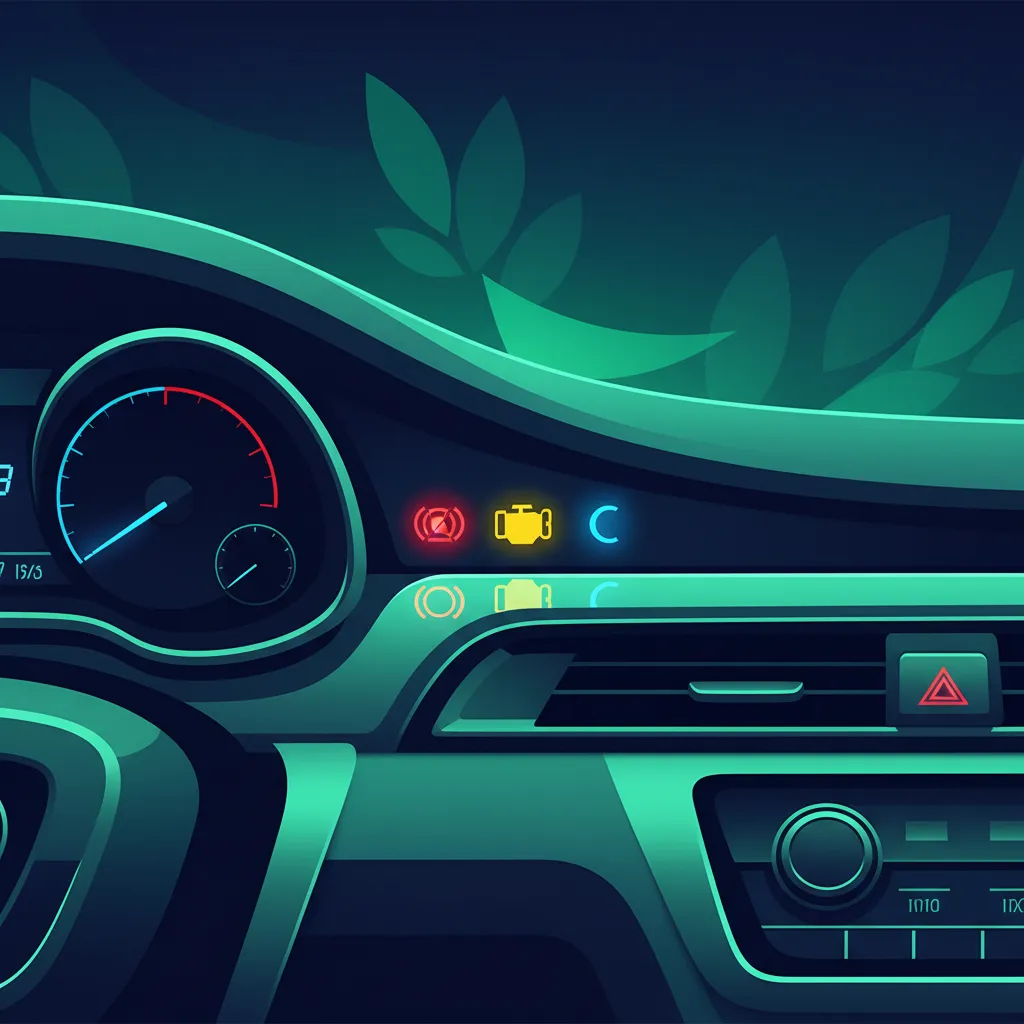
This lesson teaches drivers how to correctly interpret the various indicator lights and warning messages on a truck's dashboard. It covers common alerts related to the engine, braking system (ABS), and electronic stability control (ESC). Understanding these warnings is crucial for early fault detection, enabling drivers to take appropriate action and ensure the vehicle remains safe to operate.

This lesson outlines the proper use and legal requirements of vehicle lighting and mirror systems. It covers headlamps, fog lights, turn signals, and brake lights, clarifying when each must be used according to DGT regulations. The lesson also explains the correct adjustment of rearview and side mirrors and strategies for effective blind-spot monitoring.
This lesson focuses on the comprehensive understanding of traffic light signals and their timing sequences. It defines the meanings of steady red, amber, and green lights, as well as flashing amber and arrow signals. The content also covers pedestrian and cyclist phases, describing the actions drivers must take during each signal change to maintain safety and compliance.
This lesson covers how environmental conditions such as rain, fog, and darkness affect driving safety. It instructs drivers on adjusting speed, using appropriate lighting, and increasing following distance to compensate for reduced visibility and traction. The lesson incorporates DGT safety recommendations for handling adverse weather to mitigate risk and maintain control.
In this lesson, drivers learn how to identify risk zones where potential hazards are likely to develop. The content explains the use of proactive observation and scanning techniques to detect evolving dangers in the driving environment. Learners will practice anticipating the actions of other road users based on traffic patterns and context, adjusting their speed and position accordingly.
This lesson addresses the specific challenges posed by rain and fog, focusing on reduced visibility and loss of traction. It explains the proper use of windshield wipers and fog lights, and the need to adjust speed and increase following distance. The content covers how to prevent and react to hydroplaning (aquaplaning) to maintain vehicle control.
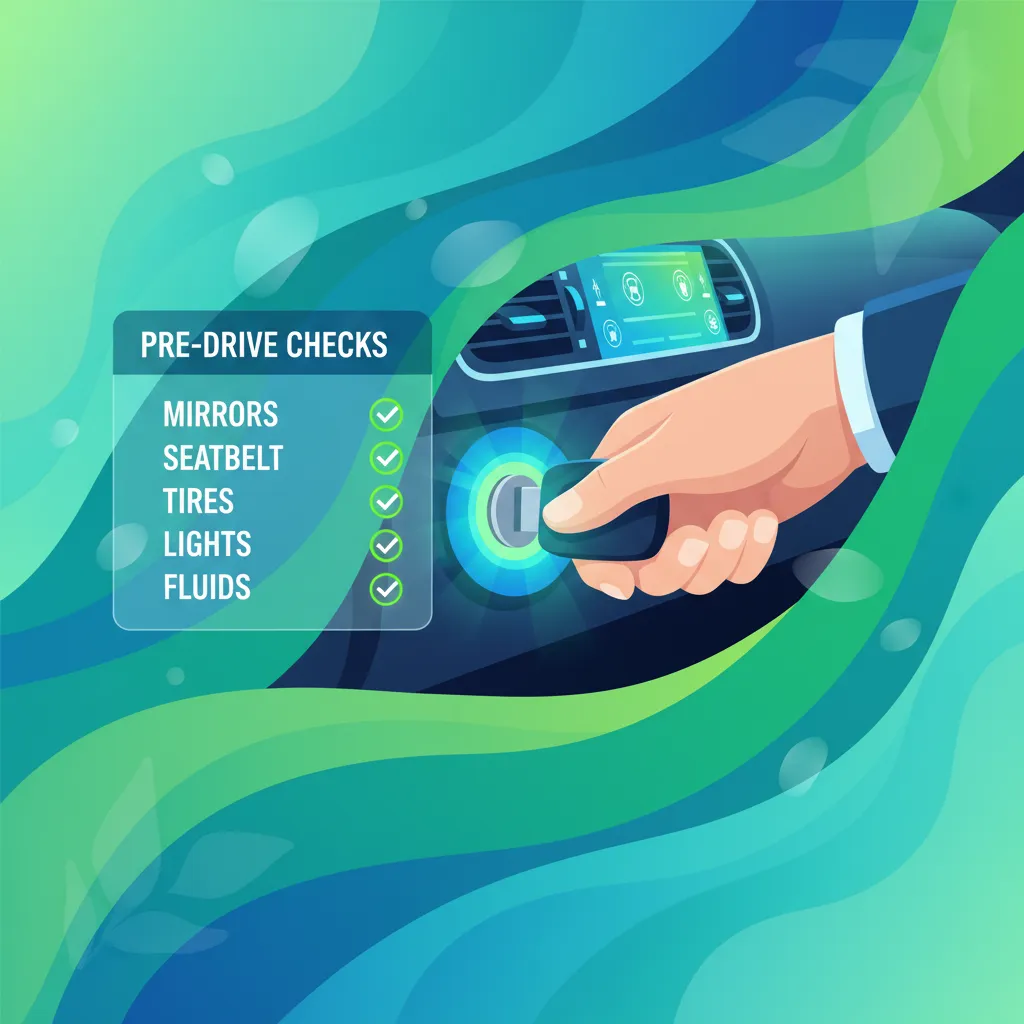
This lesson details the systematic steps required to start a vehicle safely and prepare it for motion. It describes the ignition sequence and confirmation of dashboard indicators before starting the engine. The content also outlines essential pre-drive checks, including verification of fluid levels, tire pressure, mirror adjustment, and seat position.
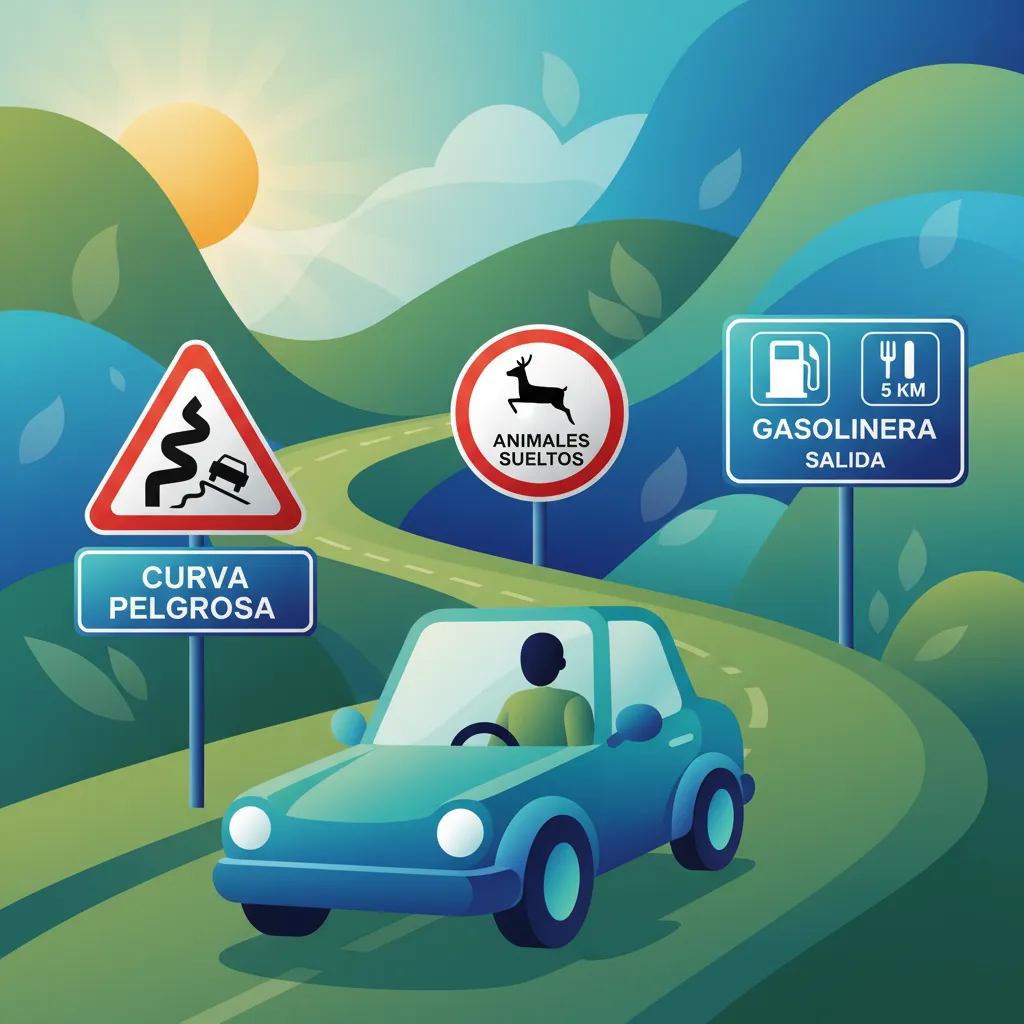
This lesson covers warning and informational signs, which are crucial for anticipating road conditions. It explains how triangular warning signs alert riders to upcoming hazards like sharp curves, slippery surfaces, or pedestrian crossings. The content also describes rectangular informational signs that provide directions, distances, and other useful guidance, helping riders to plan their route and adjust their driving in advance.
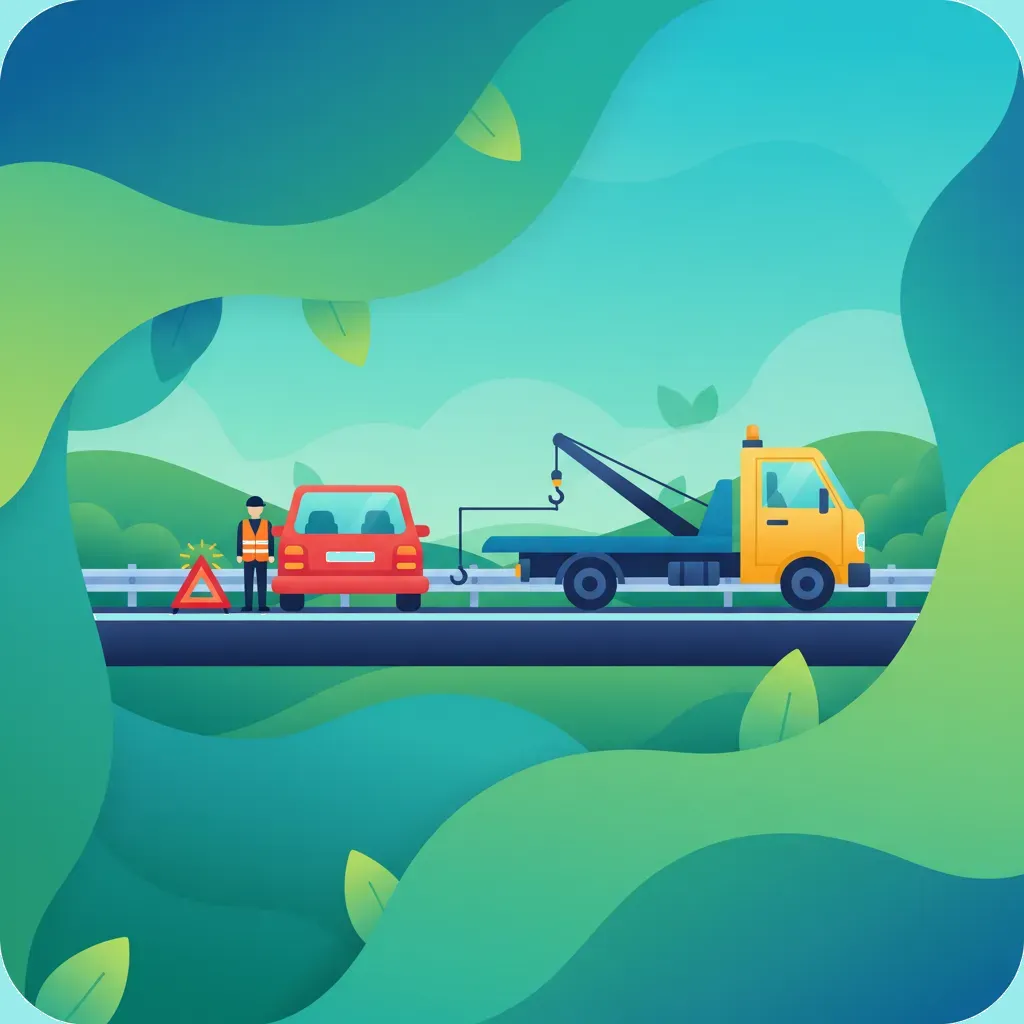
In this lesson, drivers learn the correct actions to take during a vehicle breakdown. It outlines steps for safely stopping on the hard shoulder, activating hazard lights, and deploying warning devices like the triangle or V16 light. The lesson covers DGT procedures for roadside emergencies, including wearing a high-visibility vest and contacting assistance safely.
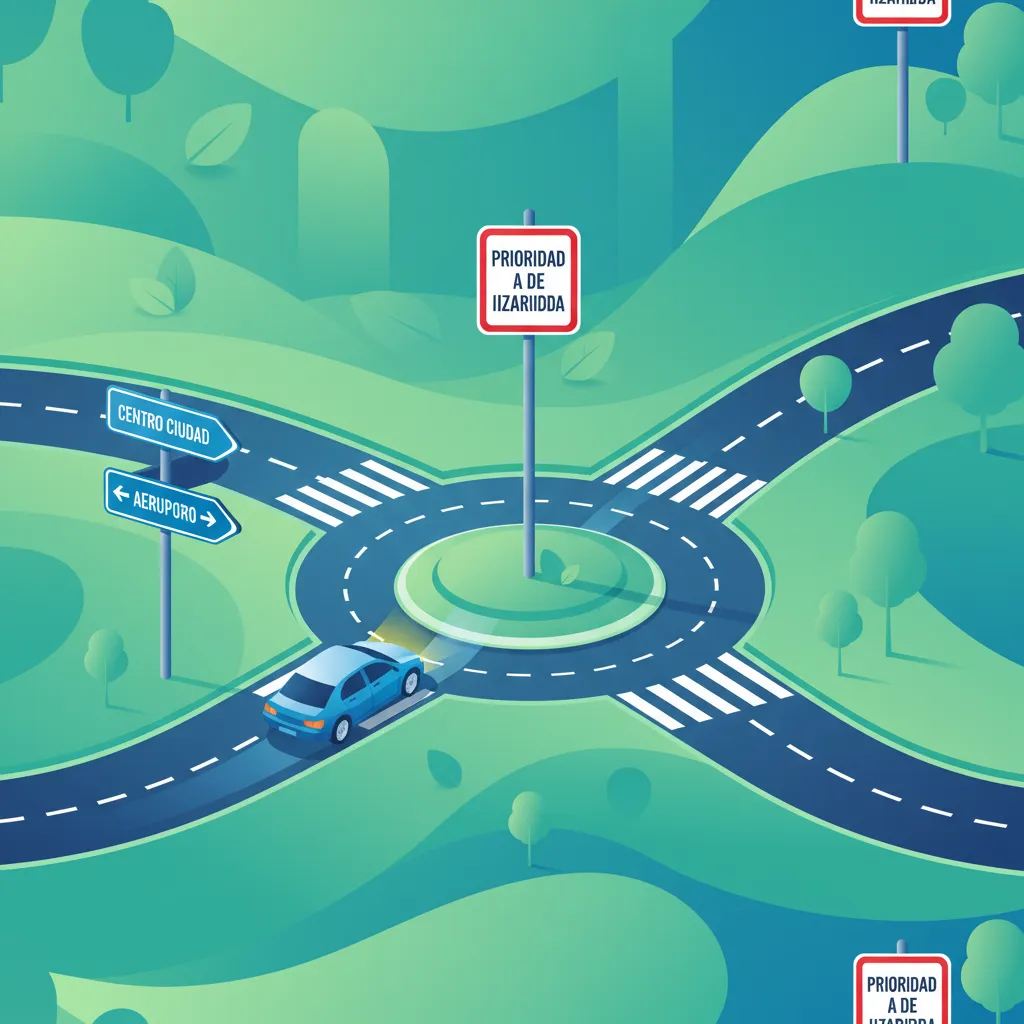
This lesson presents the variety of signs that guide drivers through roundabout navigation. It explains the significance of the roundabout warning symbol, priority signs, lane arrows, and directional signs placed before and within the roundabout. Mastery of roundabout signage ensures that drivers follow legal requirements and maintain safe traffic flow.
Learn about essential vehicle dashboard instruments like the speedometer and fuel gauge, and how their use relates to Spanish DGT traffic regulations and safe driving practices. Essential for theory test preparation.
This lesson outlines the proper use and legal requirements of vehicle lighting and mirror systems. It covers headlamps, fog lights, turn signals, and brake lights, clarifying when each must be used according to DGT regulations. The lesson also explains the correct adjustment of rearview and side mirrors and strategies for effective blind-spot monitoring.

This lesson focuses on essential safety equipment and routine maintenance tasks required for legal road operation. It explains the correct use of seat belts, airbags, and child restraints, as well as the importance of maintaining proper tire pressure and brake condition. Additionally, it clarifies the legal vehicle inspection (ITV) process mandated by the DGT to ensure roadworthiness.
This lesson addresses the specific challenges posed by rain and fog, focusing on reduced visibility and loss of traction. It explains the proper use of windshield wipers and fog lights, and the need to adjust speed and increase following distance. The content covers how to prevent and react to hydroplaning (aquaplaning) to maintain vehicle control.

This lesson examines the specific documents needed to start the Spanish license acquisition process, including personal identification, proof of residence, and a valid medical certificate (psicotécnico). It outlines the official DGT application form, associated fees, and the sequential steps for successful registration. The content also clarifies the age thresholds for categories B and BE and the conditions for license renewal.
This lesson details the systematic steps required to start a vehicle safely and prepare it for motion. It describes the ignition sequence and confirmation of dashboard indicators before starting the engine. The content also outlines essential pre-drive checks, including verification of fluid levels, tire pressure, mirror adjustment, and seat position.
This lesson focuses on the comprehensive understanding of traffic light signals and their timing sequences. It defines the meanings of steady red, amber, and green lights, as well as flashing amber and arrow signals. The content also covers pedestrian and cyclist phases, describing the actions drivers must take during each signal change to maintain safety and compliance.
This lesson covers how environmental conditions such as rain, fog, and darkness affect driving safety. It instructs drivers on adjusting speed, using appropriate lighting, and increasing following distance to compensate for reduced visibility and traction. The lesson incorporates DGT safety recommendations for handling adverse weather to mitigate risk and maintain control.
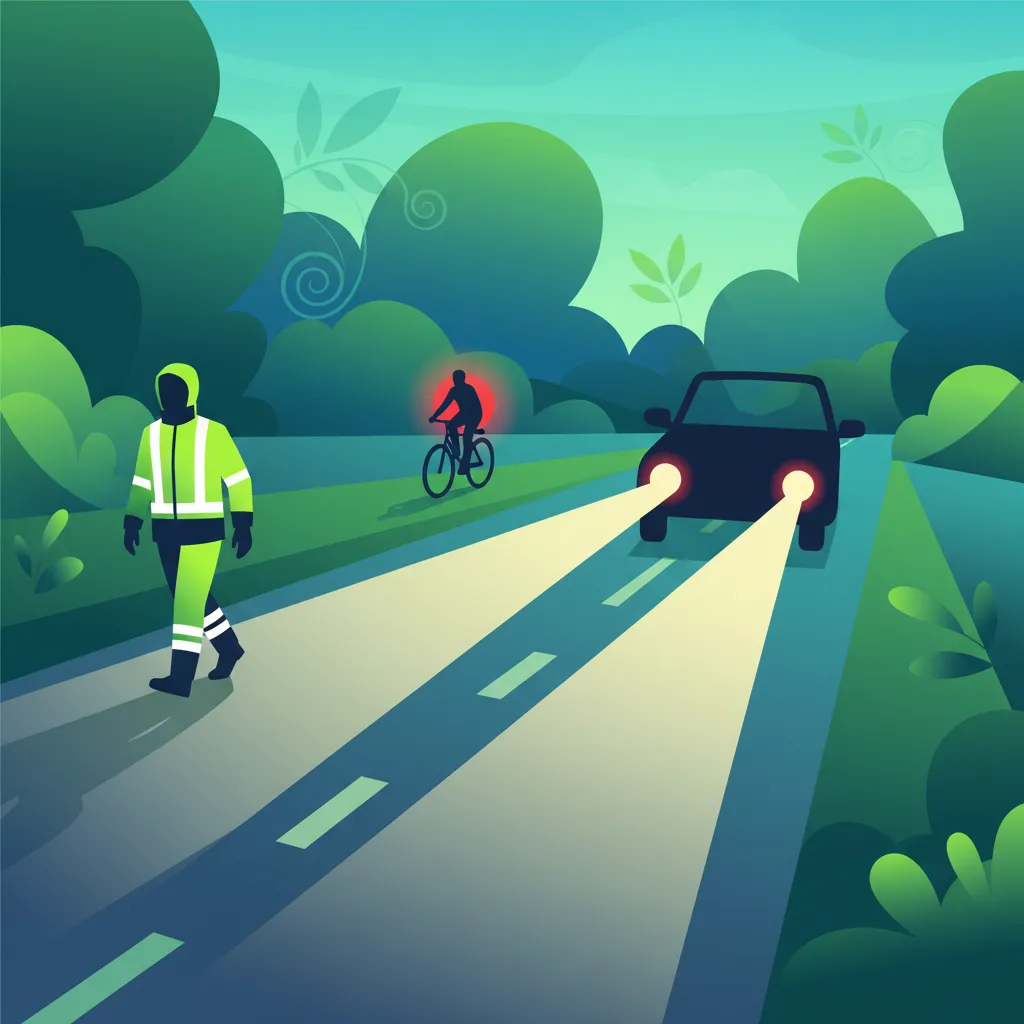
This lesson outlines the mandatory lighting and visibility equipment as per DGT regulations. It covers the correct use of headlights (low and high beams), taillights, and turn signals, ensuring the moped is visible to others, especially at night or in poor weather. The importance of wearing high-visibility or reflective clothing is also emphasized as a critical measure to enhance personal safety by making the rider more conspicuous.
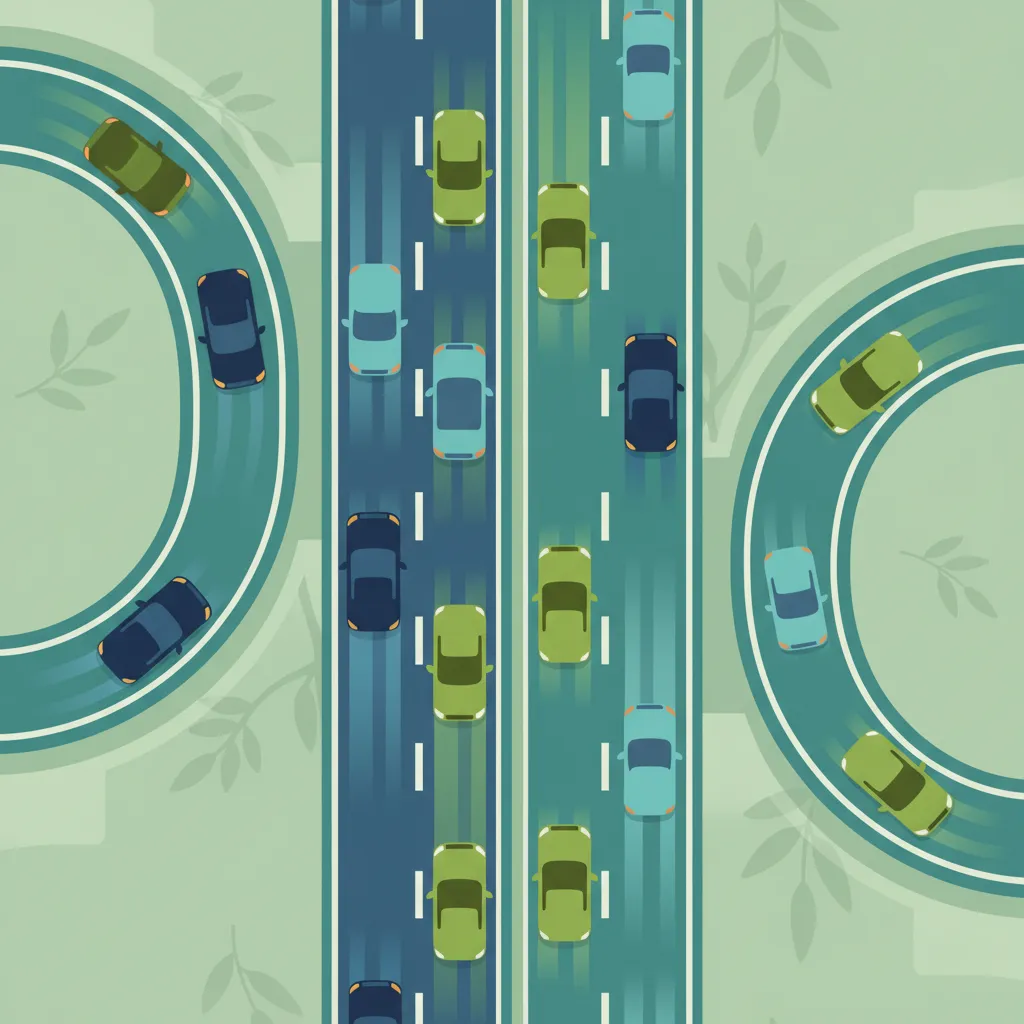
This lesson defines proper lane discipline on highways, emphasizing correct lane positioning and the rule to drive in the right-hand lane except when overtaking. It details safe merging onto main carriageways from an acceleration lane and effective exit strategies using deceleration lanes. Learners will understand DGT merge rules and the importance of signaling lane changes early.
Find clear answers to common questions learners have about Vehicle Components and Dashboard Indicators. Learn how the lesson is structured, which driving theory objectives it supports, and how it fits into the overall learning path of units and curriculum progression in Spain. These explanations help you understand key concepts, lesson flow, and exam focused study goals.
Red warning lights typically indicate a serious problem that requires immediate attention and potentially stopping the vehicle safely. Amber or yellow warning lights usually signal a less critical issue, such as a system malfunction or a reminder that a specific feature is active or needs attention soon, but allow you to continue driving cautiously to a service center.
The speedometer is a fundamental instrument. Questions on the exam often relate to understanding speed limits displayed on signs and how to monitor your speed using the speedometer to comply with Spanish regulations for different road types.
If the oil pressure warning light illuminates, it signifies a critical issue. You should stop the vehicle as soon as it is safe to do so, turn off the engine, and check the oil level. Driving with low oil pressure can cause severe engine damage.
Yes, dashboard indicators and warning lights are frequently tested topics in the Spanish DGT theory exam for Category B and BE licenses. The exam assesses your ability to recognize these symbols and understand the correct response to ensure safety.
If the ABS (Anti-lock Braking System) warning light remains illuminated after you start the engine and begin driving, it indicates that the ABS system is not functioning correctly. Your regular brakes will still work, but the anti-lock feature will be disabled. You should have the system checked by a mechanic.
Use our powerful search functionality to pinpoint specific Spanish DGT driving theory practice sets. Filter by road sign categories, traffic law topics, or question difficulty to build custom study sessions and reinforce your knowledge precisely where it matters for your official exam.