
This lesson focuses on vehicle lighting, mirrors, and visibility systems, essential components for safe driving and legal compliance in Spain. Understanding when and how to use your lights, the importance of properly adjusted mirrors, and effective blind-spot monitoring are crucial for navigating diverse driving conditions and passing your DGT theory exam. This builds on basic vehicle controls and prepares you for more complex urban and rural driving scenarios.

Lesson content overview
Driving safely on Spanish roads, whether for a Spanish driving license or daily commutes, hinges on your ability to see and be seen. This comprehensive lesson, part of your Complete Spanish Driving License Theory Course for Categories B & BE (DGT), will thoroughly explain vehicle lighting, mirror systems, and best practices for optimal visibility. Understanding these systems is not just about legal compliance; it's fundamental to anticipating hazards, communicating intentions, and preventing collisions.
Visibility in driving is a two-way street: you must have a clear view of your surroundings, and other road users must be able to clearly perceive your vehicle and your intentions. Vehicle visibility systems—comprising various lights and mirrors—are designed to achieve this critical balance. They extend your field of vision beyond direct sight and convey vital signals to pedestrians, cyclists, and other drivers.
The Dirección General de Tráfico (DGT), Spain's road traffic authority, emphasizes visibility as a cornerstone of road safety. Accidents often occur when drivers fail to detect hazards in time or when their presence and actions are not clearly communicated. Proper use of lighting and correct mirror adjustment significantly reduces these risks, making the roads safer for everyone.
Key Principles of Visibility Management:
Always perform a quick check of your lights and mirrors before starting any journey. This simple habit can prevent potential hazards and ensure compliance with DGT regulations.
Vehicle lighting systems are your primary tools for seeing the road and making your vehicle conspicuous. Each light serves a specific purpose, and knowing when and how to use them is crucial for safe driving in Spain.
Headlamps, located at the front of your vehicle, consist of two main types: dipped beams and high beams. They are essential for forward illumination and making your vehicle visible to oncoming traffic.
The dipped beam, also known as the low beam, provides a focused, low-angled light that illuminates the road ahead without dazzling oncoming drivers or those you are following. It's your most frequently used headlamp setting.
The high beam, or main beam, emits a brighter, longer-range light designed to provide maximum illumination on unlit roads.
Fog lights are specialized lights designed to improve visibility in challenging weather conditions such as dense fog, heavy rain, or snow. They are typically mounted low on the vehicle to illuminate the road surface directly and minimize reflected glare.
Front fog lights emit a wide, low-angle beam that helps cut through atmospheric particles closer to the ground, improving your view of the road immediately ahead.
Rear fog lights are brighter red lights located at the rear of the vehicle, designed to make your vehicle more visible to drivers behind you in severe low-visibility conditions.
Using fog lights on a clear day is a common violation that can result in fines. It's crucial to only activate them when truly necessary.
Turn signals, also known as indicators, are flashing lights located at the front, side, and rear of your vehicle. They are universally recognized as the primary way to communicate your intention to turn, change lanes, or exit a roundabout.
Brake lights are red lights located at the rear of your vehicle that illuminate when you press the brake pedal. Their purpose is to immediately warn following drivers that your vehicle is slowing down or stopping.
Reverse lights are white lights located at the rear of your vehicle that automatically illuminate when you select reverse gear.
Hazard warning lights (or simply hazard lights) activate all turn signals on your vehicle simultaneously. They are used to signal an emergency or a potential hazard.
Daytime Running Lights (DRLs) are low-intensity front lights that automatically illuminate when the engine is running during daylight hours.
Modern vehicles may incorporate adaptive lighting systems. These advanced headlamps can adjust their beam pattern, direction, and intensity based on factors like vehicle speed, steering angle, and surrounding traffic conditions. While optional, knowing about these systems helps drivers understand automatic light functions and their limitations. Always be aware that even with adaptive systems, manual override and understanding basic DGT lighting rules are paramount.
Mirrors are your essential tools for seeing what's happening around and behind your vehicle without having to turn your head. Proper adjustment and regular checking of mirrors are critical for safe driving, especially when changing lanes, overtaking, or parking.
The interior rear-view mirror is located inside the vehicle, typically at the top of the windshield. It provides a central view of the road directly behind your vehicle through the rear window.
The exterior side mirrors are mounted on the outside of the vehicle, typically one on the driver's side (left in Spain) and one on the passenger's side (right). They provide crucial lateral and rearward views, essential for lane changes, overtaking, and parking.
Driver's Side Mirror: Lean your head slightly towards the driver's side window. Adjust the mirror so that you can just barely see the side of your own vehicle. This maximizes the view of the lane beside you and the traffic behind.
Passenger's Side Mirror: Lean your head towards the center of the vehicle (roughly above the center console). Adjust the mirror so you can just barely see the side of your own vehicle. This similarly expands the view on the passenger side.
Blind spots are areas around your vehicle that cannot be seen using the interior or exterior mirrors. These areas are particularly dangerous during lane changes or turns. Some vehicles come equipped with blind-spot mirrors, which are small, convex mirrors integrated into the side mirrors, designed to broaden the field of view and reduce these hidden zones.
An area around a vehicle that cannot be seen by the driver through the interior or exterior mirrors.
Correct mirror adjustment is a fundamental skill for all drivers. It directly impacts your ability to safely change lanes, merge, and maneuver.
Adjust Your Seat First: Ensure your seat and steering wheel are in your optimal driving position. Mirrors should always be adjusted from this position.
Interior Rear-View Mirror: Position it to provide a clear, centered view of the entire rear window without moving your head.
Exterior Side Mirrors (Driver's Side): Lean your head slightly towards the driver's window. Adjust the mirror outwards until the side of your own vehicle is just barely visible in the innermost edge of the mirror. This setting maximizes your view of the adjacent lane.
Exterior Side Mirrors (Passenger's Side): Lean your head towards the center console. Adjust the mirror outwards until the side of your own vehicle is just barely visible in the innermost edge of the mirror.
Perform a Head Check: Even with perfectly adjusted mirrors, always glance over your shoulder (a "head check") before changing lanes to confirm the blind spot is clear.
Adhering to the specific rules laid out in the Reglamento General de Circulación (RGC), the Spanish General Traffic Regulations, is mandatory for all drivers. Failure to comply can result in fines and potential loss of points on your Spanish driving license.
Understanding the rules is one thing; consistently applying them is another. Many common road incidents stem from basic visibility errors.
Violation: Keeping high beams on when approaching oncoming traffic or following another vehicle too closely. Impact: Causes temporary blindness (glare) for other drivers, significantly increasing the risk of head-on or rear-end collisions. Safe Practice: Always dim your high beams to dipped beams when within 150 metres of an oncoming vehicle or when following another vehicle within 150 metres.
Violation: Activating front or rear fog lights on a clear day or when visibility is not sufficiently reduced. Impact: Front fog lights can dazzle oncoming drivers; rear fog lights are extremely bright and can be mistaken for brake lights or cause discomfort to following drivers. It's also an unnecessary use of energy and against regulations. Safe Practice: Only use fog lights when visibility is genuinely reduced to 100 metres or less. Switch them off immediately once conditions improve.
Violation: Changing lanes, turning, or exiting a roundabout without activating turn signals, or forgetting to cancel them after a maneuver. Impact: Creates confusion, uncertainty, and unpredictability for other road users, increasing the likelihood of side-swipe collisions. Safe Practice: Make signaling a habit. Activate your turn signal well in advance (50m urban, 100m inter-urban) and ensure it's off once your maneuver is complete.
Violation: Mirrors are set incorrectly, showing too much of your own vehicle, or being too far outward, creating large blind spots. Impact: Leads to inaccurate judgment of distances, overestimation of lateral clearance, and increases the risk of side collisions during lane changes or merging. Safe Practice: Follow the step-by-step mirror adjustment guide. Always perform a head check before any lateral movement.
Violation: Driving with one or more non-functional brake lights or lights that activate with a delay. Impact: Following drivers receive delayed or no warning of your deceleration, severely reducing their reaction time and increasing the risk of a rear-end collision. Safe Practice: Regularly check your brake lights. Replace faulty bulbs immediately. Consider carrying spare bulbs.
Violation: Using hazard lights while driving at normal speed (e.g., in a queue or under heavy rain). Impact: Misleading other drivers into thinking your vehicle is stationary or has an emergency, leading to unpredictable reactions. Safe Practice: Reserve hazard lights for genuine emergencies or when your stationary vehicle poses a danger on the road.
The effective use of lighting and mirrors is highly dependent on external conditions. Adjusting your approach based on weather, time of day, and road type is crucial for maintaining safety.
Understanding the reasoning behind visibility rules enhances your commitment to safe driving.
This comprehensive understanding of vehicle visibility systems will equip you with crucial knowledge for passing your Spanish driving license exam and becoming a responsible and safe driver on Spain's roads.
This lesson covers Spain's DGT requirements for vehicle lighting and mirrors, essential for safe driving and passing the theory exam. Dipped beams are mandatory from sunset to sunrise and in reduced visibility, while high beams are only permitted on unlit inter-urban roads with strict 150-metre dimming rules. Fog lights (both front and rear) are restricted to visibility below 100 metres and must be switched off immediately when conditions improve. Turn signals require advance activation (50m urban, 100m inter-urban) and must remain on until the maneuver completes. Correct mirror adjustment—positioned to show minimal vehicle body—combined with mandatory head checks, eliminates blind spots and enables safe lane changes and overtaking.
A short set of high-value points that capture the most important learning from this lesson.
Dipped beams are mandatory from sunset to sunrise, in tunnels, and in adverse weather conditions that reduce visibility
High beams must be dimmed to dipped beams when within 150 metres of oncoming vehicles or when following another vehicle at less than 150 metres
Turn signals must be activated at least 50 metres before a maneuver in urban areas and 100 metres on inter-urban roads
Fog lights may only be used when visibility is reduced to 100 metres or less due to fog, heavy rain, snow, or dust
Proper mirror adjustment minimizes blind spots, but a head check over the shoulder is always required before changing lanes
Explore all units and lessons included in this driving theory course.
Dipped beams are mandatory in urban areas at night even when street lighting is present
Rear fog lights are significantly brighter than standard tail lights and must be switched off as soon as visibility improves to avoid dazzling following drivers
Daytime Running Lights (DRLs) do not substitute for dipped beams as they do not provide rear illumination or sufficient forward light in tunnels and adverse weather
Driver's side mirror should be adjusted with your head near the window; passenger's side mirror with head toward the center console
Hazard lights are only for stationary vehicles posing danger or exceptional slow-moving emergencies; never use while driving at normal speed
Using high beams in fog, which reflects off particles and worsens visibility instead of improving it
Activating fog lights on clear days, which dazzles other drivers and violates DGT regulations
Forgetting to cancel turn signals after completing a lane change or turn, confusing other road users
Adjusting side mirrors too far inward, showing too much of your own vehicle and creating dangerous blind spots
Driving with non-functional or delayed brake lights, severely reducing reaction time for following drivers
Lesson content overview
A short set of high-value points that capture the most important learning from this lesson.
Dipped beams are mandatory from sunset to sunrise, in tunnels, and in adverse weather conditions that reduce visibility
High beams must be dimmed to dipped beams when within 150 metres of oncoming vehicles or when following another vehicle at less than 150 metres
Turn signals must be activated at least 50 metres before a maneuver in urban areas and 100 metres on inter-urban roads
Fog lights may only be used when visibility is reduced to 100 metres or less due to fog, heavy rain, snow, or dust
Proper mirror adjustment minimizes blind spots, but a head check over the shoulder is always required before changing lanes
Explore all units and lessons included in this driving theory course.
Dipped beams are mandatory in urban areas at night even when street lighting is present
Rear fog lights are significantly brighter than standard tail lights and must be switched off as soon as visibility improves to avoid dazzling following drivers
Daytime Running Lights (DRLs) do not substitute for dipped beams as they do not provide rear illumination or sufficient forward light in tunnels and adverse weather
Driver's side mirror should be adjusted with your head near the window; passenger's side mirror with head toward the center console
Hazard lights are only for stationary vehicles posing danger or exceptional slow-moving emergencies; never use while driving at normal speed
Using high beams in fog, which reflects off particles and worsens visibility instead of improving it
Activating fog lights on clear days, which dazzles other drivers and violates DGT regulations
Forgetting to cancel turn signals after completing a lane change or turn, confusing other road users
Adjusting side mirrors too far inward, showing too much of your own vehicle and creating dangerous blind spots
Driving with non-functional or delayed brake lights, severely reducing reaction time for following drivers
Explore search topics learners often look for when studying Lighting, Mirrors, and Visibility Systems. These topics reflect common questions about road rules, driving situations, safety guidance, and lesson level theory preparation for learners in Spain.
Browse additional driving theory lessons that cover connected traffic rules, road signs, and common driving situations related to this topic. Improve your understanding of how different rules interact across everyday traffic scenarios.
Understand the specific Spanish DGT regulations for using vehicle headlights, fog lights, turn signals, and brake lights. Learn proper mirror adjustment techniques to maximize visibility and minimize blind spots on Spanish roads.
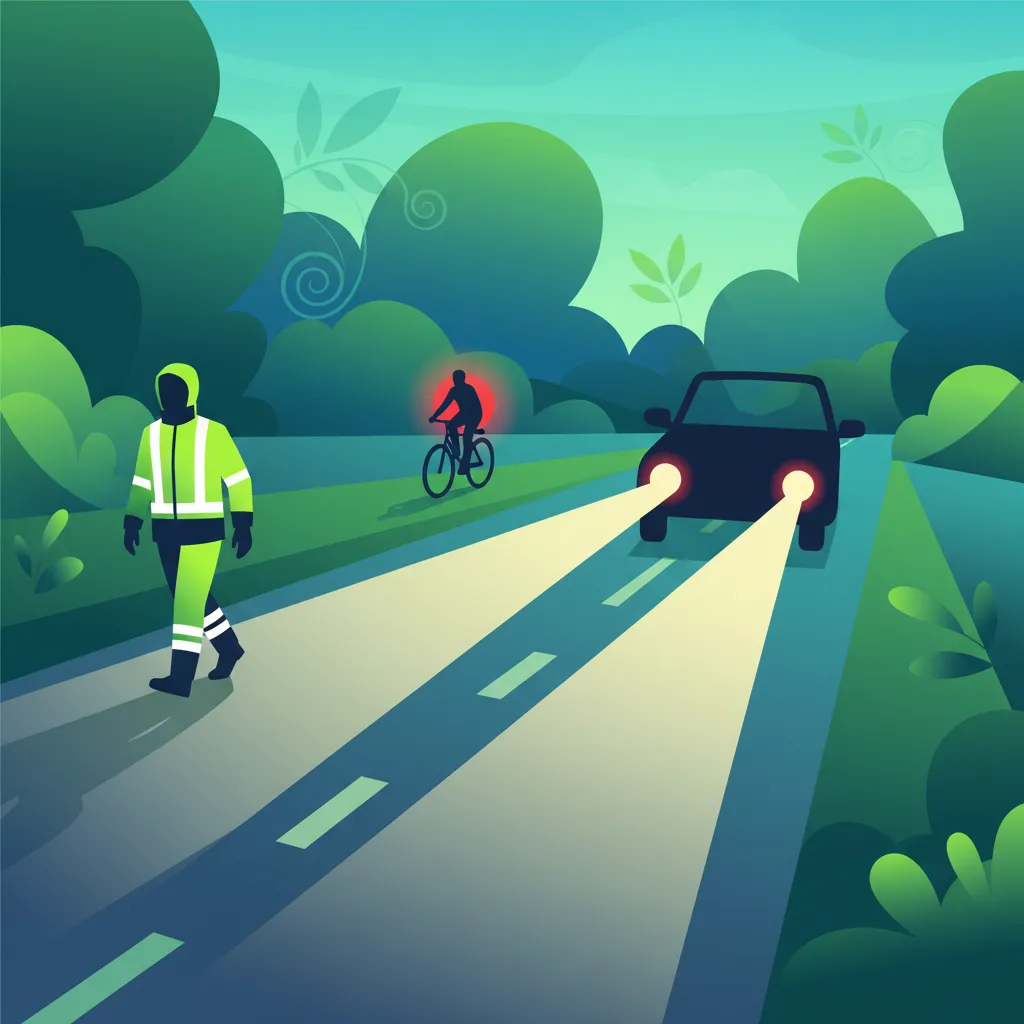
This lesson outlines the mandatory lighting and visibility equipment as per DGT regulations. It covers the correct use of headlights (low and high beams), taillights, and turn signals, ensuring the moped is visible to others, especially at night or in poor weather. The importance of wearing high-visibility or reflective clothing is also emphasized as a critical measure to enhance personal safety by making the rider more conspicuous.
This lesson focuses on safe nighttime riding, covering headlight alignment, rear-light visibility, and the use of reflective gear to enhance conspicuity. It explains DGT night riding requirements, including mandatory lighting standards. Topics also include managing glare from oncoming vehicles and mitigating rider fatigue during low-light conditions.
This lesson covers how environmental conditions such as rain, fog, and darkness affect driving safety. It instructs drivers on adjusting speed, using appropriate lighting, and increasing following distance to compensate for reduced visibility and traction. The lesson incorporates DGT safety recommendations for handling adverse weather to mitigate risk and maintain control.
This lesson focuses on nighttime driving, emphasizing proper headlight usage and glare management from oncoming vehicles. It discusses DGT regulations for night driving, the appropriate use of high-beam and low-beam headlights, and techniques to reduce eye strain. Additionally, the lesson highlights the signs of driver fatigue and the importance of taking breaks.
This lesson focuses on strategies for maximizing rider visibility in daylight and nighttime conditions, covering high-visibility apparel, reflective vests, and LED accessories. It delves into rider posture and lane positioning that improve sightlines and reduce collision risk. The content aligns with DGT regulations for illumination levels on motorcycles.
This lesson addresses the specific challenges posed by rain and fog, focusing on reduced visibility and loss of traction. It explains the proper use of windshield wipers and fog lights, and the need to adjust speed and increase following distance. The content covers how to prevent and react to hydroplaning (aquaplaning) to maintain vehicle control.
This lesson focuses on the comprehensive understanding of traffic light signals and their timing sequences. It defines the meanings of steady red, amber, and green lights, as well as flashing amber and arrow signals. The content also covers pedestrian and cyclist phases, describing the actions drivers must take during each signal change to maintain safety and compliance.
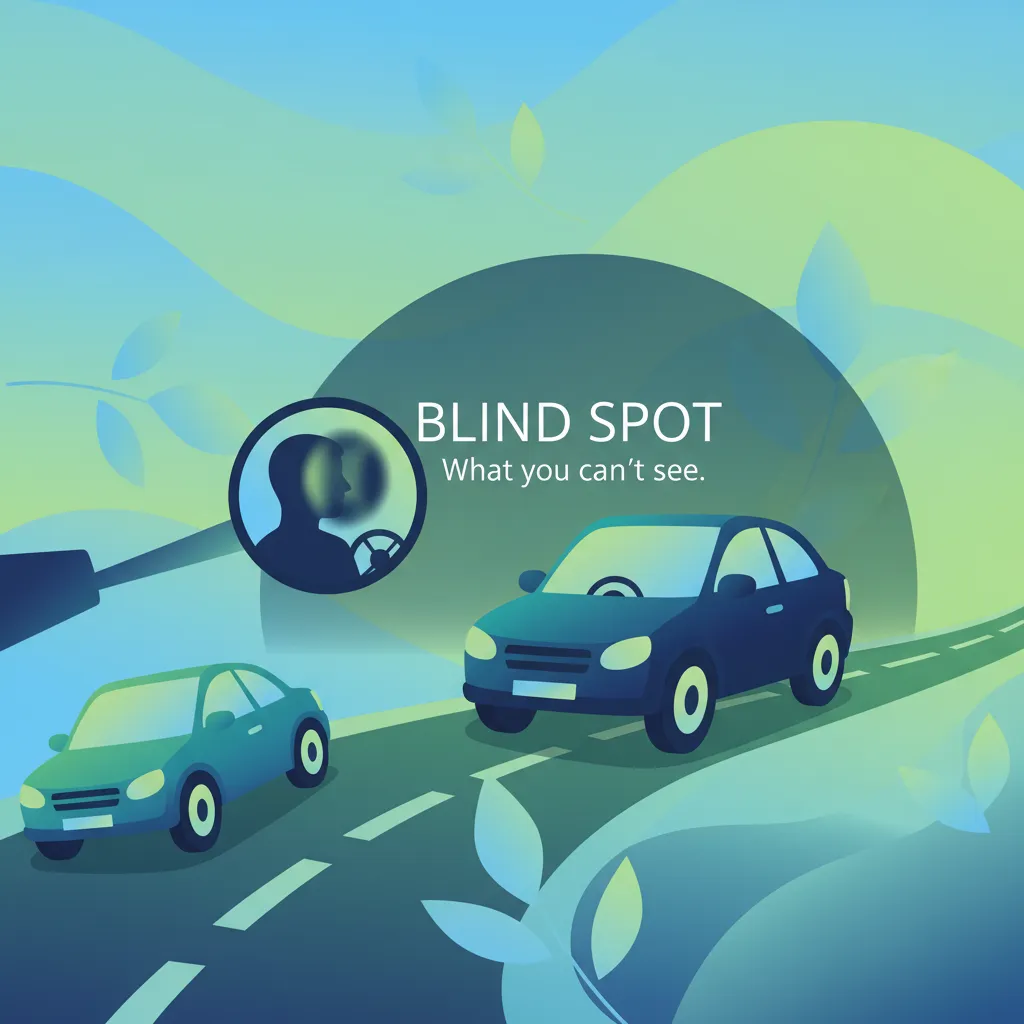
This lesson focuses on identifying blind spot zones created by larger vehicles and the rider’s own positioning. It covers effective mirror usage, lateral awareness techniques, and the importance of head checks before lane changes. DGT blind spot guidelines are referenced, emphasizing situational scanning to maintain safety in traffic.
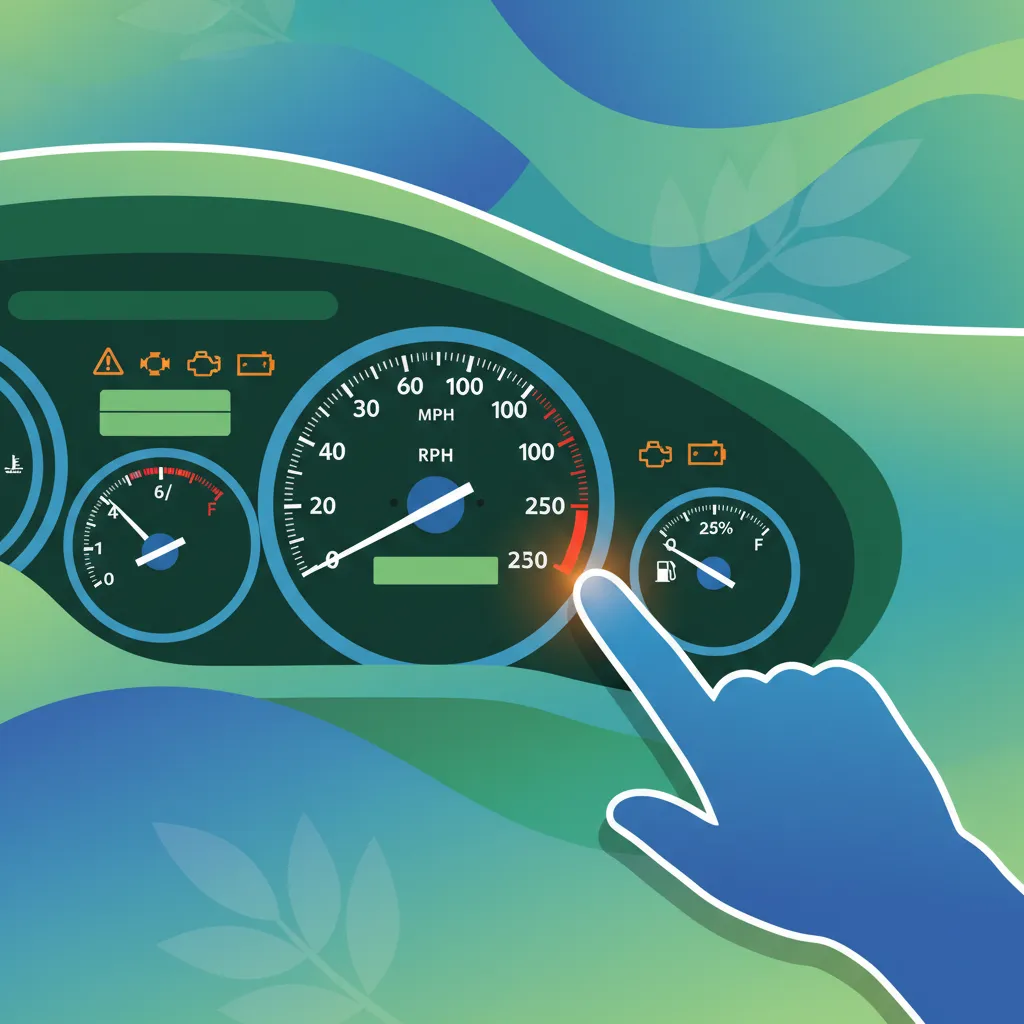
This lesson focuses on the primary components displayed on a vehicle's dashboard and their functional significance. Learners will identify instruments like the speedometer and fuel gauge and understand the meaning of key warning lights, including ABS, oil pressure, and check engine. The lesson explains how to interpret these signals while driving and the immediate actions required upon their illumination.
Explore how to adapt your use of vehicle lighting and mirrors for different driving conditions like fog, rain, and night. Learn to identify and mitigate visibility hazards for safer driving according to Spanish theory.
This lesson covers how environmental conditions such as rain, fog, and darkness affect driving safety. It instructs drivers on adjusting speed, using appropriate lighting, and increasing following distance to compensate for reduced visibility and traction. The lesson incorporates DGT safety recommendations for handling adverse weather to mitigate risk and maintain control.
This lesson addresses the specific challenges posed by rain and fog, focusing on reduced visibility and loss of traction. It explains the proper use of windshield wipers and fog lights, and the need to adjust speed and increase following distance. The content covers how to prevent and react to hydroplaning (aquaplaning) to maintain vehicle control.
This lesson focuses on safe nighttime riding, covering headlight alignment, rear-light visibility, and the use of reflective gear to enhance conspicuity. It explains DGT night riding requirements, including mandatory lighting standards. Topics also include managing glare from oncoming vehicles and mitigating rider fatigue during low-light conditions.
This lesson outlines the mandatory lighting and visibility equipment as per DGT regulations. It covers the correct use of headlights (low and high beams), taillights, and turn signals, ensuring the moped is visible to others, especially at night or in poor weather. The importance of wearing high-visibility or reflective clothing is also emphasized as a critical measure to enhance personal safety by making the rider more conspicuous.
This lesson focuses on nighttime driving, emphasizing proper headlight usage and glare management from oncoming vehicles. It discusses DGT regulations for night driving, the appropriate use of high-beam and low-beam headlights, and techniques to reduce eye strain. Additionally, the lesson highlights the signs of driver fatigue and the importance of taking breaks.
This lesson focuses on strategies for maximizing rider visibility in daylight and nighttime conditions, covering high-visibility apparel, reflective vests, and LED accessories. It delves into rider posture and lane positioning that improve sightlines and reduce collision risk. The content aligns with DGT regulations for illumination levels on motorcycles.
This lesson teaches the crucial skill of adapting speed to match prevailing environmental conditions. It explains that the posted speed limit is a maximum for ideal conditions and that riders must slow down significantly in rain, fog, or darkness. The content emphasizes maintaining a larger safety margin to account for reduced visibility and longer stopping distances, ensuring the rider can always stop within the distance they can see clearly.
This lesson teaches drivers how to proactively identify potential road hazards, from potholes and debris to unpredictable driver behavior. It provides specific guidance on how to adjust driving techniques to cope with adverse weather conditions such as heavy rain, fog, high winds, and icy roads. The content focuses on managing reduced visibility and traction to maintain vehicle control and safety.
Find clear answers to common questions learners have about Lighting, Mirrors, and Visibility Systems. Learn how the lesson is structured, which driving theory objectives it supports, and how it fits into the overall learning path of units and curriculum progression in Spain. These explanations help you understand key concepts, lesson flow, and exam focused study goals.
In Spain, front fog lights (antiniebla delantero) can be used when visibility is significantly reduced due to fog, heavy snow, or heavy rain, especially on roads where the speed limit is below 50 km/h. Rear fog lights (antiniebla trasero) must be used in conditions of very reduced visibility, such as dense fog or heavy snowfall, and should be turned off as soon as visibility improves to avoid dazzling other drivers. Always check the specific DGT regulations and your vehicle's manual.
For the theory test and safe driving in Spain, adjust your interior rearview mirror so you can see the entire rear window clearly. For side mirrors, adjust the driver's side mirror so you can just barely see the edge of your car, and the passenger side mirror so you can just barely see the side of your car. This setup minimizes blind spots. The DGT exam often tests knowledge of how mirrors improve situational awareness.
Hazard warning lights (warnings) in Spain should only be used to indicate an unexpected stop or a dangerous situation for other traffic, such as a breakdown or an accident. They are not to be used as a substitute for turn signals when changing lanes or turning in normal driving conditions. Misuse can lead to penalties.
In Spain, daytime running lights (luces de circulación diurna) are mandatory for new vehicles and must be used when driving outside of urban areas during the day. However, when visibility is reduced, or in tunnels, you must switch to dipped headlights. For Category B vehicles, the use of DRLs is often sufficient during daylight outside built-up areas, but dipping the headlights is always recommended when conditions warrant.
Common mistakes include not knowing when to use fog lights, incorrectly adjusting mirrors leading to blind spots, and failing to use indicators or hazard lights appropriately. The DGT exam specifically tests your understanding of these nuances. For instance, questions might arise about using lights when entering or exiting tunnels, or when overtaking.
Use our powerful search functionality to pinpoint specific Spanish DGT driving theory practice sets. Filter by road sign categories, traffic law topics, or question difficulty to build custom study sessions and reinforce your knowledge precisely where it matters for your official exam.