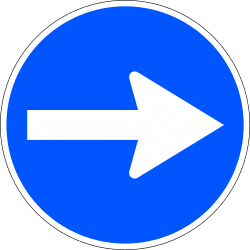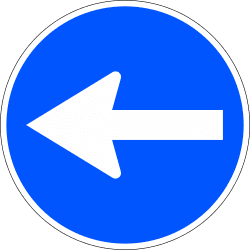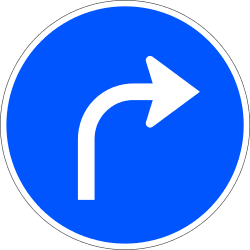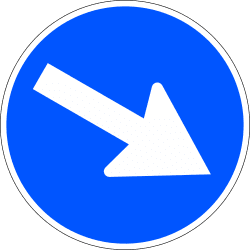
The R-400e sign is a mandatory direction sign, specifically instructing you to turn left. Unlike warning or prohibition signs, this sign dictates a required action. You will encounter this sign where traffic management or road layout necessitates a specific movement, such as at junctions or complex intersections. Ignoring this instruction can lead to dangerous situations, such as conflicting with oncoming traffic or using restricted areas, so always comply with the indicated direction.
This R-400e sign mandates a left turn, crucial for safe navigation and avoiding conflicts with other traffic or restricted areas in Spain. Understanding its specific meaning is vital for your theory test revision and real-world driving.
The sign for turn left tells road users what they are required to do rather than what they must avoid. Spanish mandatory signs are used where the road design, lane arrangement, or traffic management demands a specific direction, route, or traffic class. Ignoring the instruction can put you into conflict with opposing traffic, protected users, or reserved infrastructure. Always follow the symbol itself first, then use arrows, lane markings, and panels to understand the exact path or maneuver that is compulsory.
This mandatory sign requires road users to follow turn left. It tells you which maneuver, direction, route, or lane use is compulsory at that point.
Get clear, practical answers to the most common questions about the R-400e - Turn left road sign. Learn how the sign works, what rules it represents, and how it affects real driving situations. This FAQ strengthens your understanding and supports accurate decision making for the Spanish driving theory exam in Spain.
The R-400e sign's main purpose is to inform drivers that turning left is the only compulsory manoeuvre at that specific point. It's a mandatory direction sign, meaning you must follow the instruction to turn left.
When you see the R-400e sign, you must prepare to turn left and execute the manoeuvre. This may involve positioning your vehicle in the correct lane in advance, using indicators, and completing the turn safely.
No, you cannot go straight or turn right when faced with the R-400e mandatory 'Turn Left' sign. This sign explicitly prohibits any other movement and mandates that you must turn left. Choosing a different direction would be a violation.
A common exam trap is confusing mandatory direction signs with advisory signs or misunderstanding the compulsory nature of the instruction. Learners might incorrectly assume they have a choice of direction or might fail to recognise that ignoring the sign is a traffic violation that can lead to dangerous situations or failing the exam.
Generally, there are no exceptions to mandatory direction signs like the R-400e. However, context from lane markings, supplementary plates, or traffic signals might further refine the instruction. Always prioritise the most specific instruction for your lane and vehicle.
A clear reference image of the R-400e - Turn left road sign used in Spain.
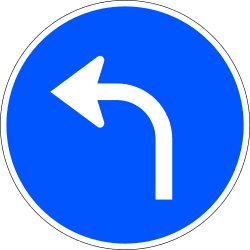
The R-400e - Turn left road sign may also be known by these alternative names or terms.
The R-400e - Turn left road sign is part of the Mandatory Signs category, which groups together signs with similar rules and functions.
Master Spanish road signs by reviewing variations of this sign and related commands. Understanding subtle differences between similar road signs is crucial for accurate theory test revision and confident driving.
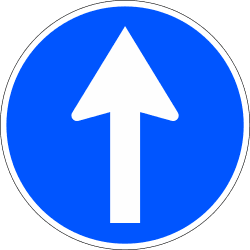
Mandatory 'Go Straight' Sign (R-400c): Know Your Compulsory Direction
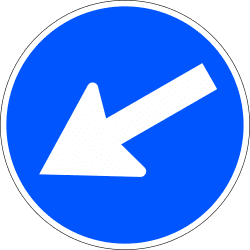
The R-401b 'Keep Left' Sign: Your Compulsory Direction in Spain
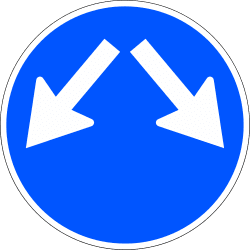
Mandatory R-401c Sign: You Must Pass On This Side
You've explored the complete list of Spanish road signs. Now, deepen your understanding by reviewing specific sign groups or testing your knowledge with practice questions. Fully prepare for your DGT driving theory exam and confidently navigate Spanish roads.
Browse All Spanish Road Signs