
This lesson details the critical paperwork and compliance standards required for professional passenger transport in Switzerland. You will learn which documents must be on your person and in the vehicle to satisfy legal requirements and avoid issues during roadside inspections.
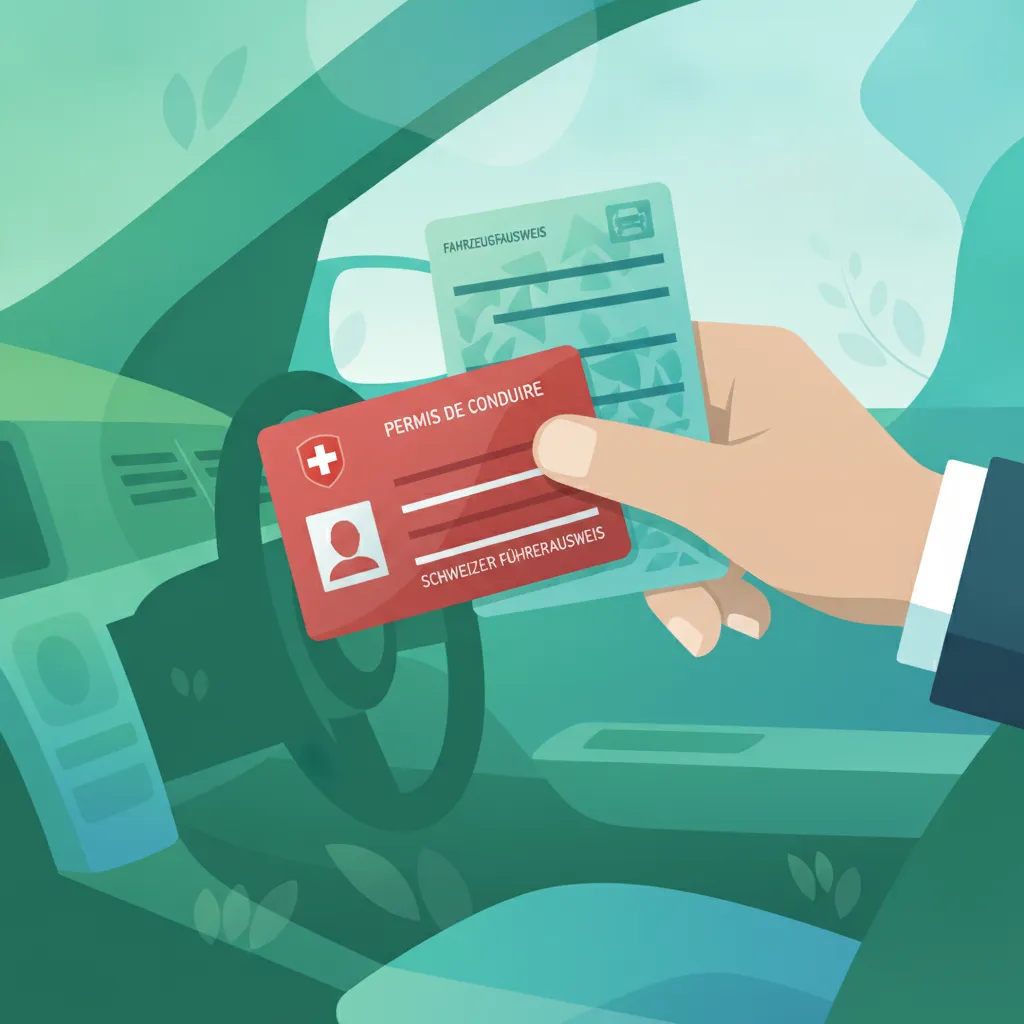
Lesson content overview
Operating a bus or coach (Category D vehicle) in Switzerland involves a significant legal responsibility, far beyond simply possessing the skills to drive. Professional passenger transport demands strict adherence to documentation requirements, ensuring both the driver's qualification and the vehicle's roadworthiness are consistently proven and up-to-date. This lesson provides a detailed overview of the critical documents you must carry, understand, and maintain to ensure full legal compliance as a professional driver in the Swiss Category D driving license theory course.
Failure to present the correct paperwork when requested by authorities can lead to severe penalties, including fines, vehicle interdiction, or even a temporary ban from service. Therefore, a thorough understanding of these requirements is not just a legal necessity but a cornerstone of professional conduct and passenger safety.
Every document associated with a professional driver and their vehicle serves a specific legal and safety purpose. Collectively, they act as proof of your legal authority to operate a passenger vehicle, the vehicle's registration, its technical fitness, and compliance with strict commercial transport regulations. For Swiss professional bus and coach drivers, this system underpins public safety and operational legitimacy.
Understanding the significance of each document goes beyond mere memorization; it reflects your commitment to the legal duty of care for passengers and adherence to the high standards expected in the transport industry. These documents are your immediate proof of competence and compliance at any given moment on the road.
As a professional driver, your personal documents confirm your individual authorization to operate specific vehicle categories and your qualification for commercial passenger transport. These must always be on your person or immediately accessible within the vehicle.
The Swiss driving license is your fundamental authorization to operate a motor vehicle. For professional bus and coach drivers, specific categories are required to legally transport passengers.
Authorizes the holder to operate buses and coaches designed for more than eight passenger seats, in addition to the driver's seat. This is the primary license for full-sized public transport and touring coaches.
Permits the operation of vehicles designed for between nine and sixteen passenger seats, plus the driver's seat. This category is typically for smaller buses or minibuses.
It is crucial to hold the correct license category for the vehicle you are operating. A Category B license, which is for passenger cars, is never sufficient for driving a bus or coach, even if the vehicle size seems small. Your physical driving license card must be present in the vehicle whenever you are driving, ready for immediate presentation upon request by traffic authorities.
Beyond merely holding a Category D or D1 driving license, professional drivers engaging in commercial passenger transport in Switzerland must possess a valid OACP Card. OACP stands for "Ordonnance sur les Conditions d’Exercice Professionnel," which translates to the Ordinance on Professional Practice Conditions.
An official card confirming that the driver has completed the mandatory professional training and regular continuing education required for commercial passenger transport in Switzerland. It is distinct from the driving license itself.
The OACP card signifies that you have undergone specific professional training focused on passenger transport, covering areas such as safety, driver health, customer service, and vehicle technology. It ensures that professional drivers meet higher standards than those holding only a basic driving license.
Why the OACP Card is Essential:
The OACP card must always be carried by the driver while on duty and presented to authorities upon request. In some cases, it may also need to be displayed prominently within the vehicle.
Always double-check the expiry dates on both your driving license and your OACP card. Plan for renewals well in advance to avoid any interruption to your professional driving authority.
Just as important as your personal documents are those pertaining to the vehicle itself. These documents confirm the bus or coach is legally registered, insured, and has passed the necessary technical inspections. They must be kept within the vehicle, readily accessible for inspection.
The Vehicle Registration Certificate, known in German as Fahrzeugausweis or in French as Permis de circulation, is an official document that registers the vehicle with the Swiss authorities.
An official document that identifies the vehicle, its registration number, the vehicle identification number (VIN), and details of its owner. It serves as proof of the vehicle's legal registration and identity.
This document is indispensable. It must be kept inside the vehicle at all times and be available for immediate presentation during any roadside stop or official inspection. It confirms that the vehicle is legally allowed on public roads and helps prevent vehicle theft or the operation of unregistered vehicles. Do not confuse it with the insurance certificate, although both are crucial vehicle documents.
In Switzerland, it is legally mandatory for every motor vehicle on public roads to have valid third-party liability insurance, known as Haftpflichtversicherung.
A document (often an insurance card) that verifies the vehicle is covered by valid compulsory third-party liability insurance, which covers damages caused to other parties in an accident.
This insurance protects third parties (other road users, pedestrians, property) from damages or injuries you might cause while operating the vehicle. Operating a bus or coach without valid insurance is a serious offense with severe financial and legal consequences. The insurance card or certificate must be kept in the vehicle and presented upon request. Ensure the insurance policy specifically covers commercial passenger transport, as a personal car insurance policy will not suffice.
The Motorfahrzeugkontrolle (MFK), or Vehicle Inspection Certificate, confirms that the bus or coach has successfully passed its periodic technical inspection.
A certificate issued after a mandatory technical inspection (Motorfahrzeugkontrolle) verifying that the vehicle meets all safety, environmental, and roadworthiness standards required by Swiss law.
Commercial passenger vehicles are subject to rigorous and regular technical inspections to ensure they are safe for transporting passengers. The intervals for these inspections vary based on the vehicle's age and type. It is the operator's and driver's responsibility to ensure the MFK certificate is current and that the vehicle undergoes re-inspection before its expiry.
Key aspects of the MFK:
Tachograph records are vital for professional drivers, particularly those operating commercial passenger vehicles. They document driving times, breaks, rest periods, and other work activities, enforcing compliance with strict regulations designed to prevent driver fatigue and promote road safety.
A tachograph is a device installed in commercial vehicles that automatically records data related to the vehicle's movement and the driver's activities. Modern buses and coaches in Switzerland are typically equipped with digital tachographs.
A device that automatically records a driver's driving time, rest periods, breaks, and other work activities, ensuring compliance with legal working hour regulations for commercial vehicle operators.
Purpose of Tachograph Records:
Drivers are responsible for operating the tachograph correctly, ensuring their driver card is inserted, and making accurate manual entries where necessary (e.g., when moving the vehicle in a depot without a card).
The integrity of tachograph data is paramount. Any tampering with records or failure to maintain accurate entries is a serious offense with severe consequences.
Tampering with tachograph equipment or falsifying records is a criminal offense, leading to substantial fines, license suspension, and potential imprisonment. Always ensure your tachograph data is accurate and compliant.
One of the most critical aspects of driver's legal responsibilities is the obligation to present all required documents to official authorities upon request.
During a routine traffic stop, a roadside inspection, or any official inquiry, police officers or transport authorities have the legal right to request to see your driver's license, OACP card, the vehicle's registration certificate, proof of insurance, MFK certificate, and relevant tachograph records.
Failure to present any of the required documents, or presenting invalid/expired documents, can lead to significant penalties:
Even experienced drivers can sometimes fall foul of documentation requirements. Awareness of common pitfalls can help you avoid them.
Proactive management of your documents is a hallmark of a responsible professional driver.
As a professional bus or coach driver in Switzerland, your legal responsibilities extend significantly to the meticulous management and presentation of documents. These documents are not mere formalities; they are critical elements that ensure your legitimacy, the vehicle's safety, and the well-being of your passengers.
Understanding and adhering to these documentation requirements is fundamental to your role as a professional driver and contributes directly to overall road safety and the high standards of the Swiss Category D Driving License Theory Course.
This lesson covers the essential documentation requirements for Swiss Category D and D1 professional bus and coach drivers, emphasizing that compliance extends far beyond holding a basic driving license. Key documents include the driving license, the mandatory OACP professional qualification card, vehicle registration certificate (Fahrzeugausweis), proof of commercial insurance (Haftpflichtversicherung), and the MFK technical inspection certificate. The lesson also stresses tachograph compliance as critical for monitoring driving hours and rest periods, with drivers required to present accurate records from the past 28 days during inspections. Failure to present valid documentation can result in fines, vehicle interdiction, driver disqualification, or criminal charges for serious violations such as tachograph tampering. Proactive document management through regular checks of expiry dates and secure yet accessible storage is essential for maintaining professional driving authority.
A short set of high-value points that capture the most important learning from this lesson.
The OACP Card is mandatory for all commercial passenger transport in Switzerland and is legally distinct from a Category D driving license, which alone does not authorize professional passenger service.
A Category D license permits buses with more than 8 passenger seats, while a Category D1 license covers vehicles with 9 to 16 seats; a standard Category B license is never sufficient for operating any bus or coach.
The Vehicle Registration Certificate (Fahrzeugausweis) must always remain inside the vehicle and be immediately accessible during any roadside inspection.
Digital tachograph records must accurately reflect driving time, rest periods, breaks, and other work activities, with drivers required to present records from the current day and previous 28 days upon request.
Operating without valid insurance specifically covering commercial passenger transport renders the vehicle effectively uninsured for its operational purpose and creates severe legal liability.
Explore all units and lessons included in this driving theory course.
The OACP card stands for Ordonnance sur les Conditions d'Exercice Professionnel and requires periodic renewal through ongoing professional development.
The MFK (Motorfahrzeugkontrolle) certificate confirms the vehicle has passed mandatory technical inspection and has an expiry date that must be monitored.
Original physical documents are generally required during inspections; digital copies on a smartphone may not be accepted.
Tachograph data must be retained for approximately one year, and tampering with records constitutes a criminal offense.
Vehicle interdiction (removal from service) is an immediate consequence of expired or missing documentation such as MFK certificates.
Assuming a valid Category D license alone permits commercial passenger transport without realizing the separate OACP card is also mandatory.
Keeping vehicle documents buried in luggage or difficult-to-reach locations, causing delays during inspection that can result in fines.
Relying on personal car insurance policies that do not specifically cover commercial passenger transport operations.
Failing to regularly download tachograph data from driver cards, which can result in lost records and non-compliance during audits.
Allowing the MFK certificate to expire by not tracking inspection intervals, leading to immediate vehicle interdiction when detected.
Lesson content overview
A short set of high-value points that capture the most important learning from this lesson.
The OACP Card is mandatory for all commercial passenger transport in Switzerland and is legally distinct from a Category D driving license, which alone does not authorize professional passenger service.
A Category D license permits buses with more than 8 passenger seats, while a Category D1 license covers vehicles with 9 to 16 seats; a standard Category B license is never sufficient for operating any bus or coach.
The Vehicle Registration Certificate (Fahrzeugausweis) must always remain inside the vehicle and be immediately accessible during any roadside inspection.
Digital tachograph records must accurately reflect driving time, rest periods, breaks, and other work activities, with drivers required to present records from the current day and previous 28 days upon request.
Operating without valid insurance specifically covering commercial passenger transport renders the vehicle effectively uninsured for its operational purpose and creates severe legal liability.
Explore all units and lessons included in this driving theory course.
The OACP card stands for Ordonnance sur les Conditions d'Exercice Professionnel and requires periodic renewal through ongoing professional development.
The MFK (Motorfahrzeugkontrolle) certificate confirms the vehicle has passed mandatory technical inspection and has an expiry date that must be monitored.
Original physical documents are generally required during inspections; digital copies on a smartphone may not be accepted.
Tachograph data must be retained for approximately one year, and tampering with records constitutes a criminal offense.
Vehicle interdiction (removal from service) is an immediate consequence of expired or missing documentation such as MFK certificates.
Assuming a valid Category D license alone permits commercial passenger transport without realizing the separate OACP card is also mandatory.
Keeping vehicle documents buried in luggage or difficult-to-reach locations, causing delays during inspection that can result in fines.
Relying on personal car insurance policies that do not specifically cover commercial passenger transport operations.
Failing to regularly download tachograph data from driver cards, which can result in lost records and non-compliance during audits.
Allowing the MFK certificate to expire by not tracking inspection intervals, leading to immediate vehicle interdiction when detected.
Explore search topics learners often look for when studying Driver's Legal Responsibilities: Documents and Compliance. These topics reflect common questions about road rules, driving situations, safety guidance, and lesson level theory preparation for learners in Switzerland.
Browse additional driving theory lessons that cover connected traffic rules, road signs, and common driving situations related to this topic. Improve your understanding of how different rules interact across everyday traffic scenarios.
Understand the essential documents required for professional bus and coach drivers in Switzerland. Covers driving license, OACP card, vehicle registration, insurance, MFK, and tachograph records for legal compliance.

This lesson outlines the mandatory documentation required during any professional transport journey in Switzerland. Drivers must be able to present the vehicle registration document ('Fahrzeugausweis'), their valid driving license, and the OACP qualification card upon request. It also touches upon transport-specific documents like consignment notes, which are crucial for legal compliance during roadside inspections by authorities.

Transporting children carries the highest level of responsibility. This lesson covers the specific legal requirements for school buses in Switzerland, including the use of special signs and warning lights. It details the safe procedures for stopping, boarding, and alighting, and the driver's role in supervising children.

The driver is legally responsible for the roadworthiness of their vehicle at the start of and during every journey. This lesson outlines the formal process for reporting any identified defects to the transport manager or maintenance staff. It stresses the critical rule that a vehicle with a known safety-critical defect must not be driven until it has been professionally repaired and declared safe.

This lesson focuses on the legally required safety equipment that must be on board every passenger vehicle. You will learn how to locate and check the fire extinguisher, first aid kit, and emergency hammers. It also covers the inspection of emergency exits to ensure they are unobstructed and functional.

This lesson provides a clear breakdown of the different vehicle categories within the Swiss Category D license framework. You will learn to distinguish between a minibus (D1), a standard bus (D), and combinations with trailers (D1E, DE). The content covers the specific rules regarding passenger numbers, vehicle mass, and the legal requirements for operating each class of vehicle.
This lesson emphasizes the broad responsibilities of holding a driver's licence in Switzerland, including adherence to traffic laws and maintaining vehicle roadworthiness. It covers legal obligations related to insurance, registration, and reporting accidents, as well as the consequences of violations. The content reinforces the duty of care drivers owe to all other road users.

The condition of tyres and wheels is paramount to safety. This lesson details how to check tyre pressures, tread depth, and sidewalls for any damage or defects. You will also learn to inspect wheel nuts for security and look for signs of issues with the suspension system.

Operating a heavy goods vehicle involves a significant responsibility for the safety of all road users. This lesson emphasizes the professional driver's enhanced duty of care due to the vehicle's size, mass, and potential impact in a collision. It covers the importance of a professional attitude, constant vigilance, and adherence to all traffic regulations to prevent incidents and maintain a high standard of road safety.

Being seen and being able to see are critical for safety. This lesson covers the systematic check of all exterior lights, including headlights, brake lights, and indicators. It also emphasizes the importance of ensuring all mirrors and camera lenses are clean, undamaged, and properly adjusted for maximum visibility.

This lesson focuses on general driving safety in areas with a high concentration of children. It stresses the importance of significantly reducing speed, being prepared for unexpected events, and scanning for children between parked cars. The driver must exhibit maximum vigilance in these high-risk environments at all times.
Learn about the OACP card requirements, its significance for professional passenger transport, and the legal distinction between a standard driving license and professional qualification in Switzerland.
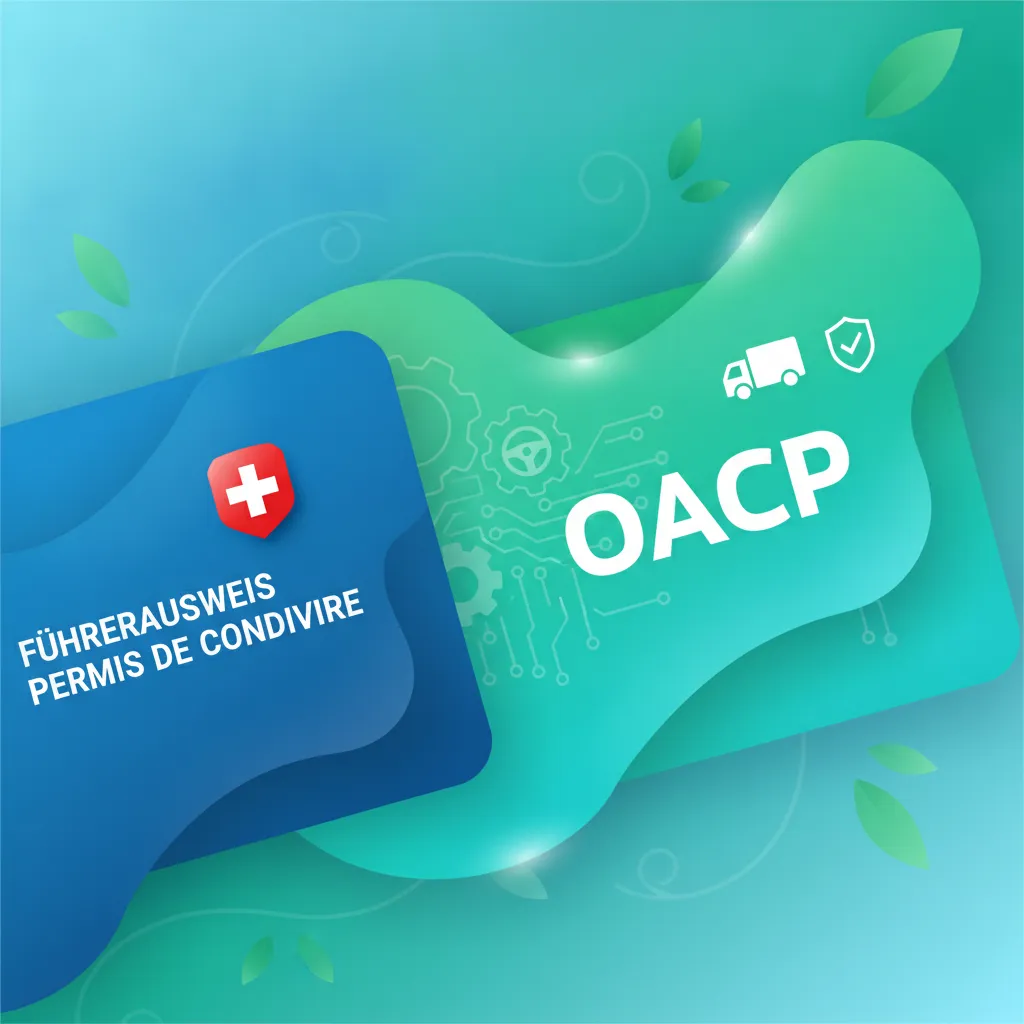
This lesson explains that obtaining a Category D license is the first step, while the OACP (Chauffeur Admission Ordinance) is a separate, mandatory professional qualification. It outlines the purpose of the OACP, including initial qualification and periodic training requirements. Understanding this distinction is crucial for a compliant and successful career in professional driving.
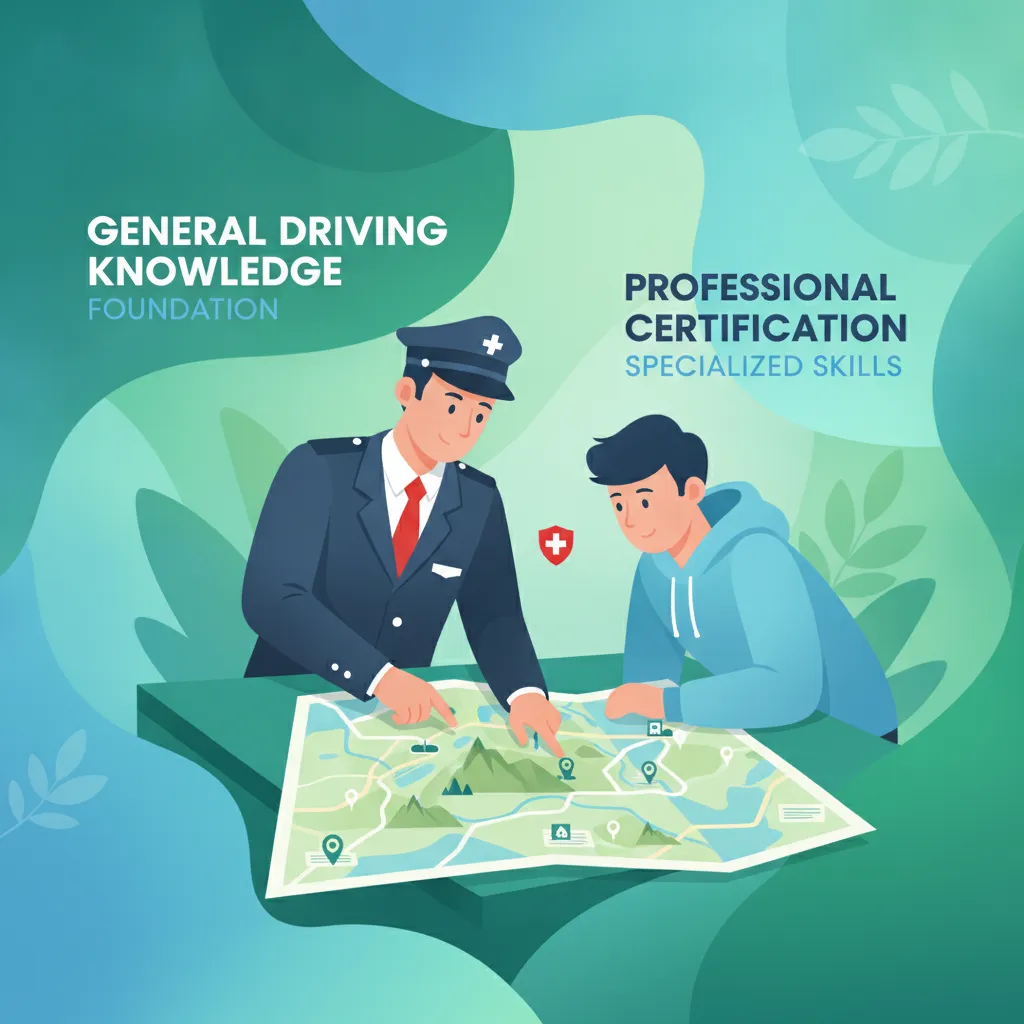
Obtaining a Category C license is the first step; driving professionally requires an additional qualification. This lesson distinguishes between the knowledge needed for the theory test and the requirements of the Chauffeur Admission Ordinance (OACP). It explains that the OACP involves further training and periodic courses focused on practical skills, safety, and economic driving, which are mandatory for commercial goods transport.
This lesson outlines the mandatory documentation required during any professional transport journey in Switzerland. Drivers must be able to present the vehicle registration document ('Fahrzeugausweis'), their valid driving license, and the OACP qualification card upon request. It also touches upon transport-specific documents like consignment notes, which are crucial for legal compliance during roadside inspections by authorities.

This lesson focuses on the heightened legal and ethical responsibilities a driver holds when carrying passengers. It explains the concept of duty of care, covering the obligation to ensure passenger safety from boarding to alighting. You will understand the potential consequences of negligence and the importance of upholding professional standards to protect every individual on board.
Transporting children carries the highest level of responsibility. This lesson covers the specific legal requirements for school buses in Switzerland, including the use of special signs and warning lights. It details the safe procedures for stopping, boarding, and alighting, and the driver's role in supervising children.
Find clear answers to common questions learners have about Driver's Legal Responsibilities: Documents and Compliance. Learn how the lesson is structured, which driving theory objectives it supports, and how it fits into the overall learning path of units and curriculum progression in Switzerland. These explanations help you understand key concepts, lesson flow, and exam focused study goals.
The OACP card serves as proof of your initial and periodic professional qualification required for passenger transport, separate from the driving licence itself. While the licence confirms your ability to operate the vehicle, the OACP card confirms you are legally certified to perform professional transport services.
In Switzerland, you are generally required to carry original, valid physical documents in the vehicle. While digital progress is ongoing, always ensure you have the mandatory hard copies as prescribed by traffic law to avoid penalties during roadside inspections.
Operating a bus without a correctly inserted tachograph card is a serious legal violation. It prevents the recording of driving and rest times, which are crucial for passenger safety and fatigue management. You must never operate the vehicle without your personal driver card active.
Professional drivers must keep their records accessible for current operations and as specified by Swiss regulations for retrospective audits. Failure to produce these records during a control can lead to heavy fines and potential suspension of your professional driving privileges.
Pinpoint specific Swiss traffic rules, road signs, or driving situations you need to master. Use the practice search to start a focused revision session now and build confidence for your official driving theory exam.