
This lesson clarifies the vital distinction between passing your Swiss Category C or C1 theory exam and the separate, mandatory professional requirements known as OACP. It provides a clear framework for understanding how standard traffic rules relate to your ongoing legal obligations as a professional goods vehicle driver in Switzerland.
Lesson content overview
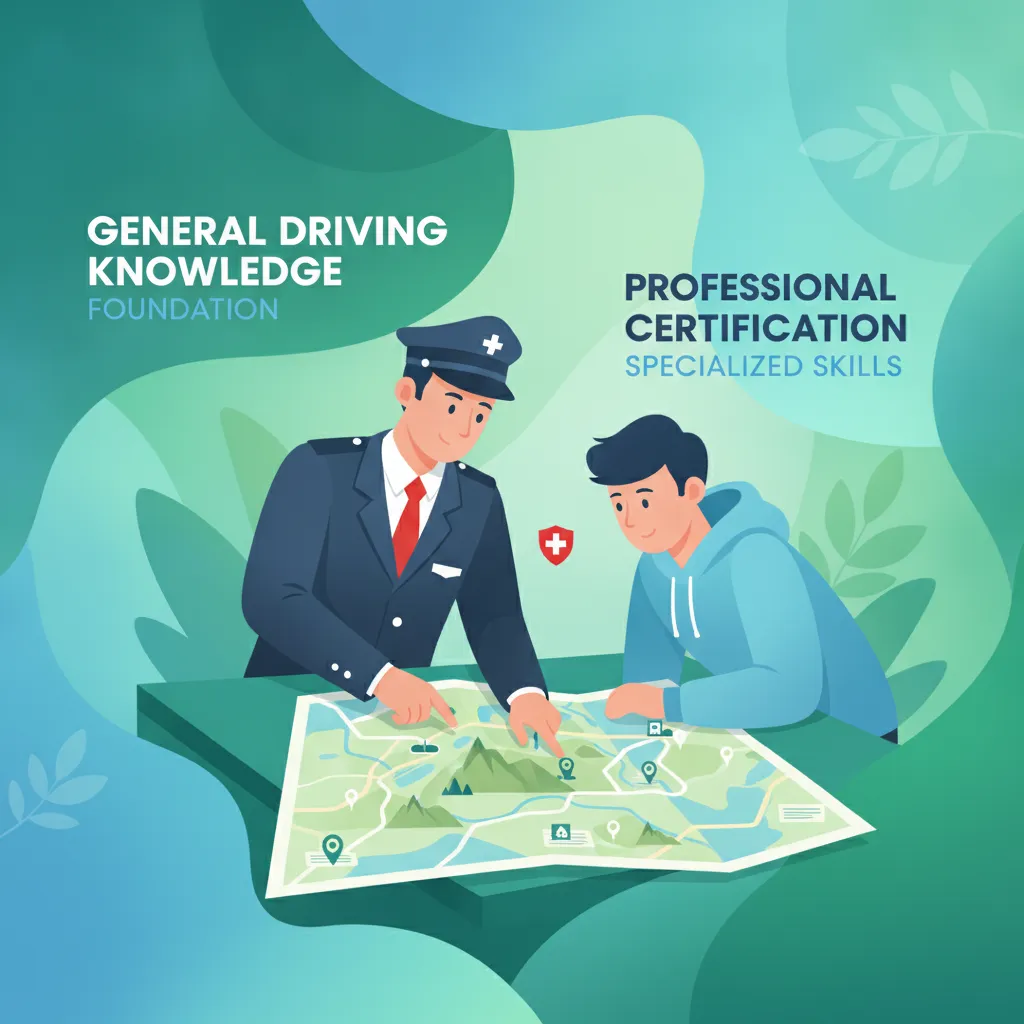
Obtaining a Category C or C1 driving license is a foundational step for anyone wishing to operate heavy goods vehicles. However, the knowledge required to pass the initial theoretical driving test is distinct from the comprehensive qualifications needed for professional goods transport. This lesson clarifies the crucial difference between standard driving theory and the advanced professional requirements mandated by the Chauffeur Admission Ordinance (OACP), known in Switzerland as the "Verordnung über die Zulassung von Chauffeuren und Chauffeurinnen" (CZV).
Understanding this distinction is vital for all aspiring and current professional drivers. It ensures awareness of the ongoing obligations, safety responsibilities, and legal requirements that extend far beyond the basic license acquisition. The OACP framework ensures that individuals engaged in commercial goods transport possess the specialized practical expertise and up-to-date knowledge necessary for safe and efficient operations on Swiss roads.
The theoretical knowledge base for a Category C or C1 license is designed to ensure a driver understands the fundamental rules of the road, basic vehicle operation, and general safety principles applicable to heavier vehicles. This knowledge is assessed through the theory exam, which certifies a driver's understanding of the general traffic system and vehicle dynamics relevant to their license category. Passing this exam grants the baseline credential for operating such vehicles, whether for private use or as a first step towards professional driving.
The Category C/C1 theory exam covers several critical areas. These include traffic regulations such as priority rules, speed limits for various road types, and correct overtaking procedures. Drivers must also grasp vehicle dynamics, understanding concepts like braking distance for heavy vehicles, the impact of load distribution on stability, and adherence to vehicle dimensions. General safety aspects, including seat belt usage, driving under the influence prohibitions, and basic emergency procedures, are also integral.
This foundational knowledge is derived from key Swiss regulations, such as sections of the Swiss Regulations for Motor Vehicles (VRV 1990) pertaining to traffic laws and the standard Swiss road signs. While essential, it is crucial to understand that merely passing this theory exam does not automatically qualify an individual for professional goods transport. This misconception often arises, as the basic license provides the legal permission to drive the vehicle type, but not necessarily for commercial purposes. For instance, a driver might know the 80 km/h speed limit for a Category C vehicle on motorways but lack the specialized practical training on advanced load securing or economic driving techniques required for commercial operations.
For drivers intending to transport goods commercially within Switzerland, the Chauffeur Admission Ordinance (OACP) introduces an additional, mandatory layer of professional qualification. This legal framework ensures that professional drivers possess competencies far exceeding those assessed in the basic theory test, focusing on real-world commercial transport scenarios. The OACP aims to enhance public safety by ensuring that commercial drivers have not only foundational knowledge but also the practical expertise to handle larger vehicles safely under varied and often challenging conditions.
The OACP professional qualification is a specific certification required by law for drivers who transport goods for remuneration. It encompasses a comprehensive curriculum that includes initial training, practical assessments, and ongoing competency development. This qualification is distinct from the basic Category C or C1 driving license, serving as a testament to a driver's specialized skills and adherence to professional standards.
The OACP framework is structured around several components:
The legal basis for this requirement is outlined in OACP Article 7, which mandates professional qualification for Category C/C1 drivers transporting goods for remuneration. This ensures that commercial drivers possess practical and safety-relevant competencies beyond basic theoretical understanding. A common misunderstanding is that a private Category C license automatically grants permission for professional transport, which is incorrect and can lead to severe legal violations.
Continuous learning is a cornerstone of the OACP. OACP Article 8 stipulates that refreshers must be completed every five years for all professional drivers to maintain the validity of their qualification. These recurring training sessions are vital for validating the continued competence of professional drivers.
The content of these refreshers often includes:
Failure to complete these refreshers within the defined interval means the driver's professional qualification becomes invalid, rendering them unable to legally engage in commercial driving until the course is completed. This critical requirement ensures that professional drivers remain up-to-date with evolving regulations and vehicle technology, thereby enhancing overall road safety.
Several core principles underpin the OACP framework, guiding the training and ongoing responsibilities of professional drivers. These principles are designed to ensure safety, efficiency, and legal compliance in the commercial transport sector.
A significant component of OACP training focuses on integrating safety with economic efficiency. This involves teaching driving techniques that simultaneously improve safety and reduce operational costs, primarily through optimizing fuel consumption and minimizing vehicle wear. OACP Article 10 establishes the requirement for economic and safe driving practices, covering areas like load securing, eco-driving, and fatigue management.
It's a common misconception that eco-driving compromises safety; in reality, both concepts are complementary, leading to smoother, more controlled, and therefore safer driving. For instance, maintaining a constant, appropriate speed on a motorway not only conserves fuel but also improves safety by reducing the need for sudden braking or acceleration, which can destabilize a heavy vehicle.
Professional drivers and their employers carry significant legal responsibilities under the OACP. This includes obligations to maintain accurate and current records of training, completed refresher courses, and adherence to driver hours regulations. OACP Article 11 details these record-keeping obligations for both drivers and companies, including copies of certificates and training records. Furthermore, OACP Article 9 mandates the issuance of certificates for completed training, which must be presented upon demand.
These robust record-keeping practices allow authorities to verify compliance during roadside inspections, company audits, or in the event of an incident. Failure to maintain or produce required documentation can lead to severe penalties. For example, a transport company must retain copies of each driver’s OACP certification for a specified period, typically at least five years, to demonstrate ongoing compliance. Verbal confirmation is insufficient; legally required written documentation is paramount.
The OACP is the central pillar governing professional driving qualifications in Switzerland. It defines the framework for initial training, continuous professional development, and the administrative processes necessary for legal compliance.
The Chauffeur Admission Ordinance (OACP/CZV) is a critical piece of legislation for anyone involved in commercial goods transport in Switzerland. It ensures that professional drivers maintain high standards of competence and safety throughout their careers.
Failure to comply with OACP regulations can lead to significant repercussions for both individual drivers and transport companies.
The OACP curriculum goes beyond theoretical rules, preparing drivers for the varied and often challenging conditions encountered in professional goods transport. It emphasizes practical application, risk assessment, and decision-making in real-world scenarios.
The Chauffeur Admission Ordinance is more than just a regulatory hurdle; it's a comprehensive framework designed to enhance road safety, promote economic efficiency, and foster environmental responsibility within the Swiss goods transport sector.
Professional drivers operate vehicles with significantly larger masses, which inherently translates to longer stopping distances and more complex load dynamics. OACP training specifically addresses these physics-based challenges, ensuring drivers understand and account for them. The training also extensively covers human factors, such as fatigue management, the importance of sustained attention, and optimizing reaction times, which are all amplified when operating heavy vehicles. Situational awareness training within the OACP is crucial for mitigating risks associated with these factors.
Studies within the Swiss transport sector indicate a tangible reduction in incidents when drivers regularly complete OACP refreshers, underscoring the effectiveness of continuous professional development in enhancing road safety. The principles of eco-driving, for instance, not only save fuel but also promote smoother driving, which reduces brake wear and inherently improves overall safety.
The distinction between the basic Category C/C1 theory test and the Professional Qualification (OACP) is fundamental for anyone involved in commercial goods transport in Switzerland. While the theory test verifies general knowledge of traffic rules and vehicle operation, the OACP ensures drivers possess the specific practical, safety-critical, and economic competencies required for professional driving.
The OACP mandates an initial comprehensive qualification process, followed by periodic refreshers, typically every five years, to keep skills and knowledge current. These refreshers cover vital topics such as advanced load securing, efficient eco-driving techniques, comprehensive fatigue management, and adherence to complex legal responsibilities including driver hours regulations monitored by the tachograph.
All professional drivers must maintain a valid Certificate of Professional Qualification and be ready to present it, alongside up-to-date tachograph records, upon request during inspections. Legal accountability is a shared responsibility, extending to both drivers and their employers, requiring diligent record-keeping and unwavering compliance with all regulations. Failure to meet OACP requirements can lead to significant consequences, including fines, license suspension, and operational disruptions. The OACP, therefore, integrates safety, economic, and environmental objectives, creating a robust framework that significantly enhances road safety and operational efficiency across the Swiss goods transport sector.
The Category C/C1 theory test verifies general traffic knowledge and vehicle operation, while the OACP (Chauffeur Admission Ordinance) establishes mandatory professional qualifications for commercial goods transport in Switzerland. Drivers must complete initial OACP training and pass assessments before transporting goods for remuneration, followed by mandatory five-year refreshers to maintain valid certification. The OACP framework emphasizes practical competencies including advanced load securing, eco-driving techniques, fatigue management, and adherence to driver hours regulations monitored by the tachograph. Non-compliance with OACP requirements can result in fines, license suspension, and operational disruptions for both drivers and their employers.
A short set of high-value points that capture the most important learning from this lesson.
The Category C/C1 theory test and OACP professional qualification are separate, distinct requirements - passing one does not satisfy the other
OACP certification is legally mandatory for anyone transporting goods for remuneration with heavy vehicles in Switzerland
Professional qualification requires both initial comprehensive training and periodic refreshers (typically every five years)
OACP training covers practical skills beyond traffic rules, including eco-driving, load securing, fatigue management, and emergency procedures
Both individual drivers and their employers share legal responsibility for maintaining OACP compliance
Explore all units and lessons included in this driving theory course.
OACP Article 7 mandates professional qualification for commercial goods transport with Category C, C1, C1E, or CE vehicles
OACP Article 8 requires completing refresher training every five years to maintain valid qualification
Drivers must carry their Certificate of Professional Qualification and tachograph records, available for inspection on demand
A private Category C license does NOT authorize commercial transport of goods - OACP is always required for remuneration-based work
OACP Article 11 requires both drivers and transport companies to maintain records of completed training for at least five years
Assuming that holding a private Category C license automatically permits commercial goods transport - it does not
Missing the five-year refresher deadline, which invalidates the professional qualification and prohibits commercial driving
Failing to carry or maintain required documentation (certificate, tachograph records), leading to fines during inspections
Believing eco-driving techniques compromise safety - in reality they complement safe driving by promoting smoother vehicle control
Employers failing to verify a driver's OACP status before assigning commercial transport duties
Lesson content overview
A short set of high-value points that capture the most important learning from this lesson.
The Category C/C1 theory test and OACP professional qualification are separate, distinct requirements - passing one does not satisfy the other
OACP certification is legally mandatory for anyone transporting goods for remuneration with heavy vehicles in Switzerland
Professional qualification requires both initial comprehensive training and periodic refreshers (typically every five years)
OACP training covers practical skills beyond traffic rules, including eco-driving, load securing, fatigue management, and emergency procedures
Both individual drivers and their employers share legal responsibility for maintaining OACP compliance
Explore all units and lessons included in this driving theory course.
OACP Article 7 mandates professional qualification for commercial goods transport with Category C, C1, C1E, or CE vehicles
OACP Article 8 requires completing refresher training every five years to maintain valid qualification
Drivers must carry their Certificate of Professional Qualification and tachograph records, available for inspection on demand
A private Category C license does NOT authorize commercial transport of goods - OACP is always required for remuneration-based work
OACP Article 11 requires both drivers and transport companies to maintain records of completed training for at least five years
Assuming that holding a private Category C license automatically permits commercial goods transport - it does not
Missing the five-year refresher deadline, which invalidates the professional qualification and prohibits commercial driving
Failing to carry or maintain required documentation (certificate, tachograph records), leading to fines during inspections
Believing eco-driving techniques compromise safety - in reality they complement safe driving by promoting smoother vehicle control
Employers failing to verify a driver's OACP status before assigning commercial transport duties
Explore search topics learners often look for when studying Distinguishing Driving Theory from Professional Qualifications (OACP). These topics reflect common questions about road rules, driving situations, safety guidance, and lesson level theory preparation for learners in Switzerland.
Browse additional driving theory lessons that cover connected traffic rules, road signs, and common driving situations related to this topic. Improve your understanding of how different rules interact across everyday traffic scenarios.
Understand the detailed differences between the foundational Swiss driving theory and the advanced Chauffeur Admission Ordinance (OACP) requirements for professional goods transport drivers. Essential knowledge for legal compliance.

This lesson explains that obtaining a Category D license is the first step, while the OACP (Chauffeur Admission Ordinance) is a separate, mandatory professional qualification. It outlines the purpose of the OACP, including initial qualification and periodic training requirements. Understanding this distinction is crucial for a compliant and successful career in professional driving.

This lesson outlines the mandatory documentation required during any professional transport journey in Switzerland. Drivers must be able to present the vehicle registration document ('Fahrzeugausweis'), their valid driving license, and the OACP qualification card upon request. It also touches upon transport-specific documents like consignment notes, which are crucial for legal compliance during roadside inspections by authorities.

This lesson details the specific documents that must be present in the vehicle and on the driver's person during service. It covers the driving license, OACP card, vehicle registration, and tachograph records. You will learn the importance of ensuring all paperwork is current and correct to ensure legal compliance at all times.

Motorway driving requires constant concentration due to high speeds. This lesson emphasizes the importance of staying in the right-hand lane unless overtaking and the specific restrictions on lorry overtaking in Switzerland. It reinforces the need for a following distance of at least four seconds to compensate for the vehicle's long stopping distance and provides guidance on safely merging and exiting.

Driving in the Alps requires a high level of skill and vehicle sympathy. This lesson covers techniques for climbing steep gradients by selecting the correct gear to maintain momentum without straining the engine. It reiterates the critical importance of using low gears and auxiliary brakes for descending, to ensure the service brakes remain cool and effective for the entire descent.

Driving a large vehicle on mountain passes is a demanding skill. This lesson covers selecting the correct gear for both ascents and descents to maintain control and avoid overheating the brakes. It also explains the specific priority rules that apply on mountain roads and the importance of being aware of sudden weather changes.

Operating a heavy goods vehicle involves a significant responsibility for the safety of all road users. This lesson emphasizes the professional driver's enhanced duty of care due to the vehicle's size, mass, and potential impact in a collision. It covers the importance of a professional attitude, constant vigilance, and adherence to all traffic regulations to prevent incidents and maintain a high standard of road safety.

Unlike cars, heavy vehicles cannot travel on every road. This lesson stresses the importance of using HGV-specific satellite navigation systems or carefully checking maps to plan routes that avoid low bridges, weak bridges, and roads with weight or width restrictions. Proper planning saves time, fuel, and prevents dangerous situations or costly damage.

Proper visibility is paramount for the safety of large vehicles, especially at night or in poor weather. This lesson covers the full range of required lights, including headlights, indicators, brake lights, and side and rear marker lights. It also explains the function of reflectors and the mandatory high-visibility conspicuity markings that outline the vehicle's shape to other drivers.

Rural roads present challenges like narrow lanes, poor surfaces, sharp bends, and limited visibility. This lesson teaches drivers how to position their large vehicle to maximize space and visibility, anticipate oncoming traffic at blind corners, and be aware of specific rural hazards. These hazards include slow-moving agricultural vehicles, animals on the road, and concealed farm entrances.
Explore the specific legal obligations and ongoing training requirements for professional goods vehicle drivers in Switzerland, focusing on the OACP, periodic refreshers, and essential record-keeping for compliance.
This lesson outlines the mandatory documentation required during any professional transport journey in Switzerland. Drivers must be able to present the vehicle registration document ('Fahrzeugausweis'), their valid driving license, and the OACP qualification card upon request. It also touches upon transport-specific documents like consignment notes, which are crucial for legal compliance during roadside inspections by authorities.
This lesson details the specific documents that must be present in the vehicle and on the driver's person during service. It covers the driving license, OACP card, vehicle registration, and tachograph records. You will learn the importance of ensuring all paperwork is current and correct to ensure legal compliance at all times.
Operating a heavy goods vehicle involves a significant responsibility for the safety of all road users. This lesson emphasizes the professional driver's enhanced duty of care due to the vehicle's size, mass, and potential impact in a collision. It covers the importance of a professional attitude, constant vigilance, and adherence to all traffic regulations to prevent incidents and maintain a high standard of road safety.
This lesson emphasizes the broad responsibilities of holding a driver's licence in Switzerland, including adherence to traffic laws and maintaining vehicle roadworthiness. It covers legal obligations related to insurance, registration, and reporting accidents, as well as the consequences of violations. The content reinforces the duty of care drivers owe to all other road users.

The driver is legally responsible for the roadworthiness of their vehicle at the start of and during every journey. This lesson outlines the formal process for reporting any identified defects to the transport manager or maintenance staff. It stresses the critical rule that a vehicle with a known safety-critical defect must not be driven until it has been professionally repaired and declared safe.

While others may have loaded the vehicle, the driver holds the final legal responsibility for the security of the load once on the public highway. This lesson clarifies this crucial point of law, explaining that the driver must inspect the load and its securing arrangements before departure and re-check them during the journey. The consequences of a load shifting or falling can be catastrophic and result in severe legal penalties for the driver.

This lesson focuses on the heightened legal and ethical responsibilities a driver holds when carrying passengers. It explains the concept of duty of care, covering the obligation to ensure passenger safety from boarding to alighting. You will understand the potential consequences of negligence and the importance of upholding professional standards to protect every individual on board.

Transporting children carries the highest level of responsibility. This lesson covers the specific legal requirements for school buses in Switzerland, including the use of special signs and warning lights. It details the safe procedures for stopping, boarding, and alighting, and the driver's role in supervising children.
This lesson explains that obtaining a Category D license is the first step, while the OACP (Chauffeur Admission Ordinance) is a separate, mandatory professional qualification. It outlines the purpose of the OACP, including initial qualification and periodic training requirements. Understanding this distinction is crucial for a compliant and successful career in professional driving.

For professional drivers, traffic violations can have career-altering consequences beyond standard fines. This lesson details the heightened penalties for infringements such as speeding, overloading, insecure loads, and violations of driving time regulations. It outlines the process of warnings, license suspension or withdrawal, and potential criminal liability, emphasizing the importance of strict legal compliance in the transport industry.
Find clear answers to common questions learners have about Distinguishing Driving Theory from Professional Qualifications (OACP). Learn how the lesson is structured, which driving theory objectives it supports, and how it fits into the overall learning path of units and curriculum progression in Switzerland. These explanations help you understand key concepts, lesson flow, and exam focused study goals.
No. The standard theory test for Category C and C1 focuses on Swiss traffic law, road signs, and safe driving rules. The OACP is a separate professional qualification mandatory for commercial transport, governed by different regulations.
The OACP is mandatory for drivers engaged in the professional transport of goods. Whether you need it depends on the nature of your driving activities rather than just the license category alone.
The driving theory exam confirms you understand road safety and traffic rules. The OACP involves specific periodic training aimed at practical vehicle management, economic driving, and the professional responsibilities of commercial lorry drivers.
Professional drivers must adhere to the Chauffeur Admission Ordinance. Failing to meet these professional qualifications can lead to legal consequences and may restrict your ability to legally drive commercial goods vehicles within Switzerland.
Pinpoint specific Swiss traffic rules, road signs, or driving situations you need to master. Use the practice search to start a focused revision session now and build confidence for your official driving theory exam.