
This lesson provides a foundational breakdown of the Swiss passenger transport license categories. By exploring the differences between minibuses, standard buses, and articulated combinations, you will gain the clarity needed to navigate professional licensing requirements in Switzerland.
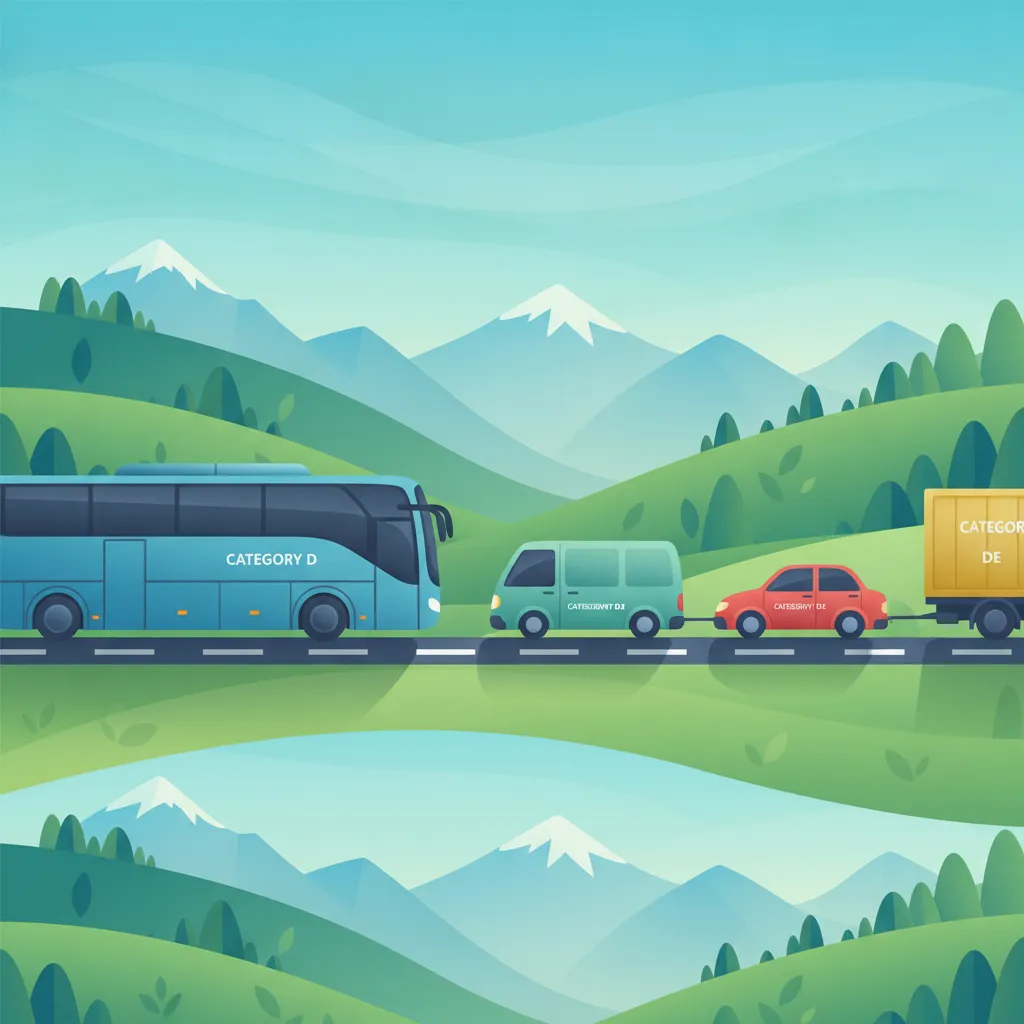
Lesson content overview
Welcome to the Swiss Category D Driving License Theory Course. This foundational lesson delves into the critical distinctions of the Swiss driving license categories D, D1, D1E, and DE. For any professional driver aspiring to operate passenger vehicles in Switzerland, a deep understanding of these classifications is not merely academic; it is essential for legal compliance, ensuring passenger safety, and optimizing operational efficiency. Mastering these categories is the first step toward becoming a responsible and proficient bus or coach driver.
This lesson will provide a clear breakdown, explaining the specific rules governing vehicle mass, passenger capacity, and trailer usage for each category. You will learn to differentiate between a standard bus (D), a minibus (D1), and the specific requirements for operating these vehicles with trailers (D1E, DE). This knowledge forms the bedrock for subsequent lessons on vehicle dynamics, passenger management, and professional responsibilities, preparing you for the multifaceted demands of transporting passengers safely across Switzerland.
In Switzerland, the operation of passenger vehicles is meticulously regulated through a system of driving license categories. These categories are designed to match a driver's qualifications with the specific characteristics and inherent risks of different vehicle types. For buses and minibuses, these classifications are based primarily on the vehicle's Maximum Authorized Mass (MAM), passenger seating capacity, and whether a trailer is being towed. Understanding these categories is paramount for professional passenger transport.
The main categories we will explore are D (for full-sized buses), D1 (for minibuses), and their respective trailer combinations, D1E and DE. Each category comes with distinct legal permissions and operational constraints, ensuring that drivers are appropriately licensed for the vehicles they command and the passengers they carry.
The Category D driving license in Switzerland grants the legal right to operate a bus designed for the transport of more than eight passengers in addition to the driver. This category encompasses a wide array of large passenger vehicles, including standard city buses, intercity coaches, and large tourist buses, without specific upper limits on their Maximum Authorized Mass (MAM) or passenger capacity, provided the vehicle complies with its own technical specifications.
A driver holding a Category D license is authorized to operate vehicles like a typical public transport bus or a long-distance coach. However, it is crucial to note that this license does not automatically permit towing a trailer. For trailer operations with a Category D vehicle, an additional license category, DE, is required.
Category D drivers are typically employed in public transport services, operating scheduled routes within urban areas or between towns. They also drive for private charter companies, conducting school transport, tourist excursions, or corporate shuttle services. Common vehicle types include articulated buses, double-decker coaches, and single-deck coaches.
When considering a vehicle for Category D, always check the vehicle's registration documents. These documents confirm the number of passenger seats and the vehicle's unladen and maximum authorized mass, ensuring it aligns with the category's requirements.
The primary rule for Category D vehicles is the passenger seat count: they must be designed to carry more than 8 passengers (excluding the driver). Unlike Category D1, there isn't an upper limit on the vehicle's MAM, which allows for the operation of very large buses, including those exceeding 7,500 kg. The critical limitation is that a Category D license alone does not permit towing a trailer. This is a common point of confusion for new professional drivers.
The Category D1 driving license authorizes the operation of a minibus. This category is specifically tailored for smaller passenger vehicles, with stringent limits on both their Maximum Authorized Mass (MAM) and the number of passenger seats. To qualify as a D1 vehicle, a minibus must have a MAM of up to 7,500 kg and be designed to carry a maximum of 16 passengers in addition to the driver.
This classification ensures that drivers are competent to handle vehicles that are larger than typical cars or vans but fall below the size and mass of full-sized buses. The D1 category is ideal for operations that do not require the extensive capacity of a standard bus.
Minibuses licensed under Category D1 are frequently used for diverse transport needs. This includes small group tours, airport shuttle services, school trips for smaller classes, hotel guest transport, and special needs transport. Examples of D1 vehicles might be larger van-based conversions or purpose-built small buses.
The two primary limitations for Category D1 are:
Similar to Category D, a D1 license by itself does not permit towing a trailer. If a minibus needs to tow a trailer, the driver must possess the D1E license. Misunderstanding this distinction can lead to significant legal penalties and safety risks.
The Category D1E driving license is a specialized extension of the D1 category. It grants permission to operate a minibus (as defined under D1) that is towing a trailer. This license is crucial for drivers who need to transport additional luggage, equipment, or even supplementary passengers in a trailer attached to their minibus.
The D1E category is designed to allow for increased transport capacity while still maintaining strict safety parameters for the combined vehicle and trailer.
Operating under D1E comes with specific mass limitations for the entire combination:
These limits are critical for ensuring the stability, braking efficiency, and maneuverability of the combined unit. The driver must ensure that both the towing vehicle and the trailer comply with all technical specifications for coupling and braking systems.
D1E combinations are commonly seen in tourist operations, where minibuses transport small groups along with their luggage, or for sports teams carrying equipment. For instance, a minibus with a MAM of 7,000 kg might tow a trailer with a MAM of 3,000 kg, bringing the combined MAM to 10,000 kg, which falls within the D1E limits. This allows for flexible transport solutions without requiring a full-sized bus.
The Category DE driving license is the highest level for passenger vehicle combinations, allowing the operation of a full-sized bus (as defined under Category D) while towing a trailer. This license is essential for long-distance coach services, tourist operations, or any scenario where a large bus needs to transport additional cargo beyond its internal capacity.
The DE category acknowledges the increased complexity and safety demands of operating such substantial vehicle combinations, requiring a higher level of driver competence.
Similar to D1E, the DE category imposes strict mass restrictions:
The technical compatibility of the coupling pin, braking assistance systems, and overall vehicle dynamics are paramount for safe operation under Category DE.
DE license holders typically operate coaches on international routes or long-distance domestic tours, where additional luggage capacity is required. An example would be a coach bus with a MAM of 9,500 kg towing a baggage trailer with a MAM of 2,500 kg, resulting in a combined MAM of 12,000 kg. This allows for efficient transport of large groups and their extensive luggage, often seen in ski holidays or summer tours.
The number of passenger seats a vehicle possesses is a fundamental differentiator between the D and D1 categories.
These limits apply to fixed, designated passenger seats. The regulation of standing passengers (common in city buses) is a separate aspect of public transport law and vehicle design, but the initial categorization is based on fixed seating capacity. Adhering to these limits is not just a legal requirement but a critical safety measure, impacting evacuation procedures and overall vehicle stability.
The Maximum Authorized Mass (MAM), sometimes referred to as Gross Vehicle Weight (GVW) or Permissible Maximum Weight, is the most crucial concept for vehicle categorization.
The total permissible weight of a vehicle when fully loaded. This includes the vehicle's unladen weight, the weight of all passengers, their luggage, and any fuel.
MAM is the decisive factor for distinguishing between D1 and potentially D, and absolutely for regulating trailer combinations (D1E and DE). Exceeding the MAM is a serious offense that compromises vehicle safety, especially braking performance and structural integrity.
The calculation of MAM involves:
Examples of MAM relevance:
The legal requirements for operating passenger vehicles in Switzerland are enshrined in the Road Traffic Act (SVG) and its associated ordinances. Adherence to these regulations is not only mandatory for all professional drivers but also fundamental for public safety.
The most critical rule is that a driver must possess the appropriate driving license category for the vehicle combination they are operating.
Operating a vehicle without the correct license is a severe offense, leading to substantial fines, license suspension, and potential criminal charges, especially if an accident occurs.
Strict adherence to the Maximum Authorized Mass (MAM) and passenger seat limits is non-negotiable.
These limits are set to ensure that the vehicle combination remains manageable, its braking systems are effective, and its structural integrity is not compromised, particularly in challenging Swiss terrain. Regular checks of passenger numbers, luggage weight, and fuel levels are part of a driver's daily routine to ensure compliance.
Overloading a vehicle, even slightly, can severely impact its handling characteristics, increase stopping distances, and put undue stress on tires and suspension, significantly increasing the risk of an accident.
Misunderstanding or neglecting the specific requirements of categories D, D1, D1E, and DE can lead to serious legal repercussions and compromise safety. Professional drivers must be acutely aware of these potential pitfalls.
Driving conditions in Switzerland can vary dramatically, and these variations have a significant impact on how passenger vehicles, especially those with trailers, must be operated. Driver competence extends beyond basic vehicle control to understanding how environmental and operational factors interact with vehicle categories.
The actual load a vehicle carries directly influences its MAM.
Larger passenger vehicles and their combinations inherently have larger blind spots and require longer stopping distances.
The regulatory framework for Swiss driving license categories is built upon clear cause-and-effect relationships designed to optimize safety and efficiency in passenger transport.
This lesson on Swiss driving license categories forms a critical foundation for the entire Swiss Category D Driving License Theory Course.
A basic understanding of general Swiss driving license categories (e.g., A, B, C) and fundamental road safety principles is assumed. Familiarity with basic vehicle mechanics, such as how braking works, also aids comprehension.
The knowledge gained here directly prepares you for several upcoming topics:
This lesson has provided a comprehensive overview of the Swiss driving license categories D, D1, D1E, and DE, which are fundamental for operating professional passenger vehicles.
Understanding these distinctions is the cornerstone of your journey to becoming a responsible and skilled professional bus or coach driver in Switzerland.
This lesson explains the four Swiss passenger transport license categories: D for full-sized buses (more than 8 passengers), D1 for minibuses (max 16 passengers, MAM up to 7,500 kg), D1E for minibuses towing trailers (combined MAM ≤ 12,000 kg), and DE for buses towing trailers (combined MAM ≤ 12,000 kg). Maximum Authorized Mass (MAM) and passenger seat count are the key factors determining which license category applies. Operating without the correct license, exceeding passenger or mass limits, or misusing trailer permissions are serious violations that carry severe penalties and create significant safety risks, particularly in Switzerland's demanding mountain terrain and variable weather conditions.
A short set of high-value points that capture the most important learning from this lesson.
Category D licenses allow operation of full-sized buses designed for more than 8 passengers, with no upper MAM limit for the bus itself, but trailer towing requires a separate DE license.
Category D1 licenses are strictly limited to minibuses with a Maximum Authorized Mass (MAM) of up to 7,500 kg and a maximum of 16 passenger seats.
The D1E license permits a D1 minibus to tow a trailer, with combined MAM not exceeding 12,000 kg and the trailer's individual MAM limited to 3,500 kg.
The DE license allows a full-sized bus (Category D) to tow a trailer, with the combined MAM of both vehicles capped at 12,000 kg.
Maximum Authorized Mass (MAM) and passenger seat count are the two pivotal factors that determine which license category applies to any given vehicle.
Explore all units and lessons included in this driving theory course.
D1 minibus: max 16 passengers + driver, MAM up to 7,500 kg, no trailer allowed without D1E.
D bus: more than 8 passengers + driver, no upper MAM limit for the bus, trailer only with DE license.
D1E combined MAM ≤ 12,000 kg total; D1E trailer MAM ≤ 3,500 kg.
DE combined MAM ≤ 12,000 kg total; trailer MAM typically ≤ 3,500 kg (verify locally for exceptions).
MAM includes vehicle weight + fuel + all passengers (estimated at 75 kg each) + cargo/luggage.
Driving a D1 minibus with only a Category B license, which covers neither the vehicle size nor passenger capacity requirements.
Exceeding the 16-passenger limit in a D1 vehicle, which reclassifies it as requiring a Category D license.
Towing a trailer with only a D1 or D license instead of upgrading to D1E or DE respectively.
Overloading a vehicle beyond its MAM, especially dangerous on Swiss mountain roads where braking distances increase dramatically.
Assuming a full-sized bus (D) can tow any trailer, when in fact a DE license and adherence to the 12,000 kg combined limit are required.
Lesson content overview
A short set of high-value points that capture the most important learning from this lesson.
Category D licenses allow operation of full-sized buses designed for more than 8 passengers, with no upper MAM limit for the bus itself, but trailer towing requires a separate DE license.
Category D1 licenses are strictly limited to minibuses with a Maximum Authorized Mass (MAM) of up to 7,500 kg and a maximum of 16 passenger seats.
The D1E license permits a D1 minibus to tow a trailer, with combined MAM not exceeding 12,000 kg and the trailer's individual MAM limited to 3,500 kg.
The DE license allows a full-sized bus (Category D) to tow a trailer, with the combined MAM of both vehicles capped at 12,000 kg.
Maximum Authorized Mass (MAM) and passenger seat count are the two pivotal factors that determine which license category applies to any given vehicle.
Explore all units and lessons included in this driving theory course.
D1 minibus: max 16 passengers + driver, MAM up to 7,500 kg, no trailer allowed without D1E.
D bus: more than 8 passengers + driver, no upper MAM limit for the bus, trailer only with DE license.
D1E combined MAM ≤ 12,000 kg total; D1E trailer MAM ≤ 3,500 kg.
DE combined MAM ≤ 12,000 kg total; trailer MAM typically ≤ 3,500 kg (verify locally for exceptions).
MAM includes vehicle weight + fuel + all passengers (estimated at 75 kg each) + cargo/luggage.
Driving a D1 minibus with only a Category B license, which covers neither the vehicle size nor passenger capacity requirements.
Exceeding the 16-passenger limit in a D1 vehicle, which reclassifies it as requiring a Category D license.
Towing a trailer with only a D1 or D license instead of upgrading to D1E or DE respectively.
Overloading a vehicle beyond its MAM, especially dangerous on Swiss mountain roads where braking distances increase dramatically.
Assuming a full-sized bus (D) can tow any trailer, when in fact a DE license and adherence to the 12,000 kg combined limit are required.
Explore search topics learners often look for when studying Understanding Swiss Categories D, D1, D1E, and DE. These topics reflect common questions about road rules, driving situations, safety guidance, and lesson level theory preparation for learners in Switzerland.
Browse additional driving theory lessons that cover connected traffic rules, road signs, and common driving situations related to this topic. Improve your understanding of how different rules interact across everyday traffic scenarios.
Understand the distinct Swiss driving license categories D, D1, D1E, and DE for professional passenger transport. Learn the specific limits for vehicle mass, passenger capacity, and trailer towing requirements essential for your theory.
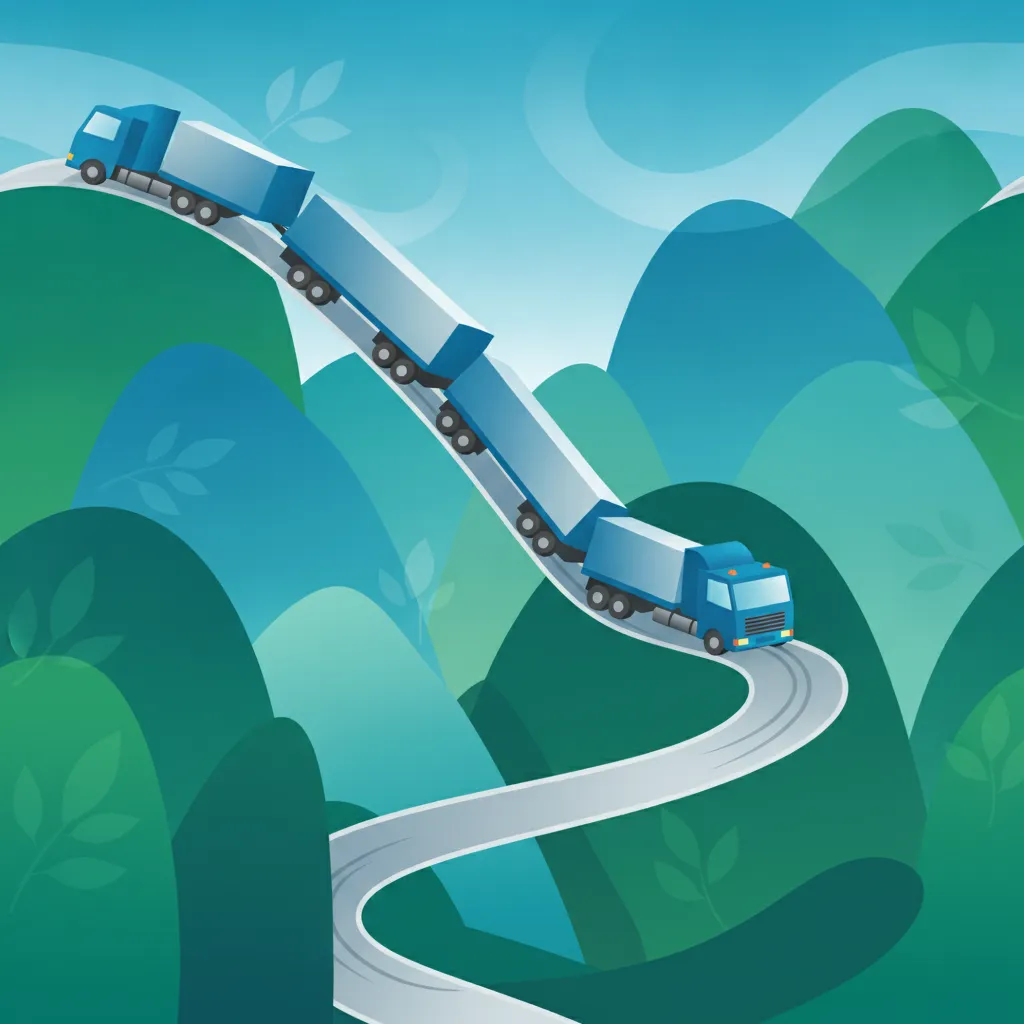
Adding a trailer (D1E) or driving an articulated bus (DE) changes the vehicle's dynamics significantly. This lesson covers the key differences in handling, braking, and reversing. It explains the concept of the pivot point and how to manage the increased length and swept path when turning and manoeuvring.
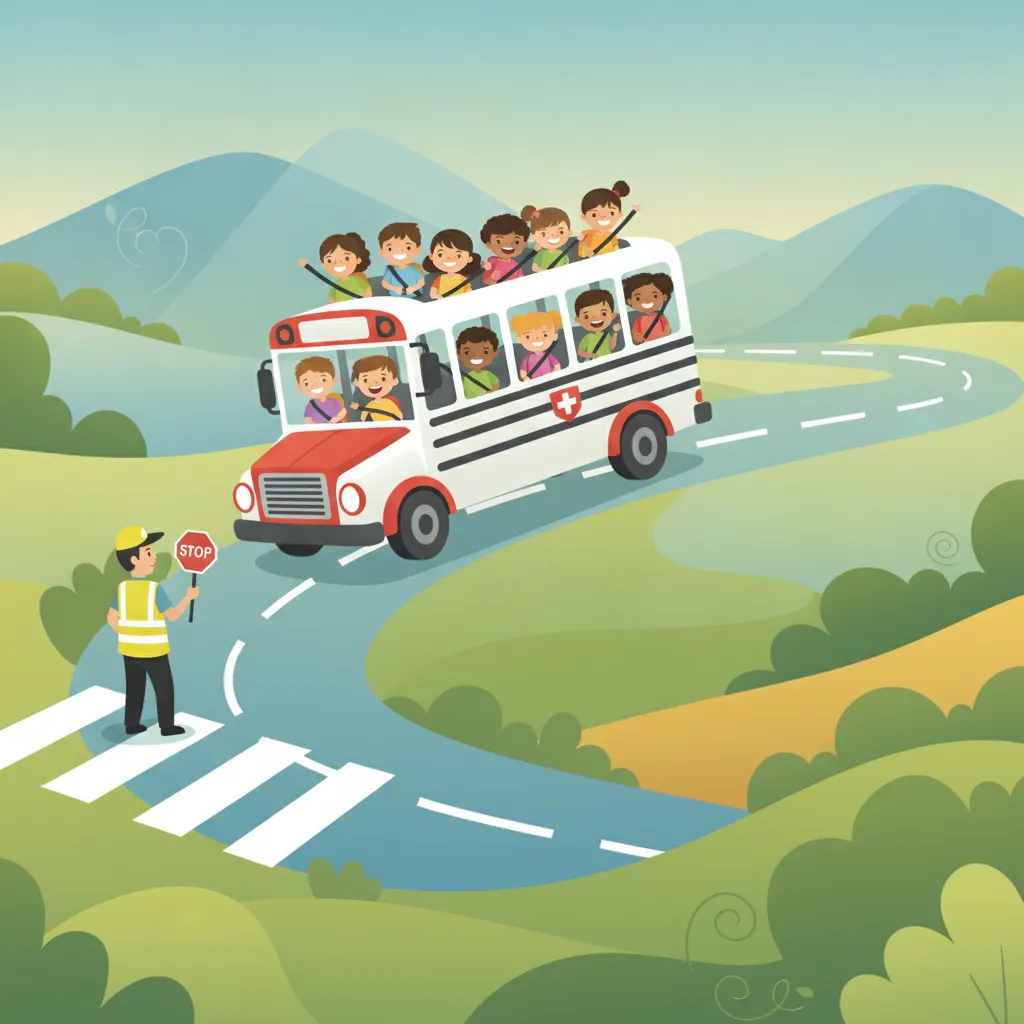
Transporting children carries the highest level of responsibility. This lesson covers the specific legal requirements for school buses in Switzerland, including the use of special signs and warning lights. It details the safe procedures for stopping, boarding, and alighting, and the driver's role in supervising children.
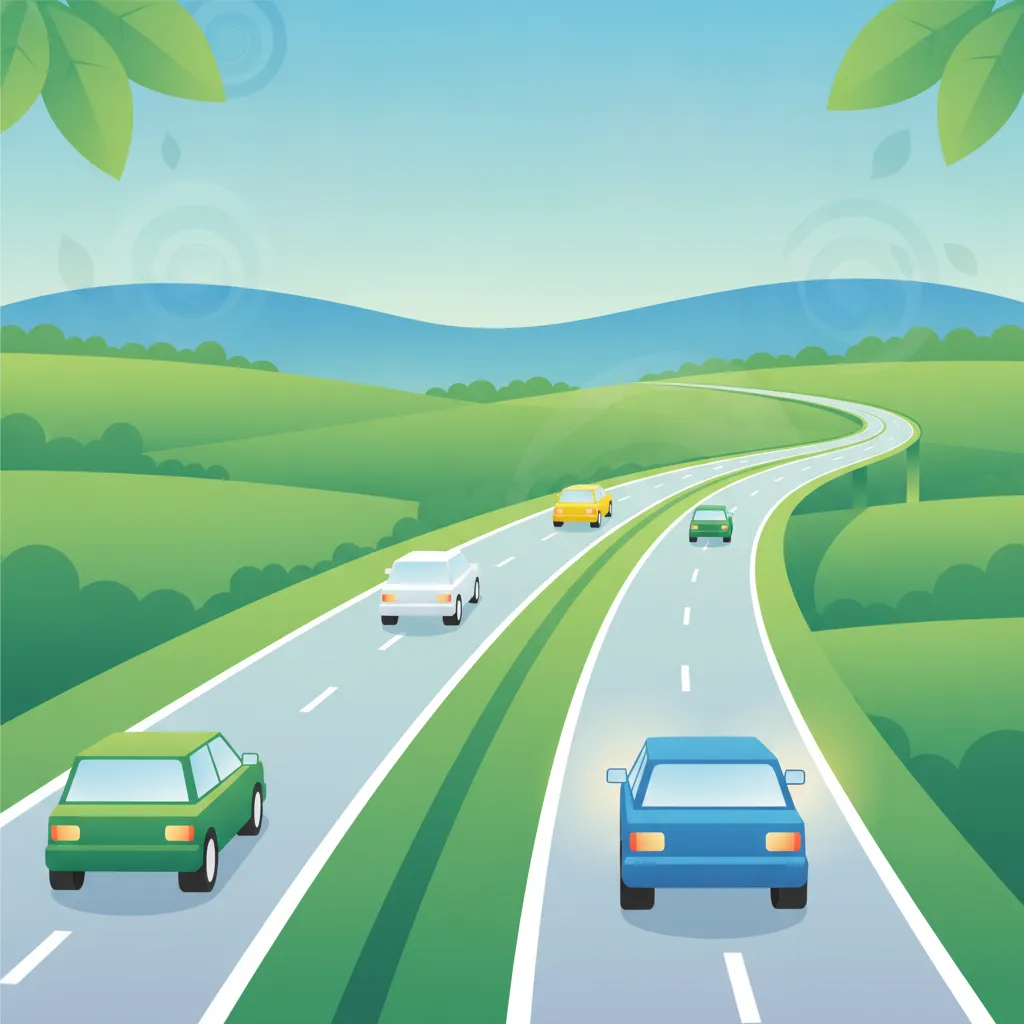
Motorway driving involves high speeds and requires constant concentration. This lesson covers correct lane discipline, safe procedures for joining and leaving the motorway, and techniques for overtaking other large vehicles. Maintaining appropriate speed and a safe following distance is emphasized throughout.
This lesson details the definition of Category B within the Swiss licensing system, focusing on vehicle types, weight capacities, and passenger limits. It clarifies the maximum authorized mass for Category B cars and the specific restrictions on towing trailers. You will learn the legal framework defining which vehicles you may operate and the boundaries of this license category.
Bus lanes are a key tool for improving service reliability, but they come with specific rules. This lesson covers how to correctly interpret bus lane signs and markings. It also explains the regulations for entering and leaving the lane to make turns or avoid obstructions, and the priority rules associated with them.
The driver must ensure all boarding passengers are safely on board and stable before moving off. This lesson covers managing the flow of passengers, dealing with fares or tickets efficiently, and encouraging people to move away from the doorway. The primary goal is to prevent falls that can occur if the vehicle moves prematurely.
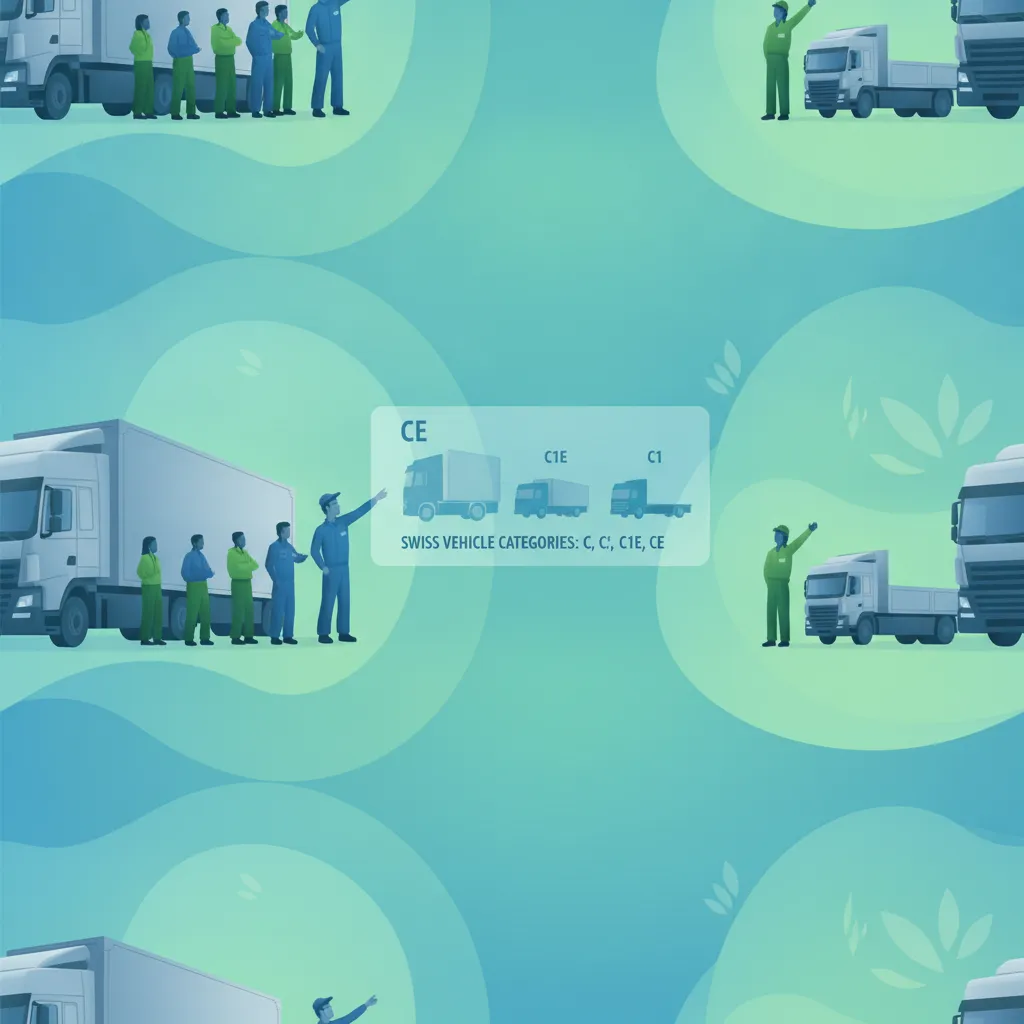
This lesson provides a clear definition of the Swiss heavy goods vehicle license categories. It details the weight limits and vehicle configurations for Category C (lorries over 3.5t) and C1 (lorries from 3.5t to 7.5t). Furthermore, it explains how categories CE and C1E grant the entitlement to tow heavy trailers, forming articulated vehicles or road trains, which is crucial for professional transport operations.
This lesson details the specific documents that must be present in the vehicle and on the driver's person during service. It covers the driving license, OACP card, vehicle registration, and tachograph records. You will learn the importance of ensuring all paperwork is current and correct to ensure legal compliance at all times.
This lesson focuses on the legally required safety equipment that must be on board every passenger vehicle. You will learn how to locate and check the fire extinguisher, first aid kit, and emergency hammers. It also covers the inspection of emergency exits to ensure they are unobstructed and functional.
Driving a large vehicle on mountain passes is a demanding skill. This lesson covers selecting the correct gear for both ascents and descents to maintain control and avoid overheating the brakes. It also explains the specific priority rules that apply on mountain roads and the importance of being aware of sudden weather changes.
Master the legal framework and critical safety considerations for Swiss Category D, D1, D1E, and DE licenses. This lesson covers compliance with mass, passenger limits, and potential risks for professional drivers.
Transporting children carries the highest level of responsibility. This lesson covers the specific legal requirements for school buses in Switzerland, including the use of special signs and warning lights. It details the safe procedures for stopping, boarding, and alighting, and the driver's role in supervising children.
This lesson details the specific documents that must be present in the vehicle and on the driver's person during service. It covers the driving license, OACP card, vehicle registration, and tachograph records. You will learn the importance of ensuring all paperwork is current and correct to ensure legal compliance at all times.
Adding a trailer (D1E) or driving an articulated bus (DE) changes the vehicle's dynamics significantly. This lesson covers the key differences in handling, braking, and reversing. It explains the concept of the pivot point and how to manage the increased length and swept path when turning and manoeuvring.
This lesson focuses on the legally required safety equipment that must be on board every passenger vehicle. You will learn how to locate and check the fire extinguisher, first aid kit, and emergency hammers. It also covers the inspection of emergency exits to ensure they are unobstructed and functional.
The driver must ensure all boarding passengers are safely on board and stable before moving off. This lesson covers managing the flow of passengers, dealing with fares or tickets efficiently, and encouraging people to move away from the doorway. The primary goal is to prevent falls that can occur if the vehicle moves prematurely.
Departing from a bus stop is a high-risk manoeuvre. This lesson details the critical sequence of actions: checking all passengers are clear of the doors, performing a comprehensive mirror and blind spot check, signalling, and waiting for a safe gap in traffic. This systematic approach is essential for preventing collisions with overtaking vehicles, cyclists, or pedestrians.
Unsecured items can become dangerous projectiles in the event of a sudden stop or collision. This lesson covers the driver's responsibility for overseeing the secure stowage of passenger belongings. It includes rules for using luggage compartments on coaches and designated spaces for prams and mobility aids on city buses.
Standing passengers are particularly vulnerable to sudden vehicle movements. This lesson covers the driver's responsibility to adapt their driving style when people are standing. It emphasizes even smoother control, heightened awareness, and clear communication to minimize the risk of falls and injuries.
This lesson provides step-by-step instructions on how to safely deploy, operate, and stow wheelchair ramps and lifts. It covers pre-operation checks, correct positioning of the vehicle, and the procedures for safely securing a wheelchair inside the bus. Proper use of this equipment is vital for the safety of both the passenger and the driver.
This lesson focuses on the heightened legal and ethical responsibilities a driver holds when carrying passengers. It explains the concept of duty of care, covering the obligation to ensure passenger safety from boarding to alighting. You will understand the potential consequences of negligence and the importance of upholding professional standards to protect every individual on board.
Find clear answers to common questions learners have about Understanding Swiss Categories D, D1, D1E, and DE. Learn how the lesson is structured, which driving theory objectives it supports, and how it fits into the overall learning path of units and curriculum progression in Switzerland. These explanations help you understand key concepts, lesson flow, and exam focused study goals.
The D1 license is for minibuses with more than 8 but not more than 16 passengers excluding the driver, while the D license covers buses with more than 16 passengers.
Yes, to operate a bus with a trailer that exceeds the permitted weight limits for a standard D1 or D license, you must hold a D1E or DE license respectively.
In Switzerland, license categories for passenger vehicles are primarily defined by the number of passengers and the specific combination of trailer weight, rather than just the vehicle's total mass.
While Swiss categories follow standard European harmonized license classes, always refer to the specific Swiss Traffic Law when preparing for your Swiss theory exam to ensure you are compliant with local requirements.
Pinpoint specific Swiss traffic rules, road signs, or driving situations you need to master. Use the practice search to start a focused revision session now and build confidence for your official driving theory exam.