
This lesson provides a comprehensive guide to performing mandatory pre-trip checks on your bus or coach. You will learn the systematic approach to verifying exterior lighting, mirror adjustments, and camera systems, ensuring your vehicle meets Swiss road safety standards before every journey.

Lesson content overview
As a professional driver in the Swiss Category D Driving License Theory Course, understanding and mastering vehicle visibility is paramount. The ability to both see and be seen significantly impacts road safety, especially when operating large passenger vehicles like buses and coaches. These vehicles present unique challenges due to their size, numerous blind spots, and the precious cargo they carry. This lesson delves into the systematic verification of all exterior lighting devices, mirrors, and other crucial visibility aids. By adhering to rigorous daily checks and proper operational procedures, drivers can mitigate risks, prevent accidents, and ensure the safety of all road users.
Effective visibility is not merely about personal comfort; it is a fundamental pillar of defensive driving and a legal obligation. A single non-functional light or an improperly adjusted mirror can have severe consequences, ranging from miscommunication of intent to completely missing a hazard. Therefore, a thorough understanding and diligent application of the principles outlined in this chapter are essential for any professional bus or coach driver.
Exterior lighting systems are your primary tools for communicating with other road users and illuminating your path. For large vehicles, a complete and functional lighting system is non-negotiable for safe operation. Every light serves a distinct purpose, and a pre-trip inspection must verify the functionality of each.
Headlights are essential for safe driving during periods of low light, such as dusk, night, or adverse weather conditions. They fall into two main categories:
Drivers must switch from main beam to dipped beam when approaching oncoming traffic or when following another vehicle within a specific distance to prevent dazzling.
Clear communication of your intentions is vital, especially when maneuvering a large bus or coach.
For large vehicles, merely having headlights and taillights is often insufficient to convey their full dimensions, especially at night.
Certain maneuvers and emergency situations require specific lighting to alert others.
A thorough lighting check is an integral part of the daily walk-around inspection.
Before starting the engine, switch on all external lights one by one: position lights, dipped beam, main beam, hazard warning lights.
Walk around the vehicle, observing each light for proper illumination and color. Ensure all lenses are clean and free from cracks or condensation.
Activate the left turn signal and check all three (front, side, rear) indicators. Repeat for the right turn signal.
Ask a colleague to press the brake pedal while you check both brake lights and the high-mounted brake light. If inspecting alone, position a reflective object or use a reflective surface to observe the brake lights, or engage a device to hold the brake pedal.
Engage reverse gear (with parking brake applied) and verify the reversing lights illuminate.
Check all side marker lights are working correctly.
Address any non-functional or damaged lights immediately before operating the vehicle.
A single burnt-out bulb can compromise your ability to communicate intentions or be seen, significantly increasing accident risk. Never operate a commercial passenger vehicle with faulty essential lighting.
Mirrors are extensions of the driver's eyes, providing crucial information about the vehicle's surroundings. For buses and coaches, properly adjusted and clean mirrors are vital for managing extensive blind spots and ensuring safe navigation.
While primarily used in smaller vehicles to view traffic directly behind, the interior rear-view mirror in a bus or coach often serves multiple purposes. It allows the driver to monitor passengers within the cabin, observe the rear entrance/exit doors, and gain some visibility of the area immediately behind the vehicle through the rear window, if unobstructed. This mirror should be adjusted to provide a clear, panoramic view of the internal passenger compartment and the area directly behind the bus.
Exterior mirrors are arguably the most critical visibility tool for a bus or coach driver. Due to the sheer length and width of these vehicles, multiple mirrors are often fitted on each side to cover different zones and minimize blind spots.
Correct mirror adjustment is a dynamic process and must be done for each driver. It is not a "set-it-and-forget-it" task.
Adjust your seat: First, ensure your driver's seat and steering wheel are adjusted to your comfortable and safe driving position. This is the foundation for mirror adjustment.
Interior Rear-view Mirror: Position it to provide a clear view of the passenger cabin and, if applicable, the rear window without straining.
Left Exterior Side Mirror (Main): Lean slightly towards the driver's window. Adjust the mirror so that you can just see the rear corner of your vehicle in the innermost part of the mirror. The horizon should be roughly in the middle. This allows maximum view of the lane beside and behind you.
Right Exterior Side Mirror (Main): Lean slightly towards the center of the vehicle. Adjust this mirror similarly to the left, so you just see the rear corner of your vehicle.
Wide-Angle and Blind Spot Mirrors: These should be adjusted to show as much of the blind spot areas as possible, aiming to overlap slightly with the view from the main mirrors. They are critical for identifying objects in the immediate vicinity of the bus, such as cyclists or objects near bus doors.
Verify Coverage: Before moving, visually scan all mirrors to confirm there are no significant gaps in your field of view. Be aware that even with perfectly adjusted mirrors, some blind spots will remain; these require head checks and careful scanning.
Regularly check mirror alignment, especially after another driver has used the vehicle or after any significant seat adjustments. Even small changes in seating position can alter your mirror's effectiveness.
Beyond lights and mirrors, several other aids contribute to maintaining clear visibility, especially in challenging conditions. These systems require regular checks and maintenance.
A clear windshield is fundamental for safe driving.
Nozzles that spray washing fluid onto the windshield, mirrors, or camera lenses to remove dirt and ensure clear visibility.
Many modern buses and coaches are equipped with camera systems that provide additional visual information, particularly for areas prone to blind spots.
For these systems to be effective, their lenses must be immaculately clean and free from damage, condensation, or obstruction (e.g., mud, snow, ice). A blurred or obstructed camera feed can be more dangerous than no camera at all, as it may provide misleading information.
The daily walk-around inspection is a mandatory pre-trip procedure for professional drivers. It is a systematic, hands-on check of the vehicle's readiness for service, and verifying lights, mirrors, and visibility aids forms a critical part of this routine.
Integrating the visibility checks into your overall daily walk-around ensures no critical item is overlooked.
Initial Interior Check: Before exiting the cab, switch on position lights, dipped beams, hazard warning lights, and ensure the ignition is on (to enable brake and reverse lights). Check the dashboard for any warning lights related to lighting or sensor systems.
Exterior Walk-Around - Front: Begin at the front of the bus. Check all front lights (headlights, position lights, turn signals) for cleanliness, damage, and function. Verify the windshield is clean and inspect wiper blades for wear. Test cleaning jets.
Exterior Walk-Around - Sides: Move along both sides of the vehicle. Inspect all side marker lights and side turn signals. Crucially, check all exterior side mirrors and camera lenses for cleanliness, damage, and proper adjustment. Ensure they are free of dirt, ice, or condensation.
Exterior Walk-Around - Rear: At the rear, check tail lights, brake lights (if checking alone, use a prop or observe reflection), turn signals, hazard warning lights, and reversing lights. Again, ensure all lenses are clean and intact. Inspect any rear-mounted camera lenses.
Final Interior Verification: Re-enter the cab. Start the engine. Re-check dashboard warning lights. Confirm mirrors are adjusted to your specific driving position. Briefly test wipers and cleaning jets again, and verify camera system displays are clear.
This systematic approach is not a formality; it is a vital safety measure. It allows drivers to detect potential issues before they become critical during a journey, preventing breakdowns, accidents, and legal penalties. For Category D vehicles, carrying passengers, the duty of care is exceptionally high, making these checks indispensable.
Swiss traffic law imposes strict requirements on the functionality and use of vehicle lighting and visibility equipment. Adherence to these regulations is mandatory for all drivers, especially those operating passenger transport vehicles.
Even with diligent checks, issues can arise. Understanding common problems and how to address them is key to maintaining high safety standards.
Effective visibility management is dynamic and must adapt to ever-changing environmental and traffic conditions.
Changes in passenger load can affect the bus's ride height and angle. This minor shift can alter the effective field of view in your mirrors. After significant changes in passenger numbers or loading, it's a good practice to quickly re-verify your mirror adjustments to ensure optimal coverage.
The principles of verifying lights, mirrors, and visibility aids are deeply rooted in fundamental physics, human perception, and risk management.
Light intensity diminishes with distance and is further absorbed or scattered by atmospheric conditions (rain, fog). This means that a driver's choice of lighting (dipped vs. main beam) directly impacts how far ahead they can see and how effectively their vehicle is perceived by others. Similarly, obstructed mirrors or dirty camera lenses create visual noise or completely block information, delaying a driver's ability to detect hazards and increasing reaction time.
Functional and correctly used lighting systems are essential for communicating a driver's intentions. A flashing turn signal clearly indicates a lane change, while brake lights warn of deceleration. When these signals are absent or faulty, other road users may misinterpret intentions or fail to react in time, leading to dangerous situations. This clear communication reduces the cognitive load on other drivers, making traffic flow more predictable and safer.
Statistics consistently show that a significant proportion of accidents involve visibility issues. Rear-end collisions, for instance, are often linked to non-functional brake lights or dirty rear windows. Side-swipe accidents or incidents involving vulnerable road users can frequently be attributed to misadjusted mirrors or unchecked blind spots. Proactive maintenance and daily verification directly contribute to reducing these statistics. By actively managing your vehicle's visibility, you are directly implementing a critical risk management strategy.
Verifying lights, mirrors, and visibility aids is far more than a routine task; it is a fundamental safety imperative for every professional driver undertaking the Swiss Category D Driving License Theory Course. This systematic process ensures that your bus or coach is fully equipped to navigate diverse traffic and environmental conditions safely. Diligent checks not only enhance your ability to see the road and surrounding traffic but also guarantee that your vehicle is clearly visible to others, fostering predictable and safe interactions on the road. By making these checks an unwavering part of your daily routine, you uphold the highest standards of professional passenger transport, protecting your passengers, yourself, and all other road users.
This lesson teaches Category D bus and coach drivers the systematic process for verifying all visibility systems before operation, covering exterior lights, mirror types and adjustment, camera systems, and cleaning equipment. It emphasizes Swiss road safety regulations including the mandatory 200m headlight dimming rule and legal requirements for operational lights and correctly positioned mirrors. The comprehensive daily walk-around inspection procedure integrates all visibility checks into a methodical pre-trip routine. Effective visibility management directly reduces accidents involving rear-end collisions, blind spot incidents, and miscommunication with other road users, making these checks fundamental to professional passenger transport safety.
A short set of high-value points that capture the most important learning from this lesson.
Every exterior light on a bus serves a distinct safety communication purpose and must be fully functional before operating the vehicle.
Proper mirror adjustment is driver-specific and must be rechecked whenever seat position changes or a different driver uses the vehicle.
The daily walk-around inspection is a non-negotiable legal and safety requirement for all professional passenger transport drivers.
Camera lenses on modern buses require the same cleaning and maintenance attention as mirrors and light lenses.
Headlights must be dimmed to dipped beam when within 200m of oncoming traffic or vehicles ahead to prevent dangerous dazzling.
Explore all units and lessons included in this driving theory course.
Dipped beam is for normal night driving; main beam extends vision on unlit roads but must be switched off when other vehicles are present within 200m.
Main side mirrors, wide-angle mirrors, and blind spot mirrors each cover different zones and must overlap slightly to eliminate critical blind spots.
The integrated visibility check follows a logical sequence: interior check with lights on, exterior walk-around (front, sides, rear), then final interior verification before departure.
Passenger load changes can alter bus ride height, which may affect mirror field of view and requires quick re-verification.
Heated mirrors and defrosters are critical in winter conditions; always clear ice and snow from all lenses, mirrors, and light covers before driving.
Neglecting to adjust mirrors after another driver has used the vehicle, leaving significant blind spots.
Operating a bus with a non-functional brake light or turn signal, significantly increasing rear-end collision risk.
Failing to clean camera lenses, resulting in misleading or obscured electronic visibility feeds that are more dangerous than having no camera.
Using main beam headlights when meeting oncoming traffic or following another vehicle, causing temporary blindness to other drivers.
Skipping or rushing the walk-around inspection due to time pressure, missing burnt-out bulbs or misadjusted mirrors.
Lesson content overview
A short set of high-value points that capture the most important learning from this lesson.
Every exterior light on a bus serves a distinct safety communication purpose and must be fully functional before operating the vehicle.
Proper mirror adjustment is driver-specific and must be rechecked whenever seat position changes or a different driver uses the vehicle.
The daily walk-around inspection is a non-negotiable legal and safety requirement for all professional passenger transport drivers.
Camera lenses on modern buses require the same cleaning and maintenance attention as mirrors and light lenses.
Headlights must be dimmed to dipped beam when within 200m of oncoming traffic or vehicles ahead to prevent dangerous dazzling.
Explore all units and lessons included in this driving theory course.
Dipped beam is for normal night driving; main beam extends vision on unlit roads but must be switched off when other vehicles are present within 200m.
Main side mirrors, wide-angle mirrors, and blind spot mirrors each cover different zones and must overlap slightly to eliminate critical blind spots.
The integrated visibility check follows a logical sequence: interior check with lights on, exterior walk-around (front, sides, rear), then final interior verification before departure.
Passenger load changes can alter bus ride height, which may affect mirror field of view and requires quick re-verification.
Heated mirrors and defrosters are critical in winter conditions; always clear ice and snow from all lenses, mirrors, and light covers before driving.
Neglecting to adjust mirrors after another driver has used the vehicle, leaving significant blind spots.
Operating a bus with a non-functional brake light or turn signal, significantly increasing rear-end collision risk.
Failing to clean camera lenses, resulting in misleading or obscured electronic visibility feeds that are more dangerous than having no camera.
Using main beam headlights when meeting oncoming traffic or following another vehicle, causing temporary blindness to other drivers.
Skipping or rushing the walk-around inspection due to time pressure, missing burnt-out bulbs or misadjusted mirrors.
Explore search topics learners often look for when studying Verifying Lights, Mirrors, and Visibility Aids. These topics reflect common questions about road rules, driving situations, safety guidance, and lesson level theory preparation for learners in Switzerland.
Browse additional driving theory lessons that cover connected traffic rules, road signs, and common driving situations related to this topic. Improve your understanding of how different rules interact across everyday traffic scenarios.
Understand the critical function of all exterior lights, proper adjustment of mirrors, and maintenance of camera systems for Category D vehicles. Learn essential pre-trip visibility checks to ensure safe operation on Swiss roads.

This lesson examines the different lighting systems on a vehicle, including headlamps, fog lights, and turn signals. It explains the appropriate use of low-beam and high-beam headlights and the conditions for activating fog lights. Understanding proper lighting usage improves visibility and safety, especially in low-light or adverse weather conditions.
Passenger vehicles are equipped with multiple mirrors, each designed for a specific purpose. This lesson explains how to correctly use standard, wide-angle, and kerb-side mirrors to build a complete picture of the surroundings. It also covers how modern camera systems supplement, but do not replace, the fundamental skill of effective mirror use.

Buses and coaches have significant blind spots to the front, sides, and rear. This lesson maps out these 'no-zones' and teaches a continuous and active scanning process using all available mirrors and direct vision. The goal is to minimize the time any other road user spends undetected in a blind spot.

Proper visibility is paramount for the safety of large vehicles, especially at night or in poor weather. This lesson covers the full range of required lights, including headlights, indicators, brake lights, and side and rear marker lights. It also explains the function of reflectors and the mandatory high-visibility conspicuity markings that outline the vehicle's shape to other drivers.

A lorry is equipped with multiple mirrors (up to six) to cover different fields of view. This lesson explains the function of each type: the main mirrors, wide-angle mirrors, and close-proximity (kerb and front) mirrors. It stresses the importance of adjusting them properly before every journey and developing a routine of constantly scanning all mirrors to maintain situational awareness.

Even after checking exterior mirrors, a late-running passenger may approach the bus. This lesson emphasizes the final, critical glance in the interior mirror to check the passenger cabin and stop area just before the vehicle begins to move. This simple, final habit can prevent serious incidents involving passengers who are late or have fallen.
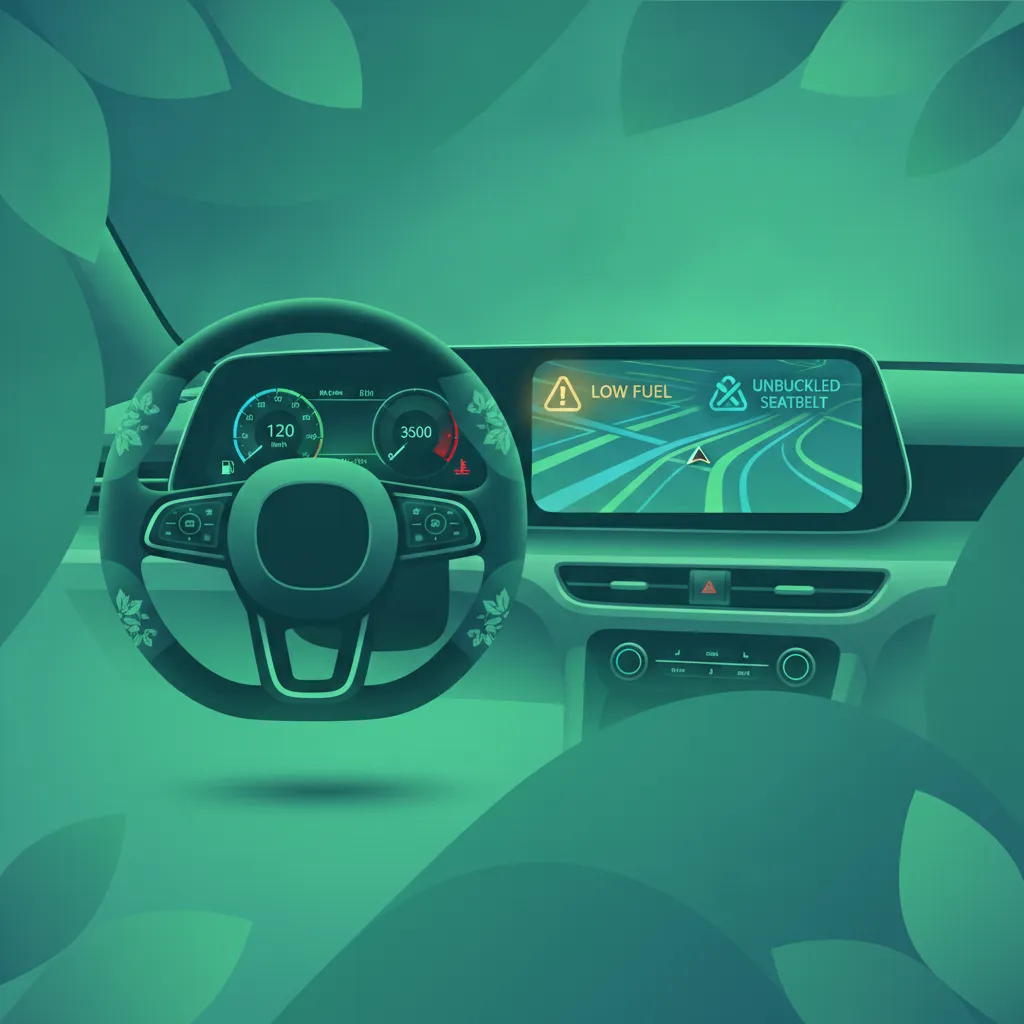
This lesson provides a detailed tour of the driver's area in a typical bus or coach. You will learn the function of every switch, lever, and button, from the main driving controls to secondary systems like heating and door operation. Interpreting the instrument panel and responding correctly to warning lights is a key focus.
This lesson covers the systematic use of rearview and side mirrors, combined with head checks, to maintain full awareness of surrounding traffic. It emphasizes frequent observation to detect vehicles in blind spots, especially during lane changes and turns. The content also details the proper timing for head checks and the role of scanning techniques in preventing collisions.

A daily walk-around check is a legal requirement and a critical safety routine. This lesson teaches a logical sequence for inspecting the exterior and interior of the bus. You will learn what to look for, from fluid leaks and body damage to the condition of passenger areas, ensuring the vehicle is safe before starting service.

Driving a large vehicle on mountain passes is a demanding skill. This lesson covers selecting the correct gear for both ascents and descents to maintain control and avoid overheating the brakes. It also explains the specific priority rules that apply on mountain roads and the importance of being aware of sudden weather changes.
Learn how to adjust your pre-trip visibility checks for various conditions including rain, fog, snow, ice, day, night, urban, and rural driving. Essential for Category D drivers to maintain safety and compliance in Switzerland.
Weather has a profound impact on vehicle handling and visibility. This lesson teaches you how to reduce speed, increase following distances, and use controls smoothly to maintain traction in poor conditions. It also covers the legal requirements and practical application of snow chains in winter.
Buses and coaches have significant blind spots to the front, sides, and rear. This lesson maps out these 'no-zones' and teaches a continuous and active scanning process using all available mirrors and direct vision. The goal is to minimize the time any other road user spends undetected in a blind spot.

This lesson examines the impact of weather and visibility on driving safety and speed selection. It covers how fog, rain, snow, and darkness affect visibility and reaction times, providing guidelines on adjusting speed. It also includes strategies for improving visibility, such as proper headlamp use, to ensure you can adapt to varying weather conditions.

Rural driving requires a different mindset from urban driving. This lesson covers how to position your vehicle on narrow roads, how to use passing places effectively, and how to anticipate hazards like slow-moving farm machinery, animals, and concealed junctions. Managing vehicle width and height is a key focus.
A daily walk-around check is a legal requirement and a critical safety routine. This lesson teaches a logical sequence for inspecting the exterior and interior of the bus. You will learn what to look for, from fluid leaks and body damage to the condition of passenger areas, ensuring the vehicle is safe before starting service.
Driving a bus in older parts of a city requires exceptional spatial awareness and precise control. This lesson focuses on assessing clearances, managing front and rear overhang, and negotiating tight turns around parked cars and buildings. A key theme is slow, careful, and deliberate manoeuvring to avoid contact.
Passenger vehicles are equipped with multiple mirrors, each designed for a specific purpose. This lesson explains how to correctly use standard, wide-angle, and kerb-side mirrors to build a complete picture of the surroundings. It also covers how modern camera systems supplement, but do not replace, the fundamental skill of effective mirror use.
Even after checking exterior mirrors, a late-running passenger may approach the bus. This lesson emphasizes the final, critical glance in the interior mirror to check the passenger cabin and stop area just before the vehicle begins to move. This simple, final habit can prevent serious incidents involving passengers who are late or have fallen.
A stopped bus creates a significant visual obstruction for other road users. This lesson focuses on the risk of pedestrians stepping out from in front of the bus and cyclists passing unexpectedly on either side. It reinforces the need for exhaustive mirror and blind spot checks before moving off to prevent tragic 'pull-away' accidents.

The condition of tyres and wheels is paramount to safety. This lesson details how to check tyre pressures, tread depth, and sidewalls for any damage or defects. You will also learn to inspect wheel nuts for security and look for signs of issues with the suspension system.
Find clear answers to common questions learners have about Verifying Lights, Mirrors, and Visibility Aids. Learn how the lesson is structured, which driving theory objectives it supports, and how it fits into the overall learning path of units and curriculum progression in Switzerland. These explanations help you understand key concepts, lesson flow, and exam focused study goals.
Professional passenger transport involves a heightened duty of care. Systematic checks ensure you identify mechanical or visibility defects before they lead to accidents, helping you remain compliant with Swiss traffic regulations.
While a thorough check occurs during your pre-trip inspection, you must constantly monitor mirror alignment and cleanliness throughout your shift, especially after stops or when driving in adverse weather conditions.
Yes, where camera systems replace or supplement mirrors, they must be fully operational and clear of debris. Their functionality is considered part of the vehicle's required visibility equipment.
A common error is leaving too much of the bus body visible in the mirror, which creates larger blind spots. Proper adjustment should prioritize the view of the road surface and surrounding traffic lanes.
Pinpoint specific Swiss traffic rules, road signs, or driving situations you need to master. Use the practice search to start a focused revision session now and build confidence for your official driving theory exam.