
This lesson provides a comprehensive guide on inspecting tyres, wheels, and suspension systems as part of your daily pre-trip duties. By mastering these critical safety checks, you ensure your bus meets Swiss regulatory standards while keeping your passengers secure. This knowledge is essential for both your professional driving practice and the Category D theory exam.

Lesson content overview
The safe operation of a bus or coach hinges on the integrity of its tyres, wheels, and suspension system. As a professional driver in the Swiss Category D Driving License Theory Course, understanding how to conduct thorough pre-trip inspections of these critical components is not merely a best practice; it is a legal requirement and fundamental to ensuring passenger safety and vehicle reliability. This comprehensive guide details the essential checks, regulatory requirements, and common pitfalls associated with maintaining these vital parts of your passenger vehicle.
Tyres are the sole point of contact between your vehicle and the road, directly influencing braking distance, handling, fuel efficiency, and overall stability. Their condition is paramount. Wheels provide the crucial link, securely fastening the tyres to the vehicle's axles, while the suspension system absorbs road shocks, maintains optimal tyre contact, and ensures a comfortable, controlled ride. Any defect in these systems can lead to compromised handling, reduced braking effectiveness, uneven load distribution, and potentially catastrophic vehicle failure.
This lesson builds upon your understanding of systematic daily walk-around checks, integrating detailed inspections of these components into your routine. By ensuring these systems are in peak condition, you uphold your duty of care, protect your passengers, and comply with strict Swiss road traffic regulations.
Regular and meticulous inspection of your bus or coach's tyres is non-negotiable. These checks go beyond a quick glance and involve precise measurements and careful visual assessments to identify any potential issues before they compromise safety.
Tyre pressure refers to the internal air pressure within a tyre, typically measured in bar or psi, which enables it to support the vehicle's load and maintain its intended shape. Correct tyre pressure is crucial for safe driving, as it affects the tyre's contact patch with the road, its temperature, and ultimately, its lifespan and grip.
Pressure must always be checked when tyres are "cold," meaning they have been stationary for at least three hours or have travelled less than 2-3 kilometres at low speed. Checking hot tyres will result in an inaccurate, higher reading, which can lead to under-inflation once the tyres cool down. Adjustments to tyre pressure must also consider the vehicle's current load. A fully loaded coach requires higher tyre pressures than when empty to adequately support the increased weight and prevent excessive flexing of the tyre walls, which can cause dangerous overheating.
Ensure the vehicle has been stationary for at least three hours, allowing tyres to cool.
Consult the manufacturer’s recommended cold tyre pressures, often found on a placard near the driver’s door or in the owner’s manual. Note any load-specific adjustments.
Use a calibrated tyre pressure gauge to measure the pressure of each tyre. Remove the valve cap, press the gauge firmly onto the valve stem, and read the display.
Add or release air as necessary to match the recommended pressure. Replace the valve cap securely.
Repeat for all tyres, including the spare if applicable.
Swiss Road Traffic Ordinance (RTO) Article 57 mandates that tyre pressures must be checked and adjusted before use. Furthermore, the pressure may not deviate beyond ±0.2 bar from the manufacturer’s recommended value for the given load and speed conditions. Failure to adhere to these regulations can result in penalties and significantly compromise vehicle safety, leading to reduced fuel efficiency, uneven tyre wear, and an increased risk of tyre failure due to overheating.
Tread depth is the vertical measurement from the deepest part of the tyre's main grooves to the top of the tread surface, expressed in millimetres. The tyre tread is designed to provide grip on various road surfaces and to displace water, preventing the dangerous phenomenon of aquaplaning.
For public service vehicles like buses and coaches in Switzerland, the minimum legal tread depth is mandated to be 2.0 mm. This is a crucial safety standard, especially considering the vehicle's weight and the number of passengers it carries. Insufficient tread depth severely reduces the tyre's ability to clear water from beneath its contact patch, leading to a loss of traction on wet roads and a dramatic increase in braking distances.
Drivers must regularly use a dedicated tread depth gauge to verify compliance across all tyres. Visual inspection alone is often insufficient, as uneven wear patterns can hide areas with dangerously low tread. Pay close attention to the full circumference of the tyre and check multiple points across the tread width. Uneven wear can indicate issues such as improper tyre pressure, misaligned wheels, or suspension problems, which should be investigated and rectified by a qualified technician.
Also known as hydroplaning, this occurs when a layer of water builds up between a vehicle’s tyres and the road surface, leading to a loss of traction and control.
Beyond tread depth and pressure, the condition of the tyre sidewall is equally vital. The sidewall is the area between the tread and the wheel rim, and it's designed to flex while supporting the vehicle's weight. However, it is also vulnerable to damage from impacts, road debris, or prolonged exposure to elements.
During your pre-trip inspection, visually examine the sidewalls of every tyre for any signs of damage or deterioration. Look for:
Swiss Road Traffic Ordinance Article 44 stipulates that any tyre exhibiting sidewall damage (cuts, bulges, cracks) must be immediately removed from service. Ignoring even seemingly minor sidewall damage is extremely dangerous and could lead to a sudden tyre failure, resulting in a loss of control and a severe accident, especially at higher speeds or under heavy loads.
Wheels are attached to the vehicle's hub by a series of fasteners known as wheel nuts, or lug nuts. These nuts must be securely fastened and correctly torqued to ensure the wheel remains safely attached under all operating conditions.
Wheel nuts are designed to provide an even clamping force, securing the wheel firmly against the hub. Each wheel nut must be tightened to a specific torque value, measured in Newton-metres (Nm), as specified by the vehicle manufacturer. This ensures that the wheel is held firmly in place without being overtightened, which could damage the studs or the wheel itself.
The rotational force applied to tighten a fastener, such as a wheel nut. It is crucial for ensuring secure attachment and preventing damage to components.
The sequence in which wheel nuts are tightened is also important. A common method is to use a star or criss-cross pattern, gradually tightening opposite nuts to ensure the wheel seats evenly against the hub. This process helps to prevent distortions in the wheel or hub and ensures uniform stress distribution.
Loose or missing wheel nuts are a severe safety hazard. They can lead to wheel detachment, causing the vehicle to lose control, or result in vibrations that accelerate wear on other components like wheel bearings and suspension parts. Even if a wheel does not detach, loose nuts can cause the wheel to wobble, affecting steering and braking.
Swiss regulations, specifically Road Traffic Ordinance Article 34, demand that all wheel nuts are present, correctly torqued, and uniformly tightened before vehicle operation. This is a critical daily check for all professional drivers.
During your systematic daily walk-around check, visually inspect all wheel nuts on every wheel.
If a wheel has been removed or a tyre changed, it is imperative to re-torque the nuts after a short period of operation (e.g., after the first 50-100 kilometres) to ensure they have settled properly. Always use a calibrated torque wrench for this task, following the manufacturer’s specified values and tightening sequence. Never rely solely on hand-tightening.
The suspension system connects the wheels to the vehicle chassis, allowing for relative motion between them. It is designed to absorb road shocks, maintain tyre contact with the road, and support the vehicle’s weight, ensuring stability, handling, and passenger comfort.
Buses and coaches often utilise robust suspension systems designed to handle heavy loads and provide a smooth ride. Key components include:
Understanding the basic function of these components helps in identifying potential problems during your inspection.
A malfunctioning suspension system can severely compromise a bus's handling and stability, increasing the risk of accidents. During your daily walk-around, perform thorough visual and, where possible, auditory checks.
Check for Leaks: Inspect all shock absorbers and air bags for any signs of fluid leaks (from shocks) or air leaks (from air bags). Air leaks in air suspension systems might be audible (hissing sound) or visible as the vehicle slowly sags.
Inspect Springs: Look for broken, cracked, or severely corroded leaf springs. For coil springs, check for cracks or signs of collapse. For air bags, ensure they are not chafed, cracked, or deflated.
Observe Ride Height: The vehicle should sit level. Any noticeable sagging on one side or a particular axle could indicate a broken spring, a deflated air bag, or a faulty levelling valve.
Check Linkages and Bushings: Inspect all connecting rods, arms, and their rubber bushings for excessive wear, cracks, or looseness. Worn bushings can lead to imprecise steering and vibrations.
Bounce Test (if safe and practical): While not always feasible for large buses, a vehicle with faulty shock absorbers might exhibit excessive bouncing or continue to oscillate after being pushed down at a corner.
Listen for Abnormal Noises: During pre-trip manoeuvring or when driving at low speeds, listen for knocking, clunking, or squeaking noises, which can indicate loose or worn suspension components.
Any identified suspension defect, such as a broken spring, leaking shock absorber, or deflated air bag, must be repaired immediately before the bus or coach is allowed to operate. Swiss Road Traffic Ordinance Article 45 explicitly states that a vehicle with suspension defects cannot be placed in service. Continuing to drive with faulty suspension jeopardises vehicle control, accelerates tyre wear, and can lead to dangerous situations.
For professional Category D drivers, proper load distribution is paramount. The way passengers and luggage are distributed within the bus directly affects axle loads, tyre performance, and the overall stability of the vehicle.
Every vehicle has specified maximum axle load limits, which define the maximum permissible weight that each individual axle can bear. Exceeding these limits, even if the total vehicle weight is within legal bounds, is illegal and highly dangerous.
Improper load distribution can lead to:
The maximum permissible weight that can be carried by an individual axle of a vehicle, specified by the manufacturer and regulated by law.
As a driver, you are responsible for ensuring that the total load, including passengers and luggage, is distributed as evenly as possible and that no axle load limits are exceeded. This involves:
Swiss Road Traffic Ordinance Article 53 strictly specifies maximum axle loads for buses and coaches. Violations can result in significant fines and immediate removal of the vehicle from service until the load is properly adjusted. Always refer to your vehicle's specific documentation for its exact axle load capacities.
Compliance with Swiss road traffic regulations is paramount for all professional drivers. The following articles from the Swiss Road Traffic Ordinance (RTO) are particularly relevant to tyres, wheels, and suspension for Category D vehicles:
Non-compliance with these regulations not only carries legal penalties but also directly compromises the safety of passengers and other road users. As a professional driver, you are expected to be fully aware of and adhere to these standards at all times.
Even experienced drivers can make mistakes when it comes to vehicle inspections. Being aware of these common errors and adopting best practices can significantly enhance safety.
Your inspection routine should adapt to various conditions:
Consider integrating a small, calibrated tyre pressure gauge and a tread depth gauge into your daily driver kit. This ensures you always have the necessary tools for accurate checks.
Let's consider how these inspection principles apply in practical driving situations for bus and coach drivers.
Scenario: TPMS Warning After a Hot Journey A coach completes a long journey on a warm summer day (30°C). As the driver prepares for the next leg, the Tyre Pressure Monitoring System (TPMS) warning light illuminates on the dashboard.
Scenario: Uneven Passenger Loading Before departing on a rural route, the driver notices that most passengers have boarded and settled in the rear section of the coach, leaving the front seats largely empty.
Scenario: Sidewall Bulge Discovery During a routine pre-trip walk-around, the driver discovers a small, yet noticeable, bulge on the sidewall of one of the rear tyres.
Scenario: Post-Tyre Change Wheel Nut Check A front tyre on the coach had to be changed by a roadside service crew during a previous trip. The driver is now preparing for the next journey.
Scenario: Insufficient Tread Depth on Rainy Day On a particularly rainy morning, the driver performs a pre-trip check and finds that the rear tyres have a tread depth of 1.5 mm, which is below the legal minimum for public service vehicles.
The diligent inspection of tyres, wheels, and the suspension system is a cornerstone of safe and compliant bus and coach operation in Switzerland. As a Category D licence holder, your expertise in these pre-trip checks directly contributes to the safety of your passengers, your vehicle's longevity, and your adherence to critical legal standards.
Remember to always:
By integrating these practices into your daily routine, you become a more responsible, proficient, and safer professional driver, upholding the high standards required for passenger transport.
This lesson covers essential pre-trip inspection procedures for tyres, wheels, and suspension systems required for Swiss Category D bus and coach operation. Key requirements include checking tyre pressure when cold with a maximum ±0.2 bar deviation from manufacturer values, maintaining the legal minimum tread depth of 2.0 mm for public service vehicles, and thoroughly inspecting sidewalls for dangerous cuts, bulges, or cracks. Wheel nut security requires proper torque application using a calibrated wrench and star pattern tightening, with mandatory re-torquing after wheel removal. Suspension inspections must identify leaks, abnormal sag, or component damage, with any defects requiring immediate repair before service. Load distribution must ensure no axle load limits are exceeded, as uneven loading strains tyres and suspension even when total weight is legal.
A short set of high-value points that capture the most important learning from this lesson.
Tyre pressure must be checked only when tyres are cold (stationary 3+ hours) and must not deviate more than ±0.2 bar from manufacturer specifications.
Swiss law requires a minimum tread depth of 2.0 mm for buses and coaches, which is critical for wet road grip and preventing aquaplaning.
Any sidewall damage—cuts, bulges, or cracks—requires immediate tyre removal from service as it indicates structural failure.
Wheel nuts must be torqued using a calibrated torque wrench following the star pattern, and re-torquing is mandatory after any wheel removal.
Suspension defects including leaks, sagging, or broken components must be repaired before the vehicle is placed in service.
Explore all units and lessons included in this driving theory course.
Tyre pressure drops approximately 2% per 10°C temperature decrease; always account for ambient temperature changes.
A sidewall bulge signals internal cord damage and imminent risk of sudden tyre blowout.
After a tyre change, re-check wheel nut torque after the first 50-100 km of operation.
Axle load limits apply independently of total vehicle weight; uneven load distribution can overload a single axle.
Air suspension leaks may be audible as hissing or visible as vehicle sagging on one side.
Checking tyre pressure on hot tyres after a journey, which gives falsely high readings and leads to under-inflation once cooled.
Dismissing minor sidewall cracks as cosmetic when they actually indicate serious internal structural degradation.
Using hand-tightening for wheel nuts instead of a calibrated torque wrench, resulting in uneven clamping force.
Failing to re-torque wheel nuts after a roadside tyre change, trusting the service crew's initial tightening.
Overloading a single axle with uneven passenger or luggage distribution while keeping total vehicle weight within legal limits.
Lesson content overview
A short set of high-value points that capture the most important learning from this lesson.
Tyre pressure must be checked only when tyres are cold (stationary 3+ hours) and must not deviate more than ±0.2 bar from manufacturer specifications.
Swiss law requires a minimum tread depth of 2.0 mm for buses and coaches, which is critical for wet road grip and preventing aquaplaning.
Any sidewall damage—cuts, bulges, or cracks—requires immediate tyre removal from service as it indicates structural failure.
Wheel nuts must be torqued using a calibrated torque wrench following the star pattern, and re-torquing is mandatory after any wheel removal.
Suspension defects including leaks, sagging, or broken components must be repaired before the vehicle is placed in service.
Explore all units and lessons included in this driving theory course.
Tyre pressure drops approximately 2% per 10°C temperature decrease; always account for ambient temperature changes.
A sidewall bulge signals internal cord damage and imminent risk of sudden tyre blowout.
After a tyre change, re-check wheel nut torque after the first 50-100 km of operation.
Axle load limits apply independently of total vehicle weight; uneven load distribution can overload a single axle.
Air suspension leaks may be audible as hissing or visible as vehicle sagging on one side.
Checking tyre pressure on hot tyres after a journey, which gives falsely high readings and leads to under-inflation once cooled.
Dismissing minor sidewall cracks as cosmetic when they actually indicate serious internal structural degradation.
Using hand-tightening for wheel nuts instead of a calibrated torque wrench, resulting in uneven clamping force.
Failing to re-torque wheel nuts after a roadside tyre change, trusting the service crew's initial tightening.
Overloading a single axle with uneven passenger or luggage distribution while keeping total vehicle weight within legal limits.
Explore search topics learners often look for when studying Checking Tyres, Wheels, and Suspension. These topics reflect common questions about road rules, driving situations, safety guidance, and lesson level theory preparation for learners in Switzerland.
Browse additional driving theory lessons that cover connected traffic rules, road signs, and common driving situations related to this topic. Improve your understanding of how different rules interact across everyday traffic scenarios.
Explore in-depth checks for bus tyre pressure, tread depth, sidewall integrity, wheel nut security, and suspension components. Understand Swiss regulations for maintaining these critical safety elements for Category D drivers.

A daily walk-around check is a legal requirement and a critical safety routine. This lesson teaches a logical sequence for inspecting the exterior and interior of the bus. You will learn what to look for, from fluid leaks and body damage to the condition of passenger areas, ensuring the vehicle is safe before starting service.
This lesson focuses on maintaining proper tyre pressure, tread depth, and overall condition. You will learn to check tyre pressure, interpret wear indicators, and select appropriate tyre types for different weather conditions. The content also covers load index and speed rating considerations, as well as legal requirements for tyre condition in Switzerland.

This lesson explores the requirements for maintaining vehicle roadworthiness, including regular technical inspections (MFK) and compliance with emission standards. It outlines the inspection criteria, such as brake performance, steering condition, and lighting system functionality. Understanding these inspections helps ensure safety and compliance with Swiss regulations.
The steering and tyres are two of the most critical safety components of any vehicle. This lesson explains how to perform basic checks on the power steering system and emphasizes the importance of daily tyre inspections. Drivers will learn to check for correct inflation pressure, sufficient tread depth (minimum legal requirements), and any signs of damage like cuts, bulges, or exposed cords on the sidewalls.

The driver is legally responsible for the roadworthiness of their vehicle at the start of and during every journey. This lesson outlines the formal process for reporting any identified defects to the transport manager or maintenance staff. It stresses the critical rule that a vehicle with a known safety-critical defect must not be driven until it has been professionally repaired and declared safe.
Before starting any journey, a professional driver must conduct a thorough pre-drive inspection. This lesson teaches a systematic walk-around method to check critical components like tyres, wheels, lights, mirrors, fluid levels, and safety equipment. This daily routine is a legal requirement and is crucial for identifying potential defects before they become a danger on the road.

The suspension system connects the vehicle's axles to its frame, supporting the massive weight and absorbing shocks from the road surface. This lesson describes the two common types: traditional leaf springs and modern air suspension. It explains how a well-maintained suspension is crucial for vehicle stability, proper handling, braking effectiveness, and preventing damage to the load and the vehicle itself.

Being seen and being able to see are critical for safety. This lesson covers the systematic check of all exterior lights, including headlights, brake lights, and indicators. It also emphasizes the importance of ensuring all mirrors and camera lenses are clean, undamaged, and properly adjusted for maximum visibility.

This lesson provides a foundational overview of a passenger vehicle's main components. You will learn to identify and understand the function of the engine, transmission, suspension, and electrical systems. This knowledge is essential for effective pre-trip checks and for communicating with maintenance staff about potential vehicle issues.

This lesson emphasizes the rider's responsibility for ensuring their vehicle is in safe, roadworthy condition. It outlines a simple pre-ride inspection routine covering key safety components like tyres, brakes, lights, and controls. Regular maintenance is presented as a critical component of overall rider safety.
Learn how proper load distribution affects tyre wear, suspension integrity, and vehicle stability. Understand Swiss regulations and best practices for managing axle loads on Category D buses.

The total weight of a vehicle is supported by its axles, and Swiss regulations set strict limits on the load each axle can bear. This lesson explains how to correctly distribute a load to comply with maximum axle load (Achslast) limits, which is vital for vehicle stability, steering control, and braking efficiency. Incorrect distribution can lead to dangerous handling characteristics and cause significant damage to road surfaces.
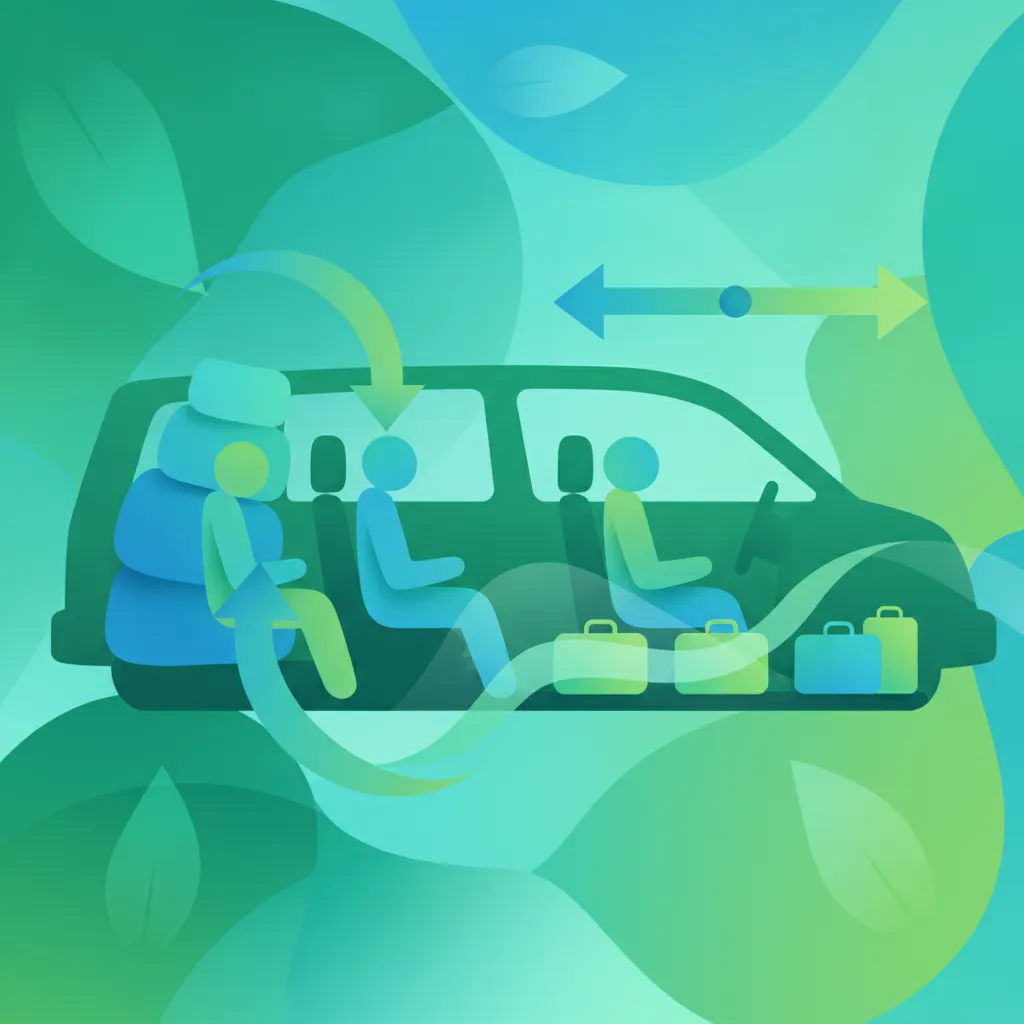
Correct load distribution is essential for safe handling and braking. This lesson explains that loads should be placed as low as possible and distributed evenly to maintain a low centre of gravity and comply with axle weight limits. A high or poorly positioned centre of gravity dramatically increases the risk of rollover, especially when cornering or in an emergency manoeuvre.

Buses have a high centre of gravity, making them susceptible to rollover forces. This lesson explains how factors like passenger load, luggage placement, and speed affect vehicle stability. Understanding these principles is essential for safe cornering, navigating roundabouts, and handling the vehicle in strong crosswinds.
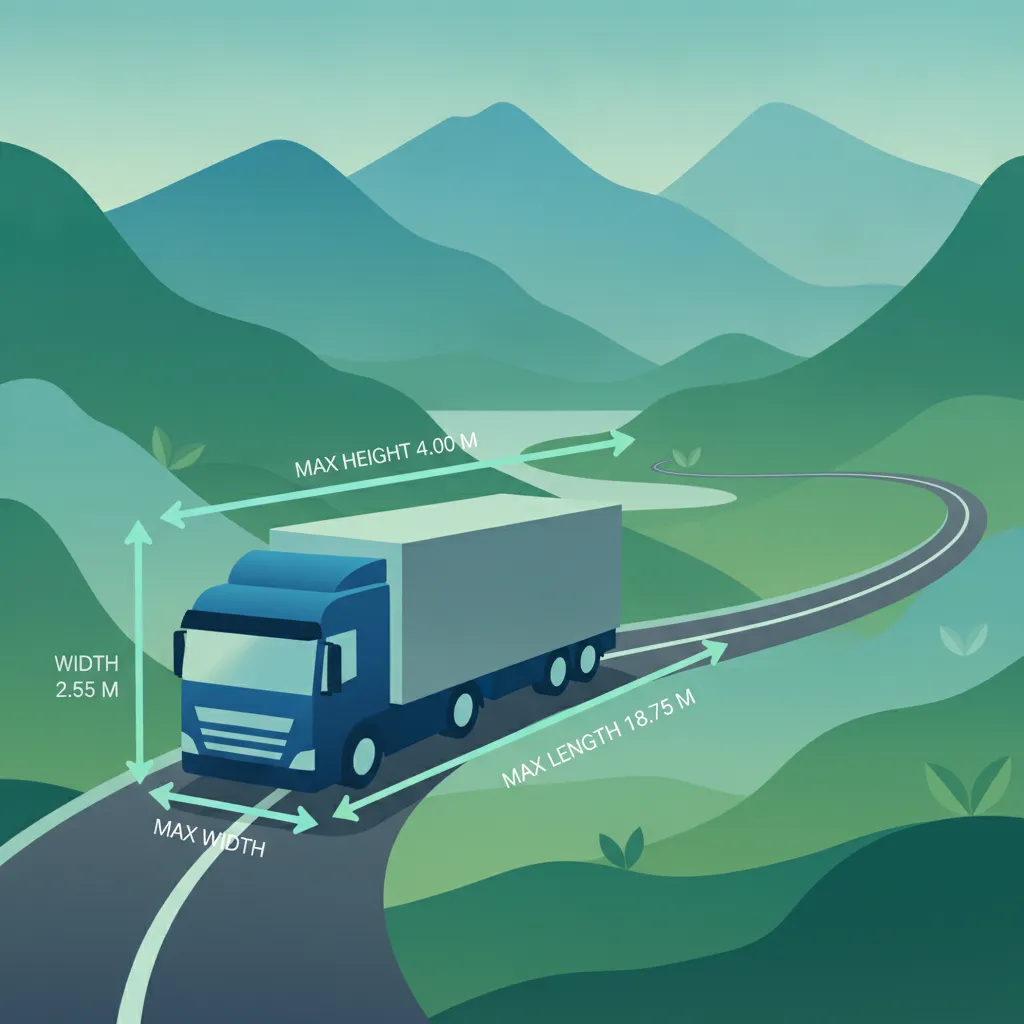
Swiss law strictly regulates the maximum dimensions of commercial vehicles to ensure they can safely navigate the infrastructure. This lesson specifies the standard limits for vehicle height (4.0m), width (2.55m), and length for various lorry and trailer combinations. Adhering to these dimensions is crucial for avoiding collisions with bridges, tunnels, and other structures, and for navigating narrow roads.

When a long vehicle turns, the rear wheels follow a shorter path than the front wheels (swept path), and the rear of the vehicle swings outwards (tail swing). This lesson explains these critical concepts. You will learn how to position the vehicle before a turn to avoid mounting the kerb or striking objects like signs and pedestrians with the rear corner.

Transporting children carries the highest level of responsibility. This lesson covers the specific legal requirements for school buses in Switzerland, including the use of special signs and warning lights. It details the safe procedures for stopping, boarding, and alighting, and the driver's role in supervising children.

Transporting loads that are wider, longer, taller, or heavier than standard regulations allow requires special authorization. This lesson explains the concept of exceptional transport and the legal requirement to obtain a special permit from the relevant cantonal authorities. It highlights that such operations require careful route planning, often mandating specific times of travel and sometimes the use of escort vehicles.

Adding a trailer (D1E) or driving an articulated bus (DE) changes the vehicle's dynamics significantly. This lesson covers the key differences in handling, braking, and reversing. It explains the concept of the pivot point and how to manage the increased length and swept path when turning and manoeuvring.

Overloading is a serious offence with severe safety and legal ramifications. This lesson details how excess weight drastically increases braking distances, puts extreme stress on tyres leading to blowouts, and negatively affects steering and overall stability. Furthermore, it discusses the substantial fines, potential license withdrawal, and driver liability that result from violating Swiss weight regulations.
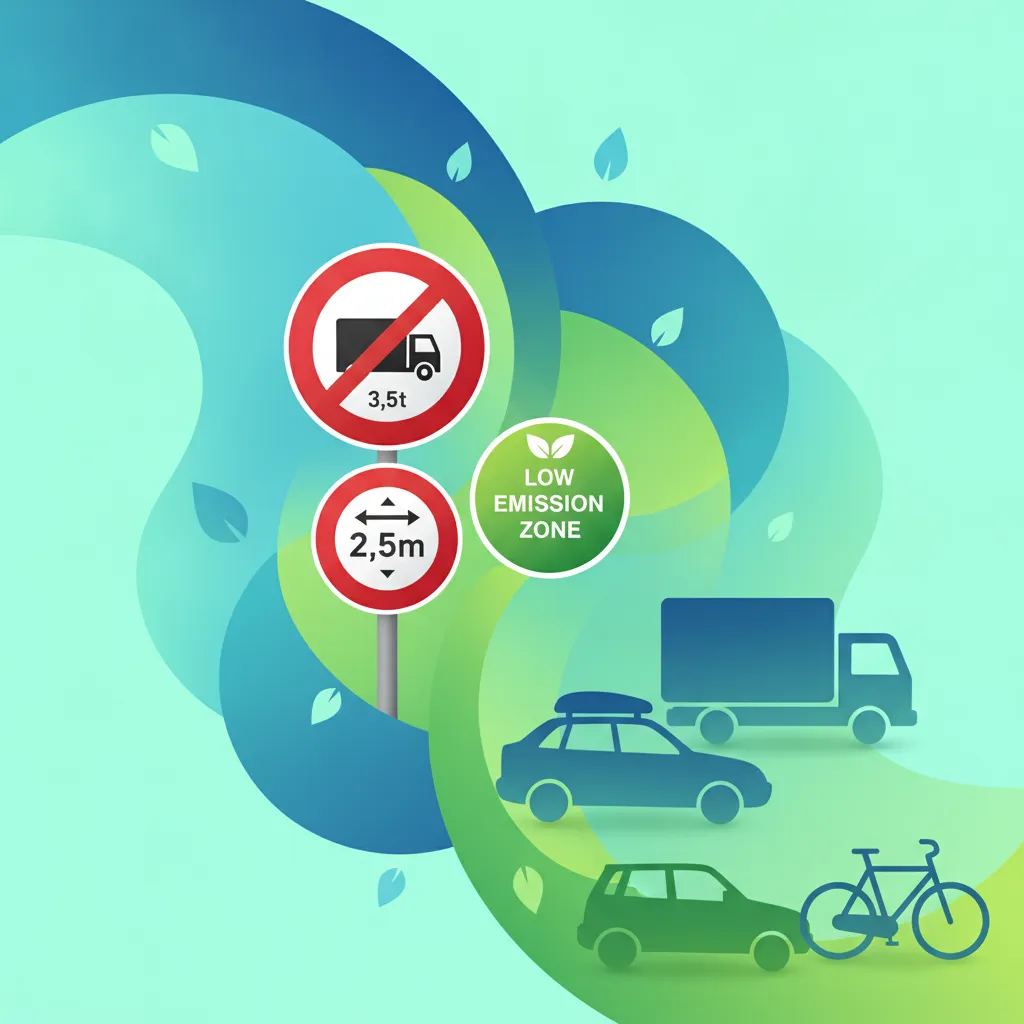
Many urban areas have restrictions to manage traffic and protect infrastructure. This lesson teaches drivers to identify and interpret traffic signs that prohibit access based on gross vehicle weight, axle load, height, or width. It also covers the growing prevalence of environmental or low-emission zones, which may restrict entry for older, more polluting vehicles.
Find clear answers to common questions learners have about Checking Tyres, Wheels, and Suspension. Learn how the lesson is structured, which driving theory objectives it supports, and how it fits into the overall learning path of units and curriculum progression in Switzerland. These explanations help you understand key concepts, lesson flow, and exam focused study goals.
For commercial passenger vehicles in Switzerland, the minimum tread depth is 1.6 mm across the entire tread surface, although safety experts recommend replacing tyres well before they reach this limit, especially for the demanding conditions of Swiss mountain routes.
Wheel nuts can loosen due to the extreme forces and vibrations acting on a heavy bus. Checking for signs of rust streaks or misalignment around the nuts is a critical safety task to prevent catastrophic wheel detachment while driving with passengers.
The theory exam expects you to identify the importance of the suspension for passenger comfort and vehicle stability. You must know how to spot obvious defects like oil leaks from shock absorbers or uneven vehicle height, which could indicate a failed suspension component.
Incorrect pressure significantly impacts braking distance, fuel efficiency, and handling. In a heavy passenger vehicle, imbalanced pressure can lead to uneven tyre wear and dangerous instability during cornering or emergency manoeuvres in Swiss urban traffic.
Pinpoint specific Swiss traffic rules, road signs, or driving situations you need to master. Use the practice search to start a focused revision session now and build confidence for your official driving theory exam.