
The W-4 sign indicates the maximum weight limit (MLC) for two-way passage of wheeled military vehicles on a bridge. This traffic sign ensures safe logistics by defining how many heavy trucks can pass each other. While it specifically applies to wheeled military vehicles, not tracked ones like tanks, drivers must always confirm their vehicle's MLC rating is below the indicated limit and exercise caution when passing oncoming traffic on narrow spans.
This detailed explanation focuses on the W-4 sign, crucial for drivers crossing bridges with potential military wheeled vehicle traffic. Grasping this sign's meaning is vital for safe passage and successful theory test revision.
The W-4 sign is used when a bridge is wide enough for two wheeled military trucks to pass each other. The number in the yellow circle (with a wheel icon) defines the maximum weight of each vehicle. It is critical for maintaining high-speed logistics on main supply routes where trucks do not want to wait for the bridge to be completely clear of oncoming traffic.
Shows the MLC limit for two-way movement of wheeled military vehicles.
Get clear, practical answers to the most common questions about the W-4 - Bridge Class - Two-Way Wheeled Vehicles road sign. Learn how the sign works, what rules it represents, and how it affects real driving situations. This FAQ strengthens your understanding and supports accurate decision making for the Polish driving theory exam in Poland.
The W-4 sign specifies the maximum weight limit (MLC) for military wheeled vehicles that can safely pass each other on a bridge. It's crucial for maintaining traffic flow on main routes where military logistics are essential.
No, the W-4 sign specifically applies only to wheeled military vehicles. It does not apply to tracked vehicles such as tanks. If you are in a tank, you must not enter a bridge displaying only the wheeled vehicle icon.
The number displayed within the yellow circle, alongside the wheel icon, represents the maximum Military Load Classification (MLC) for each vehicle allowed to pass on the bridge. You must ensure your vehicle's MLC is below this number.
When you see the W-4 sign, verify your military truck's MLC is within the limit. Be prepared to reduce speed and communicate with oncoming drivers to ensure a safe, synchronized passage across the bridge, especially on narrow spans.
Yes, you must not enter the bridge if you are in a tracked vehicle (like a tank) when only the W-4 sign is present. Also, avoid passing another heavy wheeled vehicle if your combined weight exceeds the bridge's capacity or if it feels unsafe.
A clear reference image of the W-4 - Bridge Class - Two-Way Wheeled Vehicles road sign used in Poland.
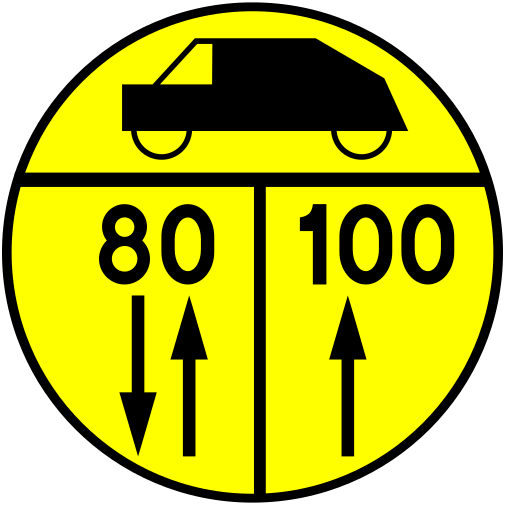
The W-4 - Bridge Class - Two-Way Wheeled Vehicles road sign may also be known by these alternative names or terms.
The W-4 - Bridge Class - Two-Way Wheeled Vehicles road sign is part of the Additional Railway Crossing Signs (G) category, which groups together signs with similar rules and functions.
Comparing the 'Bridge Class - Two-Way Wheeled Vehicles' sign with similar traffic sign comparison examples aids theory test revision by highlighting key differences. Mastering sign recognition through focused study prevents common mistakes and builds driving knowledge.

Prepare for tram signals ahead with the AT-1 warning sign.
Understand the AT-2 Tram-Activated Signal: Know when trams are coming!
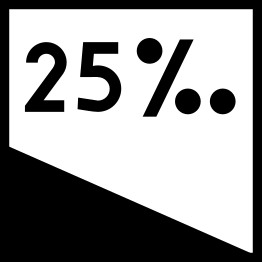
Understand the AT-3 Dangerous Tram Descent warning sign for trams.
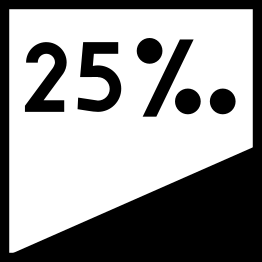
Warning: Steep Tram Ascent Ahead (AT-4)

Understand the AT-5 sign: Tram Collision Movement Warning for Turning Trams
What the BT-1 Tram Speed Limit sign means and how to obey it.
BT-2: Tram Speed Limit Restriction Ends Here

BT-3 Tram Switch Lock: Don't Enter Until Clear!
Deepen your understanding of specific road signs by reviewing official Polish traffic rules and associated real-world driving scenarios. These expert-led resources help you bridge the gap between visual recognition and practical exam application.
Clear windows are not just about personal comfort; they are a fundamental requirement for road safety and a focus area for your theoretical knowledge. You will learn how to effectively use your vehicle's climate control and ventilation systems to manage cabin moisture, ensuring you are prepared for challenging weather scenarios. Understanding these procedures helps you maintain proper visibility and stay compliant with Polish road safety standards during your journey.
Know Your Obligations: What to Do After a Road Incident in Poland.
When a red warning light illuminates on your dashboard in Poland, it signifies a serious vehicle issue requiring immediate attention. This article will clarify the meaning of these critical indicators, particularly the brake system warning light, and detail the essential safety steps you must take. Understanding these urgent signals is crucial for passing your driving theory exam and ensuring your safety on Polish roads.
Master the Critical First Steps After a Road Accident
The W-2 sign features two black numbers inside a yellow circle. The number on the bottom indicates the class for two-way traffic (where two vehicles can pass each other on the bridge). This limit is always lower than the one-way limit (W-1). It ensures that the combined weight of two opposing military vehicles does not exceed the bridge's total capacity.
The W-3 sign is a yellow circle with symbols of a wheel and a tank tread, each with a corresponding number. It recognizes that tracked vehicles (like tanks) spread their weight differently than wheeled trucks. This sign allows the military to maximize the use of the bridge by providing specific, higher limits for tanks where the bridge's architecture allows.
After reviewing the full list of Polish road signs, explore specific sign categories for in-depth understanding. Challenge your knowledge with practice questions focused on sign recognition and interpretation to solidify your preparation for the driving theory exam.
Browse All Polish Road Signs