
Navigating the rules regarding pedestrians and cyclists is a fundamental component of the DGT theory test. This guide clarifies when drivers must yield in complex situations, including turns into new streets, exiting garages, and managing group cyclists, ensuring you are prepared for both the exam and real-world safety challenges.
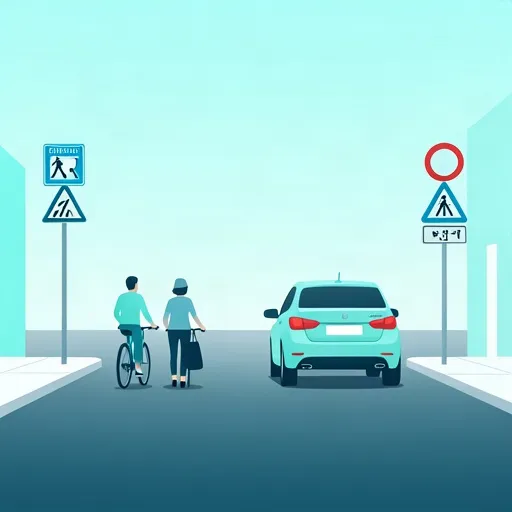
Article content overview
Passing your official DGT theory exam requires a deep understanding of priority rules, particularly when dealing with vulnerable road users. In Spain, traffic legislation places a high premium on the protection of pedestrians and cyclists, and examiners frequently include "trap" questions designed to test whether you truly understand these responsibilities. Knowing when you must yield, even in the absence of signs or markings, is essential for both your exam success and your safety on the road.
Many students mistakenly believe that drivers only need to yield to pedestrians at marked zebra crossings (pasos para peatones). While marked crossings are the most obvious scenario, the Spanish General Traffic Regulations establish that your duty to yield extends much further. You must anticipate pedestrian movement and yield in several critical situations, regardless of whether a painted crossing exists.
For example, when your vehicle is about to turn into a new street—whether at an intersection or a side road—you are legally obligated to yield to any pedestrians who are already in the process of crossing that street. This rule applies even if there is no crosswalk, provided the pedestrian is traversing the road. Furthermore, if you are crossing a sidewalk or a marked pedestrian zone to enter or exit a garage, fuel station, or private property, you must always give priority to pedestrians walking along that path.
Cyclists are considered one of the most vulnerable groups in Spanish traffic law. In the theory exam, you will encounter specific questions regarding the "unity of the group" rule. This regulation dictates that when a group of cyclists is traveling together, the entire group is treated as a single entity. If the lead cyclist has already entered a junction or a roundabout, you must wait for the entire group to clear the intersection before proceeding.
This rule is designed to prevent motorists from splitting groups of cyclists, which could force trailing riders into dangerous positions. Additionally, you must always yield to cyclists when you are turning to enter another street and a cyclist is nearby, or when you are crossing a designated bicycle lane (carril bici) or a marked path for cyclists (paso para ciclistas).
| Situation | Priority Rule |
|---|---|
| Marked Pedestrian Crossing | Pedestrian has priority |
| Turning into a street with crossing pedestrians | Pedestrian has priority |
| Crossing a sidewalk to enter a garage | Pedestrian has priority |
| Cyclist on a designated bike lane | Cyclist has priority |
| Cyclist group entering a roundabout | Entire group has priority |
The DGT frequently uses situational questions to determine if you understand these rules in practice. You might be presented with a scenario featuring an image of a junction with no road signs. In such cases, you must recall that, while the general rule at an unmarked intersection is to yield to the right, specific priorities—such as those for pedestrians or cyclists—always override this general rule. Always look for the presence of bicycle lanes or signs that might indicate a priority change.
When practicing, pay close attention to the wording of the questions. Words like "must," "always," and "whenever" are clues that you are being tested on a fundamental duty. Avoid the temptation to assume that the absence of a "Stop" or "Yield" sign means you have the right of way. In every interaction with a pedestrian or a cyclist, the law mandates a defensive and cautious approach.
This guide covers the legal obligation to yield to pedestrians, which extends beyond marked crossings to any situation where a pedestrian is already crossing a road or pedestrian zone. The 'unity of the group' rule treats cyclist groups as a single vehicle for priority purposes, requiring drivers to wait for the entire group to clear before proceeding. The article also clarifies that pedestrian and cyclist priority always overrides the general yield-to-the-right rule at unmarked intersections. DGT exam questions frequently test these rules using trap wording and scenarios without road signs, so learners should watch for absolute terms like 'must' and 'always' that signal a fundamental duty rather than an optional consideration.
A short set of high-value points that capture the most important ideas from this article.
Pedestrian priority extends beyond marked crossings to any situation where a pedestrian is already crossing, including when turning into side streets or exiting onto sidewalks
When entering or exiting a garage, fuel station, or private property across a pedestrian path, you must always yield to pedestrians on that path
Groups of cyclists are legally treated as a single entity, meaning you must wait for the entire group to clear a junction or roundabout if the lead cyclist has entered
Cyclists always have priority when you are turning and they are on a nearby bike lane or designated cyclist path
Pedestrian and cyclist priority rules always override the general 'yield to the right' rule at unmarked intersections
The duty to yield to pedestrians exists even without road markings whenever a pedestrian is traversing the road
Never stop on a pedestrian crossing; if traffic might force you to stop while on it, wait before entering
The 'unity of the group' rule means the entire cyclist group must clear before you proceed if the lead cyclist has entered the intersection
Bicycle lanes (*carril bici*) and marked cyclist crossings (*paso para ciclistas*) grant cyclists clear priority
In DGT exam questions, words like 'must,' 'always,' and 'whenever' signal a fundamental legal duty, not an optional guideline
Assuming pedestrian priority only applies at marked zebra crossings and ignoring the broader legal obligation
Attempting to proceed when only the lead cyclist has entered a roundabout, forgetting that the entire group has priority
Treating cyclists as individual road users rather than recognizing the group unity principle
Misinterpreting the absence of a Stop or Yield sign as having automatic right of way over pedestrians and cyclists
Stopping partway onto a pedestrian crossing because you anticipated being able to continue
Article content overview
A short set of high-value points that capture the most important ideas from this article.
Pedestrian priority extends beyond marked crossings to any situation where a pedestrian is already crossing, including when turning into side streets or exiting onto sidewalks
When entering or exiting a garage, fuel station, or private property across a pedestrian path, you must always yield to pedestrians on that path
Groups of cyclists are legally treated as a single entity, meaning you must wait for the entire group to clear a junction or roundabout if the lead cyclist has entered
Cyclists always have priority when you are turning and they are on a nearby bike lane or designated cyclist path
Pedestrian and cyclist priority rules always override the general 'yield to the right' rule at unmarked intersections
The duty to yield to pedestrians exists even without road markings whenever a pedestrian is traversing the road
Never stop on a pedestrian crossing; if traffic might force you to stop while on it, wait before entering
The 'unity of the group' rule means the entire cyclist group must clear before you proceed if the lead cyclist has entered the intersection
Bicycle lanes (*carril bici*) and marked cyclist crossings (*paso para ciclistas*) grant cyclists clear priority
In DGT exam questions, words like 'must,' 'always,' and 'whenever' signal a fundamental legal duty, not an optional guideline
Assuming pedestrian priority only applies at marked zebra crossings and ignoring the broader legal obligation
Attempting to proceed when only the lead cyclist has entered a roundabout, forgetting that the entire group has priority
Treating cyclists as individual road users rather than recognizing the group unity principle
Misinterpreting the absence of a Stop or Yield sign as having automatic right of way over pedestrians and cyclists
Stopping partway onto a pedestrian crossing because you anticipated being able to continue
Explore related topics, search based questions, and concepts that learners often look up when studying Pedestrian and Cyclist Priority. These themes reflect real search intent and help you understand how this topic connects to wider driving theory knowledge in Spain.
Find clear and practical answers to common questions learners often have about Pedestrian and Cyclist Priority. This section helps explain difficult points, remove confusion, and reinforce the key driving theory concepts that matter for learners in Spain.
Yes, you must yield to pedestrians when you are turning your vehicle to enter another street, even if there is no marked crossing, and when crossing a sidewalk or pedestrian zone to enter or exit a garage or private property.
This rule stipulates that when cyclists travel in a group, they are considered a single unit. Once the first cyclist enters an intersection or roundabout, you must yield to the entire group until every cyclist has safely passed.
Cyclists have priority when they travel on a designated cycle lane, a path for cyclists, or a properly signposted shoulder. They also hold priority when a vehicle intends to turn and a cyclist is in close proximity.
Now that you have found specific articles, continue to deepen your understanding by exploring related DGT regulations or other driving theory topics. Strengthen your knowledge of road signs, traffic scenarios, and essential Spanish driving procedures to prepare for your official driving license exam.