
As vehicle technology evolves, understanding how systems like adaptive cruise control, lane-keeping assistance, and hybrid powertrain labels affect your driving is crucial for both safety and the DGT theory exam. This guide clarifies the limits of electronic aids and reinforces the legal expectation that the human driver must always maintain full control of the vehicle. You will learn to distinguish between vehicle features and your personal duty as a driver to prioritize traffic safety and compliance.
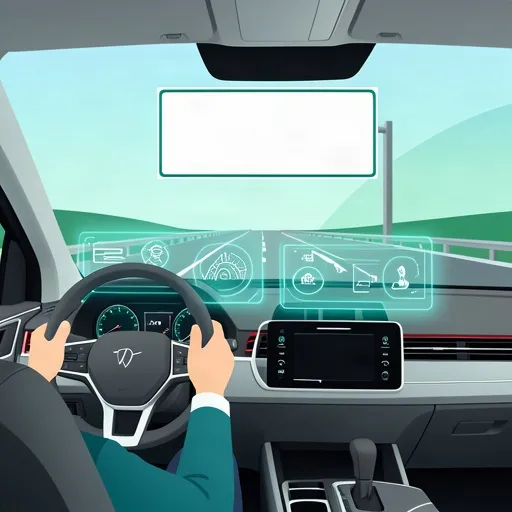
Article content overview
The rapid integration of technology into modern vehicles has fundamentally changed the driving experience in Spain. As cars become more autonomous and feature-rich, it is easy to assume that these Advanced Driver Assistance Systems (ADAS) can take over the task of driving entirely. However, according to the Dirección General de Tráfico (DGT) regulations, the human driver remains exclusively responsible for the safe operation of the vehicle, regardless of the technology present. Mastering the interplay between these aids and your legal duties is essential for both your safety on the road and your success on the official DGT theory exam.
Advanced Driver Assistance Systems, known as ADAS, are a collection of technologies designed to improve road safety by helping the driver minimize errors. These systems use a complex network of cameras, radars, and ultrasonic sensors to monitor the vehicle's environment. While they can perform tasks like maintaining lane position or adjusting cruise control speeds, they are legally classified as "assistance" rather than "automation."
For the DGT theory exam, you must clearly distinguish between systems that merely provide an alert and those that actively intervene. An alert system provides information—such as a blind-spot warning—that you must act upon. An intervention system, such as Automatic Emergency Braking (AEB), acts on your behalf, but its activation does not absolve you of the duty to maintain a safe distance and remain focused on the road.
Never rely on electronic aids to compensate for poor driving habits. In the event of a collision, the legal responsibility for the vehicle's maneuvers always rests with the driver, even if a system like Lane Keeping Assist was active at the time.
Modern vehicles are not just smarter; they are increasingly electrified. In Spain, understanding the classification of your vehicle is crucial for compliance, particularly regarding low-emission zones in urban areas. The DGT uses environmental labels to categorize vehicles, and as more drivers move toward mild-hybrid (MHEV) or plug-in hybrid technology, you are expected to understand how these systems affect your vehicle's maintenance and legal status.
A mild-hybrid system, often associated with the 'ECO' label, uses a 48V battery to assist the internal combustion engine. From a technical standpoint, this affects vehicle weight and chassis dynamics, which in turn influences how a vehicle behaves during emergency maneuvers. A driver who understands these nuances is better equipped to anticipate vehicle responses, such as how the added weight of an electric component can change braking distances in adverse weather conditions.
Official classifications issued by the DGT (0, ECO, C, B) that restrict or permit vehicle access to restricted urban areas based on emissions and technology.
The DGT frequently includes questions about how specific assistance systems interact with traffic laws. Being able to explain how these systems function is a hallmark of a well-prepared candidate.
| System | Function | Exam Perspective |
|---|---|---|
| ACC (Adaptive Cruise Control) | Adjusts speed to maintain distance. | Driver must still monitor the environment. |
| LKA (Lane Keeping Assist) | Prevents unintentional lane departure. | Does not replace the use of indicators. |
| AEBS (Emergency Braking) | Applies brakes if collision is imminent. | Final safety net, not a substitute for attention. |
| BSD (Blind Spot Detection) | Alerts to vehicles in lateral zones. | Mirrors must still be checked physically. |
Technology can provide assistance, but it cannot "discern" the environment with the same intuition as a human. As stipulated in the Reglamento General de Conductores, you must be able to manage the vehicle’s controls and react appropriately to road hazards at all times. Relying too heavily on digital interfaces or automated driving modes can lead to complacency, a primary cause of accidents according to DGT safety data.
Modern vehicles equipped with ADAS systems like adaptive cruise control, lane-keeping assist, blind-spot detection, and emergency braking offer valuable safety assistance but do not replace driver responsibility under DGT regulations. The human driver must always maintain full control, continuously scan the road environment, and perform regular physical safety checks regardless of electronic aids. Understanding the distinction between alert systems and intervention systems is critical for the theory exam, as is knowing how DGT environmental labels affect vehicle access to Spanish urban areas.
A short set of high-value points that capture the most important ideas from this article.
ADAS systems are legally classified as assistance, not automation - the driver remains exclusively responsible for vehicle control at all times.
Alert systems like blind-spot detection provide warnings you must act upon, while intervention systems like AEB actively brake but do not replace your duty to maintain safe distance.
Understanding DGT environmental labels (0, ECO, C, B) is essential for compliance in Spanish urban low-emission zones.
Technology cannot replace constant visual scanning of the road - sensors and cameras supplement but do not substitute human awareness.
Physical safety equipment like tires and reflective vests must still be checked regularly as technology cannot fix mechanical failures.
Lane Keeping Assist does not replace the obligation to use indicators when changing lanes.
Emergency braking systems are a final safety net, not a substitute for maintaining appropriate following distances.
Even when Adaptive Cruise Control is active, you must monitor the environment and be ready to take control.
The DGT uses four environmental labels to categorize vehicles for urban access restrictions based on emissions.
In the event of a collision, legal responsibility always rests with the driver regardless of which ADAS was active.
Assuming that having ADAS active means you can reduce attention or take your hands off the wheel on a motorway.
Confusing mild-hybrid technology with full electric vehicles when it comes to DGT environmental label classification.
Believing sensors will always detect hazards perfectly - adverse weather conditions can impair camera and radar effectiveness.
Neglecting to check mirrors physically because a blind-spot monitoring system is fitted.
Assuming that when an ADAS corrects a lane departure automatically, the use of turn indicators becomes optional.
Article content overview
A short set of high-value points that capture the most important ideas from this article.
ADAS systems are legally classified as assistance, not automation - the driver remains exclusively responsible for vehicle control at all times.
Alert systems like blind-spot detection provide warnings you must act upon, while intervention systems like AEB actively brake but do not replace your duty to maintain safe distance.
Understanding DGT environmental labels (0, ECO, C, B) is essential for compliance in Spanish urban low-emission zones.
Technology cannot replace constant visual scanning of the road - sensors and cameras supplement but do not substitute human awareness.
Physical safety equipment like tires and reflective vests must still be checked regularly as technology cannot fix mechanical failures.
Lane Keeping Assist does not replace the obligation to use indicators when changing lanes.
Emergency braking systems are a final safety net, not a substitute for maintaining appropriate following distances.
Even when Adaptive Cruise Control is active, you must monitor the environment and be ready to take control.
The DGT uses four environmental labels to categorize vehicles for urban access restrictions based on emissions.
In the event of a collision, legal responsibility always rests with the driver regardless of which ADAS was active.
Assuming that having ADAS active means you can reduce attention or take your hands off the wheel on a motorway.
Confusing mild-hybrid technology with full electric vehicles when it comes to DGT environmental label classification.
Believing sensors will always detect hazards perfectly - adverse weather conditions can impair camera and radar effectiveness.
Neglecting to check mirrors physically because a blind-spot monitoring system is fitted.
Assuming that when an ADAS corrects a lane departure automatically, the use of turn indicators becomes optional.
Explore related topics, search based questions, and concepts that learners often look up when studying Modern Vehicle Tech and ADAS. These themes reflect real search intent and help you understand how this topic connects to wider driving theory knowledge in Spain.
Find clear and practical answers to common questions learners often have about Modern Vehicle Tech and ADAS. This section helps explain difficult points, remove confusion, and reinforce the key driving theory concepts that matter for learners in Spain.
No. Under Spanish traffic law, the driver is always the primary party responsible for the vehicle, regardless of whether ADAS features like lane-keeping or automatic braking are active.
The exam focuses on understanding that while these systems improve road safety by minimizing human error, they are assistive tools and do not substitute the legal requirement for the driver to be attentive and in control at all times.
Modern hybrid vehicles often require knowledge regarding specific DGT environmental labels (like ECO) for access to restricted urban zones, which is a key part of modern driving theory.
Now that you have found specific articles, continue to deepen your understanding by exploring related DGT regulations or other driving theory topics. Strengthen your knowledge of road signs, traffic scenarios, and essential Spanish driving procedures to prepare for your official driving license exam.