
Learners will discover the legal hierarchy of road surfaces and why the standard priority-to-the-right rule does not apply when transitioning from a dirt path to a paved street. This guide clarifies the responsibilities of both the driver on the main road and the driver entering from an unpaved area to ensure safe traffic flow. Mastering these nuances is essential for passing the DGT theory exam and maintaining hazard perception skills in rural and semi-rural Spanish environments.
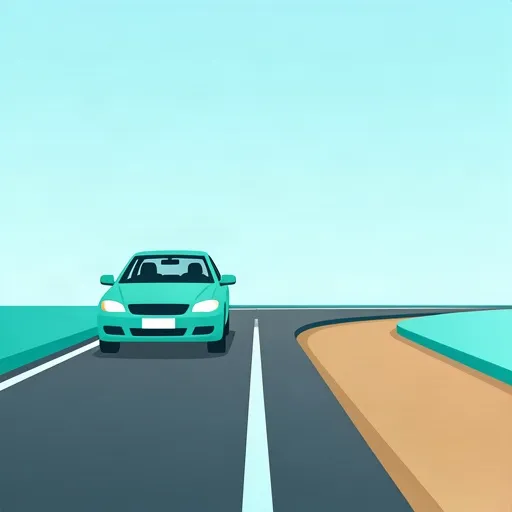
Article content overview
Understanding the hierarchy of road surfaces is a fundamental requirement for the DGT theory exam. In Spain, traffic law distinguishes clearly between paved roads and unpaved, or dirt, tracks. While new drivers are often taught that the general rule at an intersection is to give way to traffic approaching from the right, this principle is subject to specific exceptions that are frequently tested in official assessments. Recognizing these exceptions is essential for avoiding hazardous maneuvers and ensuring compliance with the Dirección General de Tráfico regulations.
In the eyes of Spanish traffic law, a paved road—or vía pavimentada—is considered a primary route compared to an unpaved one. When you are traveling on a paved road, you generally have priority over any vehicle attempting to enter or cross your path from a dirt track, regardless of whether that vehicle is approaching from your right or your left. This rule is designed to maintain the flow of traffic on main routes and prevent the disruption caused by vehicles entering from secondary, lower-quality surfaces.
This regulation serves as a critical exception to the "priority from the right" rule. Because dirt tracks are often narrow, have limited visibility, and lack consistent maintenance, the law places the burden of caution on the driver emerging from the unpaved surface. If you are the driver entering a paved road, you must stop or slow down significantly, check for traffic, and ensure the way is completely clear before merging. Failure to do so can result in serious penalties, especially if your maneuver forces a driver on the paved road to change speed or direction.
The rules regarding priority also extend to private access points, such as driveways, garages, service stations, or industrial facilities. Whenever you are exiting a private property to join a public road, you are legally required to yield to all traffic already present on that road. This is categorized as a priority maneuver, similar to the rule for dirt tracks, because the movement involves integrating into a public thoroughfare from a space that is not part of the standard road network.
Entering a public road from a private property or a dirt track without yielding to oncoming traffic is a common cause of accidents. In the DGT theory exam, remember that vehicles exiting these areas do not have priority over traffic moving on the public road, even if that traffic is coming from the left.
Beyond the immediate priority rules, drivers exiting an unpaved road have a specific duty regarding the cleanliness of the paved surface. The law strictly prohibits leaving mud, debris, stones, or any other materials on the public road when exiting a dirt track. Dragging these elements onto a paved street creates a significant slip hazard, particularly for motorcycles and cyclists, and may also impair the effectiveness of road markings or signage.
| Road Type | Priority Status |
|---|---|
| Paved Road | Always has priority over dirt tracks. |
| Dirt Track | Must always yield to traffic on paved roads. |
| Private Property | Must always yield to traffic on public roads. |
| Public Road | Has priority over vehicles exiting private or unpaved areas. |
Many learners confuse the standard "unmarked intersection" rule with the specific "paved versus unpaved" scenario. In the DGT exam, you might encounter a question featuring a car exiting a dirt path on the right. A common trap is to choose "priority to the right." However, because the vehicle is on an unpaved surface, the standard rule does not apply. Always look for clues in the image provided during the test—such as the texture of the road surface—to determine if you are dealing with an intersection of equal status or a surface-based priority situation.
Spanish traffic law establishes a clear hierarchy where paved roads always have priority over dirt tracks and private access points, overriding the general 'priority from the right' rule. Drivers on unpaved surfaces must stop, check both directions, and yield to all traffic on the paved road before entering. This rule applies equally to private property exits such as driveways and gas stations. Beyond priority, drivers exiting dirt tracks must ensure no mud or debris is carried onto the public road. For the DGT exam, always examine road surface texture in images to determine whether the standard intersection rule or the paved-unpaved exception applies.
A short set of high-value points that capture the most important ideas from this article.
In Spain, paved roads always have priority over dirt tracks, regardless of the general 'priority from the right' rule.
When entering a paved road from a dirt track, you must yield to all traffic on the main road before proceeding.
Private property exits follow the same priority rules as dirt tracks—you must always yield to public road traffic.
Drivers exiting unpaved roads are legally responsible for not leaving mud, debris, or stones on the public road.
The road surface type (paved versus unpaved) is the key factor determining priority, not the direction of approach.
Paved road (vía pavimentada) = always priority; Dirt track (camino de tierra) = always yield.
The 'priority from the right' rule is suspended when one road surface is unpaved.
When exiting private property, you do not have priority over traffic already on the public road.
Look for road surface texture clues in exam images to distinguish equal-status intersections from surface-based priority situations.
Muddy or debris-covered tires must be cleaned before crossing onto a public paved road.
Assuming the 'priority from the right' rule applies when a vehicle on a dirt track is approaching from the right side of the screen.
Failing to check traffic in both directions when entering a paved road, because the rule is not directional.
Confusing unmarked intersections of equal roads with junctions where one road is unpaved.
Forgetting that private driveways and garages are treated the same as dirt tracks regarding yielding obligations.
Article content overview
A short set of high-value points that capture the most important ideas from this article.
In Spain, paved roads always have priority over dirt tracks, regardless of the general 'priority from the right' rule.
When entering a paved road from a dirt track, you must yield to all traffic on the main road before proceeding.
Private property exits follow the same priority rules as dirt tracks—you must always yield to public road traffic.
Drivers exiting unpaved roads are legally responsible for not leaving mud, debris, or stones on the public road.
The road surface type (paved versus unpaved) is the key factor determining priority, not the direction of approach.
Paved road (vía pavimentada) = always priority; Dirt track (camino de tierra) = always yield.
The 'priority from the right' rule is suspended when one road surface is unpaved.
When exiting private property, you do not have priority over traffic already on the public road.
Look for road surface texture clues in exam images to distinguish equal-status intersections from surface-based priority situations.
Muddy or debris-covered tires must be cleaned before crossing onto a public paved road.
Assuming the 'priority from the right' rule applies when a vehicle on a dirt track is approaching from the right side of the screen.
Failing to check traffic in both directions when entering a paved road, because the rule is not directional.
Confusing unmarked intersections of equal roads with junctions where one road is unpaved.
Forgetting that private driveways and garages are treated the same as dirt tracks regarding yielding obligations.
Explore related topics, search based questions, and concepts that learners often look up when studying Priority at Paved and Unpaved Junctions. These themes reflect real search intent and help you understand how this topic connects to wider driving theory knowledge in Spain.
Find clear and practical answers to common questions learners often have about Priority at Paved and Unpaved Junctions. This section helps explain difficult points, remove confusion, and reinforce the key driving theory concepts that matter for learners in Spain.
No. The general rule of priority to the right does not apply here. Drivers entering a paved road from a dirt track or unpaved path must always yield to all traffic already on the paved road.
Drivers exiting a private property, garage, or service station are in the same legal position as those coming from an unpaved road; you must yield to all vehicles circulating on the public road.
Yes. Drivers are legally responsible for ensuring they do not deposit debris, mud, or stones onto the paved road, as this creates a significant hazard for other road users and is a punishable offense under Spanish traffic law.
This scenario tests a driver's ability to recognize exceptions to standard priority rules and their understanding of hazard management, which are crucial for safety in Spain's diverse rural and urban road networks.
Now that you have found specific articles, continue to deepen your understanding by exploring related DGT regulations or other driving theory topics. Strengthen your knowledge of road signs, traffic scenarios, and essential Spanish driving procedures to prepare for your official driving license exam.