
Understanding how to effectively communicate with emergency services is a core requirement of Spanish traffic law and a common topic in the driving theory exam. This guide clarifies the correct steps for calling 112, the critical data points required by operators, and the role of automated eCall technology in modern vehicles. You will learn the exact sequence of actions to take to ensure rapid response and compliance with safety regulations.
Article content overview
Being involved in or witnessing a traffic accident is a high-stress situation that requires a calm and methodical approach. In Spain, the legal obligation for all road users is clearly defined by the DGT (Dirección General de Tráfico), and understanding the standard protocol for handling these incidents is not only a requirement for passing the theory exam but a critical life-saving skill. The core of this procedure is the PAS rule, a universal mnemonic used to organize your actions logically: Protect, Alert, and Assist.
The PAS rule stands for Proteger (Protect), Alertar (Alert), and Socorrer (Assist). When you arrive at an accident scene, your first priority is to prevent secondary accidents by protecting the site. This involves parking your vehicle safely, activating hazard lights, and ensuring you are wearing a high-visibility vest before stepping out. Once the scene is secured, the next logical step is to alert the emergency services. Neglecting to call for help or failing to assist victims within your capabilities can have serious legal and moral consequences under Spanish traffic law.
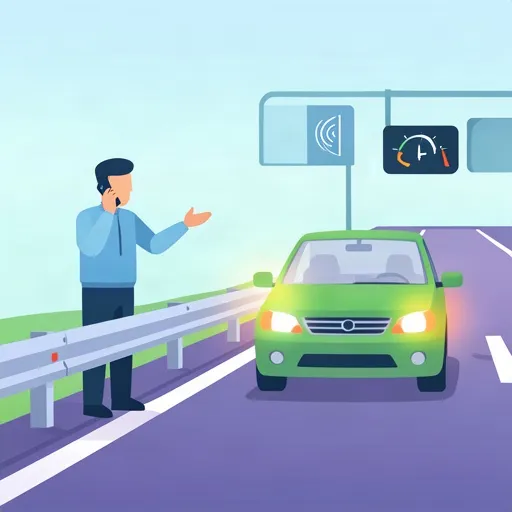
Calling 112 is the single most important action you can take to initiate a coordinated emergency response. The 112 number is a free, 24/7 service available throughout Spain and the entire European Union, and it can be reached even if your mobile phone has no coverage or credit, provided there is some signal from any network provider. When the operator answers, it is vital to remain calm and speak clearly, as the information you provide will dictate the type and quantity of resources sent to the location.
Always wait for the operator to end the call. Never hang up first, as they may need to provide you with life-saving instructions or ask clarifying questions while the ambulance, police, or firefighters are en route.
To facilitate a rapid and efficient response, you must be prepared to provide specific data points to the dispatcher. This includes the exact location of the incident—such as the road name, the specific kilometer point, and the direction of travel. Additionally, you should report the total number of vehicles involved, the approximate number of injured persons, and their condition, noting if anyone is trapped or if there are obvious dangers such as fire or the transport of hazardous materials.
In modern vehicle safety, the eCall system serves as a powerful automated supplement to manual reporting. This system is designed to automatically dial 112 when a vehicle's sensors detect a severe collision, such as airbag deployment or significant structural impact. The eCall system transmits essential data, including the vehicle's exact GPS coordinates and the time of the incident, directly to emergency services. While this technology significantly reduces response times, it does not absolve human witnesses of their duty to report an accident. If you witness an accident, or if the eCall system in a vehicle fails to trigger, the manual obligation to call 112 remains absolute.
An automated emergency call system installed in new vehicles that automatically dials 112 and sends location data in the event of a serious road accident.
The Spanish theory exam frequently tests your understanding of the duty to assist. One common exam trap is assuming that you should move injured people regardless of their condition. DGT regulations emphasize that you should avoid moving victims unless there is an immediate risk of fire or explosion, as improper handling can aggravate spinal or internal injuries. Furthermore, if you are a witness and professionals have already arrived or the situation is under control, the recommended course of action is to continue your journey to avoid causing further congestion or safety hazards at the scene.
This article teaches the essential PAS emergency protocol (Protect, Alert, Assist) that all Spanish drivers must follow when encountering a road accident. The critical steps are securing the scene with hazard lights and a high-visibility vest, calling 112 with precise location data and injury details, and providing basic assistance without exceeding your training. The eCall system in modern vehicles automatically contacts emergency services with GPS data but does not eliminate the witness's obligation to report. DGT exam questions frequently test understanding of when victims should or should not be moved and the requirement to stay on the line until the dispatcher ends the call.
A short set of high-value points that capture the most important ideas from this article.
The PAS rule (Proteger, Alertar, Socorrer) is the mandatory three-step protocol for handling any road accident in Spain.
When calling 112, you must provide the exact location including road name, kilometer point, and direction of travel.
The eCall system automatically dials 112 in modern vehicles but does not replace the legal duty of witnesses to report accidents.
Never hang up before the 112 operator ends the call, as they may provide life-saving instructions while help is en route.
You should move injured persons only if there is an immediate and serious danger such as fire or explosion.
The universal emergency number 112 is free, operates 24/7 throughout Spain and the EU, and works even without credit or with any available network signal.
Before exiting your vehicle at an accident scene, you must put on a high-visibility vest to avoid being struck by other traffic.
eCall transmits the vehicle's GPS coordinates and incident time automatically, but you may still need to verbally confirm details to the dispatcher.
If professionals have already taken control of an accident scene, witnesses should continue their journey to avoid creating additional congestion.
The V-16 beacon is the mandatory luminous device for signaling breakdowns or accidents on Spanish roads.
Assuming eCall replaces the need to manually call 112, when it is only a supplemental backup system.
Hanging up on the 112 operator prematurely, missing potentially critical life-saving instructions.
Moving injured victims from the scene without cause, which can aggravate spinal or internal injuries.
Failing to wear a high-visibility vest before leaving the vehicle, creating danger for yourself and others.
Providing vague location information such as just a town name instead of specific road details and kilometer markers.
Article content overview
A short set of high-value points that capture the most important ideas from this article.
The PAS rule (Proteger, Alertar, Socorrer) is the mandatory three-step protocol for handling any road accident in Spain.
When calling 112, you must provide the exact location including road name, kilometer point, and direction of travel.
The eCall system automatically dials 112 in modern vehicles but does not replace the legal duty of witnesses to report accidents.
Never hang up before the 112 operator ends the call, as they may provide life-saving instructions while help is en route.
You should move injured persons only if there is an immediate and serious danger such as fire or explosion.
The universal emergency number 112 is free, operates 24/7 throughout Spain and the EU, and works even without credit or with any available network signal.
Before exiting your vehicle at an accident scene, you must put on a high-visibility vest to avoid being struck by other traffic.
eCall transmits the vehicle's GPS coordinates and incident time automatically, but you may still need to verbally confirm details to the dispatcher.
If professionals have already taken control of an accident scene, witnesses should continue their journey to avoid creating additional congestion.
The V-16 beacon is the mandatory luminous device for signaling breakdowns or accidents on Spanish roads.
Assuming eCall replaces the need to manually call 112, when it is only a supplemental backup system.
Hanging up on the 112 operator prematurely, missing potentially critical life-saving instructions.
Moving injured victims from the scene without cause, which can aggravate spinal or internal injuries.
Failing to wear a high-visibility vest before leaving the vehicle, creating danger for yourself and others.
Providing vague location information such as just a town name instead of specific road details and kilometer markers.
Explore related topics, search based questions, and concepts that learners often look up when studying Reporting Accidents and Using 112. These themes reflect real search intent and help you understand how this topic connects to wider driving theory knowledge in Spain.
Find clear and practical answers to common questions learners often have about Reporting Accidents and Using 112. This section helps explain difficult points, remove confusion, and reinforce the key driving theory concepts that matter for learners in Spain.
PAS stands for Proteger (Protect), Avisar (Alert), and Socorrer (Assist). It is the fundamental sequence of actions required by law for any witness or participant in a traffic accident to ensure the safety of the scene, notify emergency services, and provide necessary help to victims.
You must provide the exact location (road, kilometer marker, and direction), the number of vehicles and victims involved, the physical state and consciousness of the victims, and any additional hazards like fire, fuel leaks, or dangerous cargo.
No, eCall is a supplementary safety system that automatically notifies 112 in a severe crash. If you are a witness to an accident, or if the eCall system does not trigger or fails to connect, you are still legally obligated to alert emergency services manually.
Yes, 112 is a free emergency service that works even if your mobile phone lacks coverage or if you do not have an active balance on your SIM card, provided the phone is functional.
Now that you have found specific articles, continue to deepen your understanding by exploring related DGT regulations or other driving theory topics. Strengthen your knowledge of road signs, traffic scenarios, and essential Spanish driving procedures to prepare for your official driving license exam.