
Navigating Spanish city streets requires a clear understanding of the tiered speed limit system established to enhance pedestrian safety. This guide clarifies the distinctions between platforma única streets, single-lane roads, and multi-lane thoroughfares, helping you avoid common pitfalls during your DGT theory test. By learning how to correctly interpret these categories—including the exclusion of bus and taxi lanes from your count—you will be better prepared to make safe and legal decisions on the road.
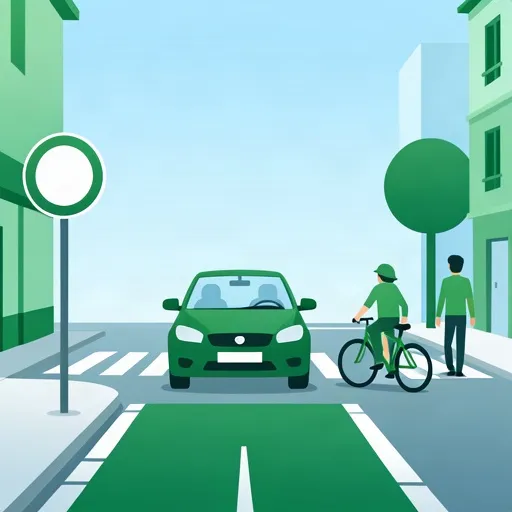
Article content overview
Navigating Spanish city streets requires more than just vehicle handling skills; it demands a precise understanding of the speed limit framework established by the Dirección General de Tráfico (DGT). Since the landmark regulation updates in 2021, urban speed limits in Spain have been standardized to improve pedestrian safety and reduce the severity of traffic accidents. For students preparing for the official theory exam, distinguishing between these categories is not just a theoretical exercise but a fundamental requirement for legal compliance and safe driving in any Spanish municipality.
The current Spanish system simplifies speed management by linking the generic speed limit to the physical configuration of the road. Understanding these rules is a common focus in DGT exam questions, where you may be presented with a scenario and asked to identify the correct maximum speed. The limits are categorized into three primary tiers: 20, 30, and 50 km/h.
A street design where the road surface and the sidewalk are at the same height, often separated only by physical bollards or texture changes rather than a curb.
The application of these limits depends on the infrastructure of the street you are driving on. On roads with a "platforma única" design, where the pavement and sidewalk are integrated, the generic limit is 20 km/h. This is designed to protect pedestrians who share the same level as the vehicle traffic. For standard urban streets, the limit is 30 km/h if there is only one lane per direction of travel. Finally, on streets featuring two or more lanes per direction, the generic limit is 50 km/h.
One of the most frequent traps in the DGT theory exam involves determining how many lanes a street has. It is a common misconception to count every marked space on the asphalt, but the law is specific: lanes reserved for specific users, such as bus lanes or taxi lanes, do not count towards the total number of lanes for the purpose of establishing the speed limit.
When you see a street with one general traffic lane and one designated bus lane, you must calculate it as a single-lane road. Therefore, the applicable speed limit for this street is 30 km/h, not 50 km/h.
This rule is designed to ensure that even on wider streets that incorporate public transport priority, the speed of private vehicles remains restricted to safer levels. Always scan the road for signs and markings that designate specific vehicle-only lanes, as these will be excluded from your "lane count" during the exam.
The following table provides a quick reference for the standard speed limits enforced in Spanish urban areas based on current DGT regulations.
| Road Type | Speed Limit |
|---|---|
| Platforma única (Integrated sidewalk) | 20 km/h |
| Single lane per direction | 30 km/h |
| Two or more lanes per direction | 50 km/h |
| Travesías (Cross-town roads) | 50 km/h |
While urban streets have specific tiered limits, "travesías"—sections of national or regional roads that pass through a town—are governed by their own standards. Generally, the speed limit in a travesía is 50 km/h for all types of vehicles. However, local authorities have the power to lower these limits if the road conditions are hazardous or if the area is particularly sensitive to pedestrian traffic.
It is also vital to remember that municipal authorities may occasionally post specific speed signs that override these generic limits. If you see a speed limit sign, the indicated limit always takes precedence over the generic rule. Furthermore, in exceptional cases, municipalities may raise the limit on single-lane roads to 50 km/h if specifically signposted, though this remains an exception to the general rule.
Spain's urban speed limits follow a tiered system based on road infrastructure: 20 km/h on plataforma única streets where sidewalks are at the same level as traffic, 30 km/h on single-lane roads, and 50 km/h on roads with two or more lanes per direction. A critical rule for exam success is that designated public transport lanes (buses and taxis) must be excluded when counting lanes for speed limit purposes. While Traversías generally allow 50 km/h, local authorities may modify limits, and any posted sign always overrides the generic default. Understanding these distinctions is essential for both passing the DGT theory exam and driving safely in Spanish urban environments.
A short set of high-value points that capture the most important ideas from this article.
On plataforma única streets (integrated sidewalk level), the generic urban limit is 20 km/h to protect pedestrians sharing the same surface
Standard single-lane urban streets (one lane per direction) have a generic limit of 30 km/h
Streets with two or more lanes per direction follow a generic 50 km/h limit in urban areas
Designated bus lanes and taxi lanes are excluded from the lane count when determining the speed limit applicable to general traffic
Any posted speed limit sign always overrides the generic default limit, regardless of road configuration
Plataforma única = integrated road and sidewalk at same level = 20 km/h generic limit
Single lane per direction = 30 km/h; two or more lanes per direction = 50 km/h
Bus and taxi lanes do NOT count toward the lane total for speed limit purposes
Travesías (through-town road sections) generally follow a 50 km/h limit but local authorities may adjust them
Municipal authorities can raise single-lane limits to 50 km/h only when specifically signposted
Counting bus lanes or taxi lanes as regular traffic lanes, which would incorrectly suggest a 50 km/h limit instead of 30 km/h
Assuming the posted generic rules always apply without checking for specific speed limit signs, which take precedence
Confusing plataforma única streets with standard single-lane roads, leading to selecting 30 km/h instead of the correct 20 km/h
Forgetting that Traversías have their own rules separate from standard urban street categories
Overlooking that municipalities may have adjusted limits in specific zones, especially in areas with high pedestrian activity
Article content overview
A short set of high-value points that capture the most important ideas from this article.
On plataforma única streets (integrated sidewalk level), the generic urban limit is 20 km/h to protect pedestrians sharing the same surface
Standard single-lane urban streets (one lane per direction) have a generic limit of 30 km/h
Streets with two or more lanes per direction follow a generic 50 km/h limit in urban areas
Designated bus lanes and taxi lanes are excluded from the lane count when determining the speed limit applicable to general traffic
Any posted speed limit sign always overrides the generic default limit, regardless of road configuration
Plataforma única = integrated road and sidewalk at same level = 20 km/h generic limit
Single lane per direction = 30 km/h; two or more lanes per direction = 50 km/h
Bus and taxi lanes do NOT count toward the lane total for speed limit purposes
Travesías (through-town road sections) generally follow a 50 km/h limit but local authorities may adjust them
Municipal authorities can raise single-lane limits to 50 km/h only when specifically signposted
Counting bus lanes or taxi lanes as regular traffic lanes, which would incorrectly suggest a 50 km/h limit instead of 30 km/h
Assuming the posted generic rules always apply without checking for specific speed limit signs, which take precedence
Confusing plataforma única streets with standard single-lane roads, leading to selecting 30 km/h instead of the correct 20 km/h
Forgetting that Traversías have their own rules separate from standard urban street categories
Overlooking that municipalities may have adjusted limits in specific zones, especially in areas with high pedestrian activity
Explore related topics, search based questions, and concepts that learners often look up when studying Spain Urban Speed Limits Explained. These themes reflect real search intent and help you understand how this topic connects to wider driving theory knowledge in Spain.
Find clear and practical answers to common questions learners often have about Spain Urban Speed Limits Explained. This section helps explain difficult points, remove confusion, and reinforce the key driving theory concepts that matter for learners in Spain.
No. According to Spanish traffic regulations, lanes reserved exclusively for specific users, such as public transport (buses or taxis), are not counted when calculating the number of lanes to determine the applicable speed limit.
On streets where the sidewalk and the road surface are at the same level (plataforma única), the generic speed limit is 20 km/h.
The 50 km/h limit applies to urban streets that have two or more lanes per direction of travel. Remember that reserved lanes, such as those for buses, are ignored in this count.
Yes. Municipal authorities may lower the generic limits through specific signage. In exceptional cases, they may also increase the limit on single-lane roads up to 50 km/h, provided it is marked with specific signage.
Now that you have found specific articles, continue to deepen your understanding by exploring related DGT regulations or other driving theory topics. Strengthen your knowledge of road signs, traffic scenarios, and essential Spanish driving procedures to prepare for your official driving license exam.