
While often mistaken for purely decorative elements, the black borders and dots on your windshield are essential components of your vehicle's structural safety. In this overview, you will learn how the ceramic frit shields the windshield's bonding adhesive from sunlight and manages thermal stress, while also providing practical utility for mounting electronic devices like Vía-T.
Article content overview
When you look closely at the edges of a vehicle's windshield, you will notice a solid black border that gradually fades into a series of small, individual dots. While many drivers assume this is merely a decorative element or a stylistic touch added by manufacturers, it is actually a vital piece of structural engineering. Known as the ceramic frit, this feature plays a critical role in the integrity of your car's safety systems and is an excellent example of the attention to detail required in modern automotive design. For those preparing for the DGT theory exam, understanding these components is part of developing a deeper knowledge of vehicle structure and maintenance.
The black border found on the perimeter of your windshield is a band of enamel-like ceramic paint that is fused into the glass during the manufacturing process. Its primary function is to protect the polyurethane adhesive—the powerful glue that holds the windshield in place—from ultraviolet (UV) radiation. Over time, constant exposure to direct sunlight can degrade this adhesive, causing it to lose its elasticity and strength. By acting as an opaque barrier, the ceramic frit prevents UV rays from reaching the bond, ensuring that the windshield remains securely attached to the vehicle's chassis, which is essential for passenger safety in the event of a collision or rollover.
Beyond its protective role, the dotted pattern serves a sophisticated purpose in managing thermal expansion. Windshields are made of glass, a material that expands and contracts significantly when subjected to temperature fluctuations. Because the black ceramic border absorbs heat from the sun much faster than the transparent glass, there is a risk of thermal shock where the extreme temperature difference creates tension. The dotted pattern creates a graduated transition zone, allowing for a more even distribution of heat across the glass surface. This design helps minimize internal stress on the windshield, significantly reducing the likelihood of cracks forming along the edges under extreme weather conditions.
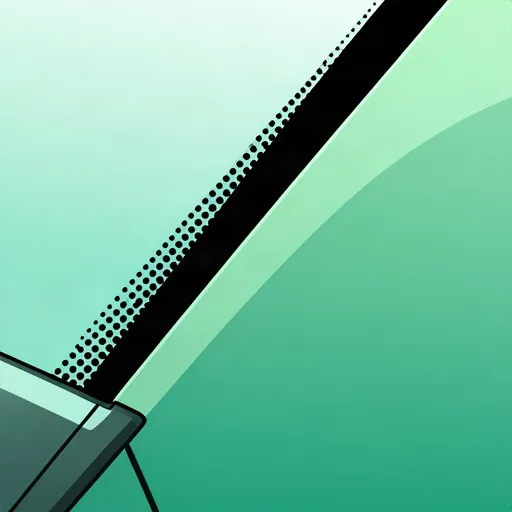
A black, baked-on ceramic enamel band around the edge of a windshield, designed to protect the bonding adhesive from UV light and manage thermal stress.
For drivers in Spain, the area around the rearview mirror—often covered in a cluster of these black dots—offers a secondary, practical benefit. This region often serves as an integrated sun visor, helping to block glare that traditional sun visors might miss. Furthermore, because the ceramic frit is a non-conductive material, it is the ideal location for mounting electronic devices that rely on radio frequency signals, such as the Vía-T toll transponder. Placing these devices within the dotted area ensures that the signal passes through the glass unimpeded, avoiding the metallic or heat-reflective coatings found on other parts of the windshield that could interfere with communication.
While the DGT theory exam focuses primarily on road rules, signage, and traffic flow, candidates are expected to understand the basics of vehicle safety and maintenance. You should be aware that the windshield is not just a viewing portal but a key structural component of the vehicle. If the frit is damaged or if the windshield seal is compromised, the vehicle's structural stability is diminished. Maintaining the clarity and integrity of your windshield is a mandatory requirement for road safety, as any obstruction or crack that interferes with the driver's visibility can lead to penalties or even failure during a mandatory vehicle inspection, such as the ITV (Inspección Técnica de Vehículos).
When cleaning your windshield, ensure that the area around the frit and any mounted devices remains free of obstructions. For the DGT theory test, remember that any modification or sticker placed on the windshield must not restrict the driver's field of vision.
| Feature | Primary Function | Benefit for the Driver |
|---|---|---|
| Solid Black Border | UV Protection | Preserves adhesive bond strength |
| Dotted Gradient | Thermal Management | Prevents stress-induced cracking |
| Dot Cluster (Center) | Glare Reduction | Enhances visibility in bright conditions |
| Clear Zone (Dotted) | Electronic Mounting | Optimal signal for Vía-T devices |
Article content overview
Explore related topics, search based questions, and concepts that learners often look up when studying Windshield Black Dots Explained. These themes reflect real search intent and help you understand how this topic connects to wider driving theory knowledge in Spain.
Find clear and practical answers to common questions learners often have about Windshield Black Dots Explained. This section helps explain difficult points, remove confusion, and reinforce the key driving theory concepts that matter for learners in Spain.
The black border is known as the 'frit', which is a band of ceramic paint baked onto the edges of the glass during manufacturing.
The frit protects the polyurethane adhesive that bonds the windshield to the vehicle chassis from harmful UV radiation, which could otherwise cause the adhesive to become brittle and fail.
The dots create a gradual transition of temperature between the hot glass and the metal frame, preventing thermal shock that could lead to cracks. They also act as a sunshade for the area near the rearview mirror.
Yes, many drivers place electronic toll devices in the dotted area because this section often lacks the thermal reflective coating that might otherwise interfere with radio frequency signals.
Now that you have found specific articles, continue to deepen your understanding by exploring related DGT regulations or other driving theory topics. Strengthen your knowledge of road signs, traffic scenarios, and essential Spanish driving procedures to prepare for your official driving license exam.