
Welcome to the AM Category lesson on moped balance and steering! Building on basic controls, this section dives into the critical physics of two-wheeled stability. Understanding how to effectively steer and maintain control at different speeds is vital for safe urban riding and passing your DGT theory exam.
Lesson content overview
Mastering the art of balance and steering is fundamental for safe and confident riding of two-wheeled vehicles, especially mopeds and light scooters in the AM category. This lesson delves into the physical principles and essential techniques required to control your moped effectively, navigate turns smoothly, and maintain stability in various urban driving situations. Understanding these concepts is not just about passing your Spanish AM driving license theory exam; it's about developing the intuitive control necessary for everyday road safety.
The ability of a moped to remain upright while in motion is due to a continuous interplay of forces, a state known as dynamic balance. Unlike a car, a two-wheeled vehicle requires constant, subtle adjustments from the rider to maintain this equilibrium. For new moped riders, comprehending and developing a feel for dynamic balance is crucial for smooth and predictable handling.
Dynamic balance is the continuous equilibrium achieved by managing the forces acting upon the moped and rider system as it moves. These forces include gravity pulling downwards, inertia resisting changes in motion, and the frictional grip of the tires on the road surface. When a moped is in motion, its spinning wheels create gyroscopic effects that contribute to its stability, making it inherently easier to balance than a stationary moped.
The rider plays an active role in maintaining this balance. Through minute adjustments in body position, steering input, and even throttle control, the rider constantly shifts the collective center of mass to counteract external forces. This constant, unconscious adjustment becomes second nature with practice, allowing for stable forward motion and controlled maneuvers.
It's important to distinguish between static and dynamic balance. Static balance refers to the ability to keep the moped upright when it is completely at rest, typically requiring the rider to place one or both feet on the ground. This is commonly experienced at traffic lights or during stops.
Dynamic balance, on the other hand, is maintained while the vehicle is in motion, even at very low speeds. At walking pace or faster, the moped's momentum and the gyroscopic effect of its wheels help it stay upright, allowing the rider to keep both feet on the footrests. The goal for safe moped operation is to transition smoothly from static balance to dynamic balance when starting, and vice-versa when stopping.
The ongoing equilibrium of forces (gravity, inertia, friction) that keeps a two-wheeled vehicle upright and stable while it is in motion.
A common misunderstanding among new riders is the belief that balance is only crucial at low speeds. In reality, dynamic balance is vital at any speed, as it enables the rider to react to road conditions, wind gusts, and traffic flow, ensuring continuous control.
While it might seem counter-intuitive, turning a moped or light scooter at speeds above walking pace primarily involves a technique called counter-steering. This is a critical skill for all two-wheeled vehicle operators and is essential for safely navigating turns, especially in dense urban environments.
Counter-steering is the technique where a rider briefly pushes the handlebar in the direction opposite to the desired turn. For example, to initiate a left turn, the rider briefly pushes the left handlebar forward (which causes the front wheel to steer momentarily to the right). This brief, initial steering input causes the moped to lean into the intended turn direction, allowing the vehicle to corner efficiently.
The reason counter-steering is essential, particularly at speeds above approximately 10 km/h, lies in the physics of inertia and gyroscopic precession. At higher speeds, the moped and rider system resists direct steering input due to its forward momentum. Pushing the handlebars left to turn left directly would initially cause the moped to move upright or even lean away from the turn. Counter-steering, by briefly turning the front wheel in the opposite direction, generates a force that quickly causes the moped to lean into the desired turn. Once the lean is established, the rider can maintain the turn with minimal additional steering input.
Counter-steering is the primary method for initiating turns on a moped at most operating speeds.
Scan the turn: Look through the turn to where you want to go. This helps your body naturally prepare.
Reduce speed (if necessary): Brake before the turn, not during it, to achieve an appropriate entry speed.
Initiate counter-steer: Gently but firmly push the handlebar corresponding to the desired turn. To turn left, push the left handlebar forward. To turn right, push the right handlebar forward. This will cause the moped to lean.
Lean into the turn: As the moped leans, allow your body to naturally align with the moped's lean angle.
Maintain the turn: Once the desired lean is achieved, ease off the initial counter-steering input and maintain a neutral or slight input to hold the lean through the turn.
Exit the turn: As you exit the turn, gently accelerate to bring the moped upright and straighten the handlebars.
Abrupt or excessive counter-steering inputs can destabilize the vehicle. The key is smooth, controlled inputs that allow the moped to lean gradually and predictably.
When a moped turns, it must lean into the corner to counteract the centrifugal force that tries to push it outwards. This lean angle is a critical factor in safe and effective cornering.
The lean angle is the tilt of the moped relative to the vertical during a turn. It's a precise balance between the outward centrifugal force (generated by the turn) and the downward force of gravity. To maintain stability during a turn, these forces must be in equilibrium. The faster you go, or the tighter the turn, the greater the lean angle required to maintain this balance.
The required lean angle is directly related to your speed and the radius of the turn. For a given turn radius, doubling your speed quadruples the centrifugal force, necessitating a significantly greater lean angle.
Riders must learn to intuitively judge the optimal lean angle for a given speed and turn radius. This judgment is developed through practice and a good understanding of how the moped reacts to different inputs. The goal is to achieve a stable and controlled lean that allows the tires to maintain maximum grip on the road surface throughout the turn.
Proper execution of counter-steering and precise control over lean angle are interconnected skills that allow a moped rider to navigate turns safely and efficiently.
Beyond steering inputs and lean angle, how a rider distributes their weight and positions their body significantly impacts a moped's stability, traction, and overall control. These factors are especially crucial on light vehicles like mopeds, where the rider's mass constitutes a substantial portion of the total vehicle weight.
Weight distribution refers to how the combined mass of the rider and the moped is allocated between the front and rear wheels, as well as side-to-side. This distribution directly influences the grip available from each tire.
Longitudinal Distribution (Front vs. Rear):
Lateral Distribution (Side-to-Side):
Body positioning is the rider's posture and alignment relative to the moped. It affects balance, aerodynamics, control, and rider comfort.
Riders should always keep their feet on the footrests while moving, only putting them down when coming to a complete stop. Standing on the footrests while turning compromises stability and shifts the center of mass unpredictably.
Operating a moped in Spain, like any vehicle, is governed by specific traffic regulations designed to ensure safety. These rules indirectly relate to balance and steering, emphasizing controlled and predictable maneuvers.
Spanish traffic regulations mandate that riders of two-wheeled vehicles, including AM category mopeds, must maintain both wheels on the road surface during normal operation.
This rule is fundamental for stability and control. Lifting a wheel, even momentarily (such as performing a "wheelie"), unless specifically within a controlled, safe environment for a specific maneuver (which is generally not applicable to typical urban riding), is prohibited on public roads. Maintaining consistent tire contact ensures optimal grip for steering, braking, and acceleration, directly contributing to safe dynamic balance.
When changing direction, especially at intersections or roundabouts, riders must follow a sequence of actions that ensure safety for themselves and other road users. This includes proper application of steering and balance techniques.
Failing to signal or turning at excessive speed without appropriate technique increases the risk of collisions and can lead to penalties under Spanish traffic law.
Load and Load Distribution regulations are critical for moped safety. The total weight of the moped, rider, any passenger, and cargo must not exceed the vehicle's maximum permissible load specified by the manufacturer.
The maximum weight that a vehicle is legally allowed to carry, including the weight of the vehicle itself, the rider, any passengers, and cargo.
Exceeding this limit significantly affects the moped's handling, balance, and braking capabilities. It shifts the center of mass, making the moped less agile and more difficult to steer, particularly when applying counter-steering. Improperly distributed weight, such as heavy cargo placed high up or far to one side, can severely compromise stability and increase the risk of losing control.
Even experienced riders can make mistakes, and new riders are particularly susceptible to errors in balance and steering. Awareness of common pitfalls and how to adapt your technique to varying conditions will significantly improve your safety.
When making turns, especially in urban areas, you will often interact with pedestrians and cyclists.
While counter-steering, your moped will momentarily move slightly away from the intended turn direction before leaning into it. This small lateral movement must be considered, especially when vulnerable road users are close by.
Always anticipate their movements, maintain a safe lateral distance, and signal your intentions clearly. Ensure you have ample space to execute your turn without encroaching on their path or surprising them. Your smooth and controlled steering techniques directly contribute to the safety of everyone on the road.
Understanding the fundamental cause-and-effect relationships in moped handling reinforces the importance of correct technique.
Understanding theory is one thing; applying it in real-world scenarios is another. Here are a few examples that integrate the concepts discussed.
Mastering balance, steering, and counter-steering is fundamental for any rider seeking their Spanish AM driving license. It’s about becoming one with your machine, understanding its physical responses, and anticipating road conditions.
By consistently applying these principles, you will be well-equipped to handle urban and rural turns safely and efficiently, meeting both the physical demands of two-wheel vehicles and the regulatory requirements for the Spanish AM category.
This lesson covers the essential physics of two-wheeled vehicle stability for AM category mopeds, focusing on dynamic balance, counter-steering technique, and lean angle management. Dynamic balance is achieved through continuous rider adjustments and gyroscopic effects while in motion, distinguishing it from static balance at rest. Counter-steering—pushing the handlebar opposite to the desired turn—initiates lean through gyroscopic precession and is the primary method for turning at speeds above approximately 10 km/h. The lean angle must be precisely matched to speed and turn radius, with critical angles of 30-45 degrees depending on tire type and conditions. Weight distribution and body positioning directly influence traction and stability, and Spanish traffic regulations require two-wheel contact, proper signaling, and adherence to maximum load limits for safe operation in urban environments.
A short set of high-value points that capture the most important learning from this lesson.
Dynamic balance is a continuous process achieved while in motion through constant rider adjustments, not just a low-speed concern.
Counter-steering initiates turns above ~10 km/h by briefly pushing the handlebar opposite to the desired direction, causing the moped to lean.
The required lean angle is directly proportional to speed and inversely proportional to turn radius—doubling speed quadruples centrifugal force.
Weight distribution shifts forward during braking and rearward during acceleration, directly affecting tire grip and vehicle control.
Spanish regulations mandate maintaining two-wheel contact and following proper signaling and speed procedures for all turns.
Explore all units and lessons included in this driving theory course.
Counter-steering works because briefly steering opposite to the desired turn generates the lean needed for cornering at normal speeds.
Critical lean angle for moped tires is approximately 30-45 degrees—exceeding this causes loss of traction and a fall.
Brake before entering a turn, not during it, to avoid destabilizing the moped while leaned over.
Maximum permissible load limits must be observed as exceeding them shifts the center of mass and compromises handling.
Keep both feet on the footrests while moving; only place feet down when fully stopped.
Applying aggressive counter-steering at high speed in a tight corner causes excessive lean and potential loss of traction.
Attempting to turn above ~10 km/h using direct steering (turning handlebars toward the turn) instead of counter-steering—feels awkward and ineffective.
Braking mid-turn, especially with the front brake, causes the front wheel to lose grip and 'wash out'.
Leaning the body excessively inside the turn while keeping the moped upright disrupts the harmony between rider and machine.
Neglecting to signal before turning, even with perfect counter-steering technique, violates Spanish Road Code and creates safety hazards.
Lesson content overview
A short set of high-value points that capture the most important learning from this lesson.
Dynamic balance is a continuous process achieved while in motion through constant rider adjustments, not just a low-speed concern.
Counter-steering initiates turns above ~10 km/h by briefly pushing the handlebar opposite to the desired direction, causing the moped to lean.
The required lean angle is directly proportional to speed and inversely proportional to turn radius—doubling speed quadruples centrifugal force.
Weight distribution shifts forward during braking and rearward during acceleration, directly affecting tire grip and vehicle control.
Spanish regulations mandate maintaining two-wheel contact and following proper signaling and speed procedures for all turns.
Explore all units and lessons included in this driving theory course.
Counter-steering works because briefly steering opposite to the desired turn generates the lean needed for cornering at normal speeds.
Critical lean angle for moped tires is approximately 30-45 degrees—exceeding this causes loss of traction and a fall.
Brake before entering a turn, not during it, to avoid destabilizing the moped while leaned over.
Maximum permissible load limits must be observed as exceeding them shifts the center of mass and compromises handling.
Keep both feet on the footrests while moving; only place feet down when fully stopped.
Applying aggressive counter-steering at high speed in a tight corner causes excessive lean and potential loss of traction.
Attempting to turn above ~10 km/h using direct steering (turning handlebars toward the turn) instead of counter-steering—feels awkward and ineffective.
Braking mid-turn, especially with the front brake, causes the front wheel to lose grip and 'wash out'.
Leaning the body excessively inside the turn while keeping the moped upright disrupts the harmony between rider and machine.
Neglecting to signal before turning, even with perfect counter-steering technique, violates Spanish Road Code and creates safety hazards.
Explore search topics learners often look for when studying Balance, Steering, and Counter-Steering. These topics reflect common questions about road rules, driving situations, safety guidance, and lesson level theory preparation for learners in Spain.
Browse additional driving theory lessons that cover connected traffic rules, road signs, and common driving situations related to this topic. Improve your understanding of how different rules interact across everyday traffic scenarios.
Explore the physical principles behind moped balance, including dynamic balance and the gyroscopic effect. Understand how counter-steering and weight distribution affect control and stability for AM category riders in Spain.
This lesson explains the physics of counter-steering, where the rider initiates a turn by briefly steering the front wheel opposite to the desired direction. It details how body shift and rider lean influence the turn entry and exit phases. Understanding these principles enables riders to achieve precise directional control and maintain turning stability.
This lesson focuses on counter-steering at higher speeds, highlighting how pre-steer torque initiates a lean. It outlines the rider input timing required for effective torque steer and discusses how speed affects the front-wheel angle necessary for stable cornering. The content includes dynamic lean initiation techniques and DGT guidelines for fast turns.
Learn how to apply balance and counter-steering techniques in various real-world riding scenarios, from city intersections to wet roads. Covers Spanish traffic regulations and safe maneuvering for AM license holders.

This lesson focuses on the optimal position for a moped within a traffic lane to maximize visibility and safety. It discusses the importance of maintaining a safety buffer from other vehicles and hazards, particularly the risk posed by the doors of parked cars. The content explains how to use lane positioning strategically to discourage unsafe overtaking and to be clearly seen by drivers in front and behind, especially when approaching intersections.
This lesson focuses on low-speed manoeuvres within congested urban traffic, detailing techniques for navigating tight corners and weaving through traffic. Learners analyze urban traffic flow, pedestrian zones, and cyclist interactions to anticipate hazards. The lesson also explains DGT regulations regarding slow-speed movement and lane positioning.

This lesson examines the dynamic interactions between mopeds, cars, and bicycles in an urban environment. It emphasizes strategies for staying visible and avoiding the blind spots of larger vehicles. The content provides clear guidelines on overtaking bicycles safely, respecting dedicated bike lanes, and signaling intentions clearly to all other road users to ensure predictable and harmonious coexistence in mixed traffic.

This lesson provides a detailed guide to safely starting a moped, from the ignition sequence to the coordinated use of the throttle and brakes. It explains the importance of a pre-ride checklist to verify lights and controls are functional. The content also covers techniques for achieving smooth acceleration from a standstill and performing controlled stops, which is crucial for managing stop-and-go urban traffic conditions.
This lesson introduces the regulatory signs that impose obligations or prohibitions on road users, with a focus on those pertinent to mopeds. It covers common signs such as speed limits, 'no entry', and mandatory turn directions, explaining how their shape and color indicate their function. Learners will be able to identify and correctly interpret these signs to navigate urban road networks legally and safely, avoiding potential fines.
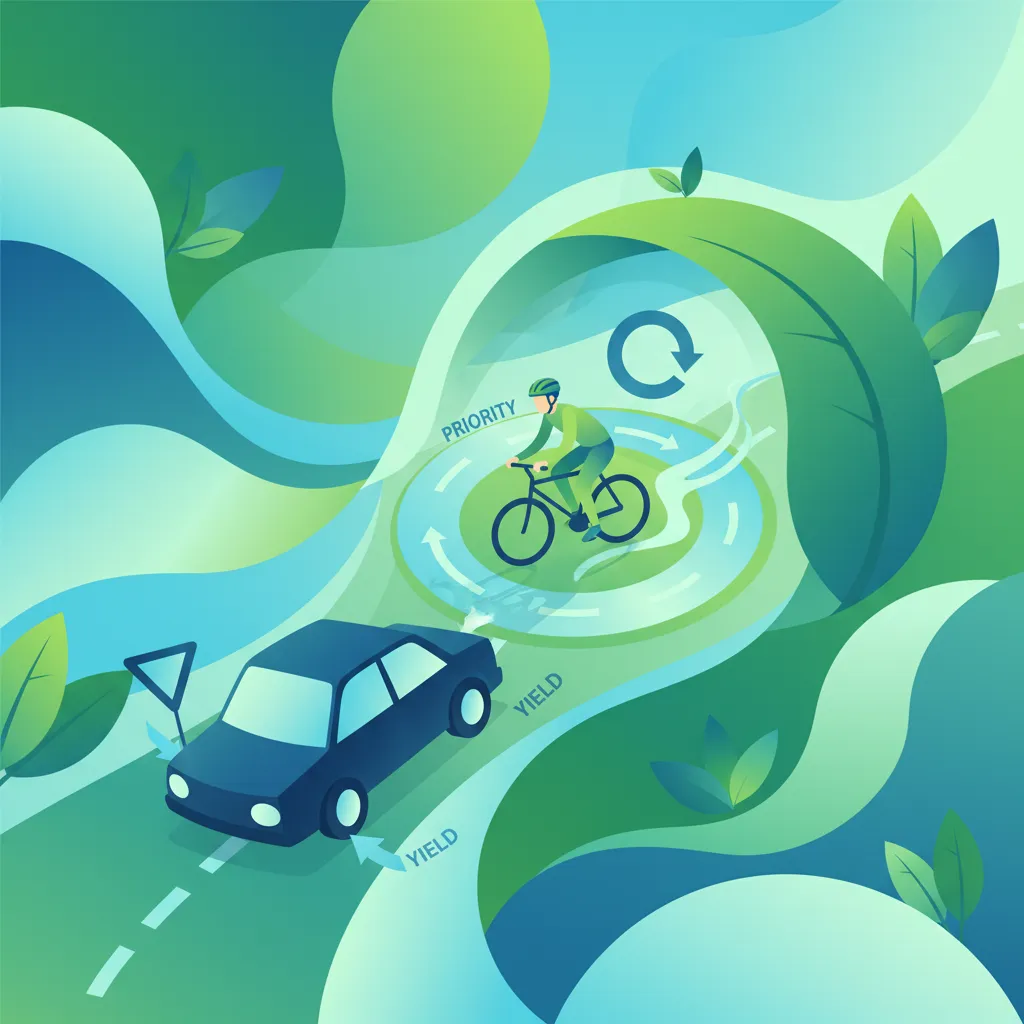
This lesson clarifies the primary rule for roundabouts: all vehicles entering must yield to traffic already on the circular roadway. It explains how to approach a roundabout, select the appropriate lane based on the intended exit, and merge safely into the flow of traffic. Proper signaling before exiting is also covered, ensuring other drivers can anticipate the rider's movements for a smooth and safe negotiation of the junction.

This lesson focuses on the absolute priority of pedestrians at marked crosswalks, often known as zebra crossings. It explains that riders must always be prepared to stop and yield the right-of-way to any pedestrian waiting to cross or already crossing. The content also covers signaled pedestrian crossings and general awareness in urban areas where pedestrians may cross unexpectedly, reinforcing safety and legal compliance.
This lesson addresses the critical skill of safely sharing the road with other vulnerable users like pedestrians, cyclists, and other motorcyclists. It emphasizes the need for increased awareness, speed adaptation, and providing ample space when passing. The content covers DGT regulations regarding minimum passing distances and highlights the importance of making eye contact to ensure mutual awareness and prevent common urban accidents.
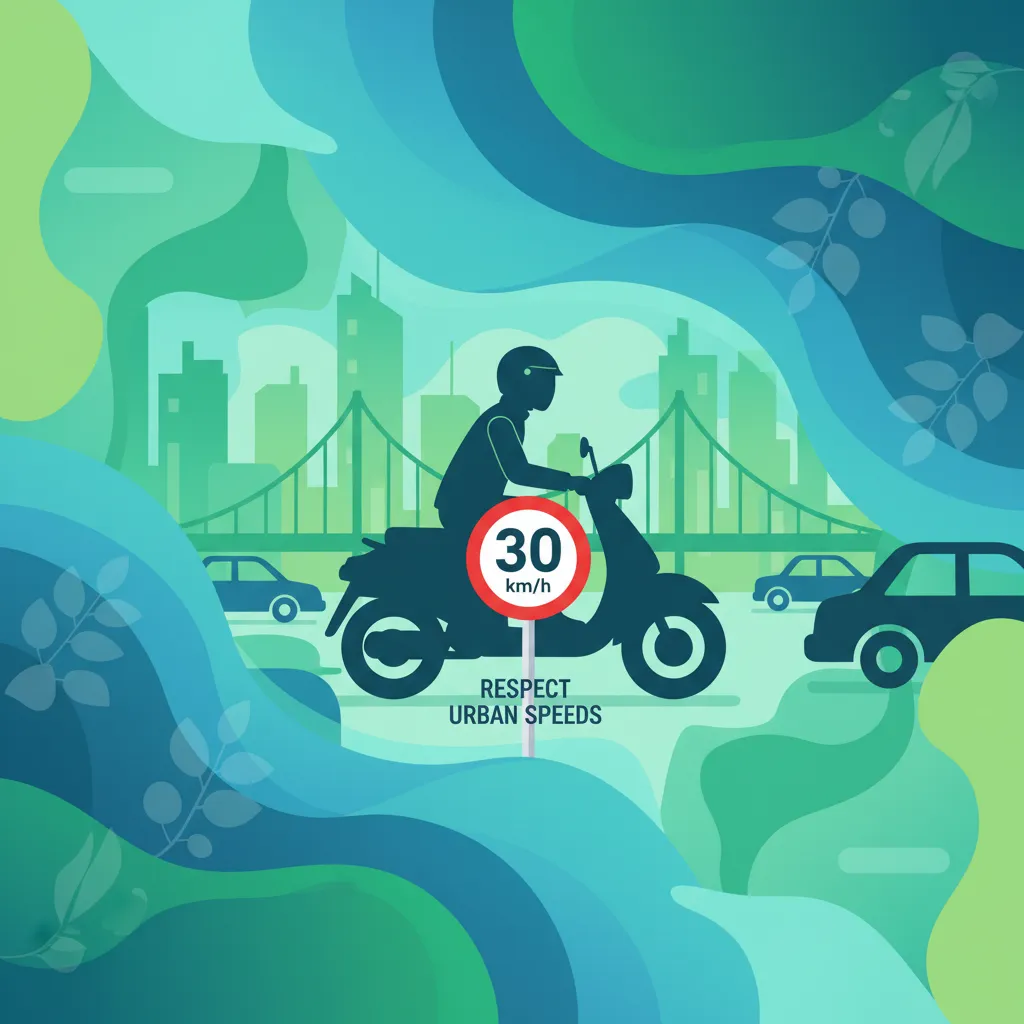
This lesson details the specific speed limits applicable to mopeds within Spanish urban areas, such as the 30 km/h limit on single-lane roads and the 50 km/h limit on roads with two or more lanes per direction. It teaches learners to identify speed zone signage and understand the legal rationale behind these restrictions. Adhering to these DGT-mandated limits is crucial for safety and avoiding penalties.

This lesson focuses on mastering acceleration and deceleration to integrate smoothly with traffic. It teaches how to apply the throttle gradually for steady speed control and how to use front and rear brakes in a balanced manner to slow down without destabilizing the moped. Learners will understand how to adjust their speed in response to changing traffic conditions, ensuring safe following distances and predictable movements for other road users.
Find clear answers to common questions learners have about Balance, Steering, and Counter-Steering. Learn how the lesson is structured, which driving theory objectives it supports, and how it fits into the overall learning path of units and curriculum progression in Spain. These explanations help you understand key concepts, lesson flow, and exam focused study goals.
Counter-steering is the technique where you push the handlebar in the direction opposite to the turn you want to make. For example, to turn left, you push the left handlebar forward slightly. This causes the moped to lean left, initiating the turn. This is a fundamental concept for your DGT theory exam, especially for AM category riders.
Yes, counter-steering is the primary method for turning at most speeds. At very low speeds, like walking pace, a direct steering input might be more noticeable. However, as speed increases, counter-steering becomes more effective and is crucial for stability and controlled cornering. Understanding this is key for passing your theory test.
Proper body positioning is essential for maintaining balance and control. Shifting your weight subtly in coordination with steering inputs helps the moped lean correctly into turns and maintain stability. For the AM license exam, expect questions about how your posture affects handling.
Yes, the DGT theory exam for the AM category includes questions that assess your understanding of how to control and maneuver a moped. Topics like balance, steering, and counter-steering are fundamental to safe riding and are therefore covered in the exam. This lesson prepares you directly for those questions.
Simply turning the handlebars without counter-steering is less effective and can lead to instability, especially at speed. Counter-steering uses a slight push to initiate a lean, which is the actual mechanism that turns a two-wheeled vehicle. It's a physics principle that is vital to grasp for your moped license.
Use our powerful search functionality to pinpoint specific Spanish DGT driving theory practice sets. Filter by road sign categories, traffic law topics, or question difficulty to build custom study sessions and reinforce your knowledge precisely where it matters for your official exam.