
This lesson is crucial for all AM moped riders in Spain, focusing on the essential yield rules at roundabouts. You'll learn the fundamental principle of giving way to traffic already circulating and how to navigate these common junctions safely and efficiently. Mastering these rules is vital for your DGT theory exam success and for maintaining safety on Spanish urban roads.
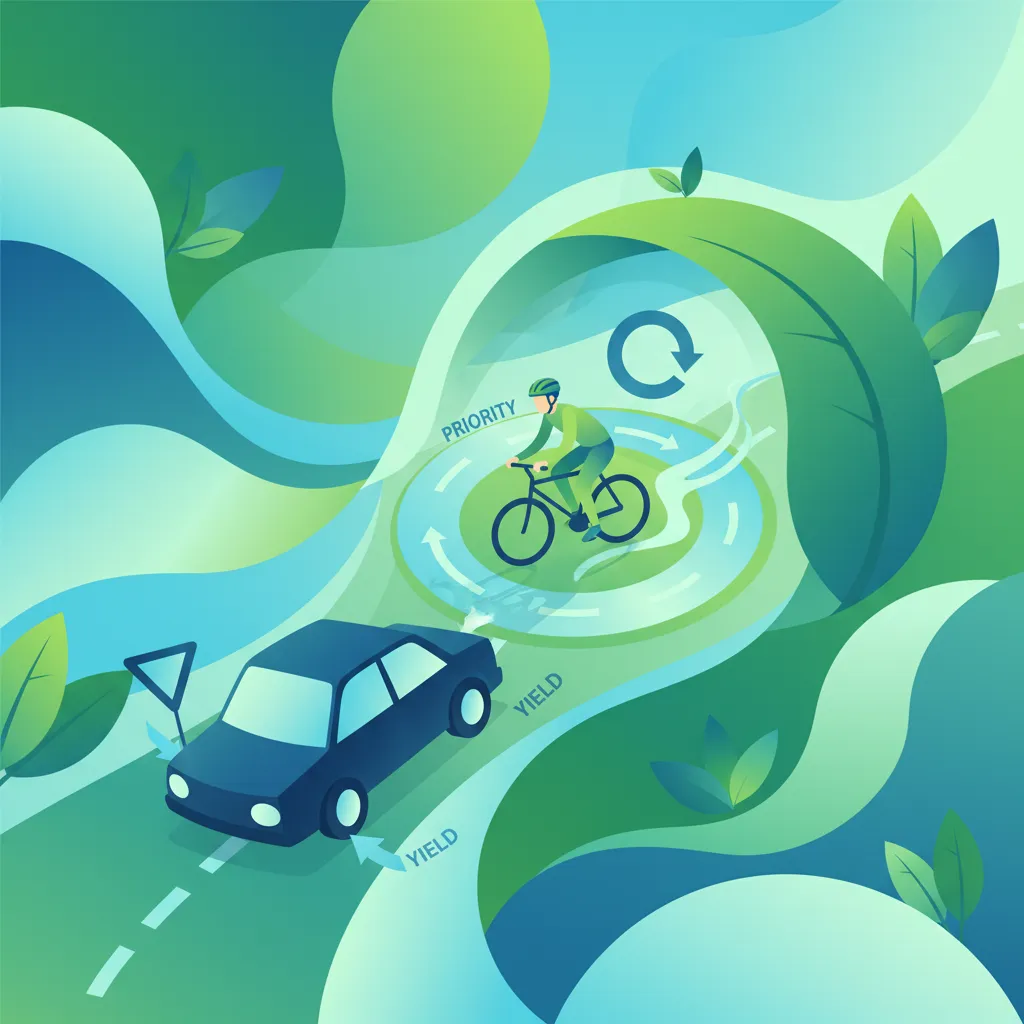
Lesson content overview
Roundabouts are common features of road networks in Spain, designed to improve traffic flow and reduce accident severity at intersections. However, their unique design requires specific rules of priority to be followed, especially the fundamental requirement to yield to traffic already circulating. For those preparing for their Spanish Category AM theoretical exam, understanding these rules is paramount for safe and legal riding of mopeds and light scooters. This lesson will clarify the primary right-of-way rules at roundabouts, focusing on how to approach, select the correct lane, merge safely, and signal effectively, ensuring a smooth and confident negotiation of these junctions.
The most crucial rule at any roundabout in Spain is the obligation to yield to vehicles already within the circular roadway. This principle, known as "Ceder el paso," ensures a continuous and predictable flow of traffic, which is vital for maintaining safety and efficiency.
When you approach a roundabout, your moped or light scooter must give way to any vehicle that is already moving around the central island. This applies universally, regardless of the size or type of the other vehicle. You must be prepared to stop your vehicle completely before entering the roundabout if necessary, to allow circulating traffic to pass safely.
The presence of a Yield Sign (señal de Ceda el Paso) at the entrance of a roundabout explicitly reinforces this rule, but even without such a sign, the fundamental priority structure dictates that traffic already in the roundabout has the right-of-way. This rule is enshrined in Spanish traffic law, specifically Article 105 of the Reglamento General de Circulación (RGC). It serves as the bedrock for preventing collisions at these busy junctions.
The underlying logic for prioritizing circulating traffic is twofold: safety and efficiency. From a safety perspective, stopping or slowing down before entering allows you sufficient time to assess the speed and gaps in the circulating flow. This reduces the risk of entering too quickly or cutting off another driver, which can lead to abrupt braking or potential collisions, particularly dangerous for vulnerable road users like moped riders.
In terms of efficiency, this rule promotes a continuous traffic flow within the roundabout itself. Vehicles can keep moving without having to stop for every vehicle entering, which reduces congestion and delays. By adhering to the Ceder el paso principle, all drivers contribute to a predictable environment, minimizing ambiguity and enhancing the overall safety and fluidity of urban and rural traffic.
Proper lane selection before entering a roundabout is a critical skill for AM category license holders. It not only ensures a smoother ride but also reduces the need for unsafe lane changes within the roundabout, which are often prohibited or dangerous.
Your intended exit point dictates which lane you should choose when approaching a roundabout. This planning should occur well in advance of reaching the junction, allowing you to position your moped correctly and smoothly.
First Exit (Turning Right): If you intend to take the very first exit, which usually means turning right, you should position your moped in the right-hand lane as you approach the roundabout. This allows you to exit directly without crossing other traffic lanes.
Second Exit (Going Straight Through): For exits that are broadly "straight through" (typically the second exit if considering a four-arm roundabout), you should use the central lane upon entry. This position allows for a smoother trajectory and avoids conflict with vehicles intending to exit immediately.
Third Exit or Later (Turning Left/U-Turn): If your intended exit is further around the roundabout, such as the third exit, a left turn, or even a U-turn, you should position your moped in the left-hand lane when entering. This provides the widest arc and prepares you for later exits.
Always look for directional arrows painted on the road surface before the roundabout, as these markings will guide you on the appropriate lane choice. For AM category vehicles, while smaller, you must still adhere to these lane markings and occupy the lane fully to avoid ambiguity for other drivers.
Once you have entered the roundabout in the correct lane, it is crucial to maintain that lane discipline throughout your journey within the circular roadway. Unnecessary lane changes inside a roundabout are a common cause of accidents and are often prohibited by traffic regulations. Article 104 of the RGC stipulates that drivers must adhere to lane markings.
Changing lanes within the roundabout can create conflicts with other vehicles, especially those also navigating the roundabout. It forces other drivers to react suddenly, which can be particularly hazardous for moped riders. By selecting your lane correctly before entry and maintaining it, you contribute to a predictable and safer traffic flow, reducing the risk of sideswipe collisions.
Proper use of turn signals (intermitentes) is essential when navigating roundabouts. Your signals communicate your intentions to other road users, allowing them to anticipate your movements and react accordingly.
The Spanish traffic law (RGC Article 116) mandates signaling before any maneuver that changes direction, and this explicitly includes exiting a roundabout. The key is to signal in advance of your intended exit.
As you approach your exit lane, you should activate your right-hand turn signal. This tells other drivers, especially those waiting to enter the roundabout or those behind you, that you intend to leave at the next available exit. For earlier exits (the first or second), you might initiate the signal shortly after passing the previous exit. For later exits (third or beyond), you should signal your intention to exit once you have passed the exit before your intended one.
Failure to signal, or signaling too late, can lead to confusion. Drivers waiting to enter might misjudge your intentions and proceed when they should wait, or drivers behind you might not anticipate your deceleration and turn, increasing the risk of a rear-end collision.
Several common mistakes occur with signaling at roundabouts:
Speed management is another critical aspect of safe roundabout navigation for AM license holders. Entering or circulating at an inappropriate speed can disrupt traffic flow and increase the risk of an accident.
When approaching a roundabout, you should reduce your speed sufficiently to allow for comfortable observation of circulating traffic and to find a safe gap. Once a gap is identified and you begin to enter, you should accelerate smoothly to match the speed of the vehicles already inside the roundabout. This prevents creating a sudden obstruction or forcing other drivers to brake abruptly.
Entering a roundabout too quickly can lead to a loss of control, especially on wet or slippery surfaces. Conversely, entering too slowly can also disrupt traffic flow and pose a hazard, as it creates a significant speed differential that following vehicles might not anticipate. The goal is a seamless merge, where your moped blends into the existing traffic stream.
The appropriate speed for entering and navigating a roundabout can vary significantly based on prevailing conditions.
The RGC emphasizes that drivers must adapt their speed to the technical characteristics of the road and the conditions of traffic. This general principle is especially important at roundabouts where dynamic traffic situations are common.
As an AM category rider, you are operating a moped, which is itself a more vulnerable vehicle than a car. Therefore, understanding and respecting the priority of other vulnerable road users, such as pedestrians and cyclists, is paramount.
Many roundabouts, particularly in urban areas, incorporate pedestrian crossings (pasos de peatones) or pedestrian islands at their entry and exit points. It is a legal requirement in Spain (RGC Article 67) to yield to pedestrians who are crossing or intending to cross at these designated areas.
You must scan thoroughly for pedestrians before entering a roundabout, even if circulating traffic appears clear. Pedestrian islands, in particular, can sometimes obscure pedestrians from a driver’s view until the last moment. Always be prepared to stop for a pedestrian stepping onto a crosswalk leading into or out of a roundabout. Their safety takes precedence over vehicle flow.
Cyclists are increasingly present in roundabouts, often using dedicated cyclist tracks or integrated lanes. According to RGC Article 84, cyclists on dedicated tracks or lanes have priority. As a moped rider, you must give way to cyclists who are already circulating within the roundabout or are approaching on their designated paths.
When encountering cyclists, grant them ample space. They may travel slower than mopeds and can be less visible, especially at night or in adverse weather. Avoid sudden maneuvers near cyclists and be mindful that they may need to change position within the roundabout for their own safety. A safe interaction involves yielding to their priority and anticipating their movements.
Adhering to Spanish traffic law is essential for all drivers, including AM license holders. Several key articles of the Reglamento General de Circulación (RGC) specifically govern behavior at roundabouts.
These articles collectively form the legal framework for safe and orderly roundabout navigation in Spain. Compliance is not optional and contributes significantly to road safety.
Spanish traffic law also specifies actions that are prohibited within roundabouts to maintain predictability and safety:
These prohibitions highlight the emphasis on maintaining a steady, predictable flow of traffic within the roundabout itself. Your focus should be on smooth entry, circulation in the correct lane, and safe exit, not on gaining speed or position over other vehicles.
While the core rules remain constant, the practical application of roundabout navigation requires adaptation to various environmental conditions and specific vehicle characteristics.
AM category mopeds and light scooters face unique considerations at roundabouts:
These specific challenges underscore the importance of strict adherence to yield rules, precise signaling, and cautious speed management for AM category riders.
Many accidents at roundabouts stem from a few common mistakes that drivers, including moped riders, frequently make. Being aware of these errors is the first step to avoiding them.
Avoiding these common pitfalls requires conscious effort, consistent practice, and a thorough understanding of roundabout rules.
Mastering roundabout navigation is a cornerstone of safe riding for Spanish AM license holders. By consistently applying these core principles, you can ensure a predictable, safe, and efficient journey through these common junctions.
By internalizing these rules and their underlying safety rationale, you will be well-equipped to navigate roundabouts confidently and responsibly as an AM category rider.
This lesson covers the essential yield rules for AM moped riders navigating Spanish roundabouts, centered on the fundamental principle that all traffic already circulating has priority over vehicles entering. Learners must select the correct entry lane based on their intended exit and maintain that lane throughout the roundabout. Proper signaling - activating the right indicator well before exiting - is mandatory under RGC Article 116, while overtaking inside the roundabout is prohibited. The lesson also emphasizes special care for vulnerable road users including pedestrians at crosswalks and cyclists on dedicated tracks, highlighting how these groups have priority over moped riders. For AM category riders, additional considerations include lower acceleration capacity, reduced visibility to other drivers, and greater wind sensitivity, all requiring defensive riding techniques and appropriate speed adaptation.
A short set of high-value points that capture the most important learning from this lesson.
Traffic already circulating inside a roundabout always has priority - you must yield by stopping if necessary (RGC Article 105).
Lane choice before entry depends on your intended exit: right lane for first exit, central for second/exit broadly straight, left for later exits.
Activate your right turn signal well before your intended exit, not at the exit itself, to give other drivers adequate warning.
Overtaking other vehicles inside the circular roadway is strictly prohibited by Spanish traffic law (RGC Article 100).
Always yield to pedestrians on crosswalks and cyclists on dedicated tracks, as they have priority over moped riders.
Explore all units and lessons included in this driving theory course.
RGC Article 105 is the foundation: vehicles already circulating have unconditional right-of-way at roundabouts.
Enter in the lane matching your intended exit and maintain that lane throughout - lane changes inside roundabouts are dangerous and often prohibited.
Right turn signal must be activated after passing the exit before your intended one for exits beyond the second.
Cyclists on dedicated tracks (carril bici) and pedestrians at marked crosswalks have priority over you as an AM rider.
Mopeds must follow the same lane discipline as cars - occupy the lane fully and do not weave between traffic.
Assuming priority based on arrival time - only circulating traffic has right-of-way, regardless of who arrived first.
Entering the wrong lane because lane selection is planned too late rather than well before reaching the roundabout.
Signaling only after reaching the exit lane instead of in advance, depriving other drivers of critical information.
Attempting to overtake slower vehicles inside the roundabout, which creates unpredictable movements and collision risks.
Forgetting to cancel the turn signal after exiting, which can confuse following drivers about your next maneuver.
Lesson content overview
A short set of high-value points that capture the most important learning from this lesson.
Traffic already circulating inside a roundabout always has priority - you must yield by stopping if necessary (RGC Article 105).
Lane choice before entry depends on your intended exit: right lane for first exit, central for second/exit broadly straight, left for later exits.
Activate your right turn signal well before your intended exit, not at the exit itself, to give other drivers adequate warning.
Overtaking other vehicles inside the circular roadway is strictly prohibited by Spanish traffic law (RGC Article 100).
Always yield to pedestrians on crosswalks and cyclists on dedicated tracks, as they have priority over moped riders.
Explore all units and lessons included in this driving theory course.
RGC Article 105 is the foundation: vehicles already circulating have unconditional right-of-way at roundabouts.
Enter in the lane matching your intended exit and maintain that lane throughout - lane changes inside roundabouts are dangerous and often prohibited.
Right turn signal must be activated after passing the exit before your intended one for exits beyond the second.
Cyclists on dedicated tracks (carril bici) and pedestrians at marked crosswalks have priority over you as an AM rider.
Mopeds must follow the same lane discipline as cars - occupy the lane fully and do not weave between traffic.
Assuming priority based on arrival time - only circulating traffic has right-of-way, regardless of who arrived first.
Entering the wrong lane because lane selection is planned too late rather than well before reaching the roundabout.
Signaling only after reaching the exit lane instead of in advance, depriving other drivers of critical information.
Attempting to overtake slower vehicles inside the roundabout, which creates unpredictable movements and collision risks.
Forgetting to cancel the turn signal after exiting, which can confuse following drivers about your next maneuver.
Explore search topics learners often look for when studying Yield Rules at Roundabouts. These topics reflect common questions about road rules, driving situations, safety guidance, and lesson level theory preparation for learners in Spain.
Browse additional driving theory lessons that cover connected traffic rules, road signs, and common driving situations related to this topic. Improve your understanding of how different rules interact across everyday traffic scenarios.
Explore advanced driving theory explanations for navigating complex roundabouts in Spain. This lesson covers challenging priority situations, multi-lane approaches, and interaction with various road users in diverse traffic conditions.
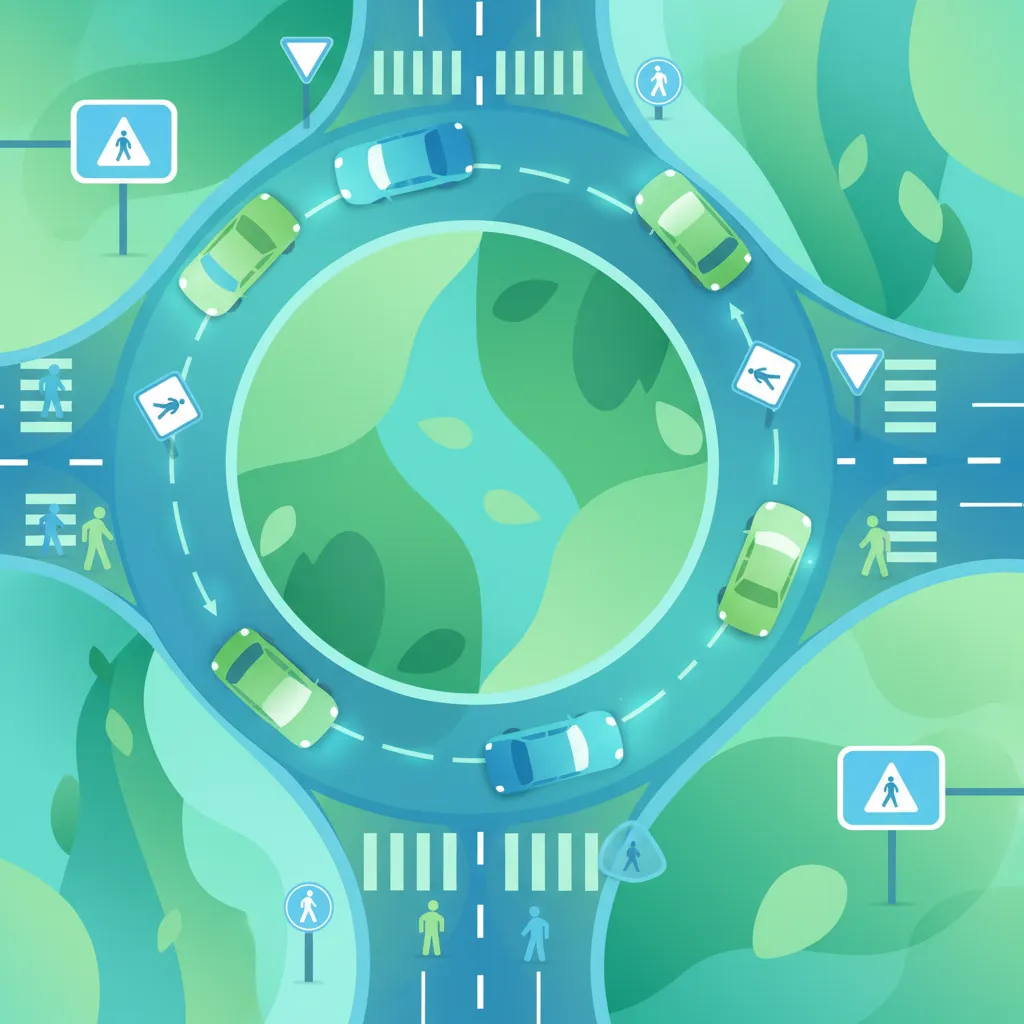
This lesson offers a comprehensive guide to navigating roundabouts in urban settings, explaining the correct protocols for entry, yielding, and circulation. Learners will be taught how to interpret lane markings and signage on multi-lane roundabouts and determine the correct vehicle positioning for safe entry and exit. The content emphasizes full compliance with Spanish city regulations that govern priority and right-of-way at these intersections.
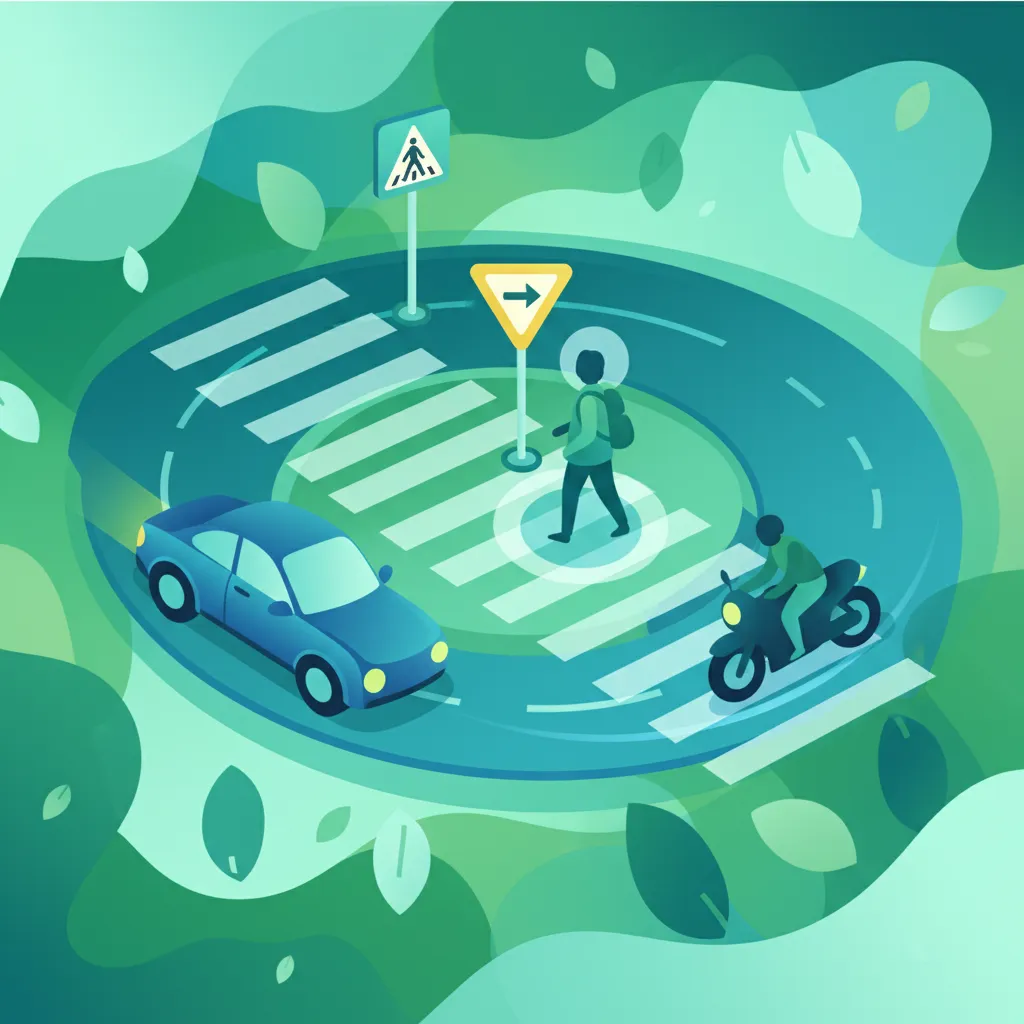
This lesson outlines the proper techniques for negotiating roundabouts and signal-controlled intersections in Spain. It explains priority rules at entry, lane selection based on the intended exit, and yielding to circulating traffic. The content also covers compliance with traffic signals and DGT regulations, including handling cyclist crossings.
This lesson focuses on the yielding hierarchy that governs roundabout usage in Spain. It clarifies that vehicles already circulating have priority over those entering and explains the proper lane positioning based on the intended exit. The content includes the correct use of signals for changing lanes and exiting, and safe merging techniques.
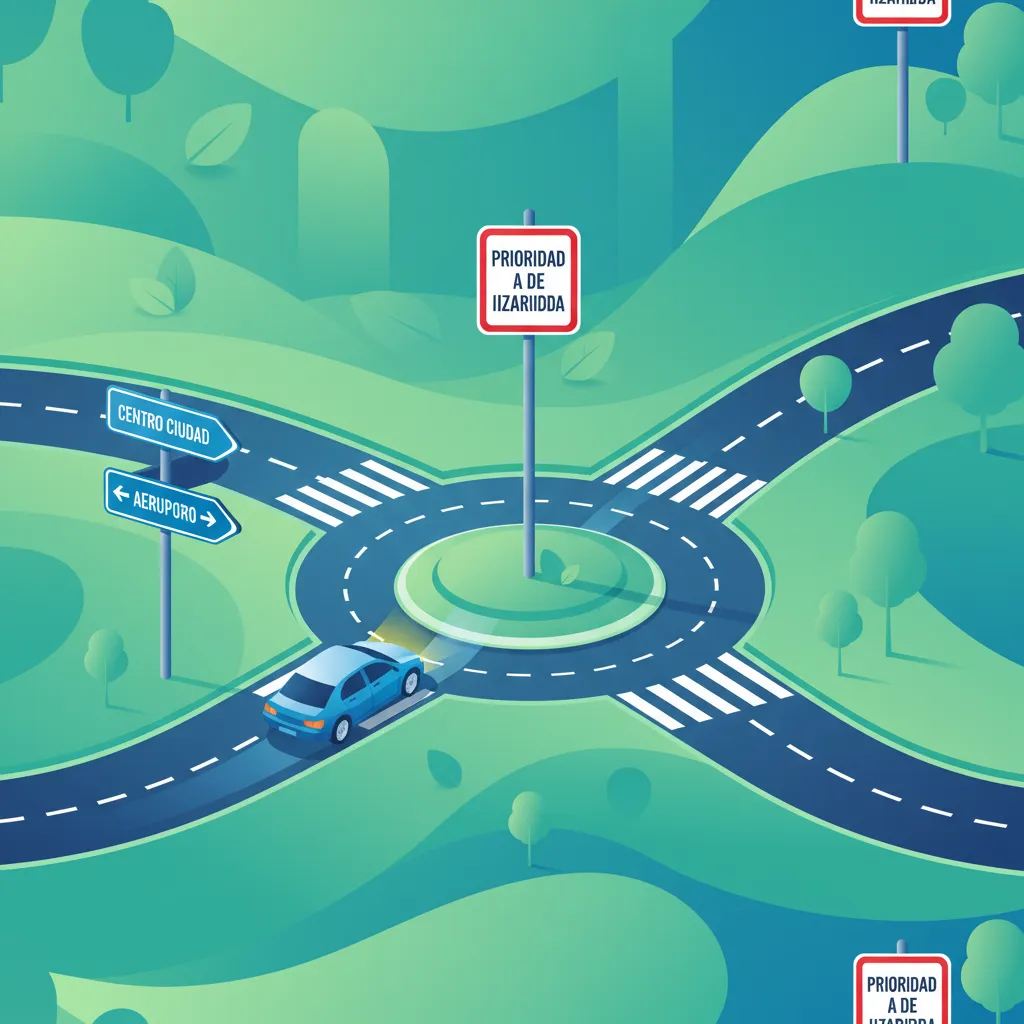
This lesson presents the variety of signs that guide drivers through roundabout navigation. It explains the significance of the roundabout warning symbol, priority signs, lane arrows, and directional signs placed before and within the roundabout. Mastery of roundabout signage ensures that drivers follow legal requirements and maintain safe traffic flow.

This lesson examines the interaction between large vehicles, such as trucks, and vulnerable road users within roundabouts. It addresses the wide turning radius of heavy vehicles, the importance of checking blind spots, and the correct yielding behavior toward pedestrians and cyclists. Learners will understand how to maintain safe distances and anticipate the movements of different road users.
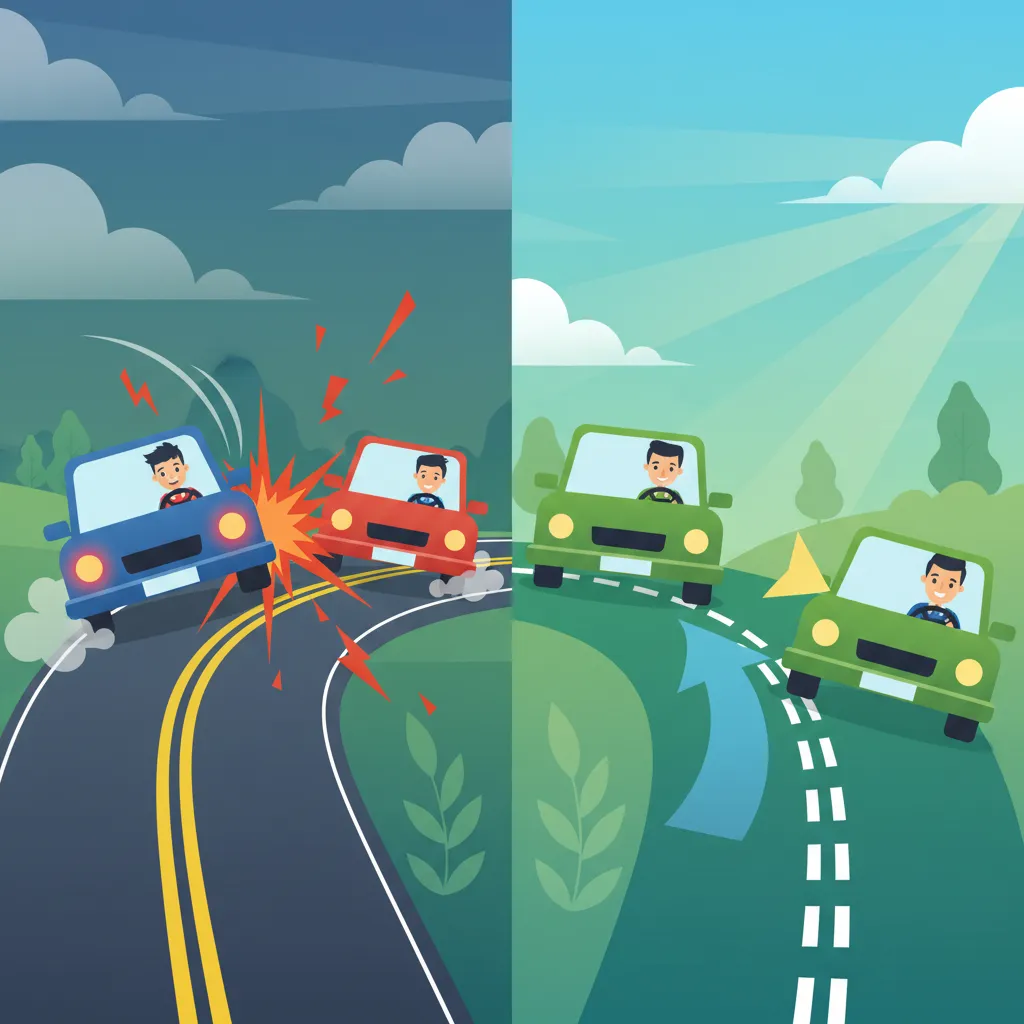
This lesson addresses common errors made by drivers when using roundabouts and presents corrective strategies. It covers issues such as entering from the wrong lane, failing to yield to circulating traffic, exceeding the recommended speed, and not signaling an exit correctly. By understanding these mistakes, drivers can improve their roundabout proficiency and reduce accident risk.
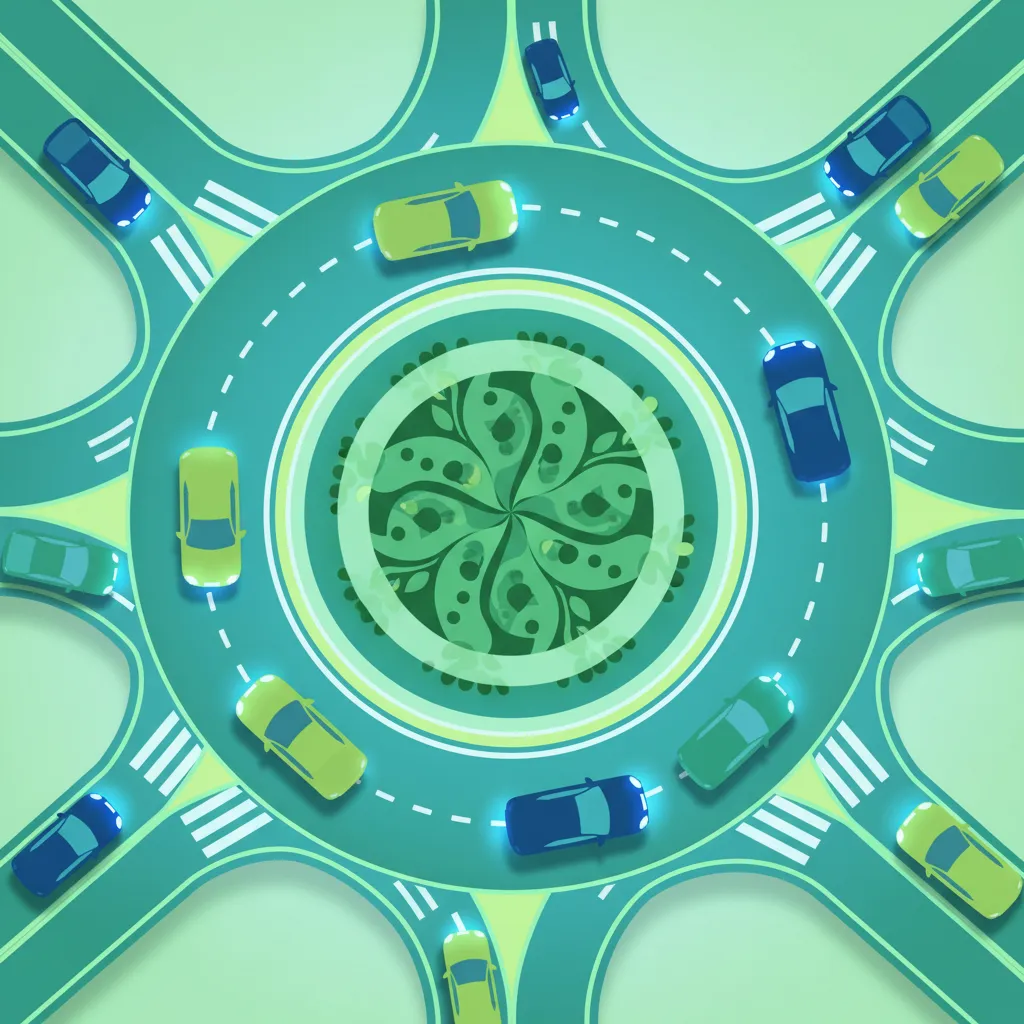
This lesson examines the structural components of a typical Spanish roundabout, describing the central island, entry and circulating lanes, and the placement of yield signs. It outlines how DGT standards dictate the geometric design and entry/exit points to ensure smooth traffic flow. Understanding these design elements enables drivers to anticipate vehicle movements and navigate safely.

This lesson addresses the crucial 'priority to the right' rule that governs traffic at intersections without signs or signals. It explains that drivers must yield to any vehicle approaching from their right-hand side. The content provides practical examples of how to assess traffic, determine the correct order of passage, and proceed with caution to safely navigate these common but potentially confusing intersections.
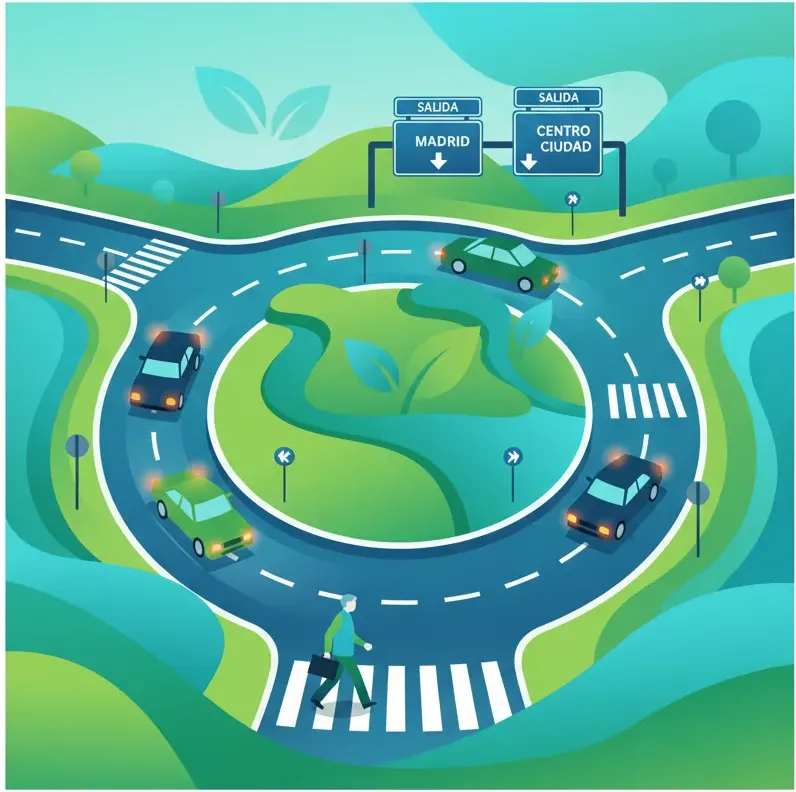
This lesson provides specific instructions on how to safely navigate complex junctions such as roundabouts and intersections with a large vehicle. It explains the rules of priority, the correct lane to use based on the intended exit, and the importance of proper vehicle positioning to account for off-tracking. The content also covers clear signaling to communicate intentions to other road users for safe and efficient passage.

This lesson analyzes the various intersection configurations found in Spanish cities, such as controlled and uncontrolled junctions. It explains the hierarchy of right-of-way, detailing when vehicles must yield, when pedestrians have priority, and how traffic signs dictate movement. Learners are guided through DGT signage conventions that determine priority at each intersection type.
Understand frequent errors drivers make at roundabouts according to Spanish traffic law. This lesson details typical misunderstandings regarding priority, signaling, lane choice, and pedestrian/cyclist interaction for the AM license.
This lesson addresses common errors made by drivers when using roundabouts and presents corrective strategies. It covers issues such as entering from the wrong lane, failing to yield to circulating traffic, exceeding the recommended speed, and not signaling an exit correctly. By understanding these mistakes, drivers can improve their roundabout proficiency and reduce accident risk.
This lesson outlines the proper techniques for negotiating roundabouts and signal-controlled intersections in Spain. It explains priority rules at entry, lane selection based on the intended exit, and yielding to circulating traffic. The content also covers compliance with traffic signals and DGT regulations, including handling cyclist crossings.
This lesson examines the structural components of a typical Spanish roundabout, describing the central island, entry and circulating lanes, and the placement of yield signs. It outlines how DGT standards dictate the geometric design and entry/exit points to ensure smooth traffic flow. Understanding these design elements enables drivers to anticipate vehicle movements and navigate safely.
This lesson examines the interaction between large vehicles, such as trucks, and vulnerable road users within roundabouts. It addresses the wide turning radius of heavy vehicles, the importance of checking blind spots, and the correct yielding behavior toward pedestrians and cyclists. Learners will understand how to maintain safe distances and anticipate the movements of different road users.
This lesson presents the variety of signs that guide drivers through roundabout navigation. It explains the significance of the roundabout warning symbol, priority signs, lane arrows, and directional signs placed before and within the roundabout. Mastery of roundabout signage ensures that drivers follow legal requirements and maintain safe traffic flow.
This lesson focuses on the yielding hierarchy that governs roundabout usage in Spain. It clarifies that vehicles already circulating have priority over those entering and explains the proper lane positioning based on the intended exit. The content includes the correct use of signals for changing lanes and exiting, and safe merging techniques.
This lesson offers a comprehensive guide to navigating roundabouts in urban settings, explaining the correct protocols for entry, yielding, and circulation. Learners will be taught how to interpret lane markings and signage on multi-lane roundabouts and determine the correct vehicle positioning for safe entry and exit. The content emphasizes full compliance with Spanish city regulations that govern priority and right-of-way at these intersections.
This lesson provides specific instructions on how to safely navigate complex junctions such as roundabouts and intersections with a large vehicle. It explains the rules of priority, the correct lane to use based on the intended exit, and the importance of proper vehicle positioning to account for off-tracking. The content also covers clear signaling to communicate intentions to other road users for safe and efficient passage.
This lesson addresses the crucial 'priority to the right' rule that governs traffic at intersections without signs or signals. It explains that drivers must yield to any vehicle approaching from their right-hand side. The content provides practical examples of how to assess traffic, determine the correct order of passage, and proceed with caution to safely navigate these common but potentially confusing intersections.
This lesson analyzes the various intersection configurations found in Spanish cities, such as controlled and uncontrolled junctions. It explains the hierarchy of right-of-way, detailing when vehicles must yield, when pedestrians have priority, and how traffic signs dictate movement. Learners are guided through DGT signage conventions that determine priority at each intersection type.
Find clear answers to common questions learners have about Yield Rules at Roundabouts. Learn how the lesson is structured, which driving theory objectives it supports, and how it fits into the overall learning path of units and curriculum progression in Spain. These explanations help you understand key concepts, lesson flow, and exam focused study goals.
The fundamental rule in Spain is that vehicles entering a roundabout must always yield to traffic already circulating within the roundabout. This applies regardless of the number of lanes or specific signage, unless otherwise indicated by a traffic light or specific DGT instruction.
Yes, proper signaling is mandatory. You must signal your exit from a Spanish roundabout to inform other drivers of your intentions. This typically involves using your right indicator as you pass the exit immediately before the one you intend to take.
When approaching a Spanish roundabout, you should select the most appropriate lane based on your intended exit. Generally, for exits to the right or straight ahead, use the rightmost lane. For exits to the left or to make a U-turn, use the leftmost lane, always maintaining awareness of other vehicles.
If there are no specific road markings, signs, or traffic lights at a Spanish roundabout, the general yield rule still applies: you must yield to vehicles already inside the roundabout. Additionally, the right-hand priority rule (giving way to vehicles coming from your right) might apply if it's an unconventional junction resembling a roundabout but not officially designated as such, though this is rare for standard roundabouts.
Use our powerful search functionality to pinpoint specific Spanish DGT driving theory practice sets. Filter by road sign categories, traffic law topics, or question difficulty to build custom study sessions and reinforce your knowledge precisely where it matters for your official exam.