
Navigating congested urban environments requires specific skills. This lesson focuses on safe and efficient slow-speed manoeuvres in Spanish city traffic, building on your understanding of basic controls. It's crucial for passing your A, A1, or A2 motorcycle theory exam and riding confidently in busy areas.

Lesson content overview
Navigating congested urban environments on a motorcycle demands exceptional skill, particularly at low speeds. This lesson delves into the essential techniques for safe and controlled riding in city centres, focusing on manoeuvres performed below approximately 30 km/h. Mastering these skills is not only crucial for daily safety and rider confidence but also a fundamental requirement for the Spanish DGT motorcycle theory exam, especially the "Urban Control" section.
At low speeds, the dynamics of a motorcycle change significantly. The gyroscopic effect that helps stabilize a moving bike diminishes, requiring the rider to actively manage balance through precise control inputs and body positioning. This chapter will equip you with the knowledge to handle tight corners, execute controlled lane changes, weave through mixed traffic, and manage stops and starts in confined spaces, all while anticipating interactions with vulnerable road users like pedestrians and cyclists.
Urban traffic presents unique challenges for motorcyclists. Stop-and-go conditions, narrow streets, numerous intersections, and the constant presence of pedestrians and cyclists demand a refined set of riding skills. Proficiency in slow manoeuvres directly translates to reduced collision risk, enhanced rider confidence, and smoother navigation through busy cityscapes. For anyone preparing for their Spanish Motorcycle Theory Exam for A, A1, or A2 licences, these techniques are indispensable, forming a core part of the practical assessment.
Mastery of slow manoeuvres is a cornerstone of safe urban riding. It helps prevent common low-speed falls and ensures you can confidently handle unexpected situations in dense traffic.
Effective low-speed manoeuvring is built upon several core principles that compensate for the diminished natural stability of a motorcycle at reduced velocities. Understanding these foundational concepts is key to safe and controlled urban riding.
Low-speed stability refers to your ability to maintain the motorcycle upright and controllable at speeds typically below 30 km/h. At these speeds, the gyroscopic forces, which naturally keep a motorcycle balanced, are minimal. Consequently, the rider must actively counteract this reduced stability by employing precise clutch control, smooth throttle application, and balanced body posture. This active engagement allows for quick reactions to sudden changes in traffic or road conditions, crucial for preventing falls or collisions in dense urban settings.
Progressive braking involves the gradual and controlled application of both the front and rear brakes to smoothly reduce speed or come to a complete stop. This technique is vital in urban environments where road surfaces can be unpredictable (e.g., wet cobblestones, manhole covers) and sudden stops are often required. By modulating brake pressure, you prevent wheel lock-up, maintain optimal traction, and control your stopping distance effectively, ensuring a stable deceleration.
Navigating corners safely at low speeds requires a systematic approach to speed adjustment, steering input, and line selection. Controlled cornering means adjusting your speed before entering the turn, using gentle and precise steering inputs to guide the motorcycle through the curve, and smoothly accelerating out of the turn. This prevents overshooting the turn, encroaching on other lanes, or losing control, which is particularly hazardous at intersections or on tight city streets.
Lane positioning involves occupying the most appropriate lateral space within your designated lane to maximize visibility, maintain safe distances from other road users, and prepare for upcoming manoeuvres. At low speeds, this includes staying a safe distance from parked vehicles (to avoid "dooring"), maintaining ample clearance from cyclists and pedestrians, and positioning yourself to be seen by other drivers, all while adhering to the legal requirements of Spanish traffic law.
The weave technique is a method of making small, deliberate lateral movements within your lane to navigate through slow-moving or stopped traffic without executing abrupt lane changes. This subtle shifting allows you to find clear paths or adjust your position without destabilizing the motorcycle or surprising other drivers. It requires anticipatory scanning for gaps and precise, gentle throttle and steering control to maintain fluidity.
In urban settings, motorcyclists share the road with a high volume of vulnerable users – pedestrians and cyclists. Vulnerability awareness means actively recognizing their presence, understanding their rights, and adjusting your riding behaviour to ensure their safety. This includes yielding at crosswalks, maintaining statutory safe distances when overtaking cyclists, and anticipating unpredictable movements, fulfilling both a legal and moral responsibility.
Spanish traffic law (Reglamento General de Circulación – RGC) places a strong emphasis on protecting vulnerable road users. Your riding decisions must always reflect this priority.
Let's break down the specific techniques vital for safe and effective slow urban riding.
Maintaining balance at low speeds, where the motorcycle's gyroscopic forces are minimal, is a critical skill. This involves subtle body shifts and precise steering inputs.
When stopped at traffic lights or in a queue, your ability to maintain static balance is paramount. This often involves placing both feet firmly on the ground to provide stability. According to RGC Article 20, riders must keep both feet on the ground when speed drops below 5 km/h for safety. Using the rear brake to hold your position while stationary prevents rolling and allows you to keep the front brake ready for immediate use if needed.
The ability to keep the motorcycle upright and stable while stationary, typically with both feet on the ground.
When moving slowly in stop-and-go traffic, dynamic balance comes into play. You use continuous, small steering adjustments, often combined with light clutch feathering (friction zone) and gentle throttle, to maintain momentum and control. Avoid sudden, large steering inputs, which can destabilize the bike.
Smooth, controlled deceleration is essential to avoid skidding or losing balance, especially on variable urban surfaces.
The most effective braking technique involves using both the front and rear brakes simultaneously. The front brake provides significant stopping power, while the rear brake helps stabilize the bike and prevent front-end dive. Apply both progressively, increasing pressure as needed, to achieve a smooth and controlled stop.
In situations where front-wheel traction is compromised (e.g., wet leaves, oil spills, cobblestones), or when very fine speed adjustments are needed, judicious use of the rear brake can be more effective. However, relying solely on the rear brake can lead to premature rear-wheel lock-up, especially if applied too abruptly.
The gradual and coordinated application of both front and rear brakes to reduce speed smoothly and prevent sudden deceleration or wheel lock-up.
Practice gentle, progressive braking in a safe environment to build muscle memory. Feel the bike's weight transfer and the limits of traction before needing it in real traffic.
Navigating tight urban corners safely requires anticipating the turn and executing a smooth sequence of actions.
Your position within the lane significantly impacts your safety and visibility.
Generally, riding in the centre of your lane offers the best visibility to other drivers, allows for evasive action to either side, and provides a buffer from hazards near the curb (e.g., drains, debris, parked cars).
You might temporarily shift closer to the curb when preparing for a right turn, or to create more space when overtaking on the left. However, always maintain a safe lateral distance to avoid "dooring" from parked cars or forcing pedestrians into the road.
The minimum safe distance maintained between your motorcycle and other road users or obstacles to the side.
The RGC article 70 mandates a minimum lateral clearance of 1.5 metres when overtaking cyclists, and 2 metres in heavy traffic. This is a critical rule for urban safety. Always signal your intention to move left before overtaking a cyclist.
In slow-moving or congested traffic, the weave technique allows for minor adjustments without committing to a full lane change.
Continuously scan side-to-side to identify small gaps in traffic or potential hazards. This allows you to anticipate movements and subtly adjust your position.
Adjust your speed to match the flow of traffic, enabling you to merge smoothly into small gaps without forcing your way or making sudden accelerations. The weave involves small, controlled steering inputs – often a gentle push-pull on the handlebars – to shift your motorcycle slightly left or right within your lane to avoid obstacles or navigate tight spaces.
The weave technique is for within-lane adjustments only. It is not an excuse for illegal lane splitting or aggressive filtering. Overtaking on the right is generally prohibited by RGC Article 48.
Your primary responsibility in urban traffic is the safety of all road users, particularly the most vulnerable.
Always be prepared to stop for pedestrians at marked zebra crossings, even if they appear hesitant. RGC Article 30 explicitly obliges drivers to yield to pedestrians at marked crosswalks.
As mentioned, maintain a minimum 1.5-metre lateral clearance when passing cyclists. Cyclists can swerve to avoid potholes or debris, and a sudden gust of wind can affect their balance. Give them ample space.
Vulnerable users can be unpredictable. Children might dart into the street, and cyclists might make sudden turns or stops. Always assume they haven't seen you and be ready to react.
Adhering to the specific articles of the Reglamento General de Circulación (RGC) is mandatory for all riders in Spain. These regulations directly govern safe behaviour during low-speed urban manoeuvres.
RGC Article 20: Mandatory Foot-on-Ground Rule
RGC Article 30: Yielding to Pedestrians at Crosswalks
RGC Article 48: Overtaking on the Left
RGC Article 70: Minimum Safe Distance from Cyclists
RGC Article 78: Safe Distance from Curb/Pedestrian Zones
RGC Article 84: Complete Stop at Stop Signs
RGC Article 95: Noise Level Limits
Understanding common mistakes can help you avoid them, ensuring safer riding and compliance with Spanish traffic laws.
Your approach to slow manoeuvres must adapt to various external factors.
Understanding how your actions lead to specific outcomes is fundamental to safe riding.
Physical Reasoning: At low speeds, the motorcycle's gyroscopic stabilization is significantly reduced, making the rider's body positioning and precise control inputs absolutely critical for maintaining balance. Small errors can have disproportionately large effects.
Legal Reasoning: The RGC mandates specific distances and yielding behaviours primarily to protect vulnerable road users, reflecting the legal principle that those operating more powerful vehicles bear a greater duty of care.
Psychological Reasoning: A predictable riding pattern, achieved through consistent signalling, lane discipline, and smooth manoeuvres, reduces the cognitive load and reaction time needed by other road users to anticipate your actions, thereby enhancing overall safety.
This lesson on slow urban manoeuvres builds upon foundational knowledge and prepares you for more complex riding scenarios.
Mastering slow urban manoeuvres creates a solid foundation for more advanced topics such as Cornering & Advanced Control (Lesson 6), where speed management and trajectory become more complex, and further development in Hazard Perception (Lesson 8), where anticipating and reacting to dynamic urban threats is paramount.
This lesson covers essential low-speed motorcycle control techniques for Spanish urban environments, specifically addressing how reduced gyroscopic stability at speeds below 30 km/h demands active balance management through precise throttle, clutch, and body positioning. Key techniques include progressive braking for smooth deceleration, a systematic cornering sequence for safe turns, and the within-lane weave technique for navigating congested traffic. The lesson emphasizes specific RGC regulations including mandatory foot-on-ground rules below 5 km/h, pedestrian yielding requirements at crossings, and strict lateral clearance distances when passing cyclists. Understanding these principles is critical for both passing the DGT theory exam and riding safely through busy Spanish city streets.
A short set of high-value points that capture the most important learning from this lesson.
Low-speed stability requires active balance management since gyroscopic forces diminish below approximately 30 km/h.
Progressive braking using both front and rear brakes together prevents wheel lock-up and maintains traction on variable urban surfaces.
The cornering sequence involves early braking before the turn, gentle counter-steering initiation, apex targeting, and smooth throttle exit.
RGC Article 70 mandates a minimum 1.5-metre lateral clearance when overtaking cyclists, increasing to 2 metres in heavy traffic.
Vulnerability awareness requires constant scanning for pedestrians and cyclists with the understanding that motorcyclists bear greater duty of care.
Explore all units and lessons included in this driving theory course.
RGC Article 20: Both feet must be on the ground when speed drops below 5 km/h for stability.
RGC Article 30: Always yield to pedestrians at marked zebra crossings, even if they appear hesitant.
RGC Article 48: Overtaking must be done on the left unless specific road markings or situations allow otherwise.
The weave technique is for within-lane adjustments only, not illegal lane splitting or aggressive filtering.
Wet road braking distance increases by approximately 30%, requiring more progressive brake application.
Abrupt front brake application at low speed can cause front-wheel lock-up and loss of control.
Insufficient lateral clearance when overtaking cyclists (less than 1.5m) violates RGC Article 70 and endangers cyclists.
Rolling stops at stop signs instead of complete stops violate RGC Article 84.
Neglecting to signal lateral movements surprises other road users and increases collision risk.
Attempting to balance with one foot on a peg in stop-and-go traffic reduces stability and violates RGC Article 20.
Lesson content overview
A short set of high-value points that capture the most important learning from this lesson.
Low-speed stability requires active balance management since gyroscopic forces diminish below approximately 30 km/h.
Progressive braking using both front and rear brakes together prevents wheel lock-up and maintains traction on variable urban surfaces.
The cornering sequence involves early braking before the turn, gentle counter-steering initiation, apex targeting, and smooth throttle exit.
RGC Article 70 mandates a minimum 1.5-metre lateral clearance when overtaking cyclists, increasing to 2 metres in heavy traffic.
Vulnerability awareness requires constant scanning for pedestrians and cyclists with the understanding that motorcyclists bear greater duty of care.
Explore all units and lessons included in this driving theory course.
RGC Article 20: Both feet must be on the ground when speed drops below 5 km/h for stability.
RGC Article 30: Always yield to pedestrians at marked zebra crossings, even if they appear hesitant.
RGC Article 48: Overtaking must be done on the left unless specific road markings or situations allow otherwise.
The weave technique is for within-lane adjustments only, not illegal lane splitting or aggressive filtering.
Wet road braking distance increases by approximately 30%, requiring more progressive brake application.
Abrupt front brake application at low speed can cause front-wheel lock-up and loss of control.
Insufficient lateral clearance when overtaking cyclists (less than 1.5m) violates RGC Article 70 and endangers cyclists.
Rolling stops at stop signs instead of complete stops violate RGC Article 84.
Neglecting to signal lateral movements surprises other road users and increases collision risk.
Attempting to balance with one foot on a peg in stop-and-go traffic reduces stability and violates RGC Article 20.
Explore search topics learners often look for when studying Slow Manoeuvres in Urban Traffic. These topics reflect common questions about road rules, driving situations, safety guidance, and lesson level theory preparation for learners in Spain.
Browse additional driving theory lessons that cover connected traffic rules, road signs, and common driving situations related to this topic. Improve your understanding of how different rules interact across everyday traffic scenarios.
Understand specific Spanish traffic regulations (RGC) governing slow-speed urban motorcycle riding. Covers lane positioning, safe distances for pedestrians and cyclists, and adherence to DGT guidelines for congested city traffic.

This lesson focuses on defensive maneuvers in mixed traffic environments where various vehicles share the road. It outlines lane discipline, appropriate overtaking safety measures, and strategies for maintaining a safety corridor. The content incorporates DGT defensive guidelines, teaching riders to manage space and anticipate unpredictable driver behavior.
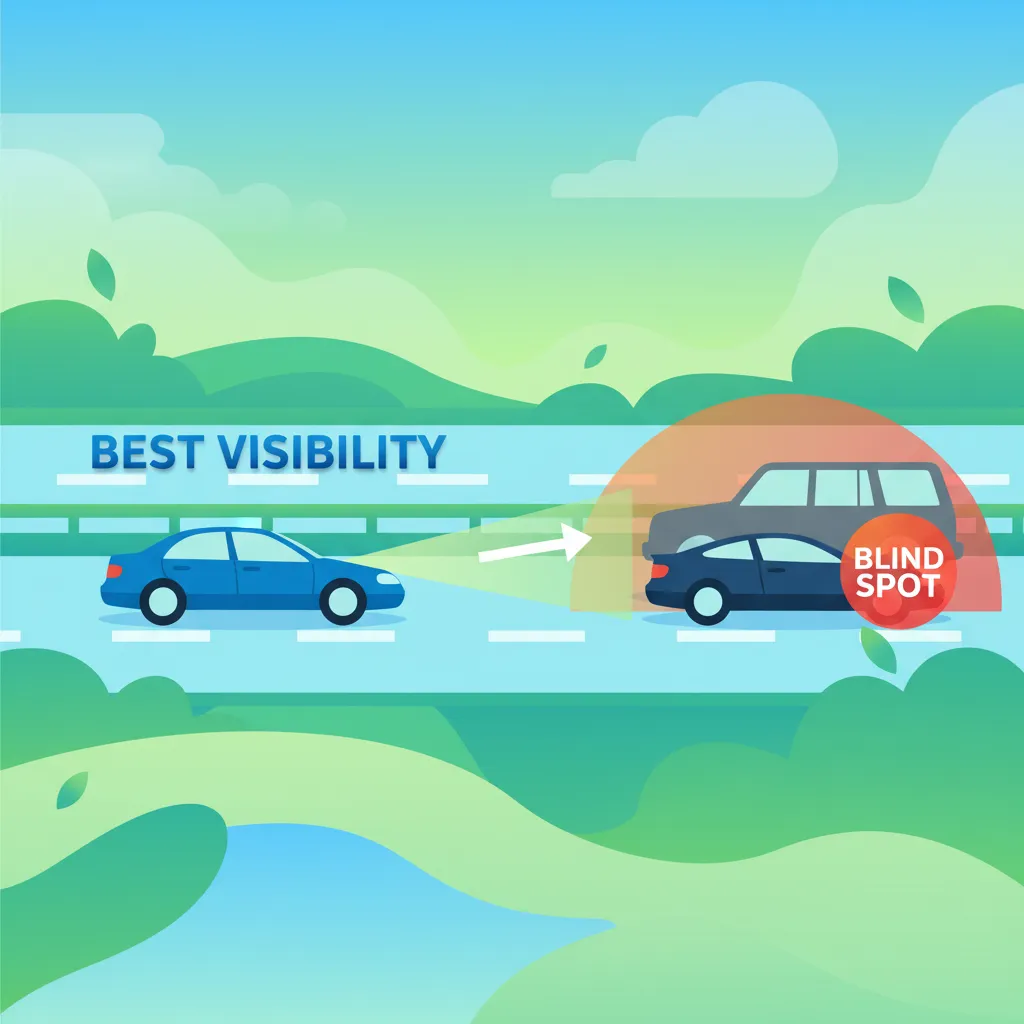
This lesson explores proper lane positioning, emphasizing strategic selection of traffic lanes for optimal visibility. It explains the importance of rider line of sight and peripheral vision in maintaining situational awareness. The content also covers legal aspects of lane splitting and correct usage of road shoulders, abiding by DGT regulations.

This lesson focuses on the optimal position for a moped within a traffic lane to maximize visibility and safety. It discusses the importance of maintaining a safety buffer from other vehicles and hazards, particularly the risk posed by the doors of parked cars. The content explains how to use lane positioning strategically to discourage unsafe overtaking and to be clearly seen by drivers in front and behind, especially when approaching intersections.

This lesson focuses on interaction dynamics with larger vehicles like cars, trucks, and buses, detailing their specific blind spot zones. Strategies for safely sharing lanes, overtaking etiquette, and proper approach when a bus stops are covered. The lesson also includes guidance on merging onto acceleration lanes following DGT policies.

This lesson discusses the infrastructure dedicated to cyclists, covering dedicated bike lanes and the rules governing interaction and overtaking. It explains DGT regulations on safe passing distances and how to navigate mixed-traffic scenarios where vehicles and bicycles share the road. The content emphasizes driver responsibilities to maintain a safe corridor and respect cyclist priority.

This lesson addresses the critical skill of safely sharing the road with other vulnerable users like pedestrians, cyclists, and other motorcyclists. It emphasizes the need for increased awareness, speed adaptation, and providing ample space when passing. The content covers DGT regulations regarding minimum passing distances and highlights the importance of making eye contact to ensure mutual awareness and prevent common urban accidents.

This lesson details overtaking rules specific to motorcyclists, covering safe zones, required visibility distance, and assessment of oncoming traffic. It emphasizes the importance of speed matching and correct timing of lane changes. The module references DGT regulations, including conditions for passing on the left or right in various environments.
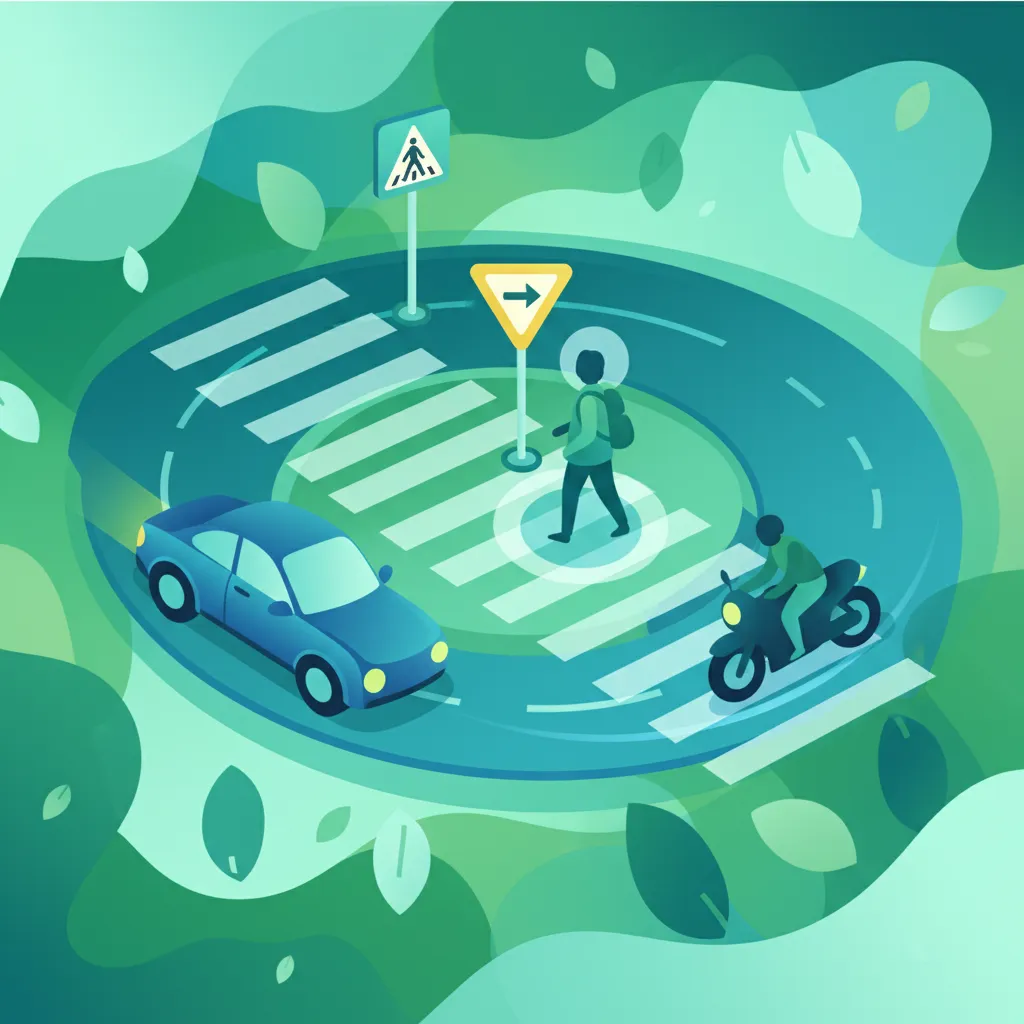
This lesson outlines the proper techniques for negotiating roundabouts and signal-controlled intersections in Spain. It explains priority rules at entry, lane selection based on the intended exit, and yielding to circulating traffic. The content also covers compliance with traffic signals and DGT regulations, including handling cyclist crossings.
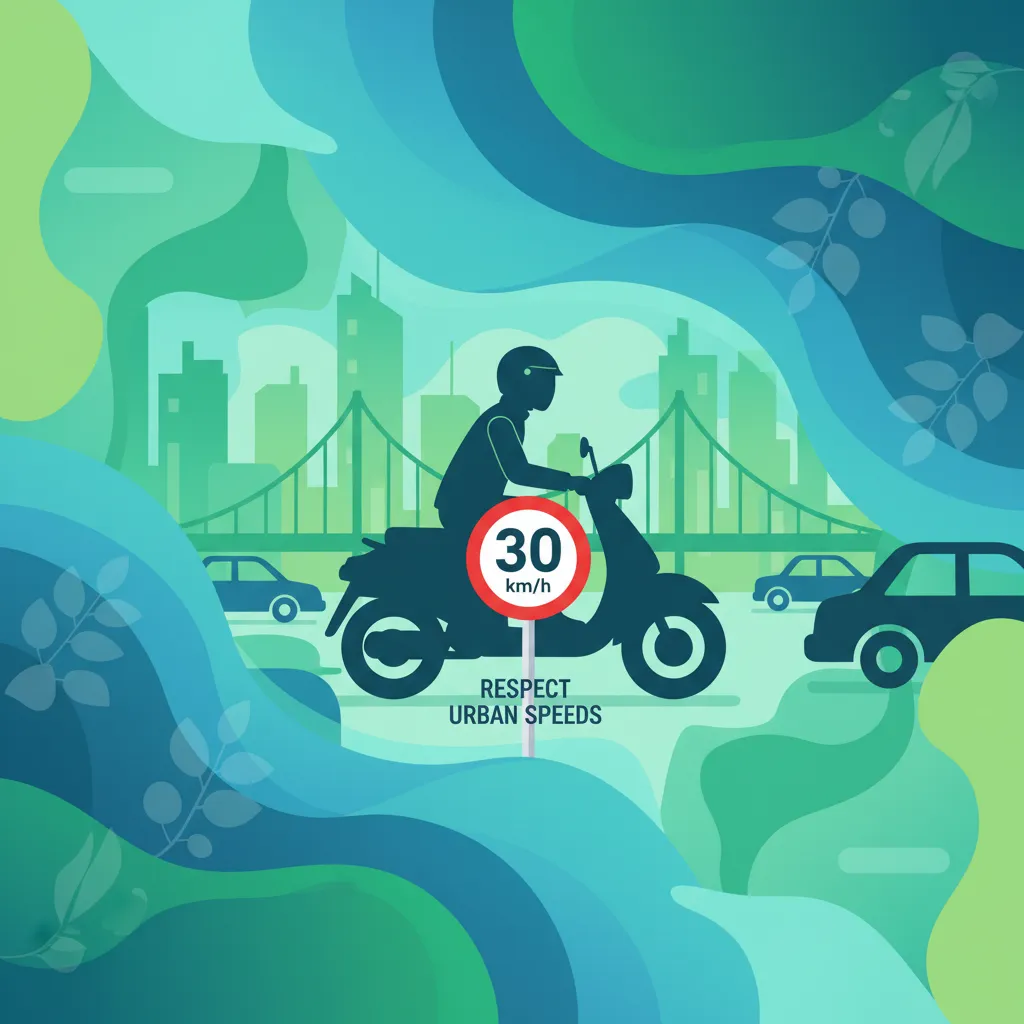
This lesson details the specific speed limits applicable to mopeds within Spanish urban areas, such as the 30 km/h limit on single-lane roads and the 50 km/h limit on roads with two or more lanes per direction. It teaches learners to identify speed zone signage and understand the legal rationale behind these restrictions. Adhering to these DGT-mandated limits is crucial for safety and avoiding penalties.

This lesson provides strategies for navigating tight, confined environments such as multi-story car parks and narrow urban lanes. It emphasizes the importance of slow and controlled movements, constant observation, and a thorough understanding of the vehicle's dimensions and turning circle. Learners will develop the skills to maneuver with precision while avoiding obstacles.
Learn essential theory on how motorcyclists must interact with and protect vulnerable road users such as pedestrians and cyclists in busy Spanish urban environments. Focuses on awareness, yielding, and safe passing distances.
This lesson addresses the critical skill of safely sharing the road with other vulnerable users like pedestrians, cyclists, and other motorcyclists. It emphasizes the need for increased awareness, speed adaptation, and providing ample space when passing. The content covers DGT regulations regarding minimum passing distances and highlights the importance of making eye contact to ensure mutual awareness and prevent common urban accidents.

This lesson explores the design and legal requirements of pedestrian crossings in Spanish urban areas. It clarifies the rules at zebra crossings, signal-controlled crossings, and areas where cyclists or other vulnerable users share space. The content explains the required safety distances and signage indicating crossing zones to ensure drivers respect all road users.
This lesson focuses on the optimal position for a moped within a traffic lane to maximize visibility and safety. It discusses the importance of maintaining a safety buffer from other vehicles and hazards, particularly the risk posed by the doors of parked cars. The content explains how to use lane positioning strategically to discourage unsafe overtaking and to be clearly seen by drivers in front and behind, especially when approaching intersections.

This lesson focuses on the absolute priority of pedestrians at marked crosswalks, often known as zebra crossings. It explains that riders must always be prepared to stop and yield the right-of-way to any pedestrian waiting to cross or already crossing. The content also covers signaled pedestrian crossings and general awareness in urban areas where pedestrians may cross unexpectedly, reinforcing safety and legal compliance.
This lesson focuses on defensive maneuvers in mixed traffic environments where various vehicles share the road. It outlines lane discipline, appropriate overtaking safety measures, and strategies for maintaining a safety corridor. The content incorporates DGT defensive guidelines, teaching riders to manage space and anticipate unpredictable driver behavior.
This lesson focuses on interaction dynamics with larger vehicles like cars, trucks, and buses, detailing their specific blind spot zones. Strategies for safely sharing lanes, overtaking etiquette, and proper approach when a bus stops are covered. The lesson also includes guidance on merging onto acceleration lanes following DGT policies.

This lesson examines the dynamic interactions between mopeds, cars, and bicycles in an urban environment. It emphasizes strategies for staying visible and avoiding the blind spots of larger vehicles. The content provides clear guidelines on overtaking bicycles safely, respecting dedicated bike lanes, and signaling intentions clearly to all other road users to ensure predictable and harmonious coexistence in mixed traffic.

This lesson outlines procedures for handling emergency situations and accidents. It covers emergency braking techniques, hazard avoidance strategies, and the DGT emergency protocol for accident reporting. Emphasis is placed on rider protective actions, post-crash first aid, roadside safety, and legal obligations after an incident.

This lesson focuses on strategies for maximizing rider visibility in daylight and nighttime conditions, covering high-visibility apparel, reflective vests, and LED accessories. It delves into rider posture and lane positioning that improve sightlines and reduce collision risk. The content aligns with DGT regulations for illumination levels on motorcycles.
This lesson explores proper lane positioning, emphasizing strategic selection of traffic lanes for optimal visibility. It explains the importance of rider line of sight and peripheral vision in maintaining situational awareness. The content also covers legal aspects of lane splitting and correct usage of road shoulders, abiding by DGT regulations.
Find clear answers to common questions learners have about Slow Manoeuvres in Urban Traffic. Learn how the lesson is structured, which driving theory objectives it supports, and how it fits into the overall learning path of units and curriculum progression in Spain. These explanations help you understand key concepts, lesson flow, and exam focused study goals.
In Spain, filtering between lanes on a motorcycle is only acceptable if it is done with extreme caution, without endangering other road users, and always respecting general traffic rules. Riders must adapt to the traffic situation and never assume they have priority. Theory exam questions may test whether you understand safe and lawful behavior in slow-moving urban traffic.
In slow urban traffic, lane positioning is essential for visibility and safety. You should ride where other drivers can see you, keep enough space to react, avoid vehicle blind spots, and adapt your position to pedestrians, cyclists, parked cars, and changing traffic flow.
Pedestrian and cyclist safety is a top priority in urban areas. You must anticipate their movements, leave sufficient lateral clearance, slow down near crossings or bike lanes, and always be prepared to stop if necessary.
At low speeds, motorcycle stability depends much more on active rider control than at higher speeds. Keeping your eyes up, using the clutch and throttle smoothly, and maintaining a relaxed but controlled posture are essential to avoid falls or sudden unstable movements.
The DGT theory exam for A, A1, and A2 may include questions about Spanish rules for riding in dense traffic, priority at urban junctions with limited visibility, reacting to pedestrians unexpectedly entering the road, and maintaining safe distances in traffic jams. These questions focus on safety, awareness, and compliance with the rules.
Use our powerful search functionality to pinpoint specific Spanish DGT driving theory practice sets. Filter by road sign categories, traffic law topics, or question difficulty to build custom study sessions and reinforce your knowledge precisely where it matters for your official exam.