
This lesson guides you on optimal moped positioning within urban traffic lanes in Spain. You will learn DGT rules to maximize your visibility, maintain a crucial safety buffer from other vehicles, and strategically avoid hazards like suddenly opening car doors. Mastering these techniques is vital for safe city riding and crucial for success in your Category AM theory exam. It builds directly on your understanding of various road markings.

Lesson content overview
Learning to ride a moped safely in bustling urban environments requires more than just mastering the controls; it demands a deep understanding of road positioning. Your position within a traffic lane directly impacts your visibility to other road users, your ability to anticipate and react to hazards, and ultimately, your safety. This lesson, part of the Spanish Driving License Theory – AM Category, will guide you through the principles and regulations governing optimal moped positioning on urban roads and streets.
Correct positioning is a cornerstone of defensive driving for all road users, but it is particularly critical for moped riders. Mopeds are smaller and less noticeable than cars, making them more vulnerable to accidents if their position does not actively enhance their presence on the road. Effective lane positioning serves as a proactive safety measure, allowing you to control your immediate environment and communicate your intentions clearly to others.
Maintaining an optimal position ensures that you are seen by drivers in front of you, behind you, and those emerging from side streets or parking spots. A central lane position often places you within a driver's normal field of vision, making you less likely to be overlooked. Furthermore, strategic positioning allows you to create a "safety bubble" around yourself, providing crucial time and space to react to sudden changes in traffic flow, unexpected pedestrian movements, or hazards such as opening car doors. Without this buffer, mopeds are at a significantly higher risk of collision.
In Spain, proper road positioning for two-wheel vehicles like mopeds is not merely a suggestion; it is a legal requirement outlined in the Reglamento General de Circulación (RGC). These regulations are designed to minimize risks and ensure predictable traffic flow. Adhering to these laws helps prevent dangerous situations and contributes to a safer road environment for everyone. Understanding and applying these rules is essential for passing your AM category theoretical exam and, more importantly, for safe riding on Spanish roads.
Several core principles dictate how mopeds should position themselves on urban roads. These principles aim to balance visibility, safety buffers, and the practicalities of navigating diverse street conditions. By consistently applying these, moped riders can significantly reduce their risk of accidents.
A safety buffer is the minimum lateral or longitudinal distance you maintain from other vehicles or hazards to allow sufficient reaction time. For mopeds, this is crucial, particularly concerning parked vehicles. A significant portion of urban streets features parallel parking, and the sudden opening of a car door can pose an immediate and severe threat. Maintaining an adequate lateral safety buffer from parked cars is a non-negotiable aspect of safe moped positioning.
The space you keep between your moped and the vehicle directly in front of you is known as the longitudinal following distance. This distance is vital for preventing rear-end collisions. Because mopeds have different braking characteristics than larger vehicles, and riders' reaction times can vary, a consistent and generous following distance is imperative. This buffer provides the necessary time to react to sudden braking or unexpected maneuvers by the vehicle ahead.
Intersections are high-risk areas due to the convergence of multiple traffic flows and potential conflicts. Your position when approaching an intersection needs to be strategic to maximize your visibility to crossing traffic and to clearly communicate your intentions (e.g., turning left or right). A slight lateral adjustment within your lane can significantly improve your sightlines and ensure other drivers see you before they proceed.
Many urban streets, especially in older city centers, are narrower than modern thoroughfares. On such constrained roads, maintaining a strict central lane position might be impractical or even unsafe. In these situations, understanding when and how to adjust your position towards the lane's edge, while still respecting road markings and maintaining safety, becomes critical. The goal is always to remain within your designated lane and avoid encroaching on sidewalks or other prohibited areas.
Let's delve into the practical application of these principles, providing concrete guidance for various urban road scenarios you will encounter while riding your AM category moped.
When riding on urban roads with standard lane widths (typically 2.5 meters or wider), the ideal position for your moped is in the middle third of the lane. This means you should aim to be roughly equidistant from the left and right edges of your lane, giving yourself a good safety margin on both sides.
This "middle third" or "lane centerline" position offers several advantages:
To mitigate this risk, you must maintain a sufficient lateral safety buffer from parked vehicles. The general guideline, and one reinforced by Spanish traffic regulations, is to keep a minimum distance of 0.5 meters (or approximately one arm's length) from the curb or the side of parked cars. In areas with dense parking, heavy pedestrian traffic, or limited visibility, it is advisable to increase this buffer even further.
Never assume that because a moped is narrow, you can safely occupy the "door zone." The law expressly forbids circulating in this dangerous area, recognizing the severe risk it poses. Always prioritize safety over hugging the curb.
The longitudinal following distance, or the space between your moped and the vehicle ahead, is crucial for preventing rear-end collisions. The most widely accepted and practical method for determining a safe following distance is the Two-Second Rule.
Choose a fixed object on the road ahead (e.g., a signpost, a bridge, a tree).
As the vehicle in front of you passes that object, begin counting "one thousand one, one thousand two."
If your moped reaches the same object before you finish counting "one thousand two," you are following too closely.
Increase your distance until you can comfortably count "one thousand two" after the vehicle ahead has passed the object.
In adverse conditions such as rain, snow, fog, or at night, your following distance should be increased to at least three seconds, or even more. Reduced visibility and traction significantly extend stopping distances.
Approaching an intersection or crossroads requires specific positioning adjustments to ensure you are clearly seen by other drivers, especially those turning across your path. In countries with right-hand traffic (like Spain), a slight offset towards the left side of your lane is often recommended.
This "intersection approach offset" involves moving approximately 0.2 meters (or slightly less than a foot) towards the left edge of your lane while still maintaining a safe distance from any center lines or opposing traffic.
This positioning helps in several ways:
On genuinely narrow urban streets, where the lane width is less than approximately 2 meters, maintaining a central lane position might not be practical or even possible without risking contact with parked cars or other obstacles. In such cases, "edge riding" may be necessary.
Edge riding means positioning your moped closer to the lane's edge, but always within the marked boundaries of your lane. It is crucial that you:
Edge riding should be a considered choice for genuinely narrow passages, not a default behavior to "save space." Your primary goal should always be to maximize your visibility and safety while adhering to traffic laws.
The Spanish Reglamento General de Circulación (RGC), along with interpretive guidelines from the Dirección General de Tráfico (DGT), explicitly outlines the rules for moped positioning. Understanding these regulations is paramount for all AM category license holders.
RGC Article 118.1 states that two-wheel vehicles, including mopeds, must circulate on the road, respecting all lane markings. This means you are expected to stay within the designated traffic lanes and not deviate onto sidewalks, pedestrian areas, or cycle lanes unless specifically permitted by signage or markings. This fundamental rule emphasizes that mopeds are vehicles that share the road with cars and must adhere to the same basic lane discipline.
RGC Article 118.3 mandates that drivers must keep a safe lateral distance from parked vehicles. This rule is reinforced by specific DGT guidance, such as DGT Circular 10/2014, which explicitly states that motorcyclists (and by extension, moped riders due to similar vulnerability) must not circulate in the "zone of danger" produced by opening car doors. This guidance solidifies the requirement to maintain that crucial 0.5-meter safety buffer from parked cars, making it a legally enforceable safety measure.
RGC Article 129 universally demands that all road users, including moped riders, maintain a safe distance from the vehicle ahead. While it doesn't always specify the "two-second rule" explicitly in all contexts, it establishes the legal obligation to ensure sufficient space for reaction and stopping distance. This means you are legally responsible for preventing rear-end collisions, reinforcing the importance of the time-based following distance rules.
RGC Article 158.1 requires that road users position themselves to be clearly visible when approaching an intersection or roundabout, especially when making a turn. This regulation supports the practice of the "intersection approach offset," as it ensures your moped is not obscured from other drivers who might be looking for traffic from your direction. Proper positioning helps prevent accidents by making your presence unmistakable.
Being aware of common errors can help you actively avoid them and enhance your road safety. Many positioning mistakes stem from a misunderstanding of moped visibility or an underestimation of potential hazards.
Many novice riders instinctively hug the right side of the road (in right-hand traffic) or ride close to parked cars, believing they are "getting out of the way" of faster traffic.
Riding too close to the vehicle ahead (tailgating) is a common, yet extremely dangerous, mistake.
Some riders might attempt to bypass traffic congestion by using sidewalks or by crossing solid lane lines to gain an advantage.
Failing to adjust your lane position when approaching intersections is a common oversight that compromises safety.
Safe moped positioning is not static; it must adapt dynamically to changes in the environment, road conditions, and traffic.
To ensure a thorough understanding of this lesson, familiarize yourself with these key terms:
Mastering safe moped positioning is fundamental for your Spanish AM Category driving license and for your safety on the road. This lesson provides the theoretical foundation, but consistent practice and careful observation are essential.
This lesson covers optimal moped positioning for Spanish urban roads under the AM licence category. The primary principle is the 'middle third rule'—riding in the center of your lane maximizes visibility and discourages unsafe overtaking. Key hazards include the 'door zone' adjacent to parked vehicles, which requires maintaining a minimum 0.5-meter lateral buffer, and insufficient following distance, which the Two-Second Rule addresses. At intersections, a slight left offset improves your sightlines and makes you more visible to turning traffic. All guidance aligns with specific articles of the Reglamento General de Circulación (RGC) and DGT Circular 10/2014, making this directly relevant to exam preparation and legal compliance.
A short set of high-value points that capture the most important learning from this lesson.
The middle third of the lane (lane centerline) is the safest position for moped riders in standard-width urban roads, maximizing visibility and deterring unsafe overtaking.
A minimum lateral distance of 0.5 meters from parked vehicles must be maintained to stay outside the legally defined 'door zone' of danger.
The Two-Second Rule should be applied for following distance: count 'one thousand one, one thousand two' after the vehicle ahead passes a fixed point.
When approaching intersections, offset slightly (~0.2m) towards the left side of your lane to improve visibility to crossing traffic.
Mopeds must stay within designated traffic lanes—never ride on sidewalks or cross solid lane lines.
Explore all units and lessons included in this driving theory course.
RGC Article 118.1 requires two-wheel vehicles to respect all lane markings and stay within their designated lanes.
DGT Circular 10/2014 explicitly prohibits circulating in the 'zone of danger' created by opening car doors, reinforcing the 0.5-meter buffer rule.
RGC Article 129 mandates maintaining safe following distance—your legal responsibility to prevent rear-end collisions.
Edge riding is only acceptable on genuinely narrow streets (less than ~2 meters wide) and must stay strictly within lane markings.
Increase following distance to at least three seconds in adverse conditions (rain, snow, fog, or at night).
Hugging the right side of the lane near parked cars—this places you directly in the door zone where opening car doors pose a severe collision risk.
Tailgating (following too closely) due to misjudging mopeds' braking characteristics; insufficient reaction time makes rear-end collisions likely.
Riding on sidewalks or crossing solid lane lines to bypass traffic—this is illegal, dangerous, and disrupts traffic flow.
Failing to adjust position at intersections; riding dead-center can obscure your turn signals and make you less visible to crossing traffic.
Assuming that because a moped is narrow, it can squeeze into spaces between vehicles—this is both unsafe and often illegal.
Lesson content overview
A short set of high-value points that capture the most important learning from this lesson.
The middle third of the lane (lane centerline) is the safest position for moped riders in standard-width urban roads, maximizing visibility and deterring unsafe overtaking.
A minimum lateral distance of 0.5 meters from parked vehicles must be maintained to stay outside the legally defined 'door zone' of danger.
The Two-Second Rule should be applied for following distance: count 'one thousand one, one thousand two' after the vehicle ahead passes a fixed point.
When approaching intersections, offset slightly (~0.2m) towards the left side of your lane to improve visibility to crossing traffic.
Mopeds must stay within designated traffic lanes—never ride on sidewalks or cross solid lane lines.
Explore all units and lessons included in this driving theory course.
RGC Article 118.1 requires two-wheel vehicles to respect all lane markings and stay within their designated lanes.
DGT Circular 10/2014 explicitly prohibits circulating in the 'zone of danger' created by opening car doors, reinforcing the 0.5-meter buffer rule.
RGC Article 129 mandates maintaining safe following distance—your legal responsibility to prevent rear-end collisions.
Edge riding is only acceptable on genuinely narrow streets (less than ~2 meters wide) and must stay strictly within lane markings.
Increase following distance to at least three seconds in adverse conditions (rain, snow, fog, or at night).
Hugging the right side of the lane near parked cars—this places you directly in the door zone where opening car doors pose a severe collision risk.
Tailgating (following too closely) due to misjudging mopeds' braking characteristics; insufficient reaction time makes rear-end collisions likely.
Riding on sidewalks or crossing solid lane lines to bypass traffic—this is illegal, dangerous, and disrupts traffic flow.
Failing to adjust position at intersections; riding dead-center can obscure your turn signals and make you less visible to crossing traffic.
Assuming that because a moped is narrow, it can squeeze into spaces between vehicles—this is both unsafe and often illegal.
Explore search topics learners often look for when studying Positioning on Urban Roads and Streets. These topics reflect common questions about road rules, driving situations, safety guidance, and lesson level theory preparation for learners in Spain.
Browse additional driving theory lessons that cover connected traffic rules, road signs, and common driving situations related to this topic. Improve your understanding of how different rules interact across everyday traffic scenarios.
Understand the critical differences between lane centerline and edge riding for mopeds on narrow urban streets. Learn how to apply Spanish traffic law to maintain safety and visibility in varied road conditions.
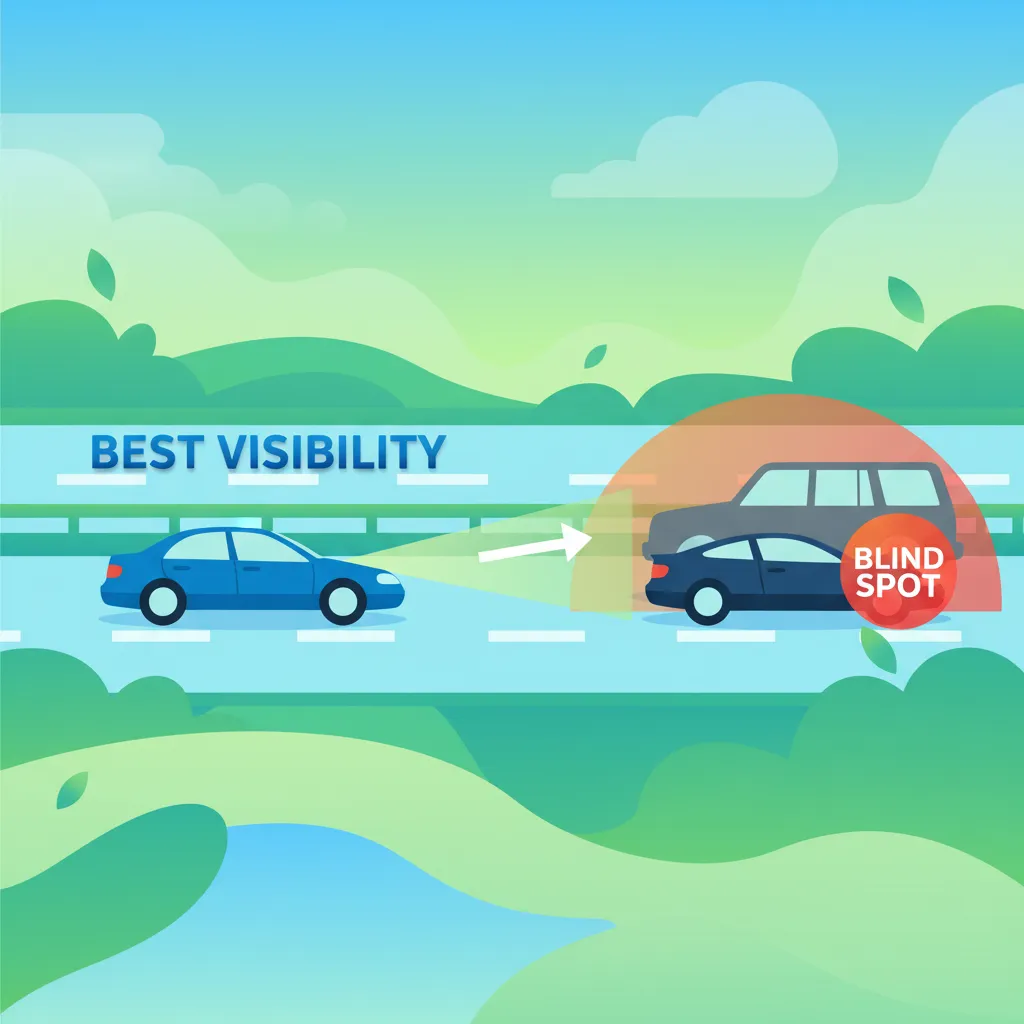
This lesson explores proper lane positioning, emphasizing strategic selection of traffic lanes for optimal visibility. It explains the importance of rider line of sight and peripheral vision in maintaining situational awareness. The content also covers legal aspects of lane splitting and correct usage of road shoulders, abiding by DGT regulations.
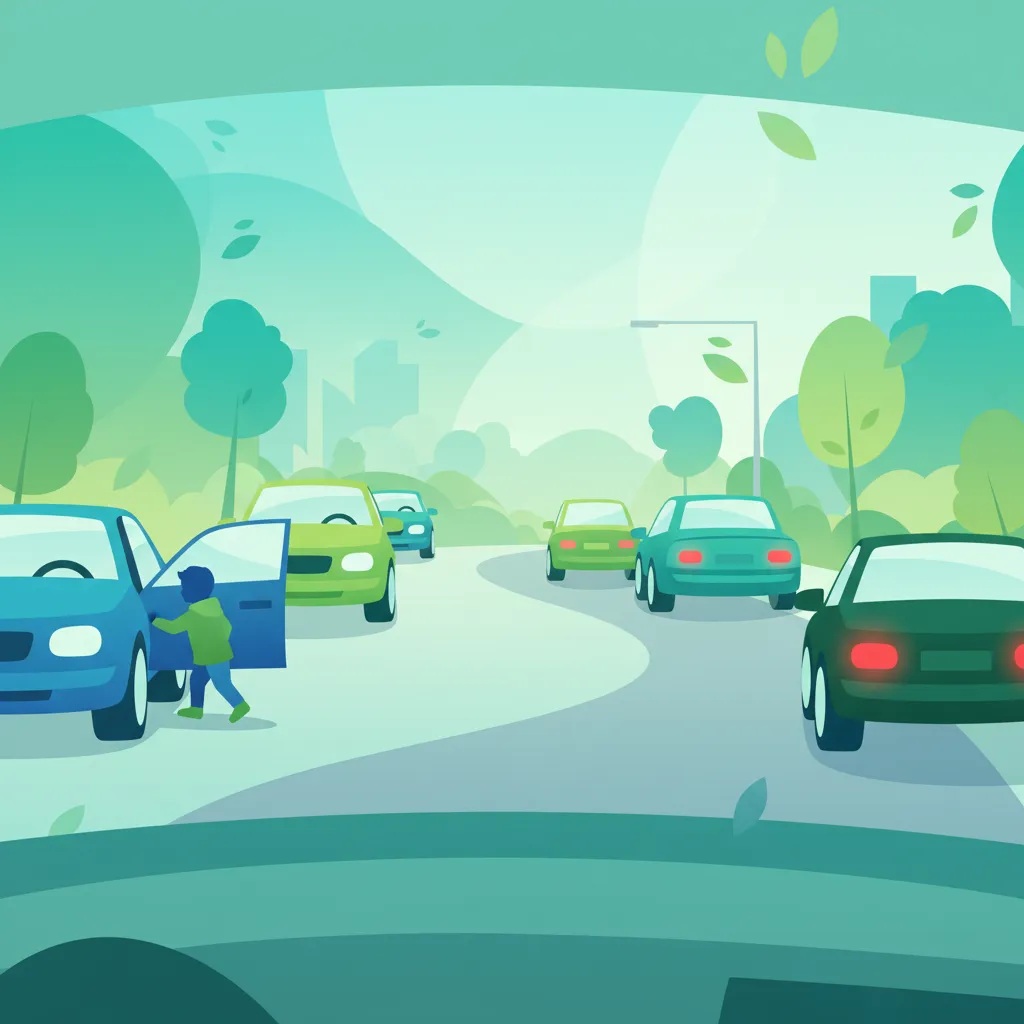
This lesson examines the specific hazards posed by vehicles parked along the roadside. It highlights the primary risk of a driver or passenger opening a door into the path of an approaching moped. Learners will understand the importance of maintaining a safe lateral distance and positioning themselves in the lane to avoid the 'door zone' while continuously scanning for signs of occupant activity.

This lesson focuses on low-speed manoeuvres within congested urban traffic, detailing techniques for navigating tight corners and weaving through traffic. Learners analyze urban traffic flow, pedestrian zones, and cyclist interactions to anticipate hazards. The lesson also explains DGT regulations regarding slow-speed movement and lane positioning.
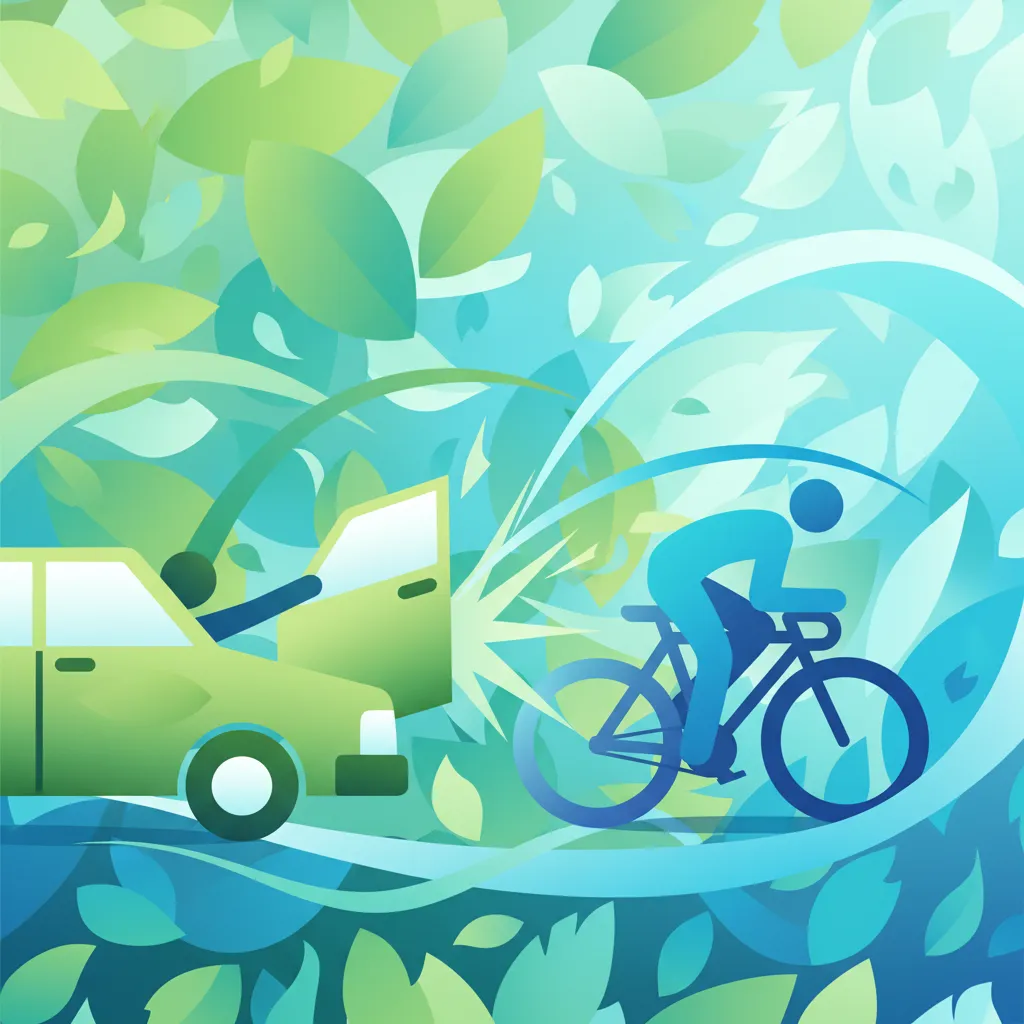
This lesson delves deeper into the mechanics and prevention of 'dooring' incidents, a common and serious urban hazard. It provides specific strategies for risk mitigation, such as adjusting lane position to ride outside the typical door-swing radius. Learners will be taught to observe cues like interior lights or visible occupants to anticipate a door opening and to always have a planned escape path.

This lesson examines the dynamic interactions between mopeds, cars, and bicycles in an urban environment. It emphasizes strategies for staying visible and avoiding the blind spots of larger vehicles. The content provides clear guidelines on overtaking bicycles safely, respecting dedicated bike lanes, and signaling intentions clearly to all other road users to ensure predictable and harmonious coexistence in mixed traffic.

This lesson teaches riders the critical importance of maintaining a safe following distance to allow for adequate reaction and braking time. It explains practical methods for judging this distance, such as the 'two-second rule,' and how this gap must be increased in adverse weather or poor visibility. Understanding this principle is fundamental to preventing rear-end collisions, one of the most common types of traffic accidents.
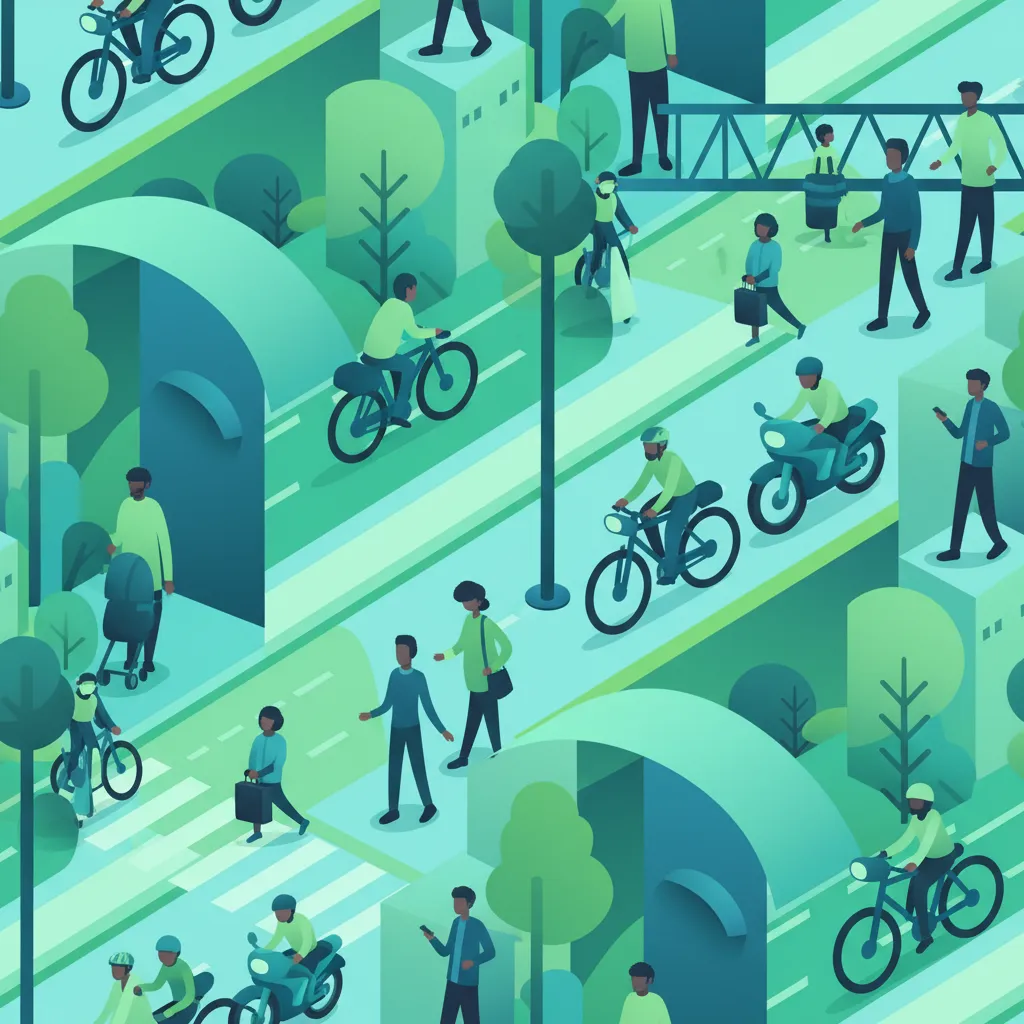
This lesson addresses the critical skill of safely sharing the road with other vulnerable users like pedestrians, cyclists, and other motorcyclists. It emphasizes the need for increased awareness, speed adaptation, and providing ample space when passing. The content covers DGT regulations regarding minimum passing distances and highlights the importance of making eye contact to ensure mutual awareness and prevent common urban accidents.
Learn to identify and avoid common urban moped positioning hazards like the 'door zone' and insufficient following distances. Understand how to create and maintain essential safety buffers for collision avoidance.
This lesson examines the specific hazards posed by vehicles parked along the roadside. It highlights the primary risk of a driver or passenger opening a door into the path of an approaching moped. Learners will understand the importance of maintaining a safe lateral distance and positioning themselves in the lane to avoid the 'door zone' while continuously scanning for signs of occupant activity.
This lesson delves deeper into the mechanics and prevention of 'dooring' incidents, a common and serious urban hazard. It provides specific strategies for risk mitigation, such as adjusting lane position to ride outside the typical door-swing radius. Learners will be taught to observe cues like interior lights or visible occupants to anticipate a door opening and to always have a planned escape path.
This lesson examines the dynamic interactions between mopeds, cars, and bicycles in an urban environment. It emphasizes strategies for staying visible and avoiding the blind spots of larger vehicles. The content provides clear guidelines on overtaking bicycles safely, respecting dedicated bike lanes, and signaling intentions clearly to all other road users to ensure predictable and harmonious coexistence in mixed traffic.
This lesson teaches riders the critical importance of maintaining a safe following distance to allow for adequate reaction and braking time. It explains practical methods for judging this distance, such as the 'two-second rule,' and how this gap must be increased in adverse weather or poor visibility. Understanding this principle is fundamental to preventing rear-end collisions, one of the most common types of traffic accidents.
This lesson addresses the critical skill of safely sharing the road with other vulnerable users like pedestrians, cyclists, and other motorcyclists. It emphasizes the need for increased awareness, speed adaptation, and providing ample space when passing. The content covers DGT regulations regarding minimum passing distances and highlights the importance of making eye contact to ensure mutual awareness and prevent common urban accidents.

This lesson provides a detailed guide to safely starting a moped, from the ignition sequence to the coordinated use of the throttle and brakes. It explains the importance of a pre-ride checklist to verify lights and controls are functional. The content also covers techniques for achieving smooth acceleration from a standstill and performing controlled stops, which is crucial for managing stop-and-go urban traffic conditions.
This lesson explains the physical principles of balance and steering specific to two-wheeled vehicles. It details the concept of counter-steering, where a slight push on the handlebar initiates a lean for turning, and explains how it applies at different speeds. Proper body positioning and weight distribution are also covered as key components for maintaining stability and executing smooth, controlled turns in tight urban environments.

This lesson focuses on the absolute priority of pedestrians at marked crosswalks, often known as zebra crossings. It explains that riders must always be prepared to stop and yield the right-of-way to any pedestrian waiting to cross or already crossing. The content also covers signaled pedestrian crossings and general awareness in urban areas where pedestrians may cross unexpectedly, reinforcing safety and legal compliance.

This lesson teaches riders how to react effectively in a sudden, critical situation. It explains the technique for applying maximum braking force without locking the wheels, ensuring the shortest possible stopping distance while maintaining stability. The content also covers how to perform a swift and controlled swerve to avoid an obstacle when stopping is not possible, emphasizing the importance of looking where you want to go.
Find clear answers to common questions learners have about Positioning on Urban Roads and Streets. Learn how the lesson is structured, which driving theory objectives it supports, and how it fits into the overall learning path of units and curriculum progression in Spain. These explanations help you understand key concepts, lesson flow, and exam focused study goals.
Proper lane positioning for mopeds in Spanish urban areas is vital for your safety and visibility. It allows you to maintain a safety buffer, makes you more noticeable to other drivers, and helps deter unsafe overtaking. This proactive approach significantly reduces your risk of accidents, which is a key focus of the DGT AM theory exam.
A safety buffer refers to the space you create around your moped to allow for emergency maneuvers or reactions to sudden hazards. You maintain it by choosing an optimal lane position that isn't too close to parked cars, other vehicles, or the curb, and by keeping a safe following distance. The lesson highlights specific DGT recommendations for these distances.
To avoid dooring, you should always position your moped at least one meter away from parked cars if possible. Constantly scan for occupants inside parked vehicles or brake lights activating. If space is limited, slow down significantly and be prepared to stop or swerve. This awareness is frequently tested in the Spanish AM theory exam.
Not always, but often. Riding in the middle or slightly to the right of the middle of your lane in urban areas can improve your visibility and prevent other vehicles from attempting to share your lane unsafely. However, you must adapt your position based on road conditions, hazards, and traffic flow, always prioritizing safety as per DGT guidelines.
Your lane position directly impacts how well other drivers see you. By choosing a position where you are clearly visible in their mirrors and not obscured by larger vehicles, you significantly reduce the risk of collisions. This is especially important at intersections where drivers might be looking for cars, not smaller mopeds.
Use our powerful search functionality to pinpoint specific Spanish DGT driving theory practice sets. Filter by road sign categories, traffic law topics, or question difficulty to build custom study sessions and reinforce your knowledge precisely where it matters for your official exam.